
Does management matter evidence from India Nick Bloom
Does management matter: evidence from India Nick Bloom (Stanford) Benn Eifert (Berkeley) Aprajit Mahajan (Stanford) David Mc. Kenzie (World Bank) John Roberts (Stanford) July 22 nd 2010
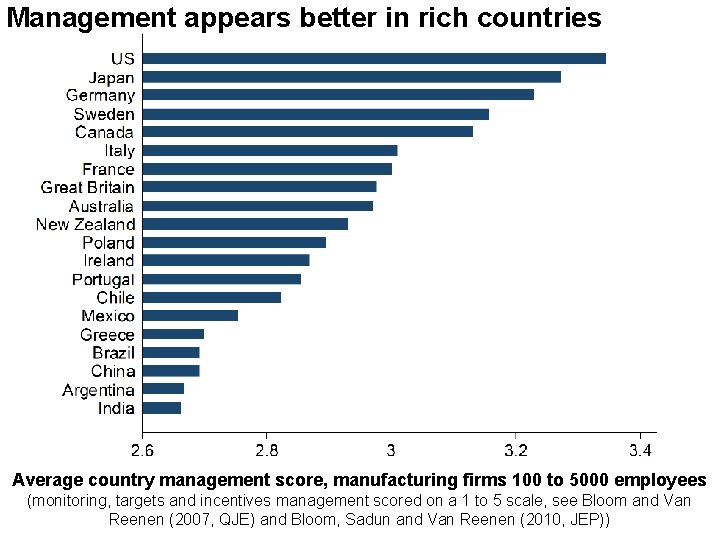
Management appears better in rich countries Average country management score, manufacturing firms 100 to 5000 employees (monitoring, targets and incentives management scored on a 1 to 5 scale, see Bloom and Van 2 Reenen (2007, QJE) and Bloom, Sadun and Van Reenen (2010, JEP))
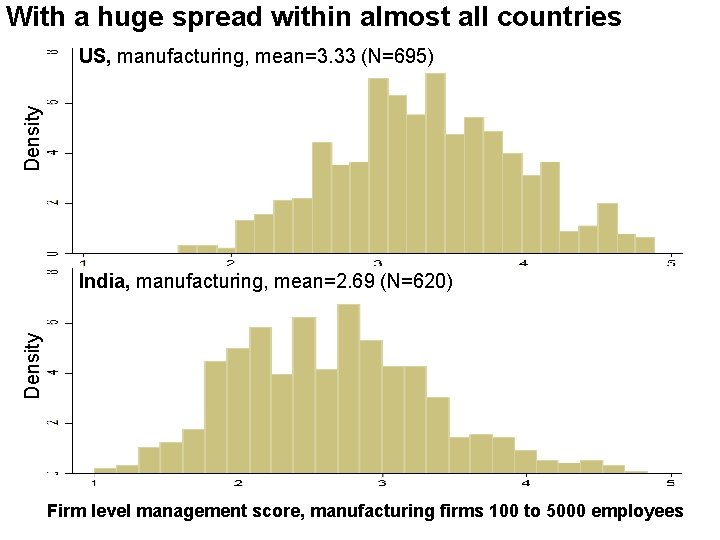
With a huge spread within almost all countries Density US, manufacturing, mean=3. 33 (N=695) Density India, manufacturing, mean=2. 69 (N=620) 3 Firm level management score, manufacturing firms 100 to 5000 employees
But do we care - does management matter? • Long debate between business practitioners versus economists • Evidence to date primarily case-studies and surveys • So in India we ran a management field experiment 4
We investigate these questions in large Indian firms Took large firms (≈ 300 employees) outside Mumbai making cotton fabric. Randomized treatment plants get heavy management consulting, controls plants get very light consulting. Collect weekly data on all plants from 2008 to 2010 1) Profits and productivity up by about 20% 2) Decentralization of power within firms 3) Increased computerization 5
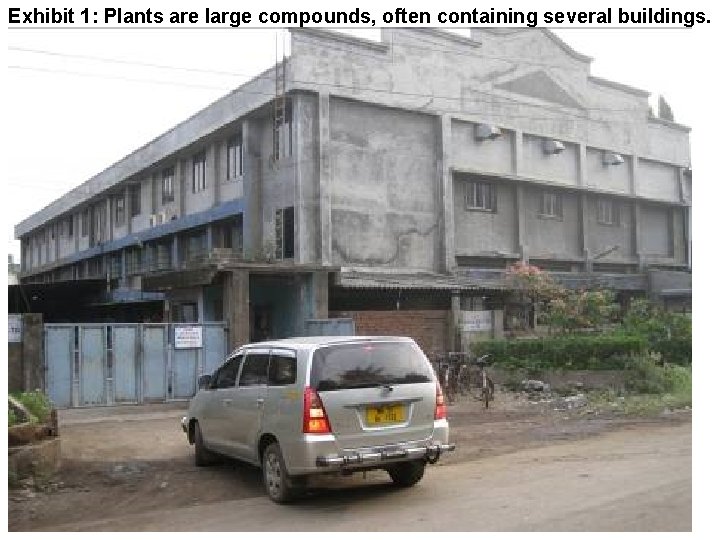
Exhibit 1: Plants are large compounds, often containing several buildings.
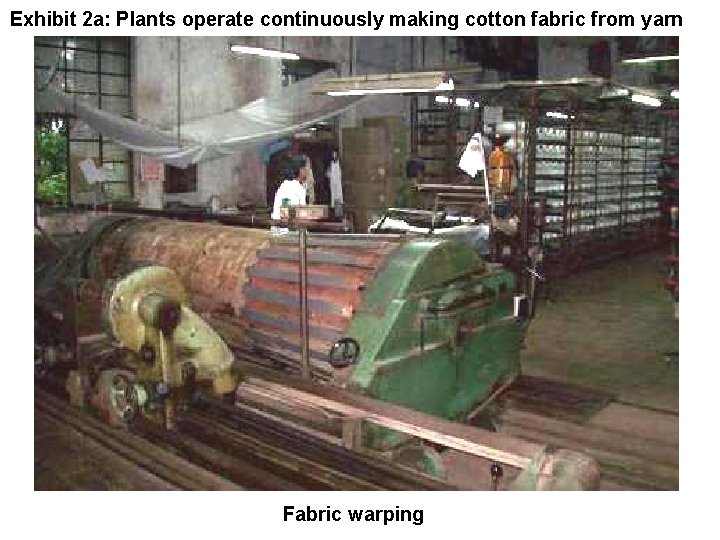
Exhibit 2 a: Plants operate continuously making cotton fabric from yarn Fabric warping
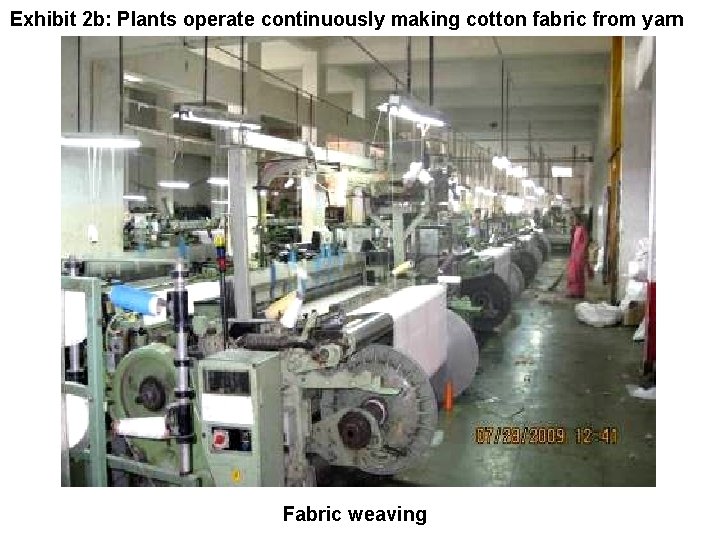
Exhibit 2 b: Plants operate continuously making cotton fabric from yarn Fabric weaving
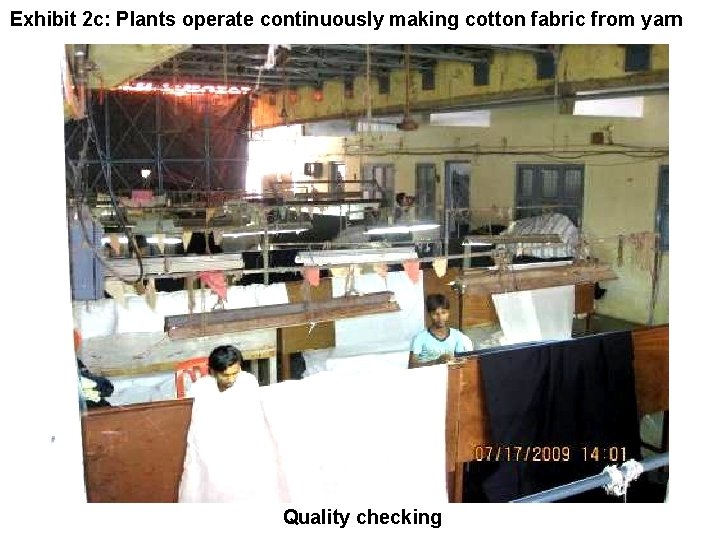
Exhibit 2 c: Plants operate continuously making cotton fabric from yarn Quality checking
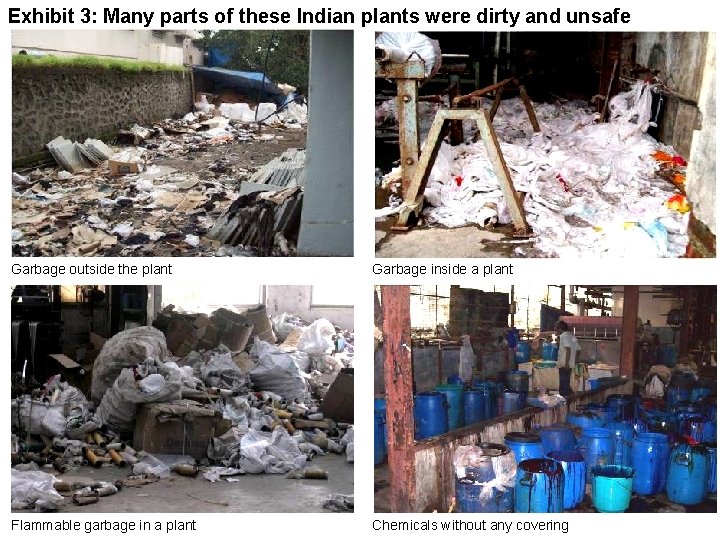
Exhibit 3: Many parts of these Indian plants were dirty and unsafe Garbage outside the plant Garbage inside a plant Flammable garbage in a plant Chemicals without any covering
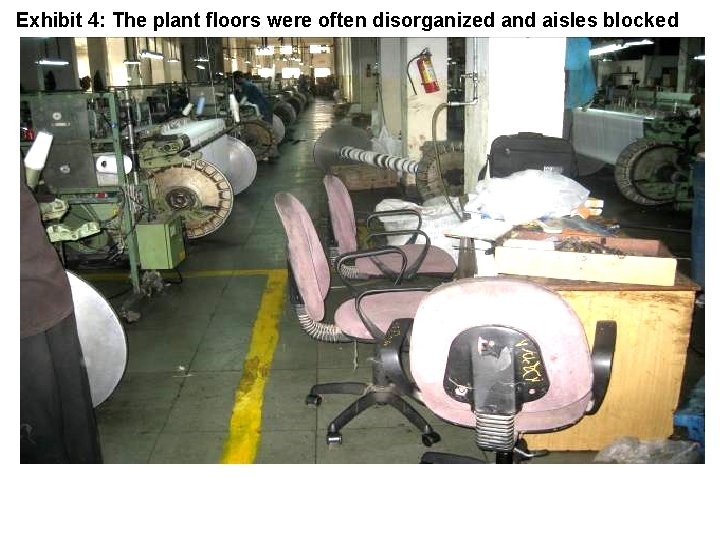
Exhibit 4: The plant floors were often disorganized and aisles blocked
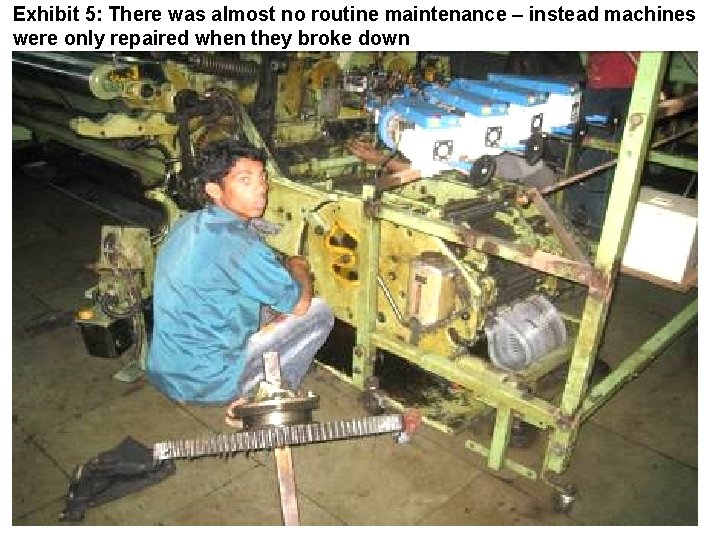
Exhibit 5: There was almost no routine maintenance – instead machines were only repaired when they broke down
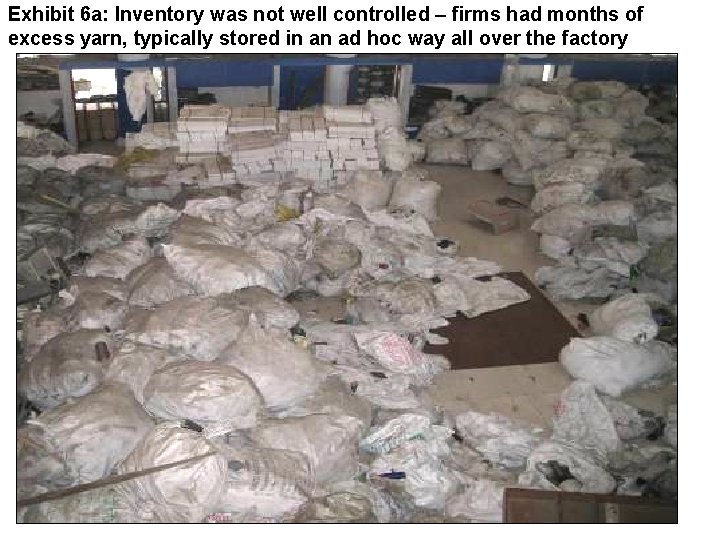
Exhibit 6 a: Inventory was not well controlled – firms had months of excess yarn, typically stored in an ad hoc way all over the factory
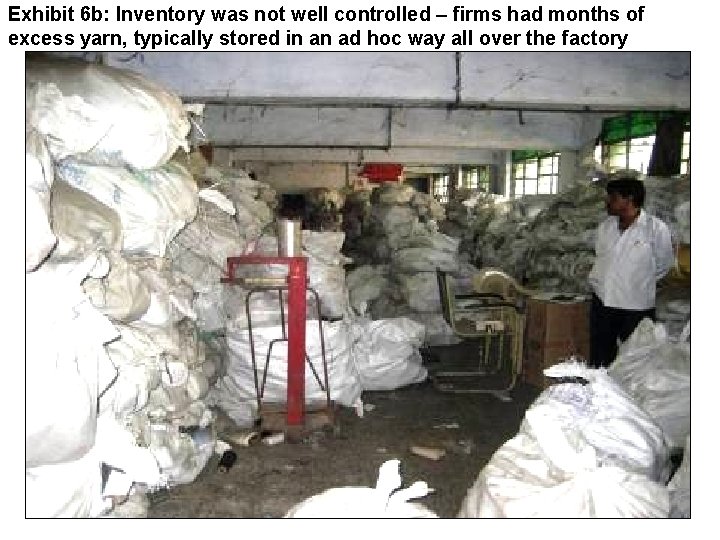
Exhibit 6 b: Inventory was not well controlled – firms had months of excess yarn, typically stored in an ad hoc way all over the factory
Management practices before and after treatment Performance of the plants before and after treatment Why were these practices not introduced before? Decentralization and IT 15
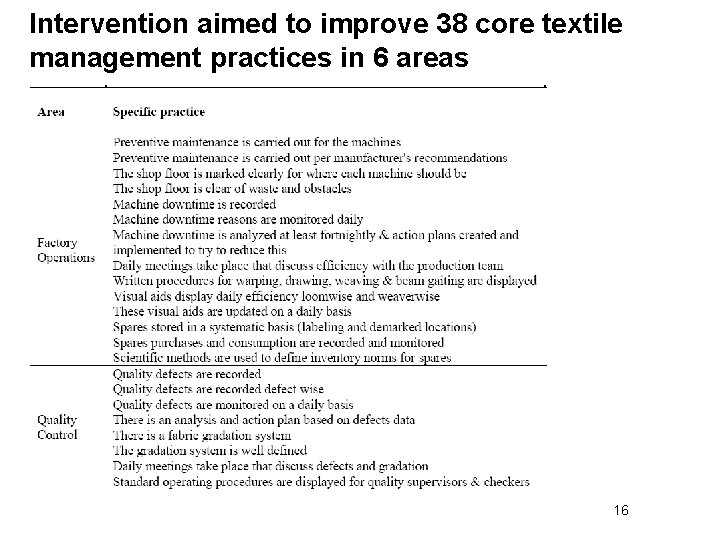
Intervention aimed to improve 38 core textile management practices in 6 areas 16
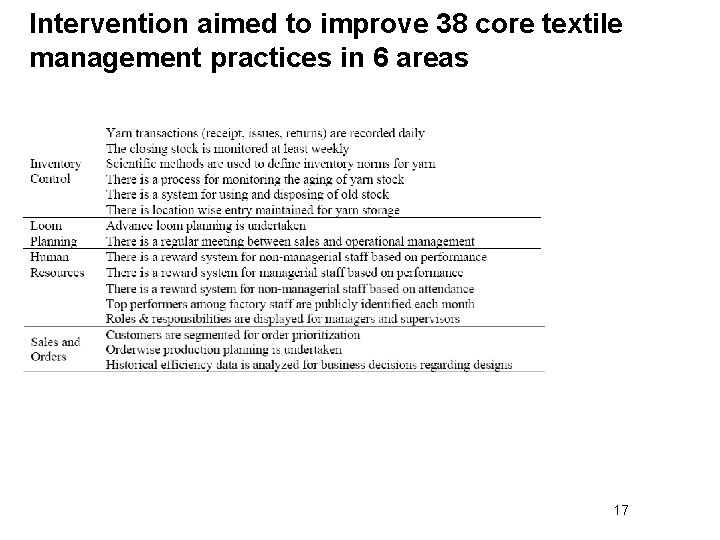
Intervention aimed to improve 38 core textile management practices in 6 areas 17
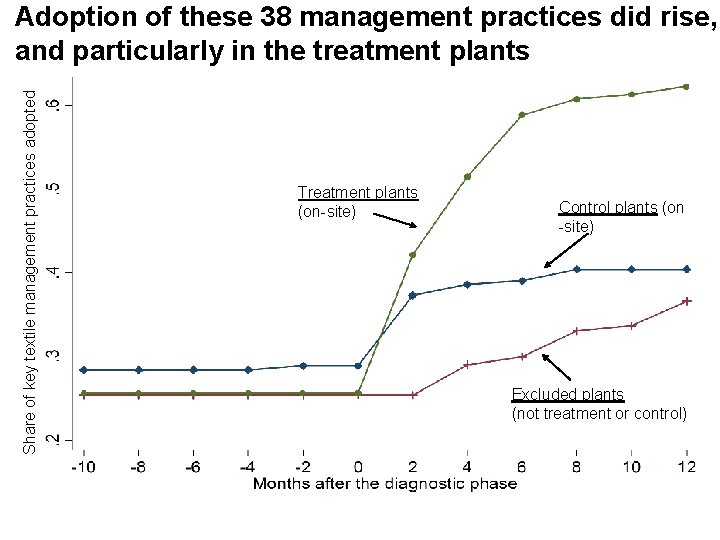
Share of key textile management practices adopted Adoption of these 38 management practices did rise, and particularly in the treatment plants Treatment plants (on-site) Control plants (on -site) Excluded plants (not treatment or control)
Management practices before and after treatment Performance of the plants before and after treatment • Quality • Inventory • Output Why were these practices not introduced before? Decentralization and IT 19
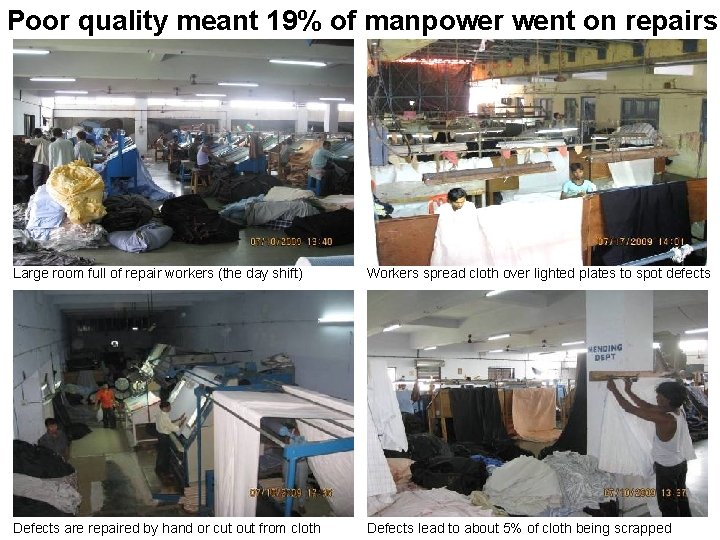
Poor quality meant 19% of manpower went on repairs Large room full of repair workers (the day shift) Workers spread cloth over lighted plates to spot defects Defects are repaired by hand or cut out from cloth Defects lead to about 5% of cloth being scrapped
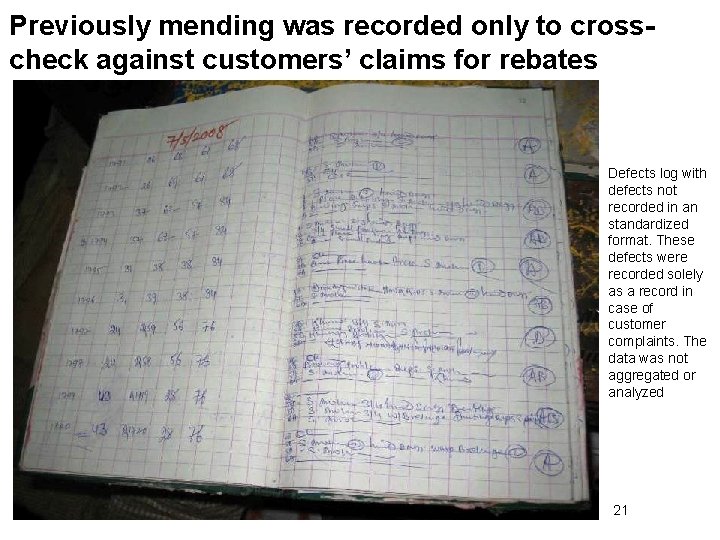
Previously mending was recorded only to crosscheck against customers’ claims for rebates Defects log with defects not recorded in an standardized format. These defects were recorded solely as a record in case of customer complaints. The data was not aggregated or analyzed 21
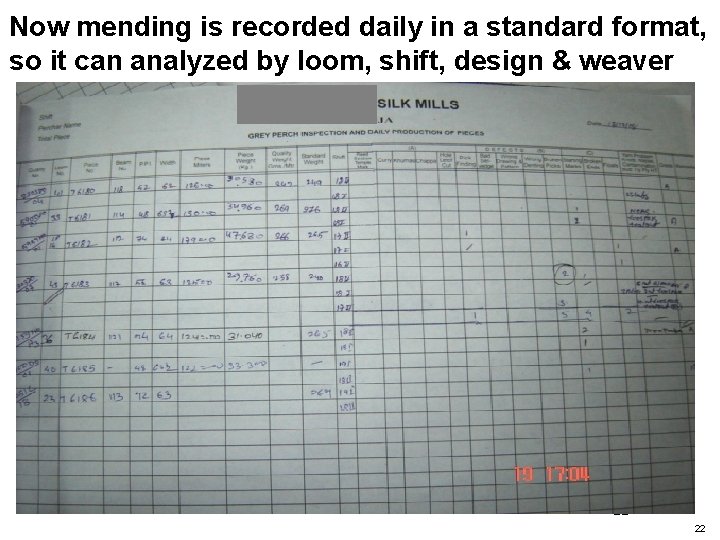
Now mending is recorded daily in a standard format, so it can analyzed by loom, shift, design & weaver 22 22
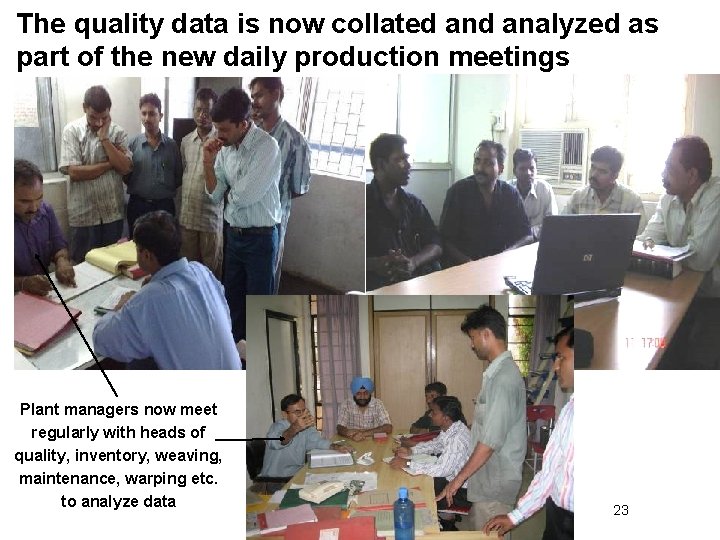
The quality data is now collated analyzed as part of the new daily production meetings Plant managers now meet regularly with heads of quality, inventory, weaving, maintenance, warping etc. to analyze data 23
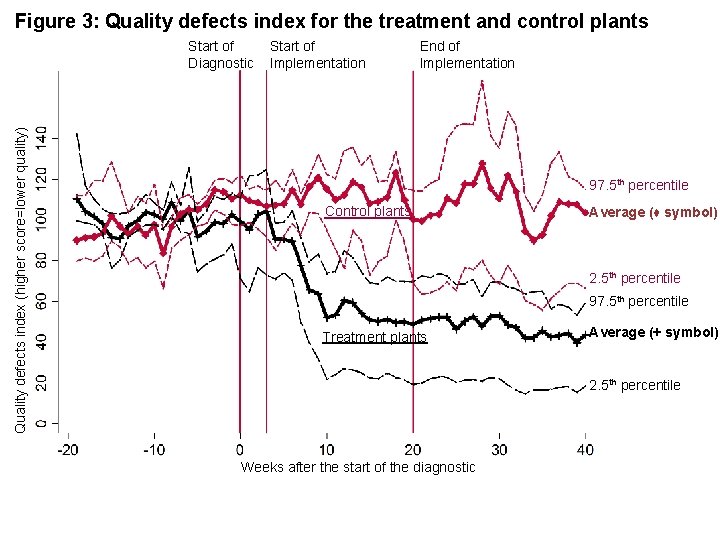
Figure 3: Quality defects index for the treatment and control plants Quality defects index (higher score=lower quality) Start of Diagnostic Start of Implementation End of Implementation 97. 5 th percentile Control plants Average (♦ symbol) 2. 5 th percentile 97. 5 th percentile Treatment plants Average (+ symbol) 2. 5 th percentile Weeks after the start of the diagnostic
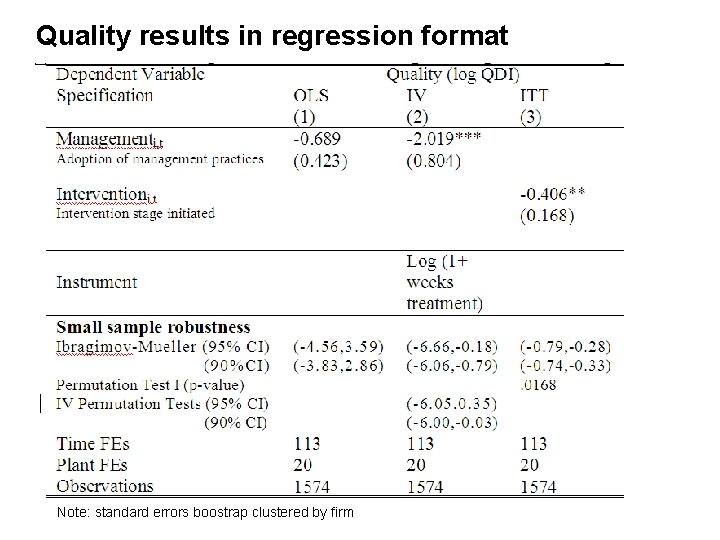
Quality results in regression format Note: standard errors boostrap clustered by firm
Management practices before and after treatment Performance of the plants before and after treatment • Quality • Inventory • Output Why were these practices not introduced before? Decentralization and IT 26
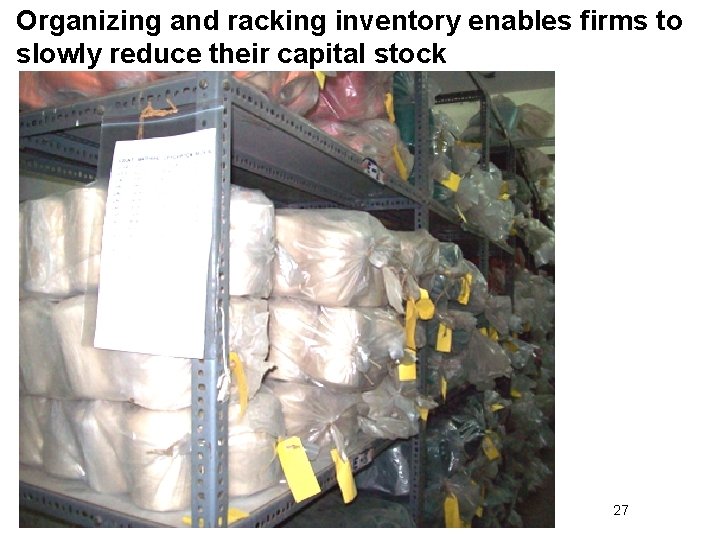
Organizing and racking inventory enables firms to slowly reduce their capital stock 27
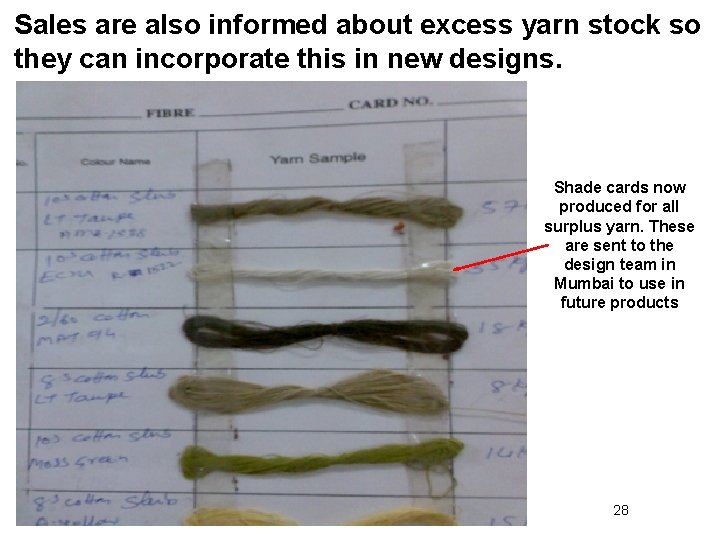
Sales are also informed about excess yarn stock so they can incorporate this in new designs. Shade cards now produced for all surplus yarn. These are sent to the design team in Mumbai to use in future products 28
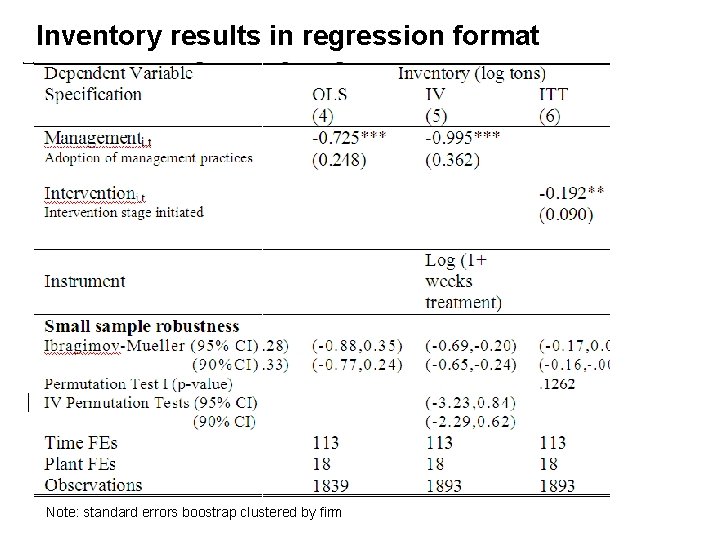
Inventory results in regression format Note: standard errors boostrap clustered by firm
Management practices before and after treatment Performance of the plants before and after treatment • Quality • Inventory • Output Why were these practices not introduced before? Decentralization and IT 30
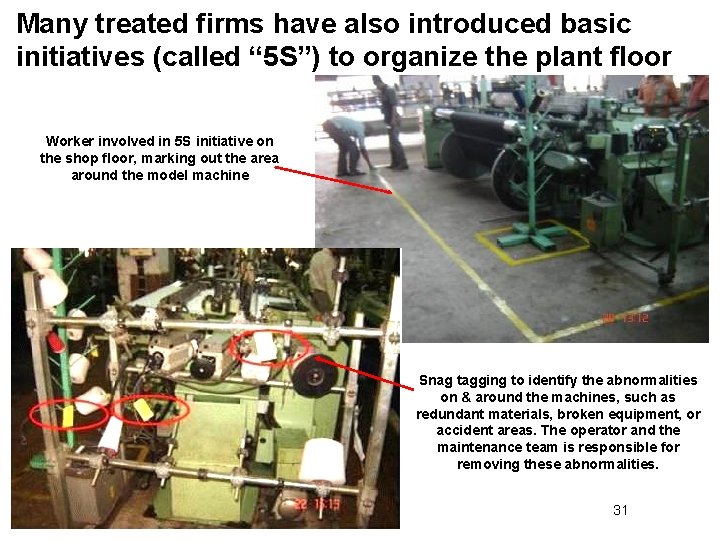
Many treated firms have also introduced basic initiatives (called “ 5 S”) to organize the plant floor Worker involved in 5 S initiative on the shop floor, marking out the area around the model machine Snag tagging to identify the abnormalities on & around the machines, such as redundant materials, broken equipment, or accident areas. The operator and the maintenance team is responsible for removing these abnormalities. 31
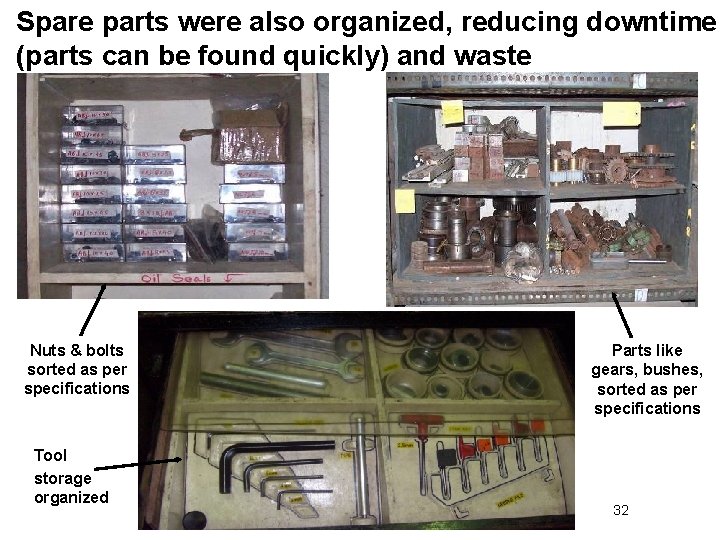
Spare parts were also organized, reducing downtime (parts can be found quickly) and waste Nuts & bolts sorted as per specifications Tool storage organized Parts like gears, bushes, sorted as per specifications 32
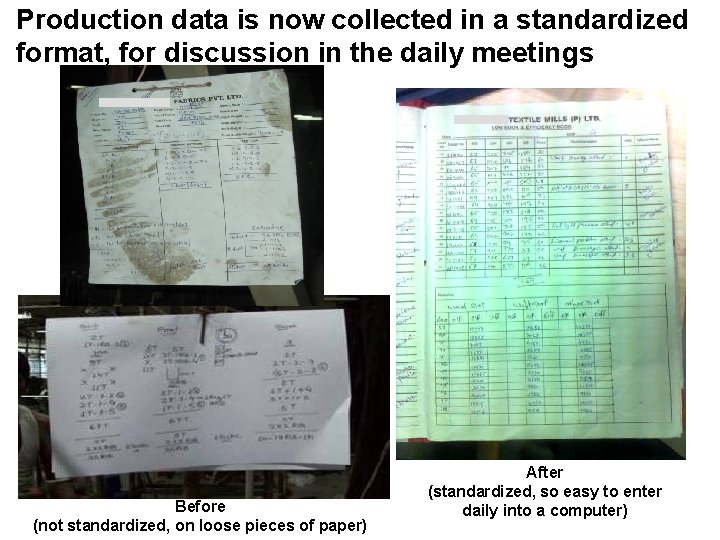
Production data is now collected in a standardized format, for discussion in the daily meetings Before (not standardized, on loose pieces of paper) After (standardized, so easy to enter 33 daily into a computer)
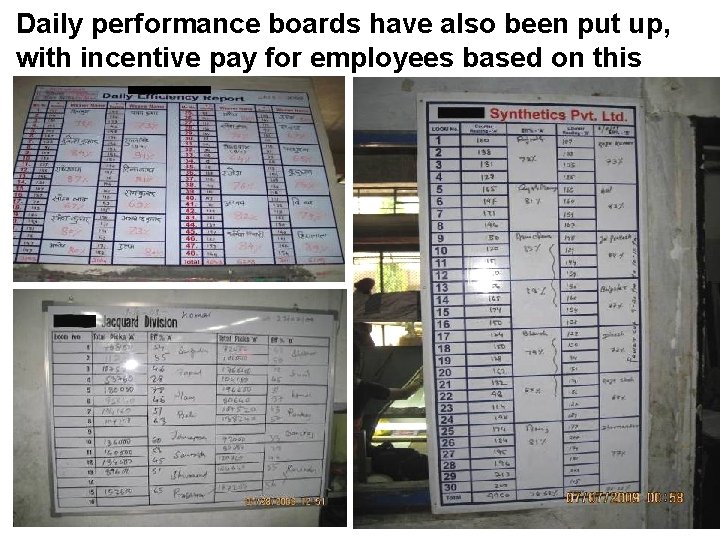
Daily performance boards have also been put up, with incentive pay for employees based on this 34
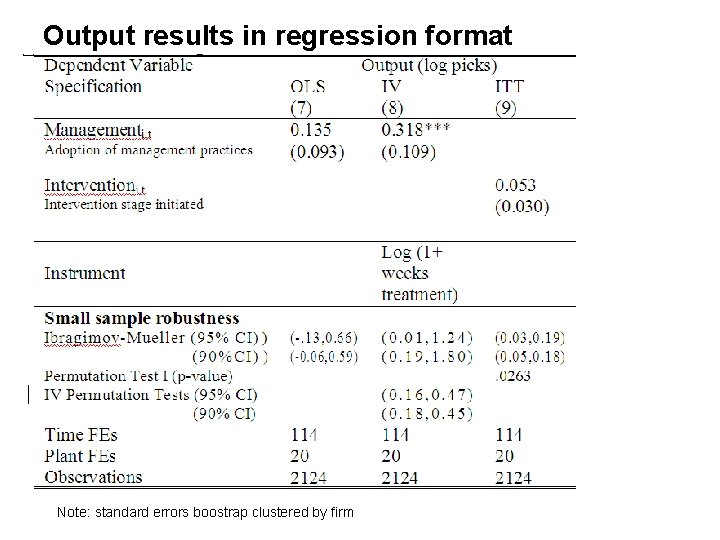
Output results in regression format Note: standard errors boostrap clustered by firm
Management practices before and after treatment Performance of the plants before and after treatment Decentralization and IT Why were these practices not introduced before? 36
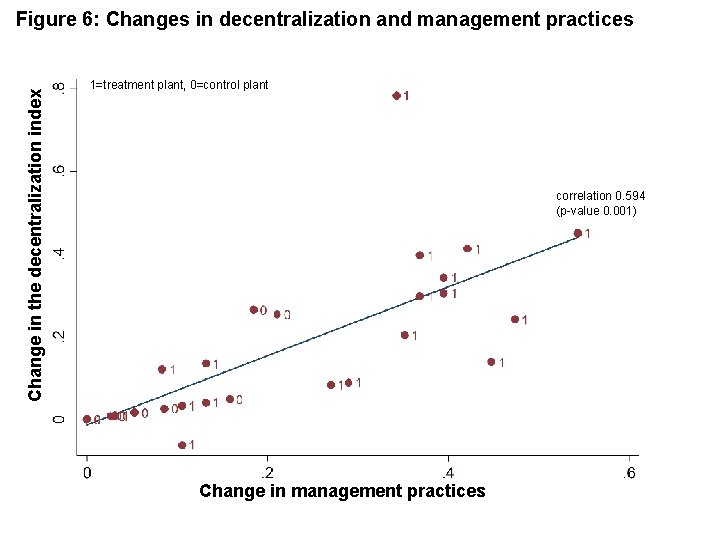
Change in the decentralization index Figure 6: Changes in decentralization and management practices 1=treatment plant, 0=control plant correlation 0. 594 (p-value 0. 001) Change in management practices
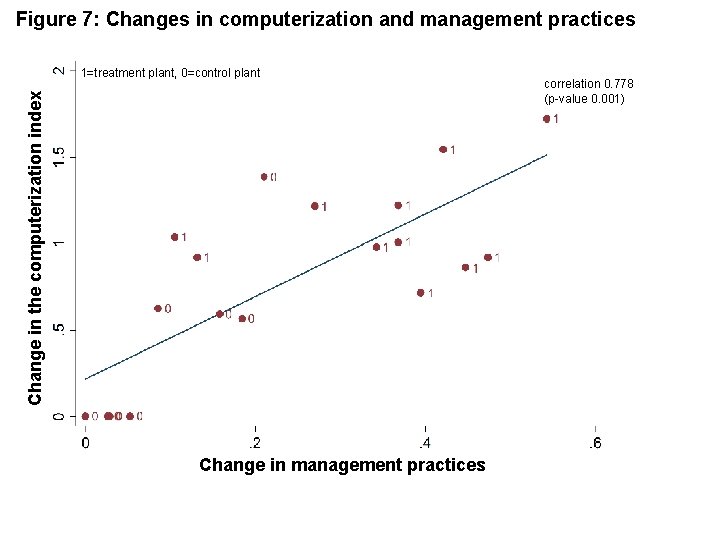
Figure 7: Changes in computerization and management practices Change in the computerization index 1=treatment plant, 0=control plant Change in management practices correlation 0. 778 (p-value 0. 001)
Management practices before and after treatment Performance of the plants before and after treatment Decentralization and IT Why were these practices not introduced before? 39
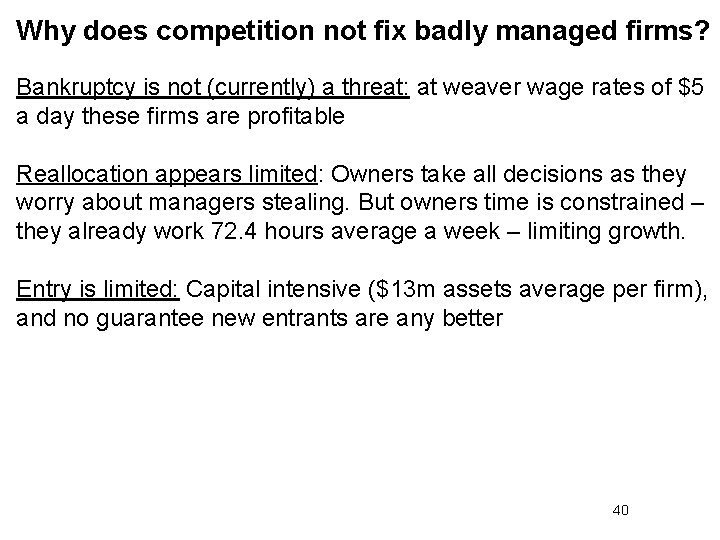
Why does competition not fix badly managed firms? Bankruptcy is not (currently) a threat: at weaver wage rates of $5 a day these firms are profitable Reallocation appears limited: Owners take all decisions as they worry about managers stealing. But owners time is constrained – they already work 72. 4 hours average a week – limiting growth. Entry is limited: Capital intensive ($13 m assets average per firm), and no guarantee new entrants are any better 40
So why did these firms not improve themselves? Collected panel data on reasons for non implementation, and main (initial) reason was a lack of information • Firms either never heard of these practices (no information) • Or, did not believe they were relevant (wrong information) Later constraints after informational barriers overcome primarily around limited CEO time and CEO ability 41
Summary Improving management practices improves productivity, leads to more decentralized decision making and greater use of IT A primary reason for bad management appears to be lack of information, which limited competition allows to persist Policy implications A) Competition and FDI: free product markets and encourage foreign multinationals B) Rule of law: improve rule of law to encourage reallocation and ownership and control separation C) Training: improved basic training around management skills 42
- Slides: 42