
DOE OFFICE OF INDIAN ENERGY STRATEGIC ENERGY PLANNING
- Slides: 21
DOE OFFICE OF INDIAN ENERGY STRATEGIC ENERGY PLANNING February 26 th, 2014
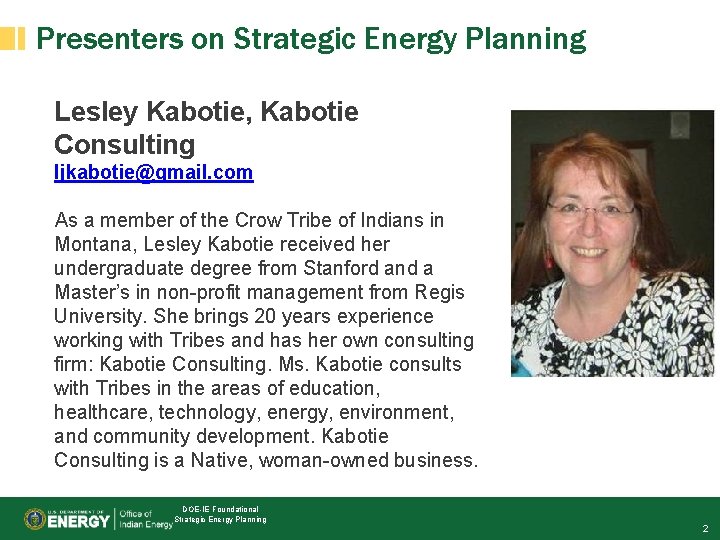
Presenters on Strategic Energy Planning Lesley Kabotie, Kabotie Consulting ljkabotie@gmail. com As a member of the Crow Tribe of Indians in Montana, Lesley Kabotie received her undergraduate degree from Stanford and a Master’s in non-profit management from Regis University. She brings 20 years experience working with Tribes and has her own consulting firm: Kabotie Consulting. Ms. Kabotie consults with Tribes in the areas of education, healthcare, technology, energy, environment, and community development. Kabotie Consulting is a Native, woman-owned business. DOE-IE Foundational Strategic Energy Planning 2
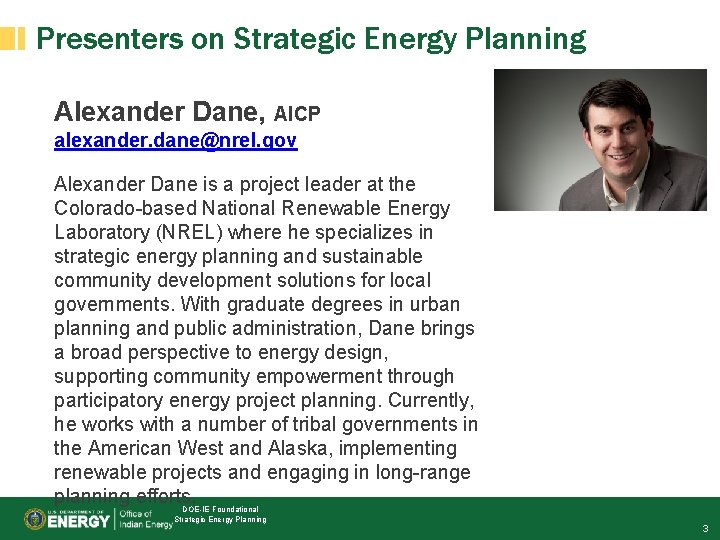
Presenters on Strategic Energy Planning Alexander Dane, AICP alexander. dane@nrel. gov Alexander Dane is a project leader at the Colorado-based National Renewable Energy Laboratory (NREL) where he specializes in strategic energy planning and sustainable community development solutions for local governments. With graduate degrees in urban planning and public administration, Dane brings a broad perspective to energy design, supporting community empowerment through participatory energy project planning. Currently, he works with a number of tribal governments in the American West and Alaska, implementing renewable projects and engaging in long-range planning efforts. DOE-IE Foundational Strategic Energy Planning 3
What is Strategic Energy Planning? And what does it do for you? vs. • • • Brings desired energy future into clear focus Considers current reality and leverages local resources Considers hurdles/challenges before you reach them Maps out efficient path to achieve your desired energy future Clarifies progress indicators Documents the game plan for short- and long-term success DOE-IE Foundational Strategic Energy Planning Graphic concepts reprinted with permission from Lesley Kabotie, Kabotie Consulting. 4
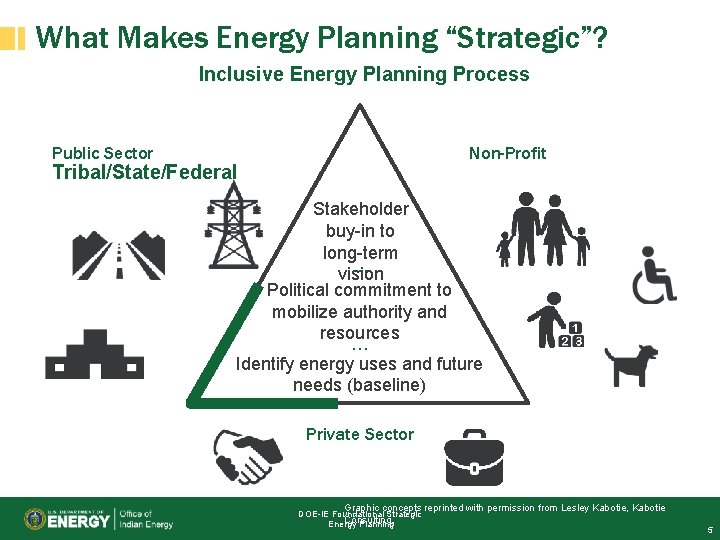
What Makes Energy Planning “Strategic”? Inclusive Energy Planning Process Public Sector Non-Profit Tribal/State/Federal Stakeholder buy-in to long-term … vision Political commitment to mobilize authority and resources … Identify energy uses and future needs (baseline) Private Sector Graphic concepts reprinted with permission from Lesley Kabotie, Kabotie DOE-IE Foundational Strategic Consulting. Energy Planning 5
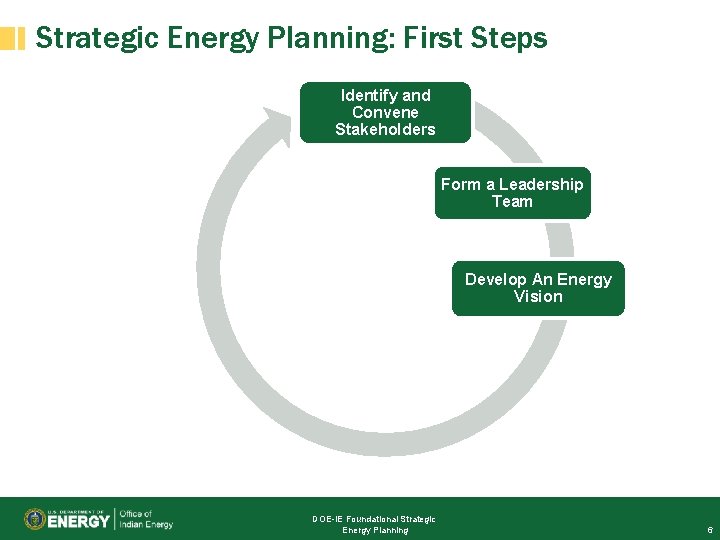
Strategic Energy Planning: First Steps Identify and Convene Stakeholders Form a Leadership Team Develop An Energy Vision DOE-IE Foundational Strategic Energy Planning 6
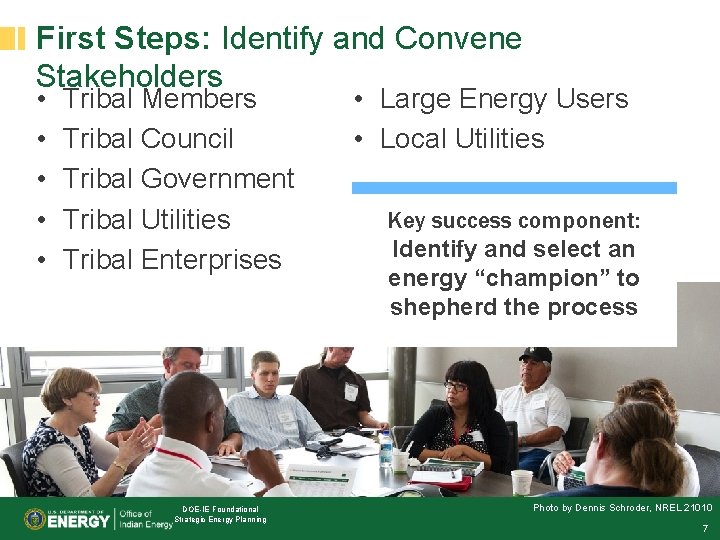
First Steps: Identify and Convene Stakeholders • • • Tribal Members Tribal Council Tribal Government Tribal Utilities Tribal Enterprises DOE-IE Foundational Strategic Energy Planning • Large Energy Users • Local Utilities Key success component: Identify and select an energy “champion” to shepherd the process Photo by Dennis Schroder, NREL 21010 7
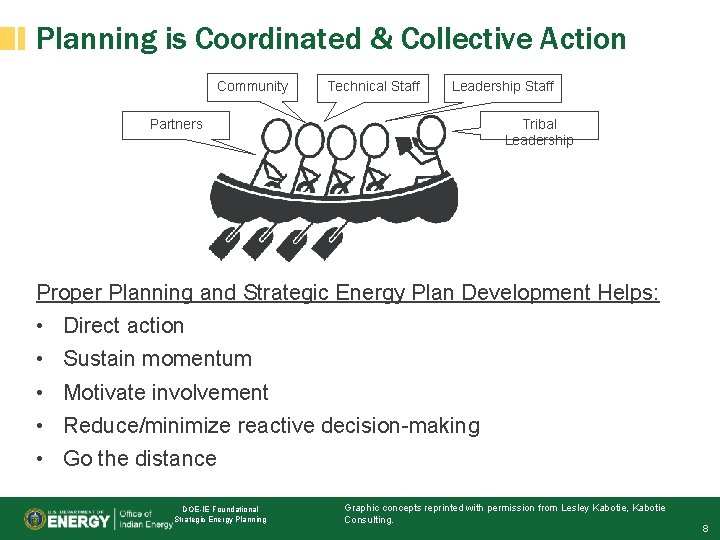
Planning is Coordinated & Collective Action Community Technical Staff Leadership Staff Partners Tribal Leadership Proper Planning and Strategic Energy Plan Development Helps: • • • Direct action Sustain momentum Motivate involvement Reduce/minimize reactive decision-making Go the distance DOE-IE Foundational Strategic Energy Planning Graphic concepts reprinted with permission from Lesley Kabotie, Kabotie Consulting. 8
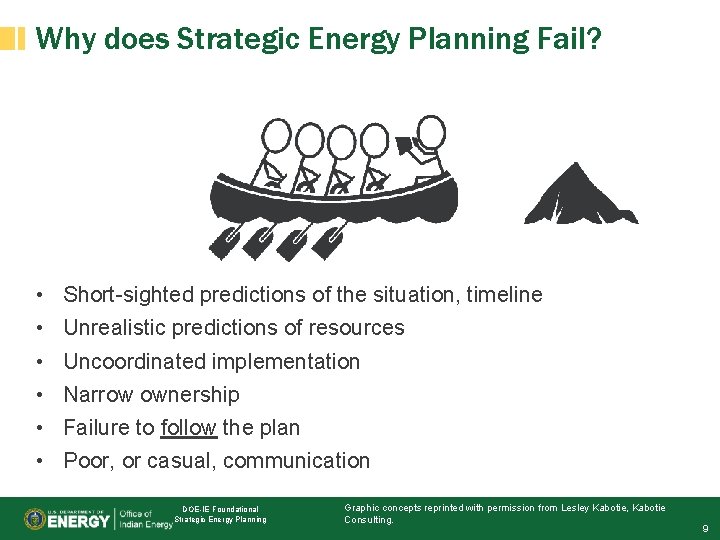
Why does Strategic Energy Planning Fail? • • • Short-sighted predictions of the situation, timeline Unrealistic predictions of resources Uncoordinated implementation Narrow ownership Failure to follow the plan Poor, or casual, communication DOE-IE Foundational Strategic Energy Planning Graphic concepts reprinted with permission from Lesley Kabotie, Kabotie Consulting. 9
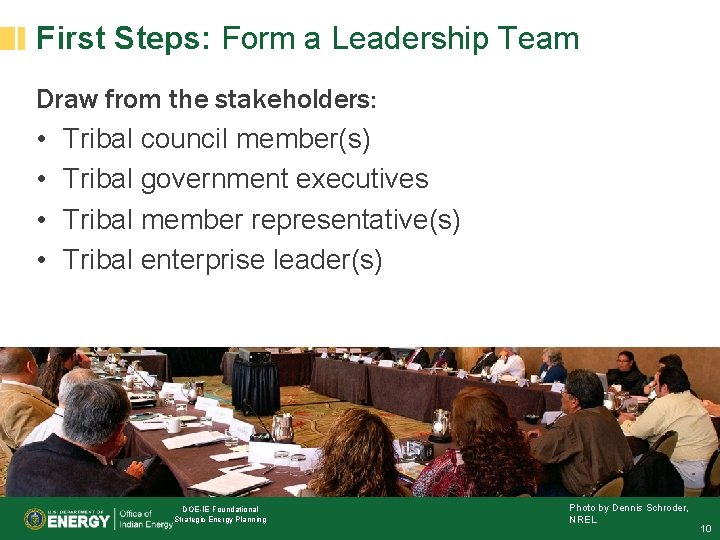
First Steps: Form a Leadership Team Draw from the stakeholders: • Tribal council member(s) • Tribal government executives • Tribal member representative(s) • Tribal enterprise leader(s) DOE-IE Foundational Strategic Energy Planning Photo by Dennis Schroder, NREL 10
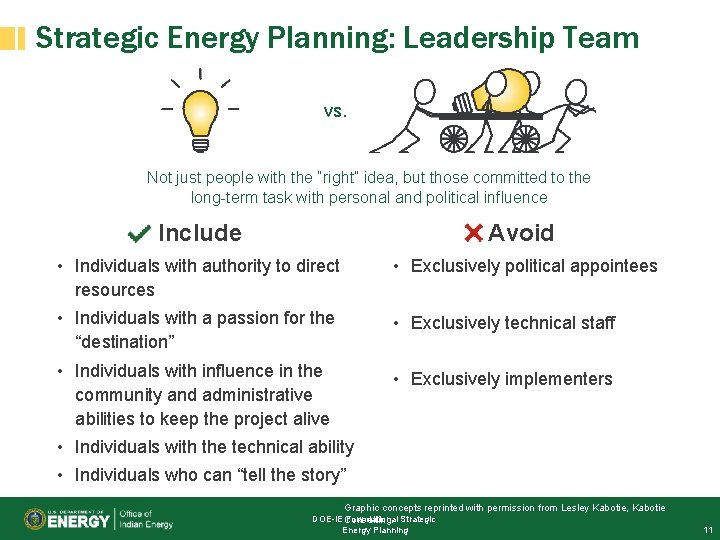
Strategic Energy Planning: Leadership Team vs. Not just people with the “right” idea, but those committed to the long-term task with personal and political influence Include Avoid • Individuals with authority to direct resources • Exclusively political appointees • Individuals with a passion for the “destination” • Exclusively technical staff • Individuals with influence in the community and administrative abilities to keep the project alive • Exclusively implementers • Individuals with the technical ability • Individuals who can “tell the story” Graphic concepts reprinted with permission from Lesley Kabotie, Kabotie DOE-IE Consulting. Foundational Strategic Energy Planning 11
First Steps: Develop an Energy Vision Common objectives, such as: • Increase and ensure energy reliability • Minimize environmental impacts • Diversify energy supply • Use local, renewable resources • Strengthen, support economic development • Build workforce/jobs DOE-IE Foundational Strategic Energy Planning • Ensure energy affordability • Generate revenue for Tribe • Energy security/self-sufficiency • Off-grid electrification • Save money (offset energy costs) • Keep money in Tribe • Stabilize energy costs for Tribe and tribal members DOE-IE Foundational Strategic Energy Planning Photo from i. Stock/14195508 12
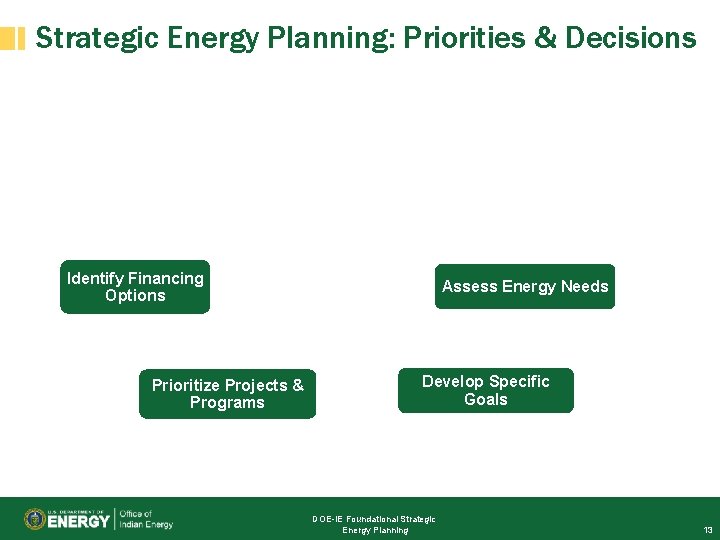
Strategic Energy Planning: Priorities & Decisions Identify Financing Options Prioritize Projects & Programs Assess Energy Needs Develop Specific Goals DOE-IE Foundational Strategic Energy Planning 13
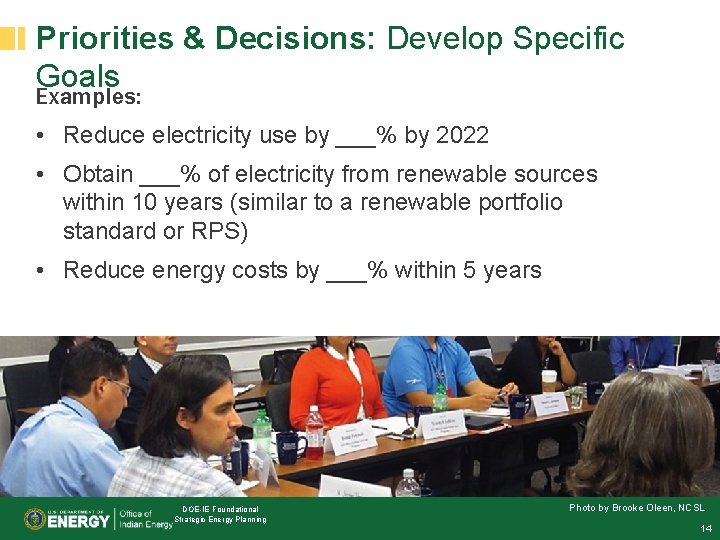
Priorities & Decisions: Develop Specific Goals Examples: • Reduce electricity use by ___% by 2022 • Obtain ___% of electricity from renewable sources within 10 years (similar to a renewable portfolio standard or RPS) • Reduce energy costs by ___% within 5 years DOE-IE Foundational Strategic Energy Planning Photo by Brooke Oleen, NCSL 14
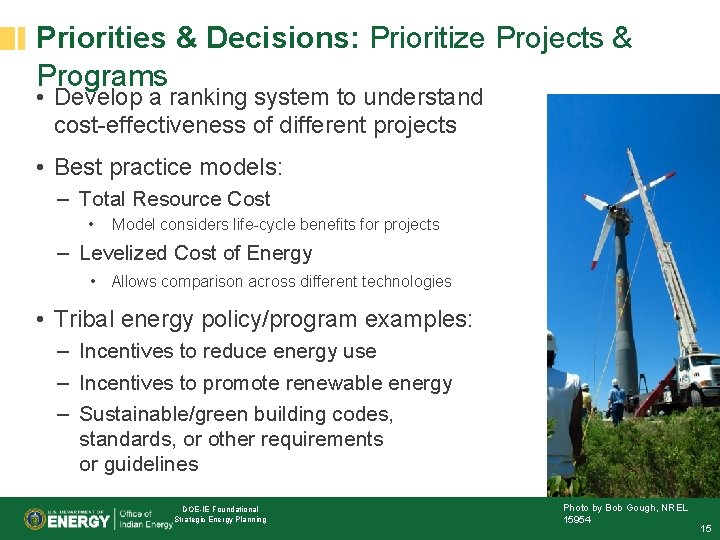
Priorities & Decisions: Prioritize Projects & Programs • Develop a ranking system to understand cost-effectiveness of different projects • Best practice models: – Total Resource Cost • Model considers life-cycle benefits for projects – Levelized Cost of Energy • Allows comparison across different technologies • Tribal energy policy/program examples: – Incentives to reduce energy use – Incentives to promote renewable energy – Sustainable/green building codes, standards, or other requirements or guidelines DOE-IE Foundational Strategic Energy Planning Photo by Bob Gough, NREL 15954 15
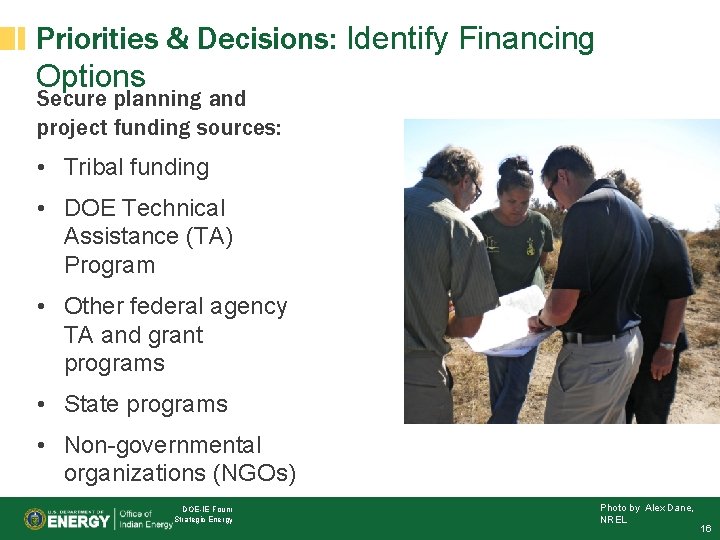
Priorities & Decisions: Identify Financing Options Secure planning and project funding sources: • Tribal funding • DOE Technical Assistance (TA) Program • Other federal agency TA and grant programs • State programs • Non-governmental organizations (NGOs) DOE-IE Foundational Strategic Energy Planning Photo by Alex Dane, NREL 16
Strategic Energy Planning: Energy Plan M&V and Plan Alterations Compile Energy Plan DOE-IE Foundational Strategic Energy Planning 17
Energy Plan: Purpose & Functions Purpose Functions • Document near-term goals • Creates “road map” to hold accountability to the destination • Sustain momentum • Achieve long-term goals • Provides the means to consistently share the story with others • Creates resources to help guide and filter priorities, providers, and decisions DOE-IE Foundational Strategic Energy Planning 18
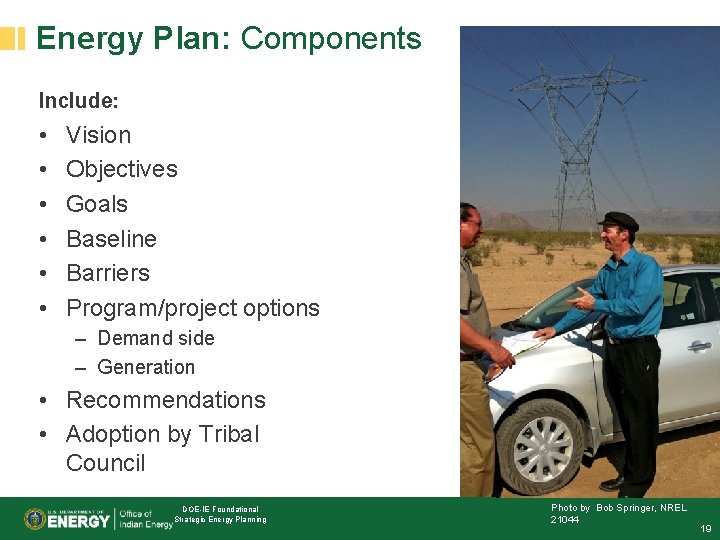
Energy Plan: Components Include: • Vision • Objectives • Goals • Baseline • Barriers • Program/project options – Demand side – Generation • Recommendations • Adoption by Tribal Council DOE-IE Foundational Strategic Energy Planning Photo by Bob Springer, NREL 21044 19
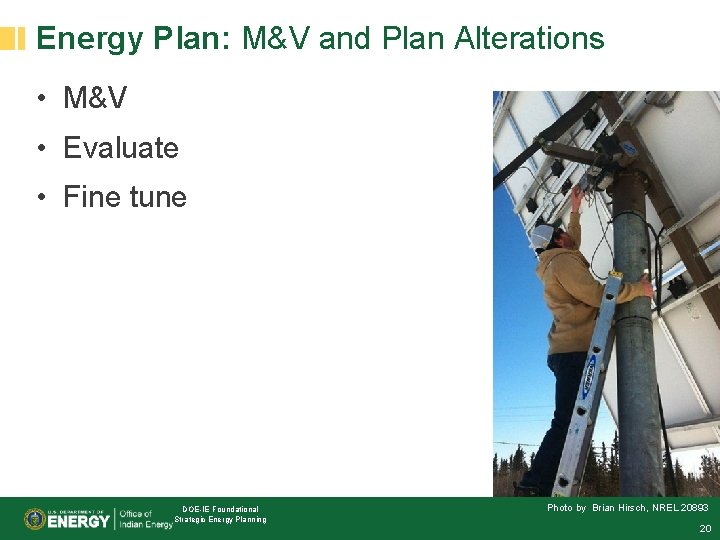
Energy Plan: M&V and Plan Alterations • M&V • Evaluate • Fine tune DOE-IE Foundational Strategic Energy Planning Photo by Brian Hirsch, NREL 20893 20
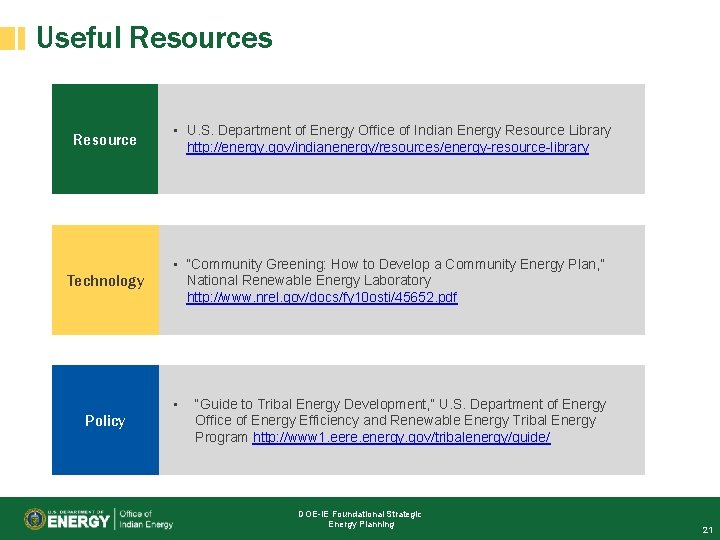
Useful Resources Resource • U. S. Department of Energy Office of Indian Energy Resource Library http: //energy. gov/indianenergy/resources/energy-resource-library Technology • “Community Greening: How to Develop a Community Energy Plan, ” National Renewable Energy Laboratory http: //www. nrel. gov/docs/fy 10 osti/45652. pdf Policy • “Guide to Tribal Energy Development, ” U. S. Department of Energy Office of Energy Efficiency and Renewable Energy Tribal Energy Program http: //www 1. eere. energy. gov/tribalenergy/guide/ DOE-IE Foundational Strategic Energy Planning 21