
DOE Facilities Drivers for Science Experimental and Simulation
- Slides: 12
DOE Facilities - Drivers for Science: Experimental and Simulation Data Richard Carlson – ASCR PM Richard. Carlson@science. doe. gov Joint Techs Winter 2012 Jan 24, 2012 Baton Rouge, LA
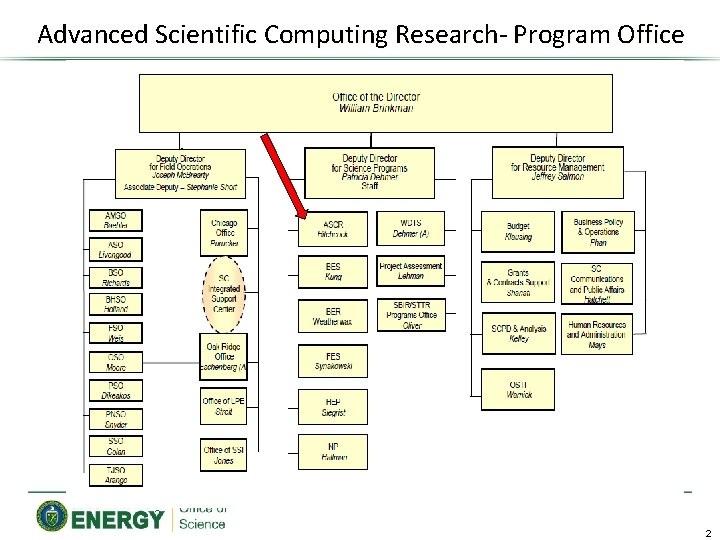
Advanced Scientific Computing Research- Program Office 2 2
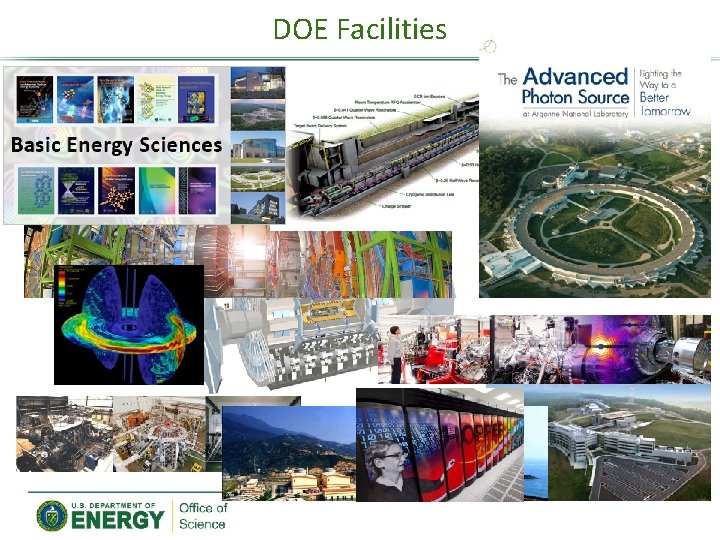
DOE Facilities
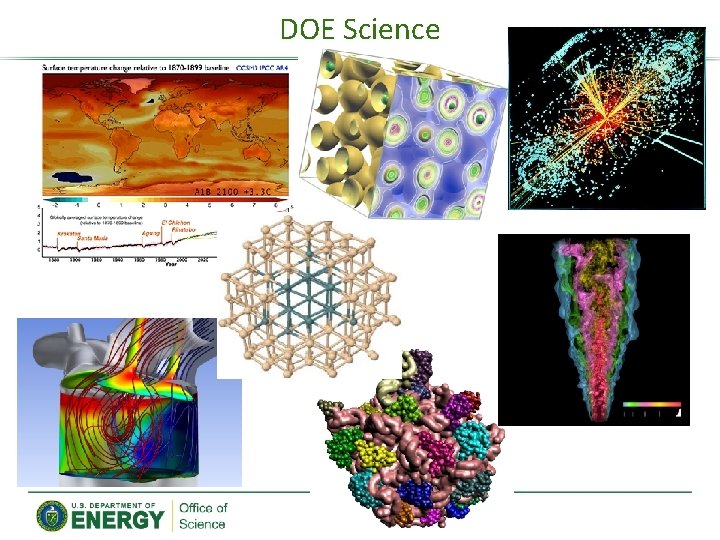
DOE Science
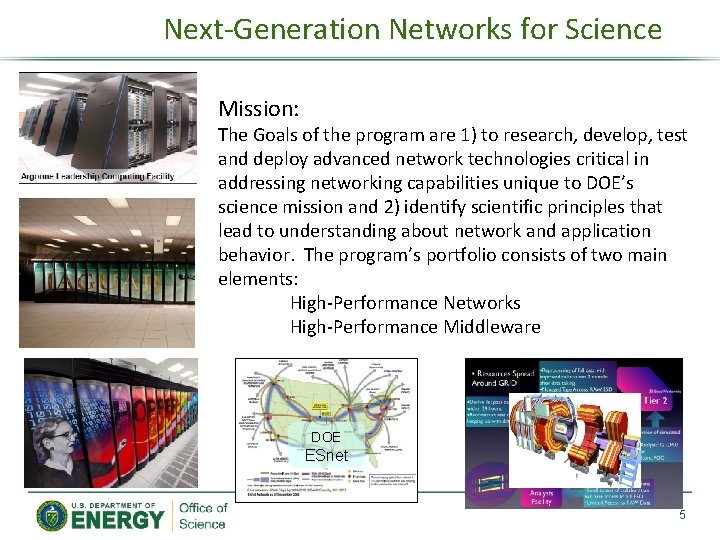
Next-Generation Networks for Science Mission: The Goals of the program are 1) to research, develop, test and deploy advanced network technologies critical in addressing networking capabilities unique to DOE’s science mission and 2) identify scientific principles that lead to understanding about network and application behavior. The program’s portfolio consists of two main elements: High-Performance Networks High-Performance Middleware DOE ESnet 5
Data Transfer Basics • Time to transfer 1 TB on various networks – – 1 TB/hour uses ¼ of a 10 Gbps network 10 TB/hour uses ¼ of a 100 Gbps network 100 TB/hour uses ¼ of a 1 Tbps network Conversely a 1 Tbps network will move 10 PB/day • Real-time aspects at 100 Gbps – Voice (128 B): 20. 5 nsec/packet – Jumbo frame Ethernet (9 KB): 720 nsec/packet
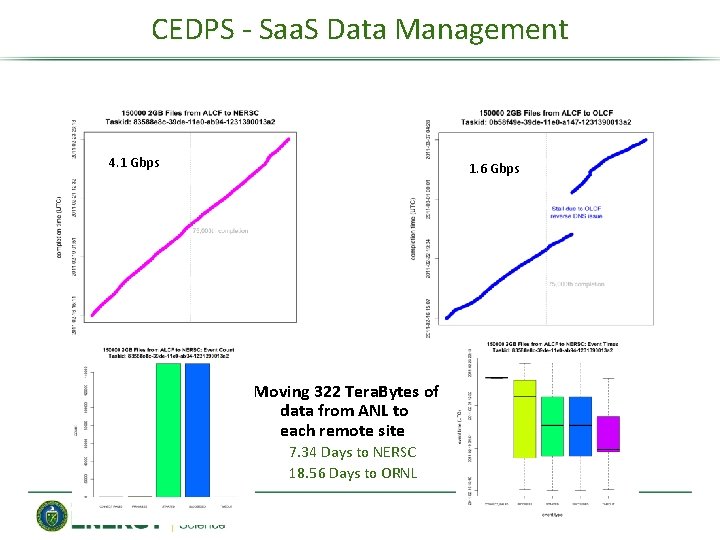
CEDPS - Saa. S Data Management 4. 1 Gbps 1. 6 Gbps Moving 322 Tera. Bytes of data from ANL to each remote site 7. 34 Days to NERSC 18. 56 Days to ORNL
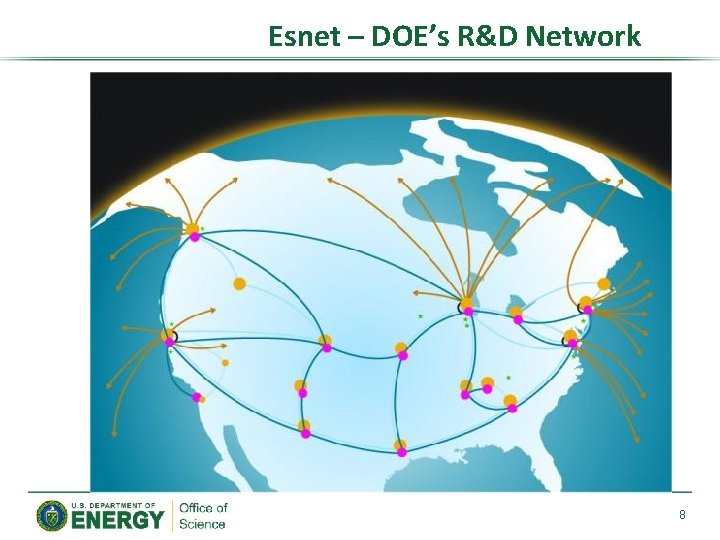
Esnet – DOE’s R&D Network 8
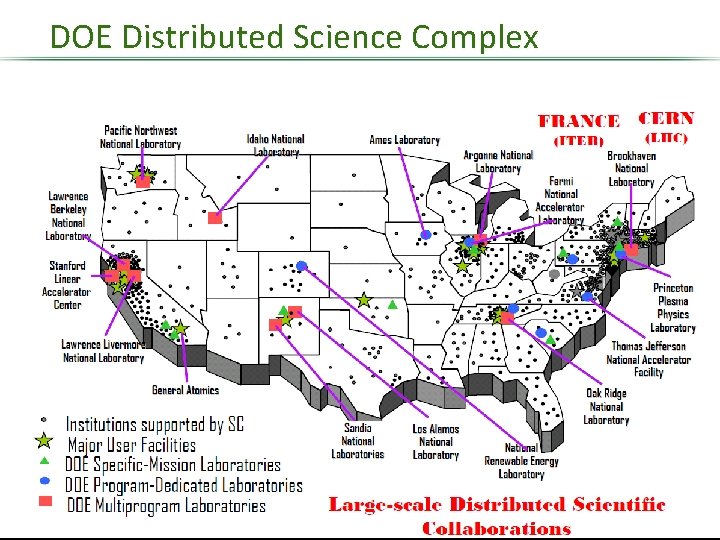
DOE Distributed Science Complex
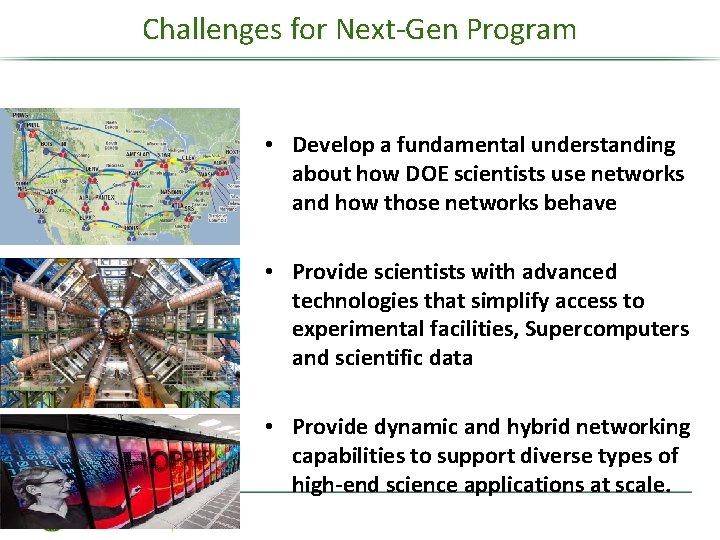
Challenges for Next-Gen Program • Develop a fundamental understanding about how DOE scientists use networks and how those networks behave • Provide scientists with advanced technologies that simplify access to experimental facilities, Supercomputers and scientific data • Provide dynamic and hybrid networking capabilities to support diverse types of high-end science applications at scale.
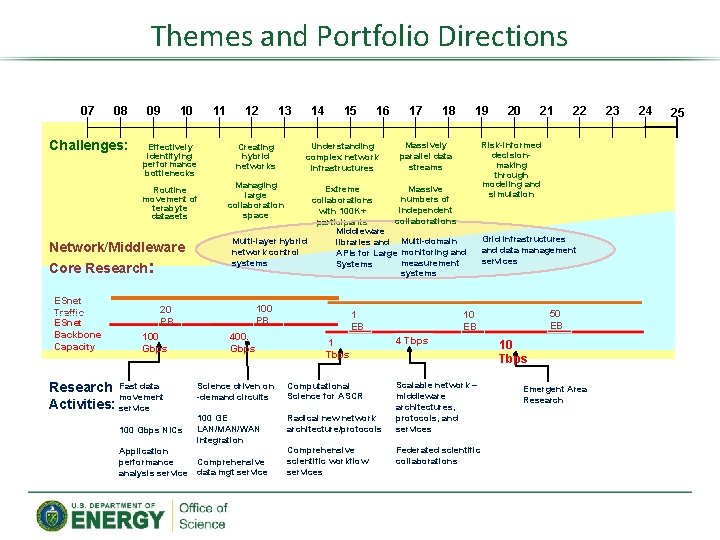
Themes and Portfolio Directions 07 08 Challenges: 09 10 12 13 Effectively identifying performance bottlenecks Creating hybrid networks Routine movement of terabyte datasets Managing large collaboration space Network/Middleware Core Research: ESnet Traffic ESnet Backbone Capacity 11 Research Fast data movement Activities: service 100 Gbps NICs 15 16 Understanding complex network infrastructures 17 18 19 Massively parallel data streams Massive Extreme numbers of collaborations independent with 100 K+ collaborations participants Middleware Multi-layer hybrid libraries and Multi-domain network control APIs for Large monitoring and systems measurement Systems systems 100 PB 20 PB 100 Gbps 14 400 Gbps 1 EB 1 Tbps Science driven on -demand circuits Computational Science for ASCR 100 GE LAN/MAN/WAN integration Radical new network architecture/protocols Application Comprehensive performance analysis service data mgt service Comprehensive scientific workflow services 20 21 Risk-informed decisionmaking through modeling and simulation Grid infrastructures and data management services 50 EB 10 EB 4 Tbps Scalable network – middleware architectures, protocols, and services Federated scientific collaborations 22 10 Tbps Emergent Area Research 23 24 25
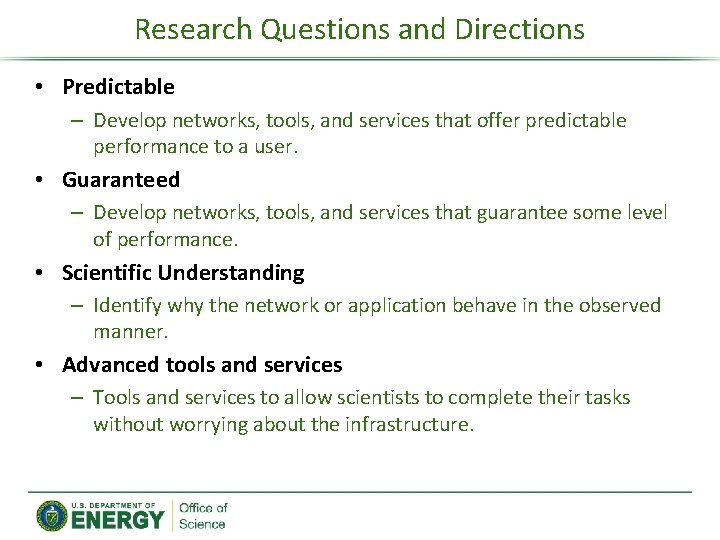
Research Questions and Directions • Predictable – Develop networks, tools, and services that offer predictable performance to a user. • Guaranteed – Develop networks, tools, and services that guarantee some level of performance. • Scientific Understanding – Identify why the network or application behave in the observed manner. • Advanced tools and services – Tools and services to allow scientists to complete their tasks without worrying about the infrastructure.