
DOCUMENTS OF DOCUMENTRY TOP Nothing as no one
- Slides: 14
DOCUMENTS OF DOCUMENTRY
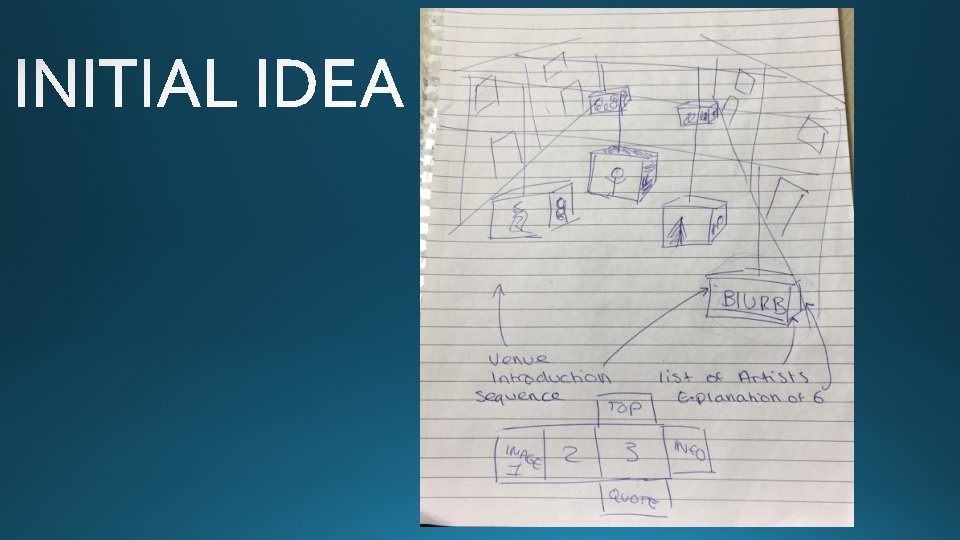
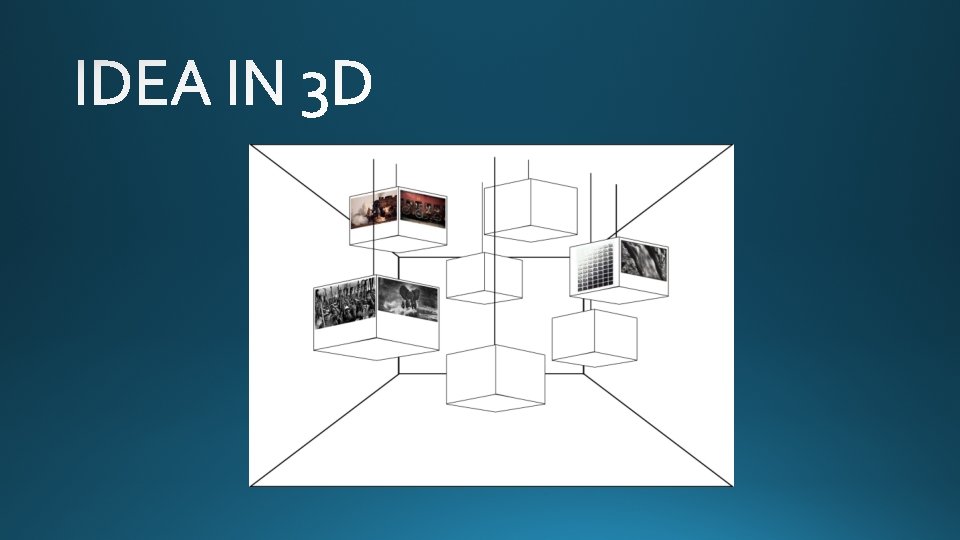
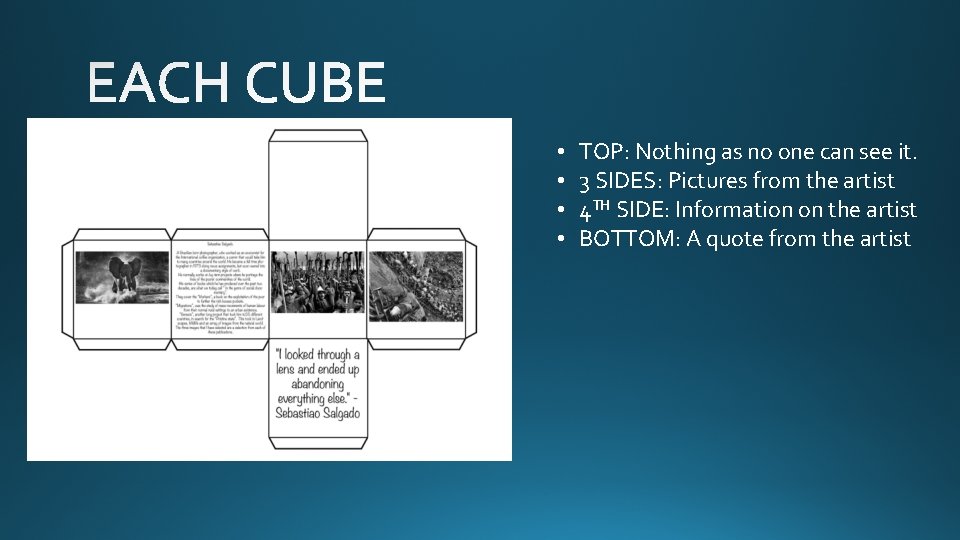
• • TOP: Nothing as no one can see it. 3 SIDES: Pictures from the artist 4 TH SIDE: Information on the artist BOTTOM: A quote from the artist
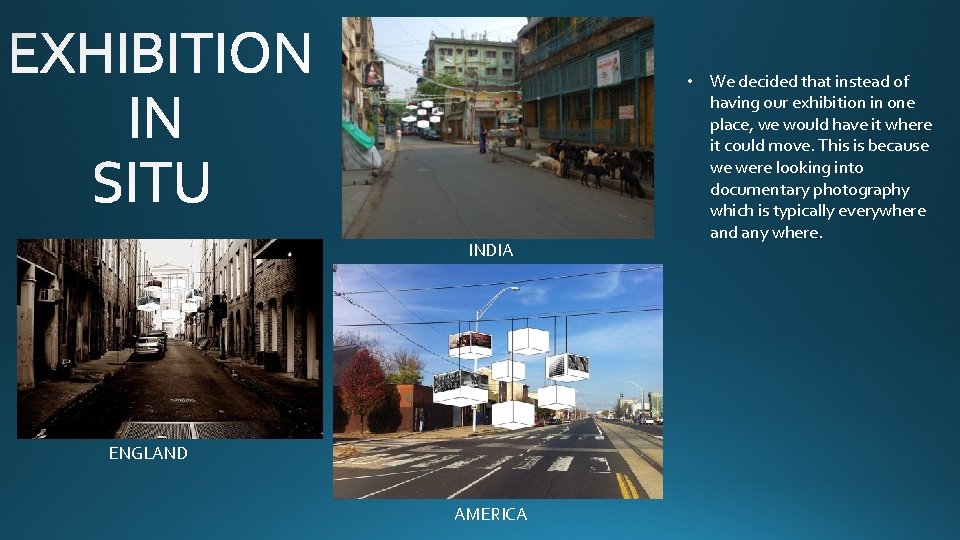
INDIA ENGLAND AMERICA • We decided that instead of having our exhibition in one place, we would have it where it could move. This is because we were looking into documentary photography which is typically everywhere and any where.
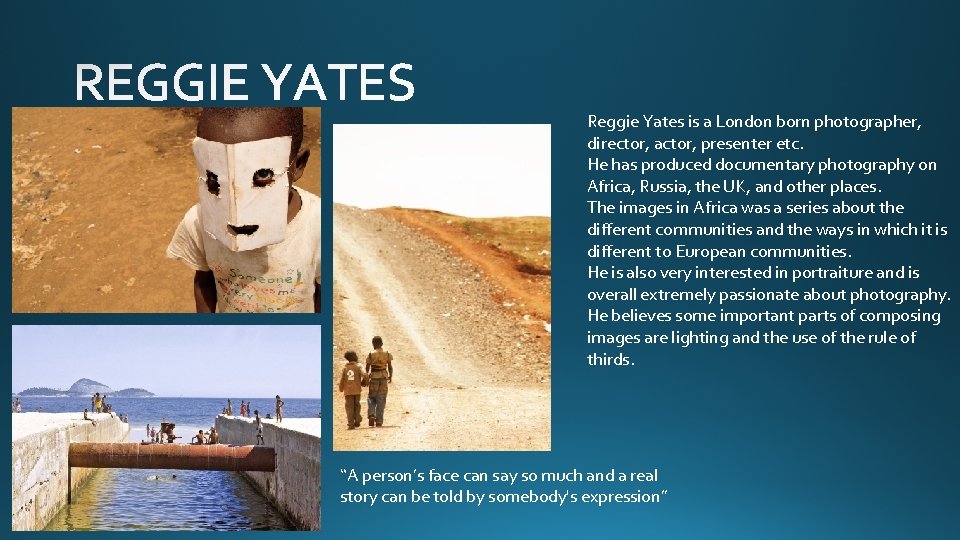
Reggie Yates is a London born photographer, director, actor, presenter etc. He has produced documentary photography on Africa, Russia, the UK, and other places. The images in Africa was a series about the different communities and the ways in which it is different to European communities. He is also very interested in portraiture and is overall extremely passionate about photography. He believes some important parts of composing images are lighting and the use of the rule of thirds. “A person’s face can say so much and a real story can be told by somebody's expression”
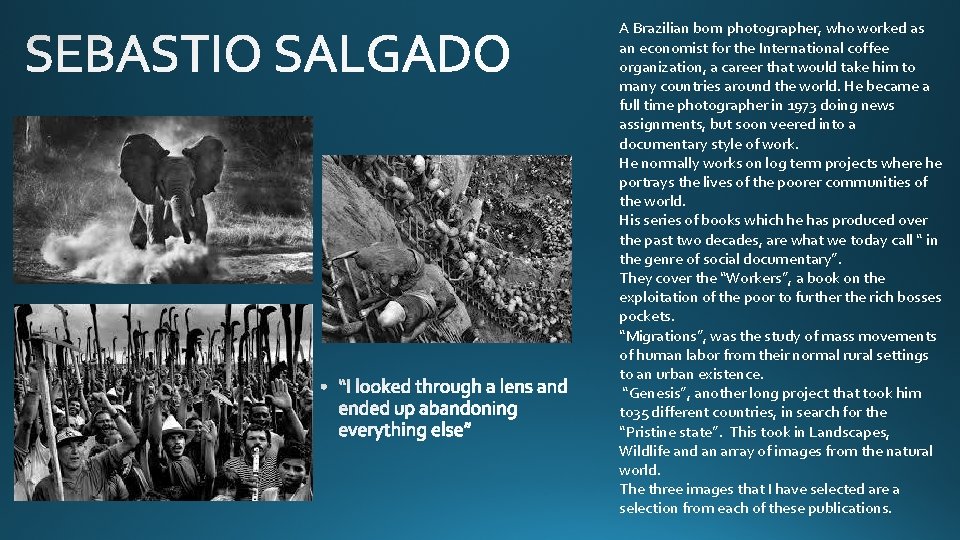
A Brazilian born photographer, who worked as an economist for the International coffee organization, a career that would take him to many countries around the world. He became a full time photographer in 1973 doing news assignments, but soon veered into a documentary style of work. He normally works on log term projects where he portrays the lives of the poorer communities of the world. His series of books which he has produced over the past two decades, are what we today call “ in the genre of social documentary”. They cover the “Workers”, a book on the exploitation of the poor to further the rich bosses pockets. “Migrations”, was the study of mass movements of human labor from their normal rural settings to an urban existence. “Genesis”, another long project that took him to 35 different countries, in search for the “Pristine state”. This took in Landscapes, Wildlife and an array of images from the natural world. The three images that I have selected are a selection from each of these publications.
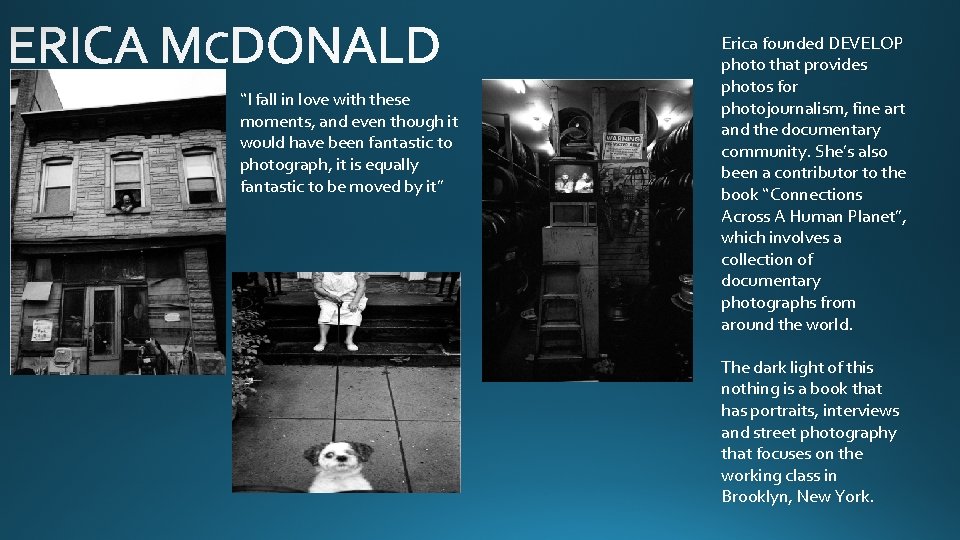
“I fall in love with these moments, and even though it would have been fantastic to photograph, it is equally fantastic to be moved by it” Erica founded DEVELOP photo that provides photos for photojournalism, fine art and the documentary community. She’s also been a contributor to the book “Connections Across A Human Planet”, which involves a collection of documentary photographs from around the world. The dark light of this nothing is a book that has portraits, interviews and street photography that focuses on the working class in Brooklyn, New York.
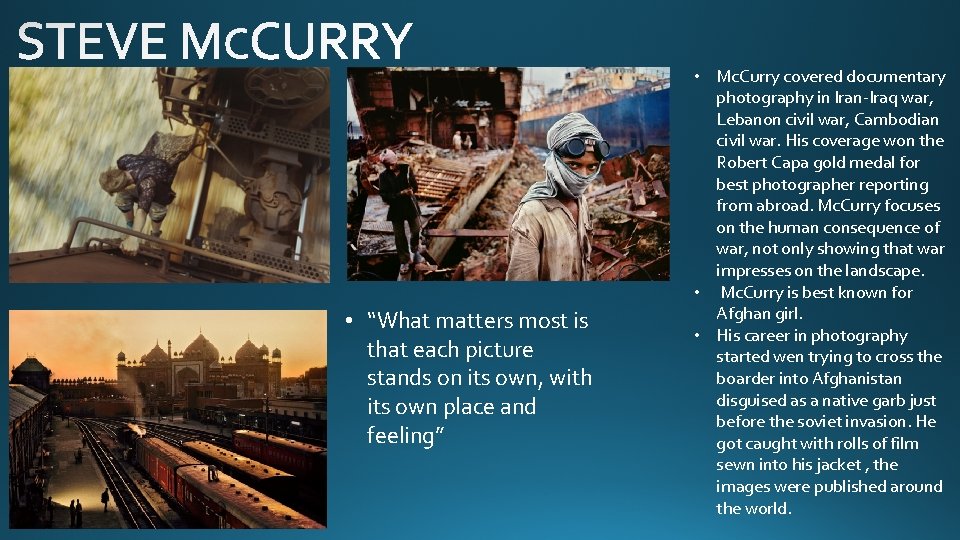
• “What matters most is that each picture stands on its own, with its own place and feeling” • Mc. Curry covered documentary photography in Iran-Iraq war, Lebanon civil war, Cambodian civil war. His coverage won the Robert Capa gold medal for best photographer reporting from abroad. Mc. Curry focuses on the human consequence of war, not only showing that war impresses on the landscape. • Mc. Curry is best known for Afghan girl. • His career in photography started wen trying to cross the boarder into Afghanistan disguised as a native garb just before the soviet invasion. He got caught with rolls of film sewn into his jacket , the images were published around the world.
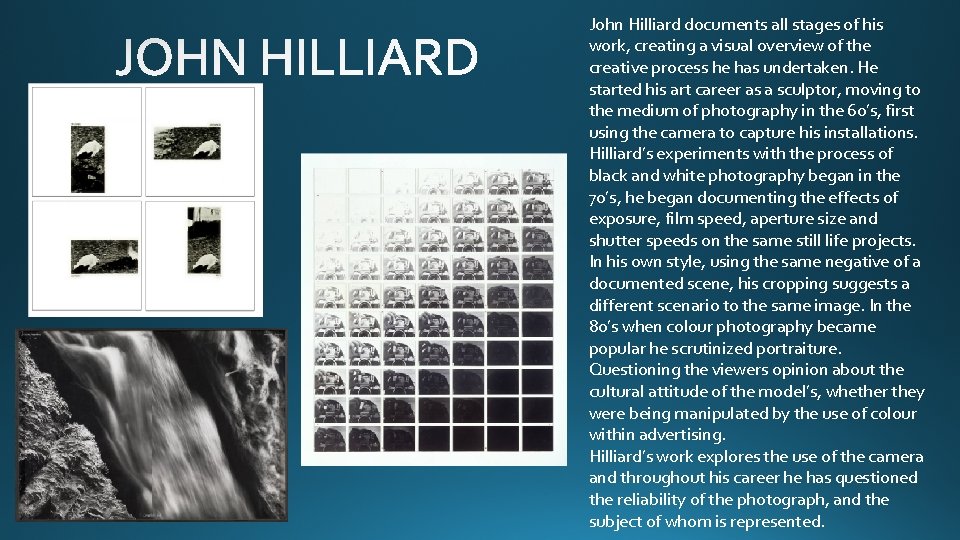
John Hilliard documents all stages of his work, creating a visual overview of the creative process he has undertaken. He started his art career as a sculptor, moving to the medium of photography in the 60’s, first using the camera to capture his installations. Hilliard’s experiments with the process of black and white photography began in the 70’s, he began documenting the effects of exposure, film speed, aperture size and shutter speeds on the same still life projects. In his own style, using the same negative of a documented scene, his cropping suggests a different scenario to the same image. In the 80’s when colour photography became popular he scrutinized portraiture. Questioning the viewers opinion about the cultural attitude of the model’s, whether they were being manipulated by the use of colour within advertising. Hilliard’s work explores the use of the camera and throughout his career he has questioned the reliability of the photograph, and the subject of whom is represented.
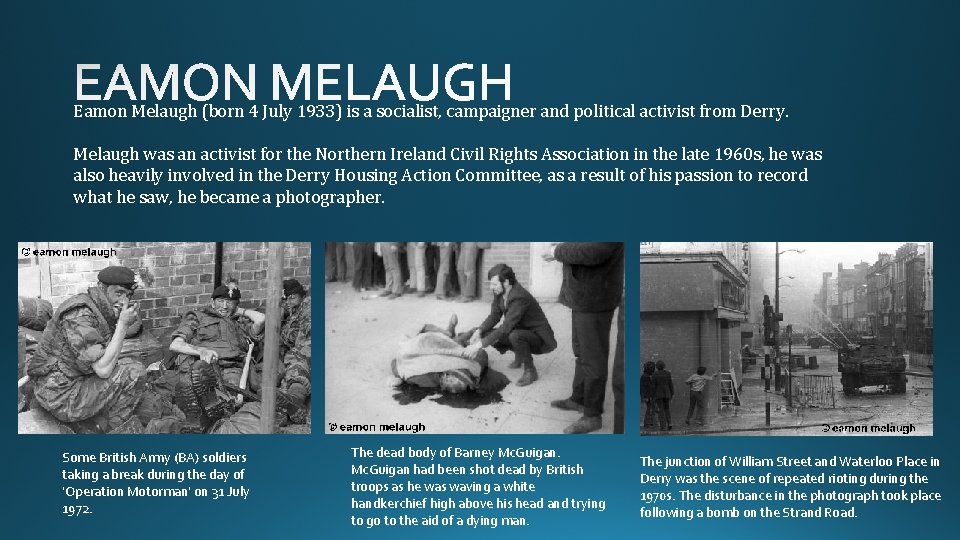
Eamon Melaugh (born 4 July 1933) is a socialist, campaigner and political activist from Derry. Melaugh was an activist for the Northern Ireland Civil Rights Association in the late 1960 s, he was also heavily involved in the Derry Housing Action Committee, as a result of his passion to record what he saw, he became a photographer. Some British Army (BA) soldiers taking a break during the day of 'Operation Motorman' on 31 July 1972. The dead body of Barney Mc. Guigan had been shot dead by British troops as he was waving a white handkerchief high above his head and trying to go to the aid of a dying man. The junction of William Street and Waterloo Place in Derry was the scene of repeated rioting during the 1970 s. The disturbance in the photograph took place following a bomb on the Strand Road.
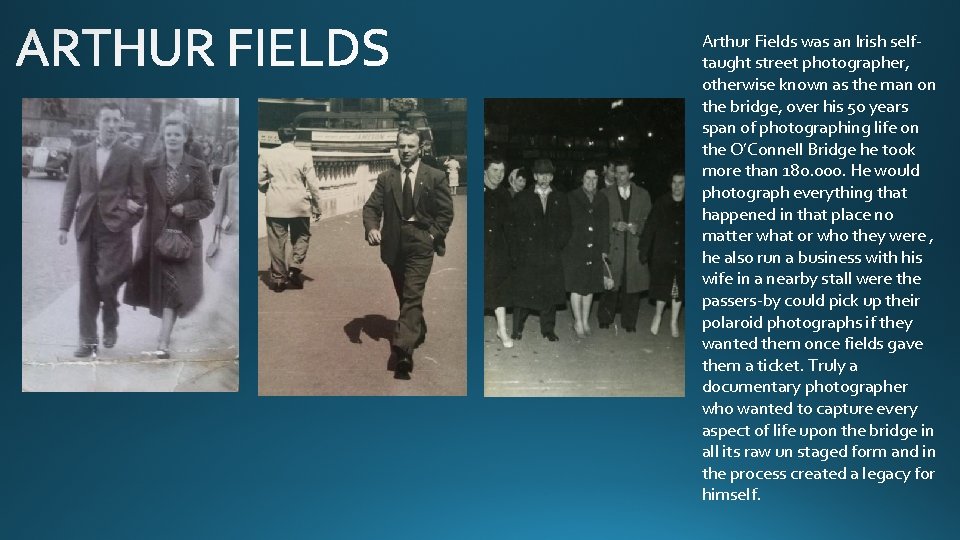
Arthur Fields was an Irish selftaught street photographer, otherwise known as the man on the bridge, over his 50 years span of photographing life on the O’Connell Bridge he took more than 180. 000. He would photograph everything that happened in that place no matter what or who they were , he also run a business with his wife in a nearby stall were the passers-by could pick up their polaroid photographs if they wanted them once fields gave them a ticket. Truly a documentary photographer who wanted to capture every aspect of life upon the bridge in all its raw un staged form and in the process created a legacy for himself.