
Documenting the use of EBPs in client charts
Documenting the use of EBPs in client charts • Nicole Ibarra, MFT, Managing Director • Chris Kernes, MFT, Clinical Director
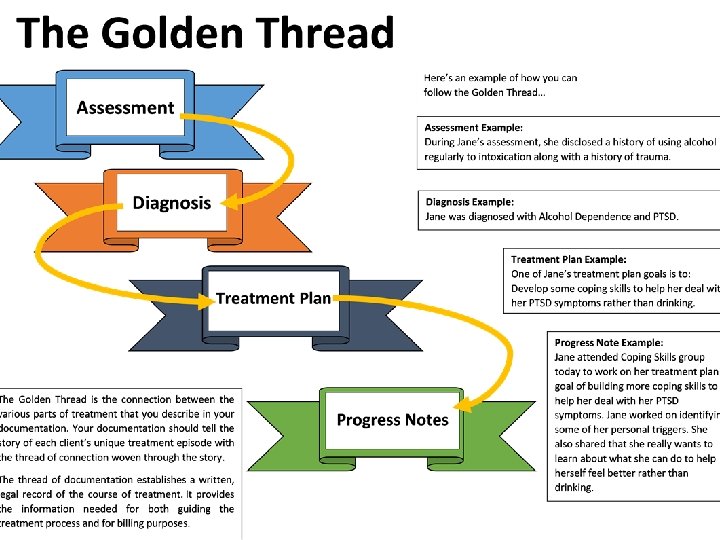
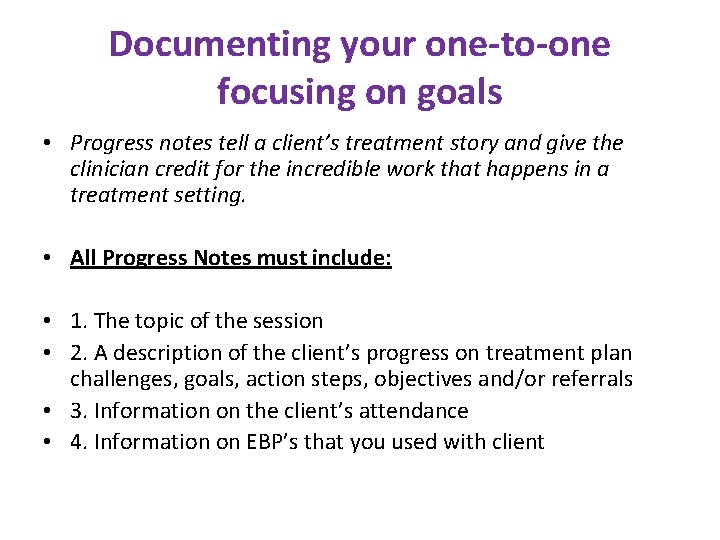
Documenting your one-to-one focusing on goals • Progress notes tell a client’s treatment story and give the clinician credit for the incredible work that happens in a treatment setting. • All Progress Notes must include: • 1. The topic of the session • 2. A description of the client’s progress on treatment plan challenges, goals, action steps, objectives and/or referrals • 3. Information on the client’s attendance • 4. Information on EBP’s that you used with client

Things to Include in the Note • Direct quotes from the client • Client’s affect, mood, overall presentation • Observations regarding motivation • Report on symptoms and or symptom relief • Action items • Agreements • Evidenced-Based Practices Used • Coping skills discussed • Homework 4
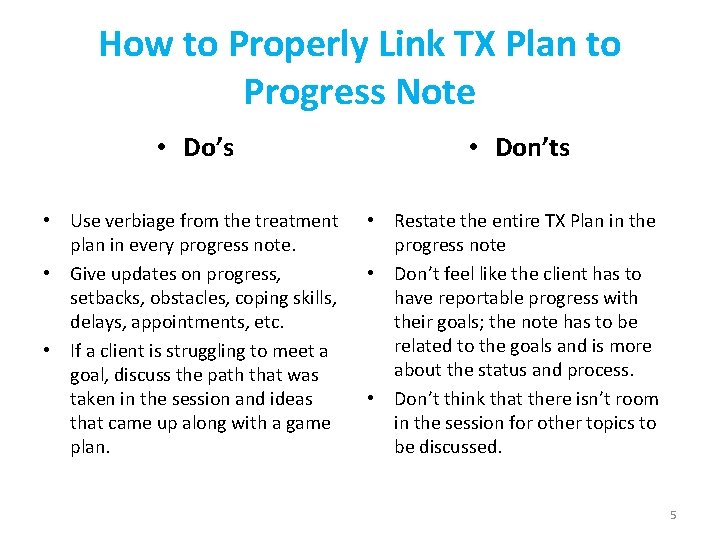
How to Properly Link TX Plan to Progress Note • Do’s • Don’ts • Use verbiage from the treatment plan in every progress note. • Give updates on progress, setbacks, obstacles, coping skills, delays, appointments, etc. • If a client is struggling to meet a goal, discuss the path that was taken in the session and ideas that came up along with a game plan. • Restate the entire TX Plan in the progress note • Don’t feel like the client has to have reportable progress with their goals; the note has to be related to the goals and is more about the status and process. • Don’t think that there isn’t room in the session for other topics to be discussed. 5

EBP’s and Standards of Care • ODS Requires a minimum of 2 of 5 listed EBPs per program: Motivational Interviewing, Cognitive-Behavioral Therapy, Relapse Prevention, Trauma. Informed Treatment, and Psycho-Education • Standards of Care require all of these, plus more. Standards of Care now our Practice Guidelines, the standards by which we require all contracted providers to abide. 6

Documenting the EVB in the chart • Discuss the intervention from the EBP used and client’s response. Examples: • MI Ruler, Decisional Balance Worksheet, Change Plan (Motivational Interviewing) • Thought Record, Cognitive Distortion Worksheet (CBT) • Wise-mind, Chain Analysis, Emotion Regulation Module, Diary Card (DBT) • Boundary Setting, PTSD Taking Back Your Power (Seeking Safety) • The Aggression Cycle (Anger Management, SAMHSA) • The Many Parts of You (Training Our Minds In, With And for Compassion) • Discipline That Makes Sense (S. T. E. P. The Parent’s Handbook) 7

Individual Progress Note Example 8
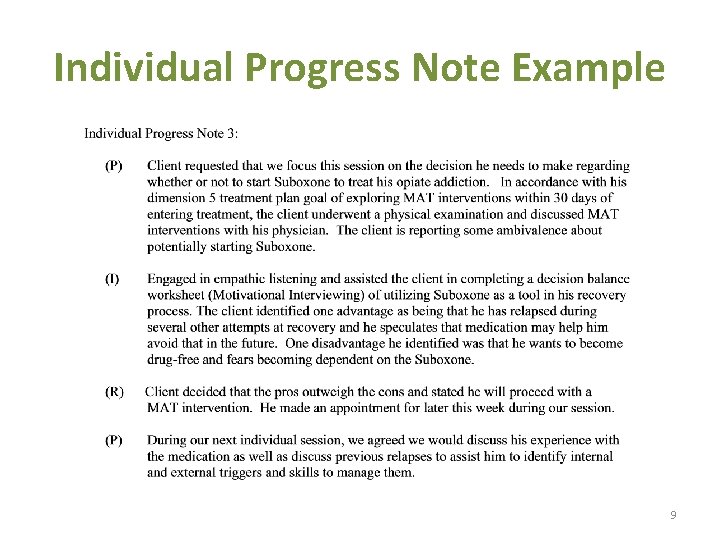
Individual Progress Note Example 9

Group Progress Notes are individual narrative summaries and shall include all of the following: • • The topic of the session (include highlights of the group session). An individual description of the beneficiary’s progress in group and on their treatment plan problems, goals, action steps (interventions & objectives) and/or referrals as it relates to the group topic. Therapist/Counselor who facilitated the group counseling session must record the progress note for each beneficiary who participated in the group. Therapist/Counselor who facilitated the group counseling session must record the evidencedbased practices that were used and provide concrete examples.

Strategies for Individualized Group Notes • Have the client fill out a short form, at the end of a group, on what they worked on. • Having a routine check-in/check-out that includes asking about treatment plan goals • Have a reflection activity at the end of every group that asks clients to discuss what goals they are taking away from today’s group. • Use EVB’s and document the client’s responses to the intervnetions.
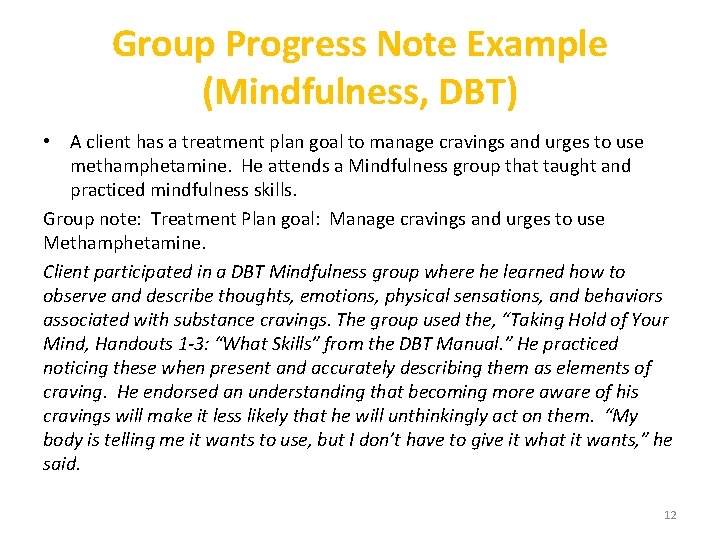
Group Progress Note Example (Mindfulness, DBT) • A client has a treatment plan goal to manage cravings and urges to use methamphetamine. He attends a Mindfulness group that taught and practiced mindfulness skills. Group note: Treatment Plan goal: Manage cravings and urges to use Methamphetamine. Client participated in a DBT Mindfulness group where he learned how to observe and describe thoughts, emotions, physical sensations, and behaviors associated with substance cravings. The group used the, “Taking Hold of Your Mind, Handouts 1 -3: “What Skills” from the DBT Manual. ” He practiced noticing these when present and accurately describing them as elements of craving. He endorsed an understanding that becoming more aware of his cravings will make it less likely that he will unthinkingly act on them. “My body is telling me it wants to use, but I don’t have to give it what it wants, ” he said. 12

Group Progress Note Example, Mindfulness, DBT 13

Group Progress Note Example, Anger Management � Group Session Activities - Started group with breathing exercises; reviewed group rules. Focus of Group: Session 4, Discussed the 3 phases of an anger from The Aggression Cycle episode which are escalation, explosion and post-explosion. Clients learned one of the primary objectives if anger management is to keep from reaching the explosion phase. Presented and discussed the anger meter and the aggression cycle chart. Discussed and lead Muscle Relaxation exercise. Assigned HW: monitor and record highest level of anger on the anger meter, identify the event that made them angry, cues associated with the anger-provoking event, and the strategies they used to manage their anger in response to the event. Clients to practice progressive muscle relaxation once daily during the coming week. Clients to continue to develop their anger control plans. � Session Results (individualized portion) – CT participated in anger management group related to his treatment goal of reducing the frequency and intensity of his anger outbursts instead of relying on substances to manage negative emotions. CT stated he thought “this information is useful because it might help me control my anger better before it becomes really out of control. ” 14
- Slides: 14