
Documentation 101 Back to the Basics of Documentation
Documentation 101 Back to the Basics of Documentation
Purpose n A general overview of Healthcare documentation and some legal considerations. n Review of improper documentation.
Objectives Define key terms n Describe professional documentation n Explain guidelines for effective documentation and recording n Discuss the purpose of documentation and common errors. n
Key Terms n n n Medical Record – a written account of a person’s illness and response to treatment and care given by healthcare team Objective – Information that is seen, heard, smelled, and felt by another person…signs Subjective – Items that are reported by a person and is not observed by others using the senses; symptoms Resident – client, patient, or customer in a residential care home or nursing home facility or Veteran Communication – exchange of information from one person to another
Professional Documentation n Consist of the following: Admission Sheet l Current and Past Medical / Surgical History l Interprofessional Progress Notes l Flow sheets l Discharge Notes l Other Items – specific to unit/area l
Documentation/Recording Factual n Accurate n Complete n Current n Organized n Confidential n Legible n
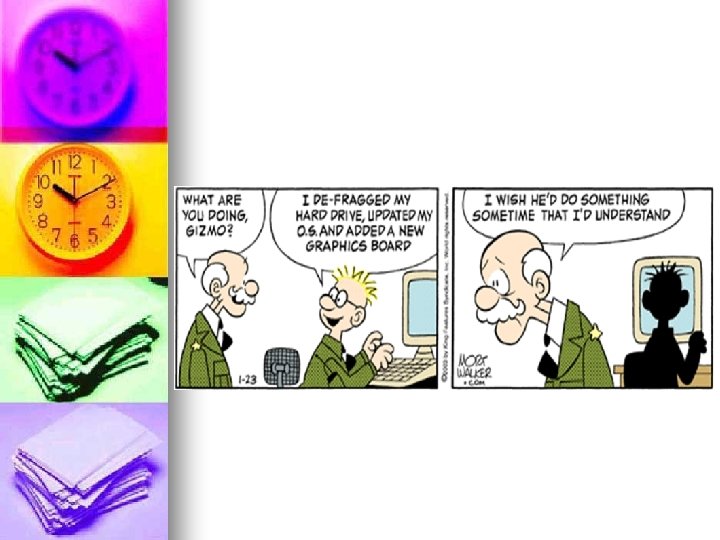
Abbreviations • Only approved abbreviations ü VANTHCS Memorandum N 0. 00 -06 (2017) ü Stedman’s Medical Dictionary ü VA Acronym list serve as VANTHCS approved abbreviation lists. • • Stedman’s Medical Dictionary VA Acronym Lookup ü Non-medical abbreviations on the VA Acronym list are not approved for use in the health record. • No Jargon
Purpose of Documentation n The purpose of the medical record is to provide information for communication, education, assessment, research, financial billing, auditing, and legal documentation.
IMPORTANT POINTS n The record serves to promote safe and effective patient care. n Entries should be specific and reflect the facts of your treatment of the patient, not the observations of other providers. n Accuracy is critical. n Discussions and disagreements which do not further care do not belong in patient’s chart. n Must be based on scope of practice of person making entry.
MEDICAL RECORD TIPS n Don’t be afraid to use quotations – these are often the best notes because they give the most descriptive, useful information. n When writing a note, ask yourself “Is this clinically relevant? ” If not, don’t include it. n Avoid terms of art like “medication error” or “adverse event” unless you are absolutely certain that is what occurred. n Avoid phrases that admit or reference legal liability, such as “standard of care” or “malpractice. ”
MEDICAL RECORD TIPS n Document the patient’s response to Medications and Treatments. n Document Precautions and Safeguards (rails, restraints, turning, fall precautions, etc. ). n Document Clinical Observations (be careful with conclusions). n Document Clinical Care provided. n Use only Standard Abbreviations (approved).
Summary n Accurate documentation reflects the quality of care and provides evidence of each health care team member’s accountability in giving that care.
Questions If it is not documented; then it was not done!
Be Careful What You Chart!

Sonya Curtis, DNP, MBA, RN, CNL QSV Consultant Ext. 23012 Sonya. Curtis@va. gov
- Slides: 16