
DOCTOR I HURT ALL OVER Approach to assessment

- Slides: 41
DOCTOR I HURT ALL OVER! Approach to assessment and treatment of pain in the older adult Dr. Alexandrea Peel 1
DISCLOSURES • None 2
OBJECTIVES • Develop an framework for assessment of pain in the older adult. • Develop an approach to assessment and treatment of pain in older adults with cognitive impairment. • Develop an approach to treatment of persistent pain in the older adult. 3
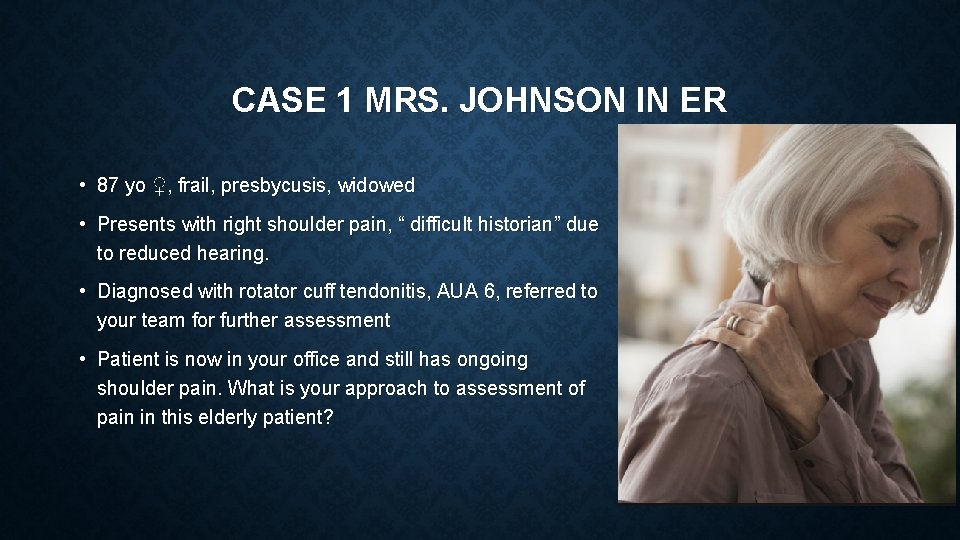
CASE 1 MRS. JOHNSON IN ER • 87 yo ♀, frail, presbycusis, widowed • Presents with right shoulder pain, “ difficult historian” due to reduced hearing. • Diagnosed with rotator cuff tendonitis, AUA 6, referred to your team for further assessment • Patient is now in your office and still has ongoing shoulder pain. What is your approach to assessment of pain in this elderly patient? 4
APPROACH 5
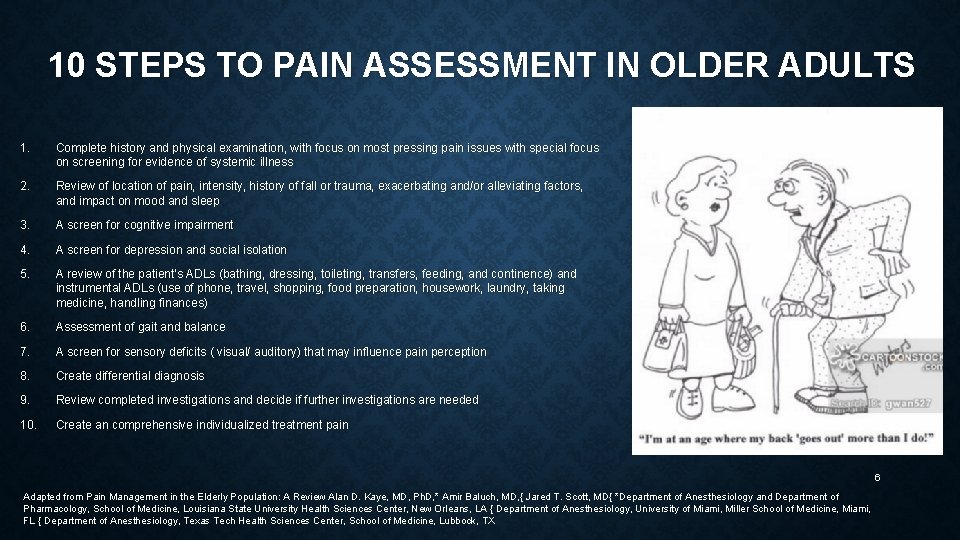
10 STEPS TO PAIN ASSESSMENT IN OLDER ADULTS 1. Complete history and physical examination, with focus on most pressing pain issues with special focus on screening for evidence of systemic illness 2. Review of location of pain, intensity, history of fall or trauma, exacerbating and/or alleviating factors, and impact on mood and sleep 3. A screen for cognitive impairment 4. A screen for depression and social isolation 5. A review of the patient’s ADLs (bathing, dressing, toileting, transfers, feeding, and continence) and instrumental ADLs (use of phone, travel, shopping, food preparation, housework, laundry, taking medicine, handling finances) 6. Assessment of gait and balance 7. A screen for sensory deficits ( visual/ auditory) that may influence pain perception 8. Create differential diagnosis 9. Review completed investigations and decide if further investigations are needed 10. Create an comprehensive individualized treatment pain 6 Adapted from Pain Management in the Elderly Population: A Review Alan D. Kaye, MD, Ph. D, * Amir Baluch, MD, { Jared T. Scott, MD{ *Department of Anesthesiology and Department of Pharmacology, School of Medicine, Louisiana State University Health Sciences Center, New Orleans, LA { Department of Anesthesiology, University of Miami, Miller School of Medicine, Miami, FL { Department of Anesthesiology, Texas Tech Health Sciences Center, School of Medicine, Lubbock, TX
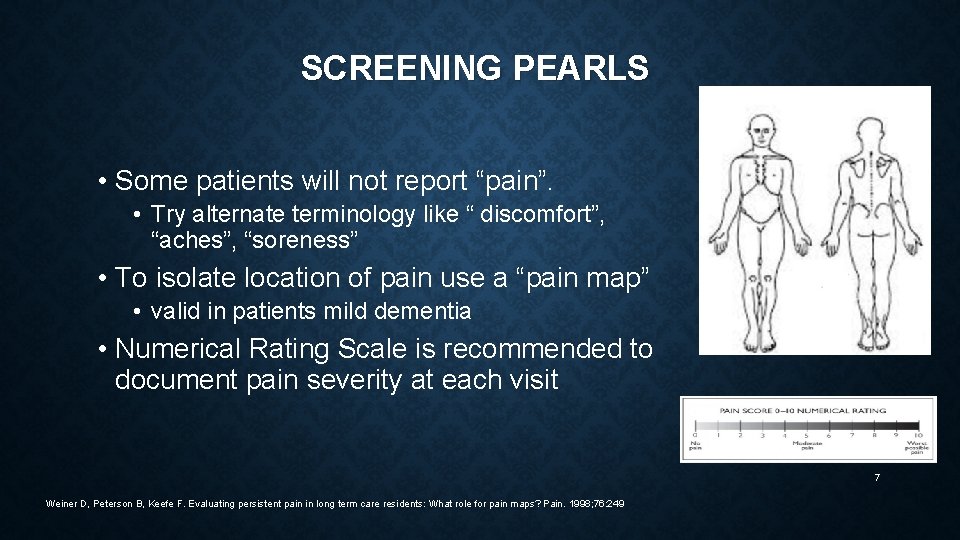
SCREENING PEARLS • Some patients will not report “pain”. • Try alternate terminology like “ discomfort”, “aches”, “soreness” • To isolate location of pain use a “pain map” • valid in patients mild dementia • Numerical Rating Scale is recommended to document pain severity at each visit 7 Weiner D, Peterson B, Keefe F. Evaluating persistent pain in long term care residents: What role for pain maps? Pain. 1998; 76: 249
HISTORY PEARLS • Review treatments tried (NSAIDS, Tylenol, rubs, narcotics, physiotherapy, massage, chiropractor, injections, specialists) • Why were they stopped ( cost, difficulty with applying creams or swallowing pills, side effects etc. ) • Review other medications and associated conditions 8
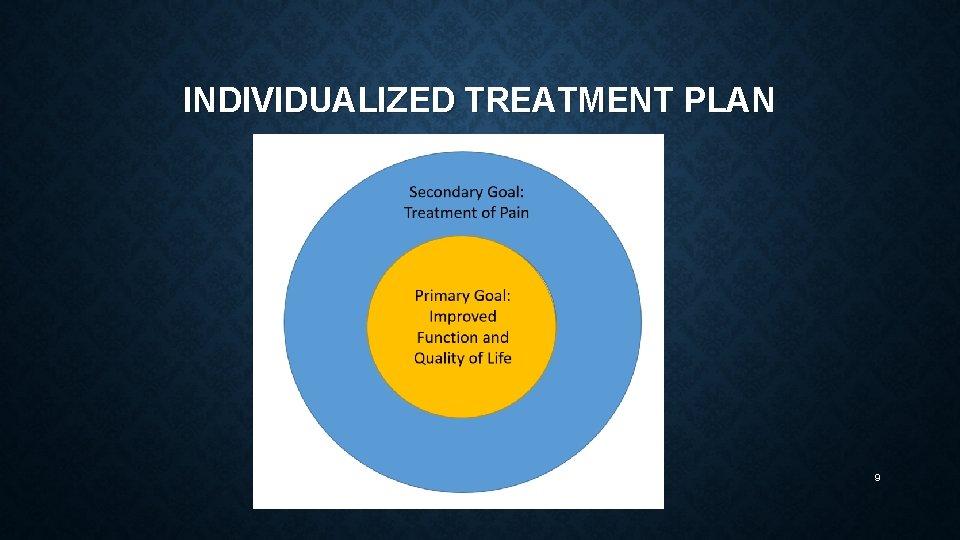
INDIVIDUALIZED TREATMENT PLAN 9
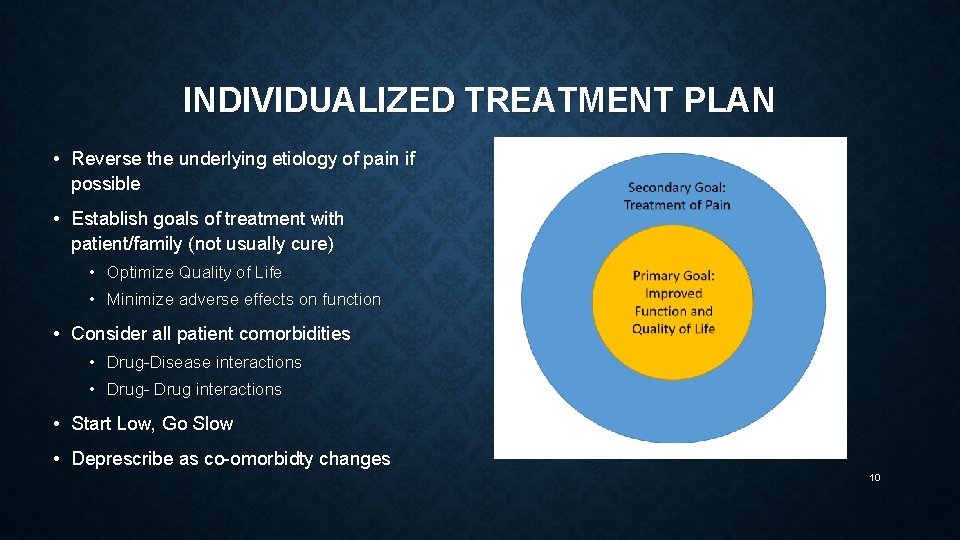
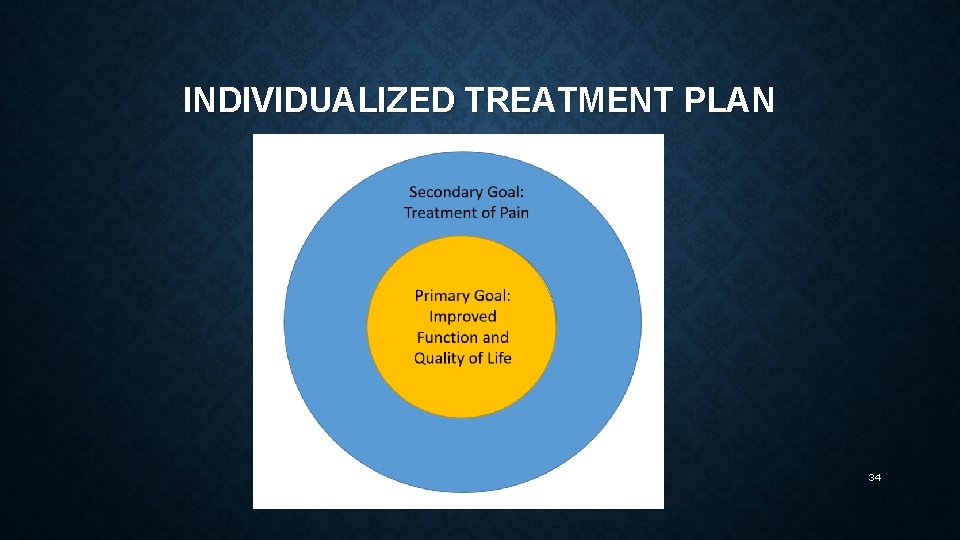
INDIVIDUALIZED TREATMENT PLAN • Reverse the underlying etiology of pain if possible • Establish goals of treatment with patient/family (not usually cure) • Optimize Quality of Life • Minimize adverse effects on function • Consider all patient comorbidities • Drug-Disease interactions • Drug- Drug interactions • Start Low, Go Slow • Deprescribe as co-omorbidty changes 10
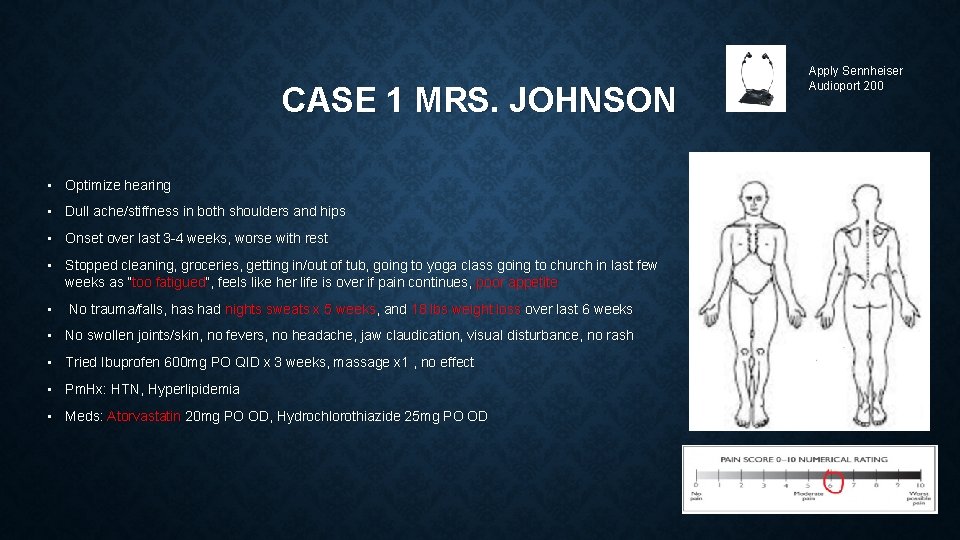
CASE 1 MRS. JOHNSON Apply Sennheiser Audioport 200 • Optimize hearing • Dull ache/stiffness in both shoulders and hips • Onset over last 3 -4 weeks, worse with rest • Stopped cleaning, groceries, getting in/out of tub, going to yoga class going to church in last few weeks as “too fatigued”, feels like her life is over if pain continues, poor appetite • No trauma/falls, has had nights sweats x 5 weeks, and 18 lbs weight loss over last 6 weeks • No swollen joints/skin, no fevers, no headache, jaw claudication, visual disturbance, no rash • Tried Ibuprofen 600 mg PO QID x 3 weeks, massage x 1 , no effect • Pm. Hx: HTN, Hyperlipidemia • Meds: Atorvastatin 20 mg PO OD, Hydrochlorothiazide 25 mg PO OD 11
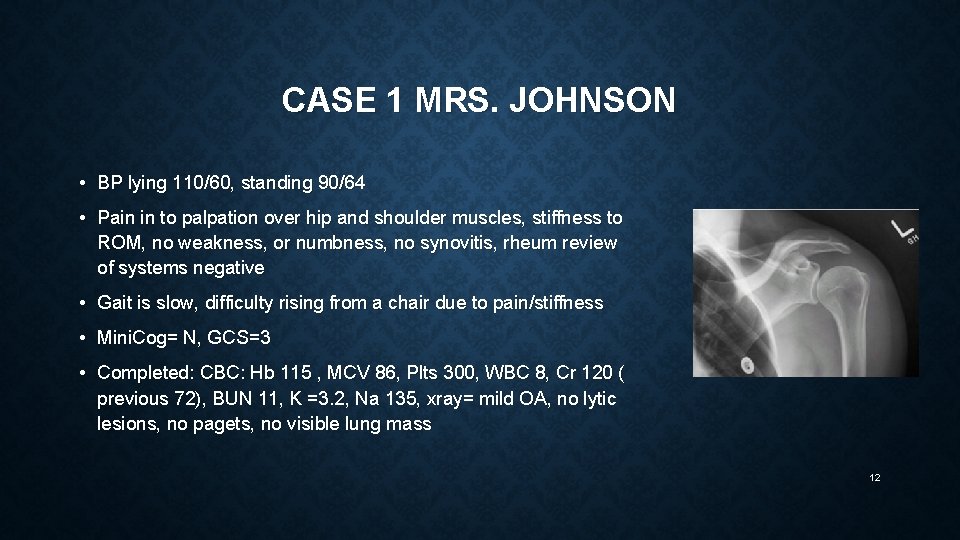
CASE 1 MRS. JOHNSON • BP lying 110/60, standing 90/64 • Pain in to palpation over hip and shoulder muscles, stiffness to ROM, no weakness, or numbness, no synovitis, rheum review of systems negative • Gait is slow, difficulty rising from a chair due to pain/stiffness • Mini. Cog= N, GCS=3 • Completed: CBC: Hb 115 , MCV 86, Plts 300, WBC 8, Cr 120 ( previous 72), BUN 11, K =3. 2, Na 135, xray= mild OA, no lytic lesions, no pagets, no visible lung mass 12
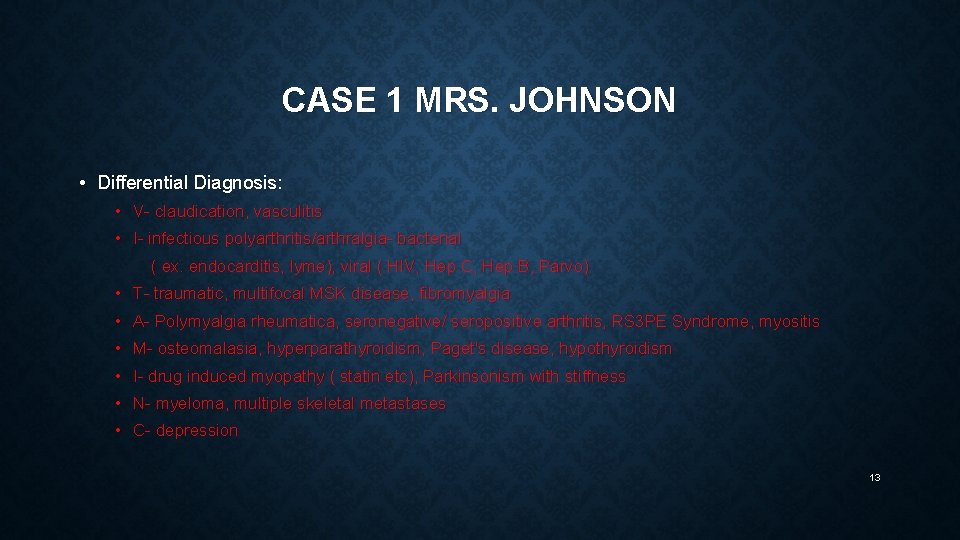
CASE 1 MRS. JOHNSON • Differential Diagnosis: • V- claudication, vasculitis • I- infectious polyarthritis/arthralgia- bacterial ( ex. endocarditis, lyme), viral ( HIV, Hep C, Hep B, Parvo) • T- traumatic, multifocal MSK disease, fibromyalgia • A- Polymyalgia rheumatica, seronegative/ seropositive arthritis, RS 3 PE Syndrome, myositis • M- osteomalasia, hyperparathyroidism, Paget's disease, hypothyroidism • I- drug induced myopathy ( statin etc), Parkinsonism with stiffness • N- myeloma, multiple skeletal metastases • C- depression 13
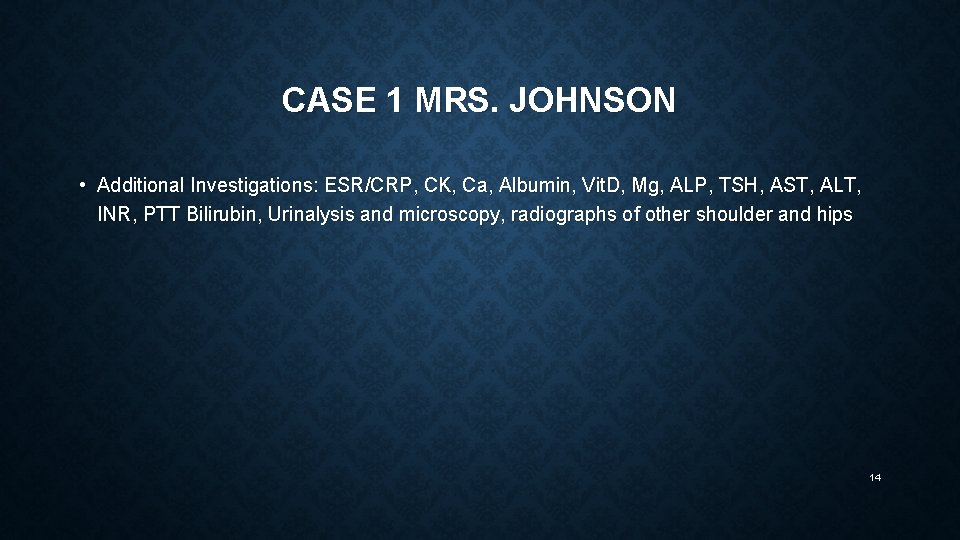
CASE 1 MRS. JOHNSON • Additional Investigations: ESR/CRP, CK, Ca, Albumin, Vit. D, Mg, ALP, TSH, AST, ALT, INR, PTT Bilirubin, Urinalysis and microscopy, radiographs of other shoulder and hips 14
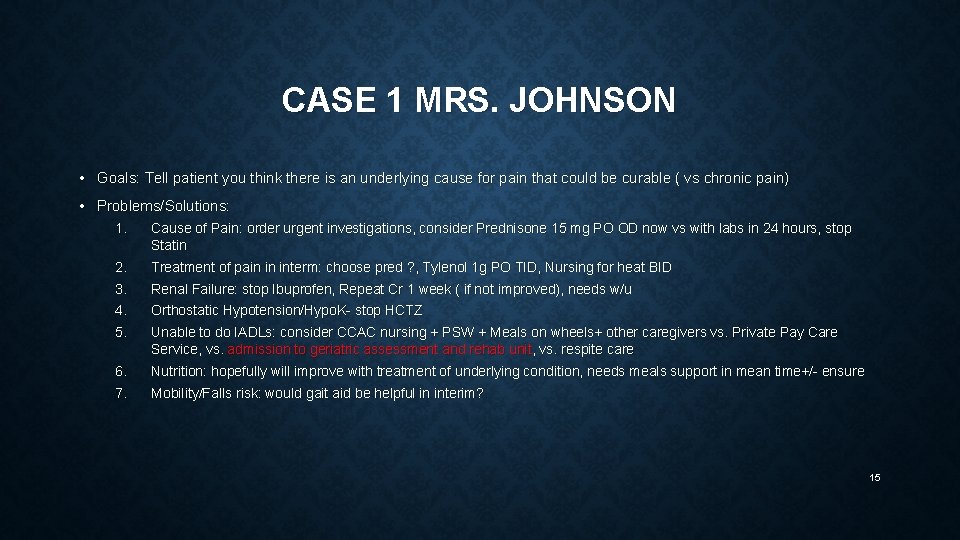
CASE 1 MRS. JOHNSON • Goals: Tell patient you think there is an underlying cause for pain that could be curable ( vs chronic pain) • Problems/Solutions: 1. Cause of Pain: order urgent investigations, consider Prednisone 15 mg PO OD now vs with labs in 24 hours, stop Statin 2. 3. Treatment of pain in interm: choose pred ? , Tylenol 1 g PO TID, Nursing for heat BID 4. 5. Orthostatic Hypotension/Hypo. K- stop HCTZ 6. 7. Nutrition: hopefully will improve with treatment of underlying condition, needs meals support in mean time+/- ensure Renal Failure: stop Ibuprofen, Repeat Cr 1 week ( if not improved), needs w/u Unable to do IADLs: consider CCAC nursing + PSW + Meals on wheels+ other caregivers vs. Private Pay Care Service, vs. admission to geriatric assessment and rehab unit, vs. respite care Mobility/Falls risk: would gait aid be helpful in interim? 15
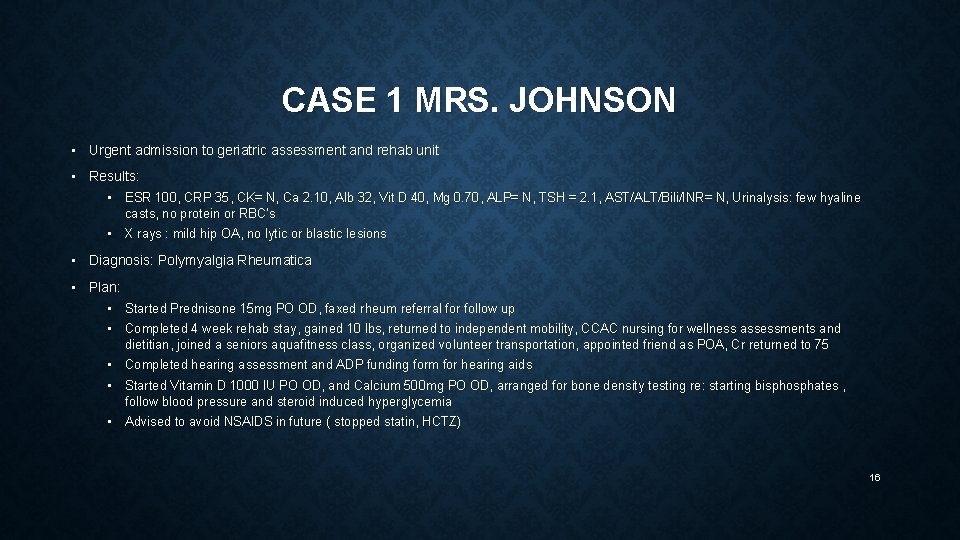
CASE 1 MRS. JOHNSON • Urgent admission to geriatric assessment and rehab unit • Results: • ESR 100, CRP 35, CK= N, Ca 2. 10, Alb 32, Vit D 40, Mg 0. 70, ALP= N, TSH = 2. 1, AST/ALT/Bili/INR= N, Urinalysis: few hyaline casts, no protein or RBC’s • X rays : mild hip OA, no lytic or blastic lesions • Diagnosis: Polymyalgia Rheumatica • Plan: • Started Prednisone 15 mg PO OD, faxed rheum referral for follow up • Completed 4 week rehab stay, gained 10 lbs, returned to independent mobility, CCAC nursing for wellness assessments and dietitian, joined a seniors aquafitness class, organized volunteer transportation, appointed friend as POA, Cr returned to 75 • Completed hearing assessment and ADP funding form for hearing aids • Started Vitamin D 1000 IU PO OD, and Calcium 500 mg PO OD, arranged for bone density testing re: starting bisphosphates , follow blood pressure and steroid induced hyperglycemia • Advised to avoid NSAIDS in future ( stopped statin, HCTZ) 16
ASSESSMENT AND TREATMENT OF PAIN IN OLDER ADULTS WITH COGNITIVE IMPAIRMENT 17
CASE 2 MRS. SWAT IN LONGTERM CARE • 92 yo ♀ advanced dementia, expressive aphasia, vocalizations, dysphagia on puree diet, wheelchair bound, smiles and laughs with music or visits from family, slipped out of wheelchair 6 weeks ago onto ground, no apparent injuries • You are the treating team at the Longterm care facility. The charge nurse asks for you assessment as Mrs. Swat has been striking the nurses lately during care and transfers 18
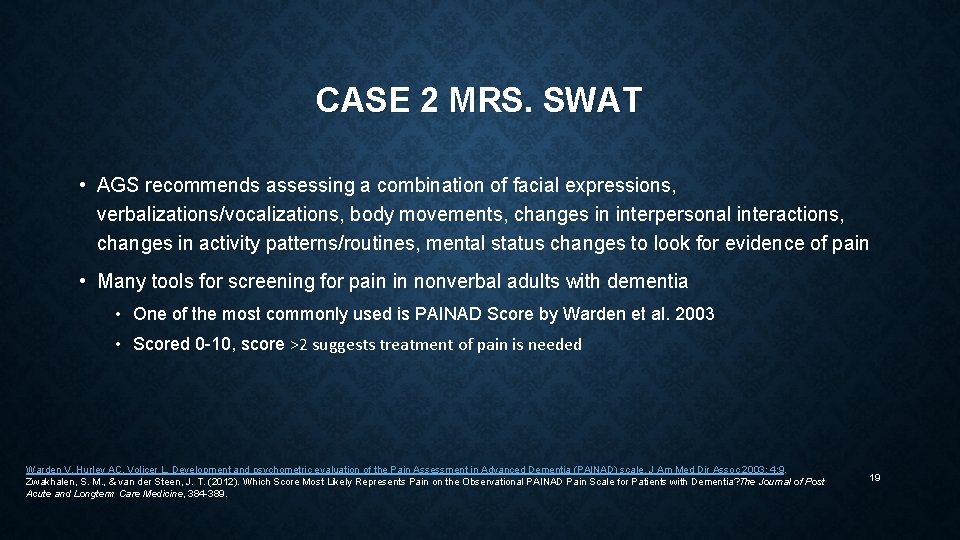
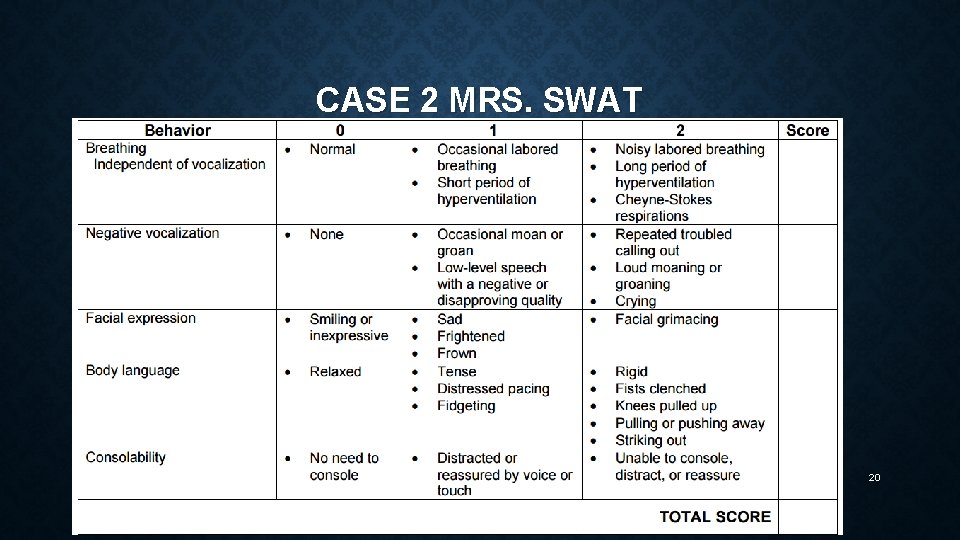
CASE 2 MRS. SWAT • AGS recommends assessing a combination of facial expressions, verbalizations/vocalizations, body movements, changes in interpersonal interactions, changes in activity patterns/routines, mental status changes to look for evidence of pain • Many tools for screening for pain in nonverbal adults with dementia • One of the most commonly used is PAINAD Score by Warden et al. 2003 • Scored 0 -10, score ˃2 suggests treatment of pain is needed Warden V, Hurley AC, Volicer L. Development and psychometric evaluation of the Pain Assessment in Advanced Dementia (PAINAD) scale. J Am Med Dir Assoc 2003; 4: 9. Zwakhalen, S. M. , & van der Steen, J. T. (2012). Which Score Most Likely Represents Pain on the Observational PAINAD Pain Scale for Patients with Dementia? The Journal of Post Acute and Longterm Care Medicine, 384 -389. 19
CASE 2 MRS. SWAT • Facial expressions • ●Verbalizations/vocalizations • ●Body movements • ●Changes in interpersonal interactions • ●Changes in activity patterns/routines • ●Mental status changes 20
CASE 2 MRS. SWAT • Staff and family agree Mrs. Swat seems agitated/ uncomfortable in certain positions, and that this is new • They have noticed any change in her urine quality ( incontinent at baseline), her BM’s are irregular and firm, her last one was 4 days ago, they check her vitals q 2 weeks ( so no reported fever, or tachycardia etc), she has had gradual weight loss over the last few years • She has no reported pain medication usage in the MAR • Pm. Hx: chronic renal failure Cr 130, osteoarthritis of knees, MI in 2000 with BM stent • Meds: ASA 81 mg PO OD, Atorvastatin 20 mg PO OD, Metoprolol 25 mg PO BID 21
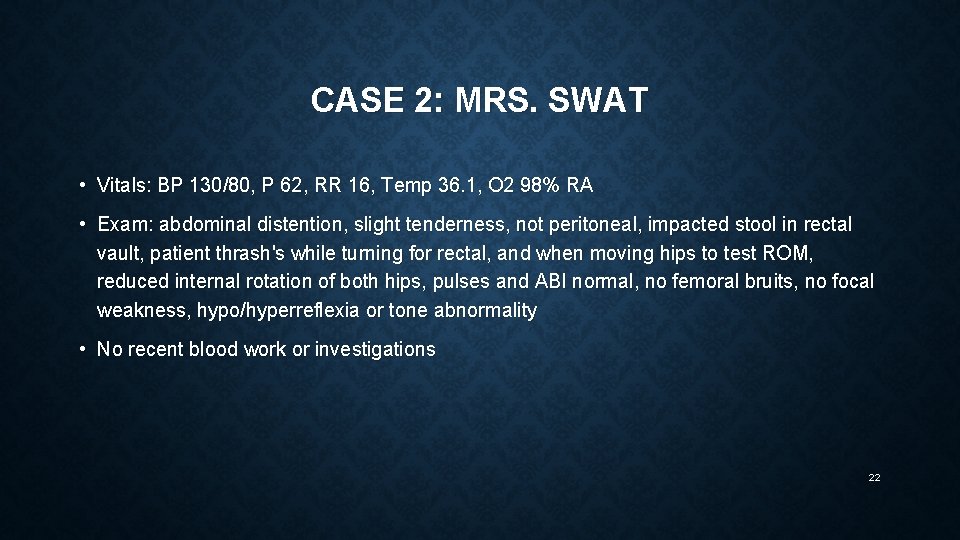
CASE 2: MRS. SWAT • Vitals: BP 130/80, P 62, RR 16, Temp 36. 1, O 2 98% RA • Exam: abdominal distention, slight tenderness, not peritoneal, impacted stool in rectal vault, patient thrash's while turning for rectal, and when moving hips to test ROM, reduced internal rotation of both hips, pulses and ABI normal, no femoral bruits, no focal weakness, hypo/hyperreflexia or tone abnormality • No recent blood work or investigations 22
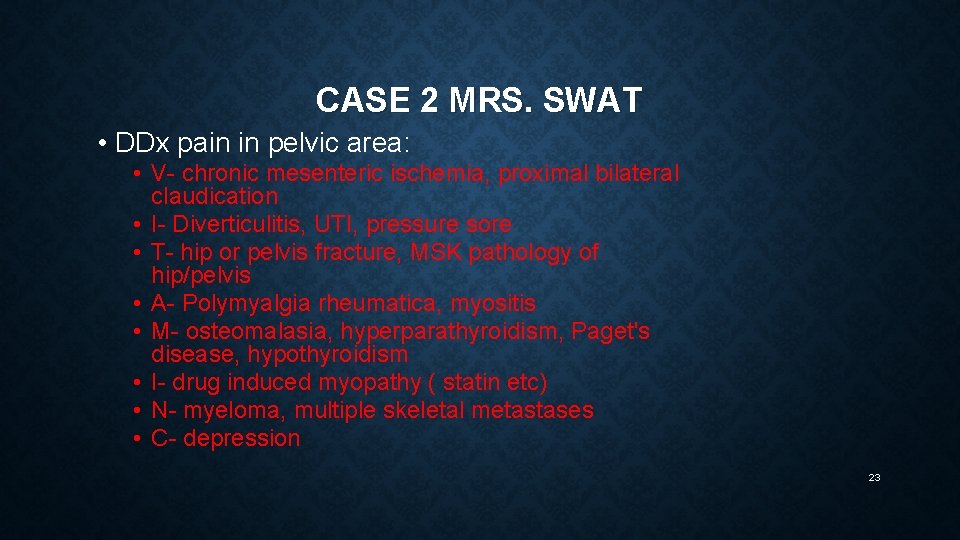
CASE 2 MRS. SWAT • DDx pain in pelvic area: • V- chronic mesenteric ischemia, proximal bilateral claudication • I- Diverticulitis, UTI, pressure sore • T- hip or pelvis fracture, MSK pathology of hip/pelvis • A- Polymyalgia rheumatica, myositis • M- osteomalasia, hyperparathyroidism, Paget's disease, hypothyroidism • I- drug induced myopathy ( statin etc) • N- myeloma, multiple skeletal metastases • C- depression 23
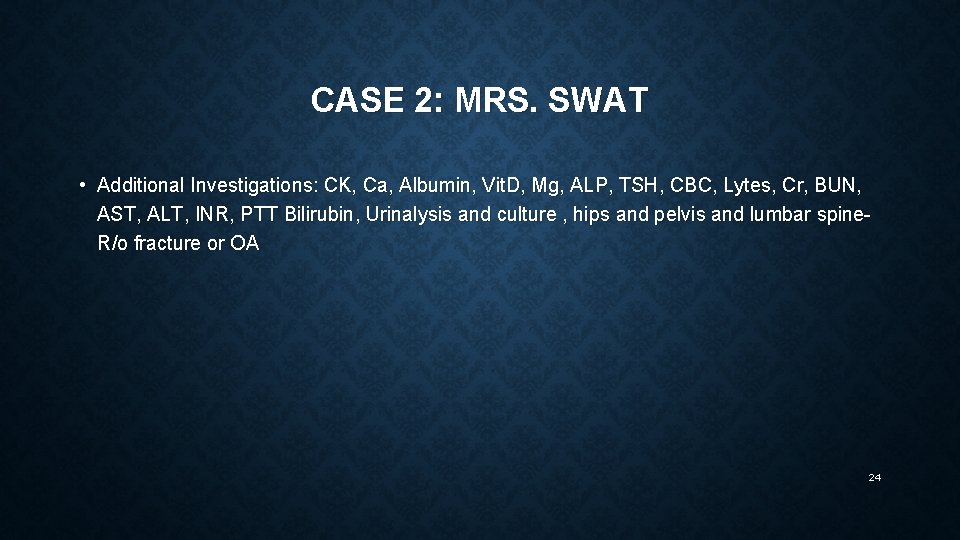
CASE 2: MRS. SWAT • Additional Investigations: CK, Ca, Albumin, Vit. D, Mg, ALP, TSH, CBC, Lytes, Cr, BUN, AST, ALT, INR, PTT Bilirubin, Urinalysis and culture , hips and pelvis and lumbar spine- R/o fracture or OA 24
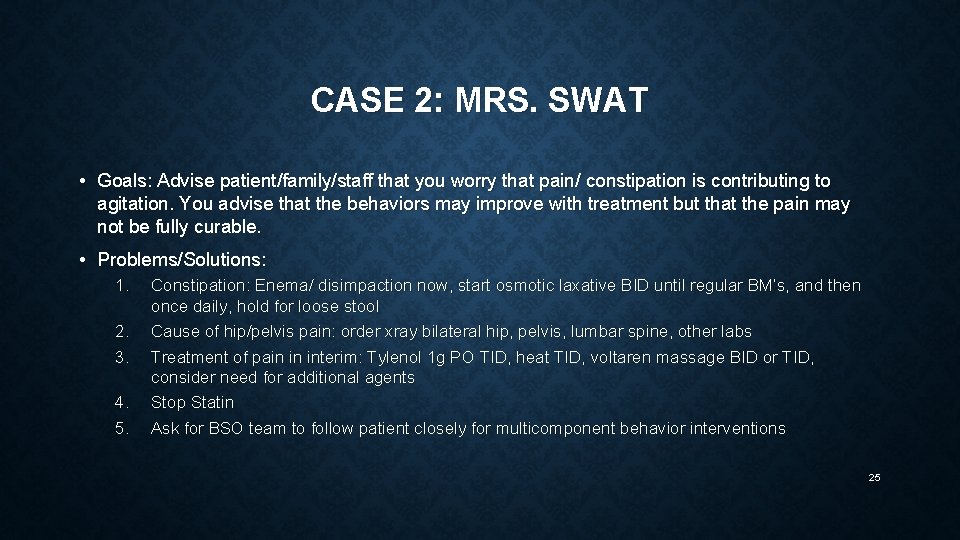
CASE 2: MRS. SWAT • Goals: Advise patient/family/staff that you worry that pain/ constipation is contributing to agitation. You advise that the behaviors may improve with treatment but that the pain may not be fully curable. • Problems/Solutions: 1. 2. 3. 4. 5. Constipation: Enema/ disimpaction now, start osmotic laxative BID until regular BM’s, and then once daily, hold for loose stool Cause of hip/pelvis pain: order xray bilateral hip, pelvis, lumbar spine, other labs Treatment of pain in interim: Tylenol 1 g PO TID, heat TID, voltaren massage BID or TID, consider need for additional agents Stop Statin Ask for BSO team to follow patient closely for multicomponent behavior interventions 25
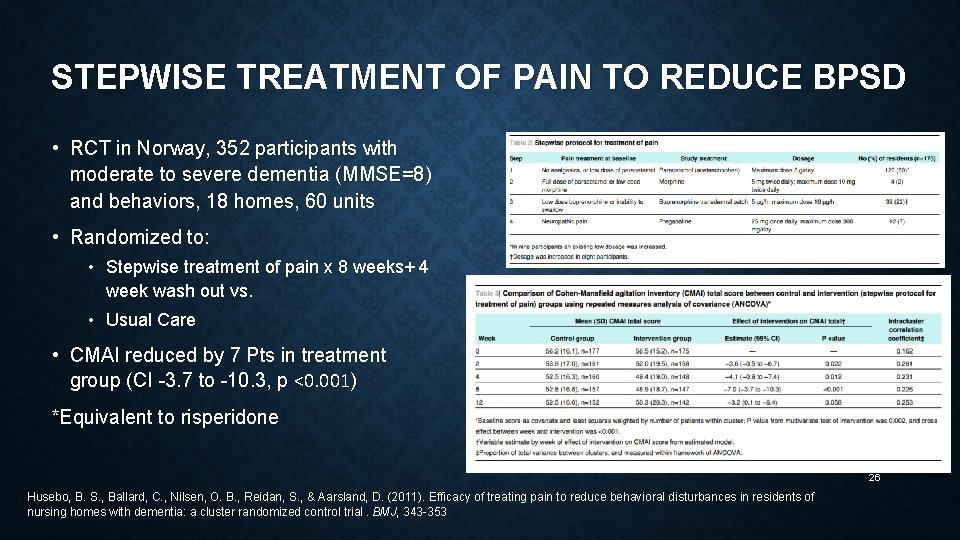
STEPWISE TREATMENT OF PAIN TO REDUCE BPSD • RCT in Norway, 352 participants with moderate to severe dementia (MMSE=8) and behaviors, 18 homes, 60 units • Randomized to: • Stepwise treatment of pain x 8 weeks+ 4 week wash out vs. • Usual Care • CMAI reduced by 7 Pts in treatment group (CI -3. 7 to -10. 3, p ˂0. 001) *Equivalent to risperidone 26 Husebo, B. S. , Ballard, C. , Nilsen, O. B. , Reidan, S. , & Aarsland, D. (2011). Efficacy of treating pain to reduce behavioral disturbances in residents of nursing homes with dementia: a cluster randomized control trial. BMJ, 343 -353
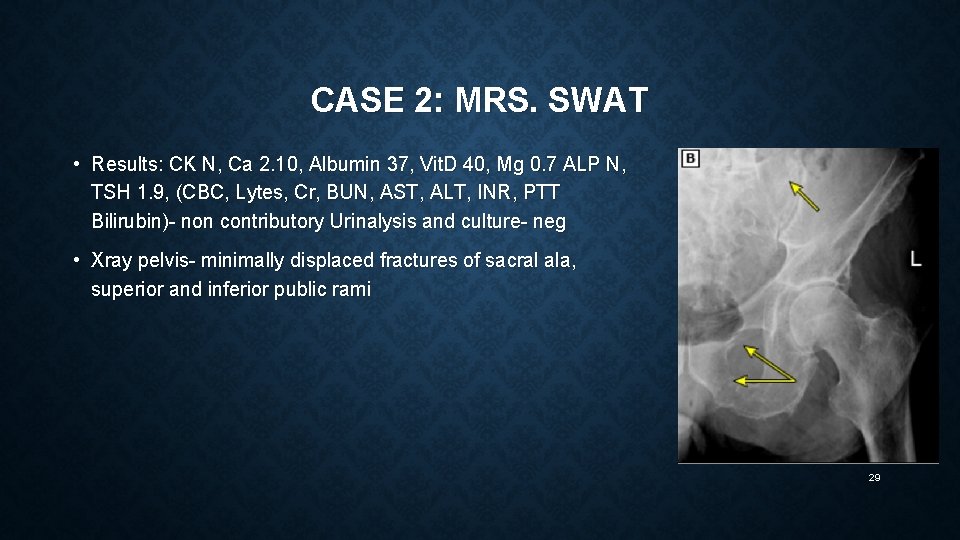
CASE 2: MRS. SWAT • Results: CK N, Ca 2. 10, Albumin 37, Vit. D 40, Mg 0. 7 ALP N, TSH 1. 9, (CBC, Lytes, Cr, BUN, AST, ALT, INR, PTT Bilirubin)- non contributory Urinalysis and culture- neg • Xray pelvis- minimally displaced fractures of sacral ala, superior and inferior public rami 29
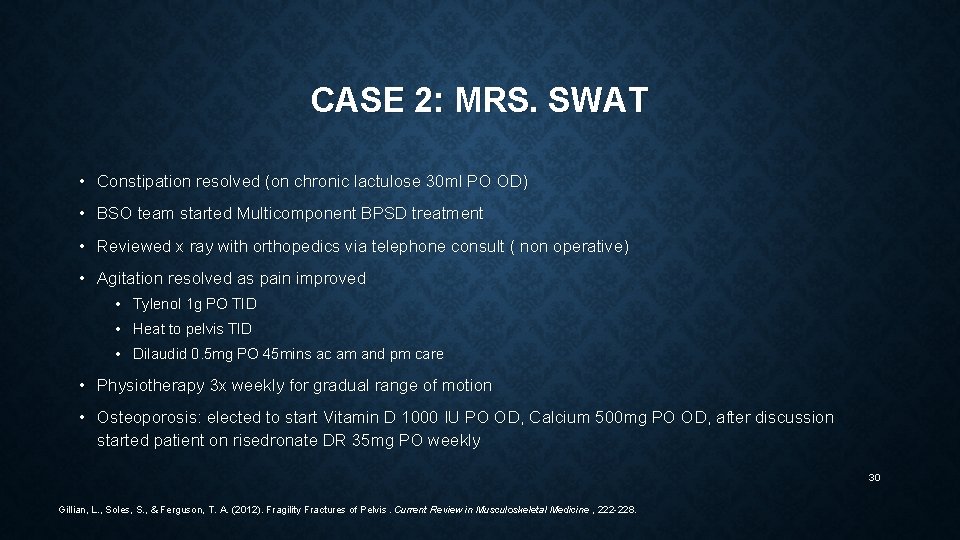
CASE 2: MRS. SWAT • Constipation resolved (on chronic lactulose 30 ml PO OD) • BSO team started Multicomponent BPSD treatment • Reviewed x ray with orthopedics via telephone consult ( non operative) • Agitation resolved as pain improved • Tylenol 1 g PO TID • Heat to pelvis TID • Dilaudid 0. 5 mg PO 45 mins ac am and pm care • Physiotherapy 3 x weekly for gradual range of motion • Osteoporosis: elected to start Vitamin D 1000 IU PO OD, Calcium 500 mg PO OD, after discussion started patient on risedronate DR 35 mg PO weekly 30 Gillian, L. , Soles, S. , & Ferguson, T. A. (2012). Fragility Fractures of Pelvis. Current Review in Musculoskeletal Medicine , 222 -228.
TREATMENT OF PERSISTENT PAIN IN THE OLDER ADULT 31
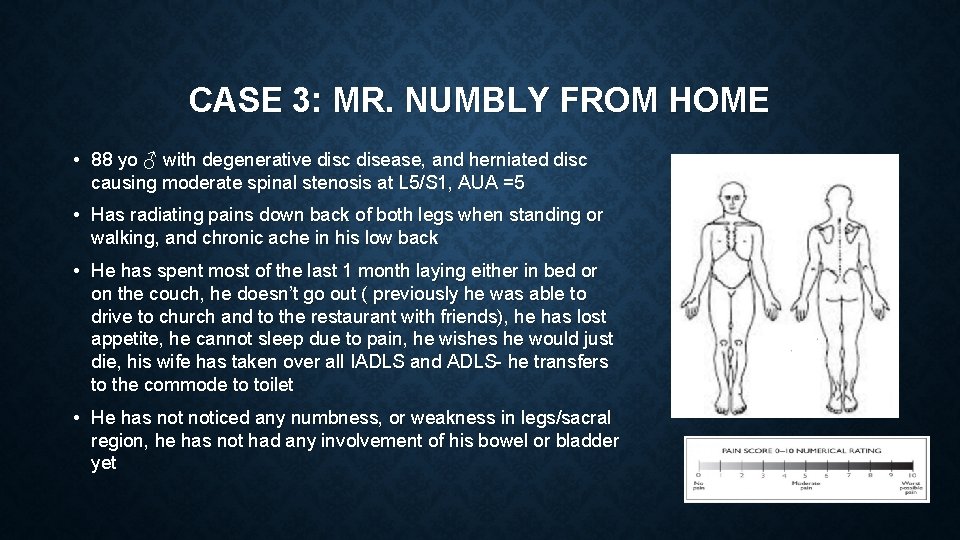
CASE 3: MR. NUMBLY FROM HOME • 88 yo ♂ with degenerative disc disease, and herniated disc causing moderate spinal stenosis at L 5/S 1, AUA =5 • Has radiating pains down back of both legs when standing or walking, and chronic ache in his low back • He has spent most of the last 1 month laying either in bed or on the couch, he doesn’t go out ( previously he was able to drive to church and to the restaurant with friends), he has lost appetite, he cannot sleep due to pain, he wishes he would just die, his wife has taken over all IADLS and ADLS- he transfers to the commode to toilet • He has noticed any numbness, or weakness in legs/sacral region, he has not had any involvement of his bowel or bladder yet 32
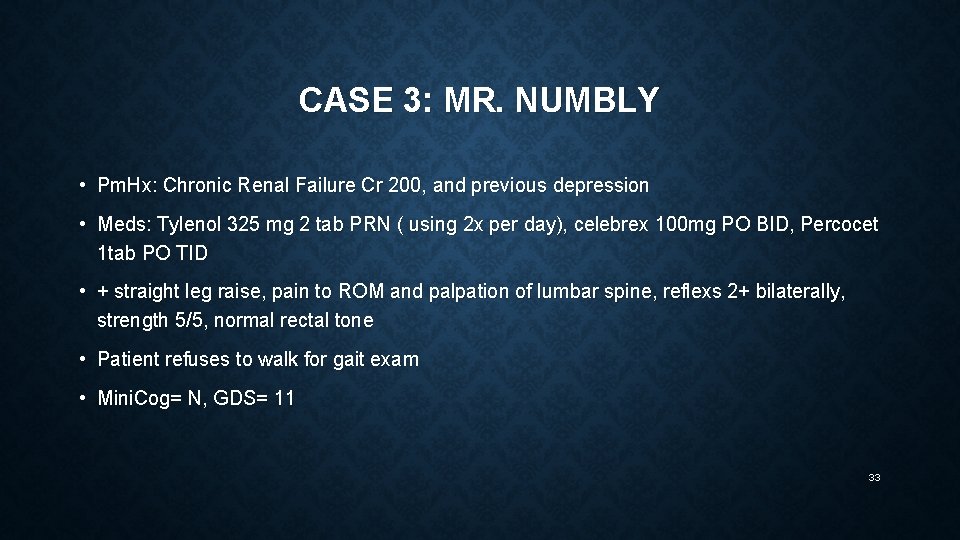
CASE 3: MR. NUMBLY • Pm. Hx: Chronic Renal Failure Cr 200, and previous depression • Meds: Tylenol 325 mg 2 tab PRN ( using 2 x per day), celebrex 100 mg PO BID, Percocet 1 tab PO TID • + straight leg raise, pain to ROM and palpation of lumbar spine, reflexs 2+ bilaterally, strength 5/5, normal rectal tone • Patient refuses to walk for gait exam • Mini. Cog= N, GDS= 11 33
INDIVIDUALIZED TREATMENT PLAN 34
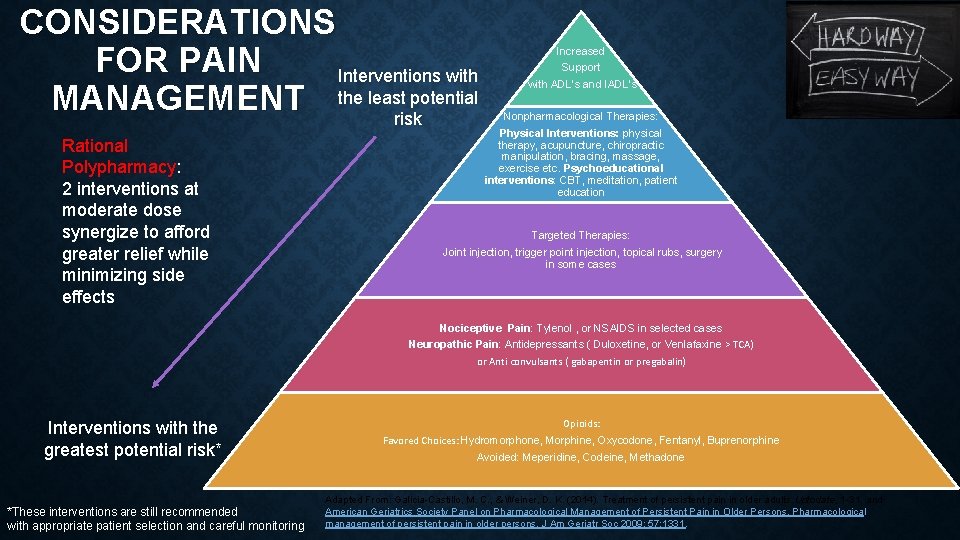
CONSIDERATIONS FOR PAIN Interventions with MANAGEMENT the least potential risk Rational Polypharmacy: 2 interventions at moderate dose synergize to afford greater relief while minimizing side effects Increased Support with ADL’s and IADL’s Nonpharmacological Therapies: Physical Interventions: physical therapy, acupuncture, chiropractic manipulation, bracing, massage, exercise etc. Psychoeducational interventions: CBT, meditation, patient education Targeted Therapies: Joint injection, trigger point injection, topical rubs, surgery in some cases Nociceptive Pain: Tylenol , or NSAIDS in selected cases Neuropathic Pain: Antidepressants ( Duloxetine, or Venlafaxine ˃ TCA) or Anti convulsants ( gabapentin or pregabalin) Interventions with the greatest potential risk* Opioids: Favored Choices: Hydromorphone, Morphine, Oxycodone, Fentanyl, Buprenorphine Avoided: Meperidine, Codeine, Methadone 35 *These interventions are still recommended with appropriate patient selection and careful monitoring Adapted From: Galicia-Castillo, M. C. , & Weiner, D. K. (2014). Treatment of persistent pain in older adults. Uptodate, 1 -31. and American Geriatrics Society Panel on Pharmacological Management of Persistent Pain in Older Persons. Pharmacological management of persistent pain in older persons. J Am Geriatr Soc 2009; 57: 1331.
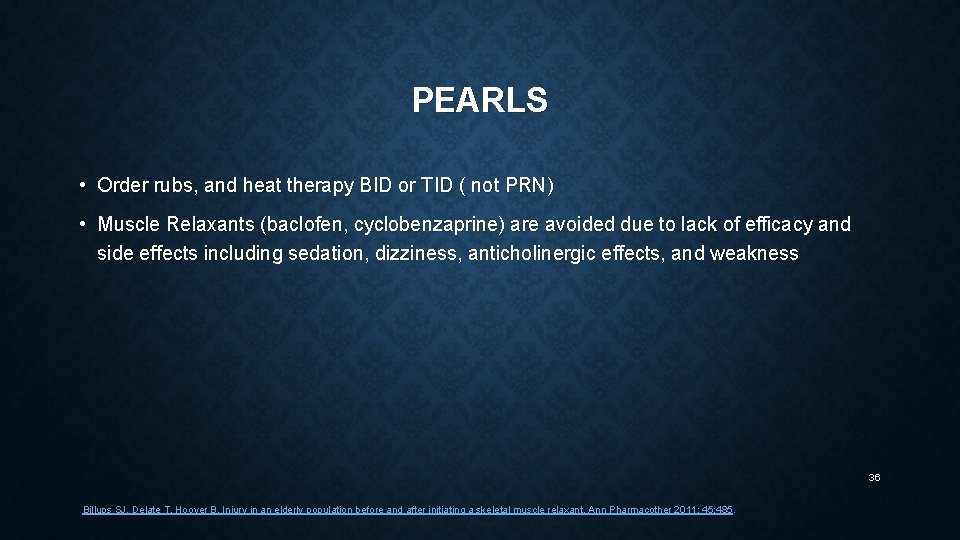
PEARLS • Order rubs, and heat therapy BID or TID ( not PRN) • Muscle Relaxants (baclofen, cyclobenzaprine) are avoided due to lack of efficacy and side effects including sedation, dizziness, anticholinergic effects, and weakness 36 Billups SJ, Delate T, Hoover B. Injury in an elderly population before and after initiating a skeletal muscle relaxant. Ann Pharmacother 2011; 45: 485.
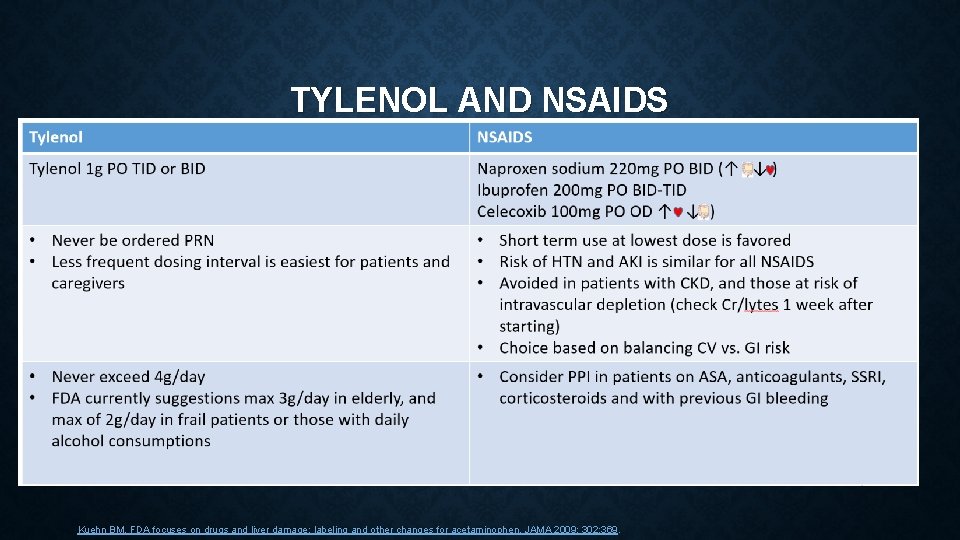
TYLENOL AND NSAIDS 37 Kuehn BM. FDA focuses on drugs and liver damage: labeling and other changes for acetaminophen. JAMA 2009; 302: 369.
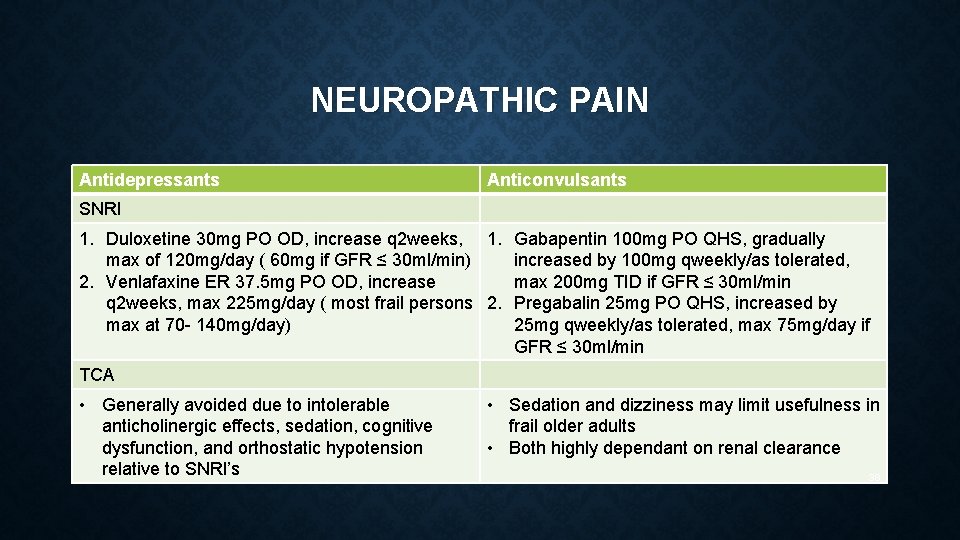
NEUROPATHIC PAIN Antidepressants Anticonvulsants SNRI 1. Duloxetine 30 mg PO OD, increase q 2 weeks, 1. Gabapentin 100 mg PO QHS, gradually max of 120 mg/day ( 60 mg if GFR ≤ 30 ml/min) increased by 100 mg qweekly/as tolerated, 2. Venlafaxine ER 37. 5 mg PO OD, increase max 200 mg TID if GFR ≤ 30 ml/min q 2 weeks, max 225 mg/day ( most frail persons 2. Pregabalin 25 mg PO QHS, increased by max at 70 - 140 mg/day) 25 mg qweekly/as tolerated, max 75 mg/day if GFR ≤ 30 ml/min TCA • Generally avoided due to intolerable anticholinergic effects, sedation, cognitive dysfunction, and orthostatic hypotension relative to SNRI’s • Sedation and dizziness may limit usefulness in frail older adults • Both highly dependant on renal clearance 38
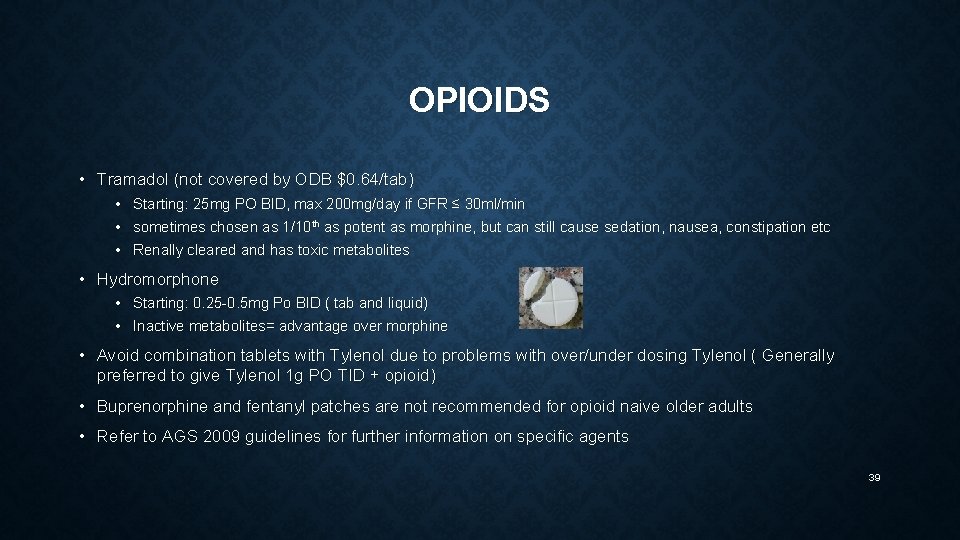
OPIOIDS • Tramadol (not covered by ODB $0. 64/tab) • • • Starting: 25 mg PO BID, max 200 mg/day if GFR ≤ 30 ml/min sometimes chosen as 1/10 th as potent as morphine, but can still cause sedation, nausea, constipation etc Renally cleared and has toxic metabolites • Hydromorphone • Starting: 0. 25 -0. 5 mg Po BID ( tab and liquid) • Inactive metabolites= advantage over morphine • Avoid combination tablets with Tylenol due to problems with over/under dosing Tylenol ( Generally preferred to give Tylenol 1 g PO TID + opioid) • Buprenorphine and fentanyl patches are not recommended for opioid naive older adults • Refer to AGS 2009 guidelines for further information on specific agents 39
CASE 3: MR. NUMBLY • Goals: Discuss with patient and family that there is evidence of osteoarthritis that will cause chronic pain. You also explain that herniated discs tend to resolved over weeks/months with multimodal treatment. Thus you expect improvement of pain with time. • Problems/Solutions: 1. Multimodal Treatment of nociceptive pain component: recommend physiotherapy and massage therapy, voltaren rub TID, Tylenol 1 g PO TID ( not PRN), stop Celebrex ( high dose, and CKD) 2. Treatment of neuropathic pain/depression: Duloxetine 30 mg PO OD x 1 week, then increase to 60 mg PO OD x 1 week ( max given GFR=31 ml/min), consider psychology referral for CBT 3. If no improvement referral to St. Josephs Pain clinic for trigger point/facet injection https: //www. sjhc. london. ca/pain-management/referrals 4. Poor Sleep: treating pain/ depression will help. Consider Melatonin 3 mg Po QHS 5. Unable to do IADLs: consider CCAC nursing + PSW + Meals on wheels+ other caregivers vs. Private Pay Care Service, vs. admission to geriatric assessment and rehab unit, vs. respite care 6. Consider 4 pronged cane to assist with mobility 41
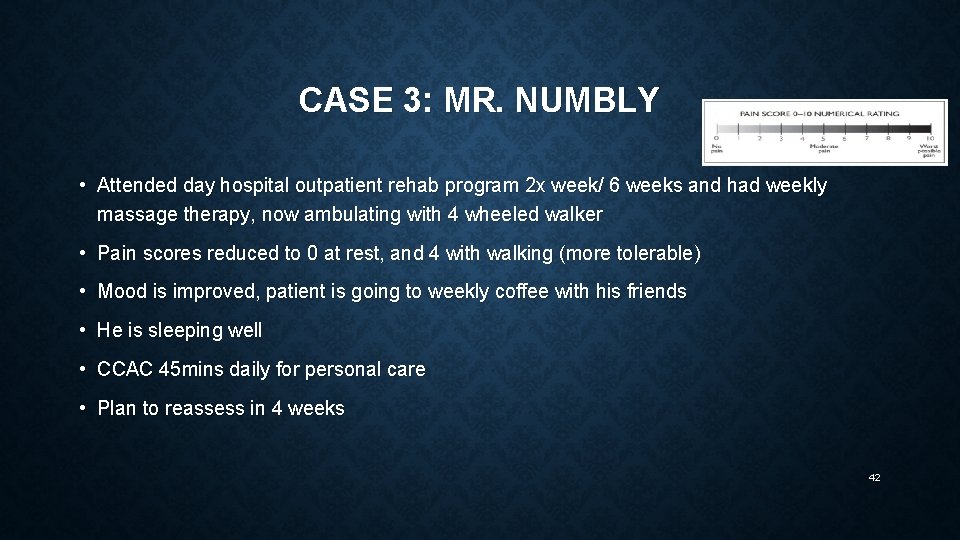
CASE 3: MR. NUMBLY • Attended day hospital outpatient rehab program 2 x week/ 6 weeks and had weekly massage therapy, now ambulating with 4 wheeled walker • Pain scores reduced to 0 at rest, and 4 with walking (more tolerable) • Mood is improved, patient is going to weekly coffee with his friends • He is sleeping well • CCAC 45 mins daily for personal care • Plan to reassess in 4 weeks 42
TAKE HOME POINTS • A comprehensive approach is needed to assess/treat pain in older adults • Consider diagnosis of/treatment of pain to reduce behaviors in persons with dementia • Treatment plan involves much more than medications ( one must create an individualized plan based on patient comorbidities). • Plan should focus on restoration and optimization of function • Uptodate and AGS provide helpful guidelines for treatment of pain in elderly 43
RECOMMENDED READINGS • Galicia-Castillo, M. C. , & Weiner, D. K. (2014). Treatment of persistent pain in older adults. Uptodate, 1 -31. • American Geriatric Society Panel on Pharmacological management of persistent pain in older persons. (2009). Pharmacological management of persistent pain in older persons . Journal of American Geriatric Society, 1331. 44