
DOAS workshop 2015 Brussels July 2015 Sulfur dioxide
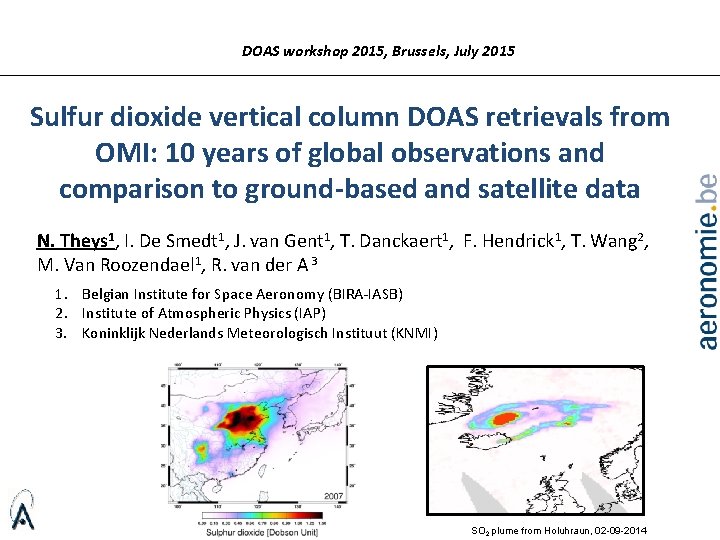
DOAS workshop 2015, Brussels, July 2015 Sulfur dioxide vertical column DOAS retrievals from OMI: 10 years of global observations and comparison to ground-based and satellite data N. Theys 1, I. De Smedt 1, J. van Gent 1, T. Danckaert 1, F. Hendrick 1, T. Wang 2, M. Van Roozendael 1, R. van der A 3 1. Belgian Institute for Space Aeronomy (BIRA-IASB) 2. Institute of Atmospheric Physics (IAP) 3. Koninklijk Nederlands Meteorologisch Instituut (KNMI) SO 2 plume from Holuhraun, 02 -09 -2014
Outline • OMI SO 2 algorithm • Examples for volcanic SO 2 • Anthropogenic SO 2: * SO 2 from ships * Validation over China * Time evolution over selected regions • Conclusions
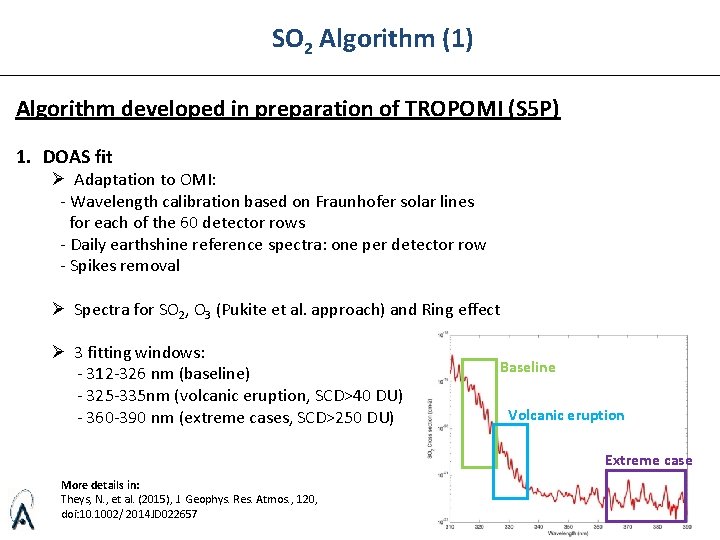
SO 2 Algorithm (1) Algorithm developed in preparation of TROPOMI (S 5 P) 1. DOAS fit Ø Adaptation to OMI: - Wavelength calibration based on Fraunhofer solar lines for each of the 60 detector rows - Daily earthshine reference spectra: one per detector row - Spikes removal Ø Spectra for SO 2, O 3 (Pukite et al. approach) and Ring effect Ø 3 fitting windows: - 312 -326 nm (baseline) - 325 -335 nm (volcanic eruption, SCD>40 DU) - 360 -390 nm (extreme cases, SCD>250 DU) More details in: Theys, N. , et al. (2015), J. Geophys. Res. Atmos. , 120, doi: 10. 1002/ 2014 JD 022657 Baseline Volcanic eruption Extreme case
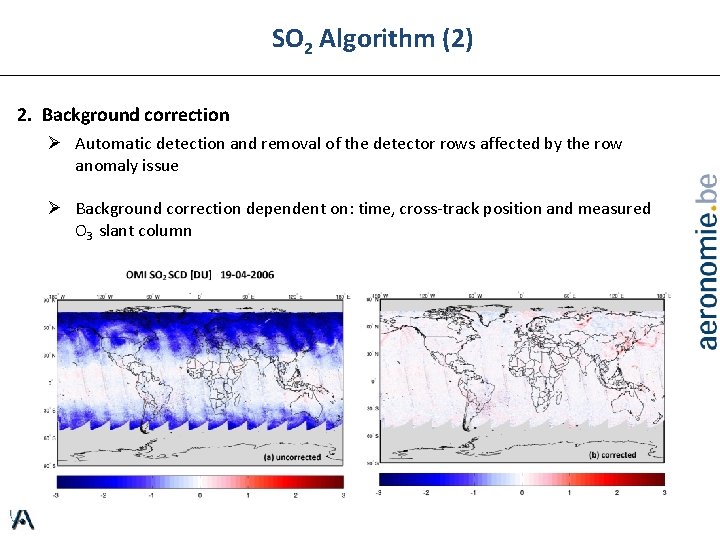
SO 2 Algorithm (2) 2. Background correction Ø Automatic detection and removal of the detector rows affected by the row anomaly issue Ø Background correction dependent on: time, cross-track position and measured O 3 slant column
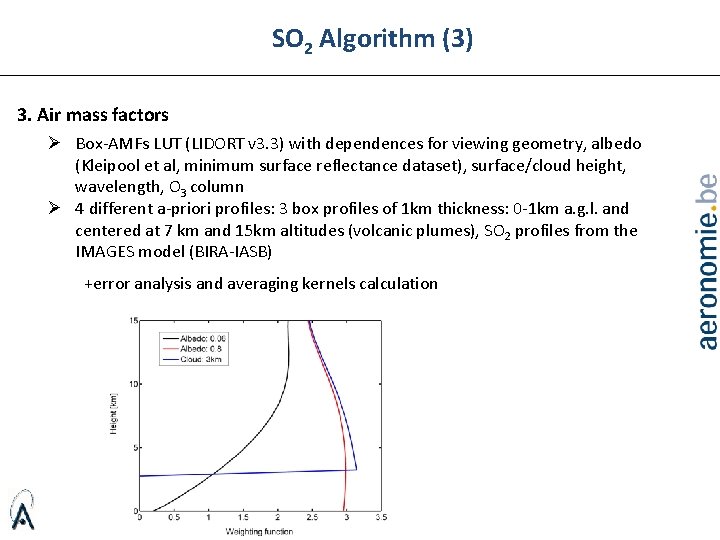
SO 2 Algorithm (3) 3. Air mass factors Ø Box-AMFs LUT (LIDORT v 3. 3) with dependences for viewing geometry, albedo (Kleipool et al, minimum surface reflectance dataset), surface/cloud height, wavelength, O 3 column Ø 4 different a-priori profiles: 3 box profiles of 1 km thickness: 0 -1 km a. g. l. and centered at 7 km and 15 km altitudes (volcanic plumes), SO 2 profiles from the IMAGES model (BIRA-IASB) +error analysis and averaging kernels calculation
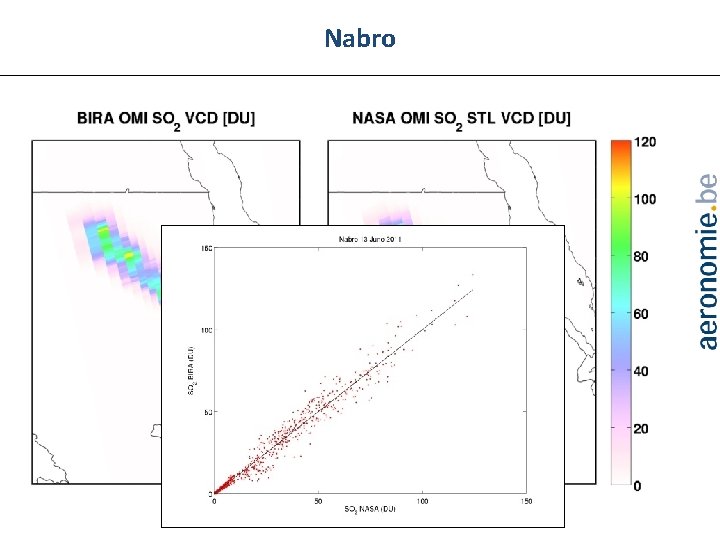
Nabro
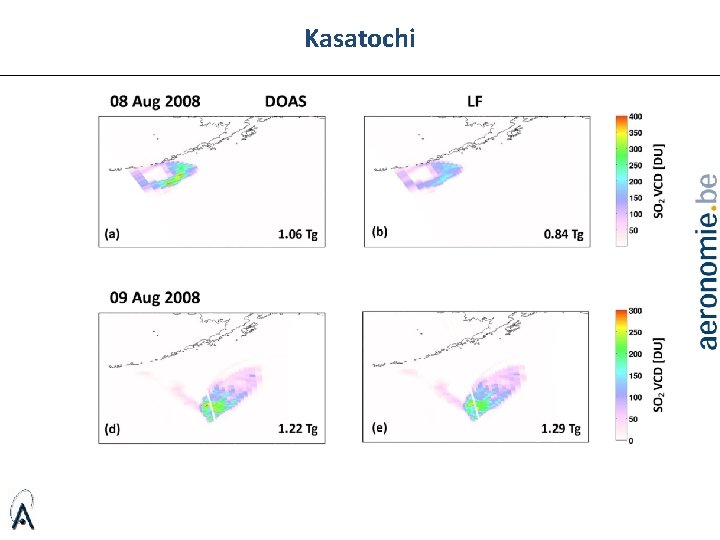
Kasatochi
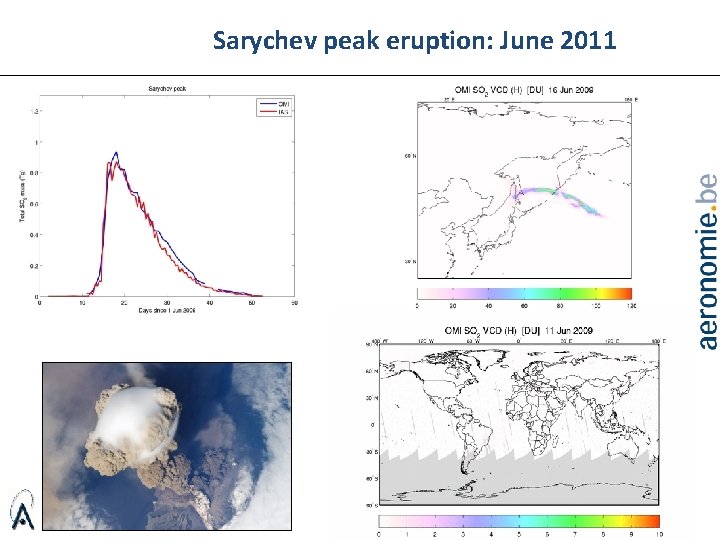
Sarychev peak eruption: June 2011
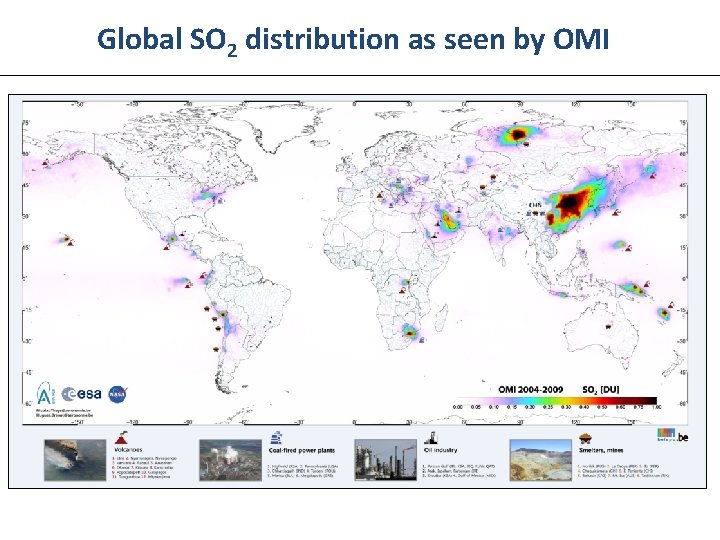
Global SO 2 distribution as seen by OMI
![SO 2 from ships OMI SO 2 VCD [DU] OMI tropo. NO 2 VCD](http://slidetodoc.com/presentation_image/4def78499639ebe366c224a2b22bd9f7/image-10.jpg "SO 2 from ships OMI SO 2 VCD [DU] OMI tropo. NO 2 VCD")
SO 2 from ships OMI SO 2 VCD [DU] OMI tropo. NO 2 VCD [molec. cm-2] 2005 -2009
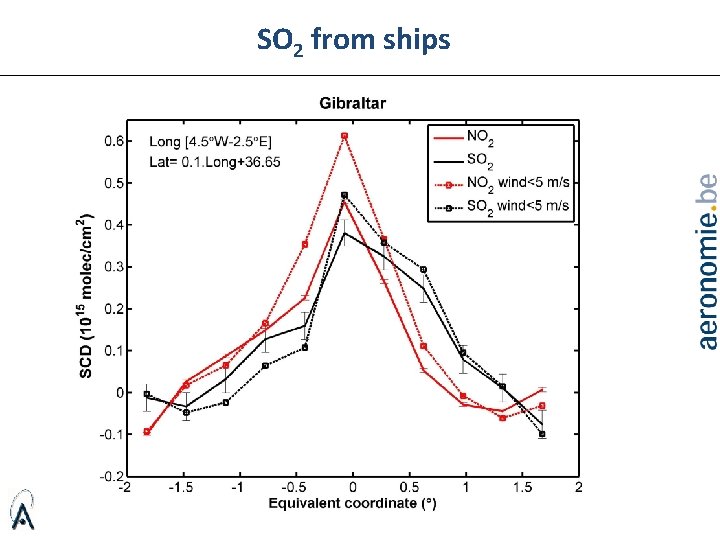
SO 2 from ships
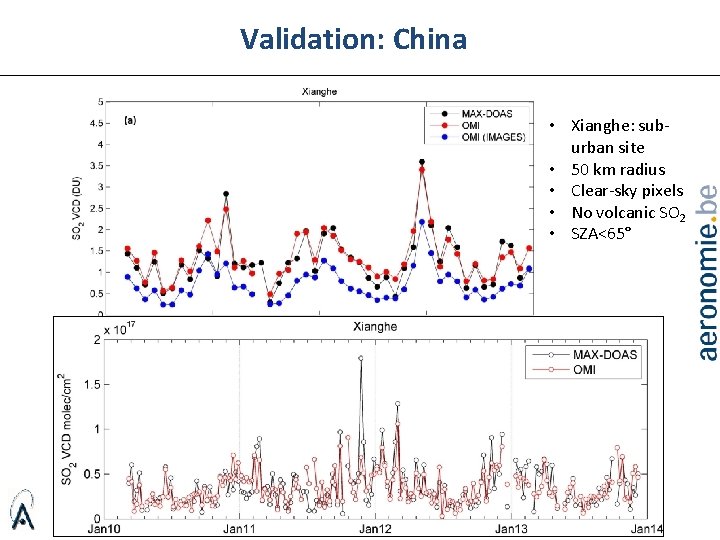
Validation: China • Xianghe: suburban site • 50 km radius • Clear-sky pixels • No volcanic SO 2 • SZA<65°
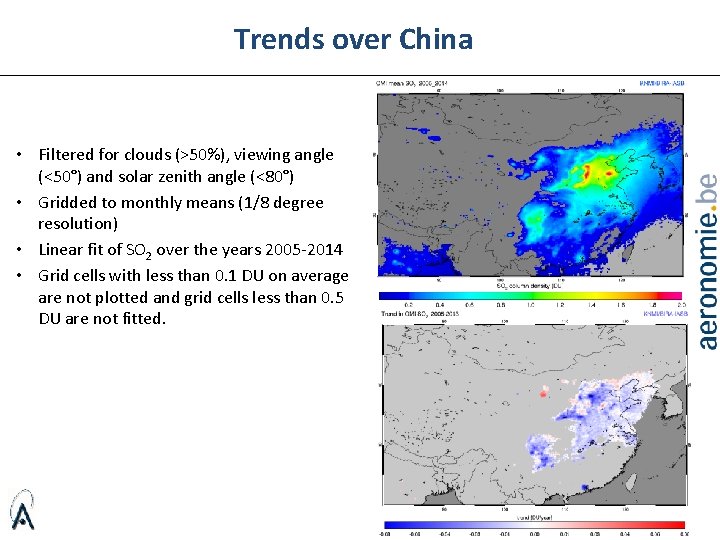
Trends over China • Filtered for clouds (>50%), viewing angle (<50°) and solar zenith angle (<80°) • Gridded to monthly means (1/8 degree resolution) • Linear fit of SO 2 over the years 2005 -2014 • Grid cells with less than 0. 1 DU on average are not plotted and grid cells less than 0. 5 DU are not fitted.
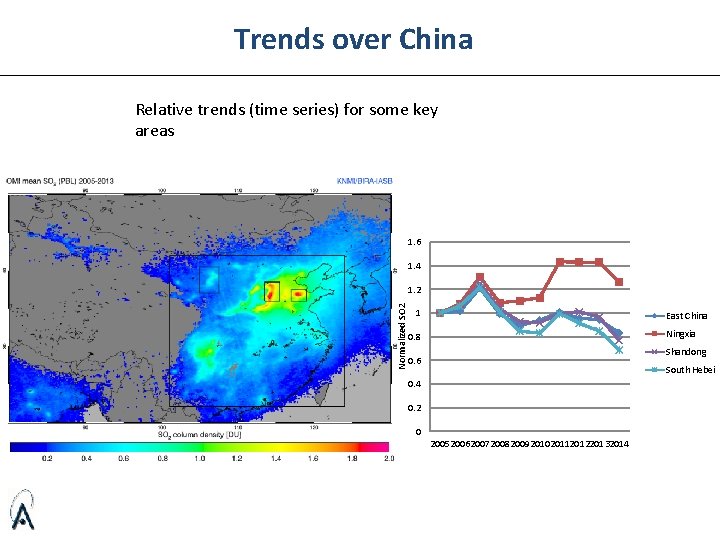
Trends over China Relative trends (time series) for some key areas 1. 6 1. 4 Normalized SO 2 1 East China Ningxia 0. 8 Shandong 0. 6 South Hebei 0. 4 0. 2 0 2005200620072008200920102011201220132014
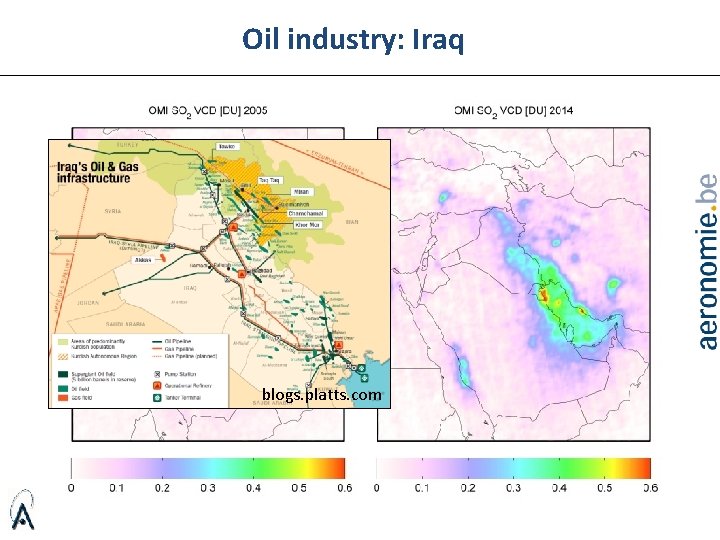
Oil industry: Iraq blogs. platts. com
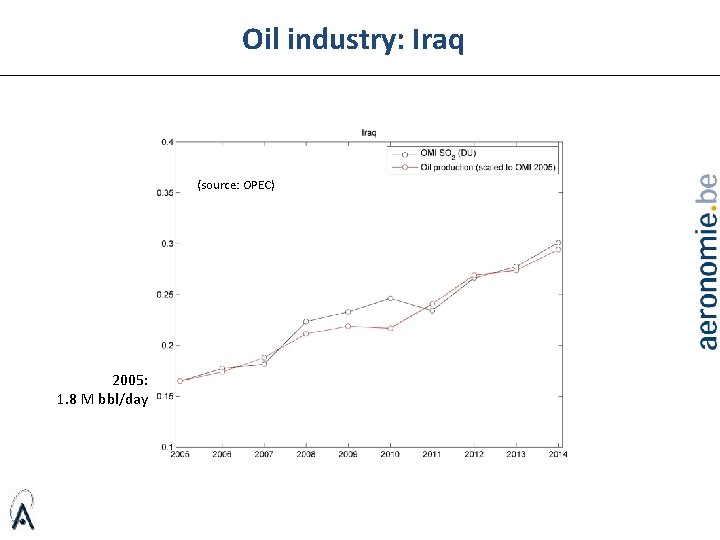
Oil industry: Iraq (source: OPEC) 2005: 1. 8 M bbl/day
Summary • Development of a DOAS SO 2 algorithm (S 5 P prototype) succesfully applied to OMI. • Volcanic SO 2: the algorithm is able to cope with large SO 2 columns and is consistent with other satellite products. • Anthropogenic SO 2: -Very weak sources are detected in long-term averages (e. g. shipping SO 2) -Excellent agreement with MAX-DOAS measurements in Xianghe -Contrasting time evolution depending on selected regions • The 7°x 7° spatial resolution of TROPOMI, combined with a SNR equivalent (or even better) than OMI, is expected to significantly improve the SO 2 observations.
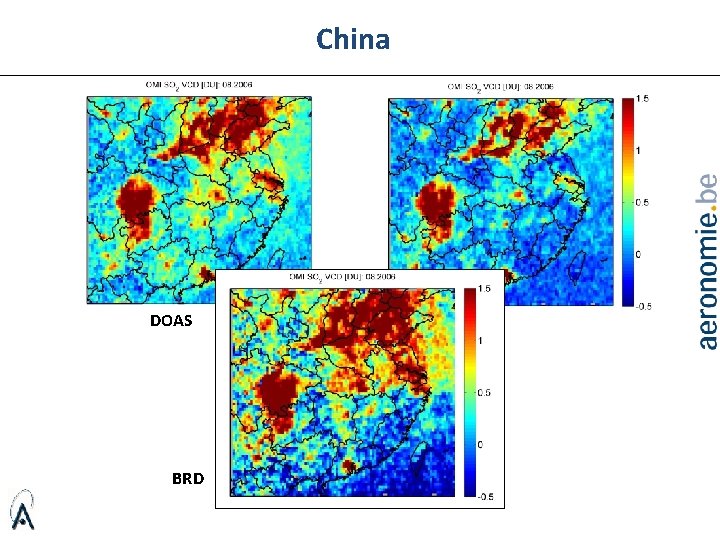
China DOAS BRD PCA
- Slides: 18