
Do you sometimes feel like you care too




- Slides: 37
Do you sometimes feel like you care too much? Understanding compassion fatigue for animal care providers Phyllis Erdman, Ph. D. College of Education
Sometimes when we care too much, we experience compassion fatigue (CF)
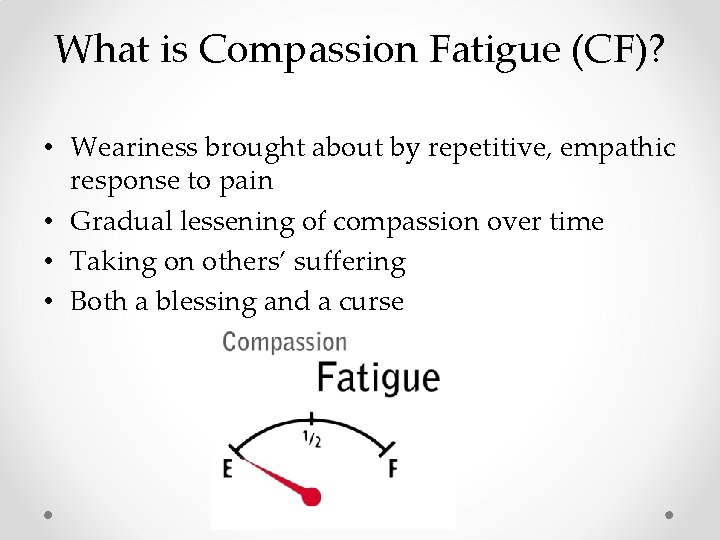
What is Compassion Fatigue (CF)? • Weariness brought about by repetitive, empathic response to pain • Gradual lessening of compassion over time • Taking on others’ suffering • Both a blessing and a curse
Compassion Fatigue and the Professions Healthcare Professions o Physicians, Nursing, Social Services, Mental Health Providers, Veterinarians, Veterinary Teams Other Helping Professions o Teachers, Clergy, Attorneys, Disaster Site Clean-up Crews, Animal Shelter, IACUC members/staff, animal facility managers Fire, EMS, Law Enforcement Family Care Givers Animal rescue workers/Animal Caregivers
Normal or Abnormal “The expectation that we can be immersed in suffering and loss daily and not be touched by it is as unrealistic as expecting to be able to walk through water without getting wet” Remen, 1996
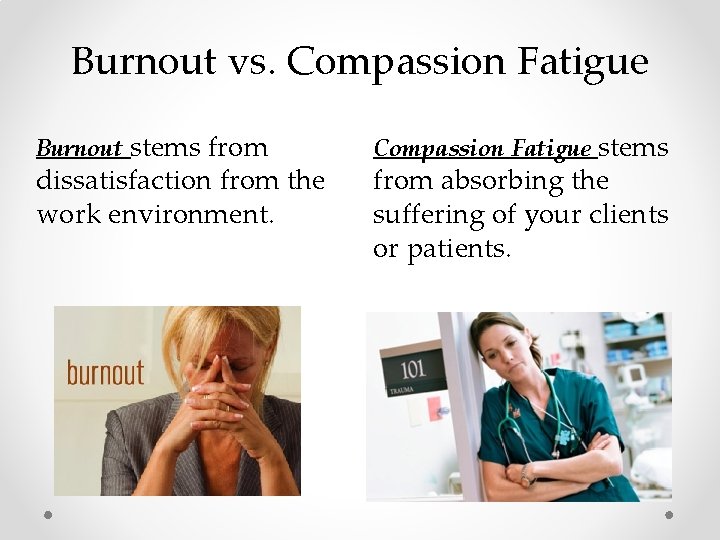
Burnout vs. Compassion Fatigue Burnout stems from dissatisfaction from the work environment. Compassion Fatigue stems from absorbing the suffering of your clients or patients.
The Difference? Ask yourself: “Do I Love My Job? ” No Yes Burnout Compassion Fatigue
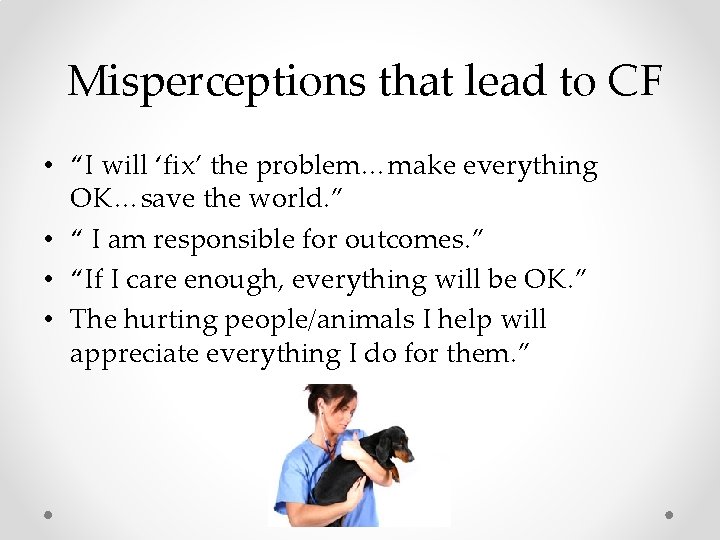
Misperceptions that lead to CF • “I will ‘fix’ the problem…make everything OK…save the world. ” • “ I am responsible for outcomes. ” • “If I care enough, everything will be OK. ” • The hurting people/animals I help will appreciate everything I do for them. ”
What We See with CF Sleeping problems or nightmares Intrusive thoughts, memories and flashbacks Hyper-vigilance General anxiety and anxiety attacks Isolation and disconnection Substance abuse and high risk behaviors Changes in appetite and sex drive Irritability and depression Cynicism, negativity, and apathy about life and the world • Substandard level of care • Increased cynicism • • • 10
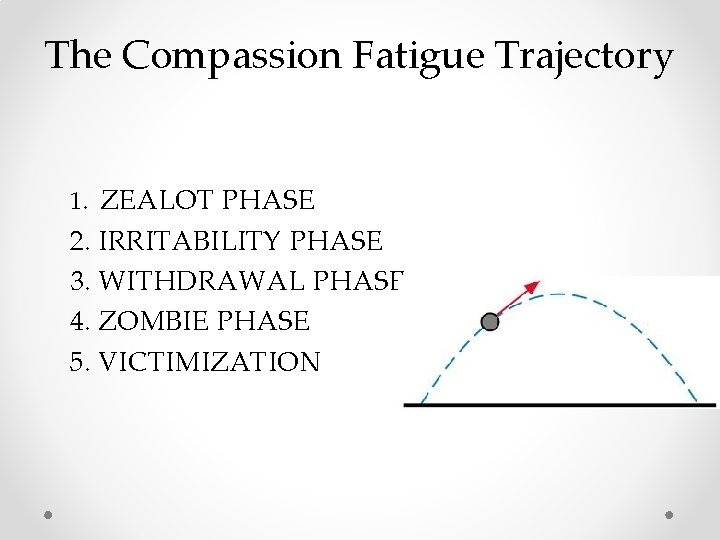
The Compassion Fatigue Trajectory 1. ZEALOT PHASE 2. IRRITABILITY PHASE 3. WITHDRAWAL PHASE 4. ZOMBIE PHASE 5. VICTIMIZATION
ZEALOT PHASE • Committed, involved, available • Solving problems/making a difference • Willing to go the extra mile • High enthusiasm • Volunteers without being asked • May be called an Idealist
IRRITABILITY PHASE • Begin to cut corners • Begin to avoid tasks involving animals • Begin to mock co-workers and clients • Begin to denigrate the people they serve • Use inappropriate/dark humor • Make mistakes • Distance selves from friends & co-workers
WITHDRAWAL PHASE • Enthusiasm turns sour • Animals become problems, not concerns • We make complaints about our work life and our personal life • Tired all the time • Neglect family, animals, coworkers and ourselves • Try to avoid our pain and sadness
ZOMBIE PHASE • Hopelessness turns to rage • Feel like you’re on auto pilot • Judge others as incompetent or ignorant • Develop a disdain for everyone • Lose patience, sense of humor, time for fun • Possibly experience health problems
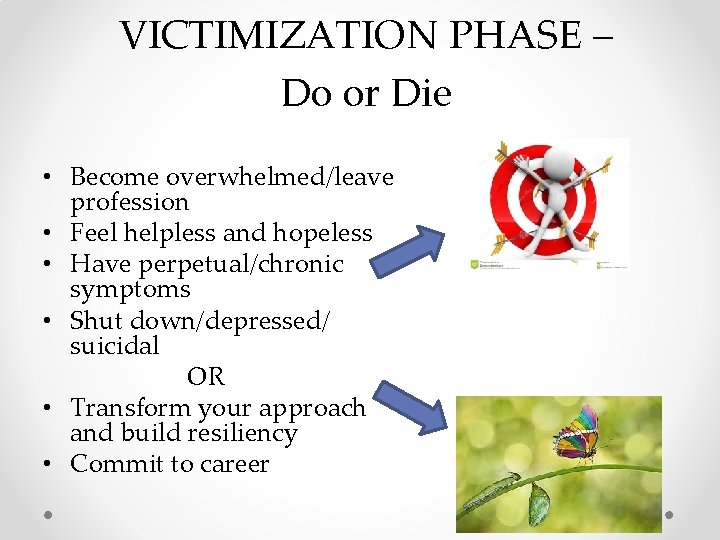
VICTIMIZATION PHASE – Do or Die • Become overwhelmed/leave profession • Feel helpless and hopeless • Have perpetual/chronic symptoms • Shut down/depressed/ suicidal OR • Transform your approach and build resiliency • Commit to career
Who is More Likely to Develop CF? People who: • Have capacity for true compassion, empathy, concern and caring • Lack of social resources/support • By nature, lower emotional resiliency • Bound by rules/obligations
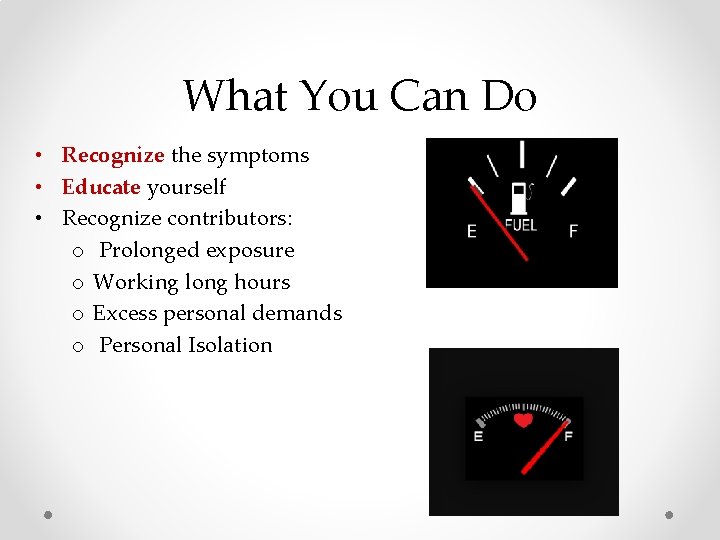
What You Can Do • Recognize the symptoms • Educate yourself • Recognize contributors: o Prolonged exposure o Working long hours o Excess personal demands o Personal Isolation
How can you prevent alleviate CF? Early recognition and awareness Restore a healthy balance in your life Enhance self care skills
How do you bring your caring and giving nature back into focus? 1. Reframing 2. Rethinking
Reframing Recognize that you are a hero doing some of the most difficult and most important work for animals. Honor yourself and feel proud of the difference you are making. Know and recognize that you are an active part of the solution.
Rethinking Think about "why" you’re so dedicated to helping animals (e. g. , what is the personal meaning? ) Think about whether you put the animals’ welfare before your own. Realize that you need to take care of yourself first or you’ll have nothing left to give to the animals.
How does CF impact us? Physical needs Mental needs Occupational needs Relational needs Spiritual needs
Physical Needs Seek medical treatment for symptoms that interfere with daily functioning Eat meals at a relaxed pace Develop breathing exercises to calm you Find a quiet place (emotionally and physically Develop and stick to an exercise plan Don’t self-medicate with alcohol or drugs Take time off!
Mental Needs Assess what’s on your plate Make a list of your stressors to see what is making your plate too full Try to reduce or eliminate multi-tasking Identify stressful thinking (e. g. “always, ” “never” “should” “ought”) Reframe failures as mistakes and learning opportunities
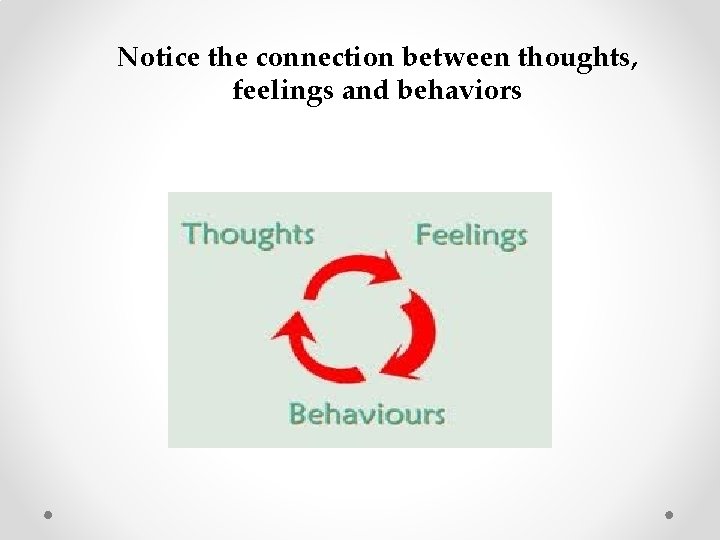
Notice the connection between thoughts, feelings and behaviors
Occupational Needs Assess your current job and work environment Ask yourself : • Does your work fit your interests? • Are you passionate about your work? Do you love what you do? • Does it allow you to use all of your strengths? • Does it allow you sufficient leisure time?
Relational • Create a self-care plan (e. g. , walk on the beach, massage, watching sports on TV) • Plan time to connect with family and friends • Keep a feelings journal • Have one good conversation a day • Find someone who cares – You will be surprised!
Spiritual • Practice prayer or meditation • Practice intentional silence • Listen to music • Read uplifting material
How to address CF at work Rebalance your workload to avoid working through lunch and weekends Take mini-breaks Find at least one fun and nourishing activity a day Ask for help Have a transition from work to home
Learn to say “no” more often. Create and/or enforce time off policies in the workplace! Remember -- A dry well cannot quench thirst!
Suggested Coping Strategies Escape: Get away from it all, physically or mentally Rest: Try to have no goal or time-line, and do things you find relaxing Play: Engage in activities that make you laugh or lighten your spirits 32
Just as speech without silence creates noise, charity without rest creates suffering. (Muller, 1999)
Help for students Cougar Health Services https: //cougarhealth. wsu. edu/your-first-visit/ College of Veterinary Medicine Counseling and Wellness https: //www. vetmed. wsu. edu/academicprograms/counseling-wellness
Help for faculty/staff Employee Assistance Program (EAP) https: //hrs. wsu. edu/resources/employee-assistance-program/ Palouse River Counseling 509 - 334 -1133
Questions?
References Figley, C. (1995). Compassion Fatigue: Coping with secondary traumatic stress disorder in those who treat the traumatized. London: Brunner-Routledge. Mitchener, Oglivie, (2002). Understanding compassion fatigue: Keys for the caring veterinary healthcare team. Journal of the American Animal Hospital Association, 38 (4), Muller, W. (1999). Sabbath: Restoring the sacred rhythm of rest. NY: Bantam. Newsome, Clemmons, Fitzhugh, Gluckman, Creamer-Hente, Tambrallo, Wilder-Kofie (2019). Compassion fatigue, euthanasia stress, and their management in laboratory animal research. Journal of the American Association for Laboratory Animal Science, 59 (3), 289 -292.