
Do you look exactly like either one of
- Slides: 11
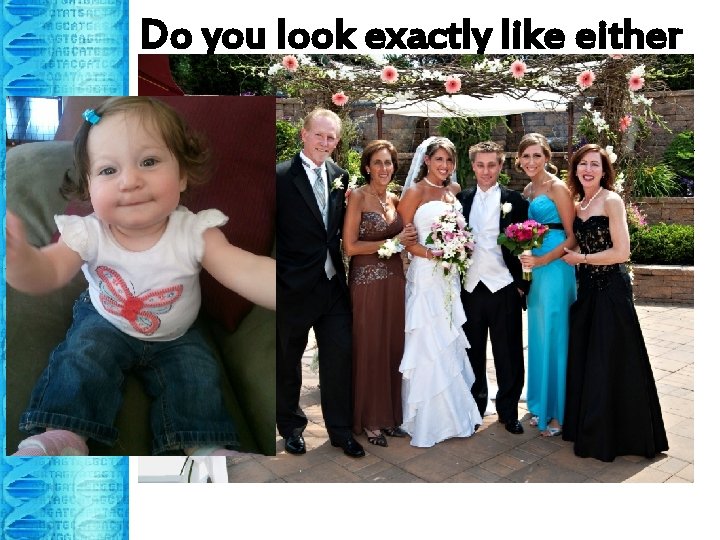
Do you look exactly like either one of your parents? What about your siblings? Why is this & how do you explain it? ? ?
Summing up Mendel’s Laws The Key Terms!!
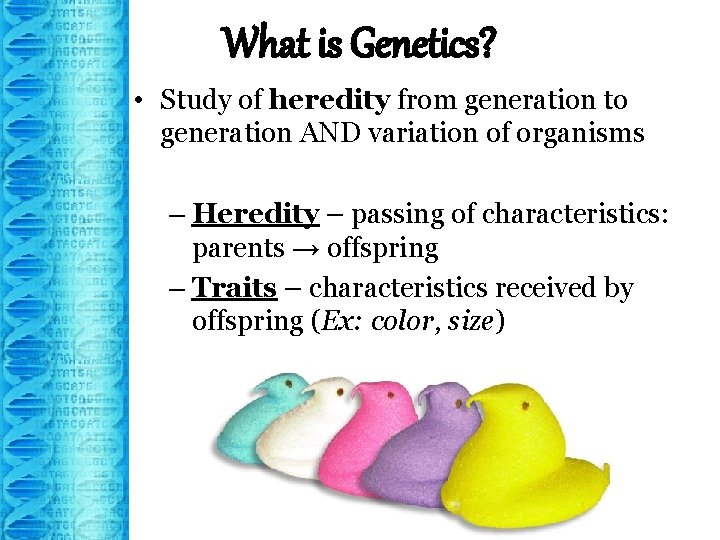
What is Genetics? • Study of heredity from generation to generation AND variation of organisms – Heredity – passing of characteristics: parents → offspring – Traits – characteristics received by offspring (Ex: color, size)
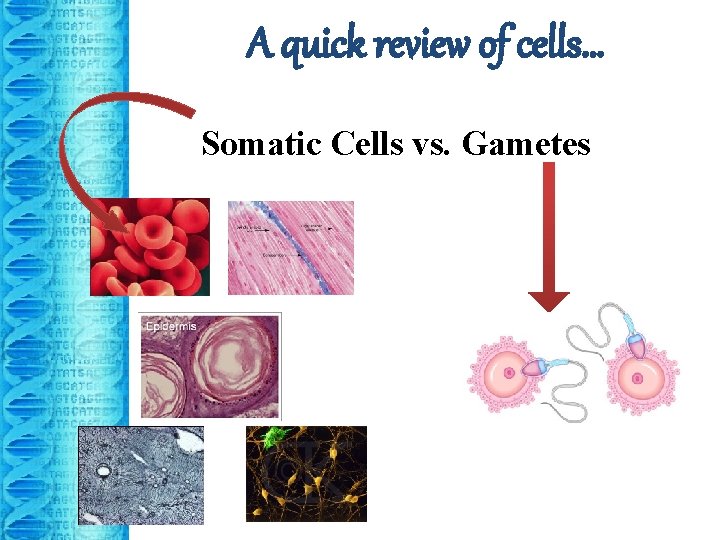
A quick review of cells… Somatic Cells vs. Gametes
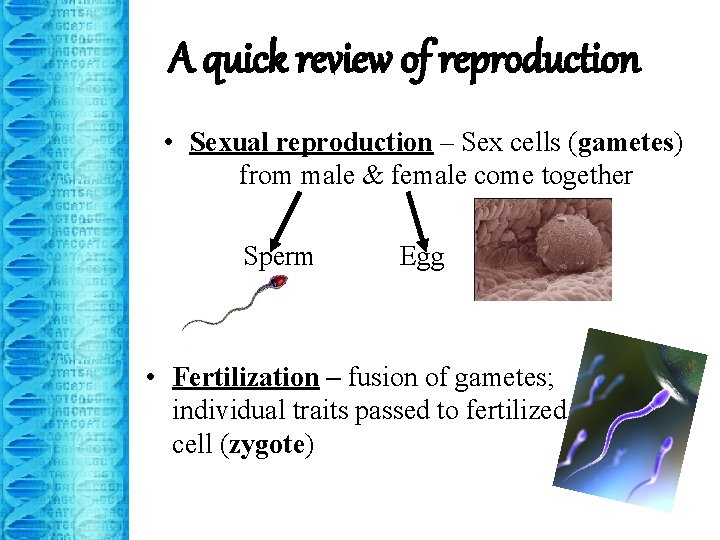
A quick review of reproduction • Sexual reproduction – Sex cells (gametes) from male & female come together Sperm Egg • Fertilization – fusion of gametes; individual traits passed to fertilized cell (zygote)
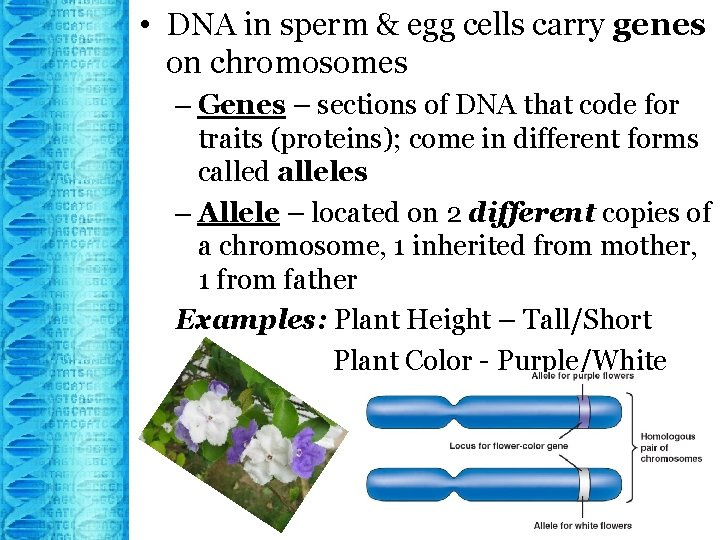
• DNA in sperm & egg cells carry genes on chromosomes – Genes – sections of DNA that code for traits (proteins); come in different forms called alleles – Allele – located on 2 different copies of a chromosome, 1 inherited from mother, 1 from father Examples: Plant Height – Tall/Short Plant Color - Purple/White
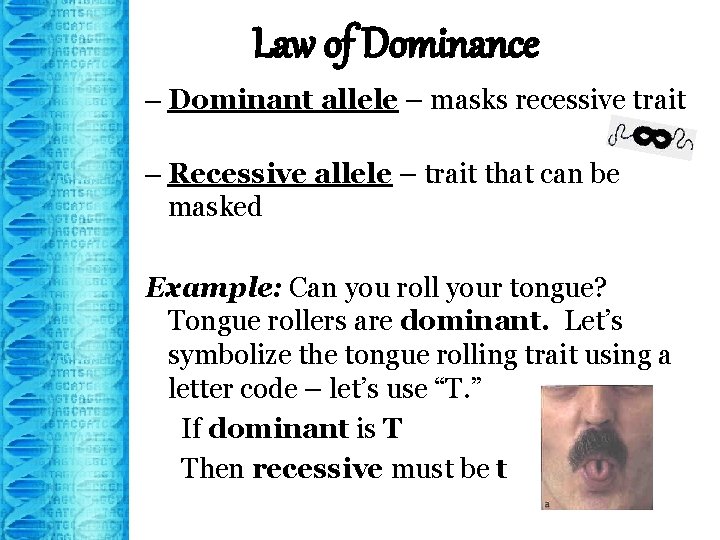
Law of Dominance – Dominant allele – masks recessive trait – Recessive allele – trait that can be masked Example: Can you roll your tongue? Tongue rollers are dominant. Let’s symbolize the tongue rolling trait using a letter code – let’s use “T. ” If dominant is T Then recessive must be t
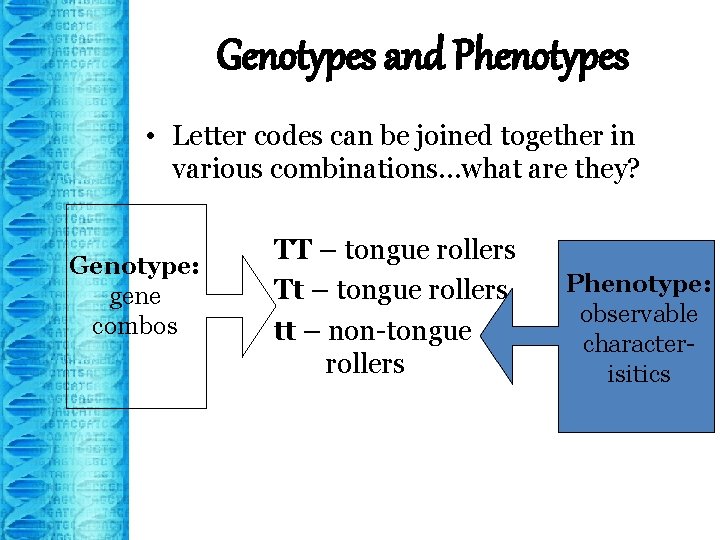
Genotypes and Phenotypes • Letter codes can be joined together in various combinations…what are they? Genotype: gene combos TT – tongue rollers Tt – tongue rollers tt – non-tongue rollers Phenotype: observable characterisitics
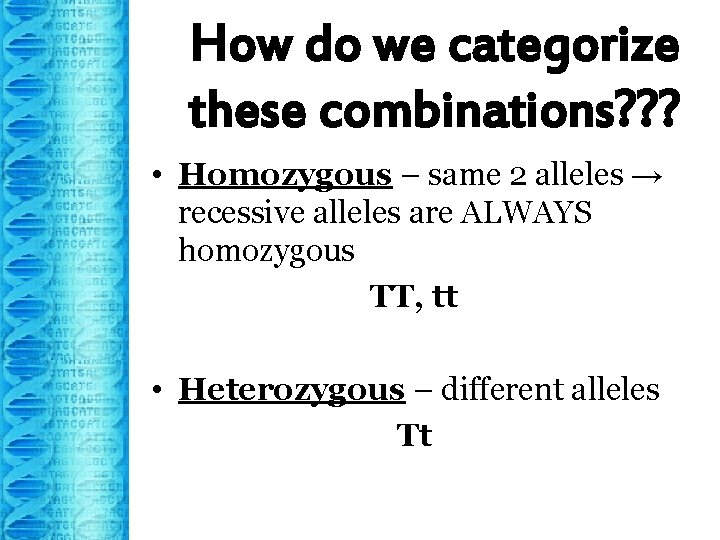
How do we categorize these combinations? ? ? • Homozygous – same 2 alleles → recessive alleles are ALWAYS homozygous TT, tt • Heterozygous – different alleles Tt
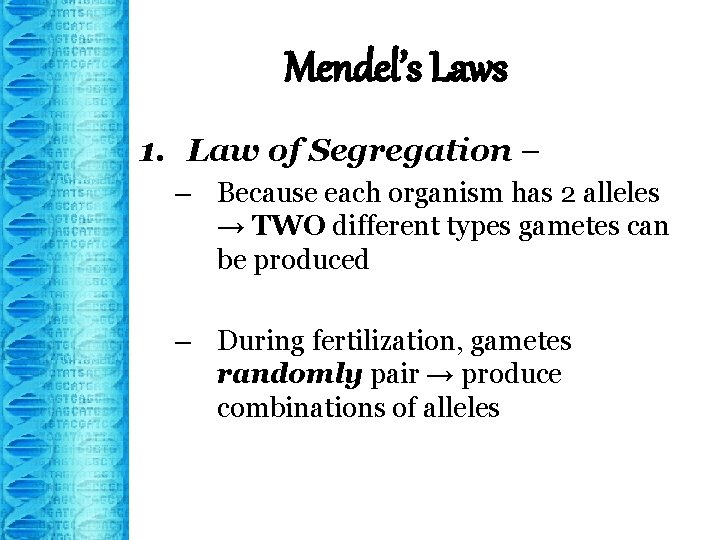
Mendel’s Laws 1. Law of Segregation – – Because each organism has 2 alleles → TWO different types gametes can be produced – During fertilization, gametes randomly pair → produce combinations of alleles
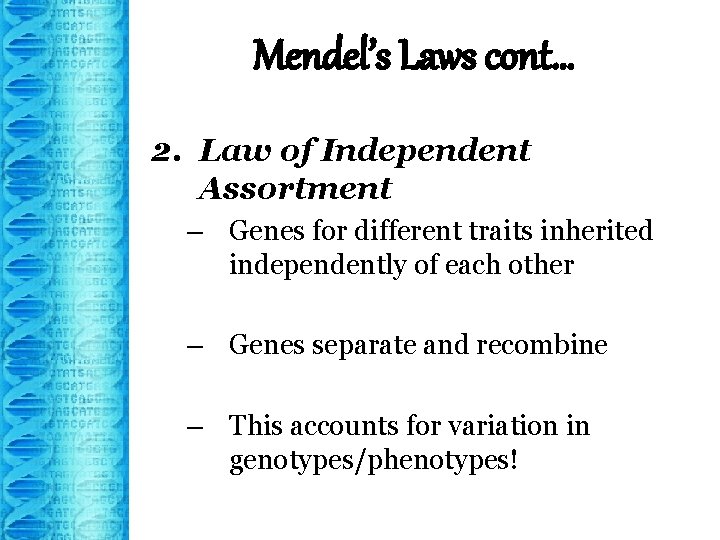
Mendel’s Laws cont… 2. Law of Independent Assortment – Genes for different traits inherited independently of each other – Genes separate and recombine – This accounts for variation in genotypes/phenotypes!