
Do you know what these gestures mean Look
- Slides: 32
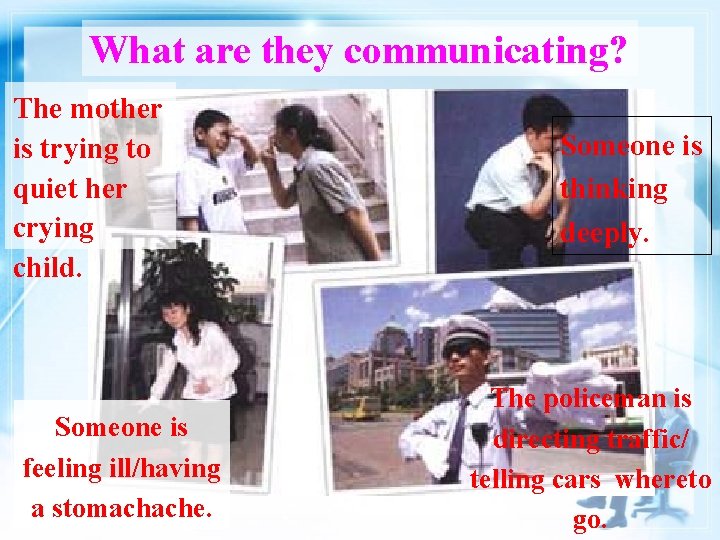
Do you know what these gestures mean? Look at the pictures and discuss with your partner what the man is trying to say.
What are they communicating? The mother is trying to quiet her crying child. Someone is feeling ill/having a stomachache. Someone is thinking deeply. The policeman is directing traffic/ telling cars whereto go.
Pre-reading 1. What is the purpose of language? The purpose of language is to communicate with other people.
2. How can you communicate with someone if you cannot speak? Give an example. I can use body language to communicate with someone.
3. There are many different ways to greet others. How many ways can you think of to greet someone if you cannot speak?
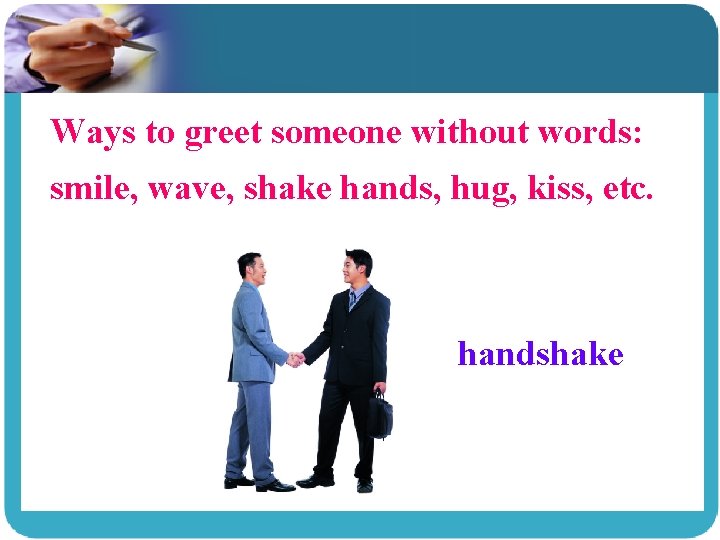
Ways to greet someone without words: smile, wave, shake hands, hug, kiss, etc. handshake
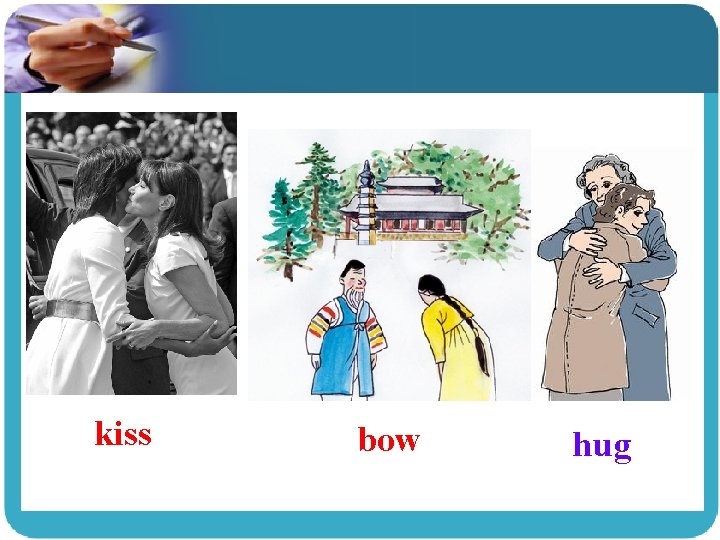
kiss bow hug
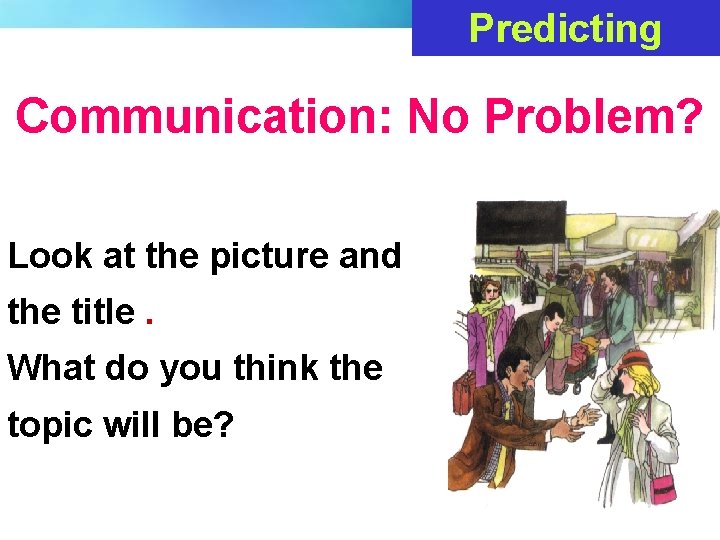
Predicting Communication: No Problem? Look at the picture and the title. What do you think the topic will be?
1. In which of the following countries do people greet each other in the same way? A. South America and Italy. B. China and Japan. C. Canada and Colombia. D. France and Britain A
2. The word “approach” means _______in the sentence “Tony approached Julia , touched her shoulder…. ” A. come nearer to B. begin to deal with C. welcome D. turn to A
3. The writer of the passage is a _____ person. A. patient and warm B. learned and cold C. careful and excited D. calm and thoughtful D
4. we can infer from the text that _____. A. not all cultures greet each other the same way B. men from Britain often stand close to others to shake hands C. people are not facing multicultural communication problems because gestures help a lot D D. the writer of the passage is a boy student
5. In order to avoid difficulties in crosscultural communication , we can do the following except______. A. doing as Romans when in Rome B. trying to be friendly all the time C. trying to learn more about international customs D. raising awareness of “the other culture” and respect the differences B
I. Read the passage and find out the main idea of each paragraph.
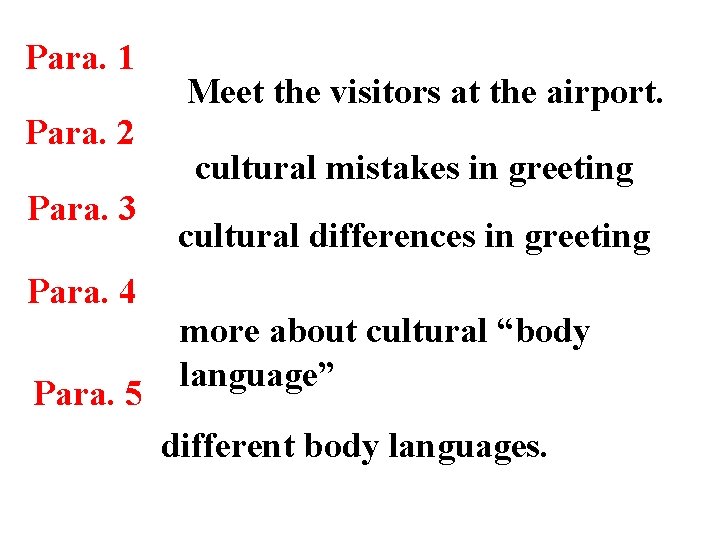
Para. 1 Para. 2 Para. 3 Para. 4 Para. 5 Meet the visitors at the airport. cultural mistakes in greeting cultural differences in greeting more about cultural “body language” different body languages.
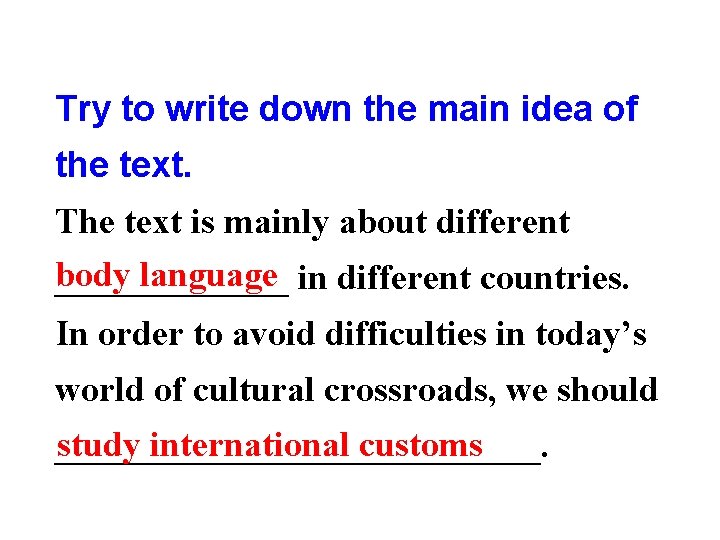
Try to write down the main idea of the text. The text is mainly about different body language in different countries. _______ In order to avoid difficulties in today’s world of cultural crossroads, we should study international customs ______________.
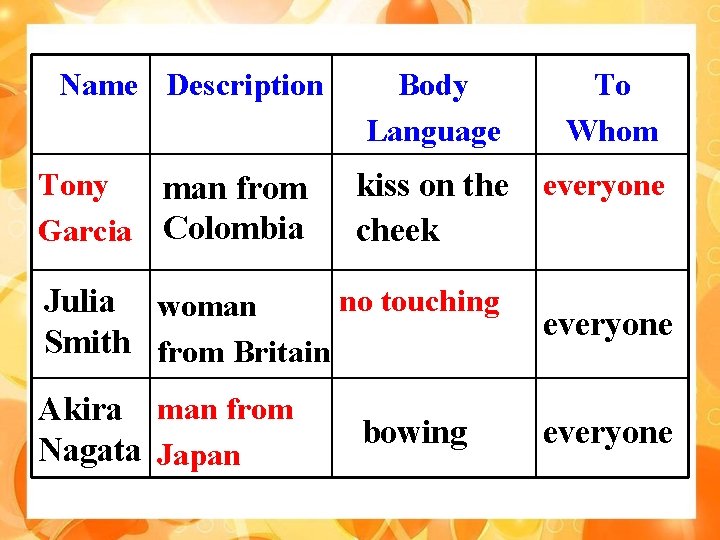
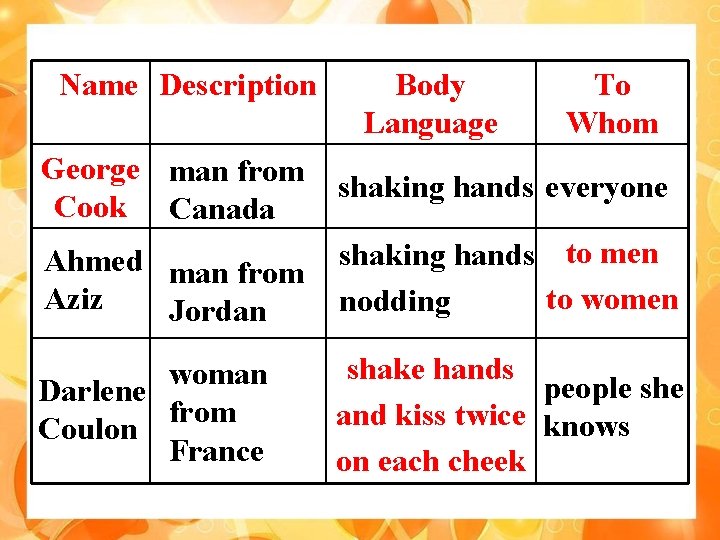
How do different international students behave when they greet people? Complete the chart with information from the passage.
Name Description Tony man from Garcia Colombia Body Language To Whom kiss on the cheek everyone no touching Julia woman Smith from Britain everyone Akira man from Nagata Japan everyone bowing
Name Description Body Language To Whom George man from Cook Canada shaking hands everyone Ahmed man from Aziz Jordan shaking hands to men to women nodding woman Darlene from Coulon France shake hands people she and kiss twice knows on each cheek
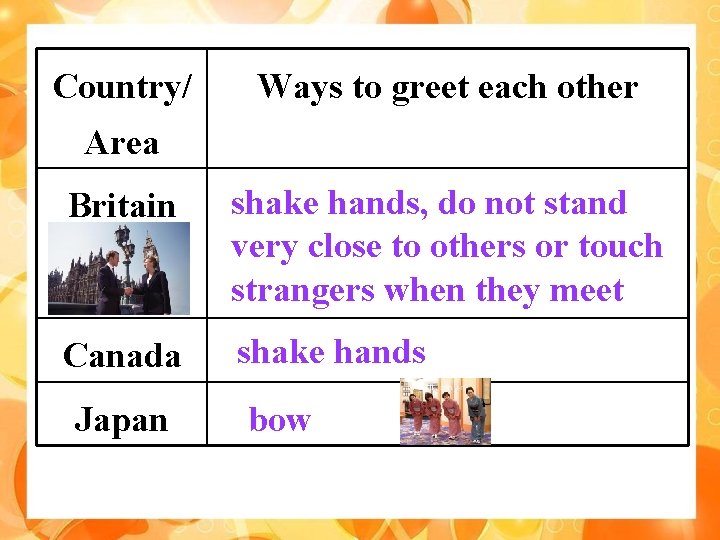
Country/ Ways to greet each other Area Britain shake hands, do not stand very close to others or touch strangers when they meet Canada shake hands Japan bow
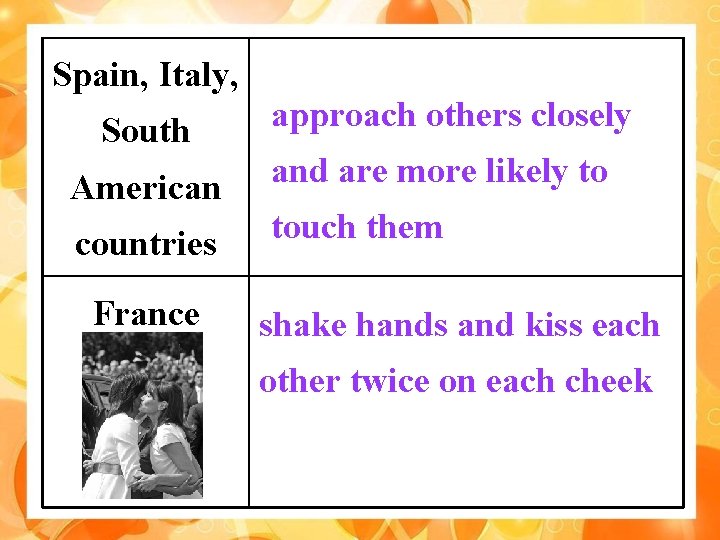
Spain, Italy, South American countries France approach others closely and are more likely to touch them shake hands and kiss each other twice on each cheek
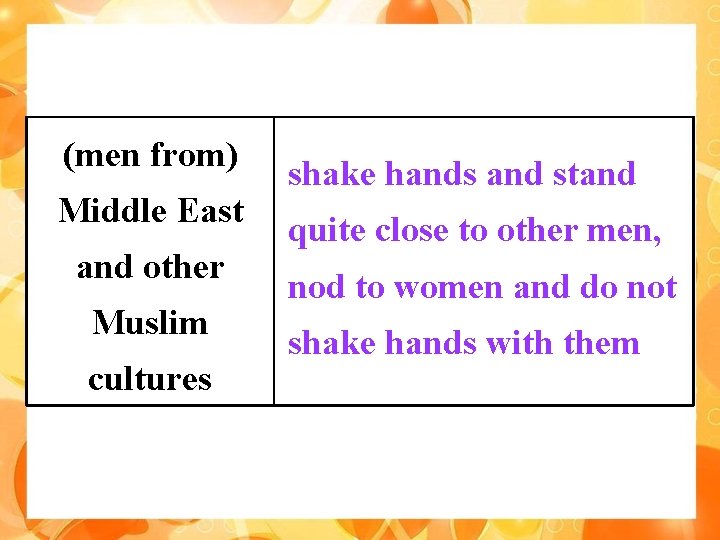
(men from) Middle East and other Muslim cultures shake hands and stand quite close to other men, nod to women and do not shake hands with them
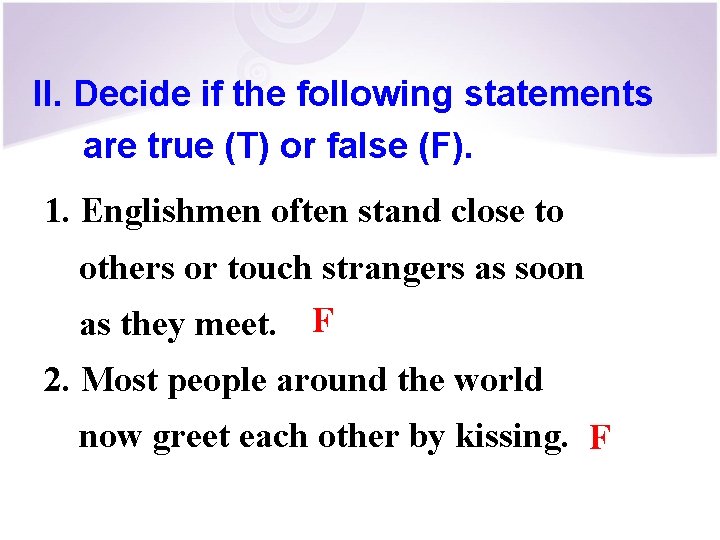
II. Decide if the following statements are true (T) or false (F). 1. Englishmen often stand close to others or touch strangers as soon as they meet. F 2. Most people around the world now greet each other by kissing. F
3. Japanese will bow to others as greeting. T 4. People from Jordan will move very close to you as you introduce yourself to them. T 5. Some body languages in some countries are good while some countries’ body language are bad. F
6. People from different countries may have a major misunderstanding while greeting each other. T 7. The physical distance from each other that people are comfortable with T generally depends on the culture. 8. All members of a culture behave in the same way. F
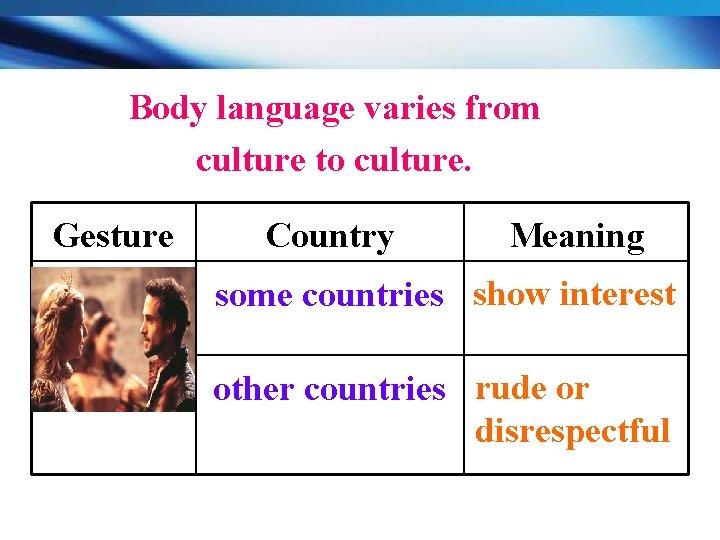
Body language varies from culture to culture. Gesture Country Meaning some countries show interest eye contact other countries rude or disrespectful
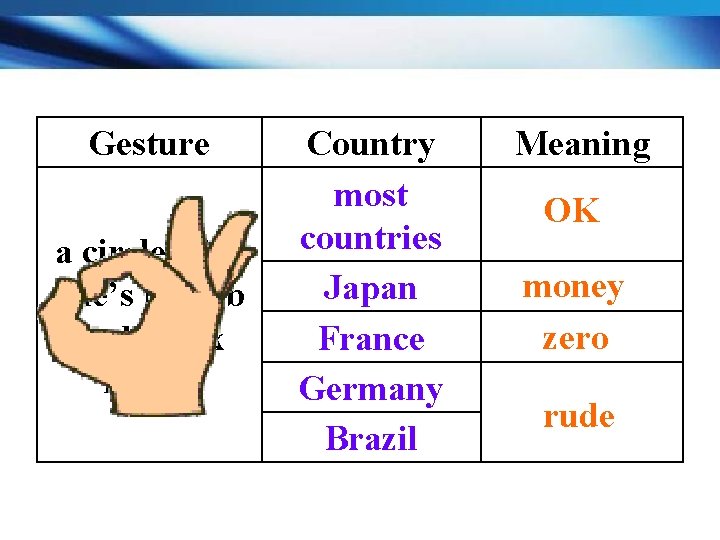
Gesture a circle with one’s thumb and index finger Country most countries Japan France Germany Brazil Meaning OK money zero rude
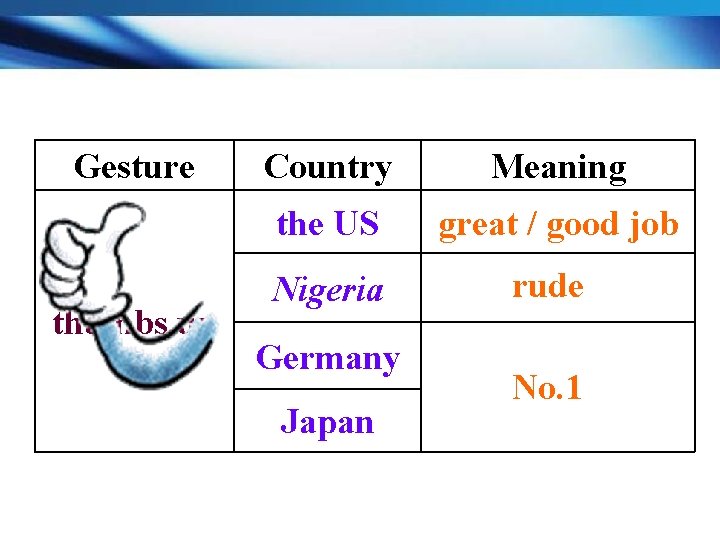
Gesture thumbs up Country Meaning the US great / good job Nigeria rude Germany Japan No. 1
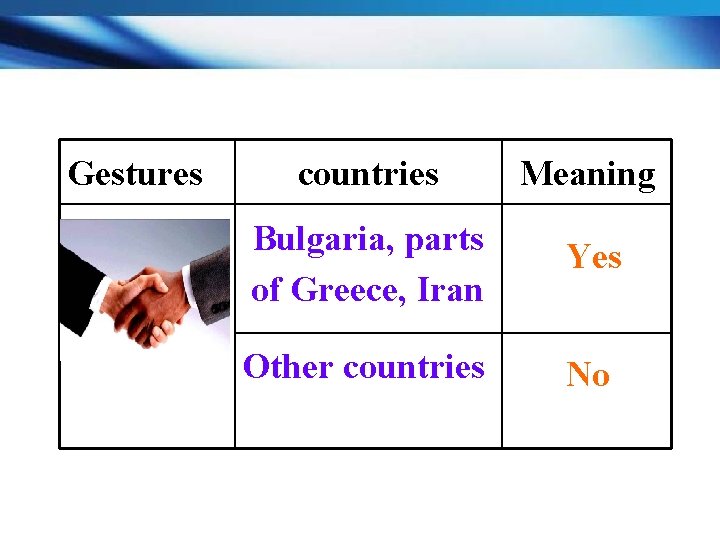
Gestures countries Meaning Shaking one’s hand Bulgaria, parts of Greece, Iran Yes Other countries No
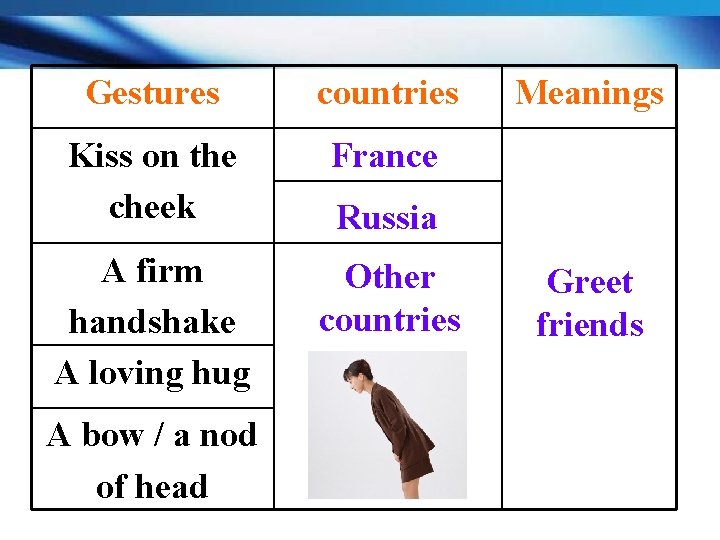
Gestures countries Kiss on the cheek France A firm handshake A loving hug Other countries A bow / a nod of head Meanings Russia Greet friends