
Do you have a brain Do you have
Do you have a brain?
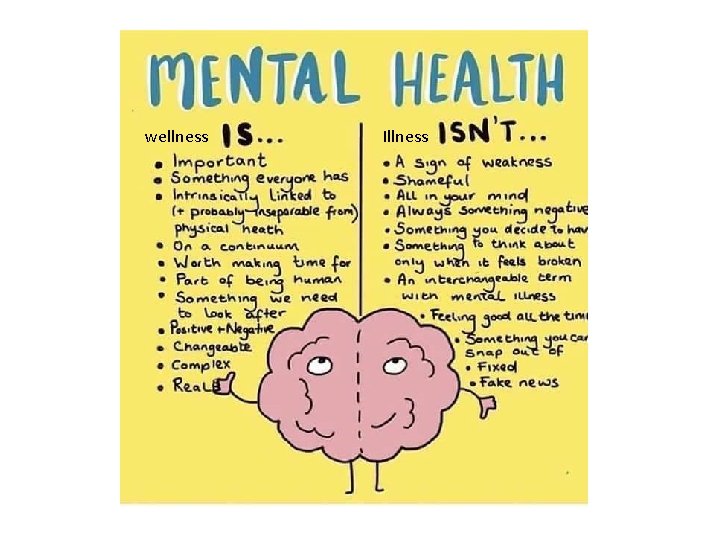
Do you have a brain? Then you have mental health!
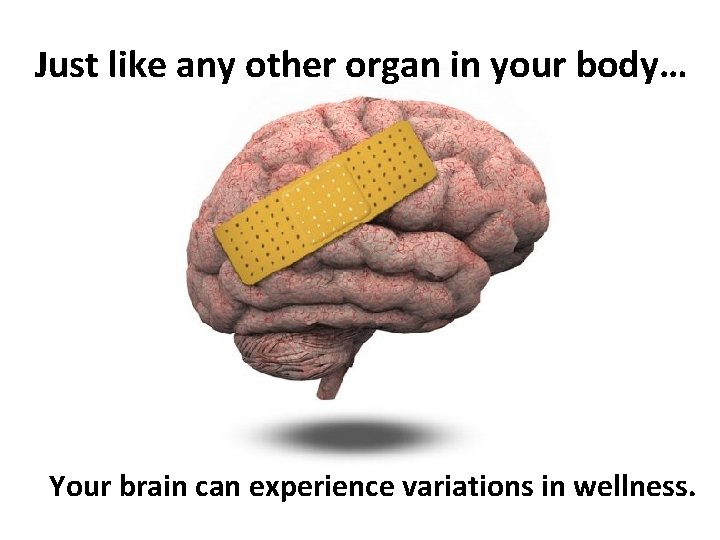
Just like any other organ in your body… Your brain can experience variations in wellness.
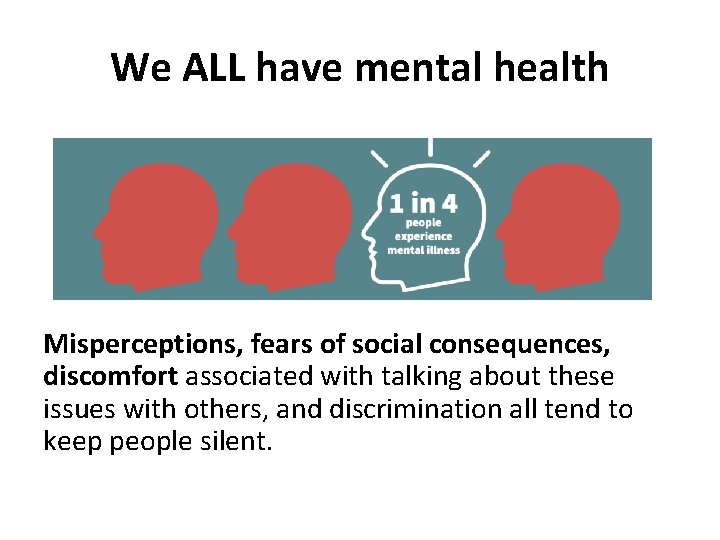
We ALL have mental health Misperceptions, fears of social consequences, discomfort associated with talking about these issues with others, and discrimination all tend to keep people silent.
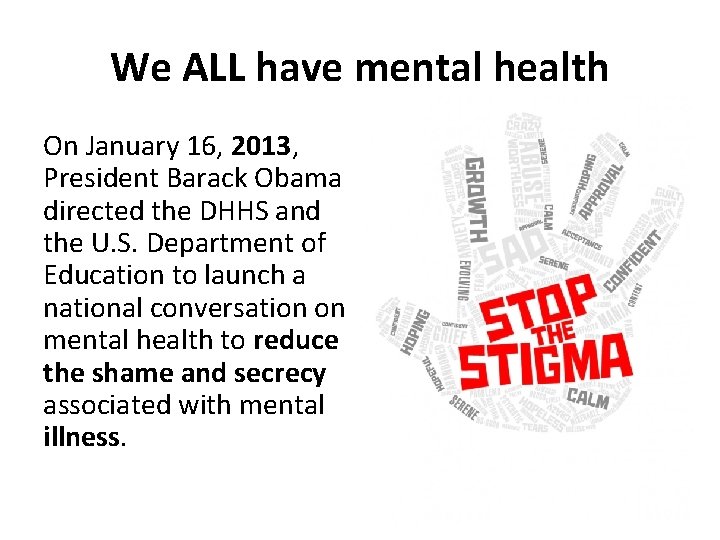
We ALL have mental health On January 16, 2013, President Barack Obama directed the DHHS and the U. S. Department of Education to launch a national conversation on mental health to reduce the shame and secrecy associated with mental illness.
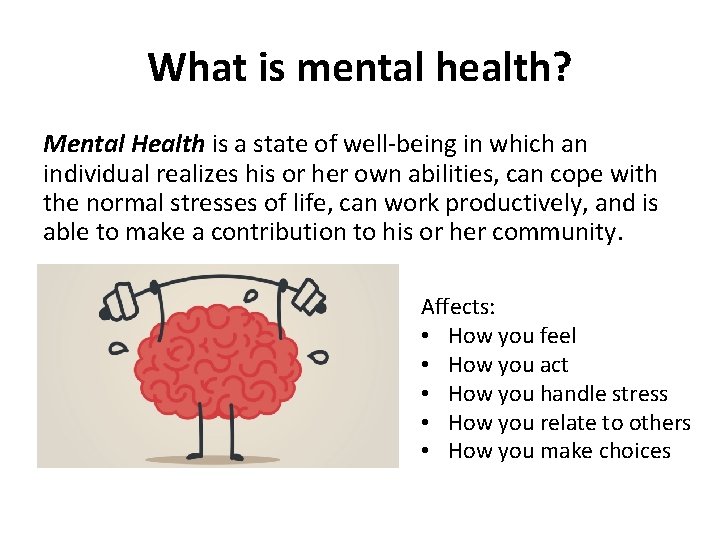
What is mental health? Mental Health is a state of well-being in which an individual realizes his or her own abilities, can cope with the normal stresses of life, can work productively, and is able to make a contribution to his or her community. Affects: • How you feel • How you act • How you handle stress • How you relate to others • How you make choices
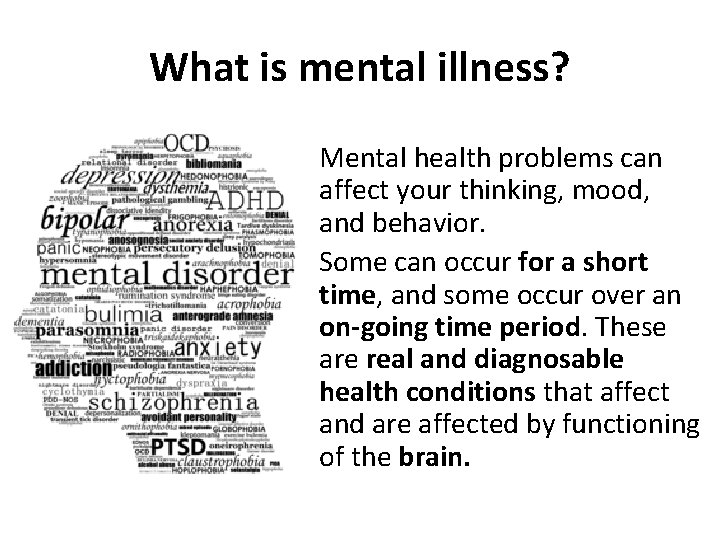
What is mental illness? Mental health problems can affect your thinking, mood, and behavior. Some can occur for a short time, and some occur over an on-going time period. These are real and diagnosable health conditions that affect and are affected by functioning of the brain.
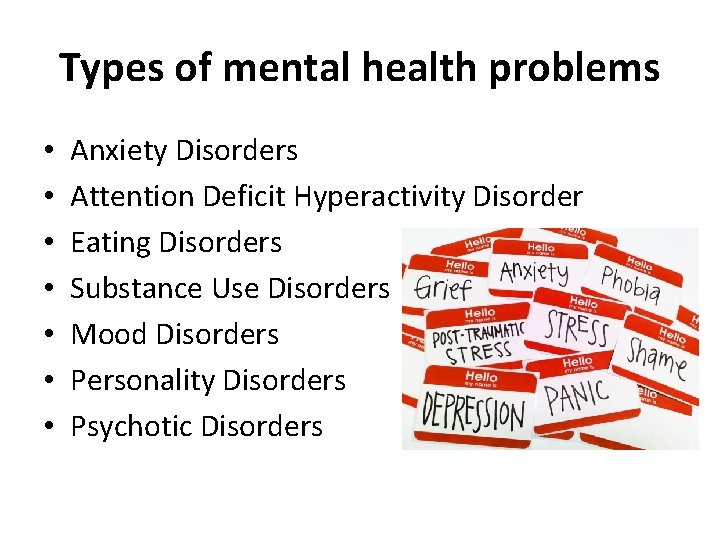
Types of mental health problems • • Anxiety Disorders Attention Deficit Hyperactivity Disorder Eating Disorders Substance Use Disorders Mood Disorders Personality Disorders Psychotic Disorders
Mental Health Depends On… Overall Health—overcoming or managing one’s disease(s) or symptoms and making informed, healthy choices that support physical and emotional wellbeing. Home—a stable and safe place to live.
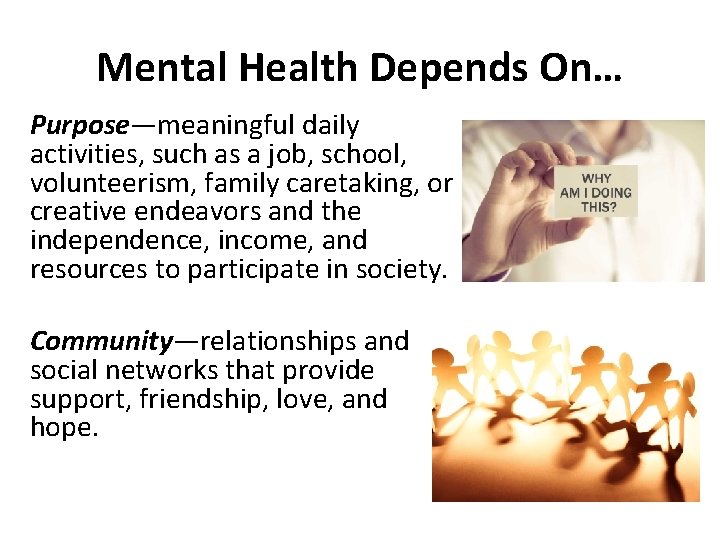
Mental Health Depends On… Purpose—meaningful daily activities, such as a job, school, volunteerism, family caretaking, or creative endeavors and the independence, income, and resources to participate in society. Community—relationships and social networks that provide support, friendship, love, and hope.
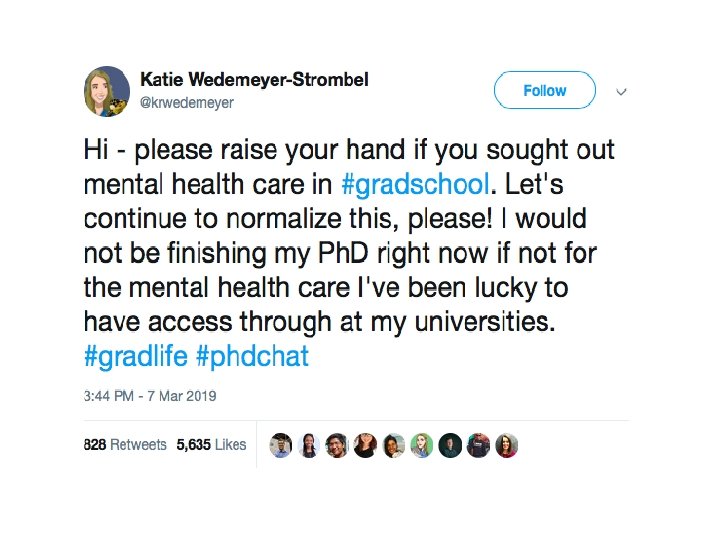
Why Talk About It? When we promote mental health, we help people improve their health and well- being, have positive self-esteem, and to be valued and contributing members of their communities. Mental health promotion also helps build resiliency in people, helping them cope better during life’s challenges. Home/Purpose/Community – largely transient for young researchers!
Why Talk About It @ CFA? Why should the community care? It's not only because trainees are suffering; it's also because intellectual health is linked with psychological health. Most of us are at our most productive when we're well adjusted—when we feel respected, valued, and confident in our potential. Unfortunately, that describes a rather small fraction of the science-trainee population.
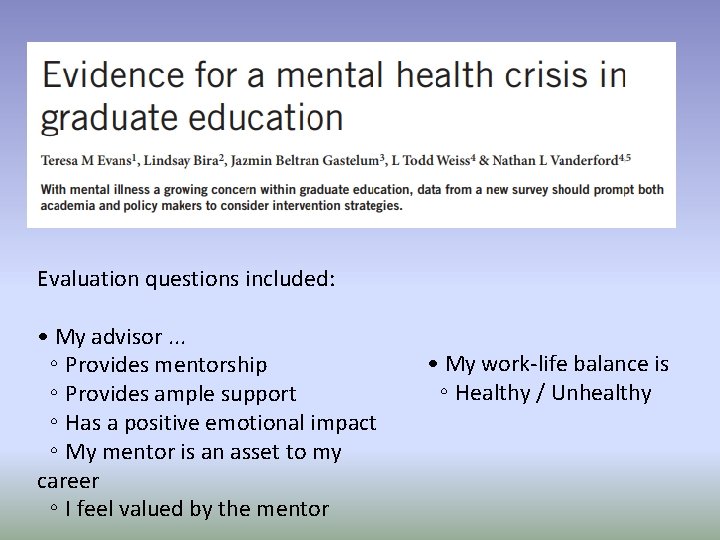
Evaluation questions included: • My advisor. . . ∘ Provides mentorship ∘ Provides ample support ∘ Has a positive emotional impact ∘ My mentor is an asset to my career ∘ I feel valued by the mentor • My work-life balance is ∘ Healthy / Unhealthy
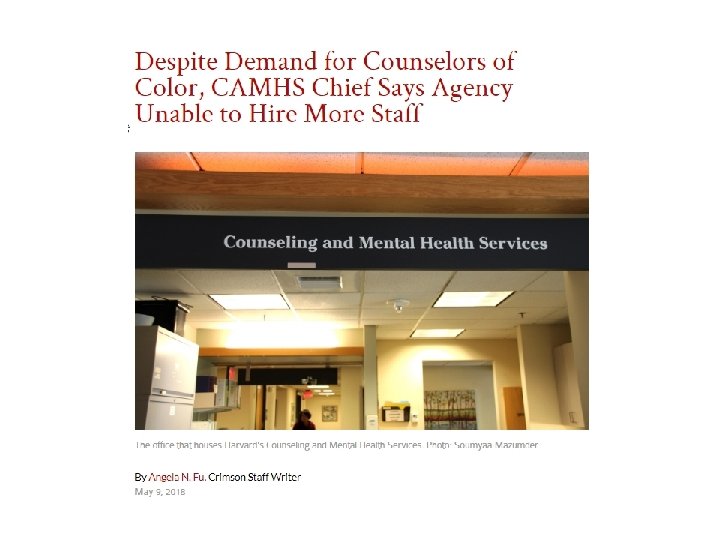
Behavioral Health Equity Racial and ethnic minorities bear a greater burden from unmet mental health needs. Lack of cultural understanding by health care providers may contribute to underdiagnosis and/or misdiagnosis of mental illness in people from racially/ethnically diverse populations.
Behavioral Health Equity The rejection of lesbian, gay, bisexual, transgender, transsexual, queer, questioning, intersex, asexual, ally, pansexual (LGBTQ+) youth by their families, or by their peers and community, can have profound and long-term impacts, including depression, use of illegal drugs, and suicidal behavior.
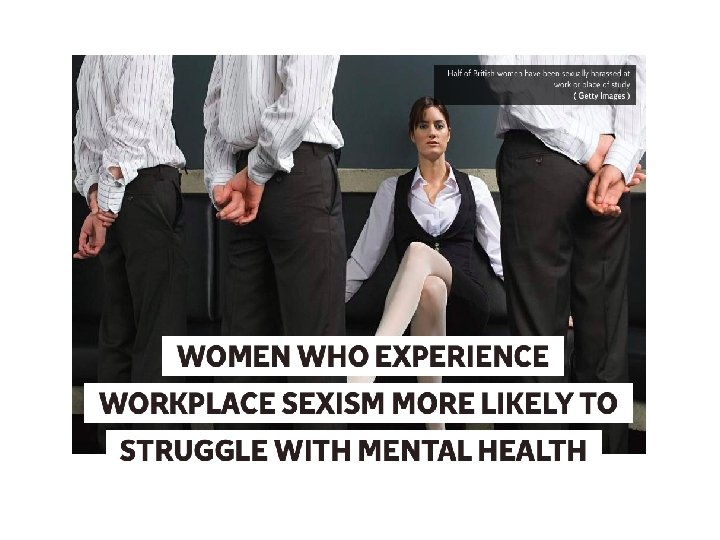
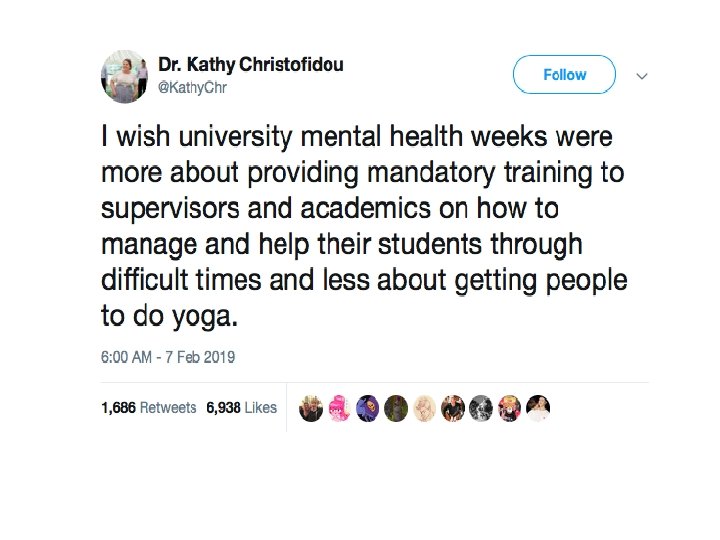
Mentors need awareness Stigma can stop people from self-identifying because they are afraid of how they may be perceived and treated. • Mental health problems are at times revealed in the workplace during a crisis. • Open communication and informed attitudes are the best tools any mentor can have.
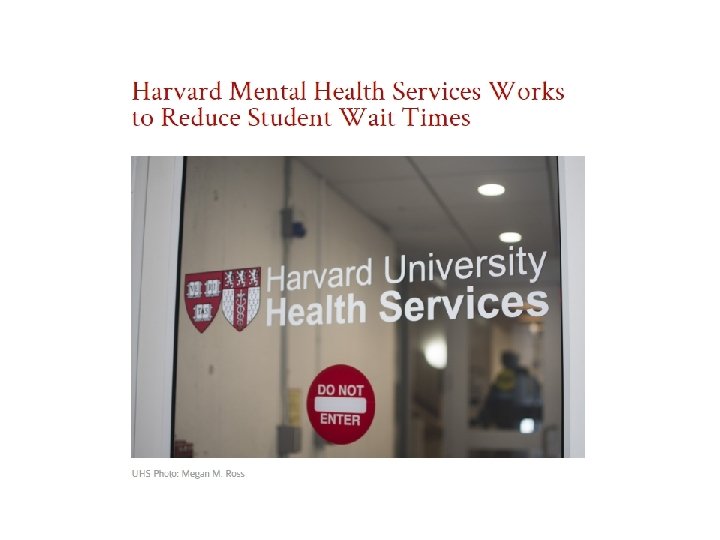
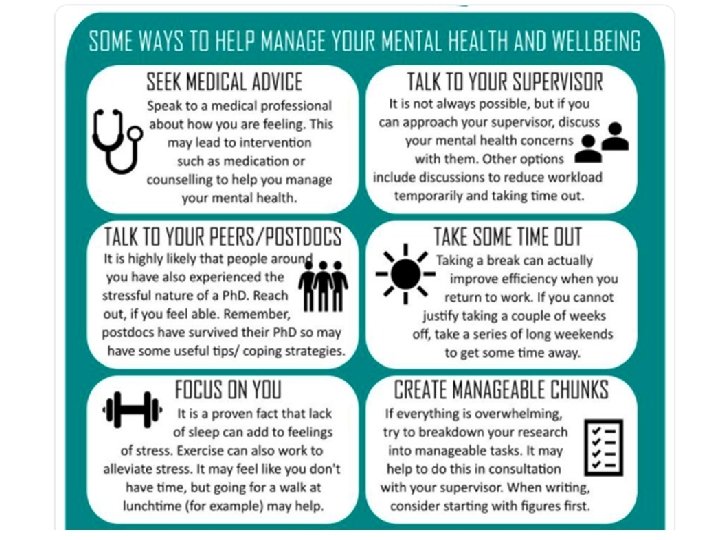
What can we do? • Pay attention to language – awareness of the words we use that contribute to stigmatizing mental issues • Rethink “sick days” – the mental health day is real • Tap the Wellness Resources – acupuncture, exercise such as walking, bicycling, swimming, tennis, and anything that will keep you moving. • Get help early. The sooner you get help, the sooner you will bounce back. • Don't be afraid to tell your fellow students or colleagues, especially those close to you. • Talk to your advisor and let them know what is going on. • Have more discussions - a start to removing stigma. • Talk about your feelings. - It's a release valve. You will be stronger for it. • Educate faculty who encourage unhealthy work habits Basic human understanding and compassion
wellness Illness
- Slides: 26