
Do SKU and Network Complexity Drive Inventory Levels




- Slides: 20
Do SKU and Network Complexity Drive Inventory Levels? JOSEPH MCCORD & DAVID NOVOA GARNICA SCM 2015
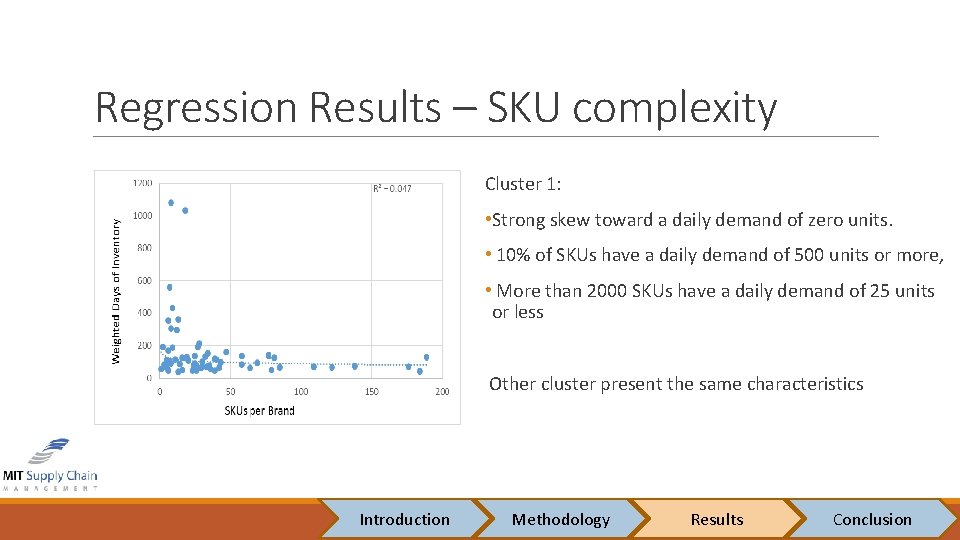
Take-aways 1. Greater complexity does not translate into higher inventory levels. 2. Inventory quantities mirror simulated inventory management heuristics rather than traditional optimal inventory models. 3. Two potential measurements of complexity: number of SKUs per brand number of stocking locations per SKU.
Outline Introduction Methodology Results Conclusion
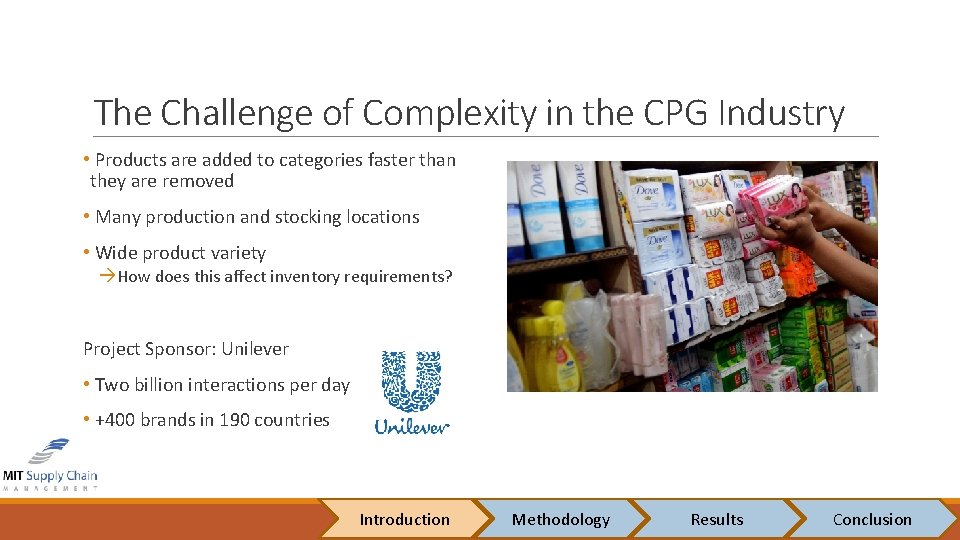
The Challenge of Complexity in the CPG Industry • Products are added to categories faster than they are removed • Many production and stocking locations • Wide product variety àHow does this affect inventory requirements? Project Sponsor: Unilever • Two billion interactions per day • +400 brands in 190 countries Introduction Methodology Results Conclusion
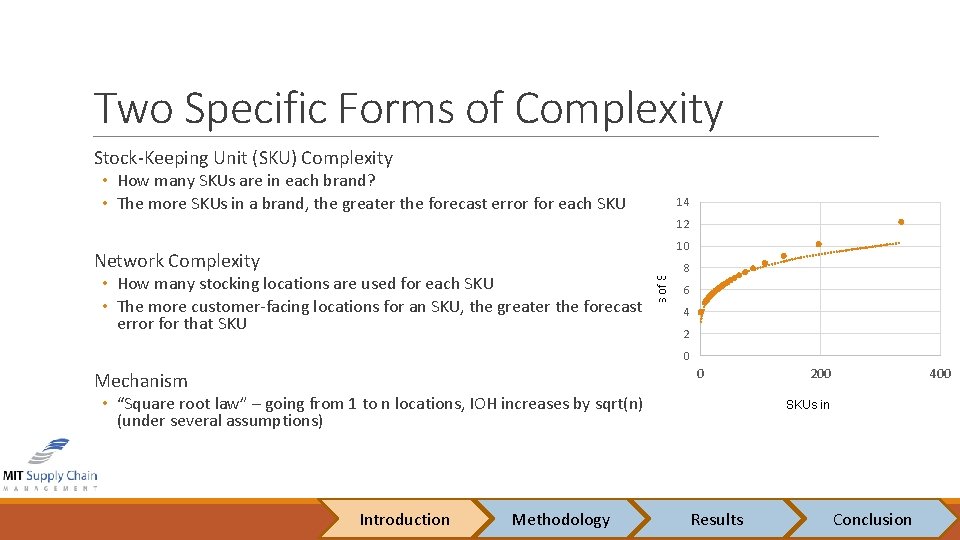
Two Specific Forms of Complexity • How many SKUs are in each brand? • The more SKUs in a brand, the greater the forecast error for each SKU Network Complexity • How many stocking locations are used for each SKU • The more customer-facing locations for an SKU, the greater the forecast error for that SKU Mechanism Weighted Days of Stock in Brand Stock-Keeping Unit (SKU) Complexity 14 12 10 8 6 4 2 0 0 • “Square root law” – going from 1 to n locations, IOH increases by sqrt(n) (under several assumptions) Introduction Methodology 200 400 SKUs in Results Conclusion
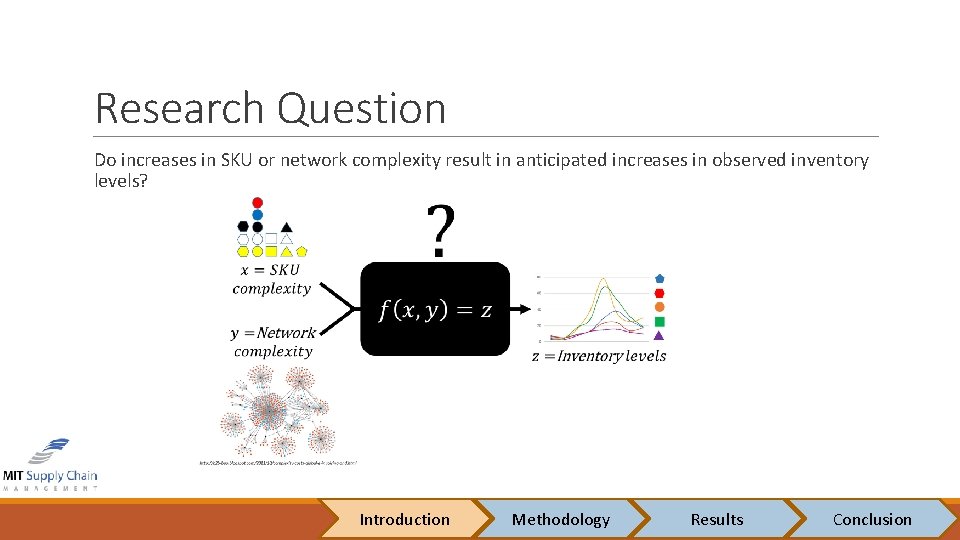
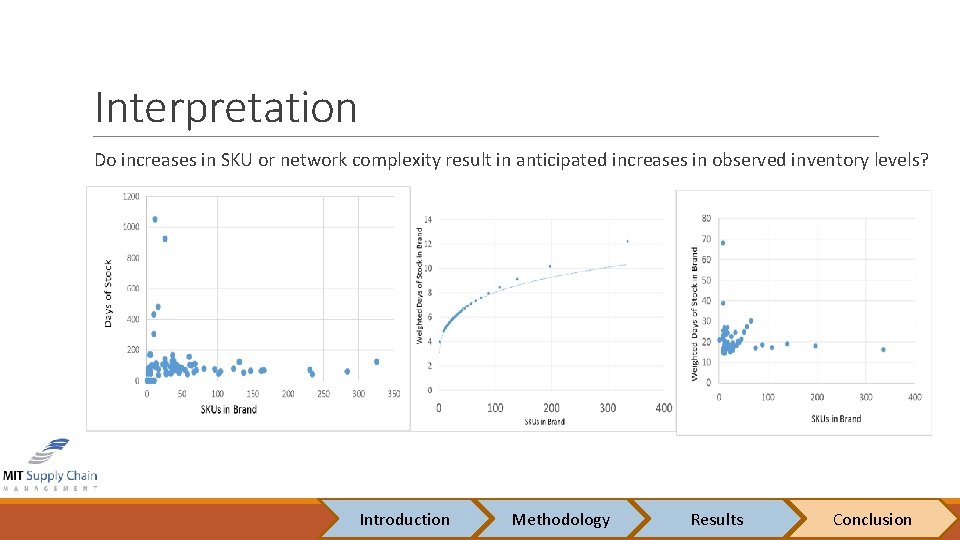
Research Question Do increases in SKU or network complexity result in anticipated increases in observed inventory levels? Introduction Methodology Results Conclusion
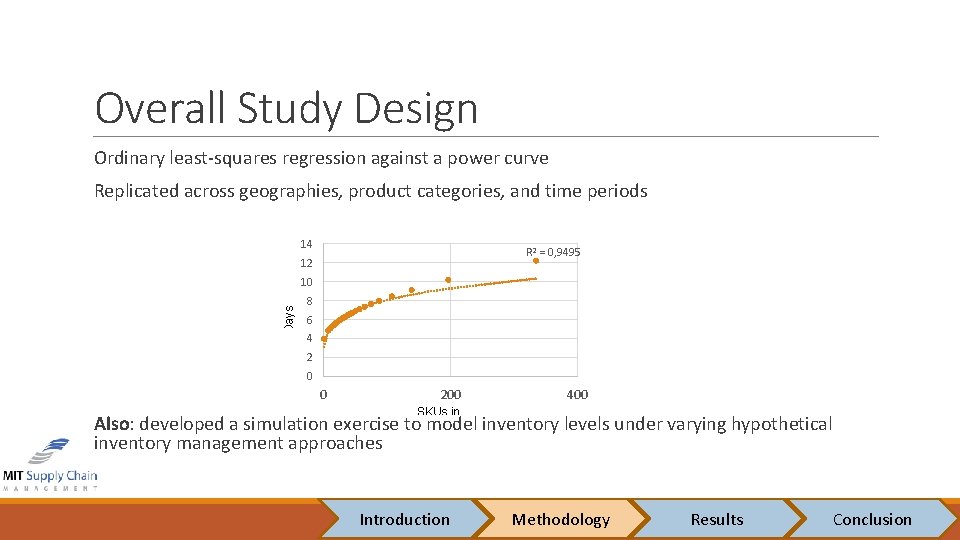
Overall Study Design Ordinary least-squares regression against a power curve Weighted Days of Stock in Replicated across geographies, product categories, and time periods 14 R 2 = 0, 9495 12 10 8 6 4 2 0 0 200 400 SKUs in Also: developed a simulation exercise to model inventory levels under varying hypothetical inventory management approaches Introduction Methodology Results Conclusion
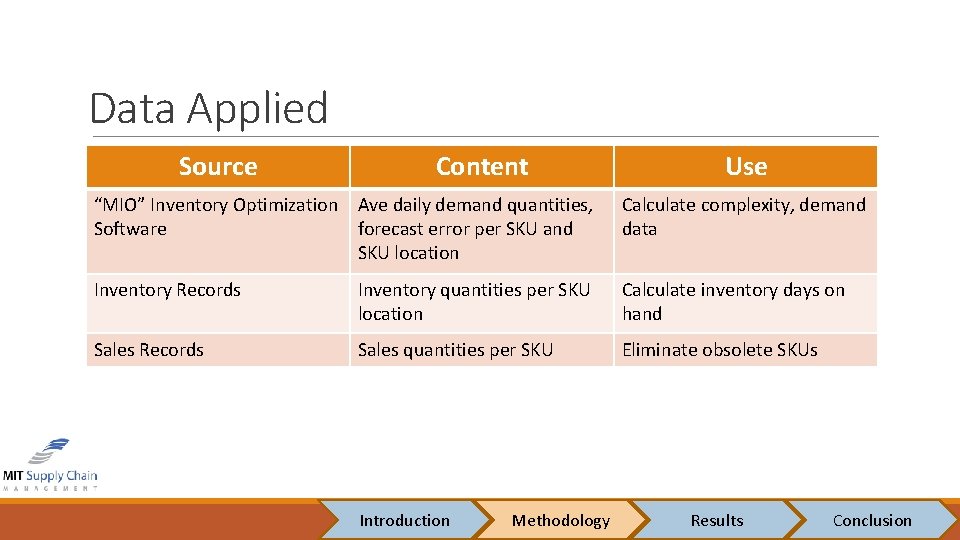
Data Applied Source Content Use “MIO” Inventory Optimization Ave daily demand quantities, Software forecast error per SKU and SKU location Calculate complexity, demand data Inventory Records Inventory quantities per SKU location Calculate inventory days on hand Sales Records Sales quantities per SKU Eliminate obsolete SKUs Introduction Methodology Results Conclusion
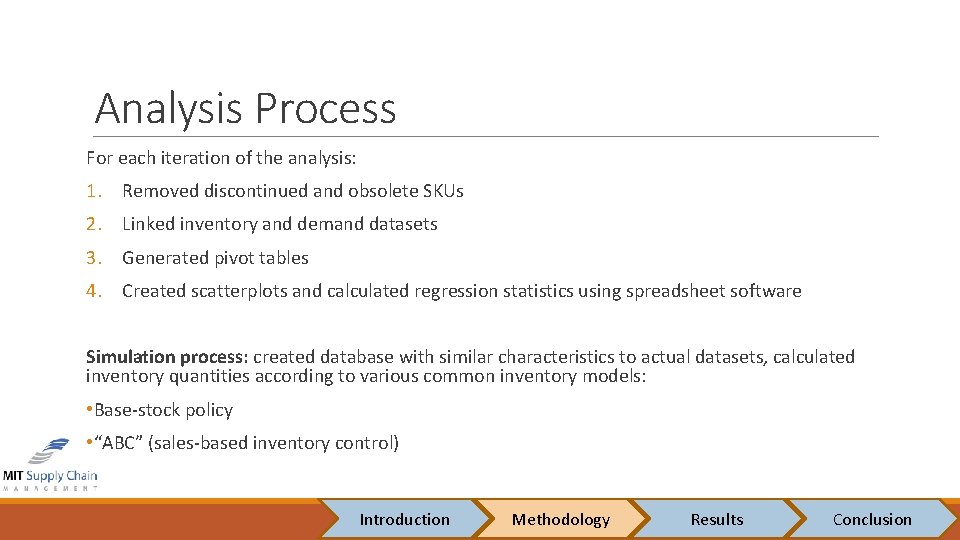
Analysis Process For each iteration of the analysis: 1. Removed discontinued and obsolete SKUs 2. Linked inventory and demand datasets 3. Generated pivot tables 4. Created scatterplots and calculated regression statistics using spreadsheet software Simulation process: created database with similar characteristics to actual datasets, calculated inventory quantities according to various common inventory models: • Base-stock policy • “ABC” (sales-based inventory control) Introduction Methodology Results Conclusion
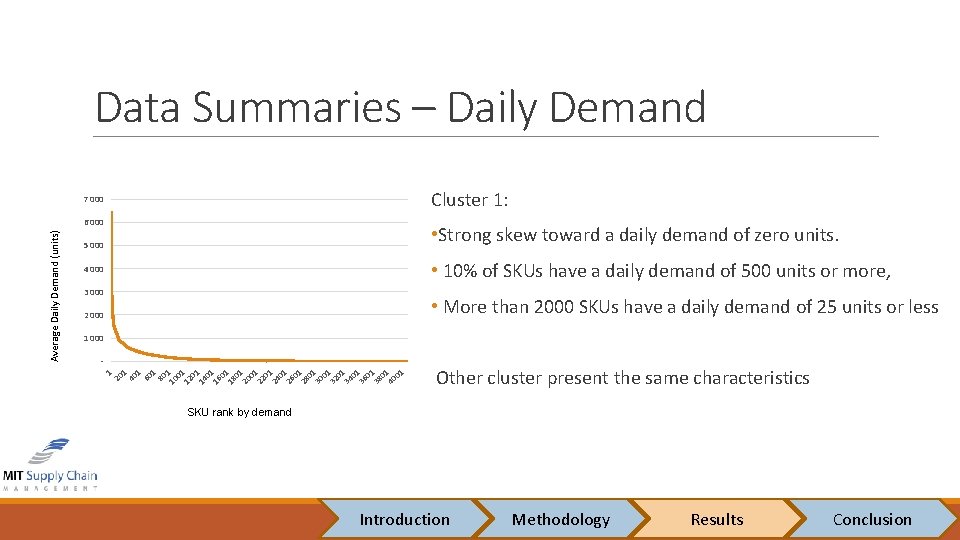
Data Summaries – Daily Demand Cluster 1: 7 000 • Strong skew toward a daily demand of zero units. 5 000 • 10% of SKUs have a daily demand of 500 units or more, 4 000 3 000 • More than 2000 SKUs have a daily demand of 25 units or less 2 000 1 20 1 40 1 60 1 80 1 10 01 12 01 14 01 16 01 18 01 20 01 22 01 24 01 26 01 28 01 30 01 32 01 34 01 36 01 38 01 40 01 Average Daily Demand (units) 6 000 Other cluster present the same characteristics SKU rank by demand Introduction Methodology Results Conclusion
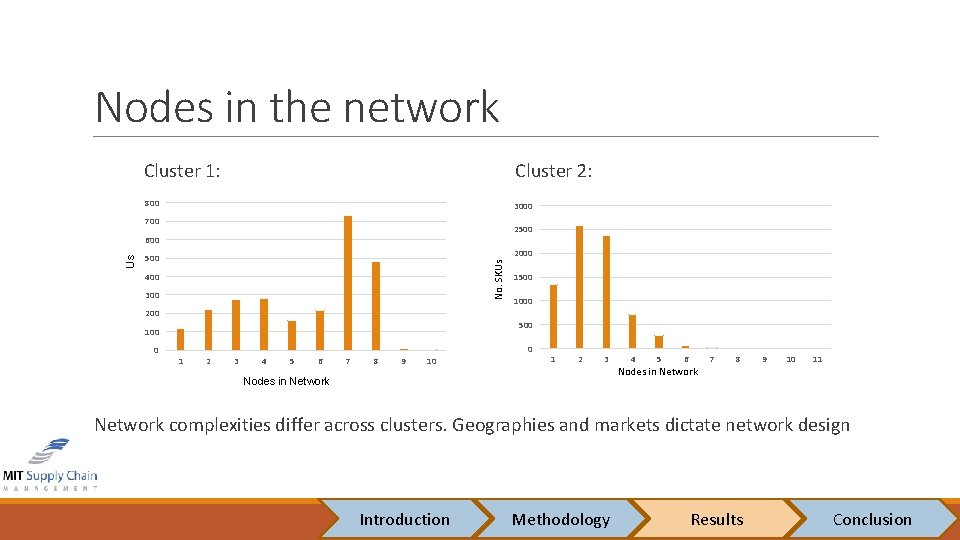
Nodes in the network Cluster 1: Cluster 2: 800 3000 700 2500 2000 500 No. SKUs 600 400 300 1500 1000 200 500 100 0 0 1 2 3 4 5 6 7 8 9 10 1 2 3 Nodes in Network 4 5 6 Nodes in Network 7 8 9 10 11 Network complexities differ across clusters. Geographies and markets dictate network design Introduction Methodology Results Conclusion
Regression Results – SKU complexity Cluster 1: • Strong skew toward a daily demand of zero units. • 10% of SKUs have a daily demand of 500 units or more, • More than 2000 SKUs have a daily demand of 25 units or less Other cluster present the same characteristics Introduction Methodology Results Conclusion
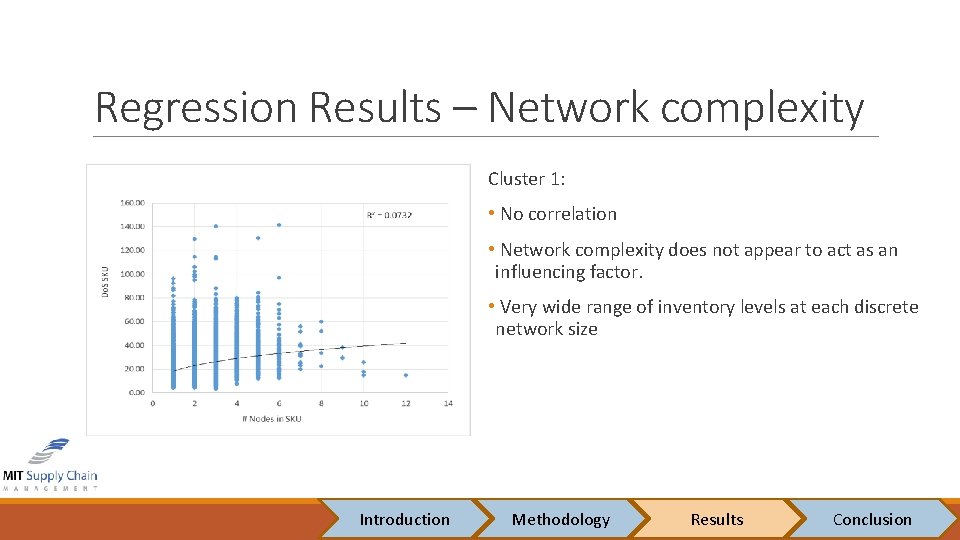
Regression Results – Network complexity Cluster 1: • No correlation • Network complexity does not appear to act as an influencing factor. • Very wide range of inventory levels at each discrete network size Introduction Methodology Results Conclusion
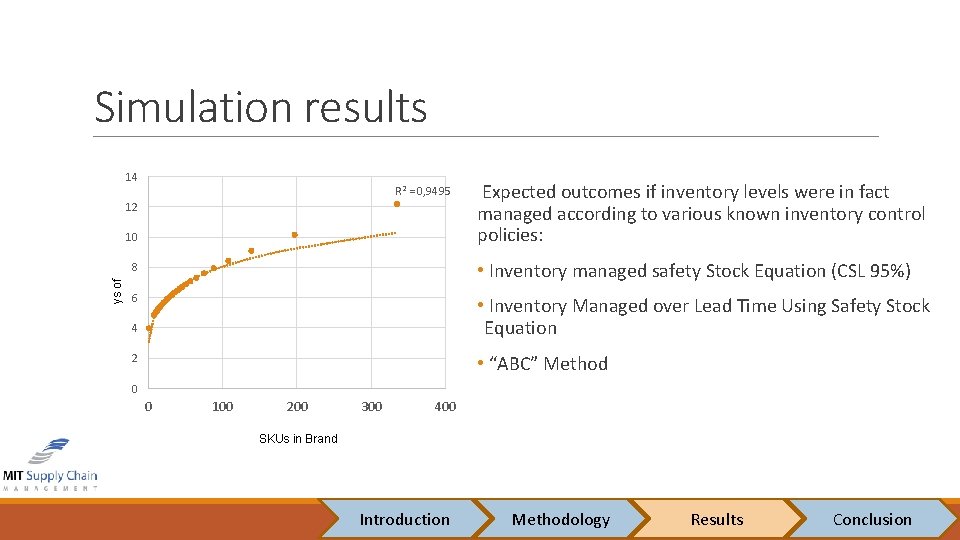
Simulation results 14 R 2 = 0, 9495 Weighted Days of Stock in 12 10 Expected outcomes if inventory levels were in fact managed according to various known inventory control policies: 8 • Inventory managed safety Stock Equation (CSL 95%) 6 • Inventory Managed over Lead Time Using Safety Stock Equation 4 • “ABC” Method 2 0 0 100 200 300 400 SKUs in Brand Introduction Methodology Results Conclusion
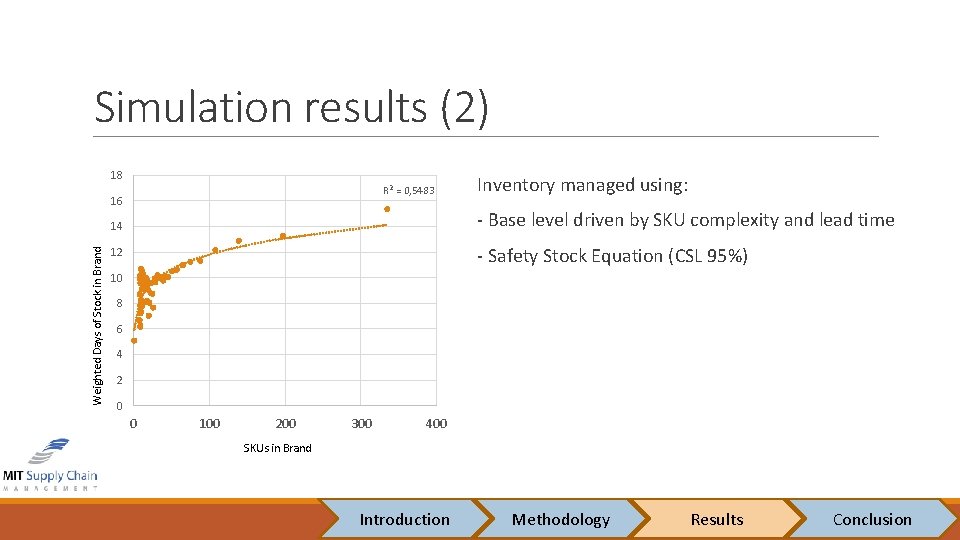
Simulation results (2) 18 R 2 = 0, 5483 16 - Base level driven by SKU complexity and lead time 14 Weighted Days of Stock in Brand Inventory managed using: - Safety Stock Equation (CSL 95%) 12 10 8 6 4 2 0 0 100 200 300 400 SKUs in Brand Introduction Methodology Results Conclusion
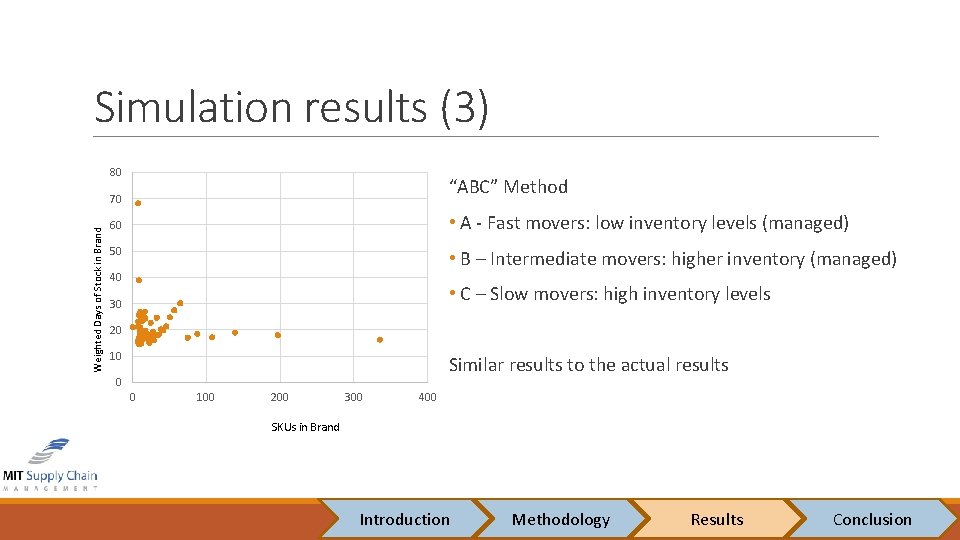
Simulation results (3) 80 “ABC” Method Weighted Days of Stock in Brand 70 • A - Fast movers: low inventory levels (managed) 60 50 • B – Intermediate movers: higher inventory (managed) 40 • C – Slow movers: high inventory levels 30 20 10 Similar results to the actual results 0 0 100 200 300 400 SKUs in Brand Introduction Methodology Results Conclusion
Interpretation Do increases in SKU or network complexity result in anticipated increases in observed inventory levels? Introduction Methodology Results Conclusion
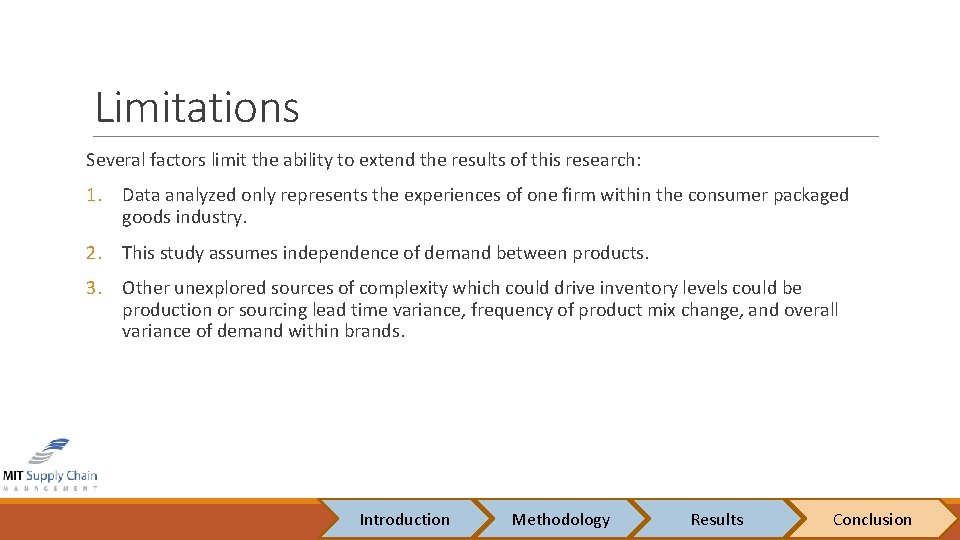
Limitations Several factors limit the ability to extend the results of this research: 1. Data analyzed only represents the experiences of one firm within the consumer packaged goods industry. 2. This study assumes independence of demand between products. 3. Other unexplored sources of complexity which could drive inventory levels could be production or sourcing lead time variance, frequency of product mix change, and overall variance of demand within brands. Introduction Methodology Results Conclusion
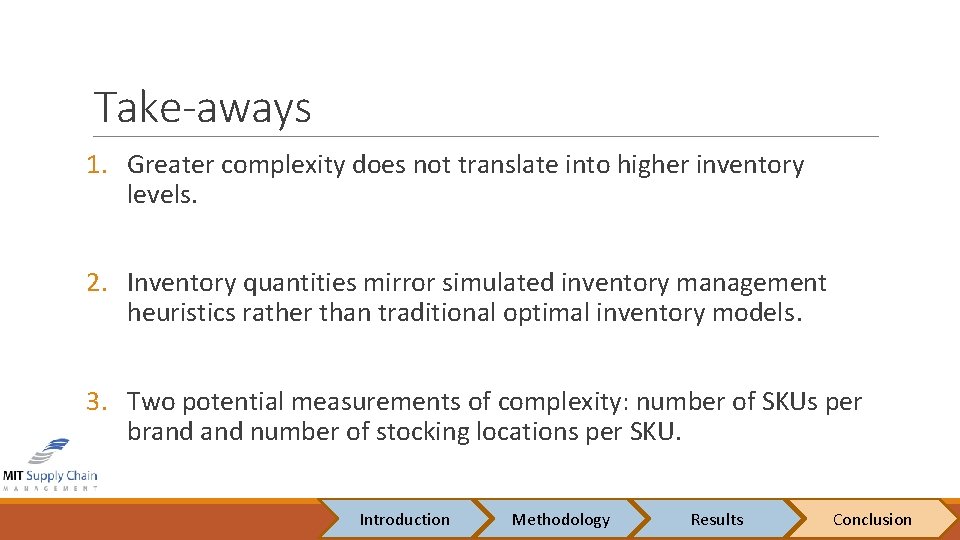
Take-aways 1. Greater complexity does not translate into higher inventory levels. 2. Inventory quantities mirror simulated inventory management heuristics rather than traditional optimal inventory models. 3. Two potential measurements of complexity: number of SKUs per brand number of stocking locations per SKU. Introduction Methodology Results Conclusion
Thank you! Questions?