
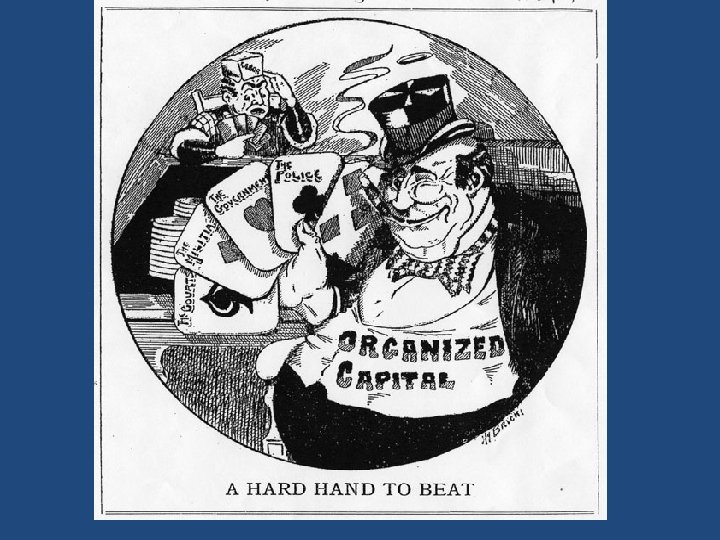
Do Now What does this cartoon demonstrate about
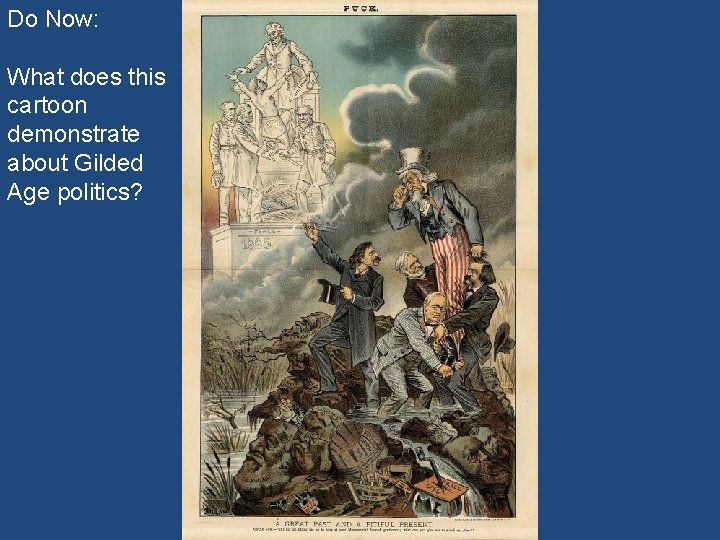
Do Now: What does this cartoon demonstrate about Gilded Age politics?
6. Gilded Age Politics Mr. Winchell APUSH Period 6
Key Concepts • 6. 3. II-Dramatic social changes in the period inspired political debates over citizenship, corruption, and the proper relationship between business and government. – A: The major political parties appealed to lingering divisions from the Civil War and contended over tariffs and currency issues, even as reformers argued that economic greed and self-interest had corrupted all levels of government.
AP Prompt • Evaluate the extent to which politics in the Gilded Age demonstrated continuity in American history.
OUTLINE • • Political Issues of the Gilded Age Economic Issues of the Gilded Age National Politics Machine Politics
Gilded Age Political Issues • • Civil Service Reform Role of Government in Business Social Darwinism Machine Politics
Gilded Age Economic Issues • Tariffs • Currency Reform
Gilded Age Politics • The American Presidents who resided in the White House from the end of the Civil War until the 1890 s are sometimes called "the forgettable Presidents. ” • Congress strong, but tied to corporate interests. • Local politics (state, city, county) stronger, but controlled by political machines.
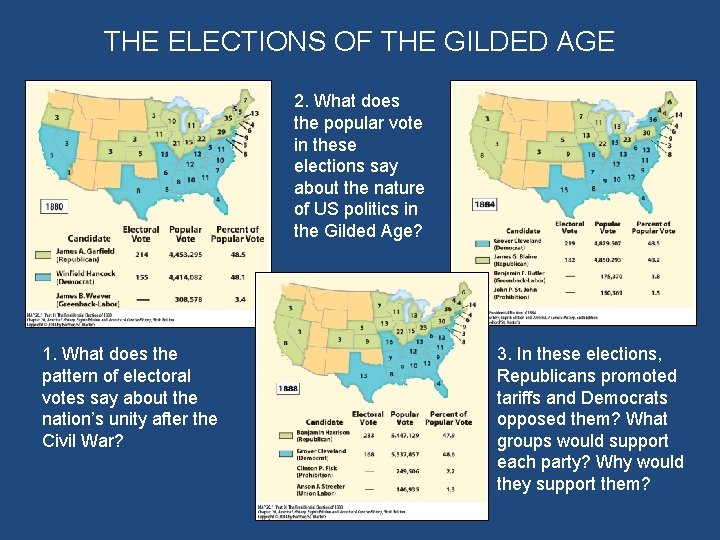
THE ELECTIONS OF THE GILDED AGE 2. What does the popular vote in these elections say about the nature of US politics in the Gilded Age? 1. What does the pattern of electoral votes say about the nation’s unity after the Civil War? 3. In these elections, Republicans promoted tariffs and Democrats opposed them? What groups would support each party? Why would they support them?
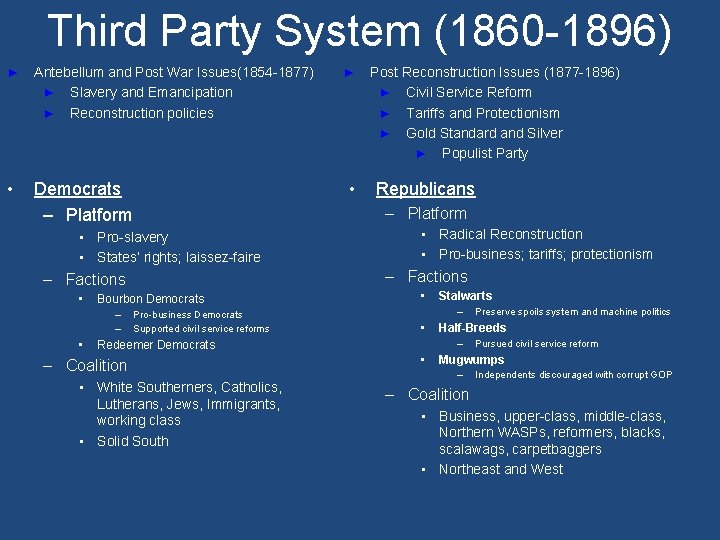
Third Party System (1860 -1896) ► Antebellum and Post War Issues(1854 -1877) ► Slavery and Emancipation ► Reconstruction policies • Democrats – Platform ► • Post Reconstruction Issues (1877 -1896) ► Civil Service Reform ► Tariffs and Protectionism ► Gold Standard and Silver ► Populist Party Republicans – Platform • Pro-slavery • States’ rights; laissez-faire • Radical Reconstruction • Pro-business; tariffs; protectionism – Factions • • Bourbon Democrats – – • Pro-business Democrats Supported civil service reforms – • • White Southerners, Catholics, Lutherans, Jews, Immigrants, working class • Solid South • Preserve spoils system and machine politics Half-Breeds – Redeemer Democrats – Coalition Stalwarts Pursued civil service reform Mugwumps – Independents discouraged with corrupt GOP – Coalition • Business, upper-class, middle-class, Northern WASPs, reformers, blacks, scalawags, carpetbaggers • Northeast and West
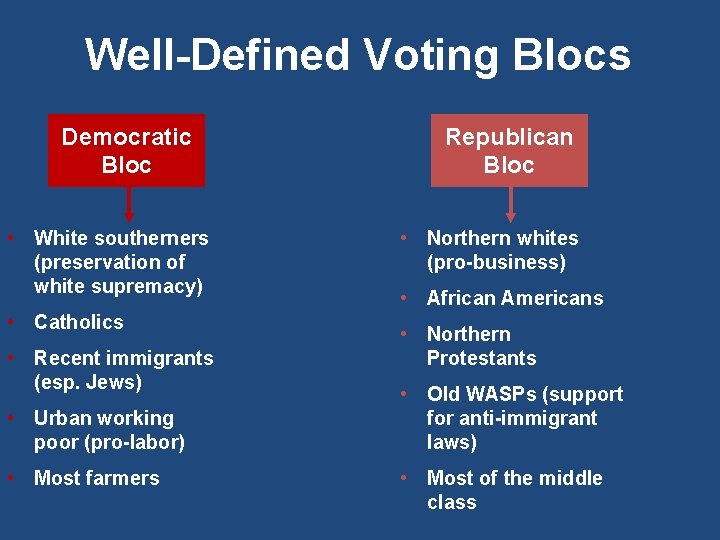
Well-Defined Voting Blocs Democratic Bloc • White southerners (preservation of white supremacy) • Catholics • Recent immigrants (esp. Jews) • Urban working poor (pro-labor) • Most farmers Republican Bloc • Northern whites (pro-business) • African Americans • Northern Protestants • Old WASPs (support for anti-immigrant laws) • Most of the middle class
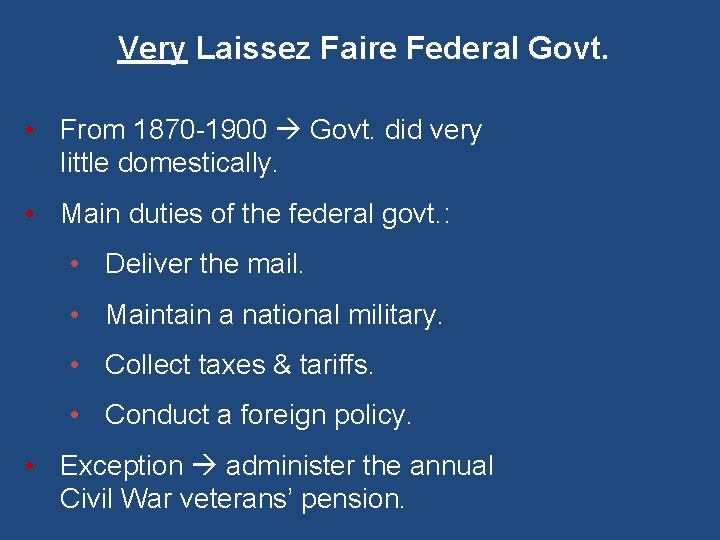
Very Laissez Faire Federal Govt. • From 1870 -1900 Govt. did very little domestically. • Main duties of the federal govt. : • Deliver the mail. • Maintain a national military. • Collect taxes & tariffs. • Conduct a foreign policy. • Exception administer the annual Civil War veterans’ pension.
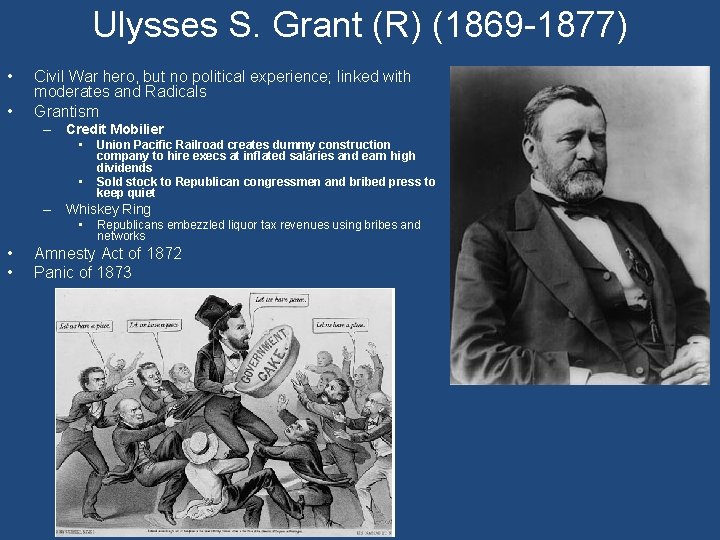
Ulysses S. Grant (R) (1869 -1877) • • Civil War hero, but no political experience; linked with moderates and Radicals Grantism – Credit Mobilier • • Union Pacific Railroad creates dummy construction company to hire execs at inflated salaries and earn high dividends Sold stock to Republican congressmen and bribed press to keep quiet – Whiskey Ring • • • Republicans embezzled liquor tax revenues using bribes and networks Amnesty Act of 1872 Panic of 1873
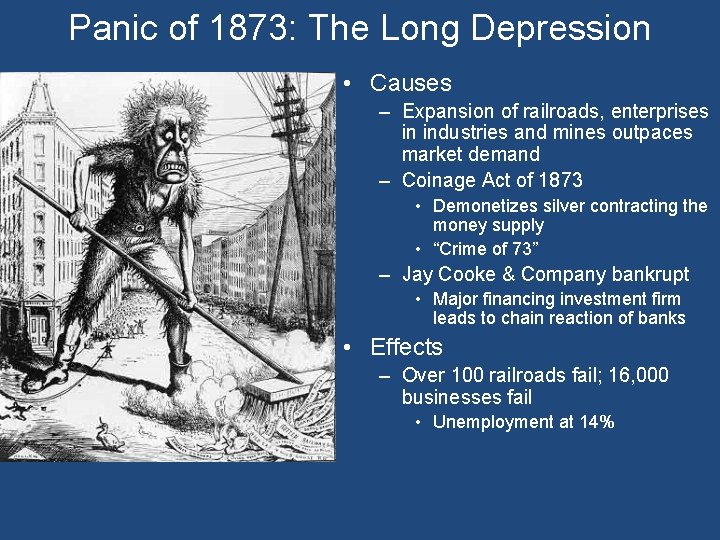
Panic of 1873: The Long Depression • Causes – Expansion of railroads, enterprises in industries and mines outpaces market demand – Coinage Act of 1873 • Demonetizes silver contracting the money supply • “Crime of 73” – Jay Cooke & Company bankrupt • Major financing investment firm leads to chain reaction of banks • Effects – Over 100 railroads fail; 16, 000 businesses fail • Unemployment at 14%
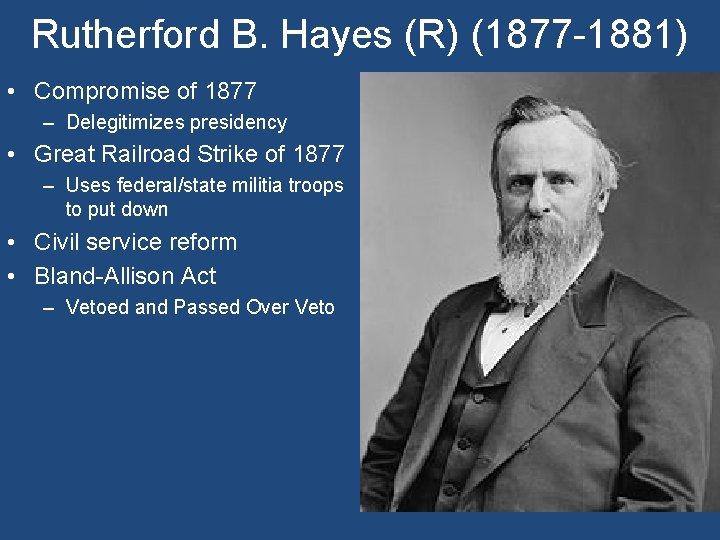
Rutherford B. Hayes (R) (1877 -1881) • Compromise of 1877 – Delegitimizes presidency • Great Railroad Strike of 1877 – Uses federal/state militia troops to put down • Civil service reform • Bland-Allison Act – Vetoed and Passed Over Veto
Political Quarrels of the Hayes Administration • Political infighting within Rep. party between Stalwarts and Half-Breeds – Stalwarts = strong supporters of Grant & party loyalty • Stalwarts led by Roscoe Conkling (NY) – Half-Breeds = more liberal & reform-minded Republicans • Half-Breeds led by James Blaine (ME)
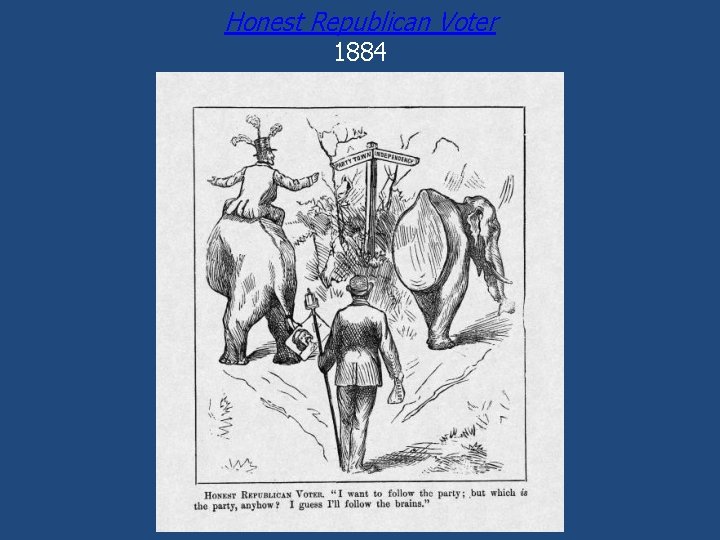
Honest Republican Voter 1884
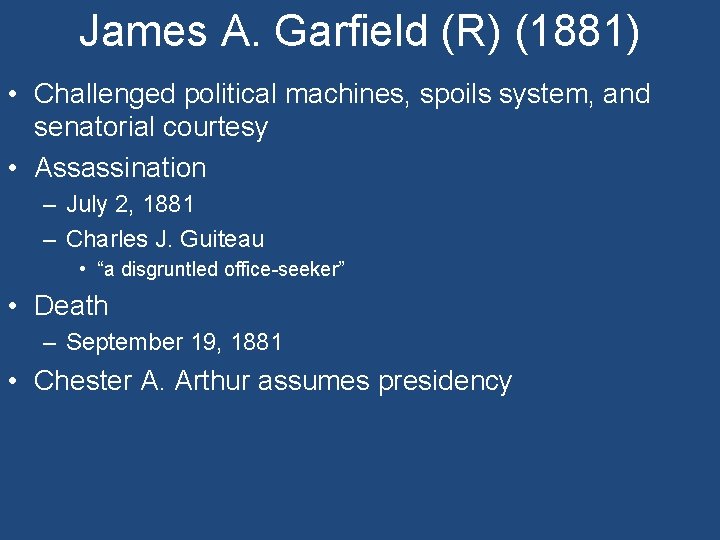
James A. Garfield (R) (1881) • Challenged political machines, spoils system, and senatorial courtesy • Assassination – July 2, 1881 – Charles J. Guiteau • “a disgruntled office-seeker” • Death – September 19, 1881 • Chester A. Arthur assumes presidency
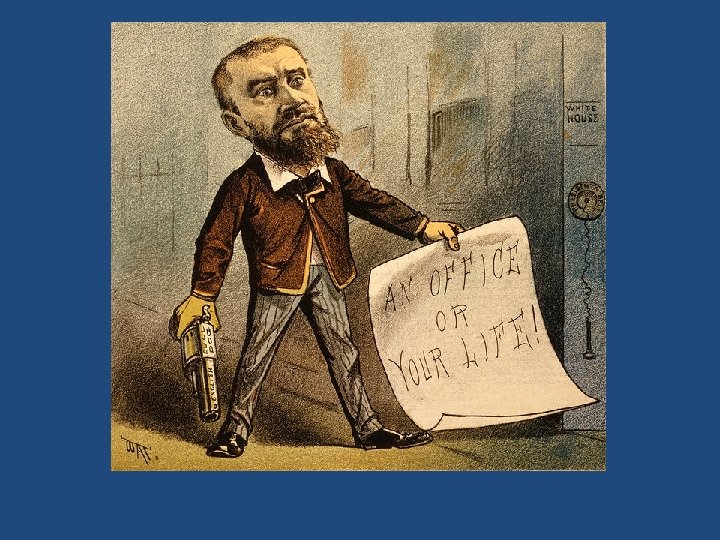
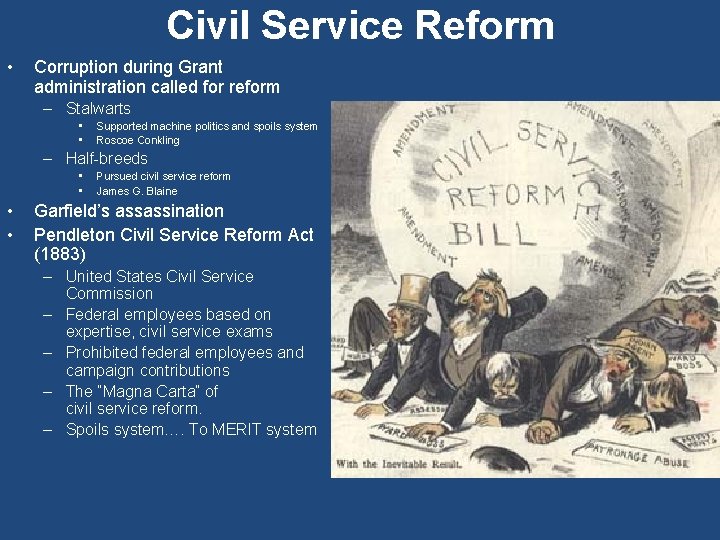
Civil Service Reform • Corruption during Grant administration called for reform – Stalwarts • • Supported machine politics and spoils system Roscoe Conkling – Half-breeds • • Pursued civil service reform James G. Blaine Garfield’s assassination Pendleton Civil Service Reform Act (1883) – United States Civil Service Commission – Federal employees based on expertise, civil service exams – Prohibited federal employees and campaign contributions – The “Magna Carta” of civil service reform. – Spoils system…. To MERIT system
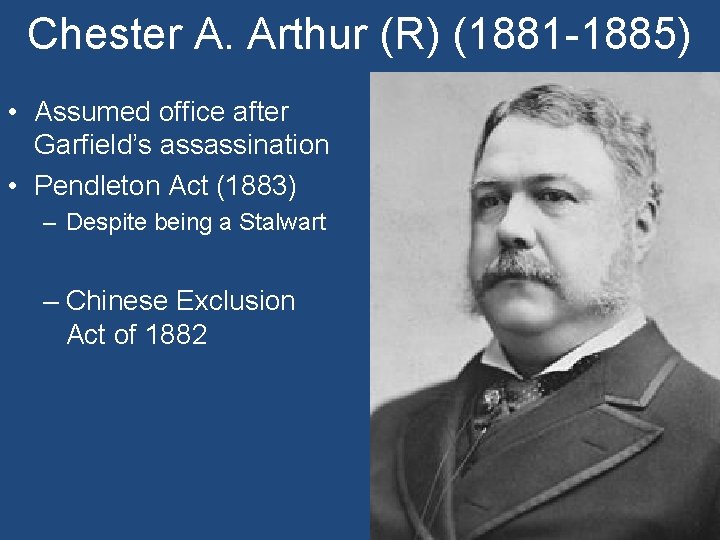
Chester A. Arthur (R) (1881 -1885) • Assumed office after Garfield’s assassination • Pendleton Act (1883) – Despite being a Stalwart – Chinese Exclusion Act of 1882
Gilded Age Presidents • Grant: covered him Period 5 -Corruption • Rutherford B. Hayes: Ineffective. Wanted patronage reform but his own election was corrupt • James Garfield: Wanted reform for the Civil Service-so he got shot. • Chester Arthur: Supported the Pendleton Civil Service Act of 1883 (merit system for all gov. civil service jobs) – SUPER UNINTENDED CONSEQUENCE: drove politicians and businesses together (money/influence) • Leads to a new era where politics are controlled by business
Gilded Age Presidents Cont’d • Grover Cleveland round 1: First Democrat to be president since James Buchanan. – Laissez-faire capitalism: no government involvement in the economy. – Against public bills and army pensions due to abuse post-Civil War – Supported lower tariffs • Benjamin Harrison: Billion dollar Congress – Sherman Silver Purchase Act – Mc. Kinley Tariff Bill of 1890: Highest tariff since the war. Hurts Western Farmers and Southerners • Leads to hostility • Grover Cleveland round 2: Panic of 1893. Thanks to loss of value of dollar. JP Morgan bails out the government. Angers Westerners who view as government ‘selling out’ to Wall Street.
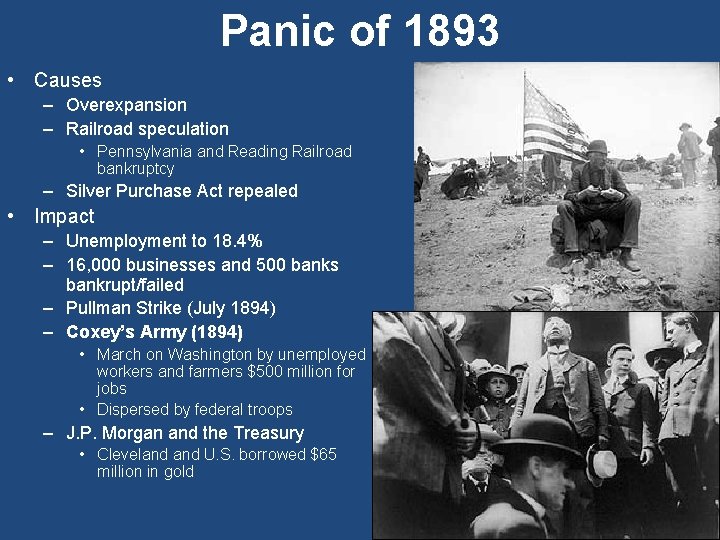
Panic of 1893 • Causes – Overexpansion – Railroad speculation • Pennsylvania and Reading Railroad bankruptcy – Silver Purchase Act repealed • Impact – Unemployment to 18. 4% – 16, 000 businesses and 500 banks bankrupt/failed – Pullman Strike (July 1894) – Coxey’s Army (1894) • March on Washington by unemployed workers and farmers $500 million for jobs • Dispersed by federal troops – J. P. Morgan and the Treasury • Cleveland U. S. borrowed $65 million in gold
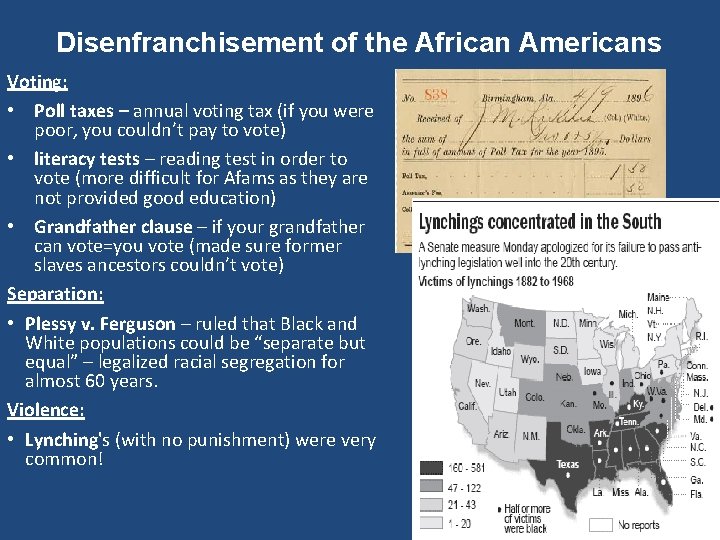
Disenfranchisement of the African Americans Voting: • Poll taxes – annual voting tax (if you were poor, you couldn’t pay to vote) • literacy tests – reading test in order to vote (more difficult for Afams as they are not provided good education) • Grandfather clause – if your grandfather can vote=you vote (made sure former slaves ancestors couldn’t vote) Separation: • Plessy v. Ferguson – ruled that Black and White populations could be “separate but equal” – legalized racial segregation for almost 60 years. Violence: • Lynching's (with no punishment) were very common!
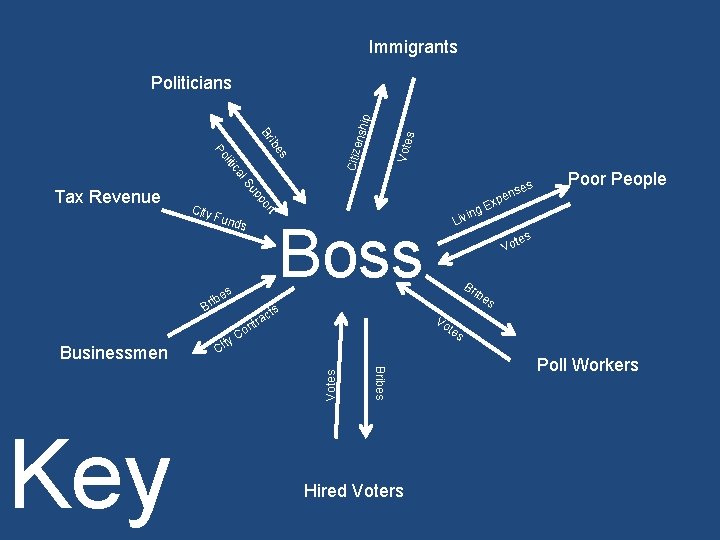
Immigrants City Fun ds B Vote s ts ac r t n Votes t Ci Hired Voters p Ex se en Poor People L tes Vo Br ibe Vo o y. C Bribes Key g ivin Boss es rib Businessmen s rt po up Tax Revenue l. S ca liti Citiz es Po ib Br ensh ip Politicians s tes Poll Workers
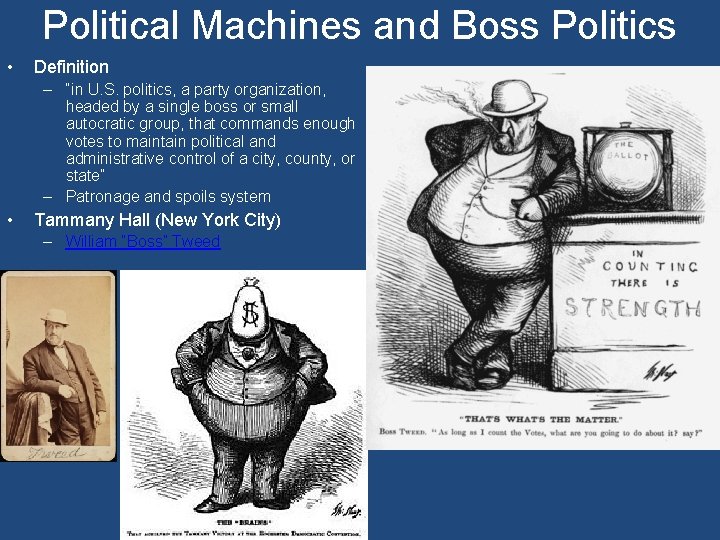
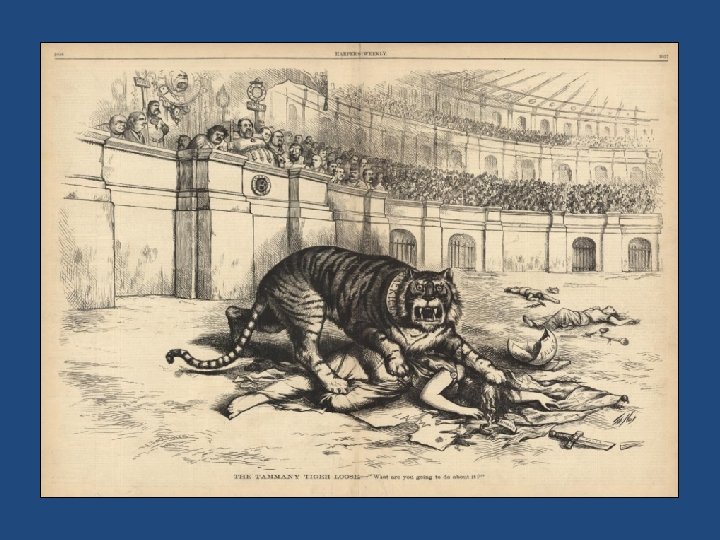
Political Machines and Boss Politics • Definition – “in U. S. politics, a party organization, headed by a single boss or small autocratic group, that commands enough votes to maintain political and administrative control of a city, county, or state” – Patronage and spoils system • Tammany Hall (New York City) – William “Boss” Tweed

Thesis Response
- Slides: 32