
Do Now Turn in Microscope Lab from last
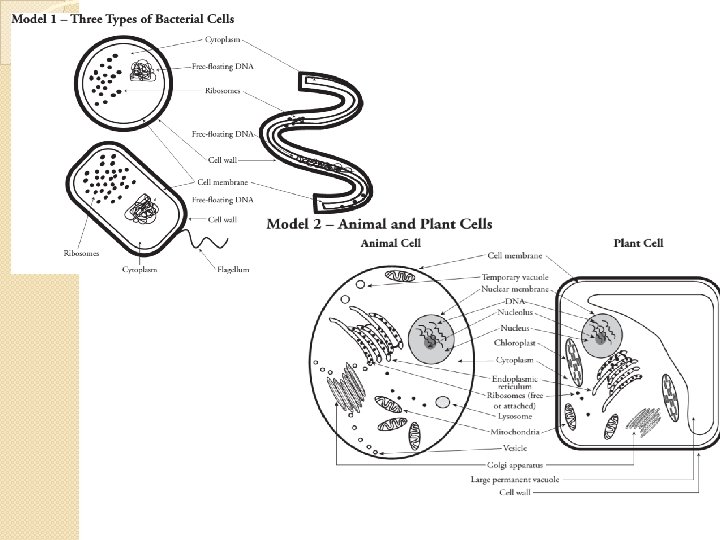
Do Now �Turn in Microscope Lab from last class �Work on Cell Types Review (comparing bacterial, animal and plant cells) �Cells Quiz/Quest FRI 11/13
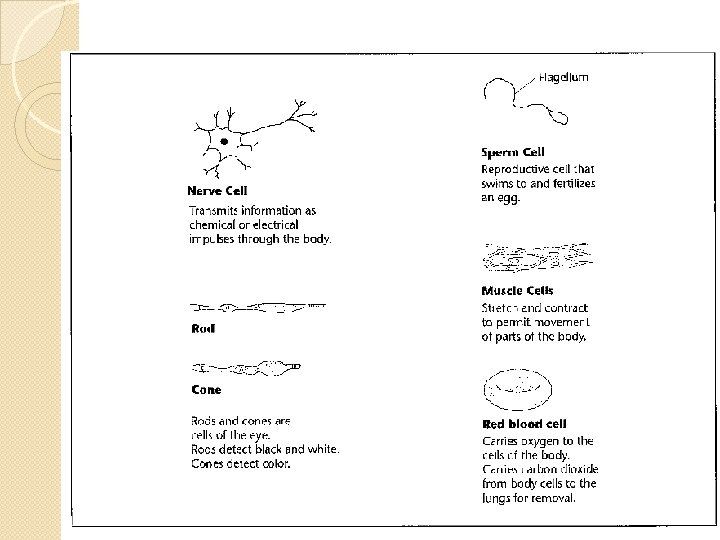
Cell Differentiation and Specialization �Unicellular Organisms ◦ Tend to have fairly complex cells. This is because they can only depend on one cell to perform all the functions necessary for them to live
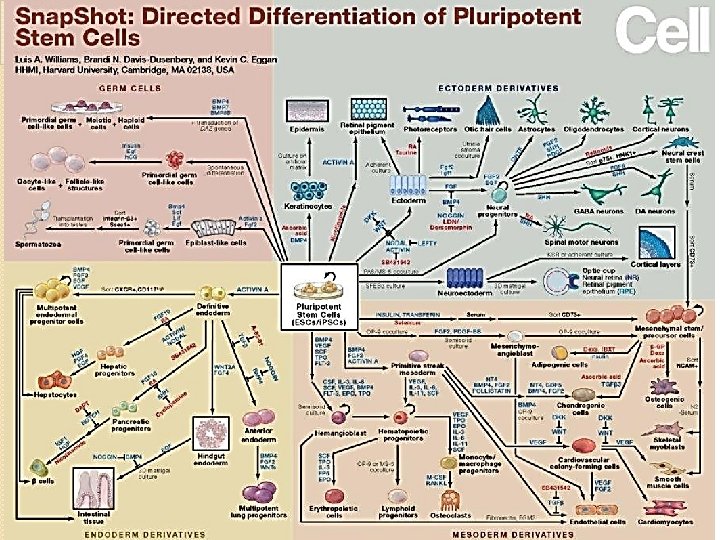
Cell Differentiation and Specialization �Multicellular Organisms ◦ Have lots of cells that are specialized, or designed for different functions. ◦ This allows you to have variation in cell shape/structure to better serve a specific function ◦ Multicellular organisms start out as single cells that divide and multiply. We all start out as a bunch of embryonic stem cells, which are pluripotent, meaning these cells have the potential to become several different cell types
Cell Differentiation Simulation
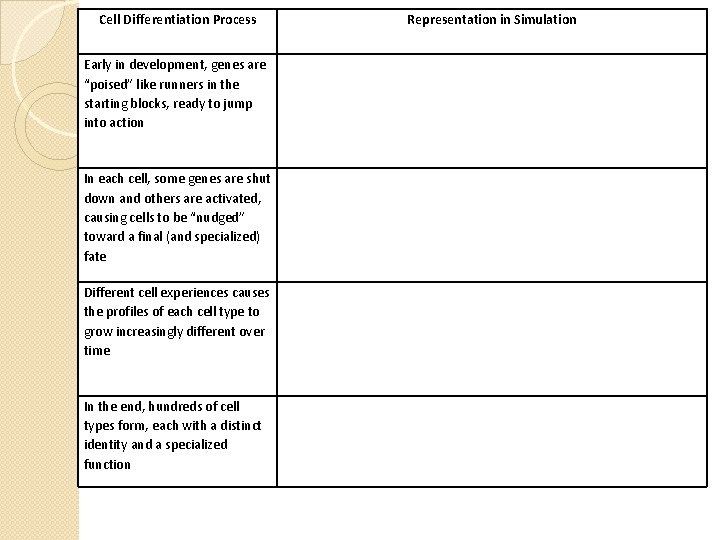
Cell Differentiation Process Early in development, genes are “poised” like runners in the starting blocks, ready to jump into action In each cell, some genes are shut down and others are activated, causing cells to be “nudged” toward a final (and specialized) fate Different cell experiences causes the profiles of each cell type to grow increasingly different over time In the end, hundreds of cell types form, each with a distinct identity and a specialized function Representation in Simulation
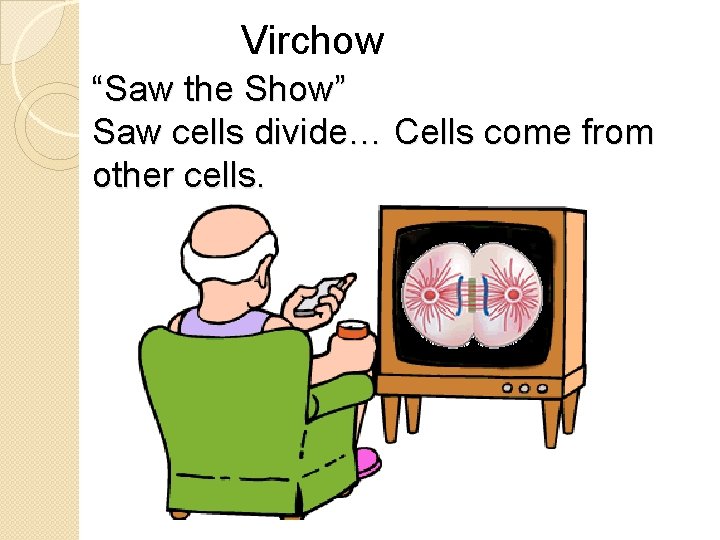
Virchow “Saw the Show” Saw cells divide… Cells come from other cells.
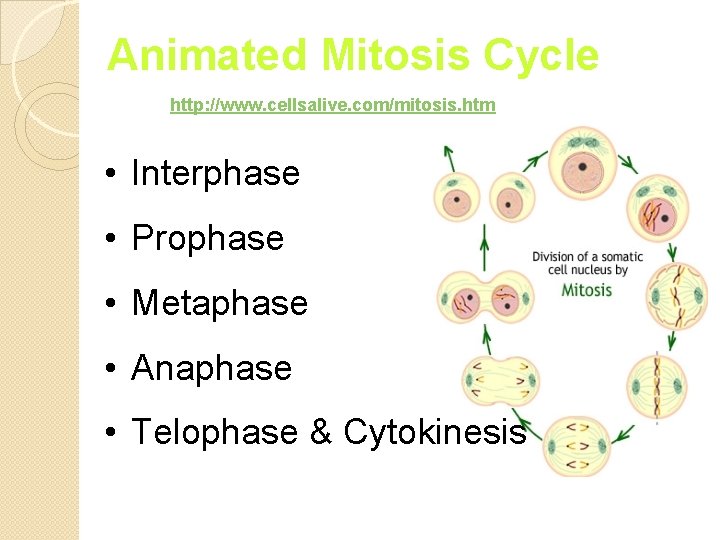
Animated Mitosis Cycle http: //www. cellsalive. com/mitosis. htm • Interphase • Prophase • Metaphase • Anaphase • Telophase & Cytokinesis
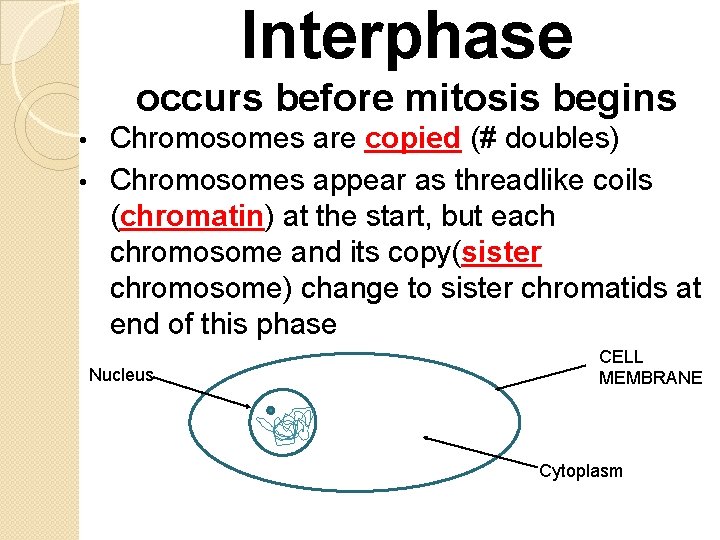
Interphase occurs before mitosis begins Chromosomes are copied (# doubles) • Chromosomes appear as threadlike coils (chromatin) at the start, but each chromosome and its copy(sister chromosome) change to sister chromatids at end of this phase • Nucleus CELL MEMBRANE Cytoplasm
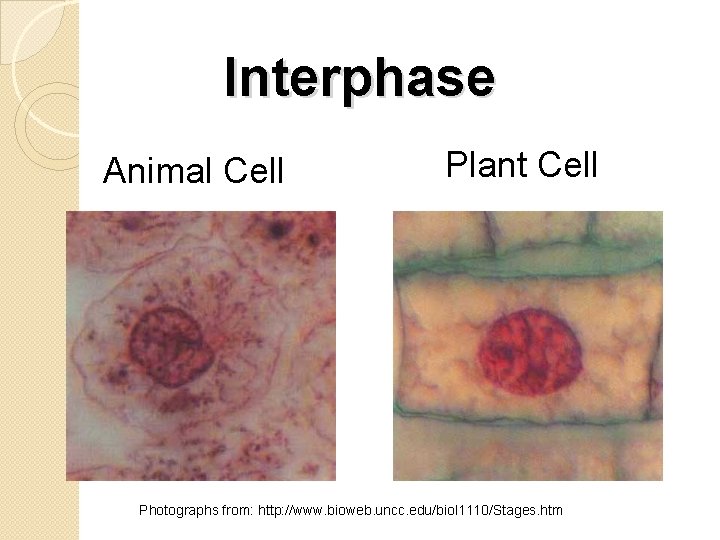
Interphase Animal Cell Plant Cell Photographs from: http: //www. bioweb. uncc. edu/biol 1110/Stages. htm
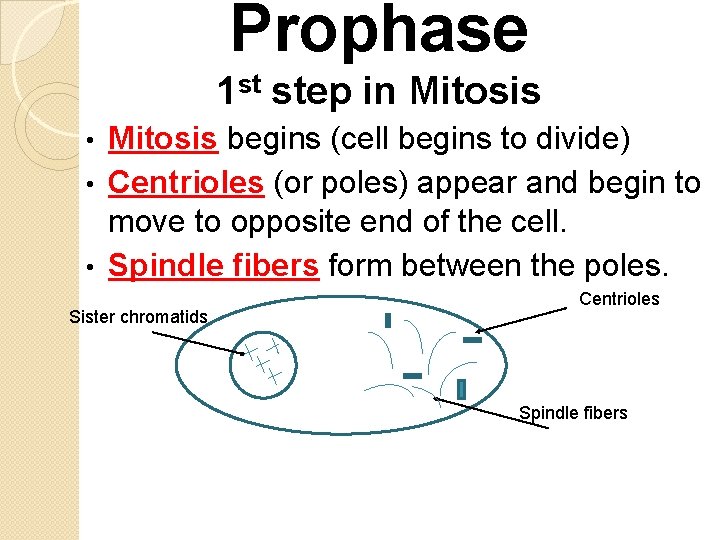
Prophase 1 st step in Mitosis begins (cell begins to divide) • Centrioles (or poles) appear and begin to move to opposite end of the cell. • Spindle fibers form between the poles. • Sister chromatids Centrioles Spindle fibers
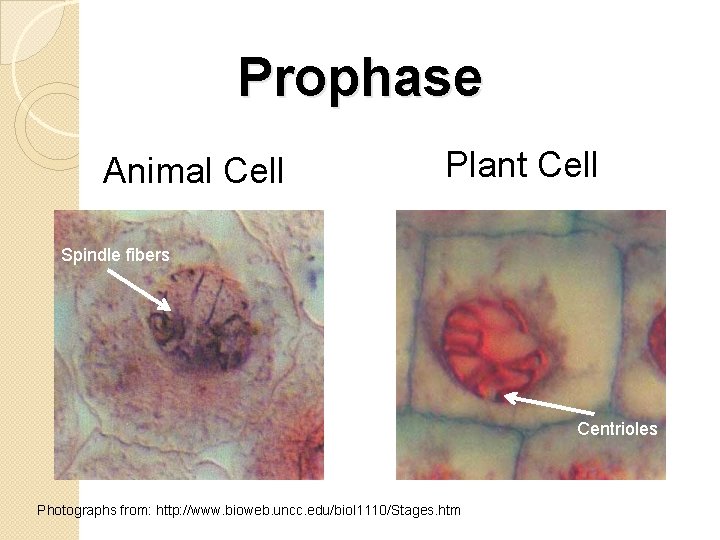
Prophase Animal Cell Plant Cell Spindle fibers Centrioles Photographs from: http: //www. bioweb. uncc. edu/biol 1110/Stages. htm
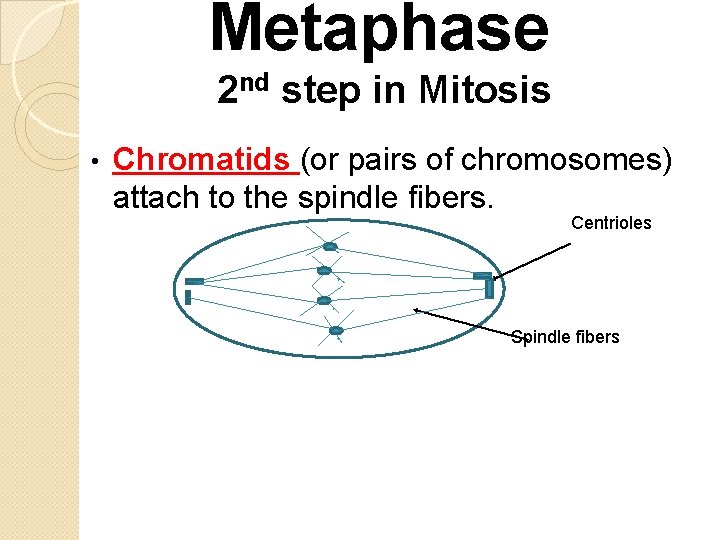
Metaphase 2 nd step in Mitosis • Chromatids (or pairs of chromosomes) attach to the spindle fibers. Centrioles Spindle fibers
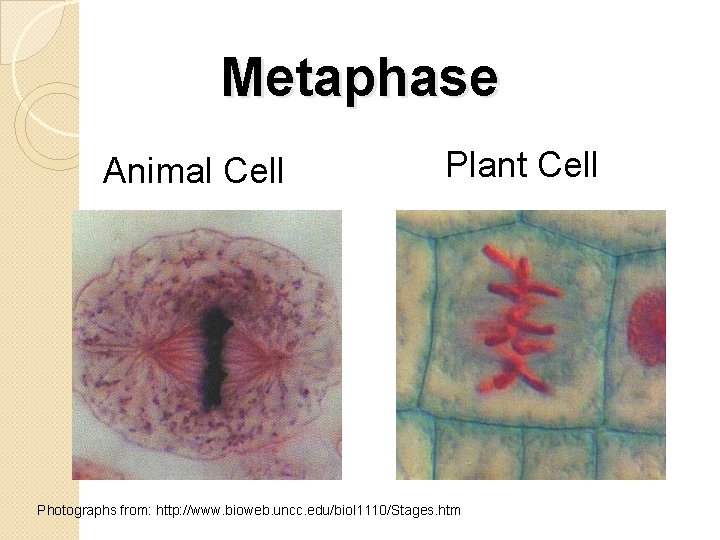
Metaphase Animal Cell Plant Cell Photographs from: http: //www. bioweb. uncc. edu/biol 1110/Stages. htm
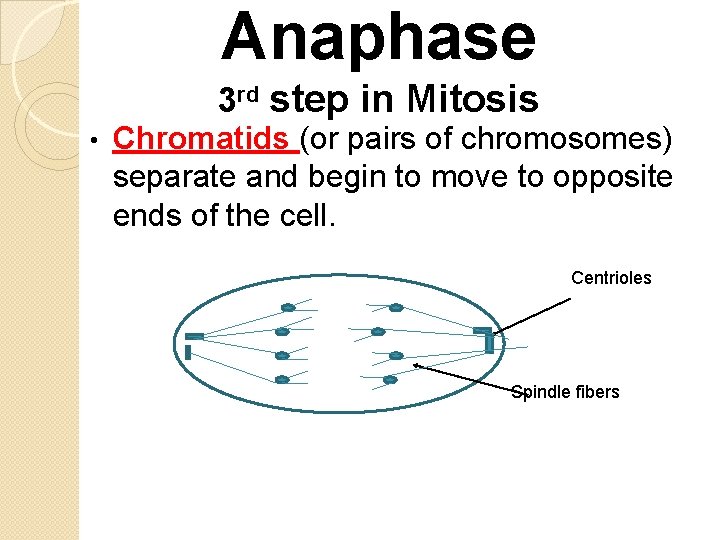
Anaphase 3 rd step in Mitosis • Chromatids (or pairs of chromosomes) separate and begin to move to opposite ends of the cell. Centrioles Spindle fibers
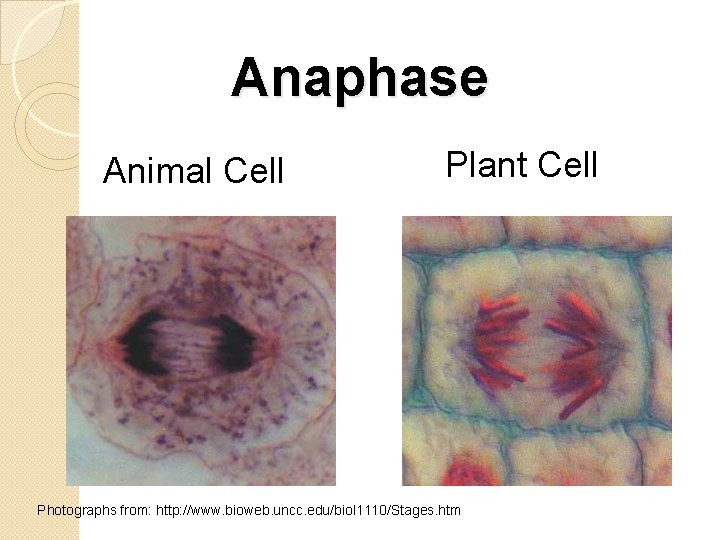
Anaphase Animal Cell Plant Cell Photographs from: http: //www. bioweb. uncc. edu/biol 1110/Stages. htm
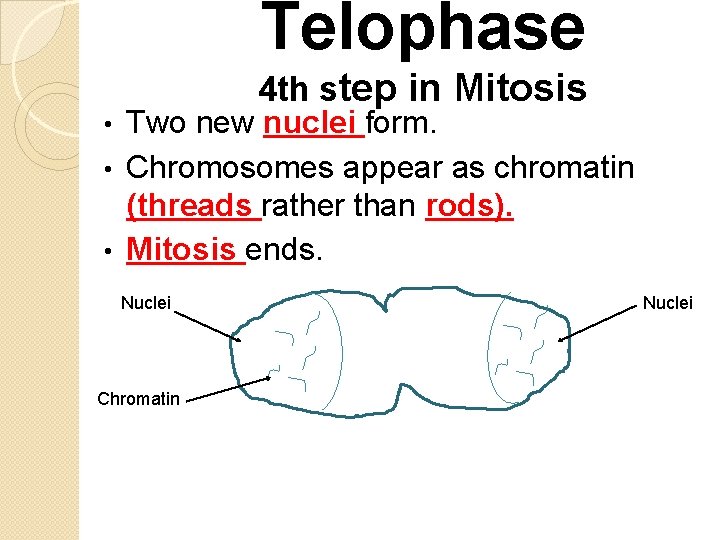
Telophase 4 th step in Mitosis Two new nuclei form. • Chromosomes appear as chromatin (threads rather than rods). • Mitosis ends. • Nuclei Chromatin Nuclei
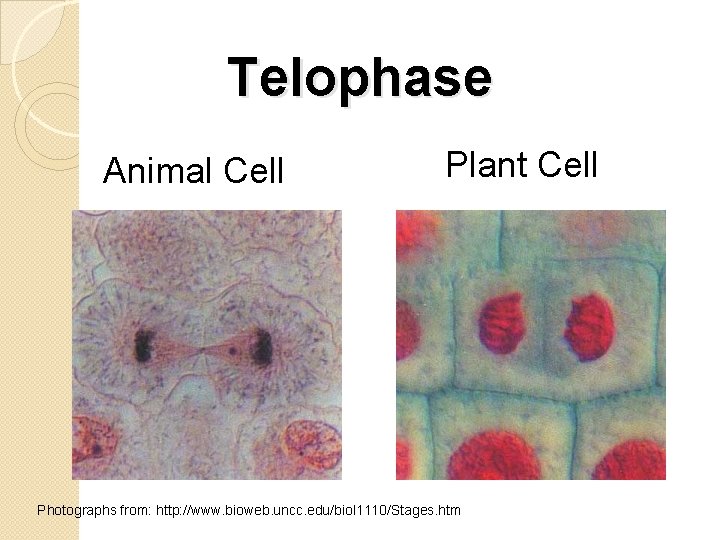
Telophase Animal Cell Plant Cell Photographs from: http: //www. bioweb. uncc. edu/biol 1110/Stages. htm
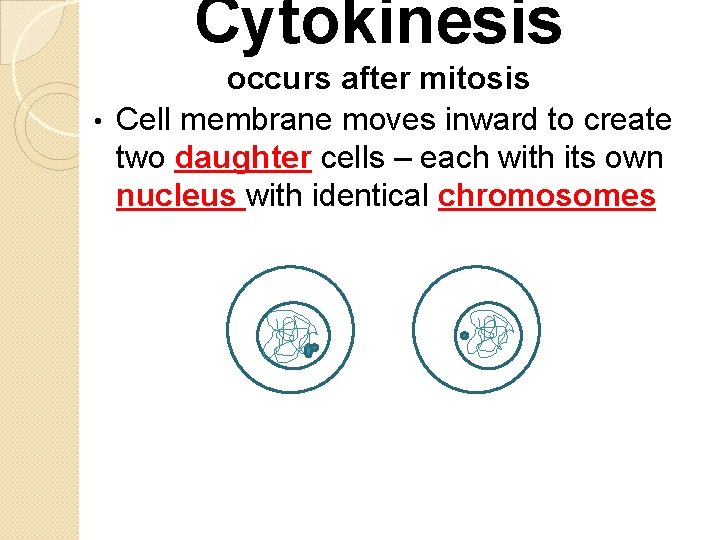
Cytokinesis occurs after mitosis • Cell membrane moves inward to create two daughter cells – each with its own nucleus with identical chromosomes.
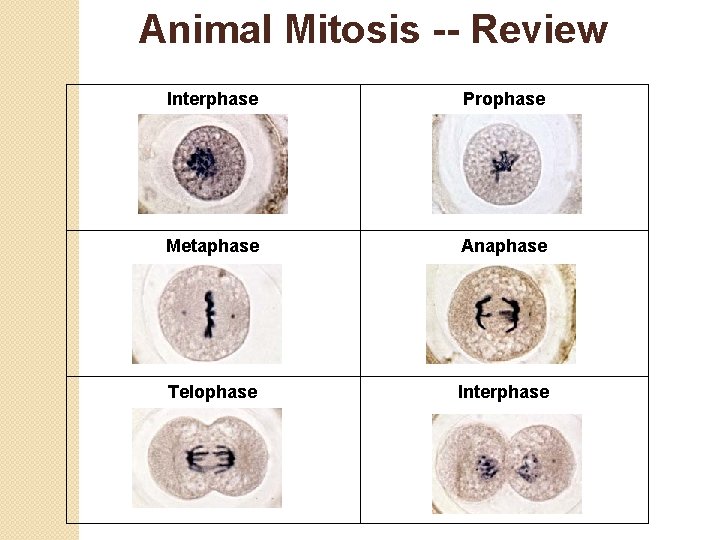
Animal Mitosis -- Review Interphase Prophase Metaphase Anaphase Telophase Interphase
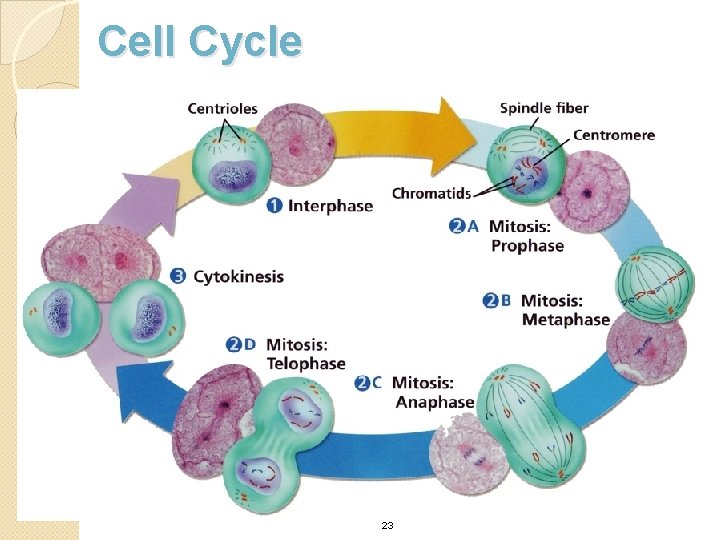
Cell Cycle 23
- Slides: 23