
Do Now Take out weekend homework Take out


- Slides: 35
Do Now • Take out weekend homework. • Take out a sheet of paper for today’s notes and answer the following questions: • What is a chemical reaction? • What is activation energy? • Describe what a saltine cracker tastes like. • What macromolecule composes saltines?
Saltine • Chew the saltine in front of you for 2 minutes. • What does it taste like? • How does it get to this point?
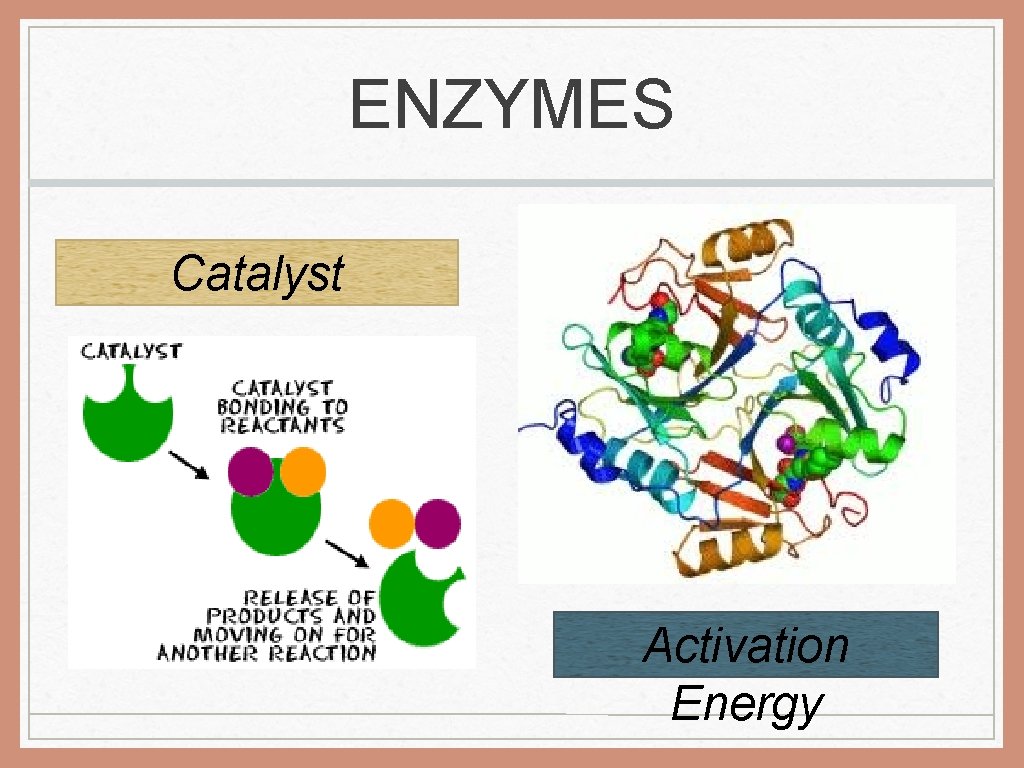
ENZYMES Catalyst Activation Energy
II. Chemical Reactions • Chemical reaction: the process of making or breaking the chemical bonds that join atoms together • Do chemical reactions take place in your cells? Yes!!! All the time. • Metabolism: all the thousands of chemical reactions occurring together in a cell
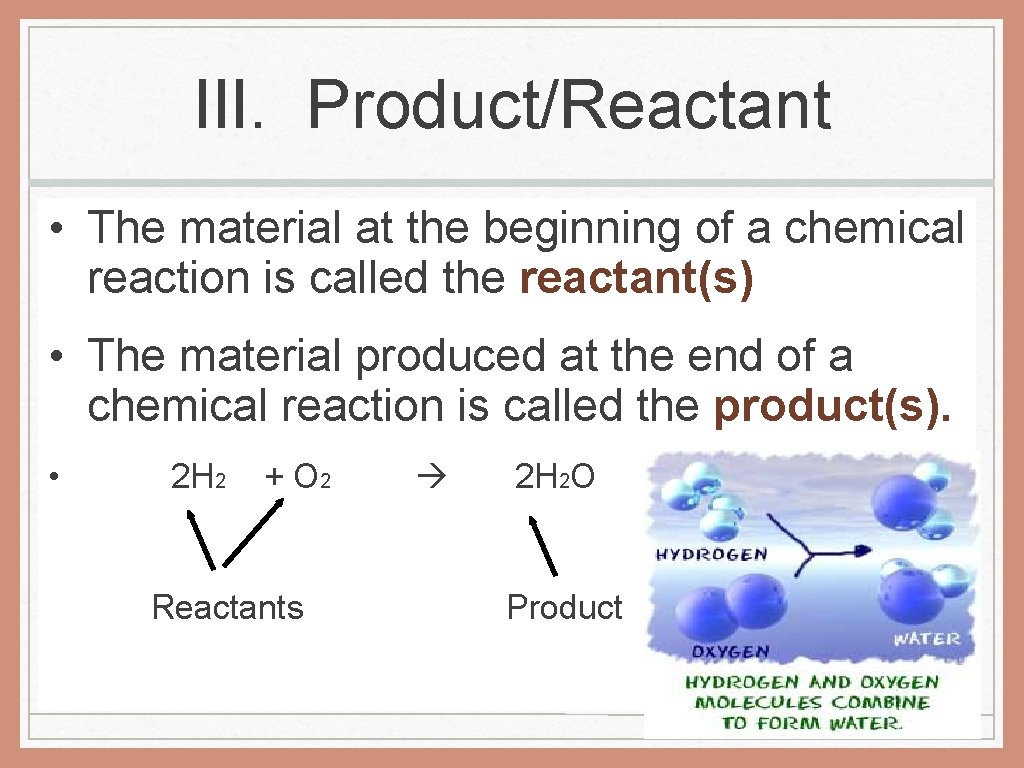
III. Product/Reactant • The material at the beginning of a chemical reaction is called the reactant(s) • The material produced at the end of a chemical reaction is called the product(s). • 2 H 2 + O 2 Reactants 2 H 2 O Product
ADITL of an MIT freshman • http: //tech. mit. edu/V 127/N 36/sodiumdrop/video. ht m
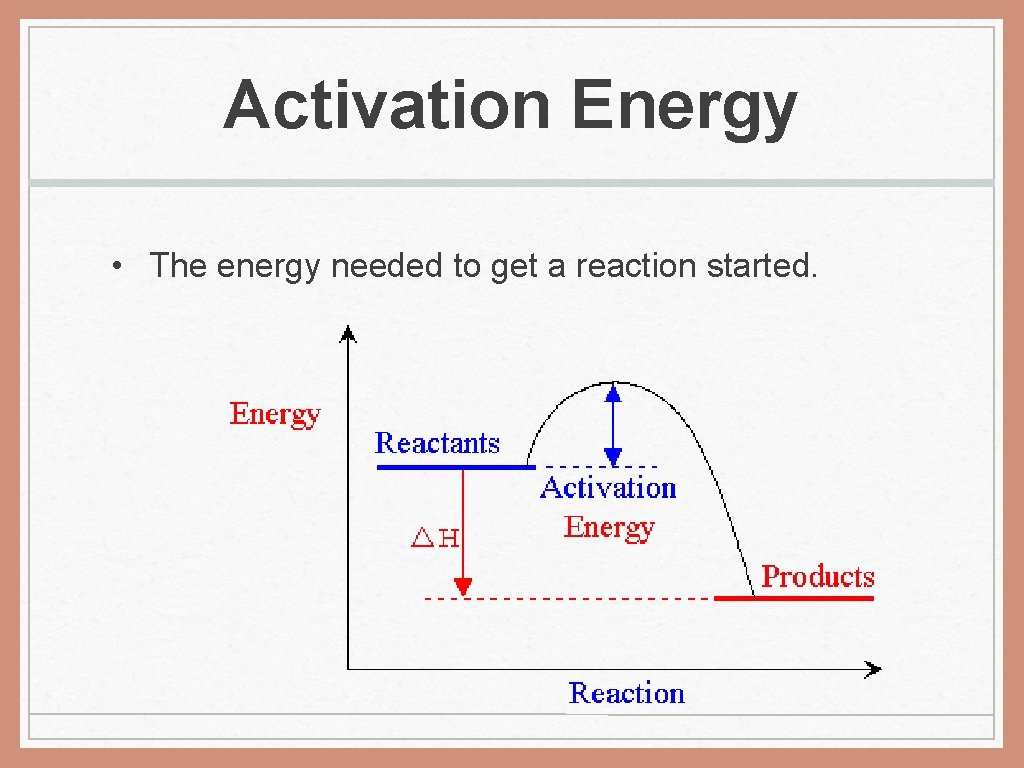
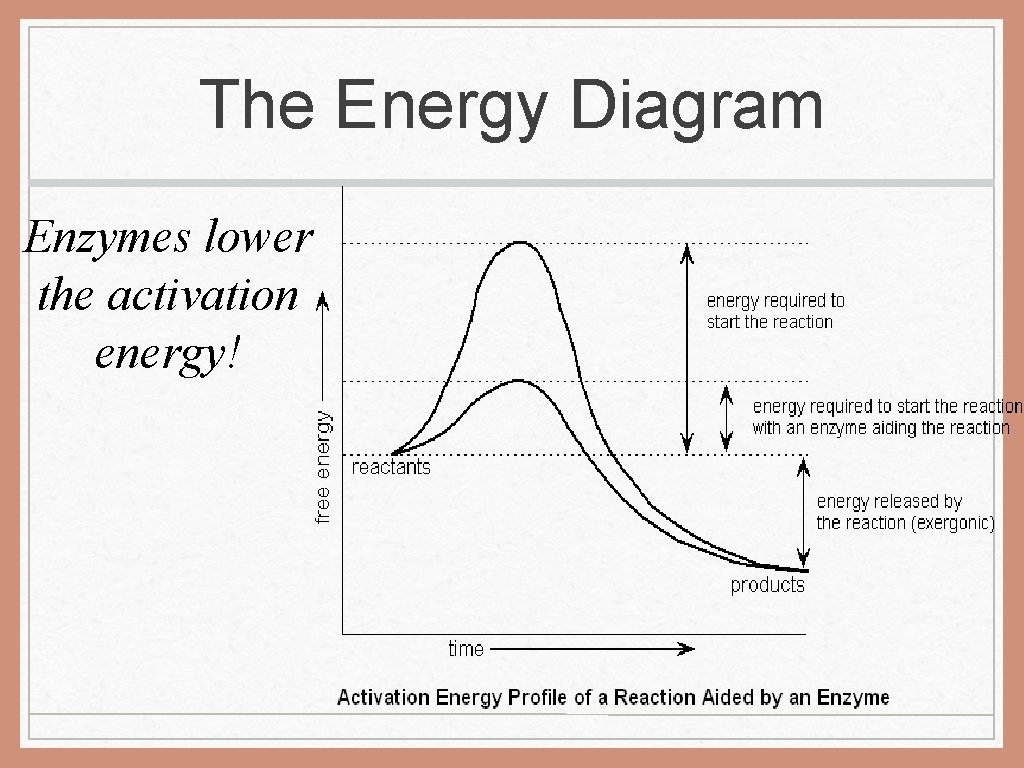
Activation Energy • The energy needed to get a reaction started.
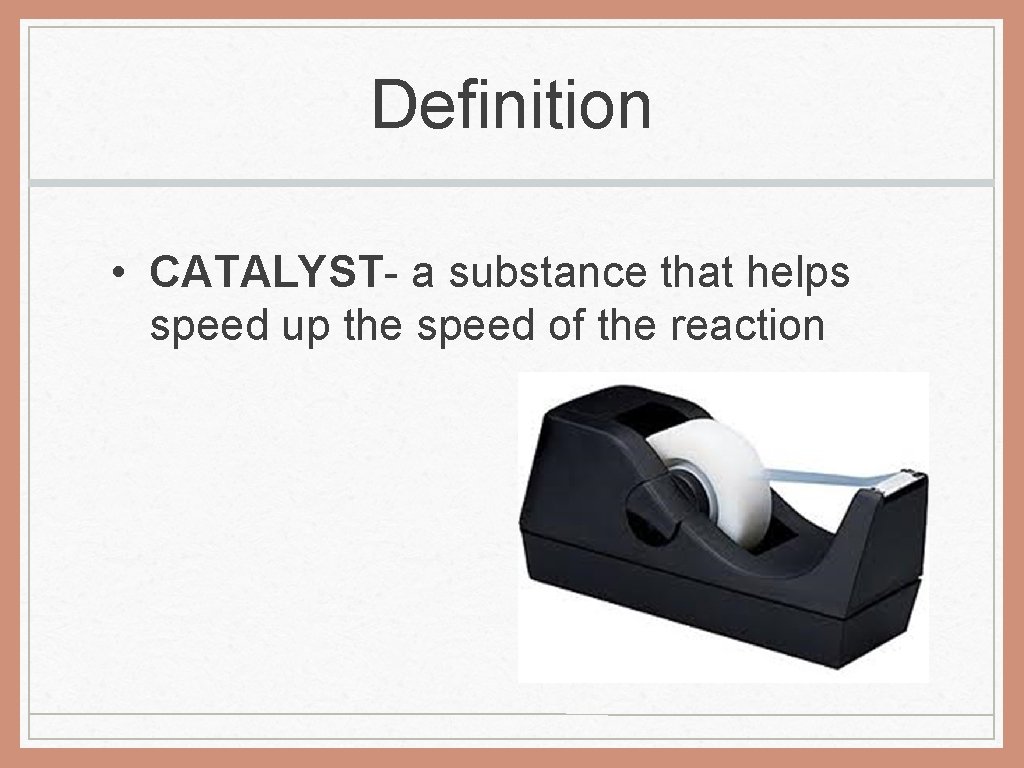
TAPE DEMO
Definition • CATALYST- a substance that helps speed up the speed of the reaction
Practice • Think of another example of a catalyst. • Tell it to your partner and be prepared to share out your neighbor’s answer!
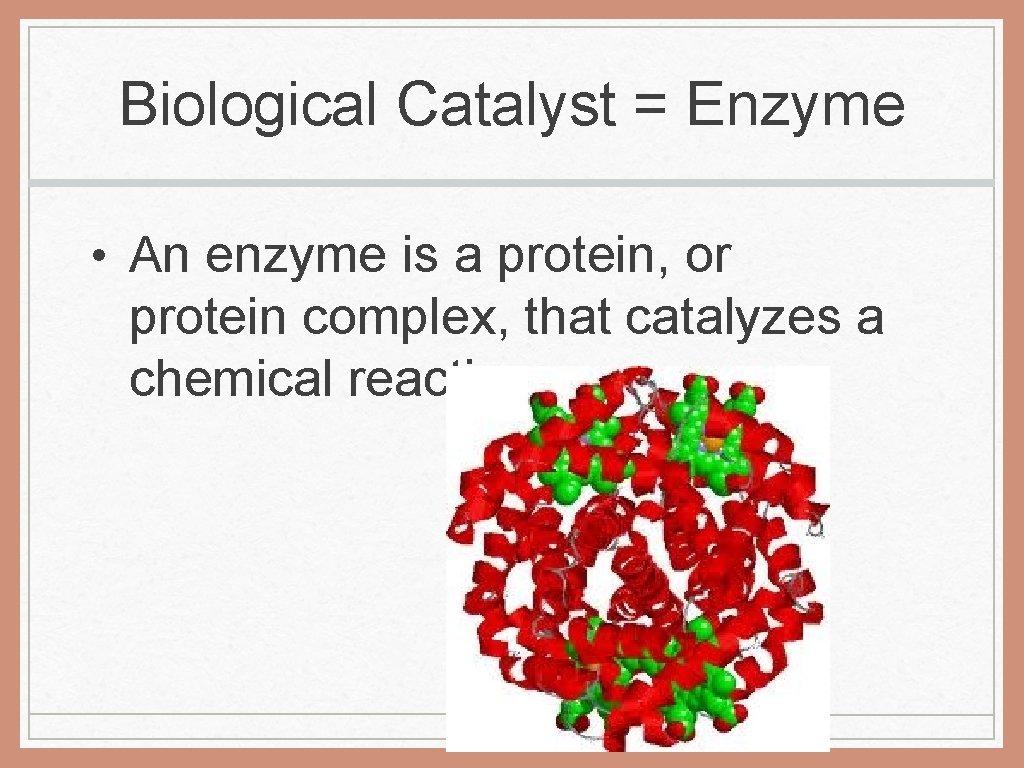
Biological Catalyst = Enzyme • An enzyme is a protein, or protein complex, that catalyzes a chemical reaction
Enzyme Vocabulary • Catalyze (Verb): to begin or speed up a process • Catalyst (noun): something that speeds up the chemical reaction. • Using these terms, how would you change the definition of an enzyme? An enzyme is a protein that speeds up a chemical reaction Substrates = the reactants that the enzyme binds to in order to catalyze the reaction. Without the enzyme they would still react but much slower
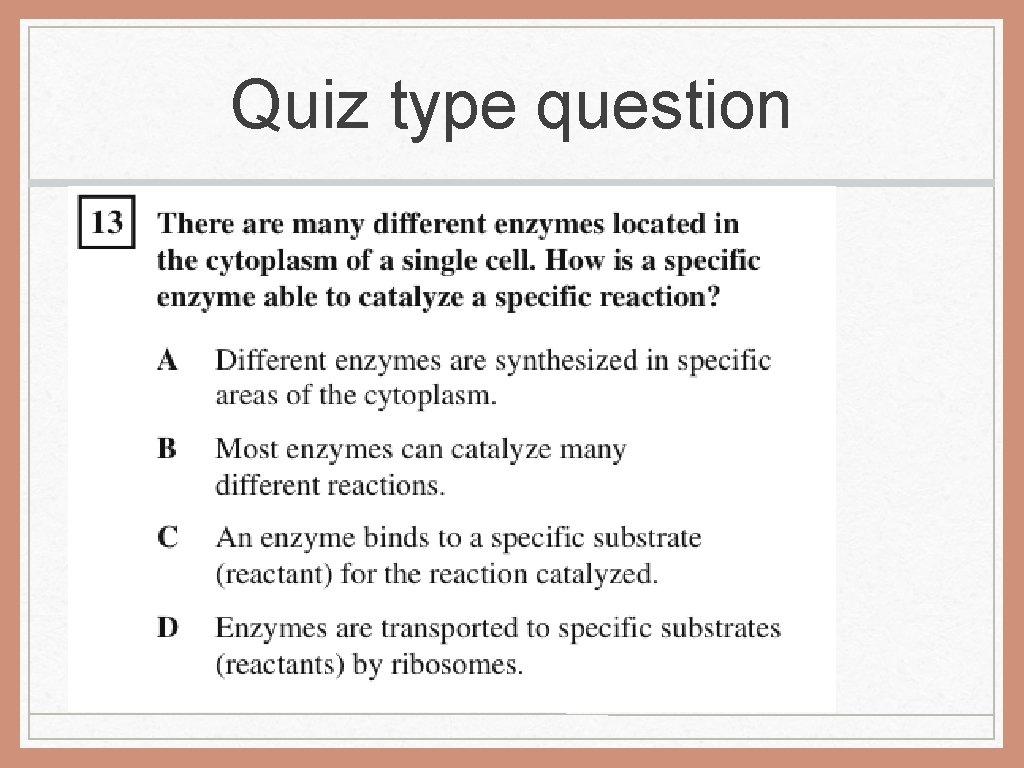
How do enzymes work? An enzyme catalyzes a chemical reaction by binding lowering the activation energy of the reaction Enzymes are SUBSTRATE- SPECIFIC That means the enzymes only work with certain reactants because each active site only fits certain reactants (substrates) If the substrate don’t fit, it ain’t legit.
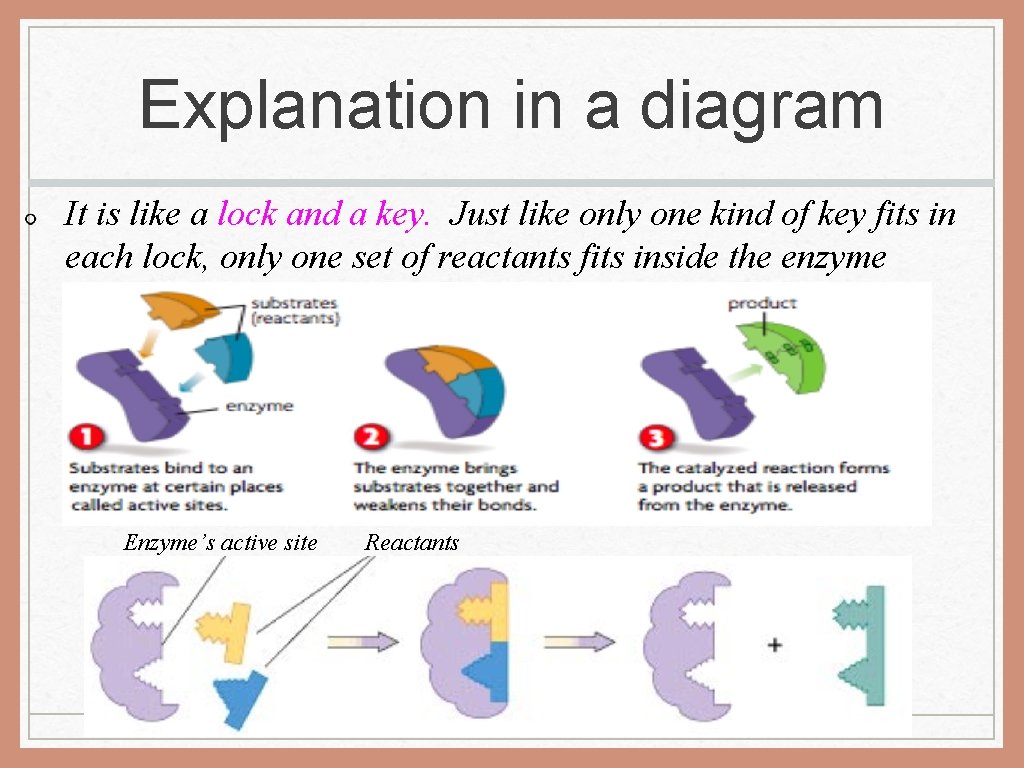
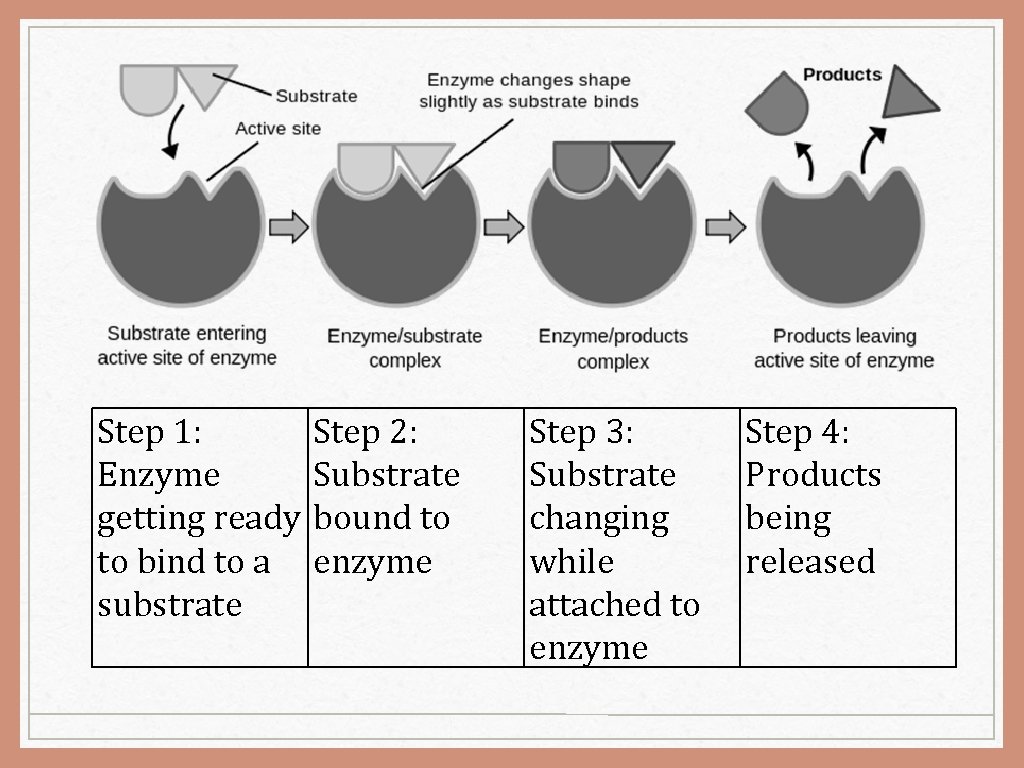
Explanation in a diagram It is like a lock and a key. Just like only one kind of key fits in each lock, only one set of reactants fits inside the enzyme Enzyme’s active site Reactants
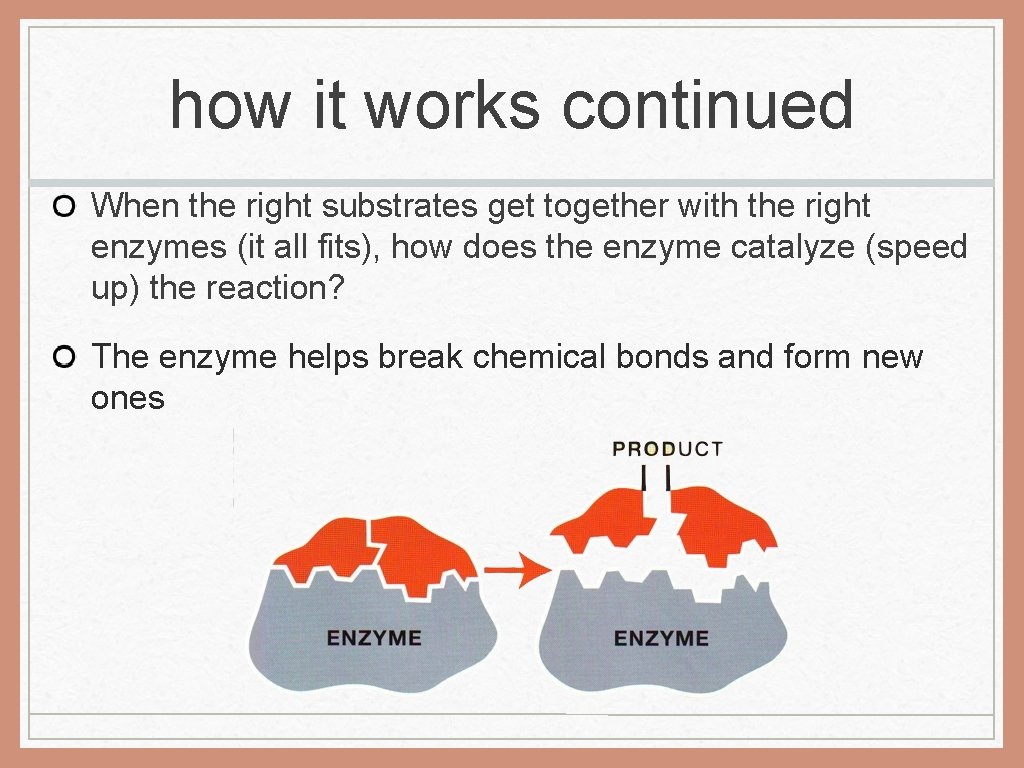
how it works continued When the right substrates get together with the right enzymes (it all fits), how does the enzyme catalyze (speed up) the reaction? The enzyme helps break chemical bonds and form new ones
Why? ? Your thoughts? All the reactions required for life would not be possible without enzymes
Practice • What is a enzyme? • How does it relate to a catalyst? • What is a substrate? • What does a lock and key have to do with this?
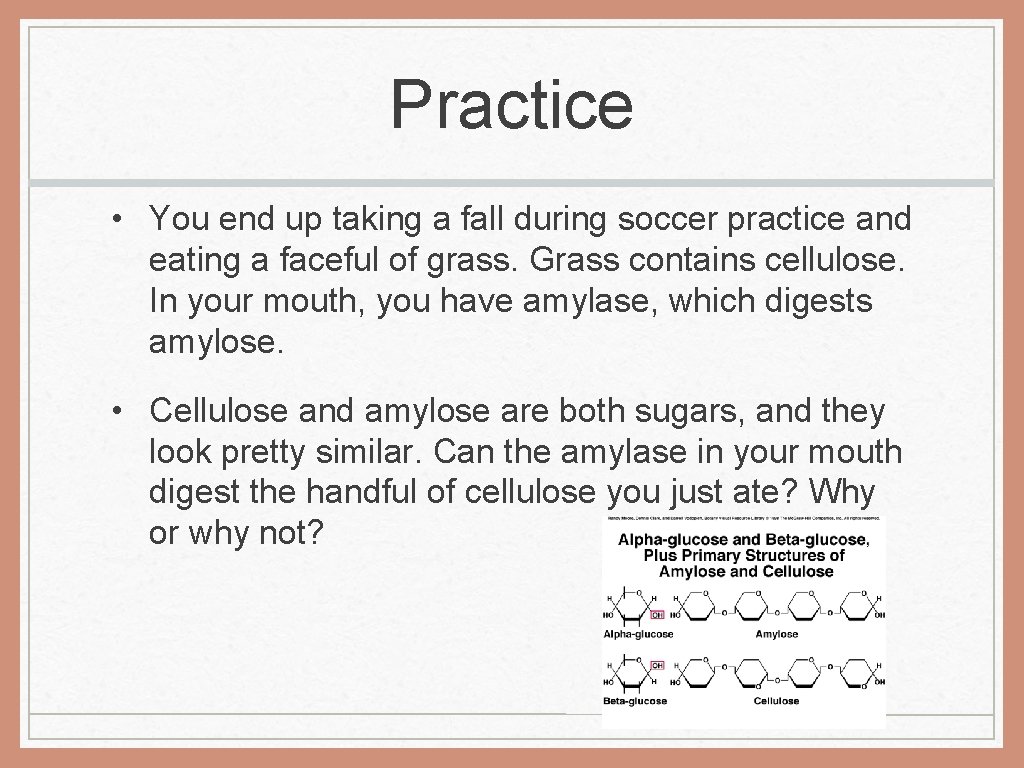
Practice • You end up taking a fall during soccer practice and eating a faceful of grass. Grass contains cellulose. In your mouth, you have amylase, which digests amylose. • Cellulose and amylose are both sugars, and they look pretty similar. Can the amylase in your mouth digest the handful of cellulose you just ate? Why or why not?
Step 1: Enzyme getting ready to bind to a substrate Step 2: Substrate bound to enzyme Step 3: Substrate changing while attached to enzyme Step 4: Products being released
• THAT’S ALL FOLKS!
Do Now • Put the cracker in front of you in your mouth for 2 minutes. Try and see what happens to the taste.
Factors that Effect Enzymes
The Energy Diagram Enzymes lower the activation energy!
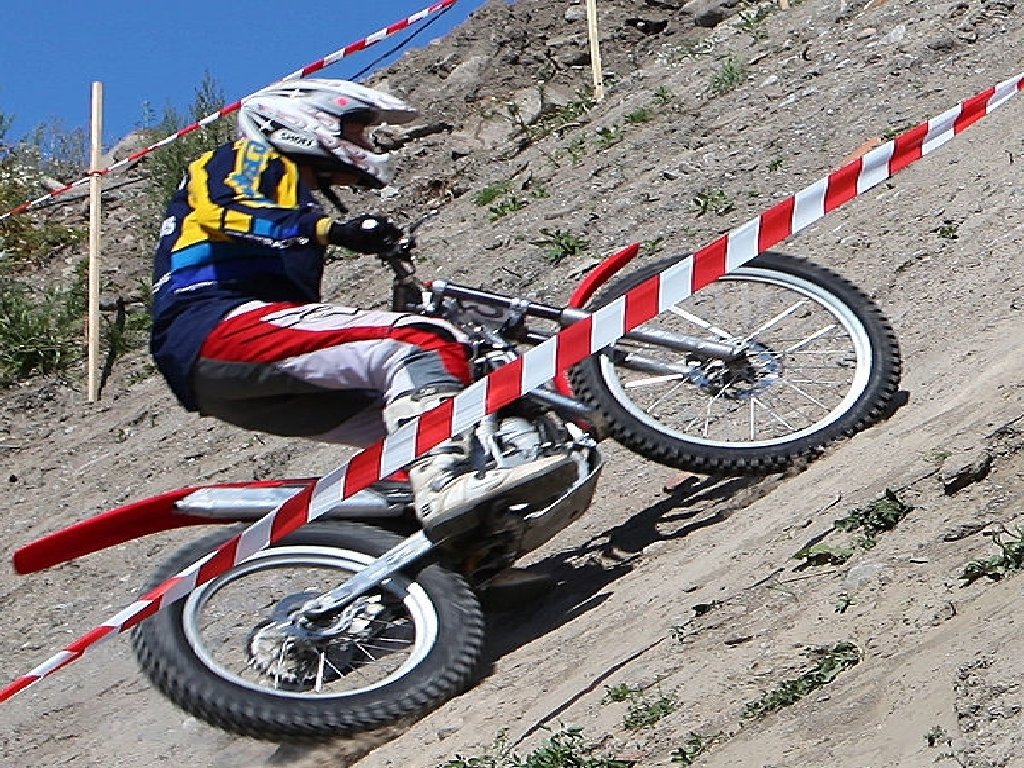
Think-Pair-Share • Turn to your partner(s) and come up with an analogy for how enzymes work together
Check for understanding Will a reaction take place without the enzyme? In other words, will the reactants become the product when there is no enzyme? YES! it will just happen much slower but it will eventually happen. Enzymes just speed it up
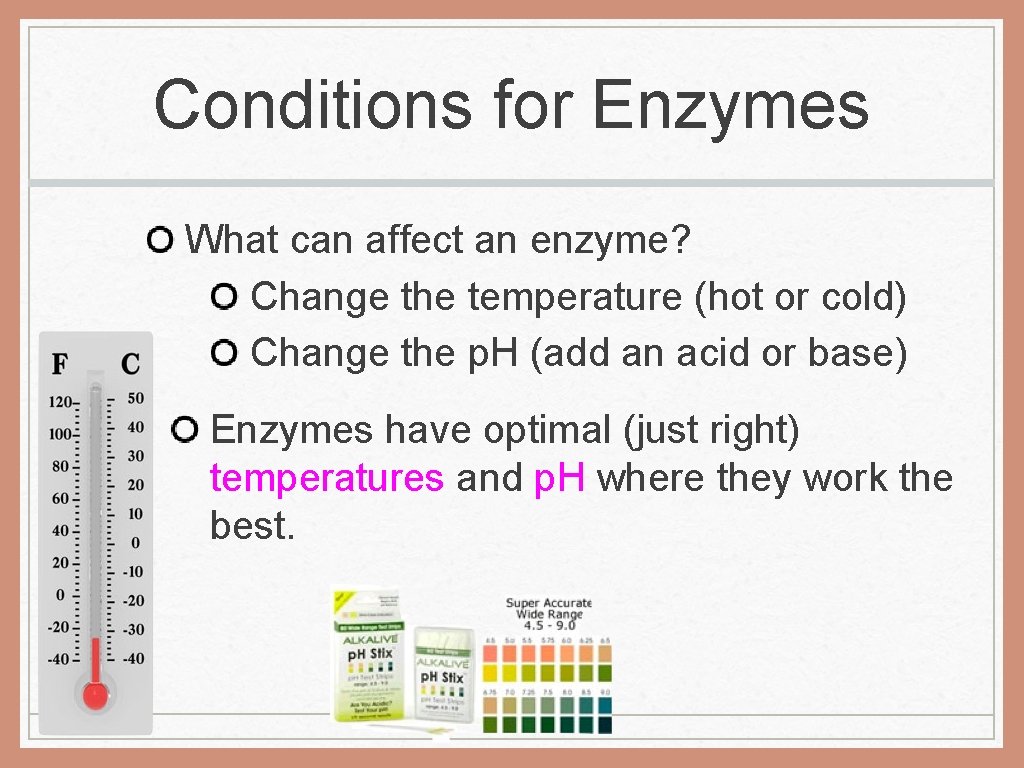
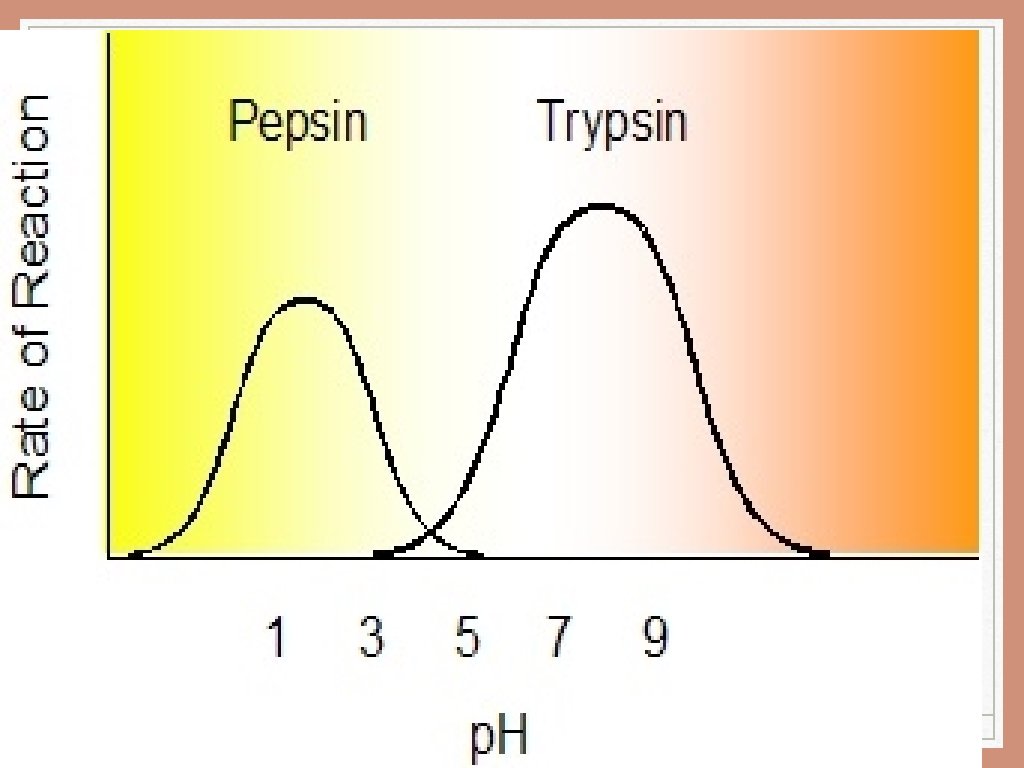
Conditions for Enzymes What can affect an enzyme? Change the temperature (hot or cold) Change the p. H (add an acid or base) Enzymes have optimal (just right) temperatures and p. H where they work the best.
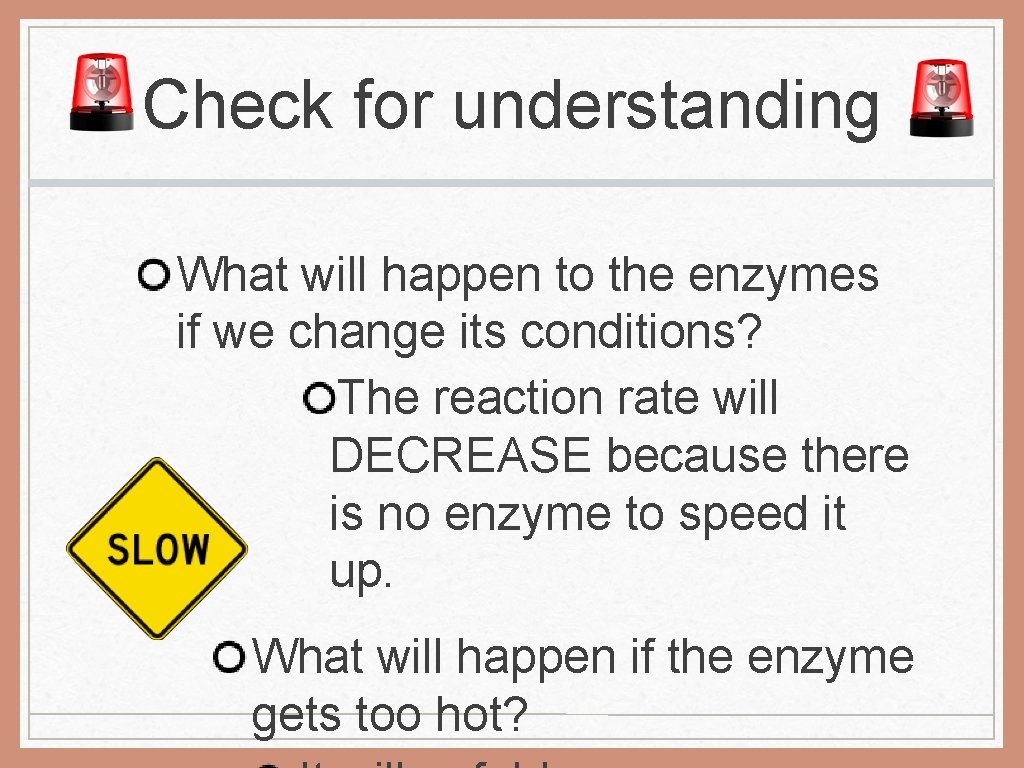
Check for understanding What will happen to the enzymes if we change its conditions? The reaction rate will DECREASE because there is no enzyme to speed it up. What will happen if the enzyme gets too hot?
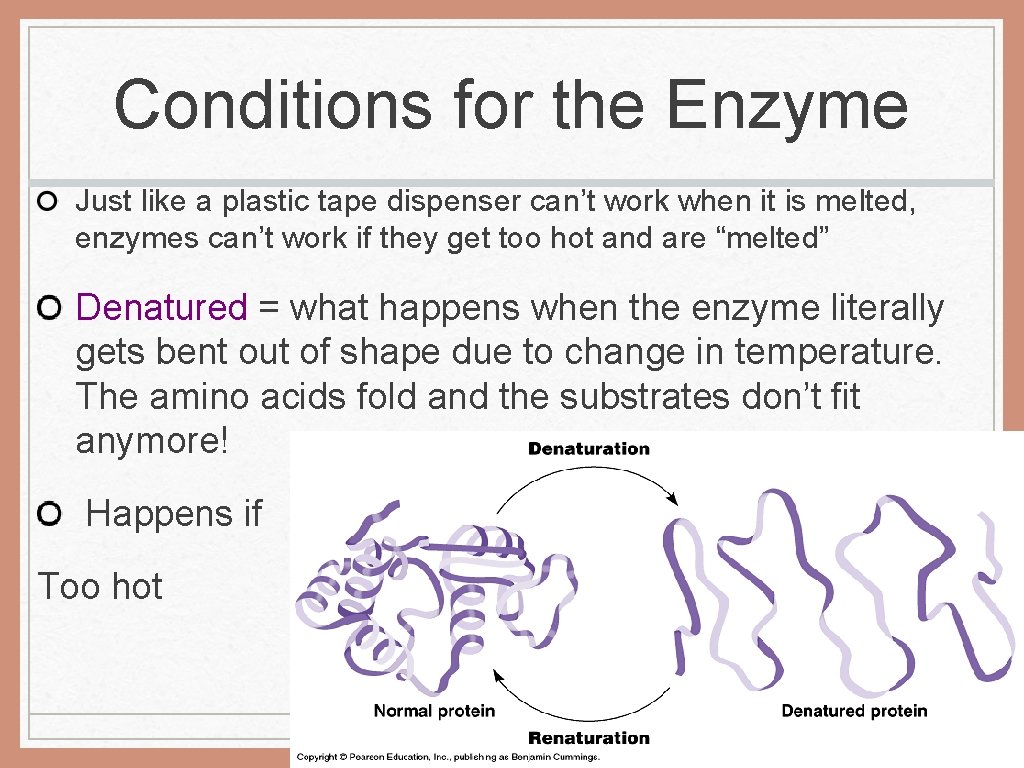
Conditions for the Enzyme Just like a plastic tape dispenser can’t work when it is melted, enzymes can’t work if they get too hot and are “melted” Denatured = what happens when the enzyme literally gets bent out of shape due to change in temperature. The amino acids fold and the substrates don’t fit anymore! Happens if Too hot
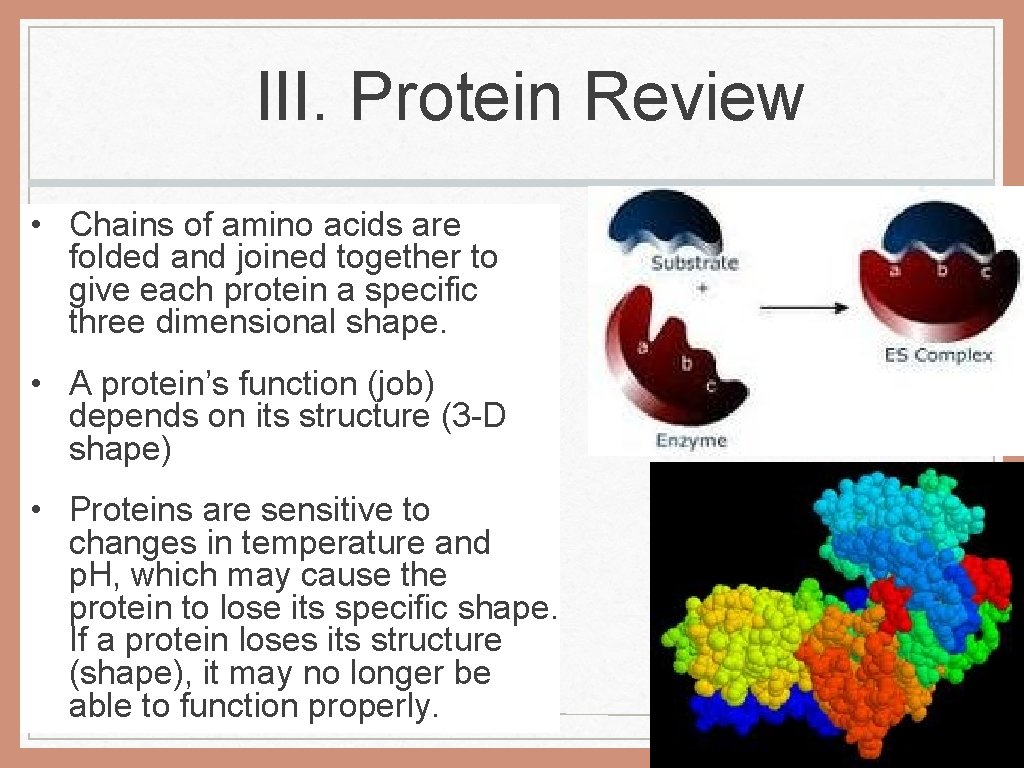
III. Protein Review • Chains of amino acids are folded and joined together to give each protein a specific three dimensional shape. • A protein’s function (job) depends on its structure (3 -D shape) • Proteins are sensitive to changes in temperature and p. H, which may cause the protein to lose its specific shape. If a protein loses its structure (shape), it may no longer be able to function properly.
Quiz type question