
Do Now Quiz Corrections For each question you





- Slides: 46
Do Now • Quiz Corrections – For each question you missed, write: • The answer and why it is the most correct • Why you think you made the mistake Completing the quiz corrections will earn back half of the points you missed Example, (4/12 becomes 8/12) or (6/12 becomes 9/12) 1
Economic options simulation 2
Economic options simulation • I am the district pen purchaser guy. You are a new pen company. Your task is to design and market a pen that I will purchase for our district. – Think about • My interests – not your own. I am the purchaser not you • Price (it should be realistic based on the quality and options of your pen) • What price-point am I willing to buy at Your group must also design a 1 -2 minute sales pitch with your pen. You should have the following: 1) a drawing of your pen 2) a slogan 3) a sales pitch 12/12/2021 7 Market System 3
Review with your partner the market simulation that we did yesterday. What did you learn? What is the bigger picture? 4
Economic Systems The way a country or society structures production and consumption and goods and services 12/12/2021 5
The Market System Profit and Competition 12/12/2021 6
Because of scarcity, someone will always be told NO! • The trick is to get as much as possible from scarce resources. • What are the most efficient systems of production and exchange? 12/12/2021 7 Market System 7
Different methods of production and exchange • Tradition -There is no need for success; you do what your parents did. • Command – You do as you’re told. • The market - You do what is in your best interests and by so doing, provide the material wants of society; incentives are the key. 12/12/2021 7 Market System 8
1776 12/12/2021 7 Market System 9
ADAM SMITH (1723 - 1790) Profit is the motivator, competition is the regulator. 12/12/2021 7 Market System 10
Profit is the Motivator “It is not from the benevolence of the butcher, the brewer, or the baker that we expect our dinner, but from their regard to their self-interest. We address ourselves, not to their humanity, but to their self-love, and never talk to them of our necessities, but of their advantages. ” 12/12/2021 7 Market System 11
Competition is the Regulator “If he charges too much for his wares, or if he refuses to pay as much as everybody else for his workers, he will find himself without buyers in the one case, and without workers in the other. ” 12/12/2021 7 Market System 12
Laissez-Faire • Literally means “let do” n Implies, “let it be” or “leave it alone” • Free from government intervention 12/12/2021 7 Market System 13
The Invisible Hand (self-interest and competition): • rewards efficient producers and buyers • results in: – goods society wants – quantity society wants – prices society is willing and able to pay – normal profits 12/12/2021 7 Market System 14
The Entrepreneur: the driver of the market system. • combines resources to produce a product • takes the risks associated with innovation • the “residual claimant” 12/12/2021 7 Market System 15
Why the market? • Scarcity exists • Societies must find a way to allocate scarce goods and services • In any allocative mechanism, some people will be told “No. ” • The market system is efficient, but… • Neither markets nor other economic systems are “fair. ” 12/12/2021 7 Market System 16
Main Points • In a market system, profit is the motivator and competition is the regulator. • The entrepreneur is the driver of the market system. • The market system is efficient; neither it, not other economic systems are “fair. ” 12/12/2021 7 Market System 17
What type of economy does the U. S. employ • Command • Market • Mixed 12/12/2021 7 Market System 18
Command Economy • Economic system controlled by the central government 12/12/2021 7 Market System 19
Capitalism • A system in which private citizens own most, if not all, of the means of production and decide how to use them within legislated limits 12/12/2021 7 Market System 20
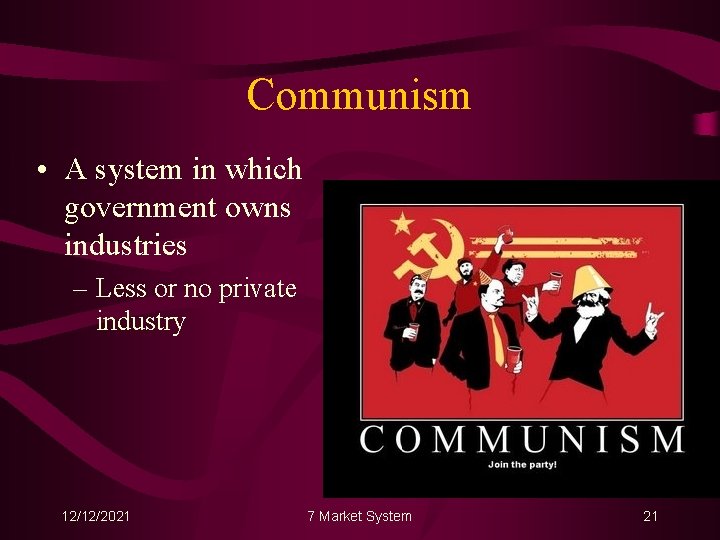
Communism • A system in which government owns industries – Less or no private industry 12/12/2021 7 Market System 21
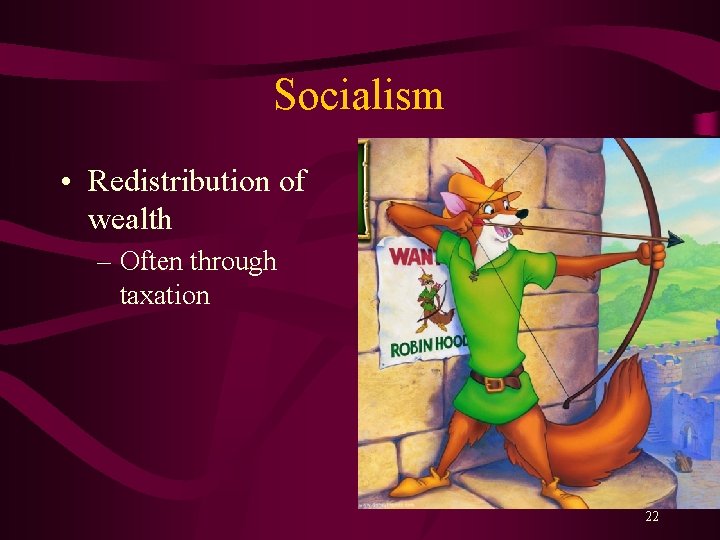
Socialism • Redistribution of wealth – Often through taxation 22
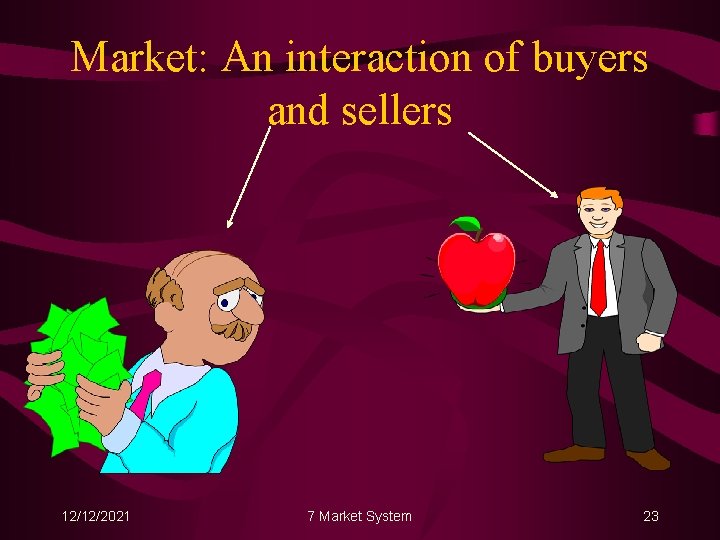
Market: An interaction of buyers and sellers 12/12/2021 7 Market System 23
The Process of Price Determination 24
COMPETITION IS THE REGULATOR It constrains buyers and sellers. 25
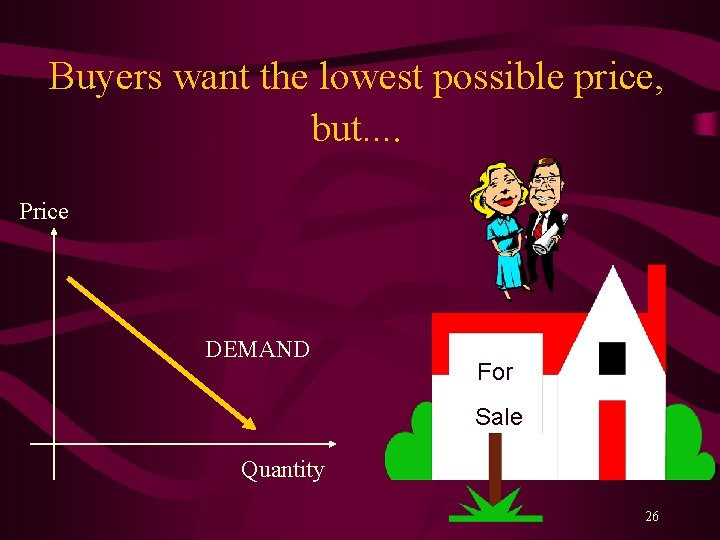
Buyers want the lowest possible price, but. . Price DEMAND For Sale Quantity 26
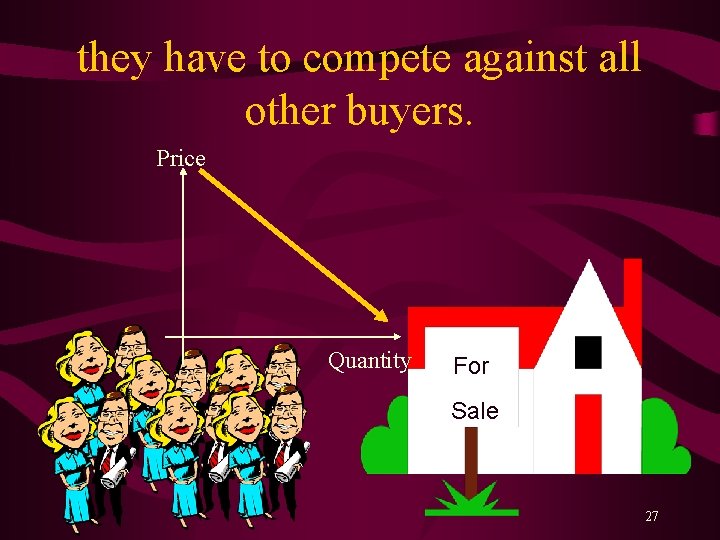
they have to compete against all other buyers. Price Quantity For Sale 27
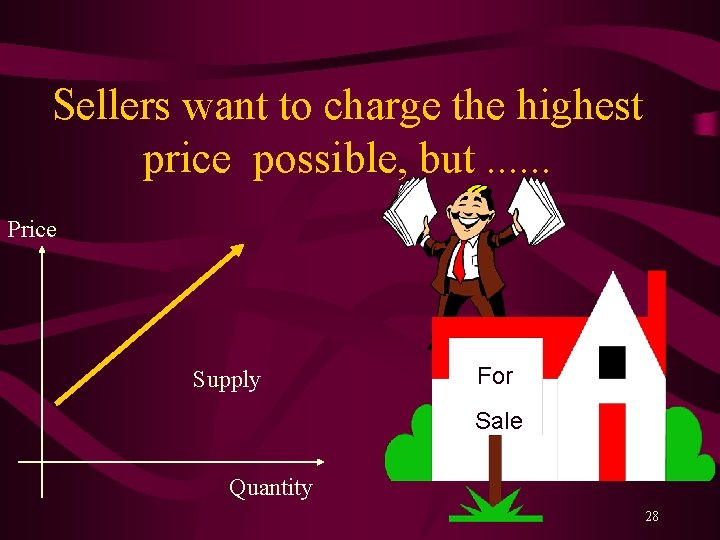
Sellers want to charge the highest price possible, but. . . Price Supply For Sale Quantity 28
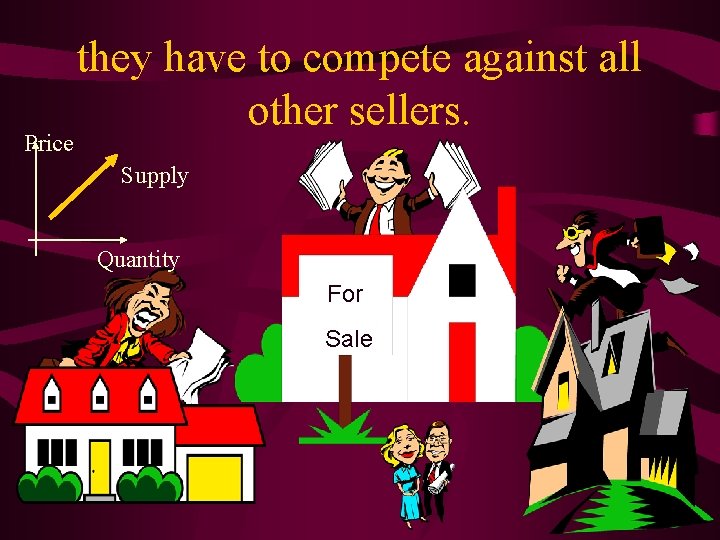
Price they have to compete against all other sellers. Supply Quantity For Sale 29
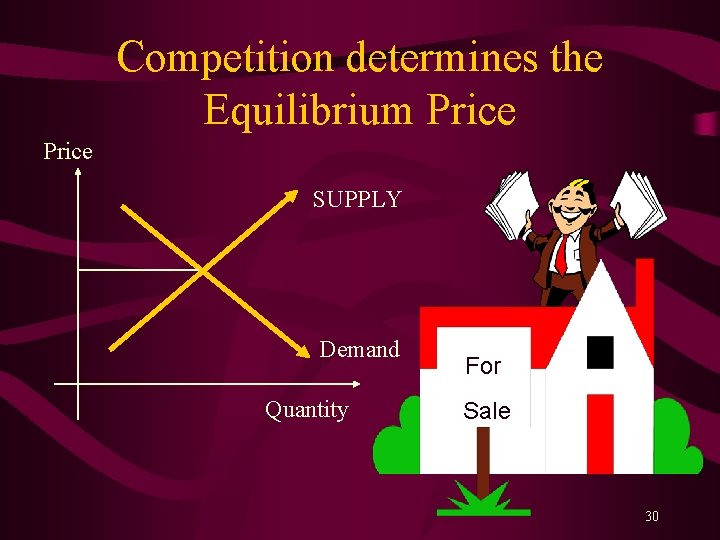
Competition determines the Equilibrium Price SUPPLY Demand Quantity For Sale 30
How are prices determined? • Buyers competing against each other drive the price up • Sellers competing against each other drive the price down • Equilibrium Price is determined by the impersonal forces of supply and demand 31
About the buyers 32
Influences on the sellers 33
Reservation Prices • Sellers – Supply price – The lowest price that a seller is willing and able to accept for a particular quantity of a particular product • Buyers – Demand price – The highest price that a buyer is willing and able to pay for a particular quantity of a particular product 34
At the equilibrium price • Buyers who are able and willing to pay the price get the goods and services they desire • Sellers who are able to produce at that price sell all that they wish • There are neither surpluses nor shortages • Not all prospective buyers or sellers are satisfied 35
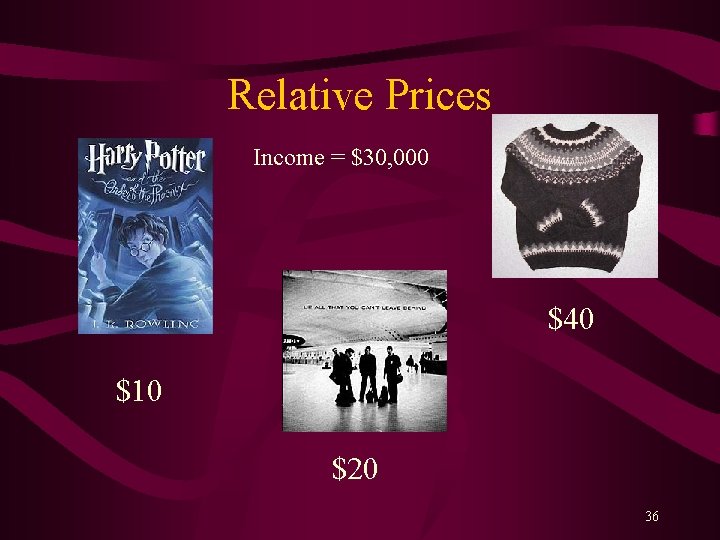
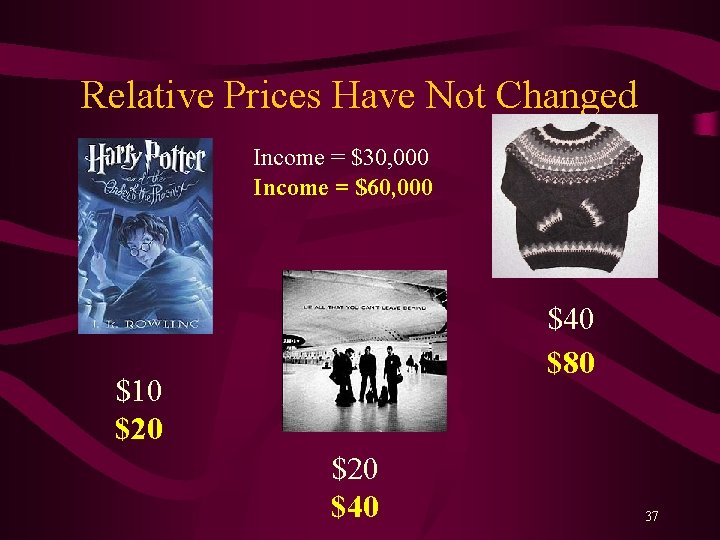
Relative Prices Income = $30, 000 $40 $10 $20 36
Relative Prices Have Not Changed Income = $30, 000 Income = $60, 000 $40 $80 $10 $20 $40 37
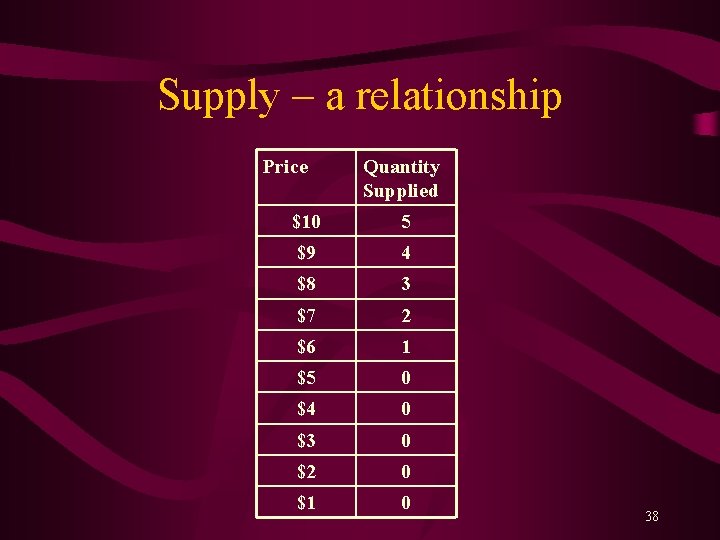
Supply – a relationship Price Quantity Supplied $10 5 $9 4 $8 3 $7 2 $6 1 $5 0 $4 0 $3 0 $2 0 $1 0 38
The Law of Supply • Once all other factors have been considered, the quantity supplied of a product varies directly with the price of the product. • If the price rises, the quantity supplied will rise; if the price falls, the quantity supplied will fall. 39
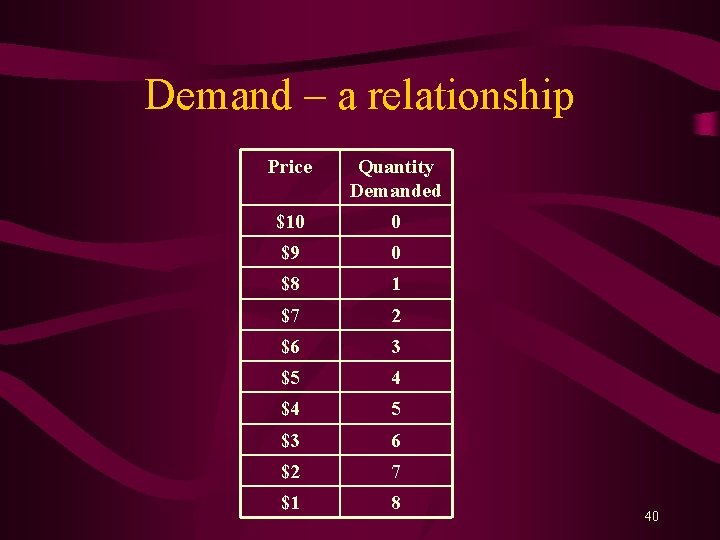
Demand – a relationship Price Quantity Demanded $10 0 $9 0 $8 1 $7 2 $6 3 $5 4 $4 5 $3 6 $2 7 $1 8 40
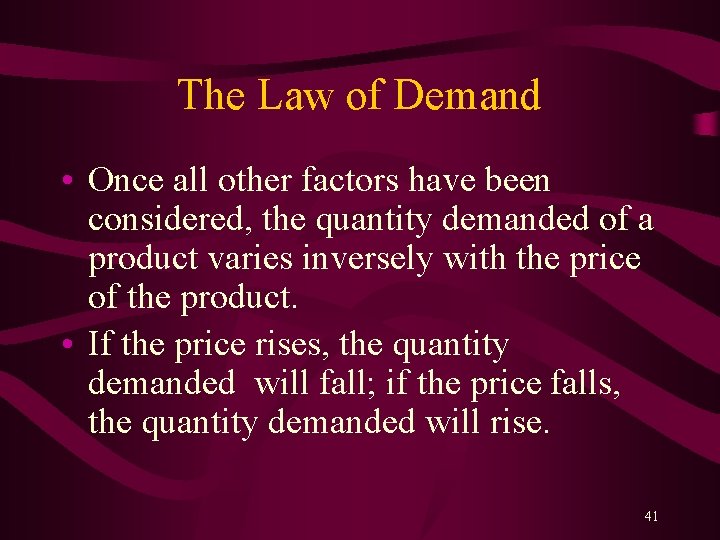
The Law of Demand • Once all other factors have been considered, the quantity demanded of a product varies inversely with the price of the product. • If the price rises, the quantity demanded will fall; if the price falls, the quantity demanded will rise. 41
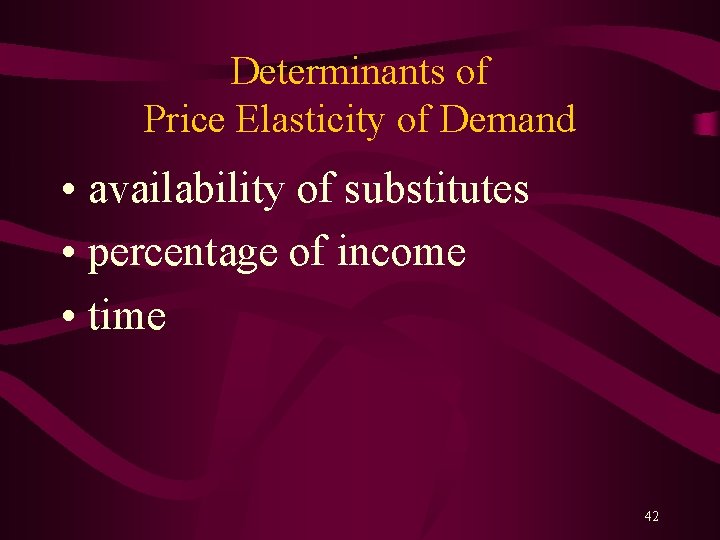
Determinants of Price Elasticity of Demand • availability of substitutes • percentage of income • time 42
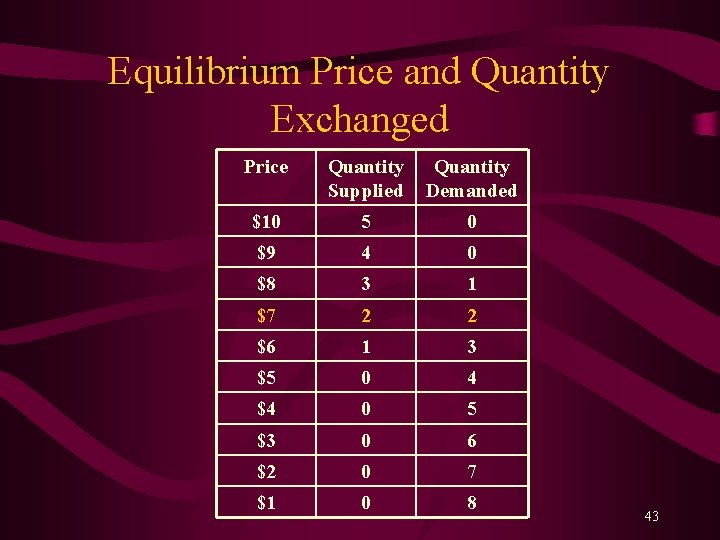
Equilibrium Price and Quantity Exchanged Price Quantity Supplied Quantity Demanded $10 5 0 $9 4 0 $8 3 1 $7 2 2 $6 1 3 $5 0 4 $4 0 5 $3 0 6 $2 0 7 $1 0 8 43
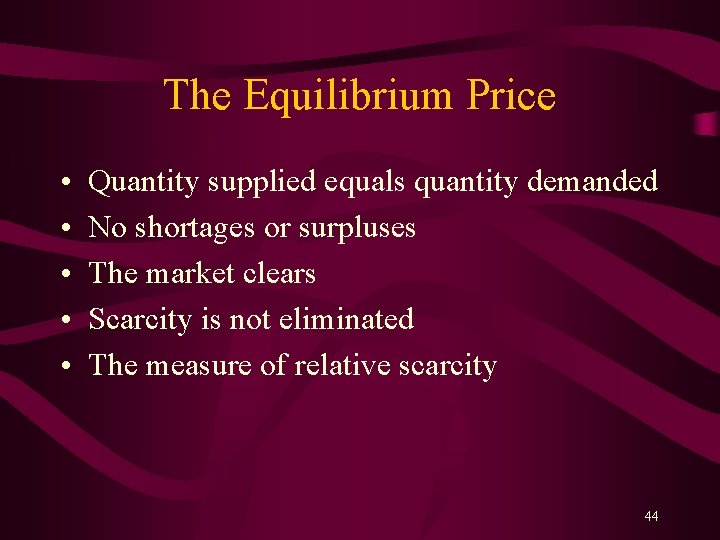
The Equilibrium Price • • • Quantity supplied equals quantity demanded No shortages or surpluses The market clears Scarcity is not eliminated The measure of relative scarcity 44
Main Points • Buyers and sellers (demand supply) determine equilibrium price and quantity exchanged. • At the equilibrium price, the number of items that sellers are willing and able to offer for sale equals the number of items that buyers are willing and able to purchase. • Relative scarcity is the relationship of supply and demand. • Price is the measure of relative scarcity 45
Shifts in Supply • • Input costs Natural conditions Government regulations New Technology 46