
Do Now Presented by LIDIA n n Identify
Do Now: Presented by : LIDIA n n Identify key strengths and weaknesses of the Union entering the Civil War Identify key strengths and weaknesses of the Confederacy entering the Civil War
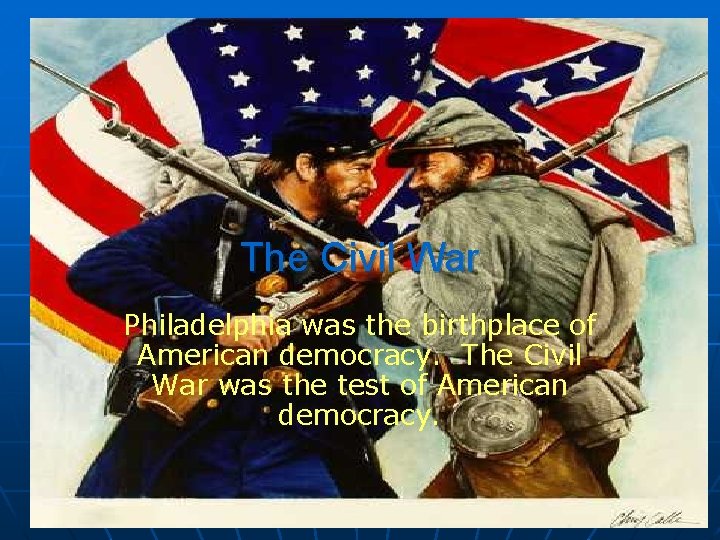
The Civil War Philadelphia was the birthplace of American democracy. The Civil War was the test of American democracy.

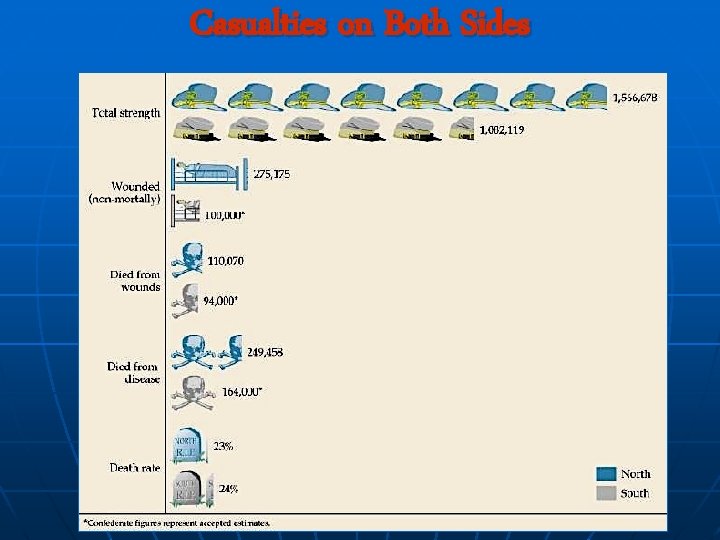
Casualties of the Civil War
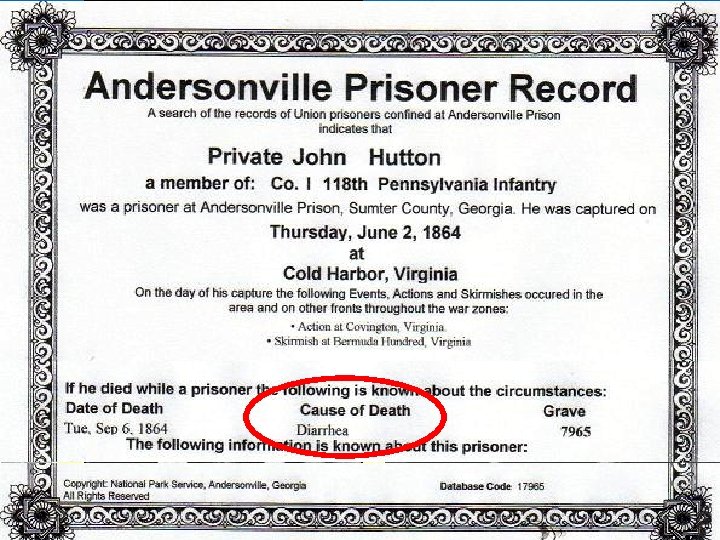
Confederate Prison Camp in Andersonville, GA Union Prison Camp at Andersonville, GA Built to hold 10, 000 prisoners; but held more than 32, 000 Union POWs
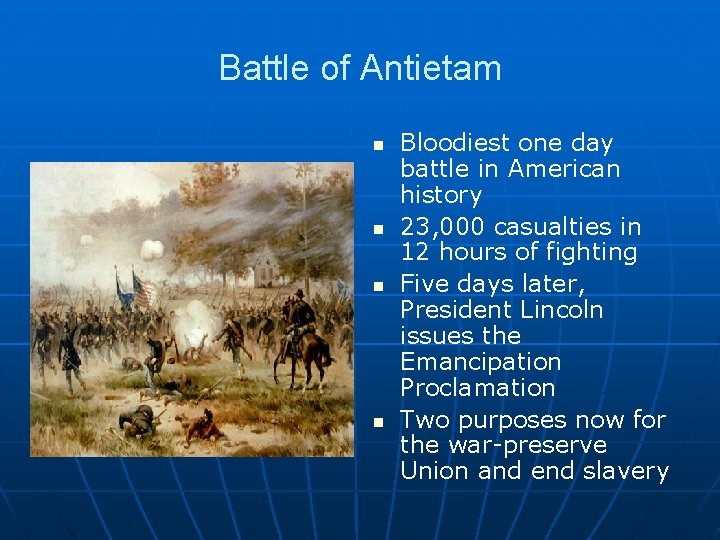
Battle of Antietam n n Bloodiest one day battle in American history 23, 000 casualties in 12 hours of fighting Five days later, President Lincoln issues the Emancipation Proclamation Two purposes now for the war-preserve Union and end slavery
Emancipation Proclamation “An instrument in God’s Hands” n n n Lincoln called it his most important act as president EP demonstrates how Lincoln’s thoughts changed on the need to end slavery Emancipation of slaves was not an original goal of the Civil War
n n Lincoln’s discussed first draft of EP with his cabinet in the Summer of 1862 Members of Lincoln’s cabinet urge him to wait for a good moment in the war before issuing EP That moment is the Union victory at Antietam (Sharpsburg, Maryland) on September 17, 1862 EP became law on January 1, 1863
Gettysburg n n n n July 1 -3, 1863 General Robert E. Lee brings war into Union territory for the first time Some leaders in Congress willing to negotiate a compromise with Confederacy A Confederate victory at Gettysburg might have led to these talks Lee would also have access to needed supplies and better railroads 51, 000 casualties Major turning point in the war for Union
The Gettysburg Address “A Few Appropriate Remarks” n n n 272 words November 19, 1863 at the dedication of the National Cemetery President Lincoln was the second speaker that day Professor orator Edward Everett was the keynote speaker Speaks for two and a half hours President Lincoln-Two and a half minutes
Abraham Lincoln, The Gettysburg Address (1863) Main Points: n It is time we talk about the promise of equality. • “…a new nation, conceived in liberty, and dedicated to the proposition that all men are created equal” n We honor the soldiers sacrifice. • “The world will little note, nor long remember what we say here, but it can never forget what they did here. ” • “It is rather for us to be here dedicated to the great task remaining before us” n The Union is worth fighting for. • “—that this nation, under God, shall have a new birth of freedom and that government of the people, by the people, for the people shall not parish from the earth. ”
Fight to the Finish n By 1863, the war began to turn in favor of the North: • Northern supremacy in industry & manpower began to take its toll on the exhausted South • The North began enlisting blacks into the Union army; 200, 000 fought as soldiers & many others served as labor in the Northern war effort n TOTAL WAR: Not just about who’s fighting in combat…
Union Victory n n n n 3 part approach for Union to win U. S. Naval blockade of southern ports Divide Confederacy into two parts by controlling Mississippi River Have needed troop levels Battle of Vicksburg (Spring 1863) achieved goal of controlling Mississippi River Grant- “Total War” or “Hard War” Sherman’s “March to the Sea” Total destruction from Tennessee to South Carolina
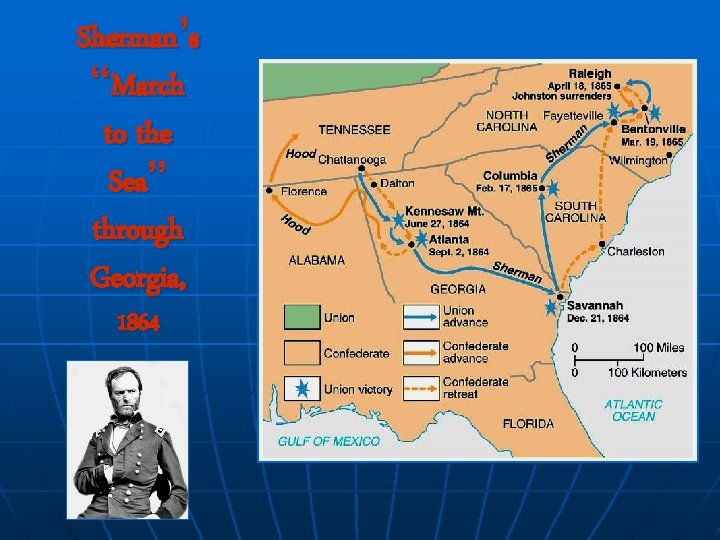
Sherman’s “March to the Sea” through Georgia, 1864
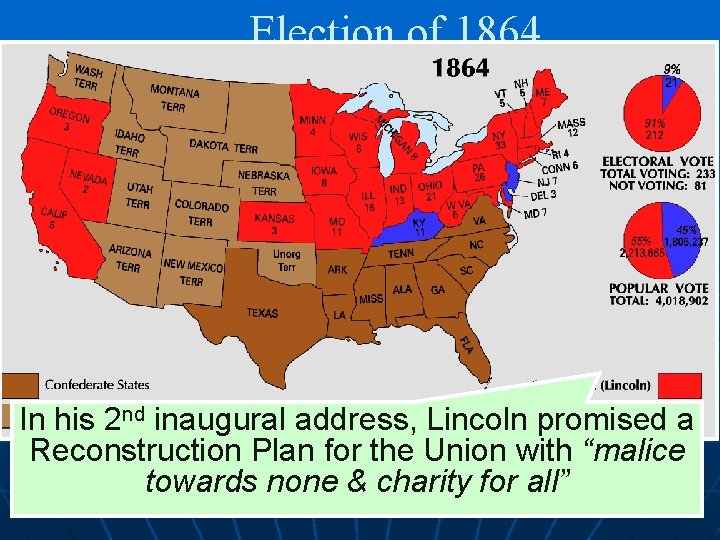
Election of 1864 n Meanwhile, Lincoln faced a tough reelection in 1864 against General George Mc. Clellan: • War failures were a key issue • Radical Republicans considered dropping Lincoln from the ticket n But, when Atlanta fell during Sherman’s “March to the Sea, ” Lincoln regained support and was overwhelmingly reelected In his 2 nd inaugural address, Lincoln promised a Reconstruction Plan for the Union with “malice towards none & charity for all”
Lincoln’s Second Inaugural Address n n Grant and Sherman’s success greatly improved Lincoln’s chances of re-election in 1864 Lincoln easily defeats General George Mc. Clellan Delivers his second inaugural address on March 4, 1865 Lincoln • Before we can move forward, we must understand what the last four years have been about • Must heal as a nation • Both sides must accept responsibility for the war
Surrender at Appomattox n n n April 2 - Grant captures Richmond April 4 - Lincoln walks through Richmond April 9 - Lee surrenders at Appomattox Court House April 11 -Lincoln gives his final speech April 14 - Lincoln shot by John Wilkes Booth April 15 - Lincoln dies of wounds suffered the night before
Casualties on Both Sides
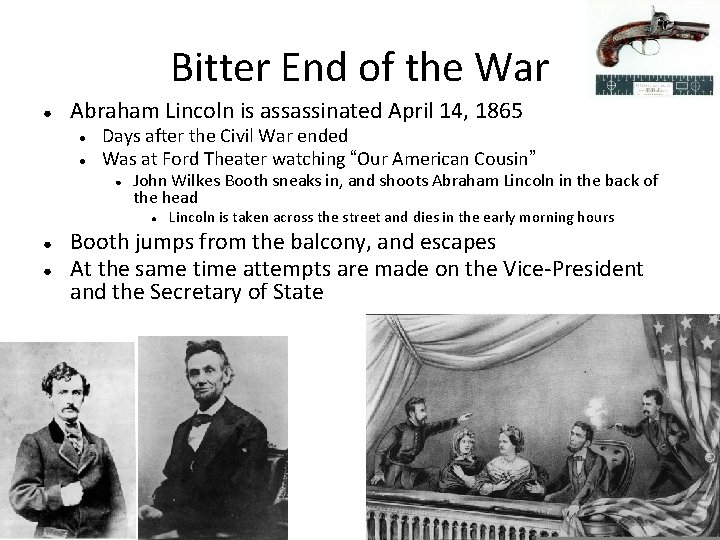
Bitter End of the War ● Abraham Lincoln is assassinated April 14, 1865 ● ● Days after the Civil War ended Was at Ford Theater watching “Our American Cousin” ● John Wilkes Booth sneaks in, and shoots Abraham Lincoln in the back of the head ● ● ● Lincoln is taken across the street and dies in the early morning hours Booth jumps from the balcony, and escapes At the same time attempts are made on the Vice-President and the Secretary of State
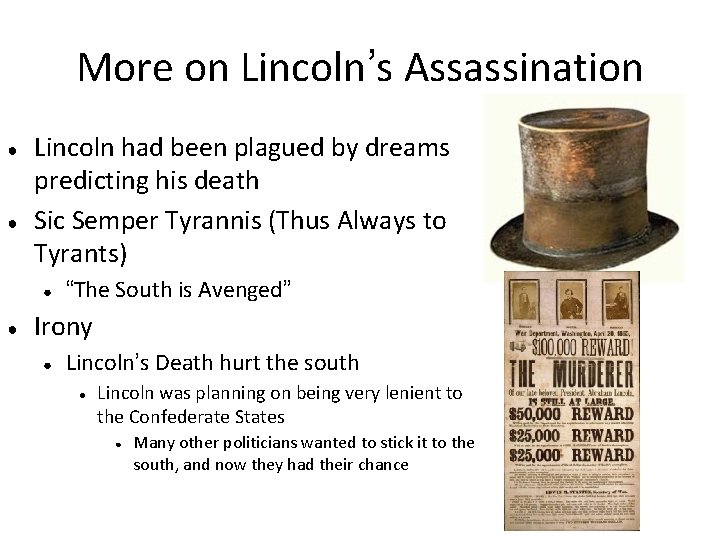
More on Lincoln’s Assassination ● ● Lincoln had been plagued by dreams predicting his death Sic Semper Tyrannis (Thus Always to Tyrants) ● ● “The South is Avenged” Irony ● Lincoln’s Death hurt the south ● Lincoln was planning on being very lenient to the Confederate States ● Many other politicians wanted to stick it to the south, and now they had their chance
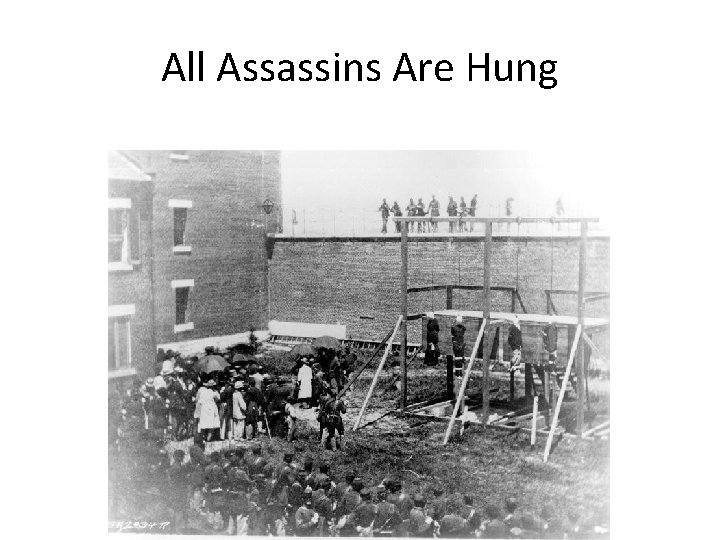
All Assassins Are Hung
● Republican Congress pushed through their agenda unopposed ● Homestead Act of 1862 ● Any one could claim up to 160 acres of land buy it for a cheap price after living/farming it for 5 years ● Morill Land Grant of 1862 ● Set public land aside for public education (Land-Grant Colleges) ● Tariff Bills ● Without the South to resist the North jacked up tariffs to protect America’s growing industry ● Construction began on the Transcontinental Railroad ● National Bank Act ● Banks could join national banking system ● Could then buy gov’t bonds and issue paper currency ● Created first national banking system since Jackson killed the Bank of the US in 1836 North/West: Political Effects ● ● ● Infringement on Civil Liberties ● “supervised” voting ● Writ of Habeas Corpus ● Freedom of Speech Abolishment of Slavery ● Confiscation Acts: Union army could confiscate any Confederate property including slaves (essentially freed slaves when the Union army took over) ● Emancipation Proclamation: freed all slaves in CSA territory ● 13 th Amendment: banned slavery Massive Expansion of Federal Power ● Aggressively enforce laws ● Protect Civil Rights ● 14 th Amendment granted citizenship to all African-Americans ● 1 st Social Welfare program (Freedmen’s Bureau) ● Print currency ● Conscription
North: Economic Effects ● Boom in industry due to war (transportation and supplies) ● ● Tariffs protect young American industry Paper currency caused some inflation
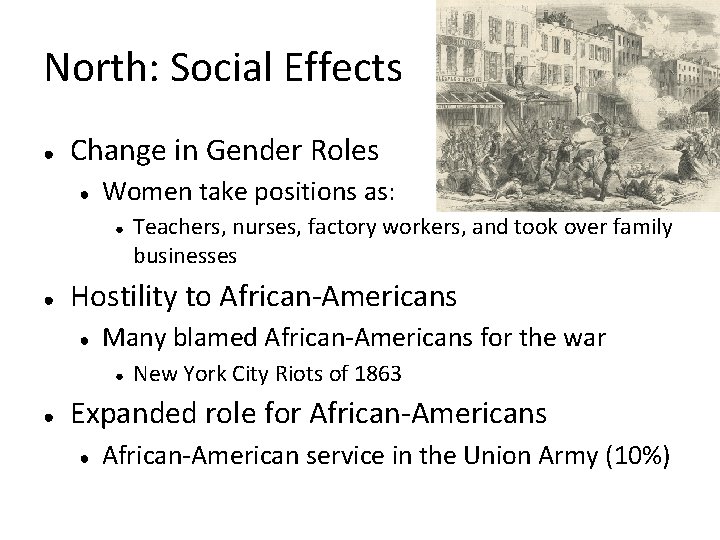
North: Social Effects ● Change in Gender Roles ● Women take positions as: ● ● Hostility to African-Americans ● Many blamed African-Americans for the war ● ● Teachers, nurses, factory workers, and took over family businesses New York City Riots of 1863 Expanded role for African-Americans ● African-American service in the Union Army (10%)
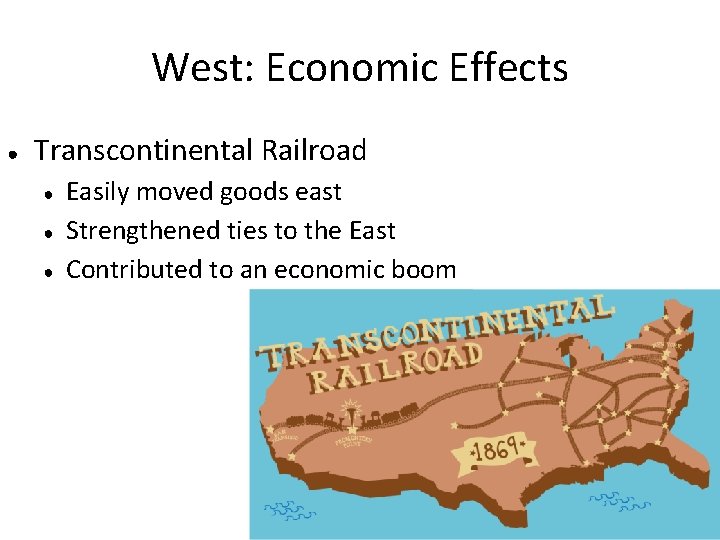
West: Economic Effects ● Transcontinental Railroad ● ● ● Easily moved goods east Strengthened ties to the East Contributed to an economic boom
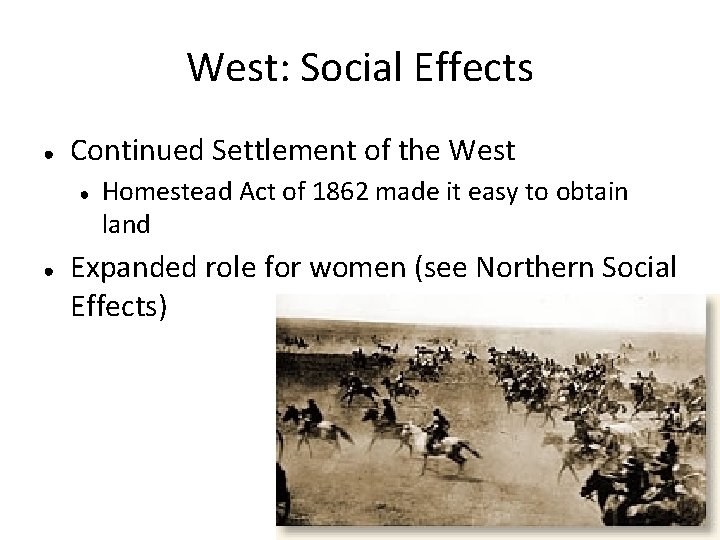
West: Social Effects ● Continued Settlement of the West ● ● Homestead Act of 1862 made it easy to obtain land Expanded role for women (see Northern Social Effects)
South: Political Effects ● Confederate States of America ● Decentralized gov’t that kept the power with the states ● Crippled the war effort ● ● States did not give money to the federal gov’t if they didn’t feel like it States raised own armies and sometimes refused to allow them to leave the home state
South: Economic Effects ● Economy was crushed ● ● ● Blockade of ports and not trading with the North destroyed the Southern economy Lack of hard currency created massive levels of inflation Entire Economic System/Way of Life was destroyed
South: Social Effects ● ● ● Slaves freed Expanded role for women Development of Southern Nationalism
- Slides: 28