
DO NOW Pick up notes and Review 31



- Slides: 24
DO NOW • Pick up notes and Review #31.
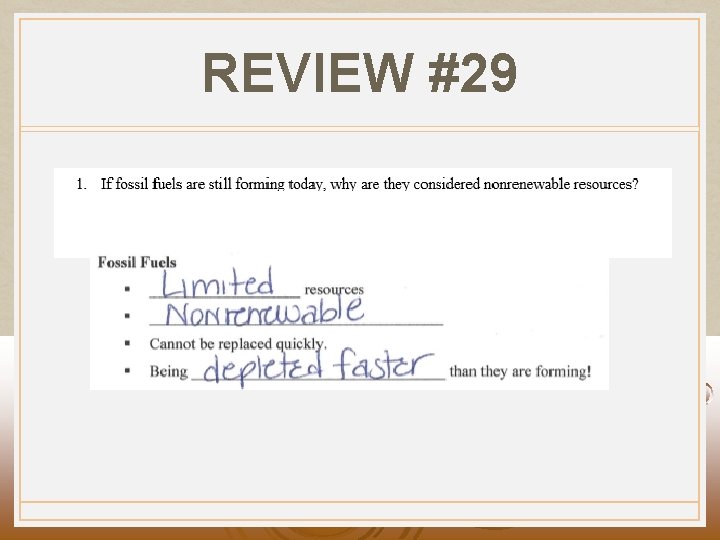
REVIEW #29
REVIEW #29
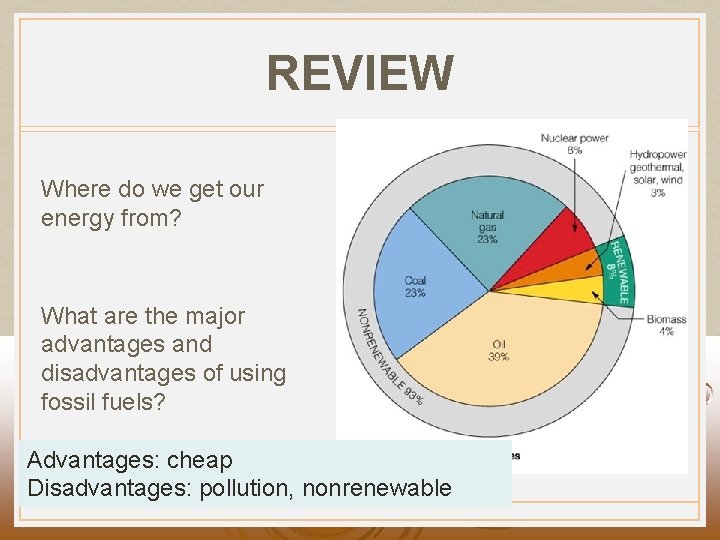
REVIEW Where do we get our energy from? What are the major advantages and disadvantages of using fossil fuels? Advantages: cheap Disadvantages: pollution, nonrenewable
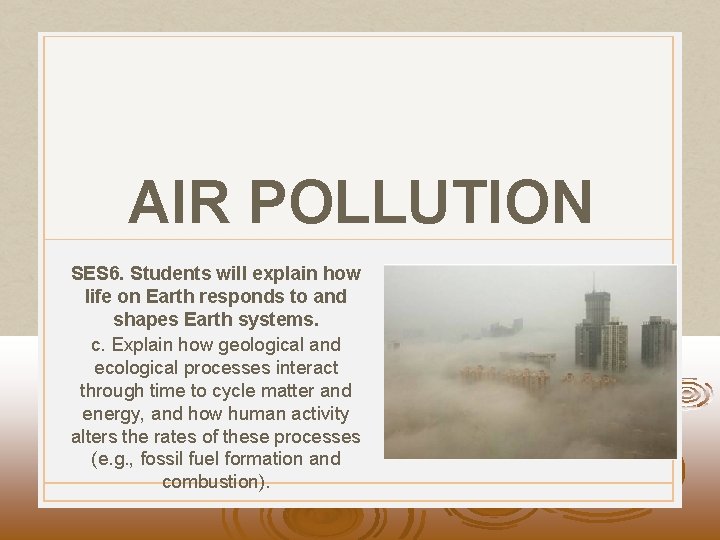
AIR POLLUTION SES 6. Students will explain how life on Earth responds to and shapes Earth systems. c. Explain how geological and ecological processes interact through time to cycle matter and energy, and how human activity alters the rates of these processes (e. g. , fossil fuel formation and combustion).
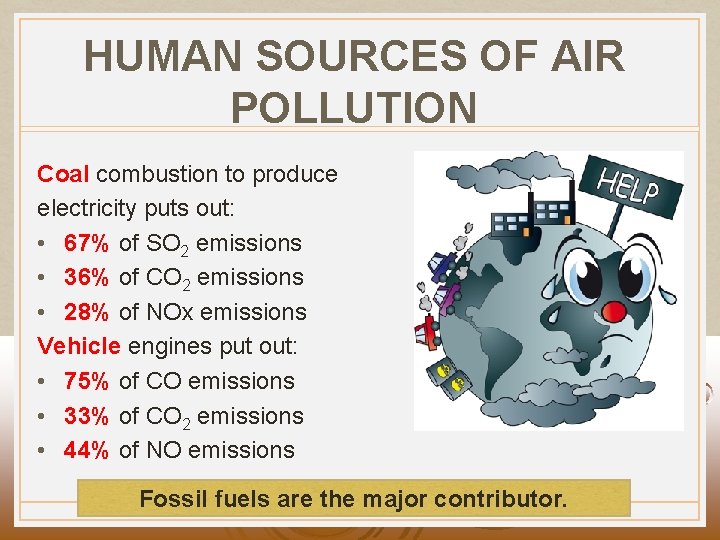
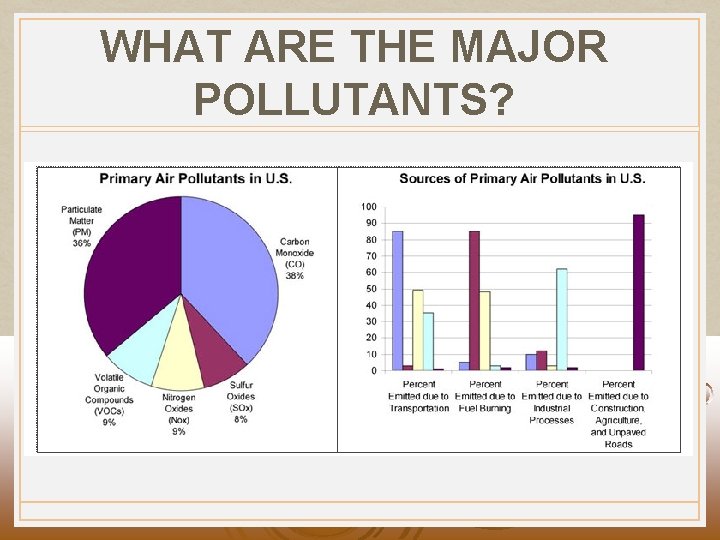
HUMAN SOURCES OF AIR POLLUTION Coal combustion to produce electricity puts out: • 67% of SO 2 emissions • 36% of CO 2 emissions • 28% of NOx emissions Vehicle engines put out: • 75% of CO emissions • 33% of CO 2 emissions • 44% of NO emissions Fossil fuels are the major contributor.
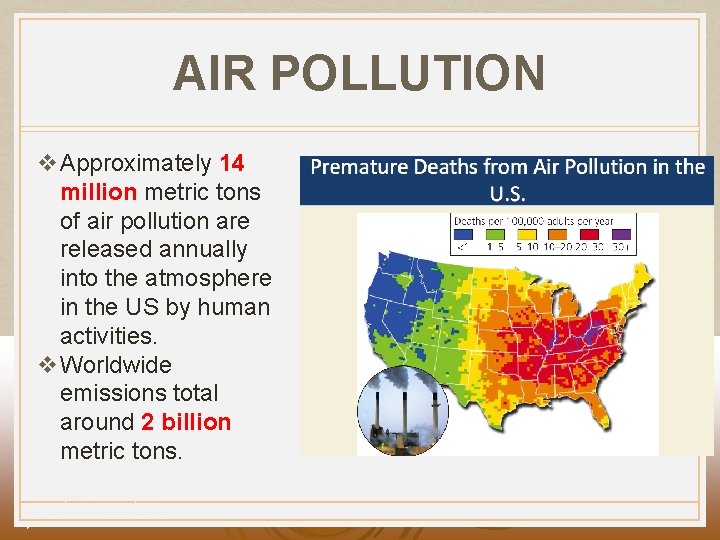
AIR POLLUTION v Approximately 14 million metric tons of air pollution are released annually into the atmosphere in the US by human activities. v Worldwide emissions total around 2 billion metric tons. Cunningham - Cunningham Saigo: Environmental Science 7 th Ed.
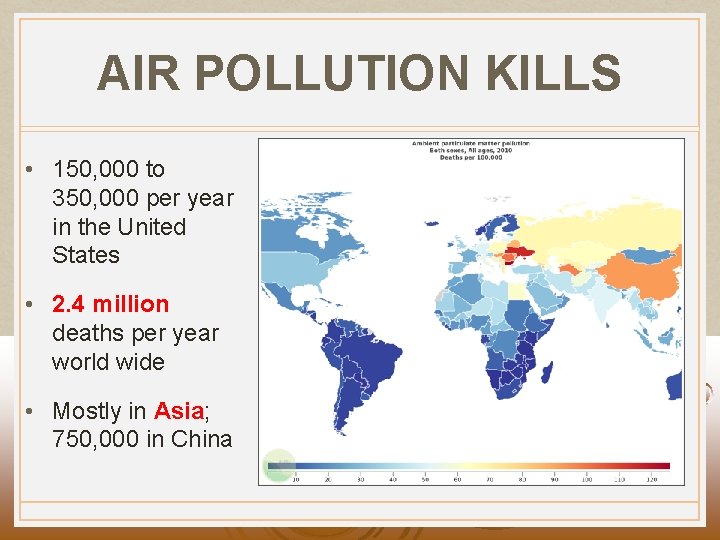
AIR POLLUTION KILLS • 150, 000 to 350, 000 per year in the United States • 2. 4 million deaths per year world wide • Mostly in Asia; 750, 000 in China
WHAT ARE THE MAJOR POLLUTANTS?
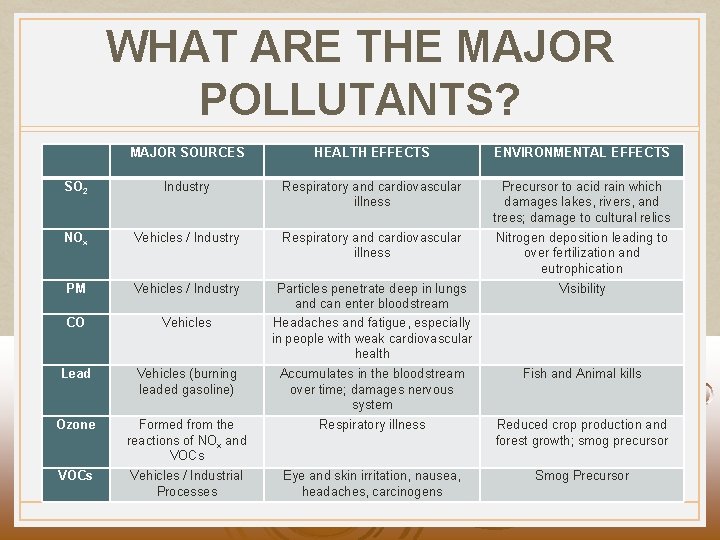
WHAT ARE THE MAJOR POLLUTANTS? MAJOR SOURCES HEALTH EFFECTS ENVIRONMENTAL EFFECTS SO 2 Industry Respiratory and cardiovascular illness Precursor to acid rain which damages lakes, rivers, and trees; damage to cultural relics NOx Vehicles / Industry Respiratory and cardiovascular illness Nitrogen deposition leading to over fertilization and eutrophication PM Vehicles / Industry Visibility CO Vehicles Particles penetrate deep in lungs and can enter bloodstream Headaches and fatigue, especially in people with weak cardiovascular health Lead Vehicles (burning leaded gasoline) Accumulates in the bloodstream over time; damages nervous system Fish and Animal kills Ozone Formed from the reactions of NOx and VOCs Respiratory illness Reduced crop production and forest growth; smog precursor VOCs Vehicles / Industrial Processes Eye and skin irritation, nausea, headaches, carcinogens Smog Precursor
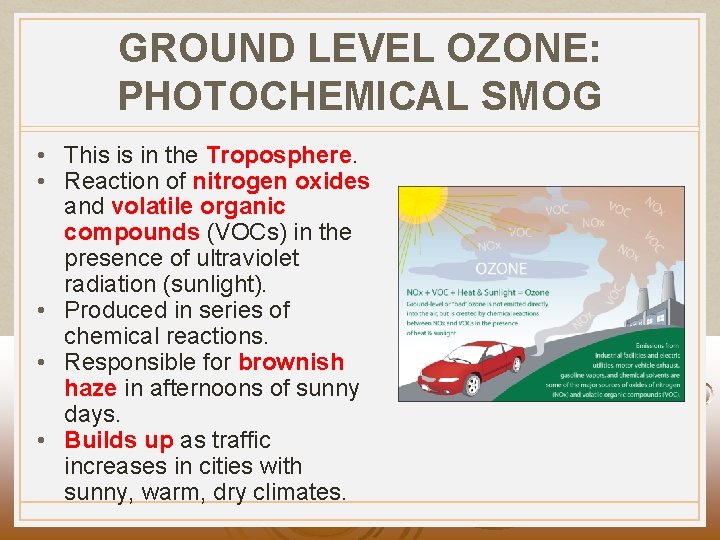
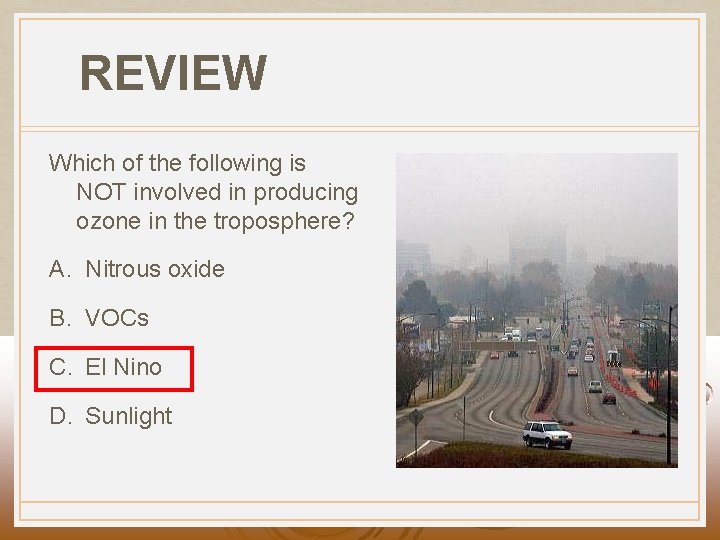
GROUND LEVEL OZONE: PHOTOCHEMICAL SMOG • This is in the Troposphere. • Reaction of nitrogen oxides and volatile organic compounds (VOCs) in the presence of ultraviolet radiation (sunlight). • Produced in series of chemical reactions. • Responsible for brownish haze in afternoons of sunny days. • Builds up as traffic increases in cities with sunny, warm, dry climates.
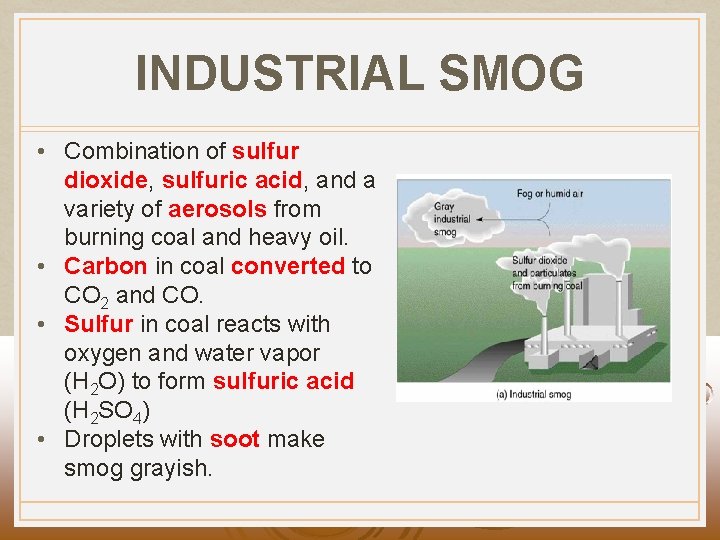
INDUSTRIAL SMOG • Combination of sulfur dioxide, sulfuric acid, and a variety of aerosols from burning coal and heavy oil. • Carbon in coal converted to CO 2 and CO. • Sulfur in coal reacts with oxygen and water vapor (H 2 O) to form sulfuric acid (H 2 SO 4) • Droplets with soot make smog grayish.
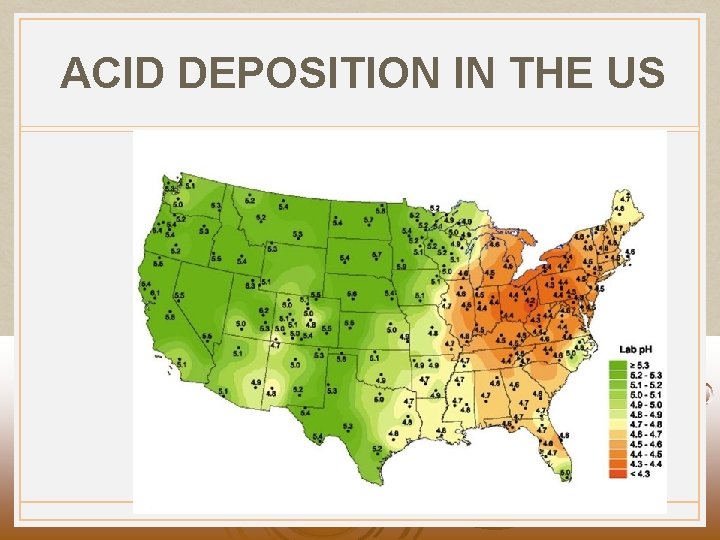
ACID RAIN • Higher than normal amounts of nitric and sulfuric acids in the atmosphere. • Wet deposition: • Acid rain, fog, and snow • Natural CO 2 in atmosphere is reason for rain’s natural acidity of 5. 6. • Reacts with calcium carbonate in limestone, creates caves.
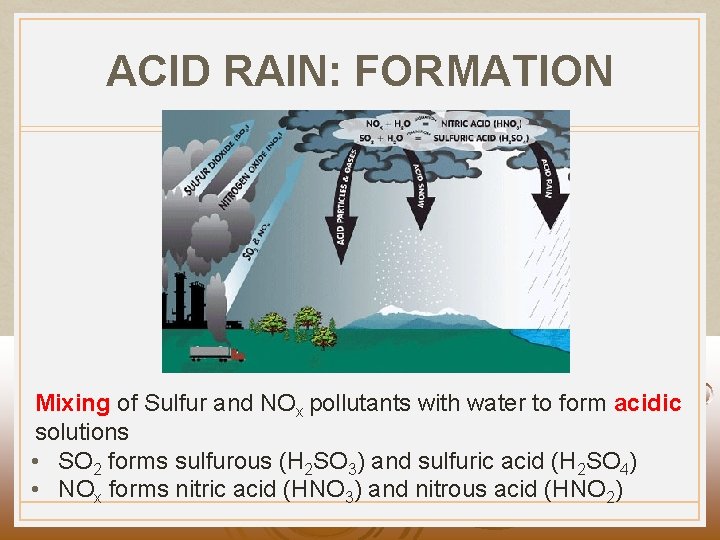
ACID RAIN: FORMATION Mixing of Sulfur and NOx pollutants with water to form acidic solutions • SO 2 forms sulfurous (H 2 SO 3) and sulfuric acid (H 2 SO 4) • NOx forms nitric acid (HNO 3) and nitrous acid (HNO 2)
ACID DEPOSITION IN THE US
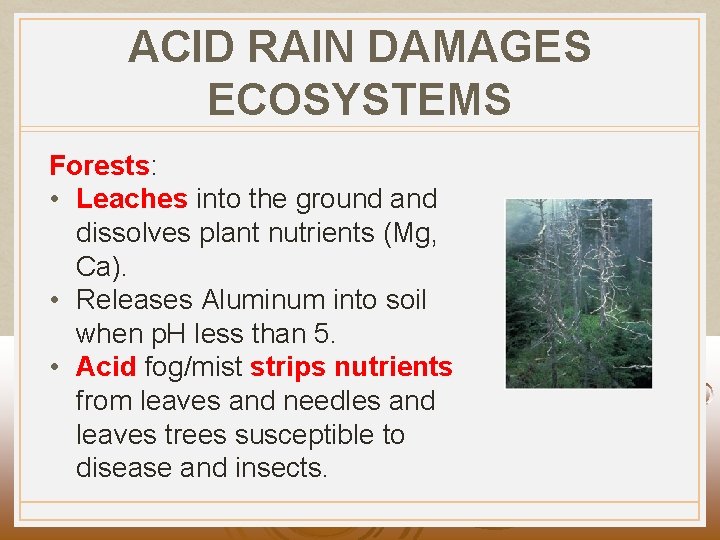
ACID RAIN DAMAGES ECOSYSTEMS Forests: • Leaches into the ground and dissolves plant nutrients (Mg, Ca). • Releases Aluminum into soil when p. H less than 5. • Acid fog/mist strips nutrients from leaves and needles and leaves trees susceptible to disease and insects.
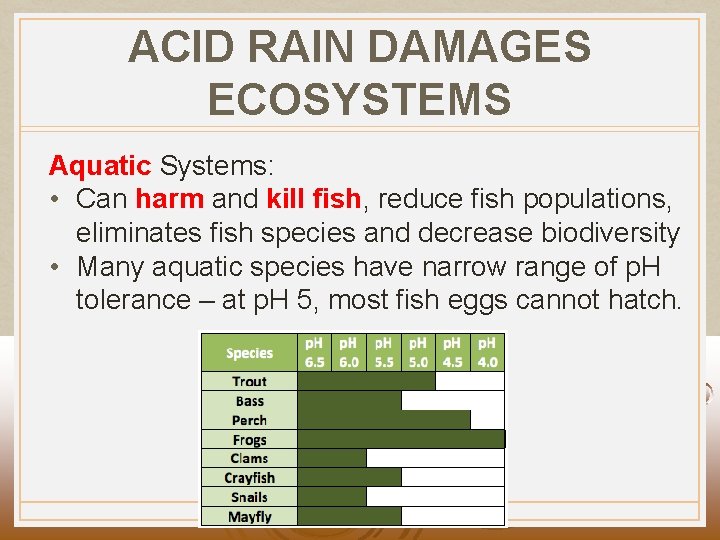
ACID RAIN DAMAGES ECOSYSTEMS Aquatic Systems: • Can harm and kill fish, reduce fish populations, eliminates fish species and decrease biodiversity • Many aquatic species have narrow range of p. H tolerance – at p. H 5, most fish eggs cannot hatch.
FACTORS AFFECTING AIR POLLUTION Reduced by: • • • Settling out Precipitation Sea spray Winds Chemical reactions Increased by: • Urban buildings - slow wind dispersal of pollutants. • Mountains - promote temperature inversions • High temperatures - promote photochemical reactions
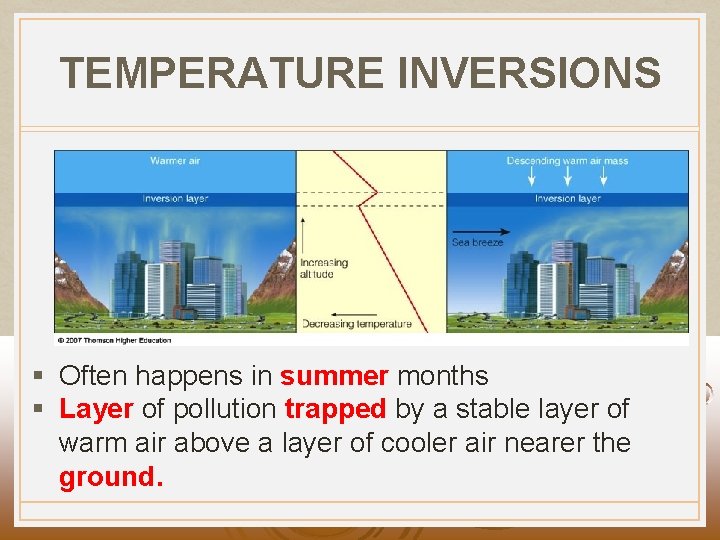
TEMPERATURE INVERSIONS § Often happens in summer months § Layer of pollution trapped by a stable layer of warm air above a layer of cooler air nearer the ground.
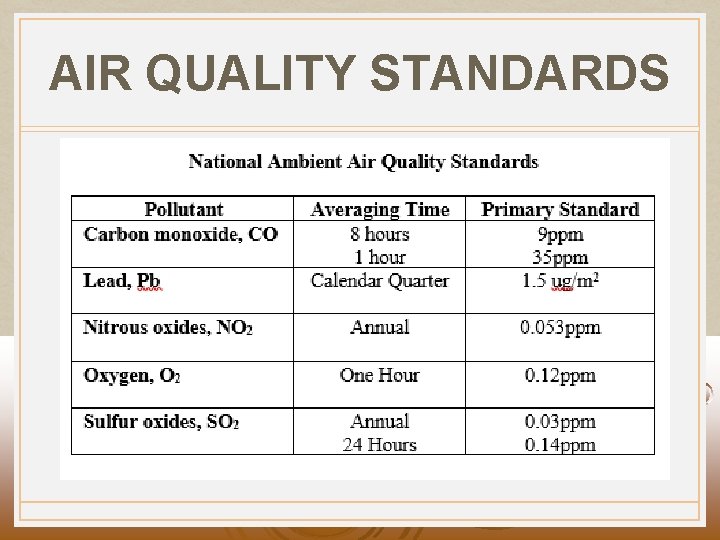
AIR QUALITY STANDARDS
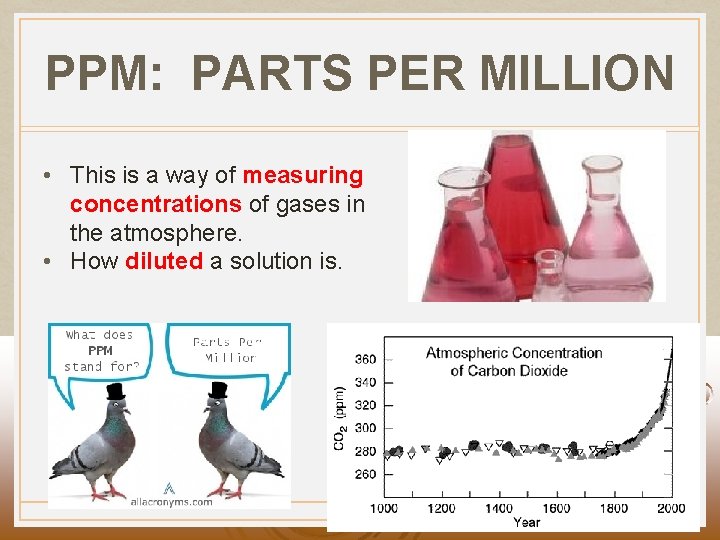
PPM: PARTS PER MILLION • This is a way of measuring concentrations of gases in the atmosphere. • How diluted a solution is.
REVIEW Which of the following is NOT involved in producing ozone in the troposphere? A. Nitrous oxide B. VOCs C. El Nino D. Sunlight
TO DO • Do Review #31. • Work on The Energy Resource Scavenger Hunt or the Renew-A-Bean lab.