
Do Now Grab todays Agenda 2 1 Weebly
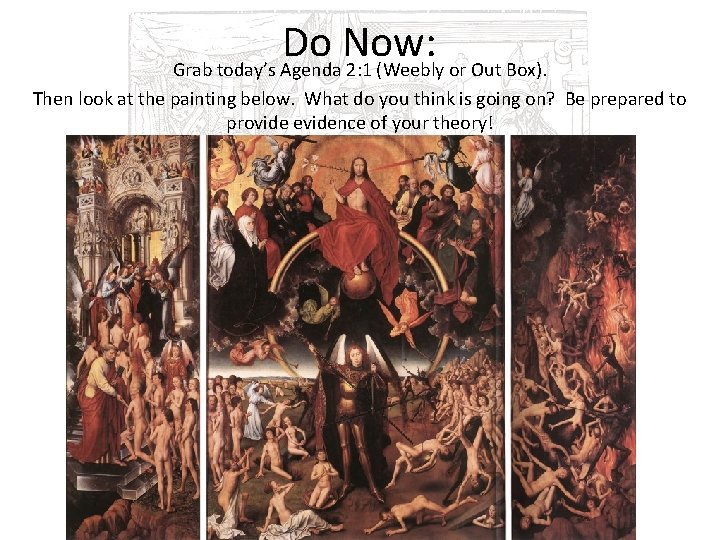
Do Now: Grab today’s Agenda 2: 1 (Weebly or Out Box). Then look at the painting below. What do you think is going on? Be prepared to provide evidence of your theory!
Objective: The Church and the Renaissance WHII. 3 a TSWDK of the Reformation in terms of its impact on Western civilization by explaining the effects of theological, political, and economic differences that emerged, including the views and actions of Martin Luther, John Calvin, Henry VIII, and Elizabeth I.
The Church and the Renaissance • • Center of Life Italian Domination of the Church The Power of the Church The Renaissance
Center of Life It’s all about the Church! • Religion in Medieval Europe • Life and death was thoroughly entrenched in the church, especially if you wanted to go to heaven and attain salvation. • The Church was the center of life. But what if that was no longer the case?
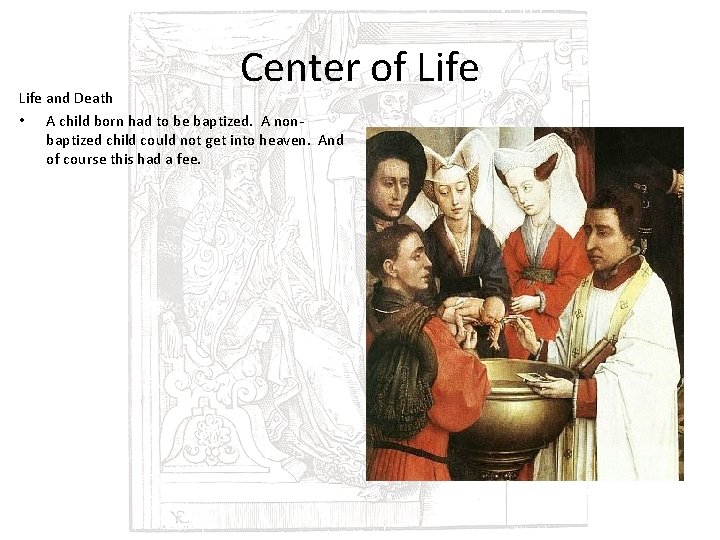
Center of Life and Death • A child born had to be baptized. A nonbaptized child could not get into heaven. And of course this had a fee.
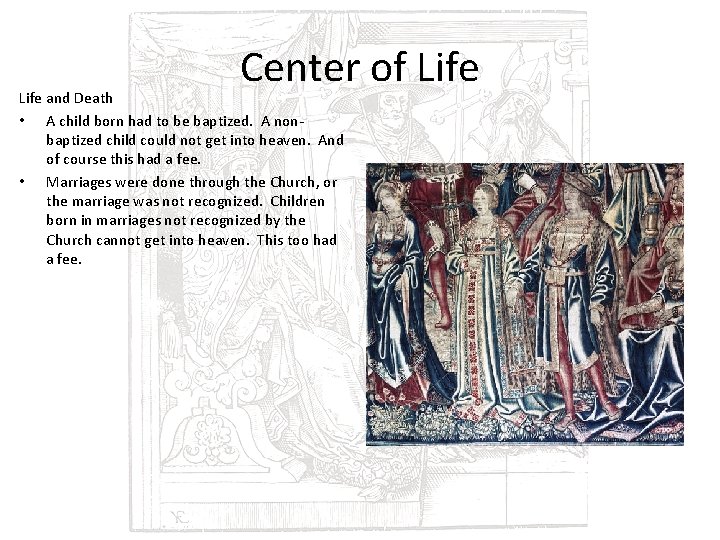
Center of Life and Death • A child born had to be baptized. A nonbaptized child could not get into heaven. And of course this had a fee. • Marriages were done through the Church, or the marriage was not recognized. Children born in marriages not recognized by the Church cannot get into heaven. This too had a fee.
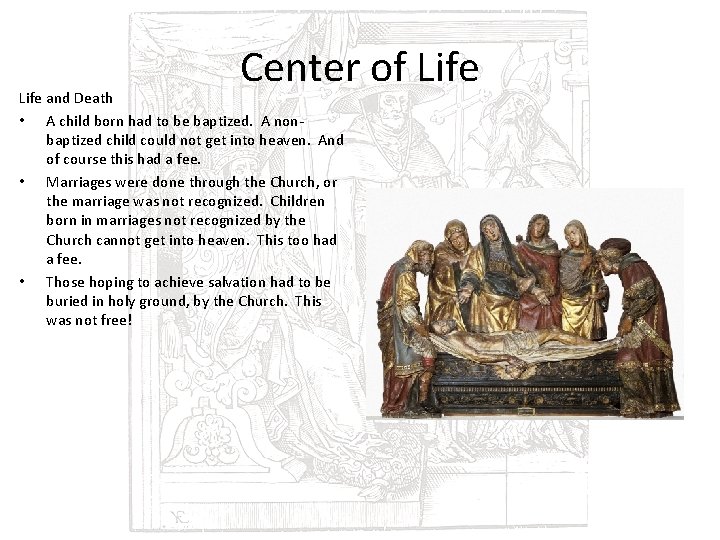
Center of Life and Death • A child born had to be baptized. A nonbaptized child could not get into heaven. And of course this had a fee. • Marriages were done through the Church, or the marriage was not recognized. Children born in marriages not recognized by the Church cannot get into heaven. This too had a fee. • Those hoping to achieve salvation had to be buried in holy ground, by the Church. This was not free!
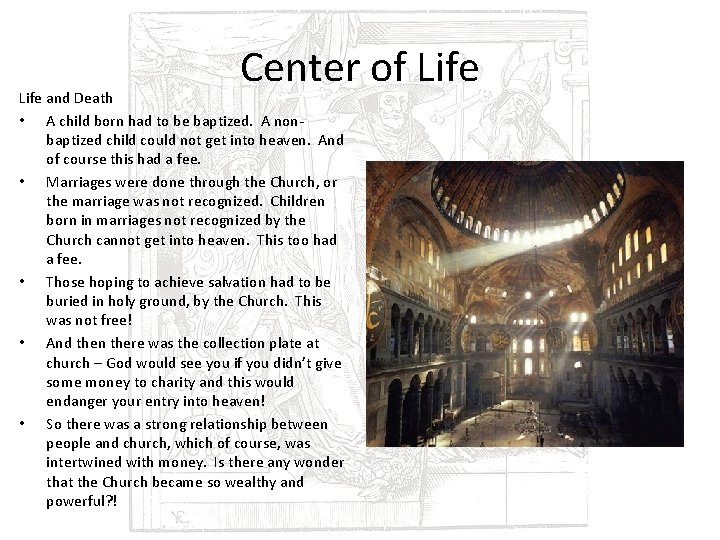
Center of Life and Death • A child born had to be baptized. A nonbaptized child could not get into heaven. And of course this had a fee. • Marriages were done through the Church, or the marriage was not recognized. Children born in marriages not recognized by the Church cannot get into heaven. This too had a fee. • Those hoping to achieve salvation had to be buried in holy ground, by the Church. This was not free! • And then there was the collection plate at church – God would see you if you didn’t give some money to charity and this would endanger your entry into heaven! • So there was a strong relationship between people and church, which of course, was intertwined with money. Is there any wonder that the Church became so wealthy and powerful? !
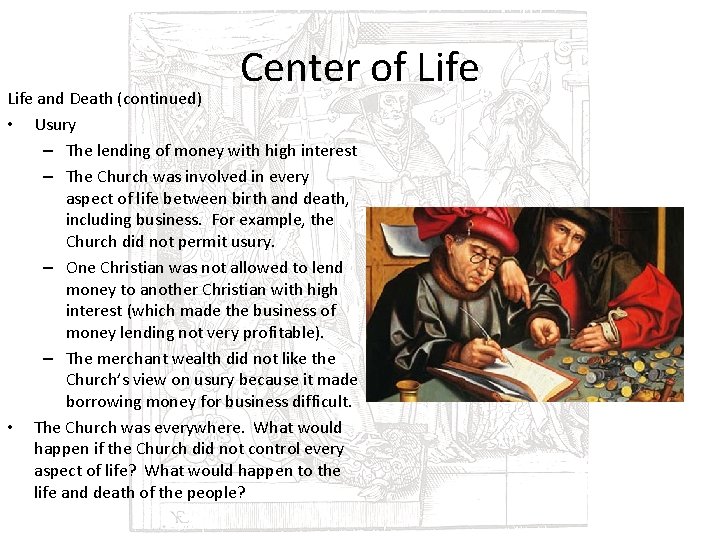
Center of Life and Death (continued) • Usury – The lending of money with high interest – The Church was involved in every aspect of life between birth and death, including business. For example, the Church did not permit usury. – One Christian was not allowed to lend money to another Christian with high interest (which made the business of money lending not very profitable). – The merchant wealth did not like the Church’s view on usury because it made borrowing money for business difficult. • The Church was everywhere. What would happen if the Church did not control every aspect of life? What would happen to the life and death of the people?
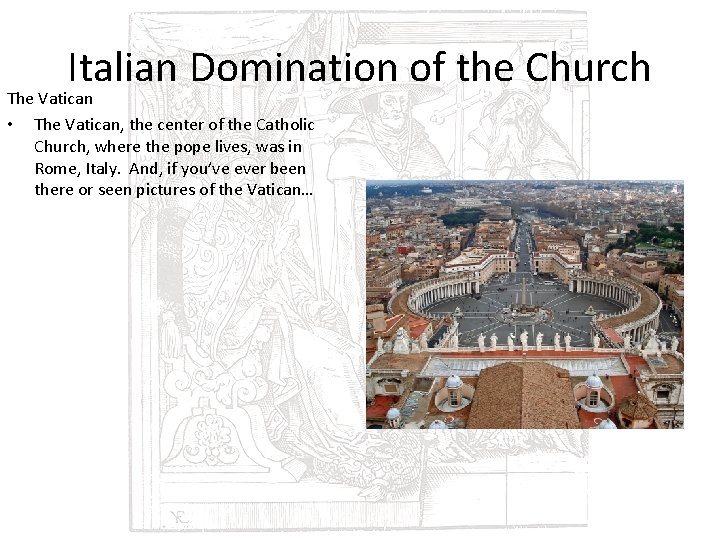
Italian Domination of the Church The Vatican • The Vatican, the center of the Catholic Church, where the pope lives, was in Rome, Italy. And, if you’ve ever been there or seen pictures of the Vatican…
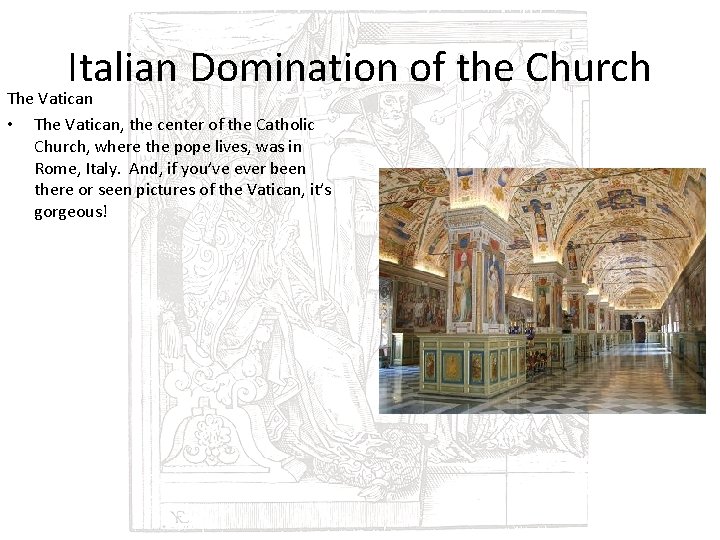
Italian Domination of the Church The Vatican • The Vatican, the center of the Catholic Church, where the pope lives, was in Rome, Italy. And, if you’ve ever been there or seen pictures of the Vatican, it’s gorgeous!
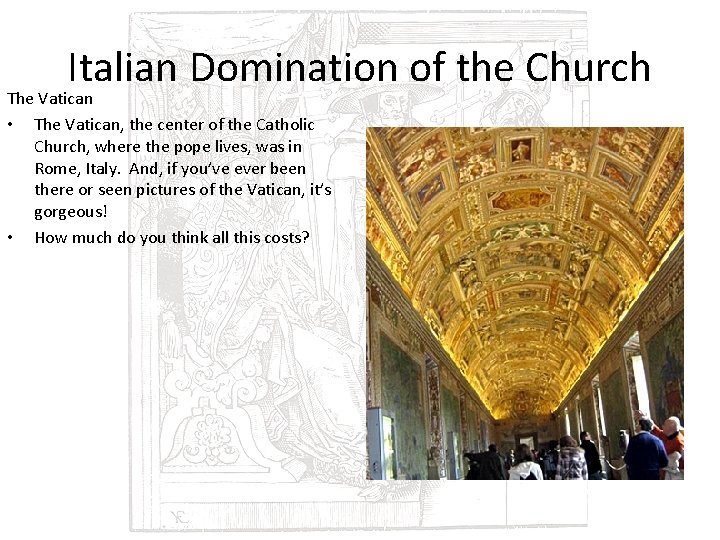
Italian Domination of the Church The Vatican • The Vatican, the center of the Catholic Church, where the pope lives, was in Rome, Italy. And, if you’ve ever been there or seen pictures of the Vatican, it’s gorgeous! • How much do you think all this costs?
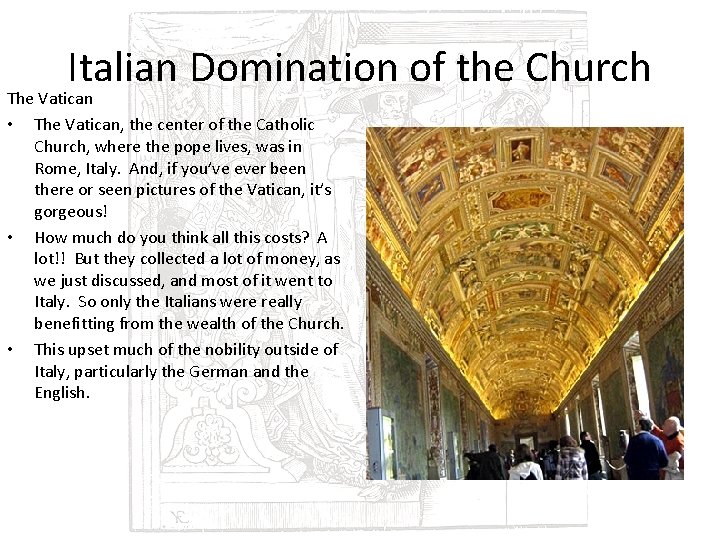
Italian Domination of the Church The Vatican • The Vatican, the center of the Catholic Church, where the pope lives, was in Rome, Italy. And, if you’ve ever been there or seen pictures of the Vatican, it’s gorgeous! • How much do you think all this costs? A lot!! But they collected a lot of money, as we just discussed, and most of it went to Italy. So only the Italians were really benefitting from the wealth of the Church. • This upset much of the nobility outside of Italy, particularly the German and the English.
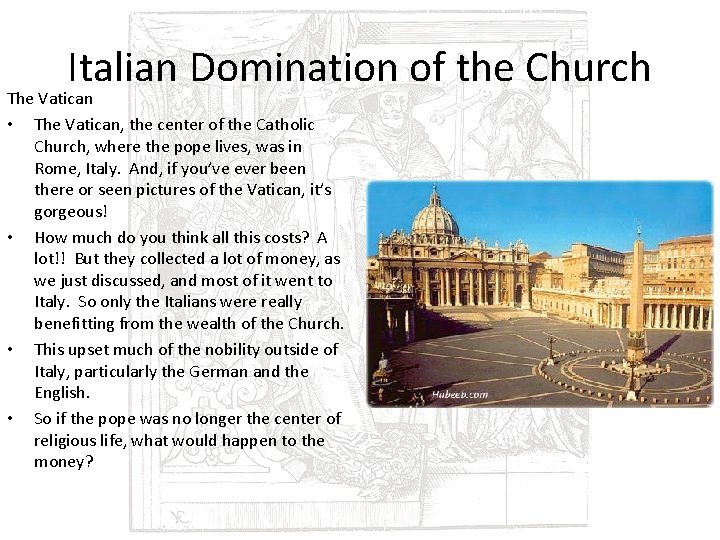
Italian Domination of the Church The Vatican • The Vatican, the center of the Catholic Church, where the pope lives, was in Rome, Italy. And, if you’ve ever been there or seen pictures of the Vatican, it’s gorgeous! • How much do you think all this costs? A lot!! But they collected a lot of money, as we just discussed, and most of it went to Italy. So only the Italians were really benefitting from the wealth of the Church. • This upset much of the nobility outside of Italy, particularly the German and the English. • So if the pope was no longer the center of religious life, what would happen to the money?
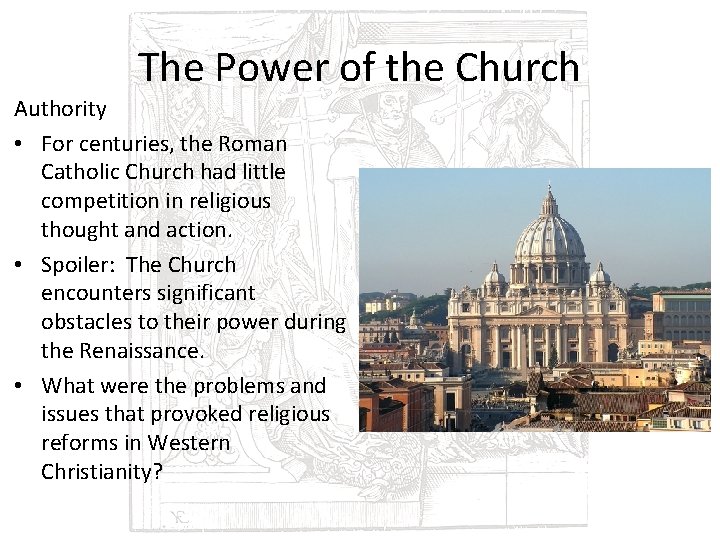
The Power of the Church Authority • For centuries, the Roman Catholic Church had little competition in religious thought and action. • Spoiler: The Church encounters significant obstacles to their power during the Renaissance. • What were the problems and issues that provoked religious reforms in Western Christianity?
The Power of the Church Rise to Power • No alternative – By the start of the 16 th century, the Catholic Church was very powerful, particularly in Western Europe. – It’s a power that has been building up for centuries and relied largely on ignorance and superstition on the part of the populace. – Remember the purpose of life was to achieve salvation when you die. So the people would do whatever was needed to reach that goal. However, only the super-rich and clergy knew how to read so if anyone else had a religious question, they had to completely rely on the super-rich and the clergy. And the people would have to abide by their answers because they did not know any better. (The best way to control the people is through religion and fear!) – People relied completely on the Church to get into heaven. This gave the clergy an inordinate amount of power. Keep your clergy happy and you’ll get into heaven!
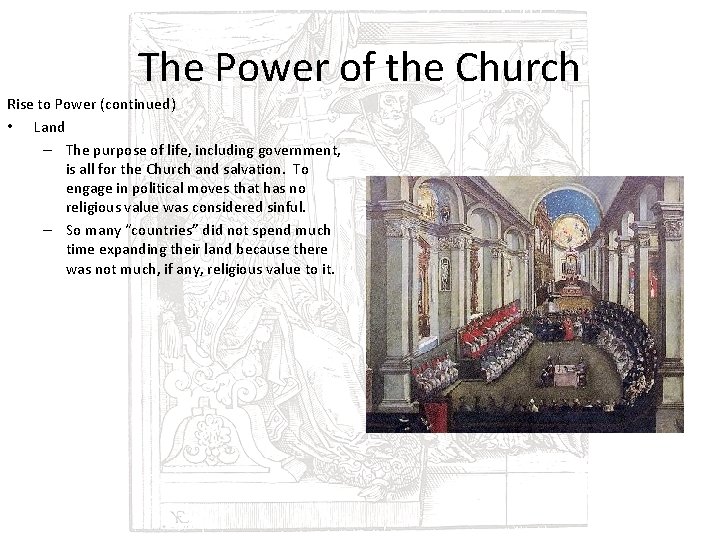
The Power of the Church Rise to Power (continued) • Land – The purpose of life, including government, is all for the Church and salvation. To engage in political moves that has no religious value was considered sinful. – So many “countries” did not spend much time expanding their land because there was not much, if any, religious value to it.
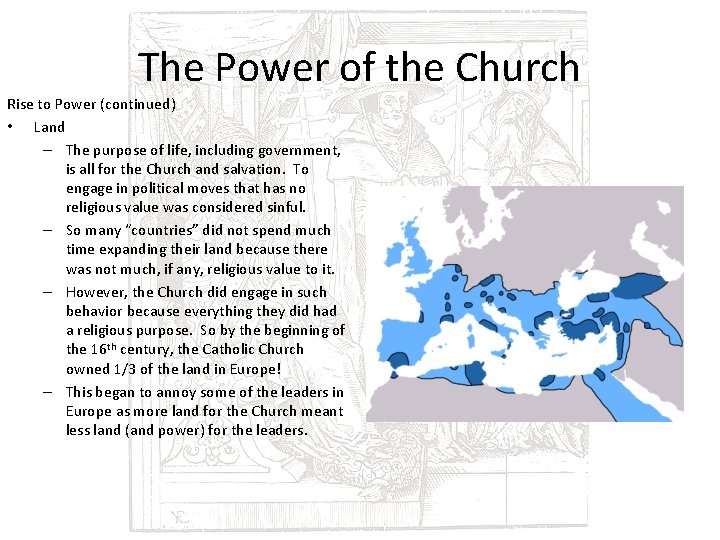
The Power of the Church Rise to Power (continued) • Land – The purpose of life, including government, is all for the Church and salvation. To engage in political moves that has no religious value was considered sinful. – So many “countries” did not spend much time expanding their land because there was not much, if any, religious value to it. – However, the Church did engage in such behavior because everything they did had a religious purpose. So by the beginning of the 16 th century, the Catholic Church owned 1/3 of the land in Europe! – This began to annoy some of the leaders in Europe as more land for the Church meant less land (and power) for the leaders.
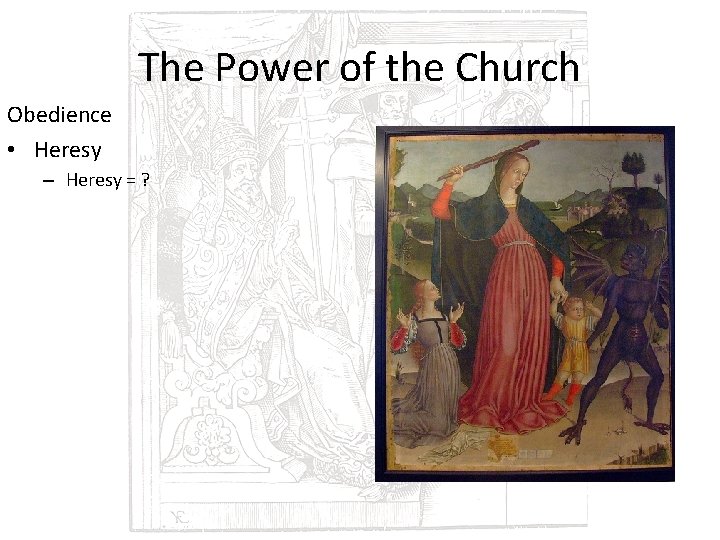
The Power of the Church Obedience • Heresy – Heresy = ?
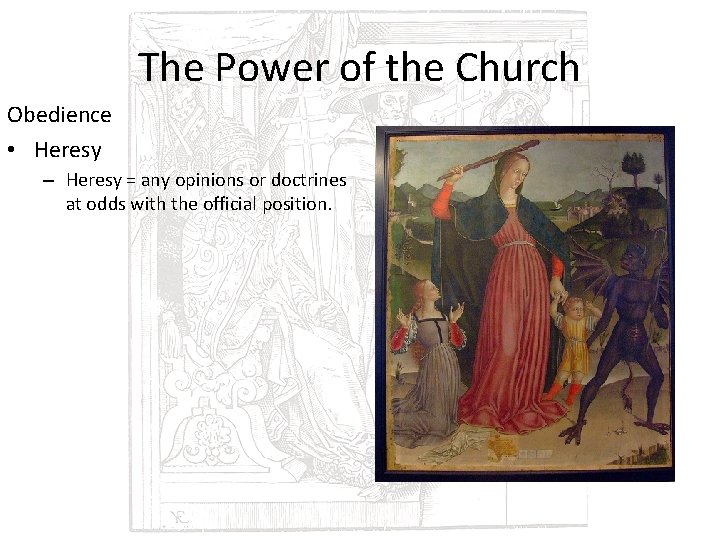
The Power of the Church Obedience • Heresy – Heresy = any opinions or doctrines at odds with the official position.
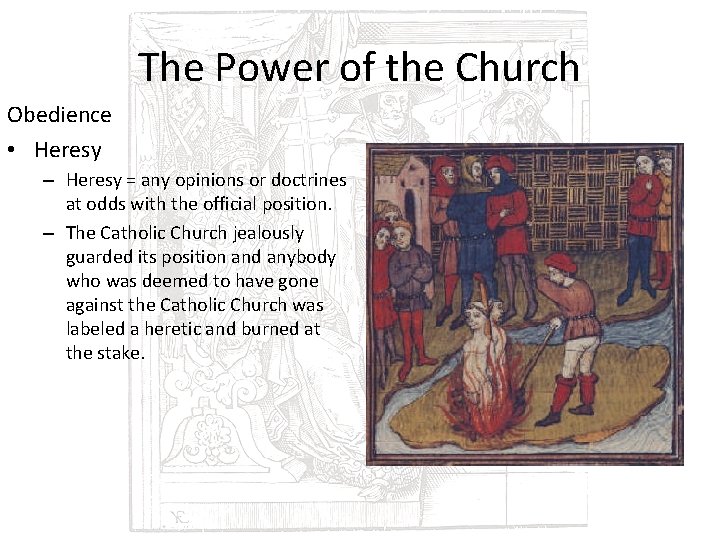
The Power of the Church Obedience • Heresy – Heresy = any opinions or doctrines at odds with the official position. – The Catholic Church jealously guarded its position and anybody who was deemed to have gone against the Catholic Church was labeled a heretic and burned at the stake.
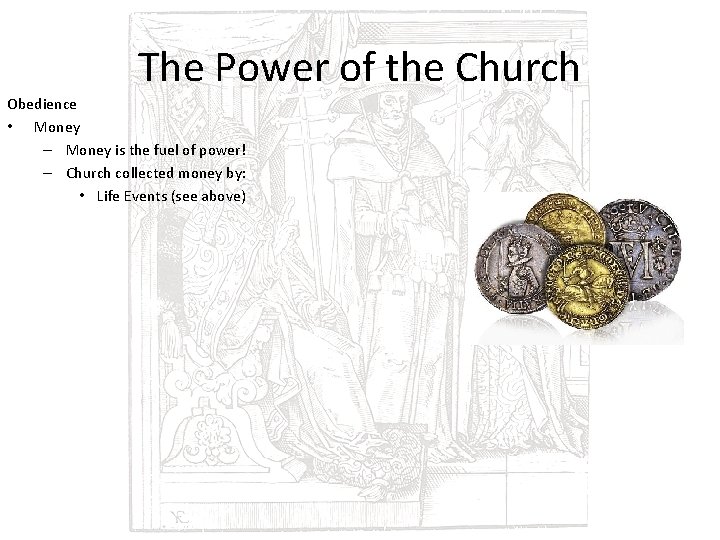
The Power of the Church Obedience • Money – Money is the fuel of power! – Church collected money by: • Life Events (see above)
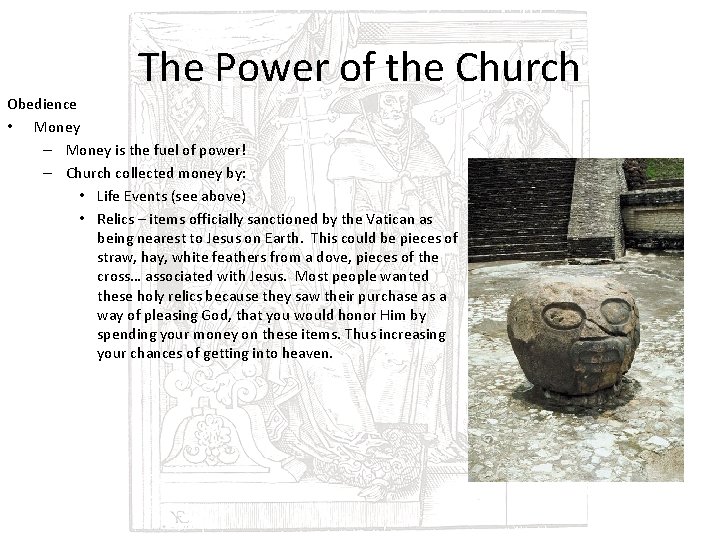
The Power of the Church Obedience • Money – Money is the fuel of power! – Church collected money by: • Life Events (see above) • Relics – items officially sanctioned by the Vatican as being nearest to Jesus on Earth. This could be pieces of straw, hay, white feathers from a dove, pieces of the cross… associated with Jesus. Most people wanted these holy relics because they saw their purchase as a way of pleasing God, that you would honor Him by spending your money on these items. Thus increasing your chances of getting into heaven.
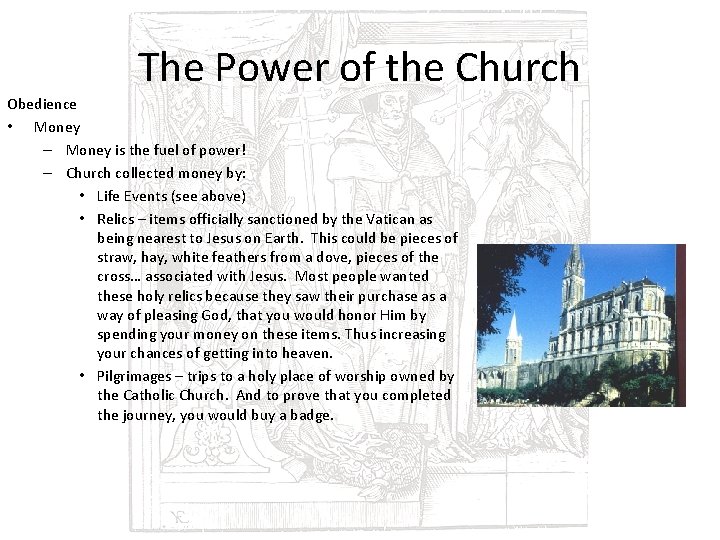
The Power of the Church Obedience • Money – Money is the fuel of power! – Church collected money by: • Life Events (see above) • Relics – items officially sanctioned by the Vatican as being nearest to Jesus on Earth. This could be pieces of straw, hay, white feathers from a dove, pieces of the cross… associated with Jesus. Most people wanted these holy relics because they saw their purchase as a way of pleasing God, that you would honor Him by spending your money on these items. Thus increasing your chances of getting into heaven. • Pilgrimages – trips to a holy place of worship owned by the Catholic Church. And to prove that you completed the journey, you would buy a badge.
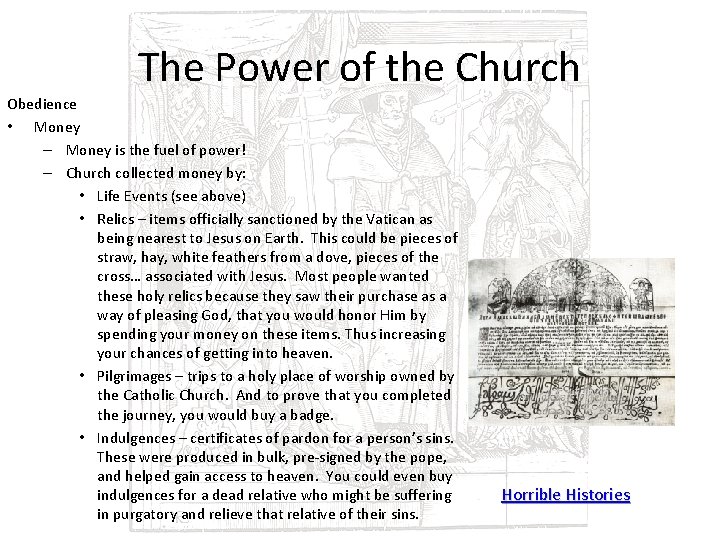
The Power of the Church Obedience • Money – Money is the fuel of power! – Church collected money by: • Life Events (see above) • Relics – items officially sanctioned by the Vatican as being nearest to Jesus on Earth. This could be pieces of straw, hay, white feathers from a dove, pieces of the cross… associated with Jesus. Most people wanted these holy relics because they saw their purchase as a way of pleasing God, that you would honor Him by spending your money on these items. Thus increasing your chances of getting into heaven. • Pilgrimages – trips to a holy place of worship owned by the Catholic Church. And to prove that you completed the journey, you would buy a badge. • Indulgences – certificates of pardon for a person’s sins. These were produced in bulk, pre-signed by the pope, and helped gain access to heaven. You could even buy indulgences for a dead relative who might be suffering in purgatory and relieve that relative of their sins. Horrible Histories
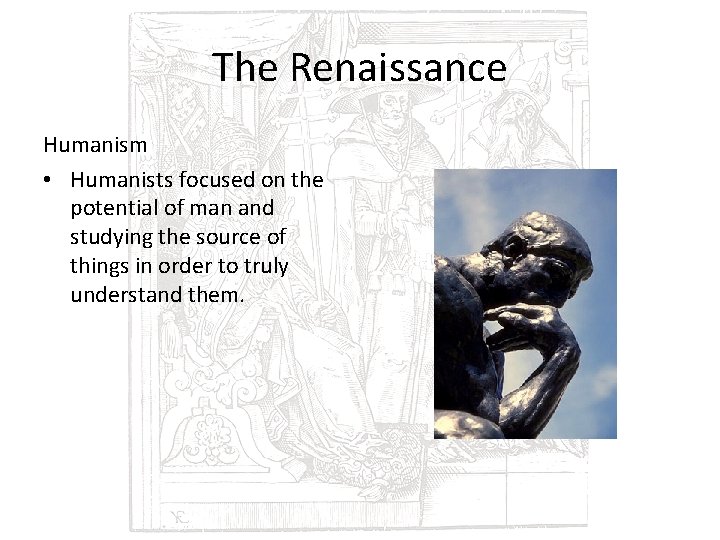
The Renaissance Humanism • Humanists focused on the potential of man and studying the source of things in order to truly understand them.
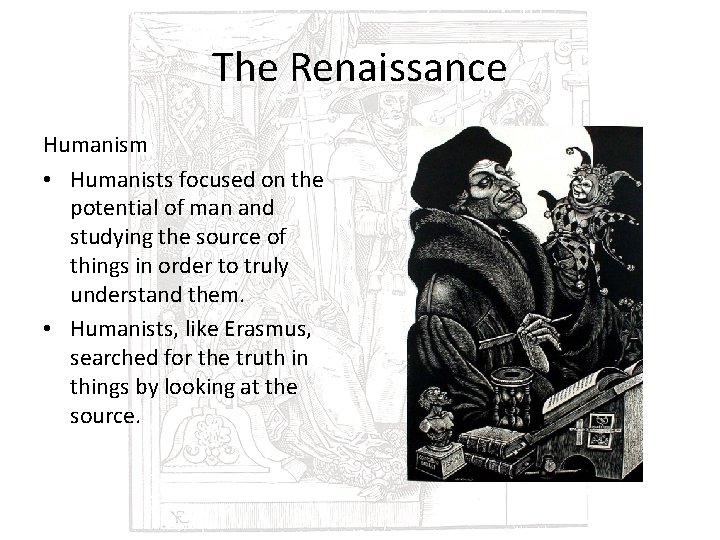
The Renaissance Humanism • Humanists focused on the potential of man and studying the source of things in order to truly understand them. • Humanists, like Erasmus, searched for the truth in things by looking at the source.
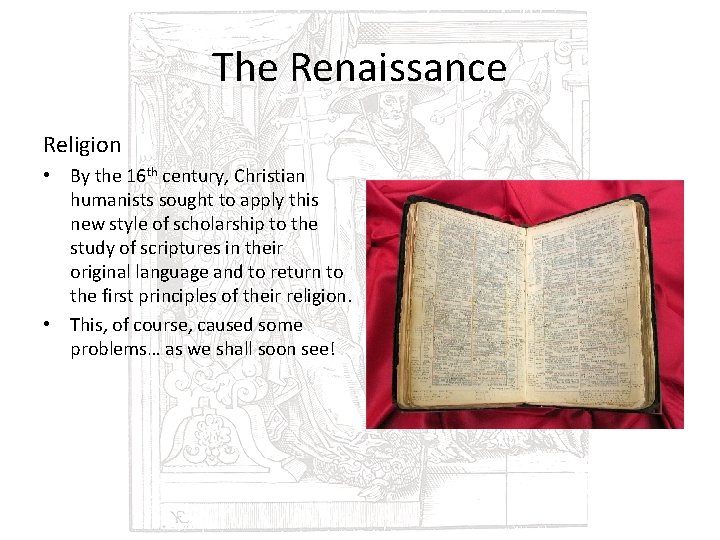
The Renaissance Religion • By the 16 th century, Christian humanists sought to apply this new style of scholarship to the study of scriptures in their original language and to return to the first principles of their religion. • This, of course, caused some problems… as we shall soon see!
Conclusion • For centuries, the Roman Catholic Church had little competition in religious thought and action.
Conclusion • For centuries, the Roman Catholic Church had little competition in religious thought and action. • There were conflicts that challenged the authority of the Church in Rome:
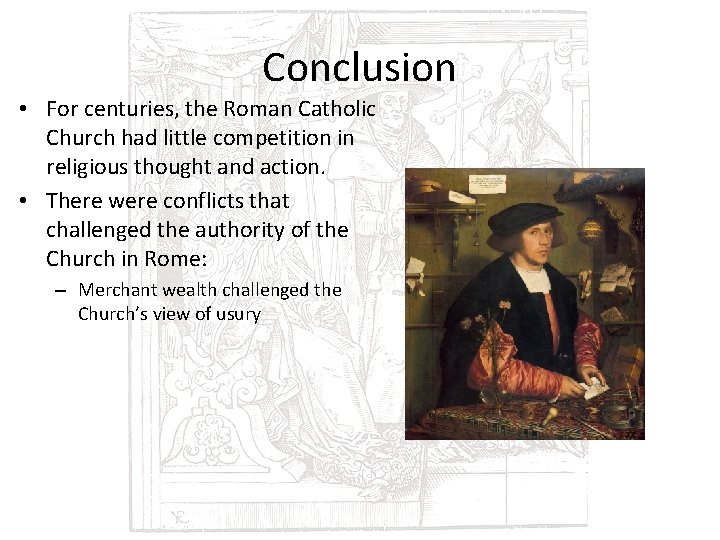
Conclusion • For centuries, the Roman Catholic Church had little competition in religious thought and action. • There were conflicts that challenged the authority of the Church in Rome: – Merchant wealth challenged the Church’s view of usury
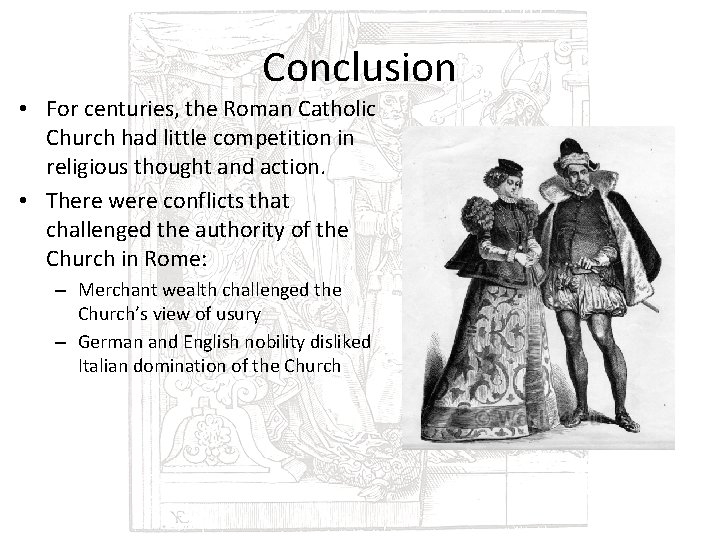
Conclusion • For centuries, the Roman Catholic Church had little competition in religious thought and action. • There were conflicts that challenged the authority of the Church in Rome: – Merchant wealth challenged the Church’s view of usury – German and English nobility disliked Italian domination of the Church
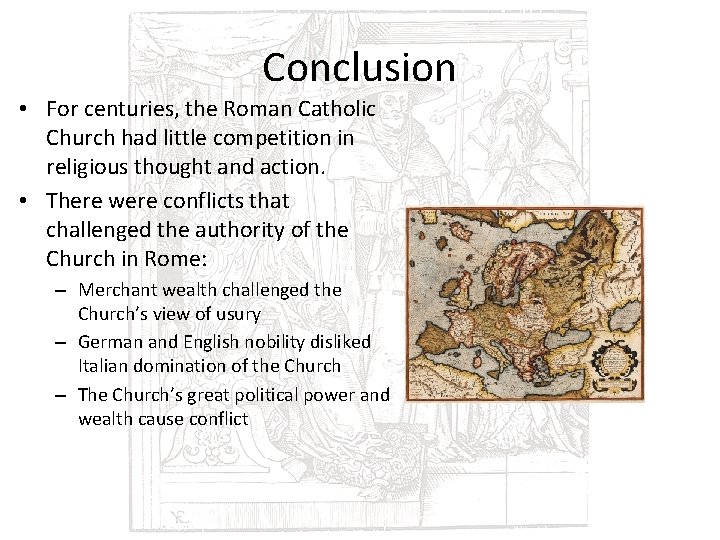
Conclusion • For centuries, the Roman Catholic Church had little competition in religious thought and action. • There were conflicts that challenged the authority of the Church in Rome: – Merchant wealth challenged the Church’s view of usury – German and English nobility disliked Italian domination of the Church – The Church’s great political power and wealth cause conflict
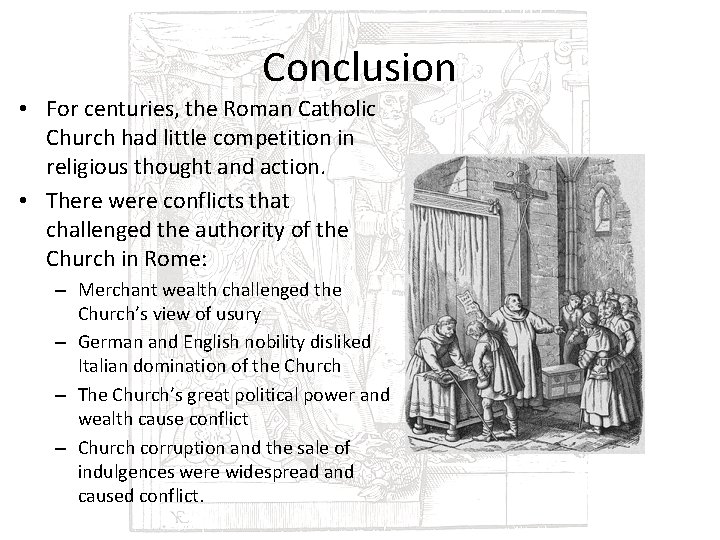
Conclusion • For centuries, the Roman Catholic Church had little competition in religious thought and action. • There were conflicts that challenged the authority of the Church in Rome: – Merchant wealth challenged the Church’s view of usury – German and English nobility disliked Italian domination of the Church – The Church’s great political power and wealth cause conflict – Church corruption and the sale of indulgences were widespread and caused conflict.
- Slides: 34