
Do Now Describe the motion of the Earth
Do Now • Describe the motion of the Earth.
Gravity • Inertia and gravity are the forces that keep one object in orbit around another. • Gravity is a force of attraction between two objects.
• The strength of gravitational force depends on the total mass of the two objects and the distance between them. • The greater the total mass, the greater the force of gravity. • The greater the distance between two objects, the less the force of gravity.
• The difference between an object’s mass and its weight is explained by gravity. • Mass is the measure of the amount of matter in an object • Weight is the force of gravity between an object and the celestial body it is on. • Bodies in the solar system have different masses; therefore the same object has a different weight on each celestial body.
• Objects in the solar system are held in their predictable paths by the inward-pulling gravitational attraction of the sun. • The interaction of the center-pulling force of gravity with a moving object’s inertia (tendency to keep moving) keeps one object in circle-like motion (revolution) around another. • This causes planets to orbit around the center of the solar system and moons to orbit around planets.
Earth’s Motion • Rotation: the spinning of Earth on its axis • Earth’s rotation causes day/night. • Revolution: the movement of an object around another • One complete revolution of Earth around the sun is a year
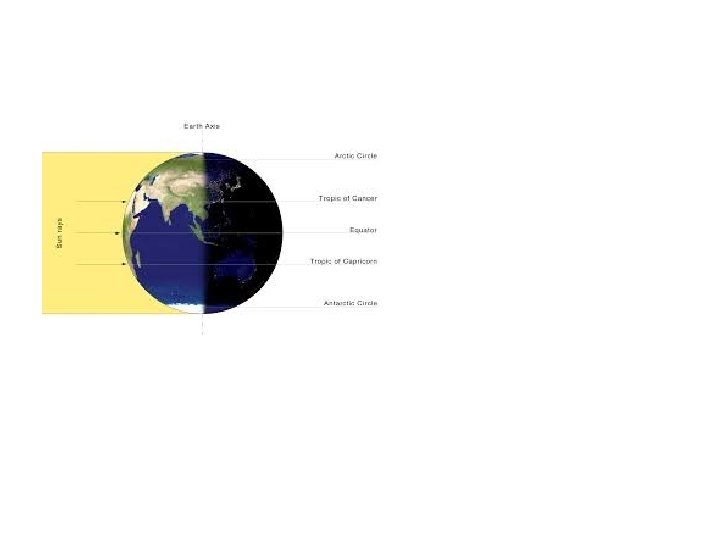
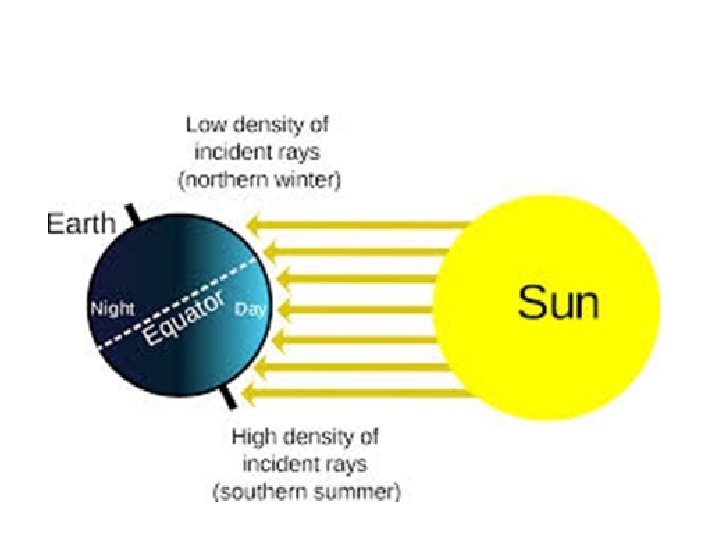
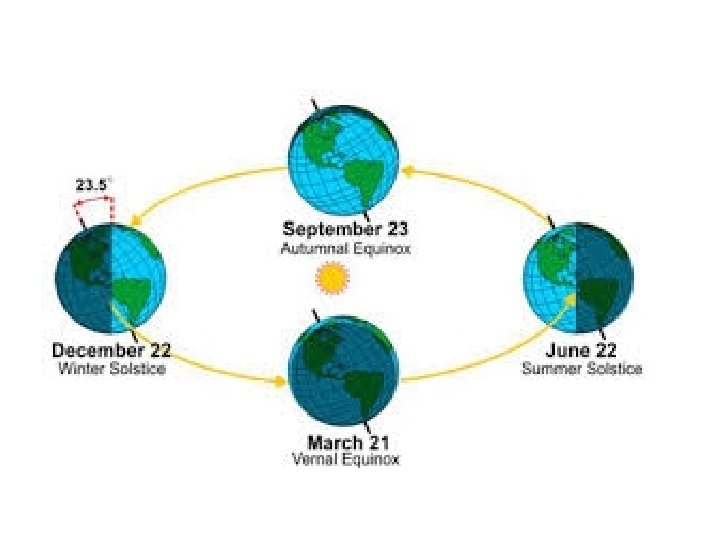
Seasons • Earth has seasons because its axis is tilted as it revolves around the sun. • The north end of Earth’s axis is tilted toward the sun for part of the year and away for part of the year. • Change in season is not caused by a change in distance from the sun!
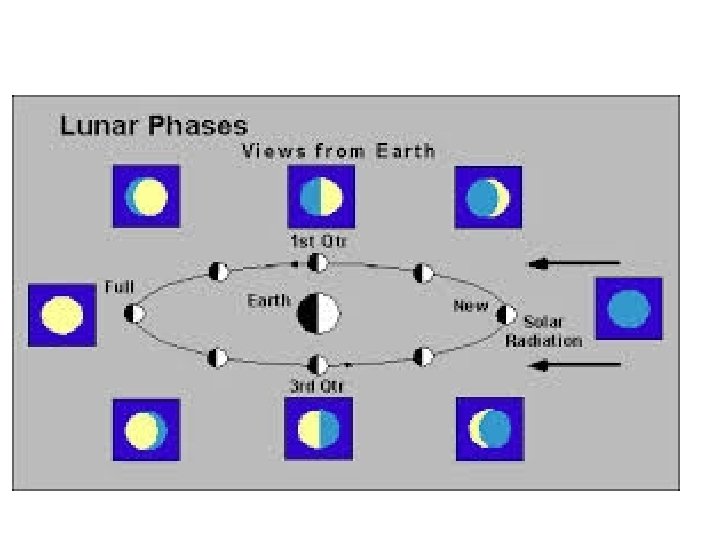
Phases of the Moon • The moon changes its position relative to the earth and sun as it revolves around the earth in a period of about 29 days. • The same half of the moon is always reflecting light from the Sun; some of the reflected light reaches Earth. • Phases of the moon are explained by changes in the angle at which the sun’s light strikes the moon and is reflected to Earth. • The relative position of the Sun, Earth and moon can be predicted given a diagram of a moon phase.
Eclipses • Eclipses occur when the moon, Earth and sun occasionally align in specific ways. • A solar eclipse occurs when the moon is directly between the Earth and the sun (during new moon phase) and the moon blocks the sun’s light, creating a moving shadow on parts of the earth. • A lunar eclipse occurs when the Earth is directly between the moon and the sun (full moon phase), the Earth blocks the sun’s light, casting a shadow over the moon.
Tides • Ocean tides on Earth are caused by the moon’s gravitational force pulling on large bodies of water as the Earth and moon move around each other daily. • The regular daily and monthly movement of the water (tides) can be predicted.
- Slides: 14