
Do Now Define the word reform Lesson Objective
Do Now Define the word ‘reform’
Lesson Objective SWBAT identify corrupt practices and key events that weakened the Catholic Church
The Protestant Reformation 1517 -1648
Unit Objectives • To understand the causes of the split in Western Christianity • To understand the underlying differences between Catholicism and Protestantism • To understand the results and relevance of the Protestant Reformation on Western society

Lesson Objective SWBAT explain theological, political, and economic differences that emerged, including the views and actions of Martin Luther and John Calvin
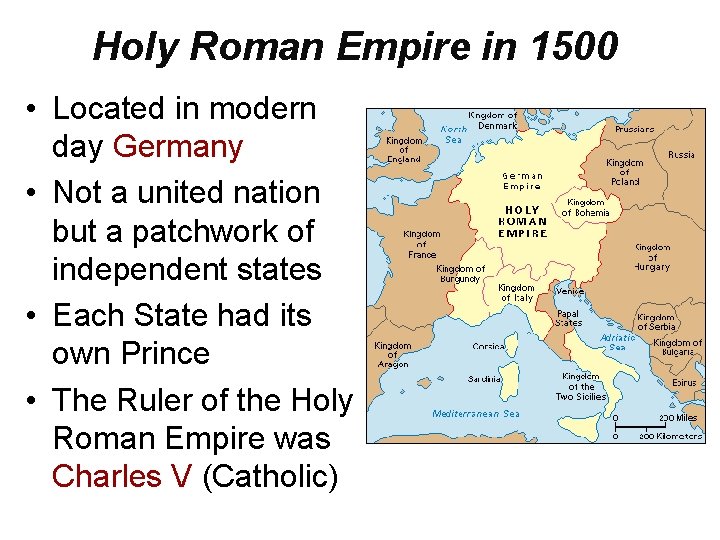
Holy Roman Empire in 1500 • Located in modern day Germany • Not a united nation but a patchwork of independent states • Each State had its own Prince • The Ruler of the Holy Roman Empire was Charles V (Catholic)
The Catholic Church in 1500 • The Catholic Church was the most powerful institution in Europe • Held the monopoly on information and education and owned a great deal of property • People resented the wealth of the Church • The Church and Clergy did not pay taxes • The Church was corrupt!
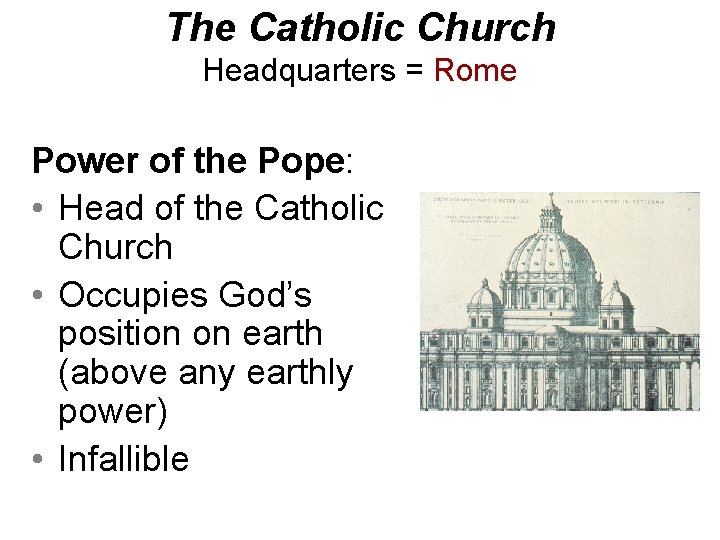
The Catholic Church Headquarters = Rome Power of the Pope: • Head of the Catholic Church • Occupies God’s position on earth (above any earthly power) • Infallible
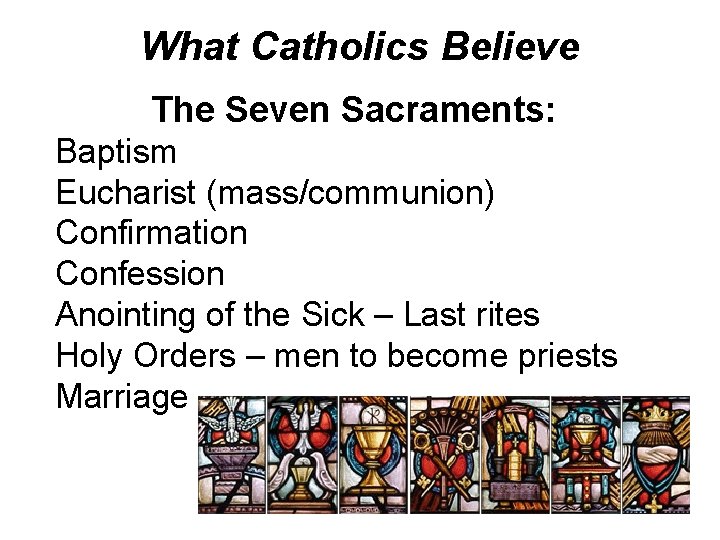
What Catholics Believe The Seven Sacraments: Baptism Eucharist (mass/communion) Confirmation Confession Anointing of the Sick – Last rites Holy Orders – men to become priests Marriage
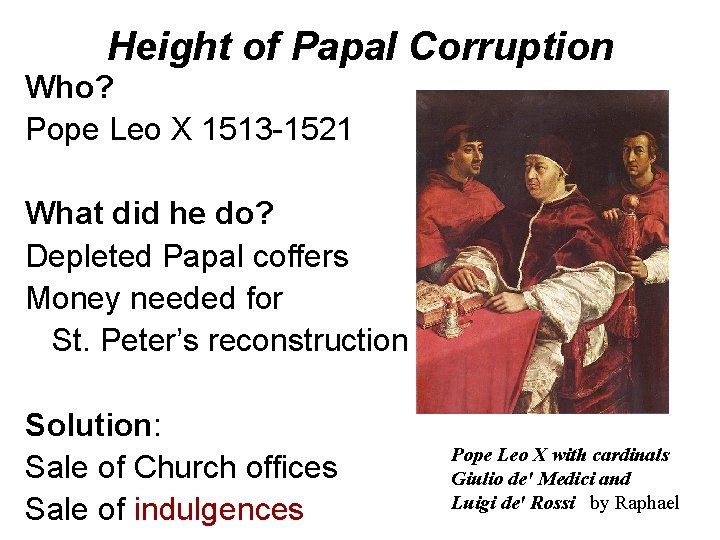
Height of Papal Corruption Who? Pope Leo X 1513 -1521 What did he do? Depleted Papal coffers Money needed for St. Peter’s reconstruction Solution: Sale of Church offices Sale of indulgences Pope Leo X with cardinals Giulio de' Medici and Luigi de' Rossi by Raphael
• Prior to the Reformation all Christians were Roman Catholic • The Reformation was an attempt to REFORM the Catholic Church • Martin Luther and others wanted to get rid of the corruption and restore people’s faith in the church, not start a separate church
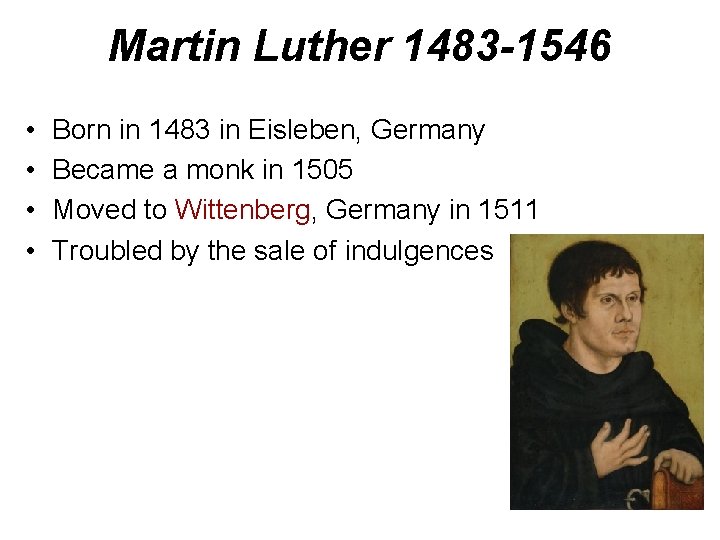
Martin Luther 1483 -1546 • • Born in 1483 in Eisleben, Germany Became a monk in 1505 Moved to Wittenberg, Germany in 1511 Troubled by the sale of indulgences
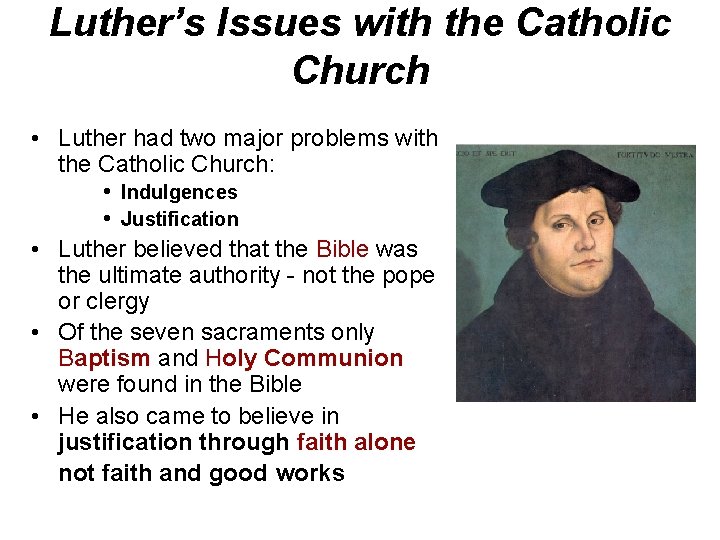
Luther’s Issues with the Catholic Church • Luther had two major problems with the Catholic Church: • Indulgences • Justification • Luther believed that the Bible was the ultimate authority - not the pope or clergy • Of the seven sacraments only Baptism and Holy Communion were found in the Bible • He also came to believe in justification through faith alone not faith and good works
What was an Indulgence? • A Papal pardon for sins • A lessening of the time a soul would have to spend in purgatory – Purgatory = a place where souls too impure to enter heaven atoned for sins committed during their lifetime • According to Luther, indulgences had no basis in the Bible and the Pope had no authority to release souls from purgatory
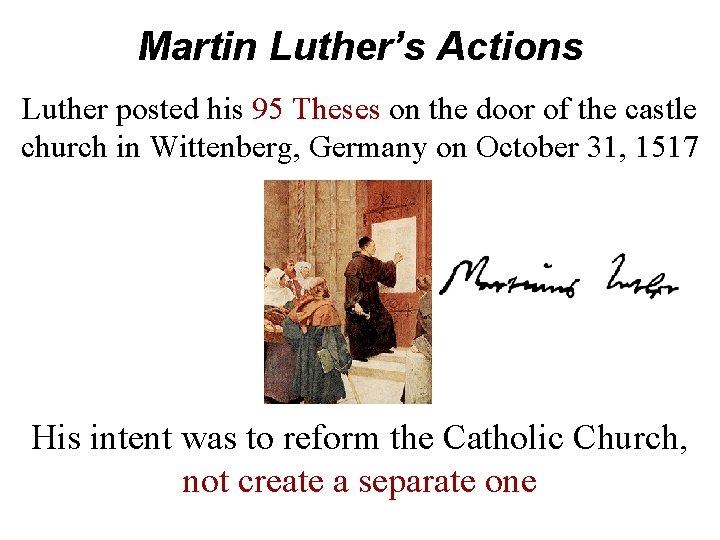
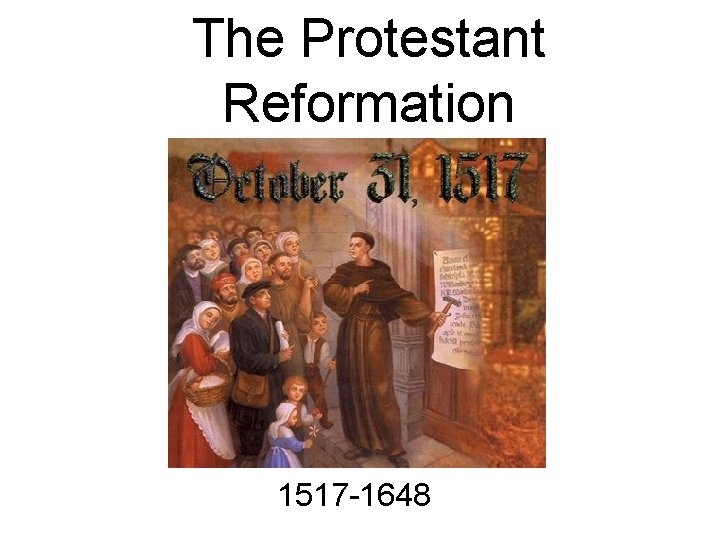
Martin Luther’s Actions Luther posted his 95 Theses on the door of the castle church in Wittenberg, Germany on October 31, 1517 His intent was to reform the Catholic Church, not create a separate one
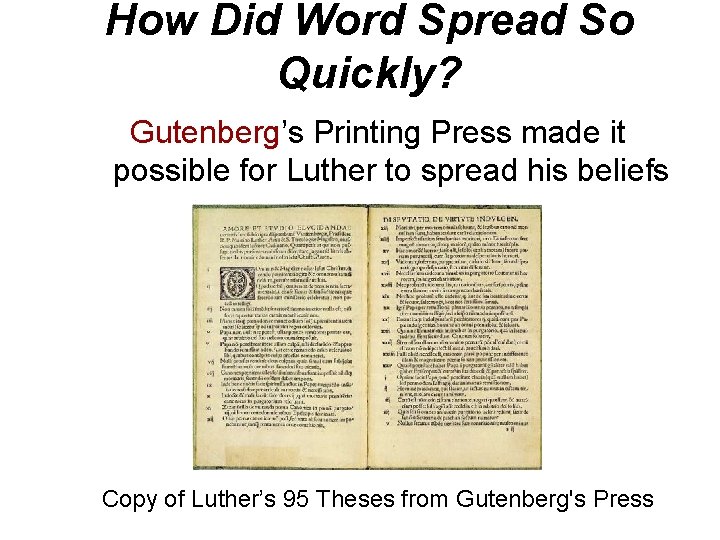
How Did Word Spread So Quickly? Gutenberg’s Printing Press made it possible for Luther to spread his beliefs Copy of Luther’s 95 Theses from Gutenberg's Press
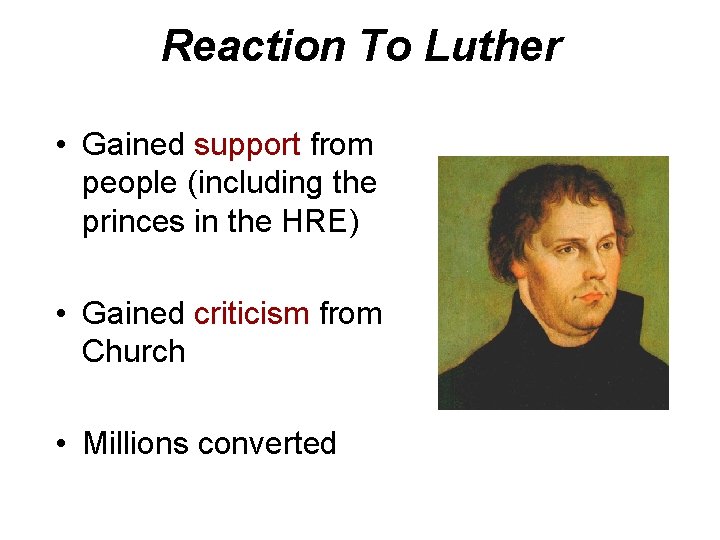
Reaction To Luther • Gained support from people (including the princes in the HRE) • Gained criticism from Church • Millions converted
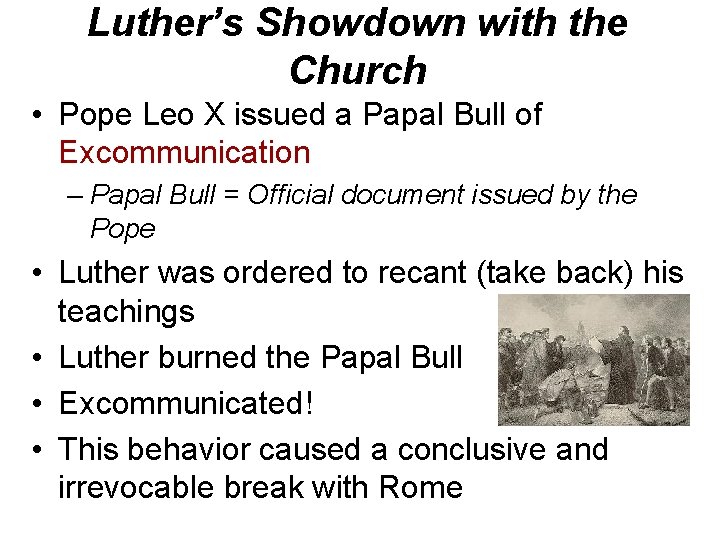
Luther’s Showdown with the Church • Pope Leo X issued a Papal Bull of Excommunication – Papal Bull = Official document issued by the Pope • Luther was ordered to recant (take back) his teachings • Luther burned the Papal Bull • Excommunicated! • This behavior caused a conclusive and irrevocable break with Rome
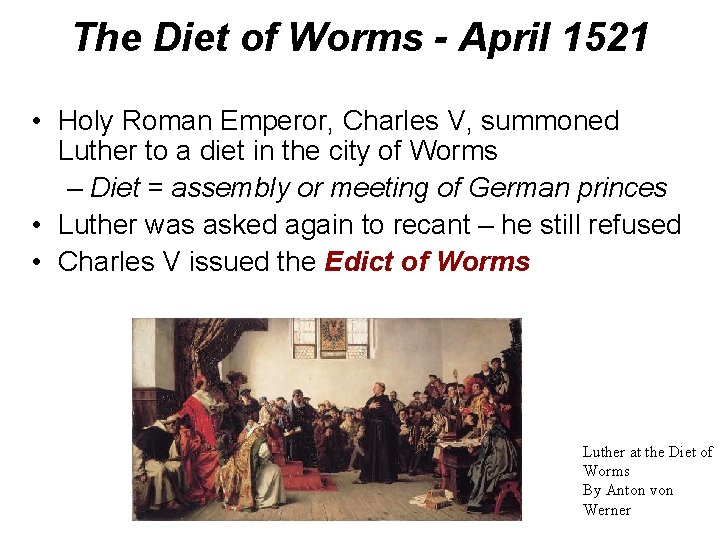
The Diet of Worms - April 1521 • Holy Roman Emperor, Charles V, summoned Luther to a diet in the city of Worms – Diet = assembly or meeting of German princes • Luther was asked again to recant – he still refused • Charles V issued the Edict of Worms Luther at the Diet of Worms By Anton von Werner
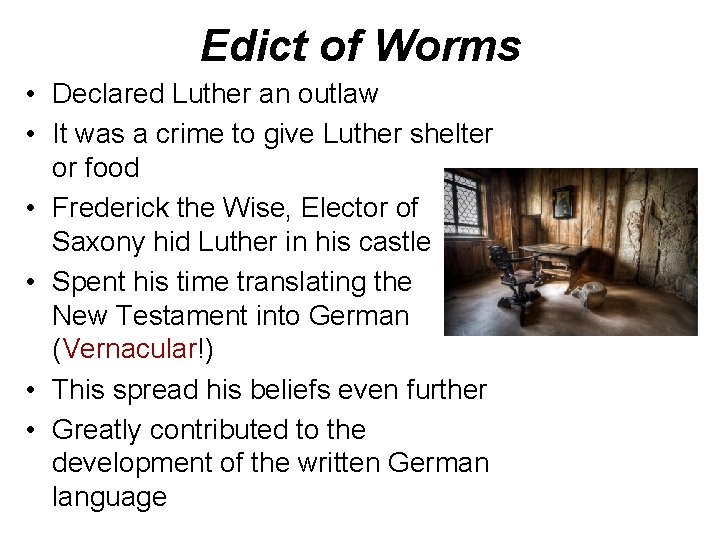
Edict of Worms • Declared Luther an outlaw • It was a crime to give Luther shelter or food • Frederick the Wise, Elector of Saxony hid Luther in his castle • Spent his time translating the New Testament into German (Vernacular!) • This spread his beliefs even further • Greatly contributed to the development of the written German language
A New Name Lutherans started using the name “Protestant” for those who protested papal authority
The Peace of Augsburg 1555 • The Protestant Reformation divided Germany politically • Princes in Germany converted to Protestantism, ending authority of the Pope in their states • Charles V, the Emperor of the HRE tried to force Princes to accept Catholicism again, with little success The Peace of Augsburg: • Recognized Lutheranism as a legal religion • A Prince could decide if his realm was to be Lutheran of Catholic
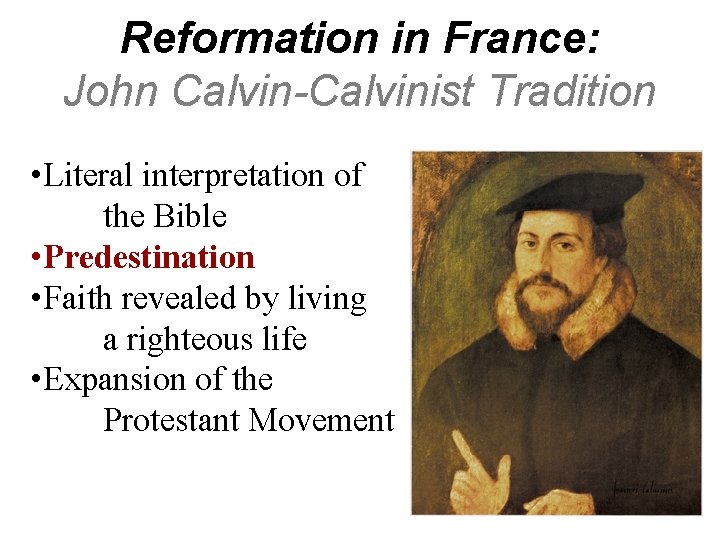
Reformation in France: John Calvin-Calvinist Tradition • Literal interpretation of the Bible • Predestination • Faith revealed by living a righteous life • Expansion of the Protestant Movement
Predestination • Calvin set forth the idea of Predestination – God decided at the beginning of time who would go to heaven after death and who would not • Calvin set up a theocracy in Geneva, Switzerland – Theocracy = government run by church leaders
Do Now • List two of Martin Luther’s beliefs (that contradicted what the Catholic Church said) • Define ‘indulgence’ • Define ‘predestination’
Lesson Objective SWBAT explain theological, political, and economic differences that emerged, including the views and actions of Henry VIII and Elizabeth I
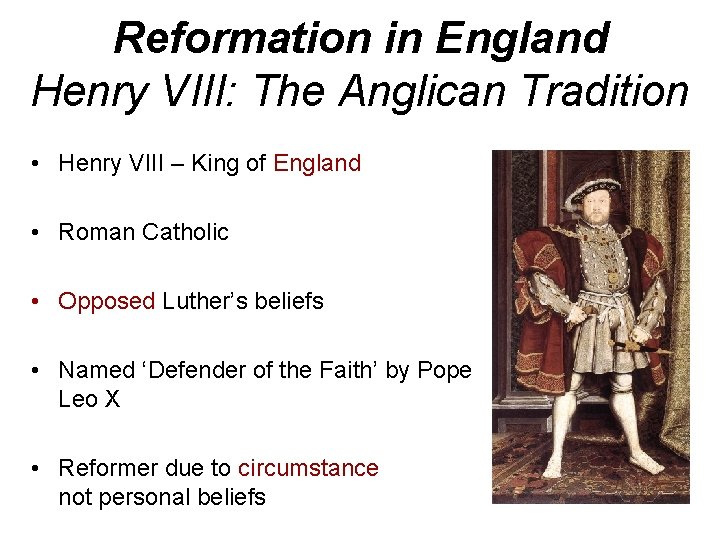
Reformation in England Henry VIII: The Anglican Tradition • Henry VIII – King of England • Roman Catholic • Opposed Luther’s beliefs • Named ‘Defender of the Faith’ by Pope Leo X • Reformer due to circumstance not personal beliefs
Henry VIII Needs a Divorce! • Catholic Church does not permit divorce • Marriage to Catherine of Aragon did not produce male heir only a girl - Mary Tudor • Henry needed a male to preserve his throne • Henry asked the Pope for an annulment so he could marry someone who could give him a male heir • The Pope denied his request • Henry created the Church of England established his own supremacy over it
Act of Supremacy - 1534 • Parliament passed the Act of Supremacy • Made Henry “the only supreme head on Earth of the Church of England” • Many refused to accept Henry as the head of the church and were executed for treason • Sir Thomas More was one of them!
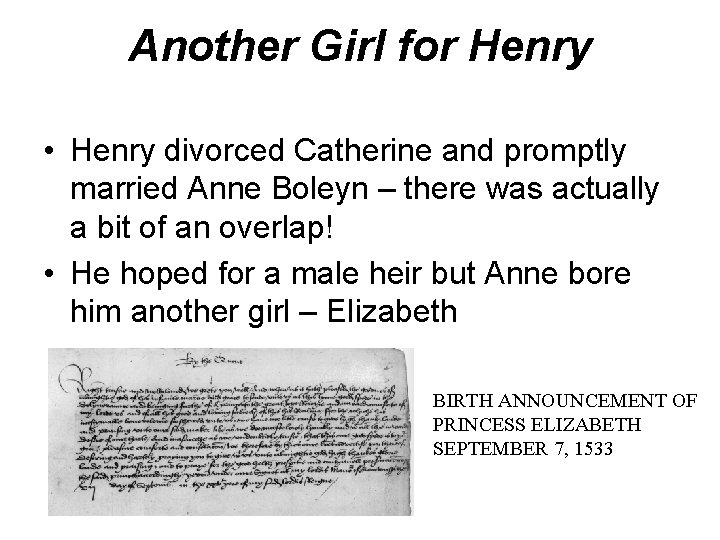
Another Girl for Henry • Henry divorced Catherine and promptly married Anne Boleyn – there was actually a bit of an overlap! • He hoped for a male heir but Anne bore him another girl – Elizabeth BIRTH ANNOUNCEMENT OF PRINCESS ELIZABETH SEPTEMBER 7, 1533
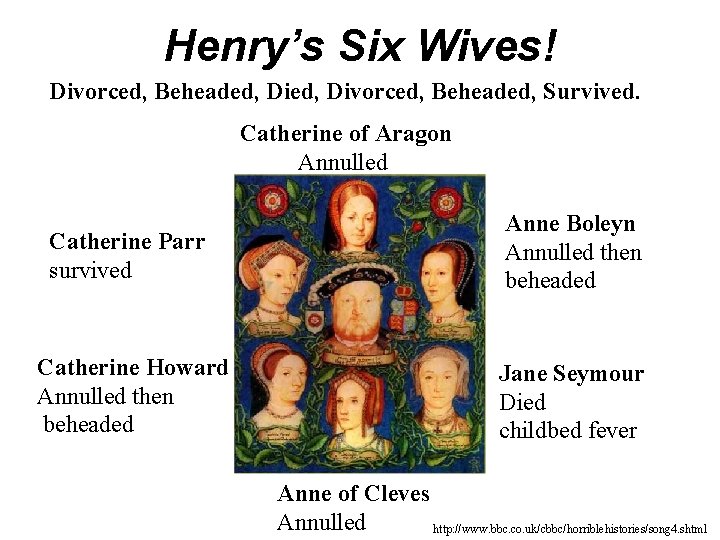
Henry’s Six Wives! Divorced, Beheaded, Survived. Catherine of Aragon Annulled Catherine Parr survived Anne Boleyn Annulled then beheaded Catherine Howard Annulled then beheaded Jane Seymour Died childbed fever Anne of Cleves Annulled http: //www. bbc. co. uk/cbbc/horriblehistories/song 4. shtml
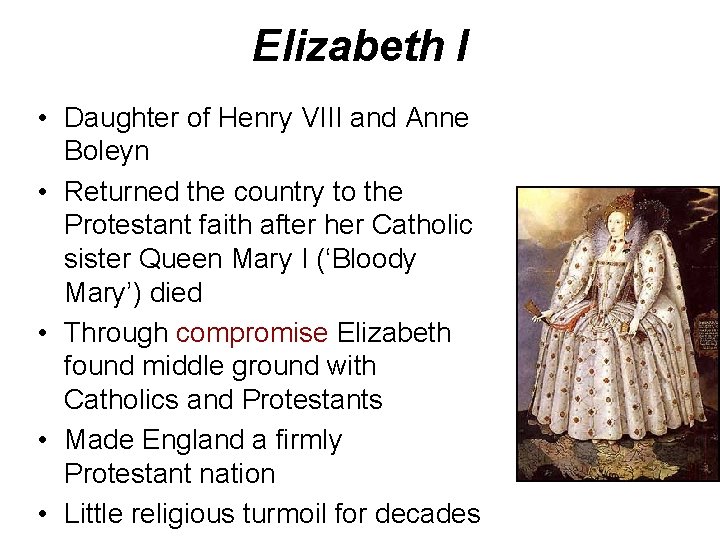
Elizabeth I • Daughter of Henry VIII and Anne Boleyn • Returned the country to the Protestant faith after her Catholic sister Queen Mary I (‘Bloody Mary’) died • Through compromise Elizabeth found middle ground with Catholics and Protestants • Made England a firmly Protestant nation • Little religious turmoil for decades
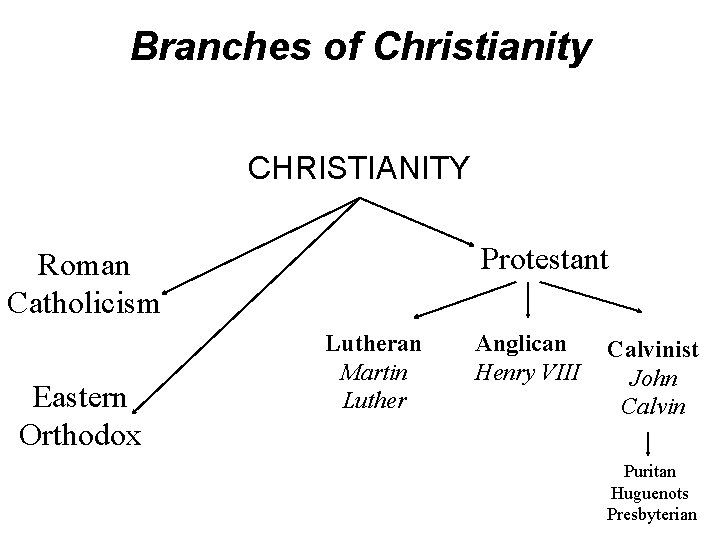
Branches of Christianity CHRISTIANITY Protestant Roman Catholicism Eastern Orthodox Lutheran Martin Luther Anglican Henry VIII Calvinist John Calvin Puritan Huguenots Presbyterian
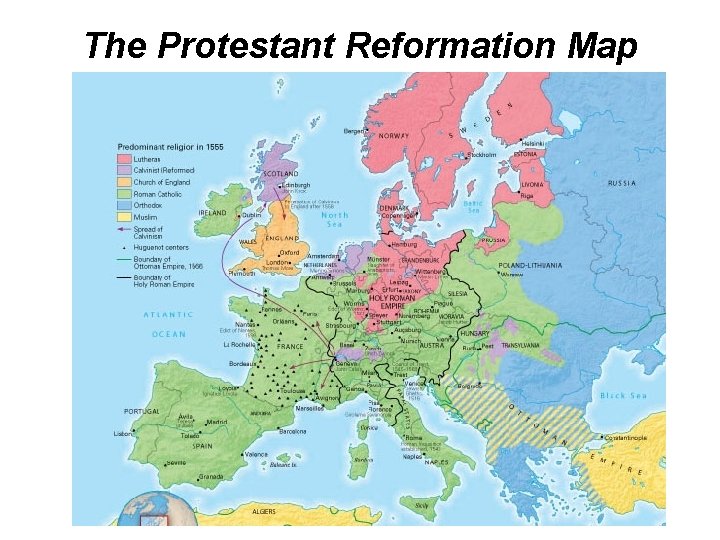
The Protestant Reformation Map
Results • In the end reformers like Luther established their own non-Catholic traditions • The Reformation caused a permanent split in Christianity with the formation of new Protestant faiths
Do Now Why would the Catholic Church want to start a Counter-Reformation?
Lesson Objective SWBAT: 1) describe the impact of the Catholic Reformation on society and government actions 2) describe changing cultural values, traditions, and philosophies
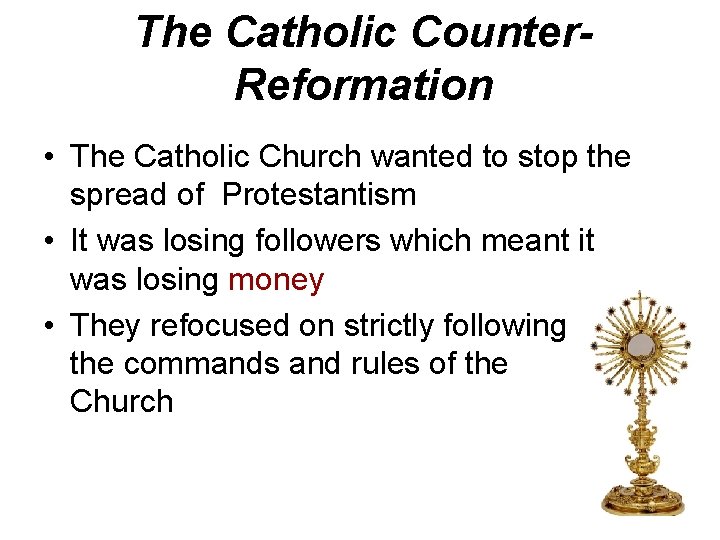
The Catholic Counter. Reformation • The Catholic Church wanted to stop the spread of Protestantism • It was losing followers which meant it was losing money • They refocused on strictly following the commands and rules of the Church
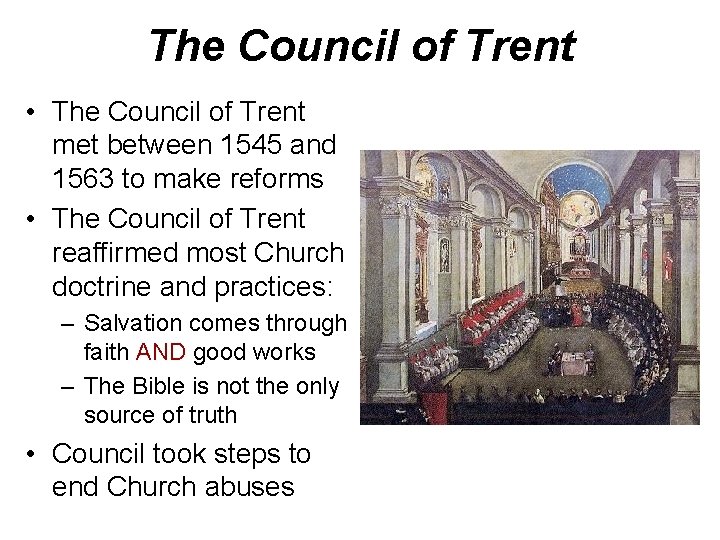
The Council of Trent • The Council of Trent met between 1545 and 1563 to make reforms • The Council of Trent reaffirmed most Church doctrine and practices: – Salvation comes through faith AND good works – The Bible is not the only source of truth • Council took steps to end Church abuses
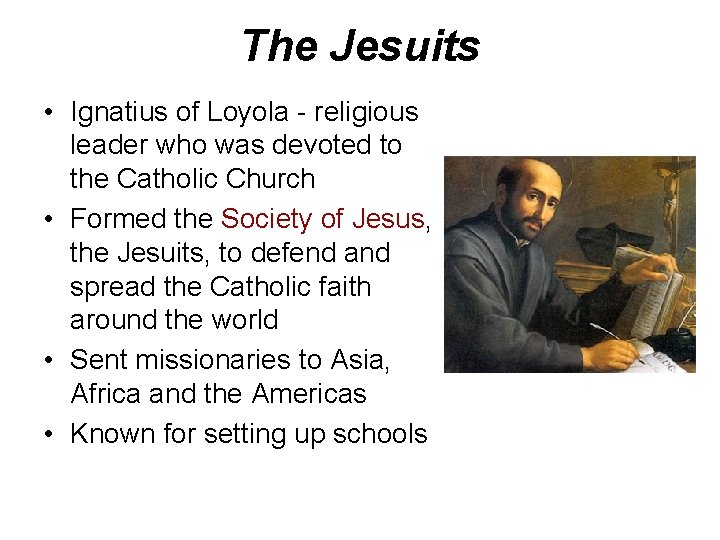
The Jesuits • Ignatius of Loyola - religious leader who was devoted to the Catholic Church • Formed the Society of Jesus, the Jesuits, to defend and spread the Catholic faith around the world • Sent missionaries to Asia, Africa and the Americas • Known for setting up schools
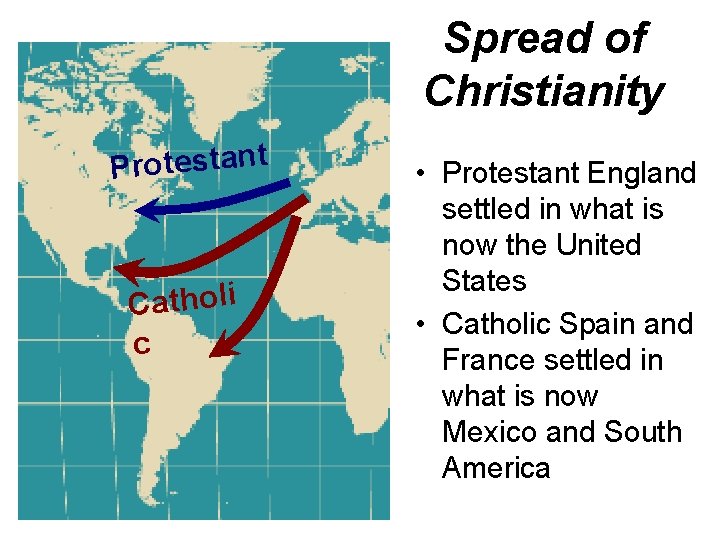
Spread of Christianity Protestant Catholi c • Protestant England settled in what is now the United States • Catholic Spain and France settled in what is now Mexico and South America
Conclusion • The Protestant Reformation began as a theological dispute between Martin Luther and the Catholic Church • Theological dispute becomes religious conflict, as Catholics and Protestant are persecuted for their beliefs • Religious conflict becomes a political conflict between states seeking to advance their positions
- Slides: 42