
DO NOW Can you identify these lesions abnormalities

DO NOW: Can you identify these lesions (abnormalities in tissue due to disease or trauma)?
Burns and Skin Cancer Diseases, Conditions, and Disorders of the Integumentary System
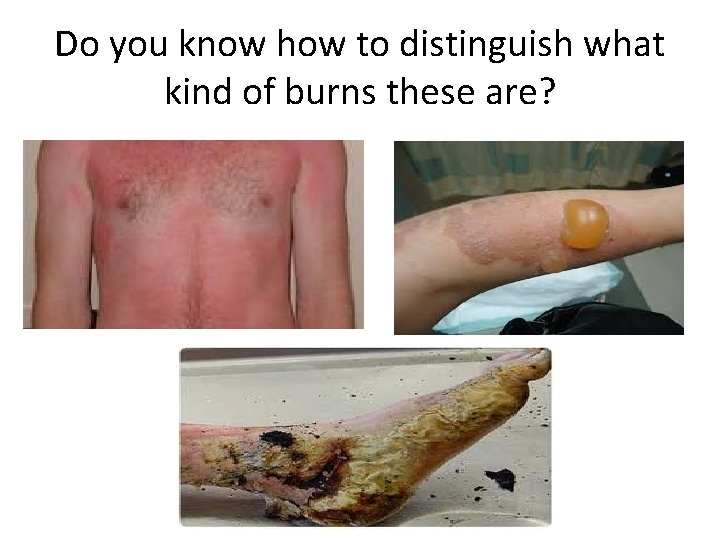
Do you know how to distinguish what kind of burns these are?
Burns • Burns are categorized by severity as first, second, or third degree. • First degree burns are similar to a painful sunburn, causing redness and swelling to the tissues. • The damage is more severe with second degree burns, leading to blistering and more intense pain. Damage is found in deeper tissues. • With third degree burns, skin turns white and loses sensation, the entire depth of tissue is affected and may be fatal. • Burn treatment depends upon the location, total burn area, and intensity of the burn.
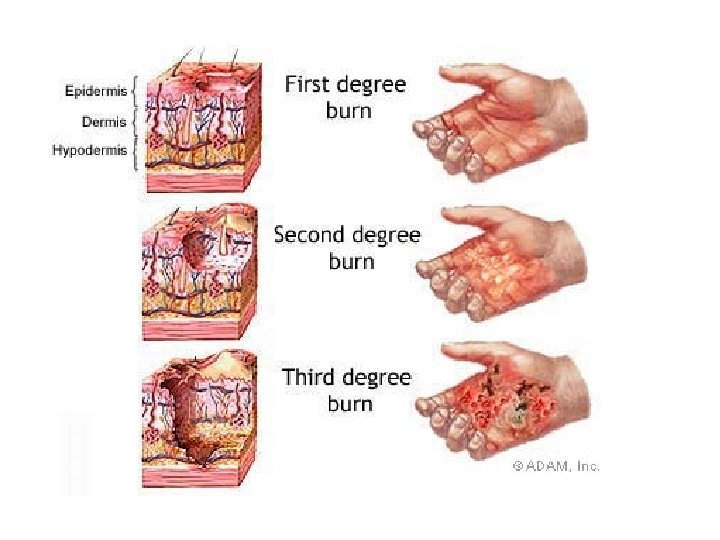
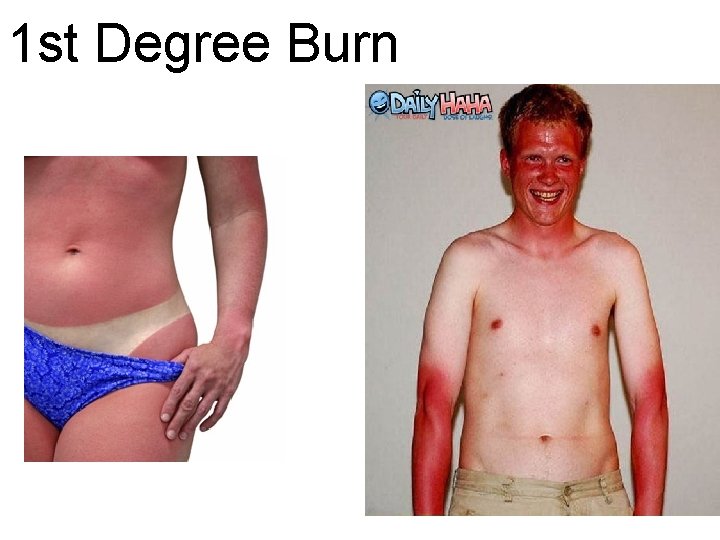
1 st Degree Burn
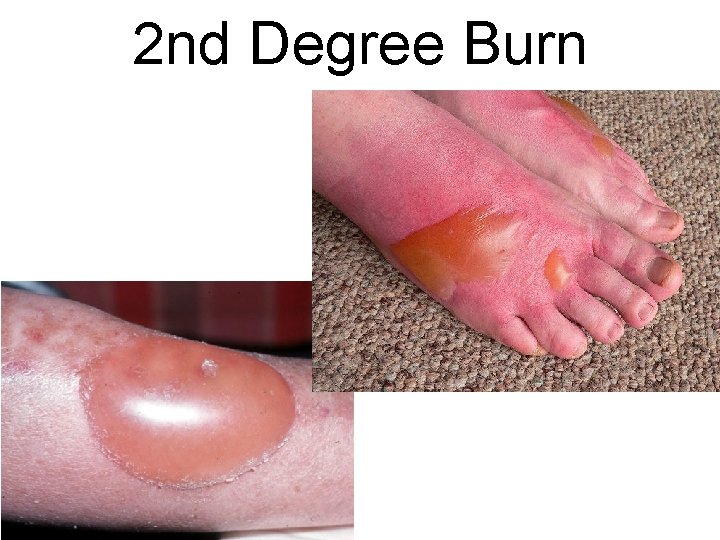
2 nd Degree Burn
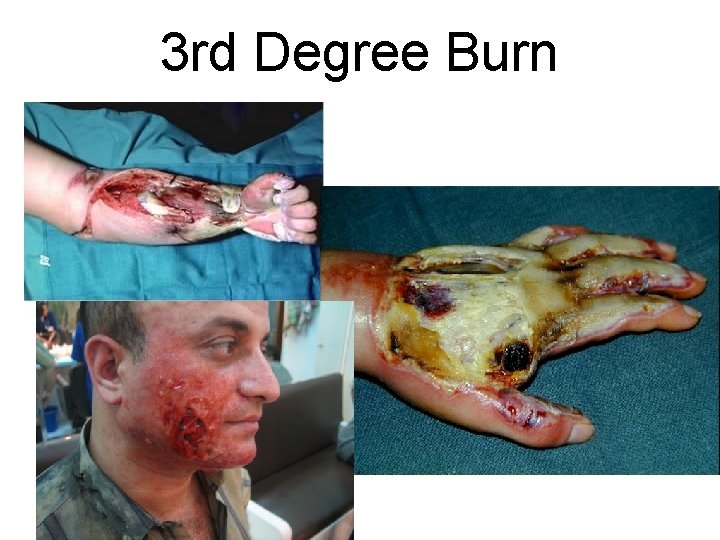
3 rd Degree Burn
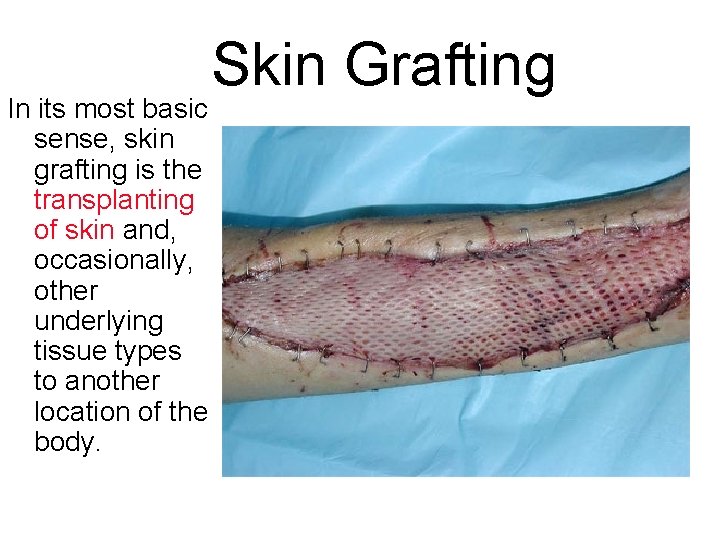
In its most basic sense, skin grafting is the transplanting of skin and, occasionally, other underlying tissue types to another location of the body. Skin Grafting

The Skin Gun
Ear Growing on Arm
Skin Cancer • • Skin cancer is the most common form of cancer in the United States. More than one million skin cancers are diagnosed annually. Each year there are more new cases of skin cancer than the combined incidence of cancers of the breast, prostate, lung and colon. One in five Americans will develop skin cancer in the course of a lifetime. Basal cell carcinoma (BCC) is the most common form of skin cancer; about one million of the cases diagnosed annually are basal cell carcinomas are rarely fatal, but can be highly disfiguring Squamous cell carcinoma (SCC) is the second most common form of skin cancer. More than 250, 000 cases are diagnosed each year, resulting in approximately 2, 500 deaths. Basal cell carcinoma and squamous cell carcinoma are the two major forms of non-melanoma skin cancer. Between 40 and 50 percent of Americans who live to age 65 will have either skin cancer at least once. About 90 percent of non-melanoma skin cancers are associated with exposure to ultraviolet (UV) radiation from the sun. Up to 90 percent of the visible changes commonly attributed to aging are caused by the sun.
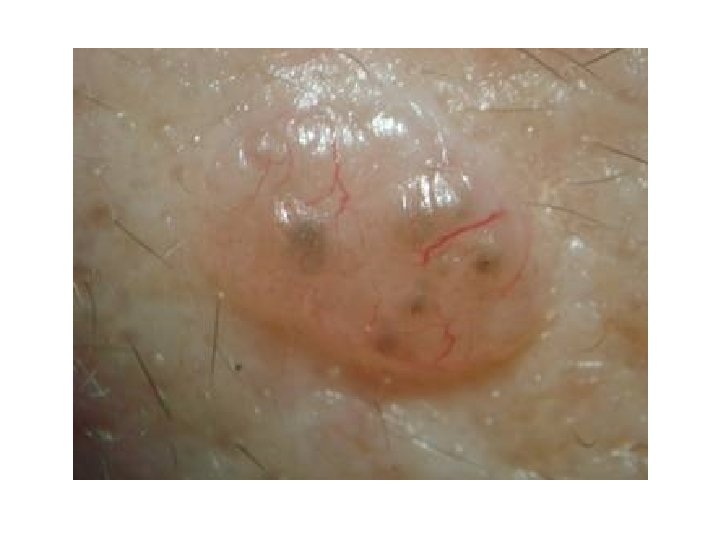
Basal Cell Carcinoma • Basal cell cancer most often appears on sun-exposed areas such as the face, scalp, ears, chest, back, and legs. • The most common appearance of basal cell cancer is that of a small dome-shaped bump that has a pearly white color. • Blood vessels may be seen on the surface. • Basal cell cancer can also appear as a pimple-like growth that heals, only to come back again and again. • A very common sign of basal cell cancer is a sore that bleeds, heals up, only to recur again.
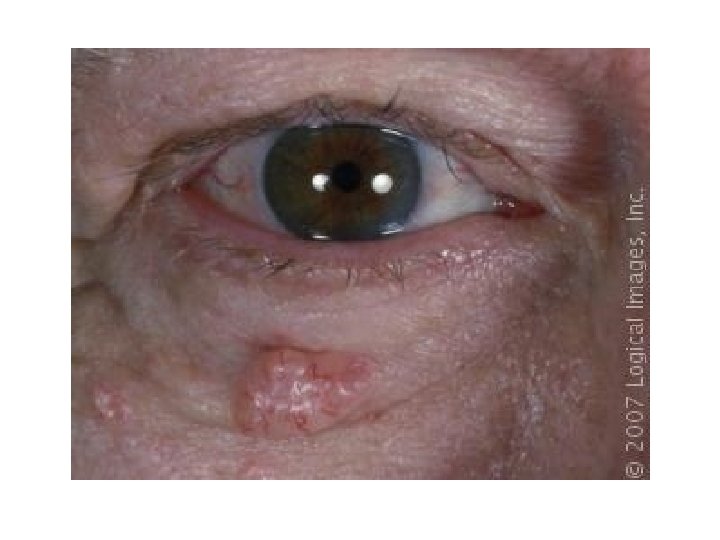
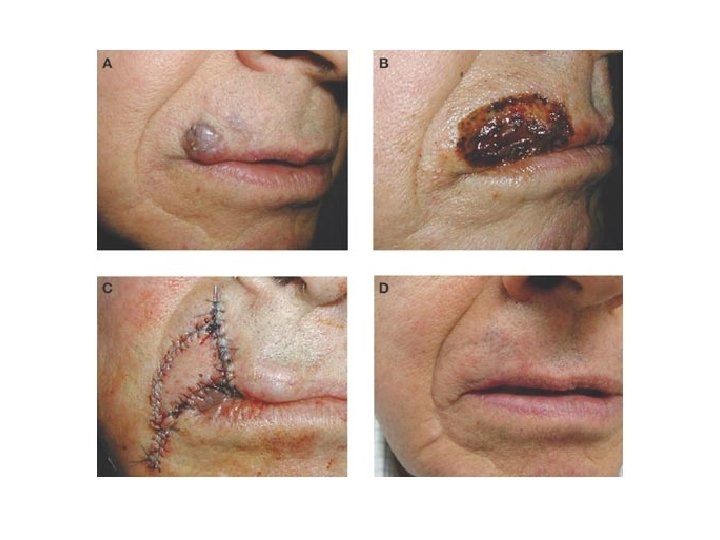
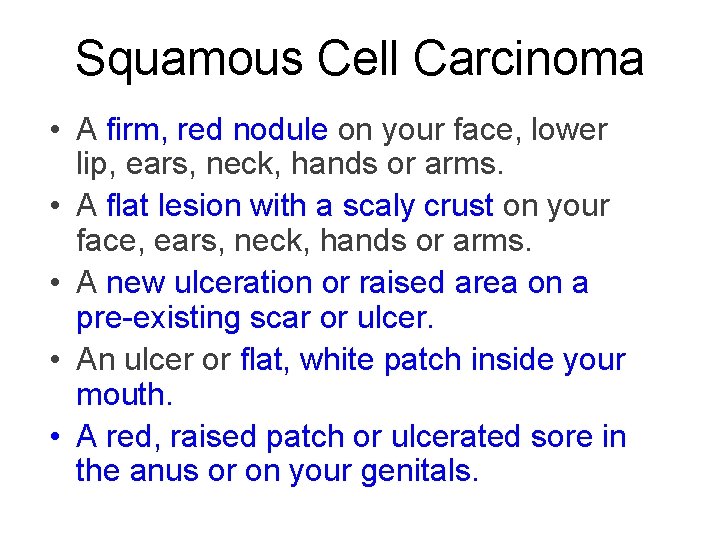
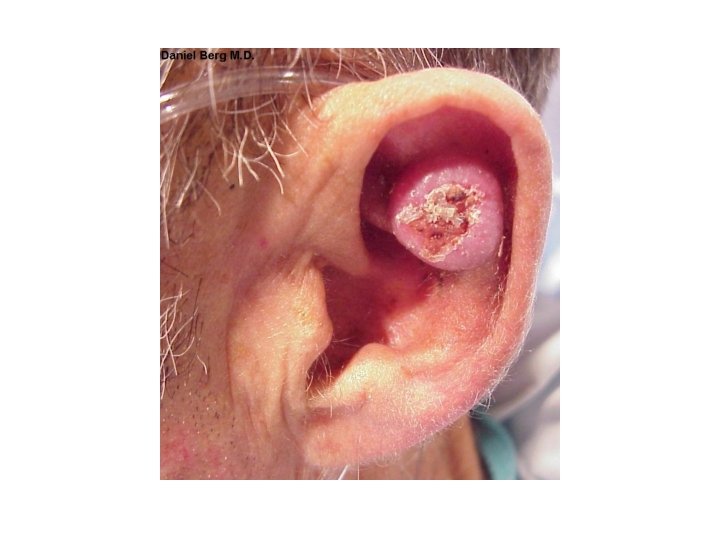
Squamous Cell Carcinoma • A firm, red nodule on your face, lower lip, ears, neck, hands or arms. • A flat lesion with a scaly crust on your face, ears, neck, hands or arms. • A new ulceration or raised area on a pre-existing scar or ulcer. • An ulcer or flat, white patch inside your mouth. • A red, raised patch or ulcerated sore in the anus or on your genitals.

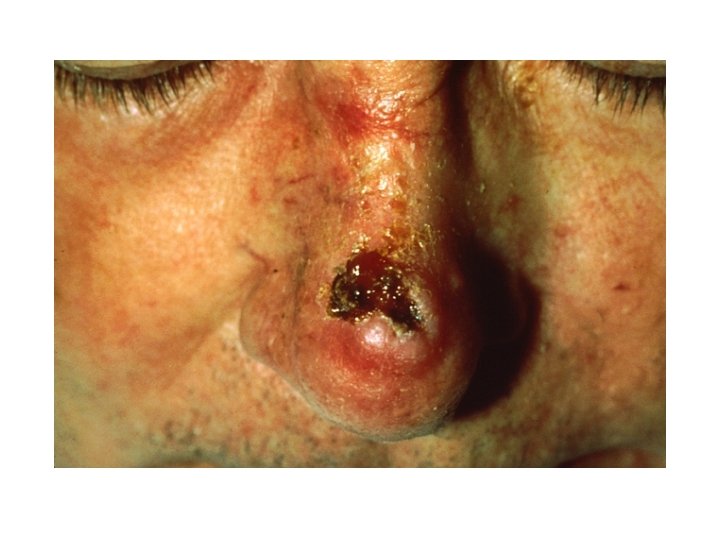
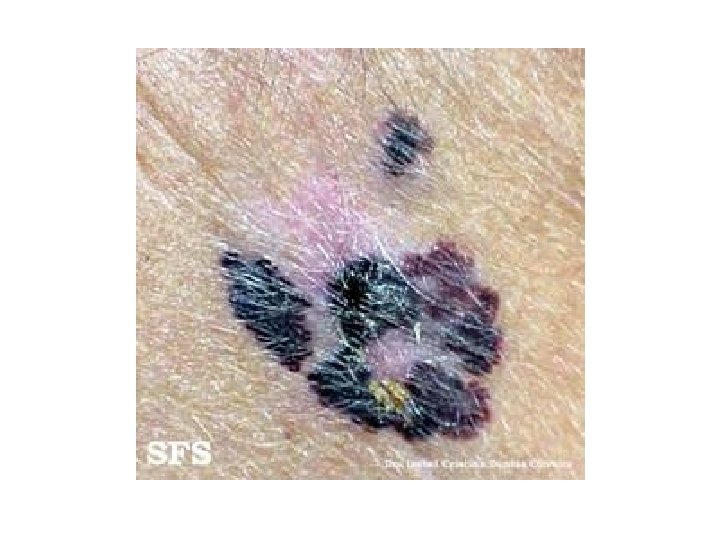
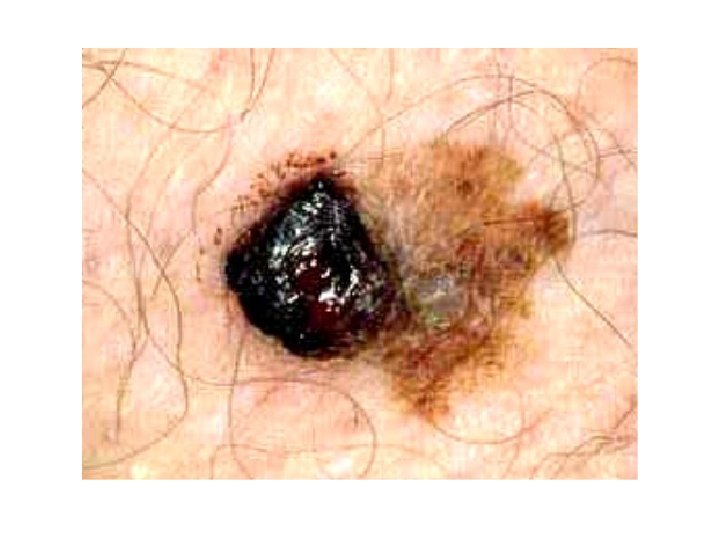
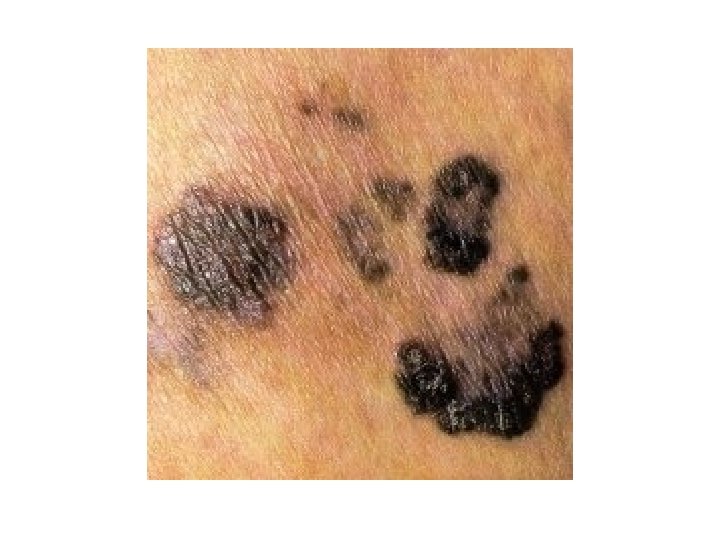
Melanoma • A highly malignant type of skin cancer that arises in melanocytes, the cells that produce pigment. • Melanoma usually begins in a mole. • A popular method for remembering the signs and symptoms of melanoma is the mnemonic "ABCD": • Asymmetrical skin lesion. • Border of the lesion is irregular. • Color: melanomas usually have multiple colors. • Diameter: moles greater than 6 mm are more likely to be melanomas than smaller moles.
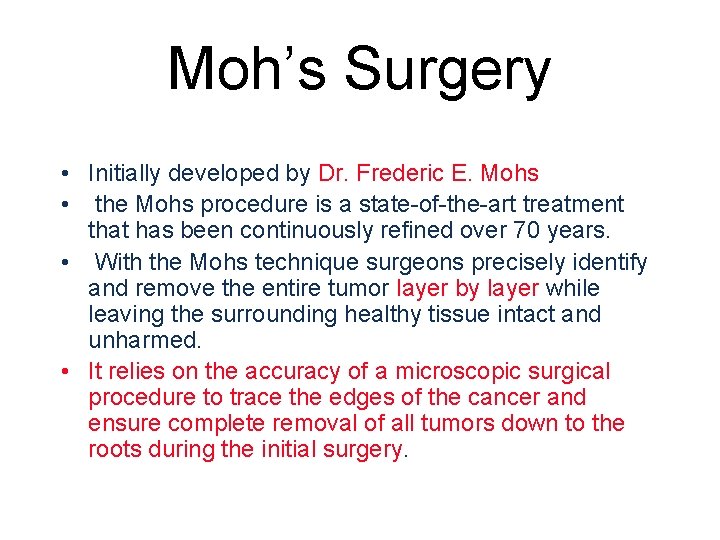
Moh’s Surgery • Initially developed by Dr. Frederic E. Mohs • the Mohs procedure is a state-of-the-art treatment that has been continuously refined over 70 years. • With the Mohs technique surgeons precisely identify and remove the entire tumor layer by layer while leaving the surrounding healthy tissue intact and unharmed. • It relies on the accuracy of a microscopic surgical procedure to trace the edges of the cancer and ensure complete removal of all tumors down to the roots during the initial surgery.

Let’s Go to the Video!
- Slides: 26