
Do Now Activity You are an employer of
- Slides: 20
Do Now Activity: �You are an employer of 15 employees and they have the following complaints: How would you prevent a strike? �Feel they are paid too little �Unsafe working conditions �Too many working hours JClarke
Objectives: �Describe why American workers have formed labor unions �Analyze the reasons for the decline of the labor movement. JClarke
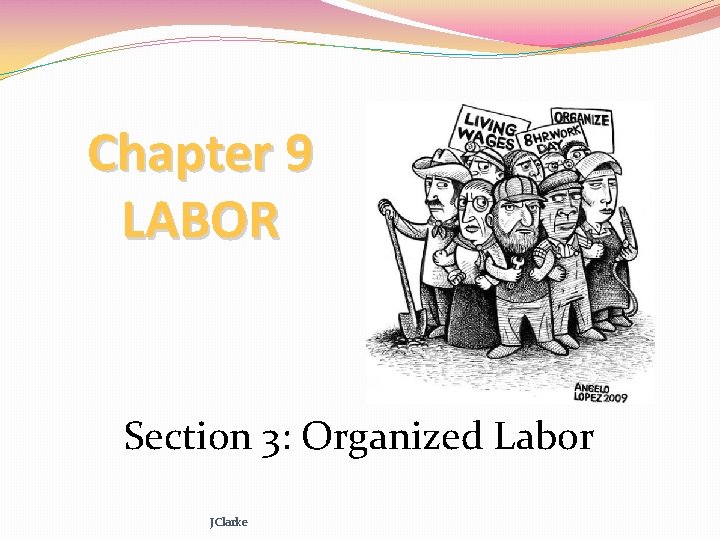
Chapter 9 LABOR Section 3: Organized Labor JClarke
I. Labor & Labor Unions �When workers are unsatisfied with working conditions, they can choose to seek employment elsewhere or form/join labor unions. JClarke
A. Power of Many vs One �Labor unions are viewed as stronger than an individual employee. �Workers can ban together to win gains from employers. �CQ: What are some examples? JClarke
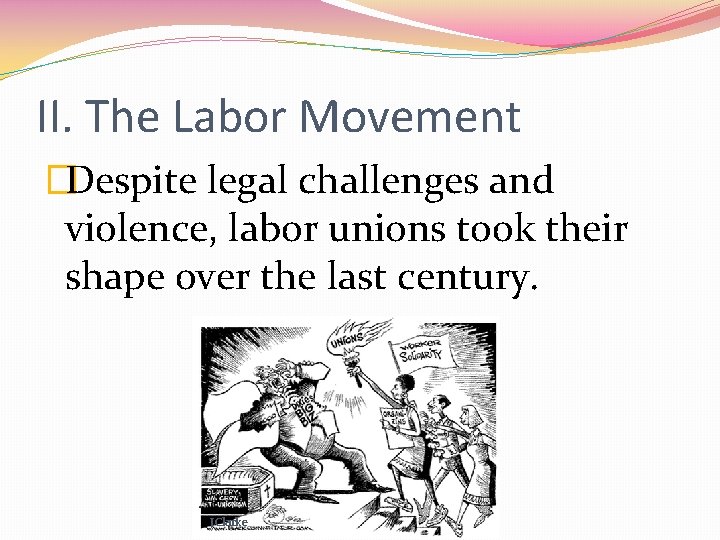
II. The Labor Movement �Despite legal challenges and violence, labor unions took their shape over the last century. JClarke
A. Workers in the 1800 s �Labors unions arose in response to working conditions during the Industrial Revolution (early to mid 1800 s) �Rise of manufacturing and factory work JClarke
1) Factory Conditions � 12 -16 hour work days, 7 days per week �Poor working conditions �Men, women and children (even age 5) operated machinery. �Many injuries and lost of jobs due to them. JClarke
B. Unions Take Hold �Worker discontent grew into organized protests. �Skilled workers formed unions to protect their interests. �Chief tool of the early unions was the strike. JClarke
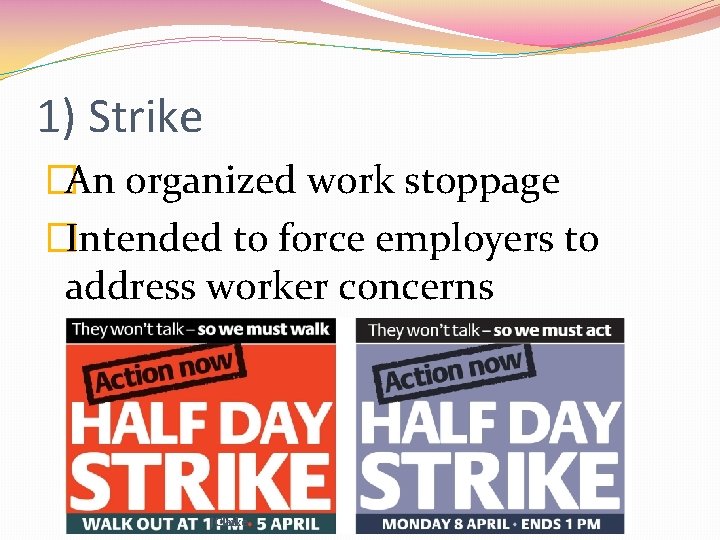
1) Strike �An organized work stoppage �Intended to force employers to address worker concerns JClarke
2) Scabs �People who filled the jobs vacated by those who were on strike. JClarke
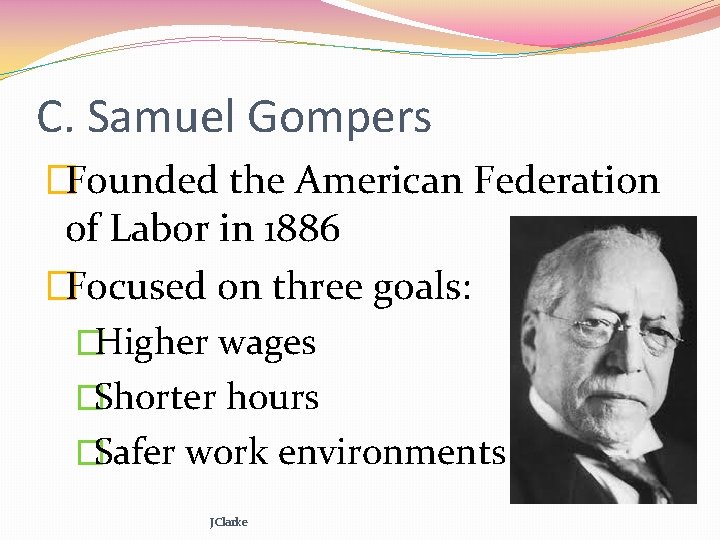
C. Samuel Gompers �Founded the American Federation of Labor in 1886 �Focused on three goals: �Higher wages �Shorter hours �Safer work environments JClarke
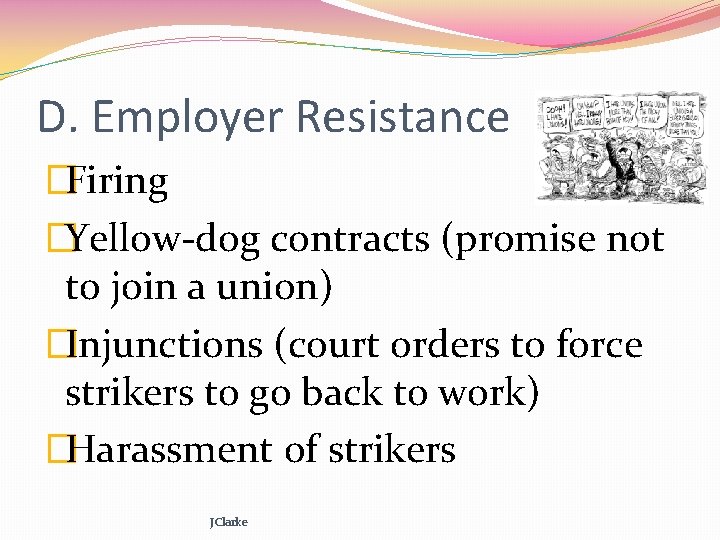
D. Employer Resistance �Firing �Yellow-dog contracts (promise not to join a union) �Injunctions (court orders to force strikers to go back to work) �Harassment of strikers JClarke
III. Decline of the Labor Movement �Some union abused their power as they grew. �Some unions were even linked to organized crime. �Union funds were sometimes used to fund illegal operations JClarke
A. Reasons for Decline �“Right-to-Work” Laws �Taft-Hartley Act 1947 – banned mandatory membership �Loss of Traditional Strongholds �Less unionization among blue-collar workers (record loss of blue-collar jobs) �Lessened Need for Unions �Government regulation and benefits JClarke
IV. Labor and Management JClarke
A. Collective Bargaining �Process in which the union and company management meet to negotiate a new labor contract. �Contracts usually last 2 -5 years and can cover many issues. �Wages & Benefits �Working Conditions �Job Security JClarke
B. Outside Help Reaching Settlement �When a strike continues for a long time, a third party is called in to settle the dispute. JClarke
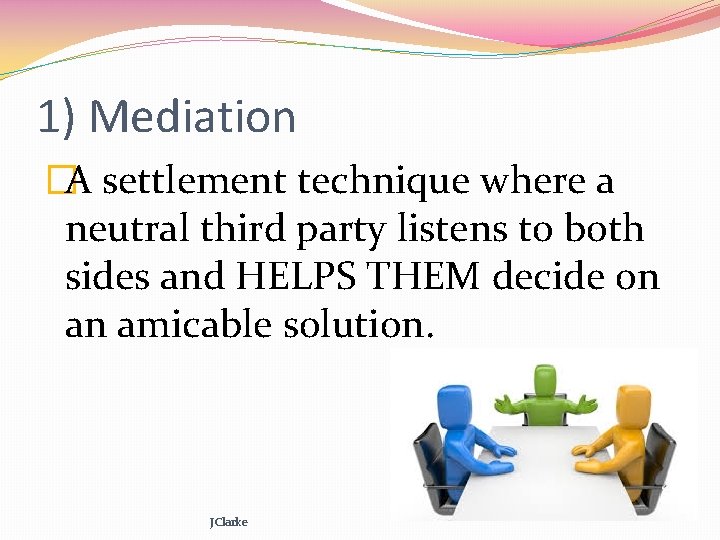
1) Mediation �A settlement technique where a neutral third party listens to both sides and HELPS THEM decide on an amicable solution. JClarke
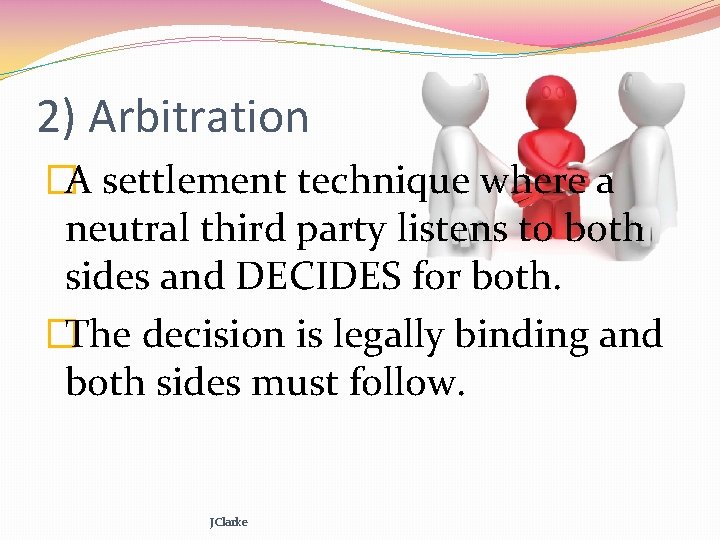
2) Arbitration �A settlement technique where a neutral third party listens to both sides and DECIDES for both. �The decision is legally binding and both sides must follow. JClarke