
DO NOW ACTIVITY 2 1 Make a photosynthesis






- Slides: 37
DO NOW ACTIVITY #2 1. Make a photosynthesis book. a) You need 9 blank half sheets of paper b) You need 1 sheet of directions c) Staple the direction sheet last.
DO NOW 2. ACTIVITY How come animals do#2 not need to do photosynthesis? 3. Where does photosynthesis happen in plant cells? 4. Name 2 things that plants produce from photosynthesis. 5. What type of macromolecule do plants
Essential Question: What do plants use for photosynthesis? What do they make? SECTION 6 -1: PHOTOSYNT Learning Target 6. Use a model to illustrate how photosynthesis transforms light energy into stored chemical energy.
DON’T FORGET TO CHUNK YOUR NOTES!
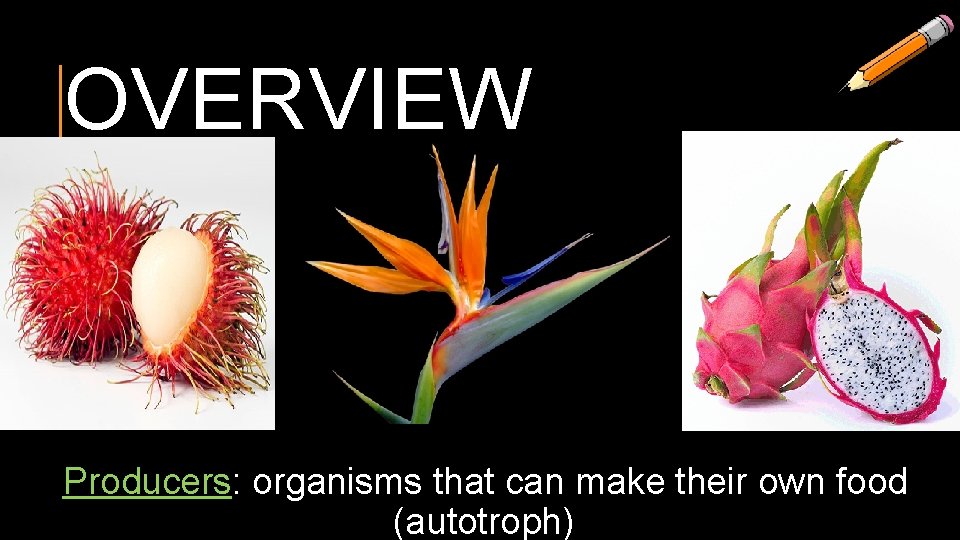
OVERVIEW Producers: organisms that can make their own food (autotroph)
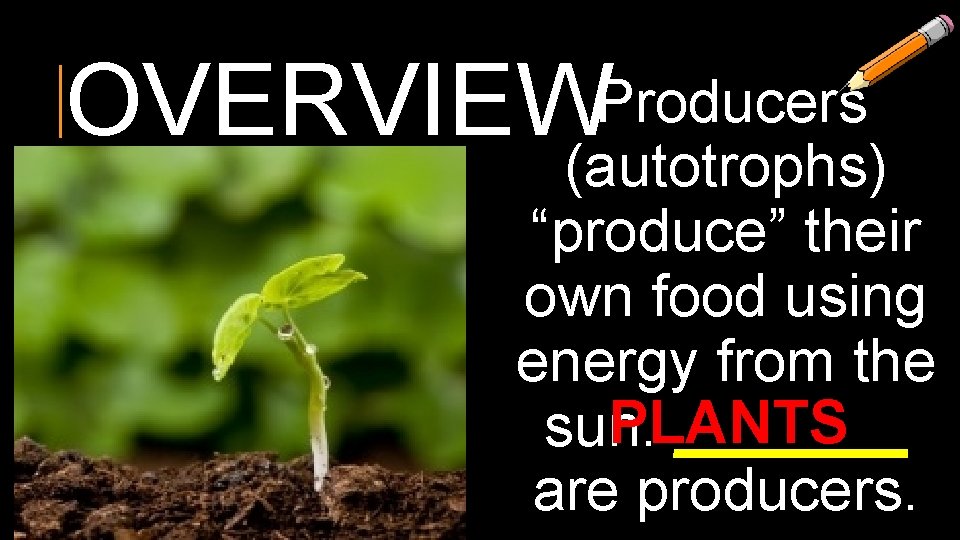
OVERVIEWProducers (autotrophs) “produce” their own food using energy from the PLANTS sun. _______ are producers.
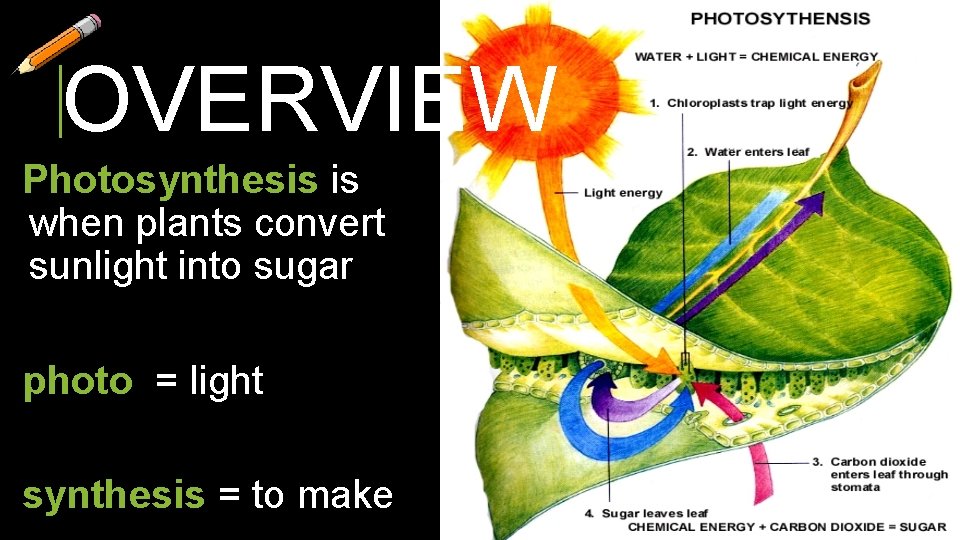
OVERVIEW Photosynthesis is when plants convert sunlight into sugar photo = light synthesis = to make
DON’T FORGET TO CHUNK YOUR NOTES!
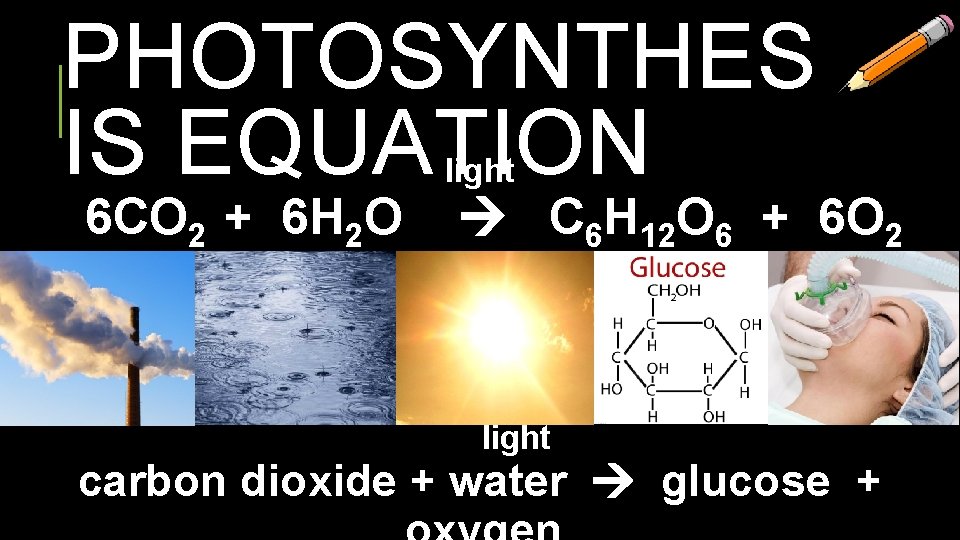
PHOTOSYNTHES IS EQUATION 6 CO 2 + 6 H 2 O light C 6 H 12 O 6 + 6 O 2 light carbon dioxide + water glucose +
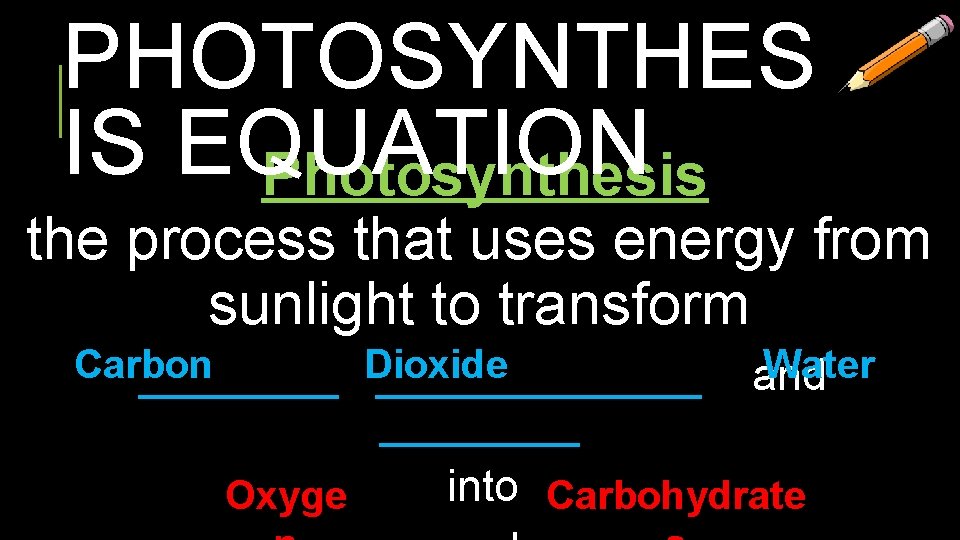
PHOTOSYNTHES IS EQUATION Photosynthesis the process that uses energy from sunlight to transform Carbon ____ Dioxide _______ Water and ____ into Carbohydrate Oxyge
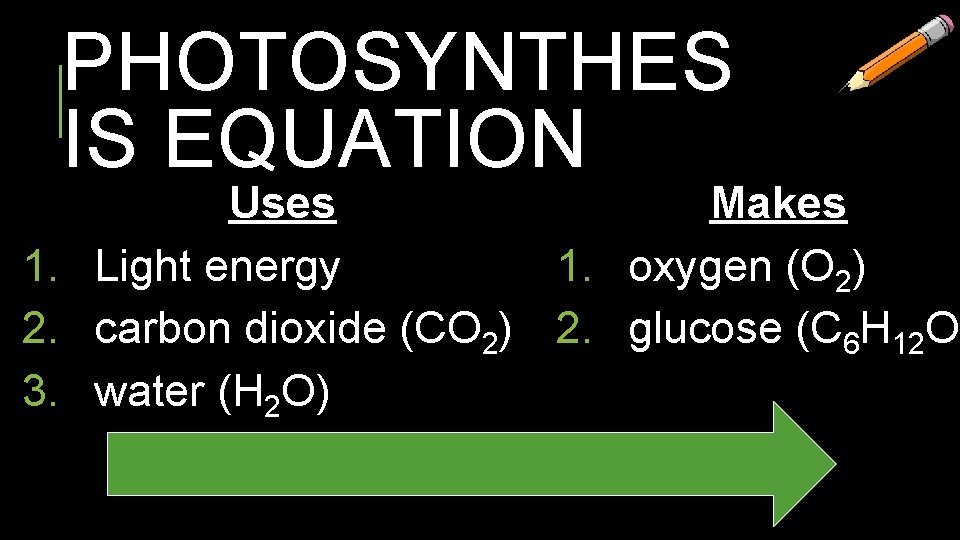
PHOTOSYNTHES IS EQUATION Uses Makes 1. Light energy 1. oxygen (O 2) 2. carbon dioxide (CO 2) 2. glucose (C 6 H 12 O 6 3. water (H 2 O)
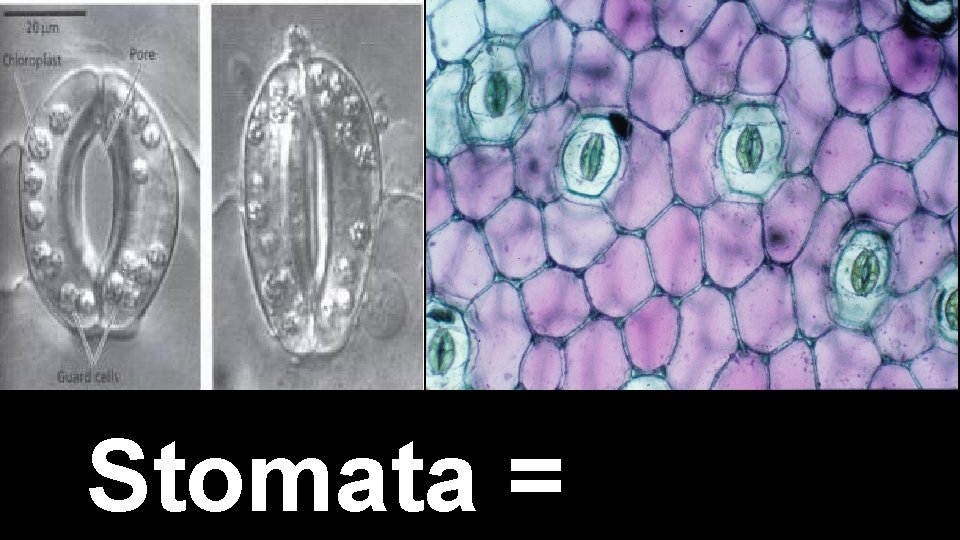
Stomata =
DON’T FORGET TO CHUNK YOUR NOTES!
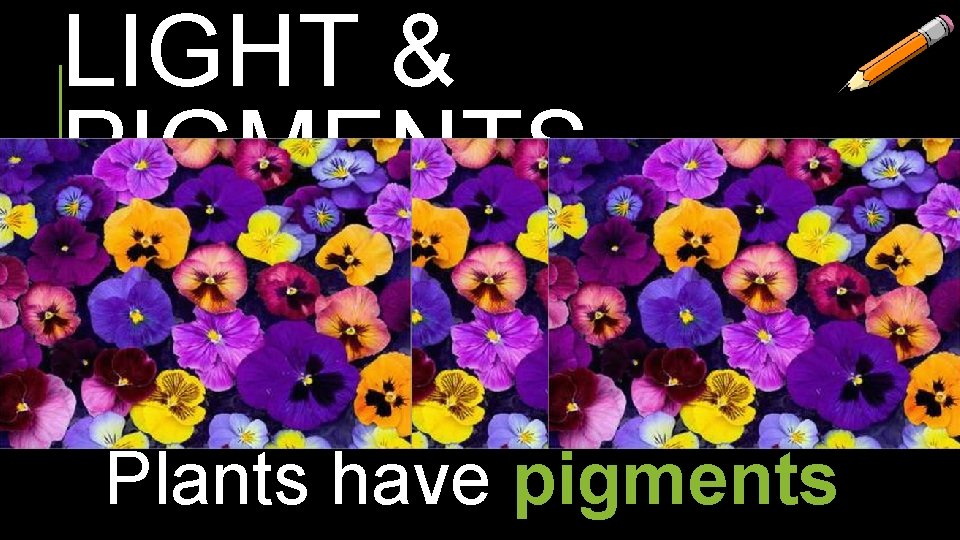
LIGHT & PIGMENTS Plants have pigments
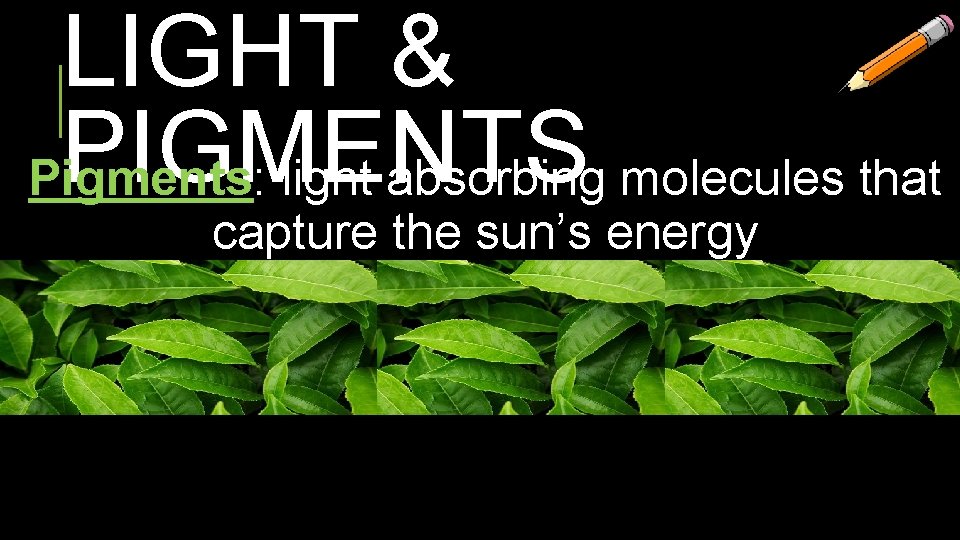
LIGHT & PIGMENTS Pigments: light absorbing molecules that capture the sun’s energy
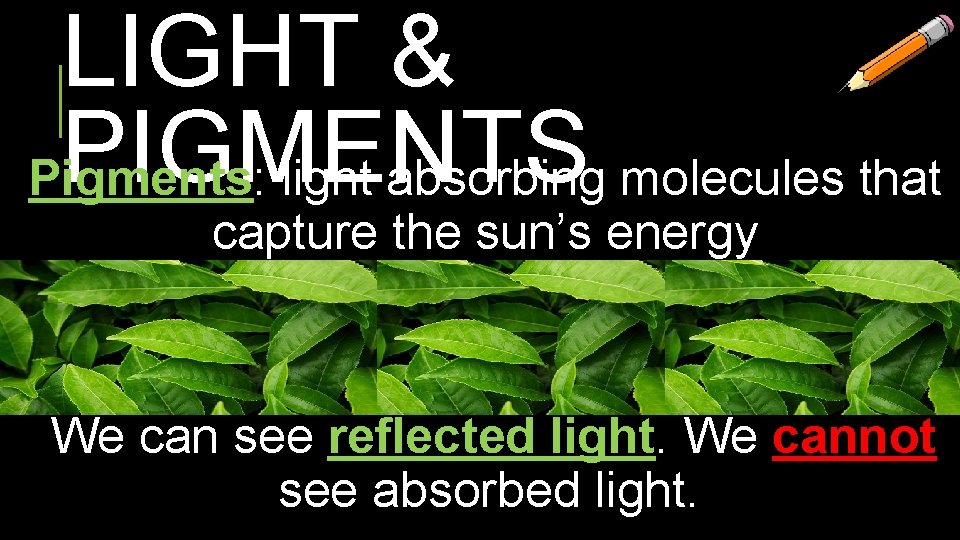
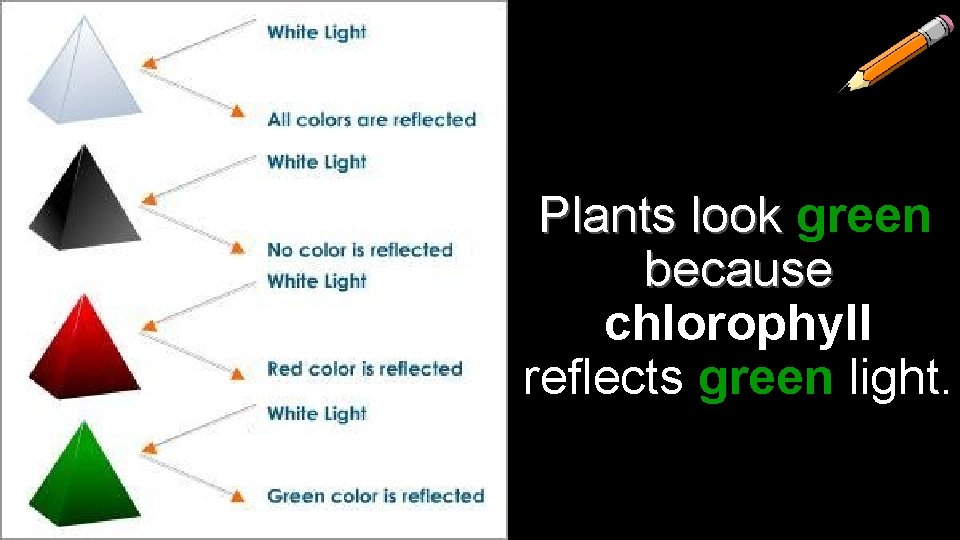
LIGHT & PIGMENTS Pigments: light absorbing molecules that capture the sun’s energy We can see reflected light. We cannot see absorbed light.
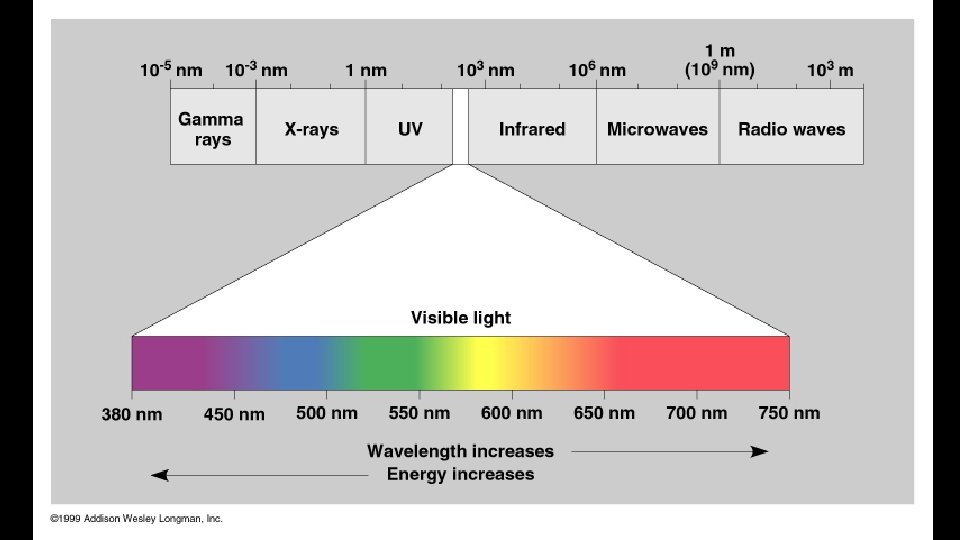
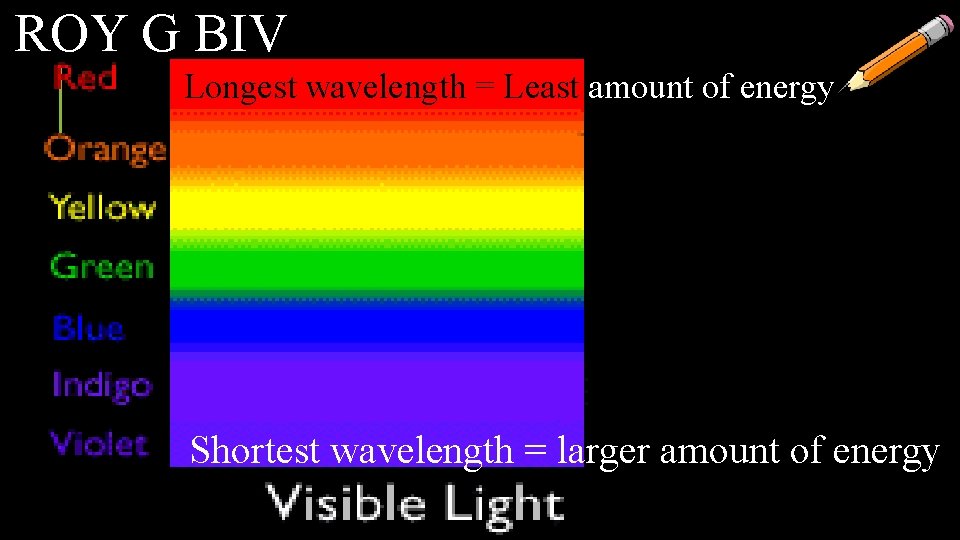
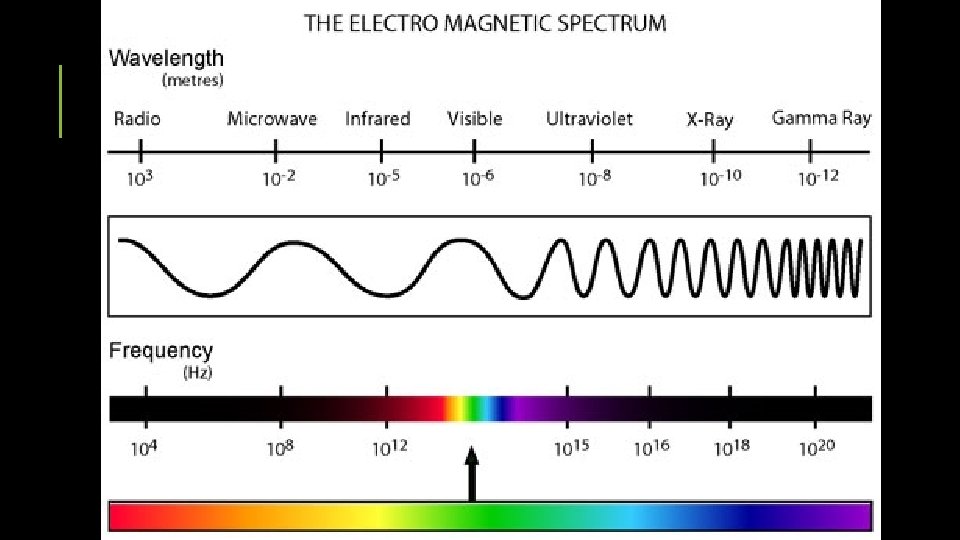
ROY G BIV Longest wavelength = Least amount of energy Shortest wavelength = larger amount of energy
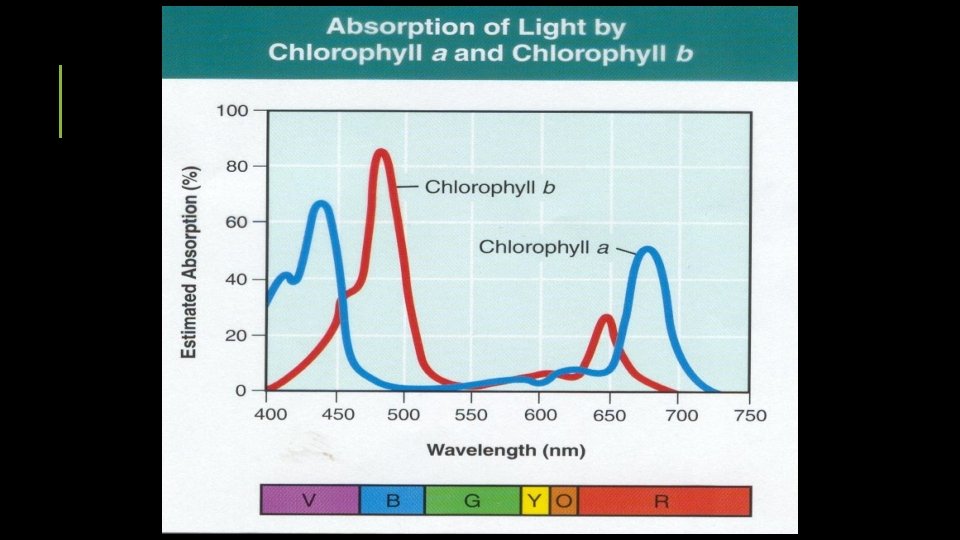
Plants look green because chlorophyll reflects green light.
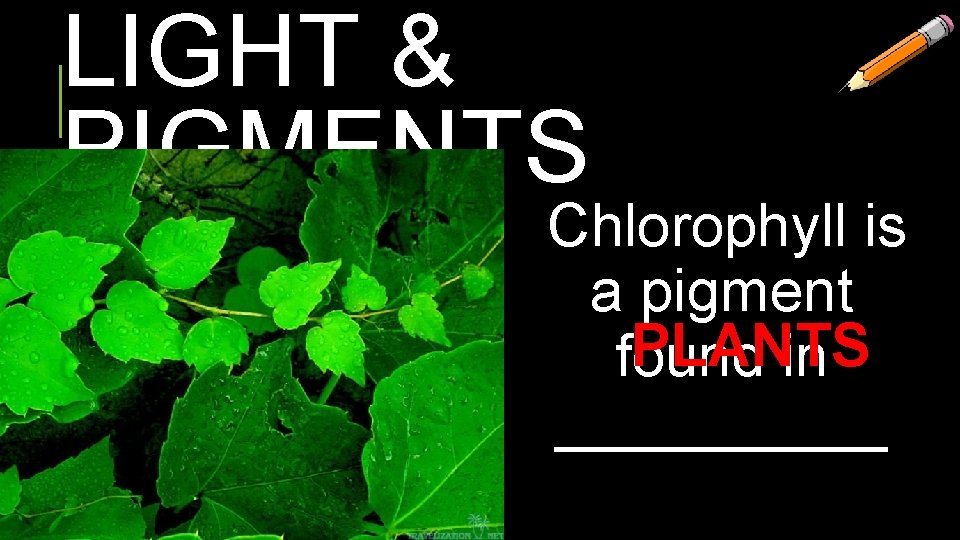
LIGHT & PIGMENTS Chlorophyll is a pigment PLANTS found in _____
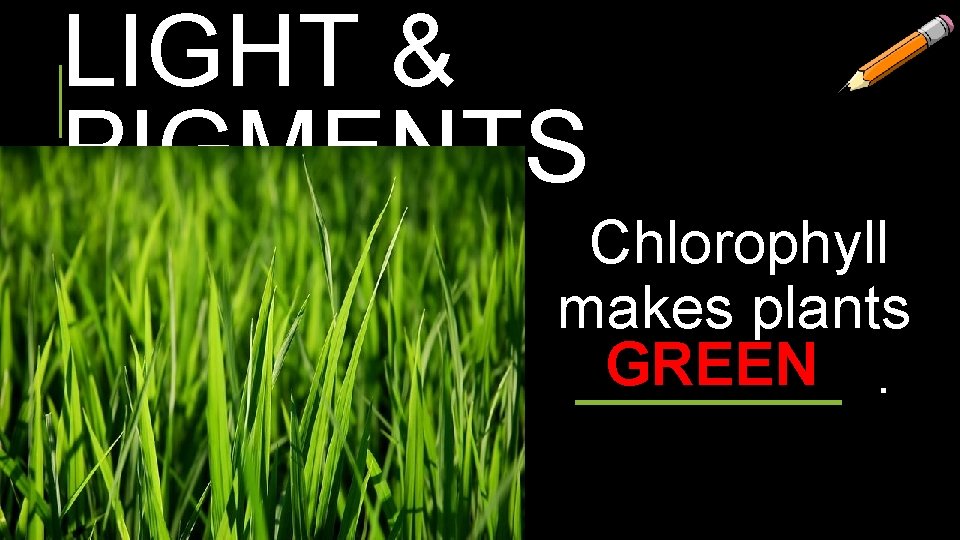
LIGHT & PIGMENTS Chlorophyll makes plants GREEN. ____
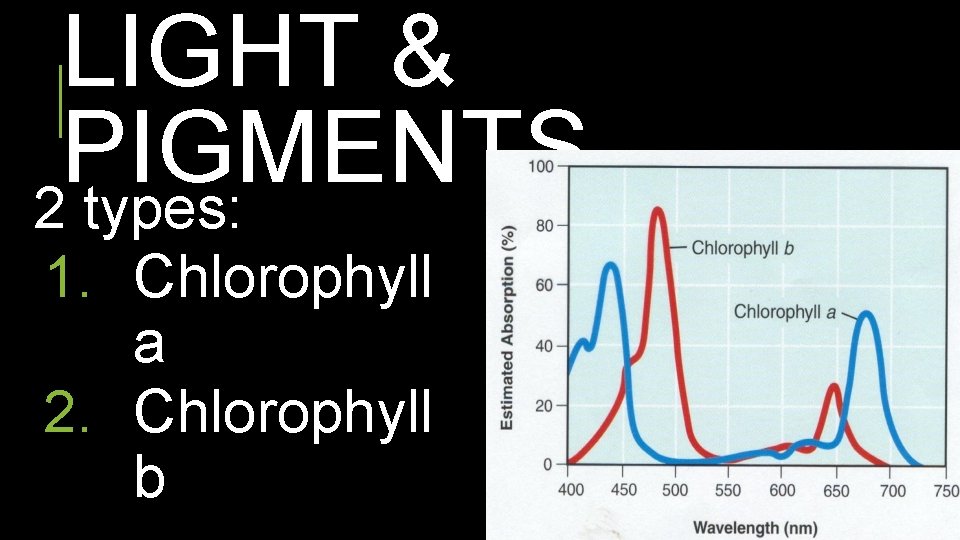
LIGHT & PIGMENTS 2 types: 1. Chlorophyll a 2. Chlorophyll b
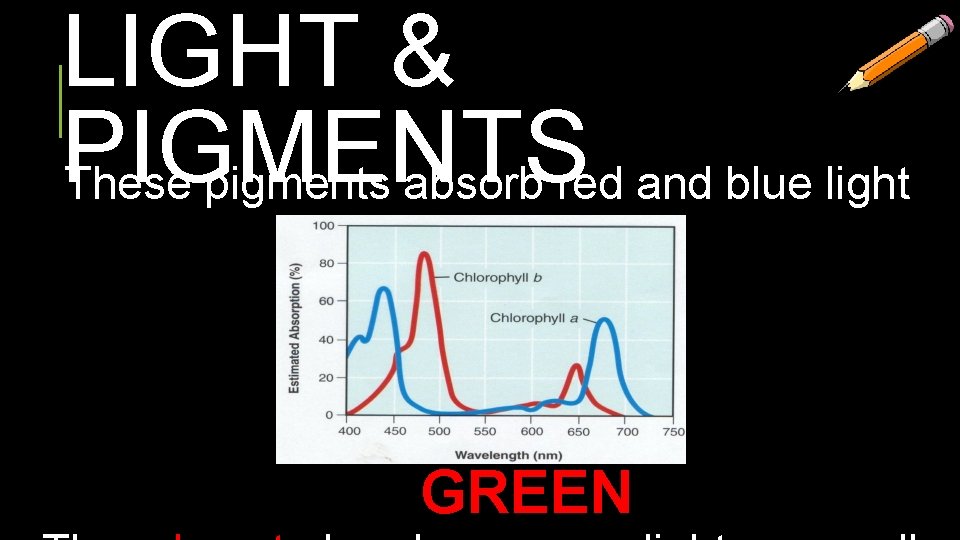
LIGHT & PIGMENTS These pigments absorb red and blue light well. GREEN
IS THE COLOR GREEN BEING REFLECTED OR ABSORBED BY PLANTS?
DON’T FORGET TO CHUNK YOUR NOTES!
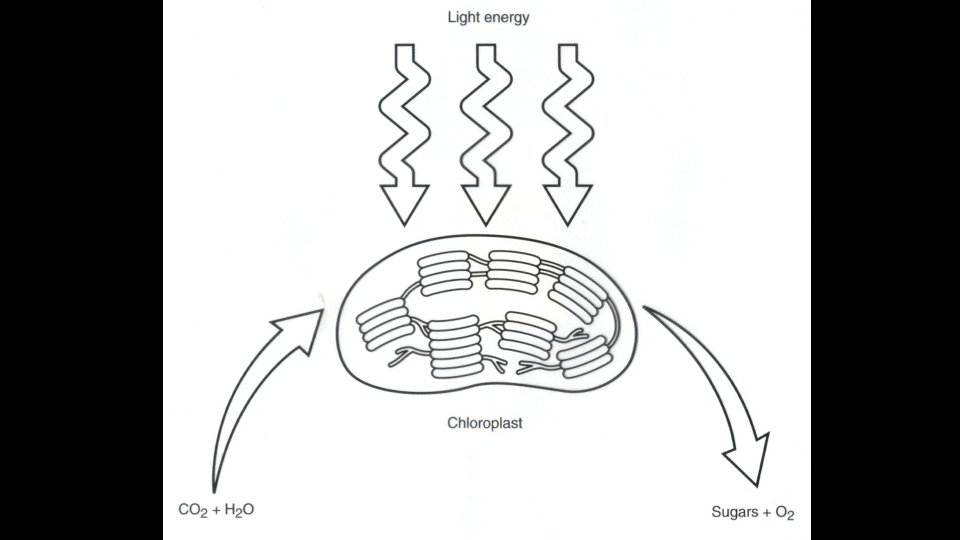
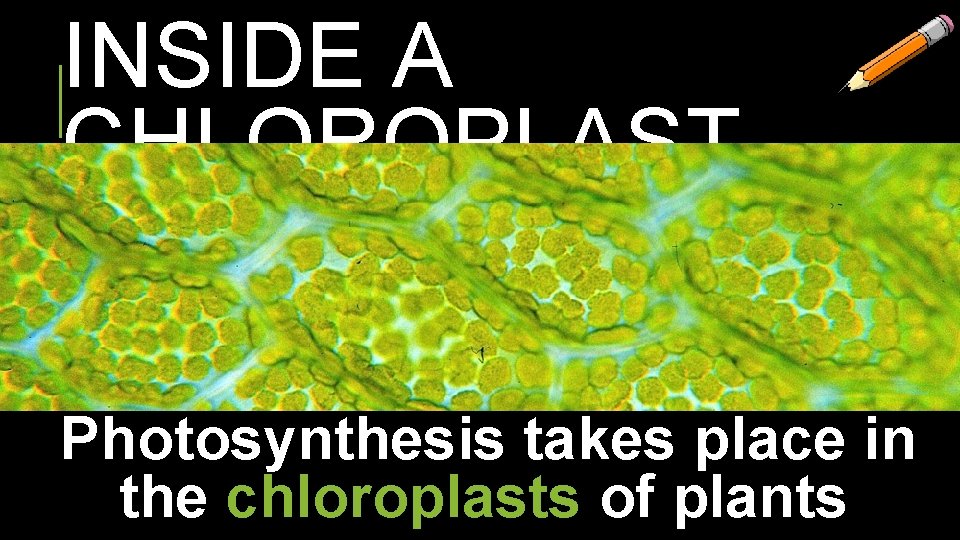
INSIDE A CHLOROPLAST Photosynthesis takes place in the chloroplasts of plants
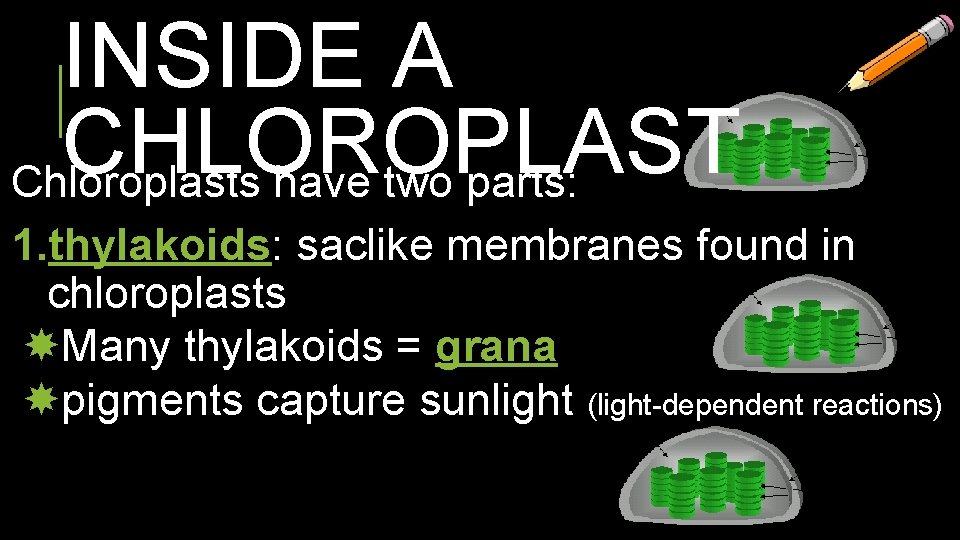
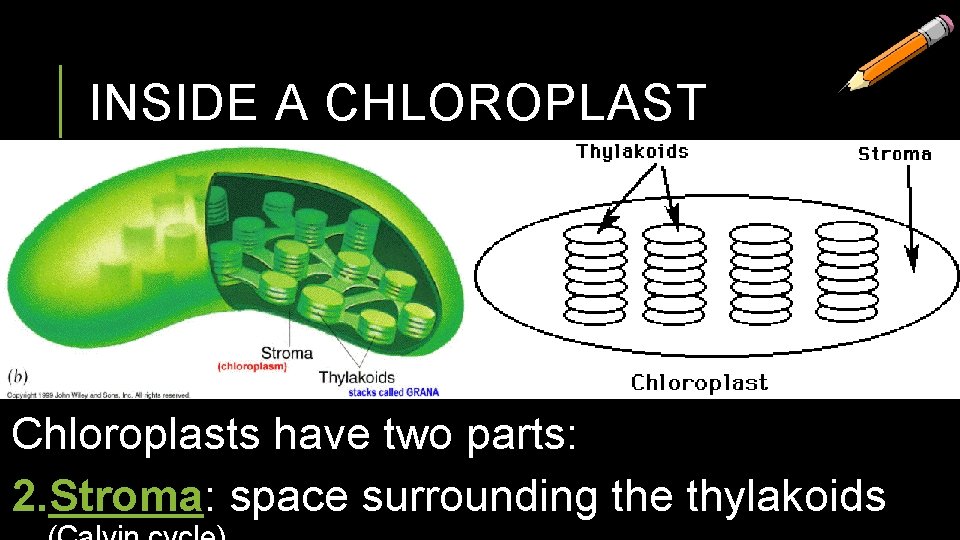
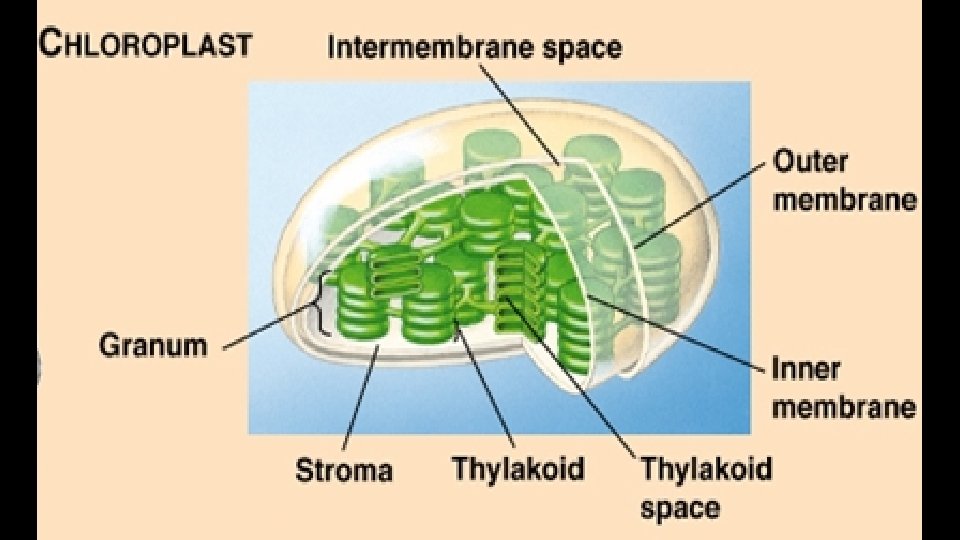
INSIDE A CHLOROPLAST Chloroplasts have two parts: 1. thylakoids: saclike membranes found in chloroplasts Many thylakoids = grana pigments capture sunlight (light-dependent reactions)
INSIDE A CHLOROPLAST Chloroplasts have two parts: 2. Stroma: space surrounding the thylakoids
THE CHLOROPLAST
DON’T FORGET TO CHUNK YOUR NOTES!
WWW. BIOPHAMILY. W EEBLY. COM
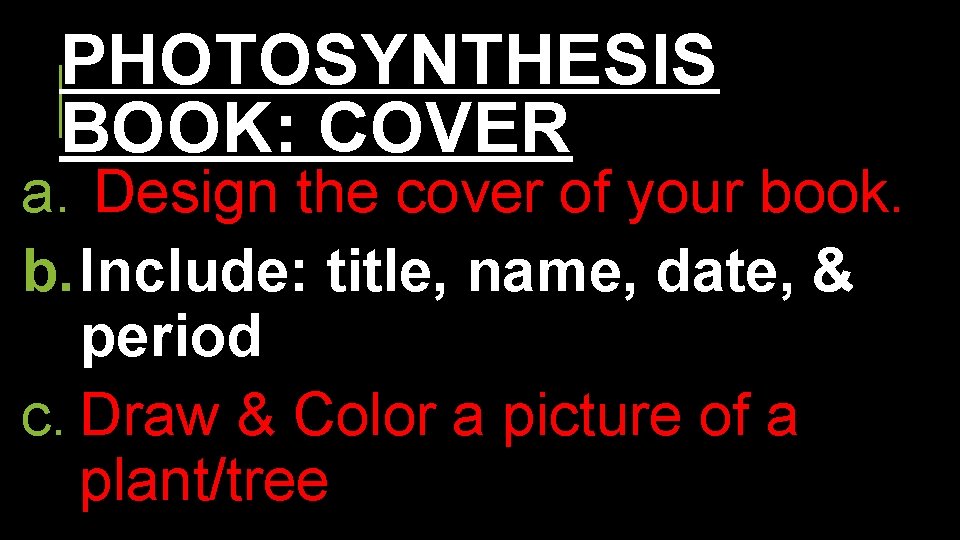
PHOTOSYNTHESIS BOOK: COVER a. Design the cover of your book. b. Include: title, name, date, & period c. Draw & Color a picture of a plant/tree
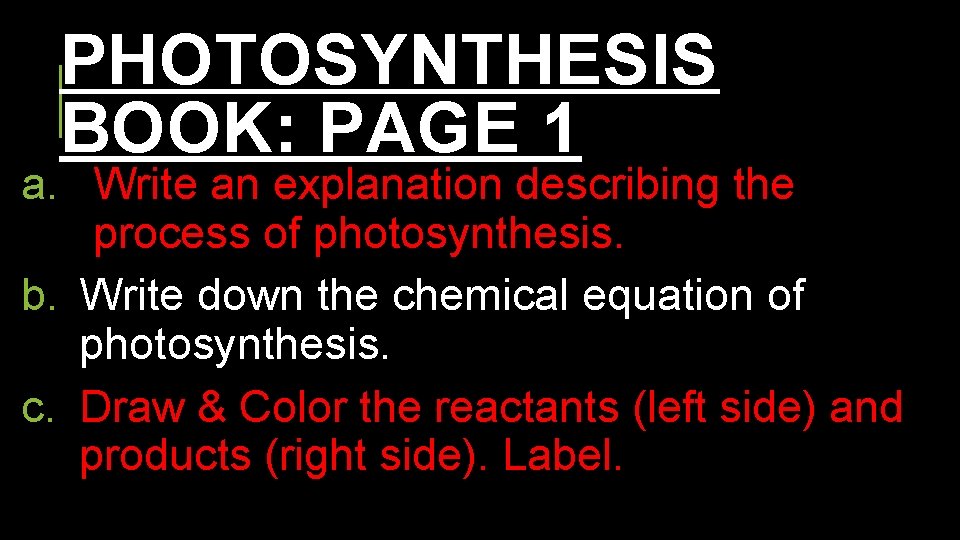
PHOTOSYNTHESIS BOOK: PAGE 1 a. Write an explanation describing the process of photosynthesis. b. Write down the chemical equation of photosynthesis. c. Draw & Color the reactants (left side) and products (right side). Label.
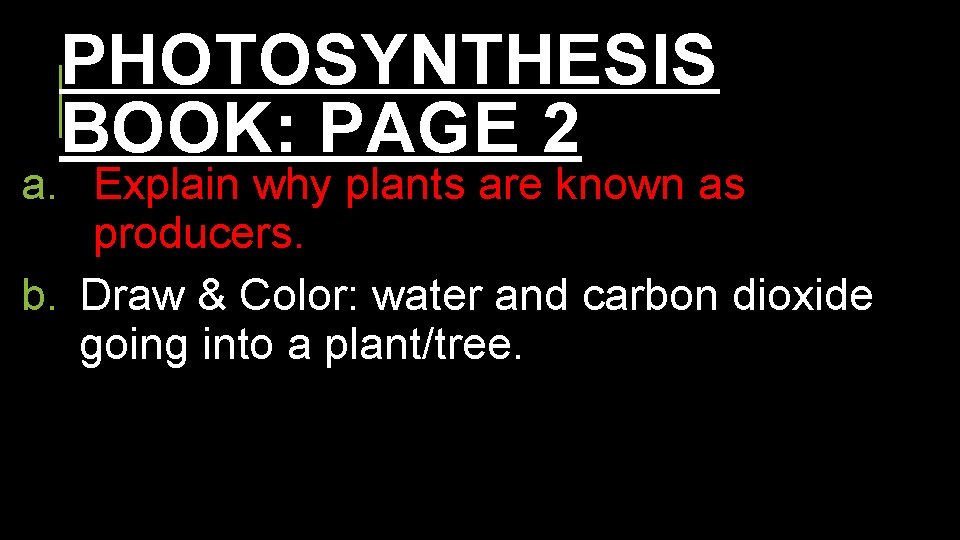
PHOTOSYNTHESIS BOOK: PAGE 2 a. Explain why plants are known as producers. b. Draw & Color: water and carbon dioxide going into a plant/tree.