
Do Now 18 and 20 on p 466
- Slides: 13
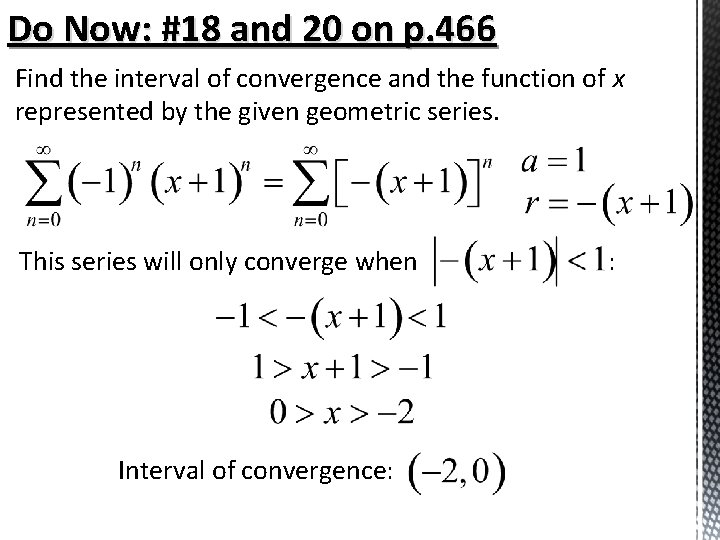
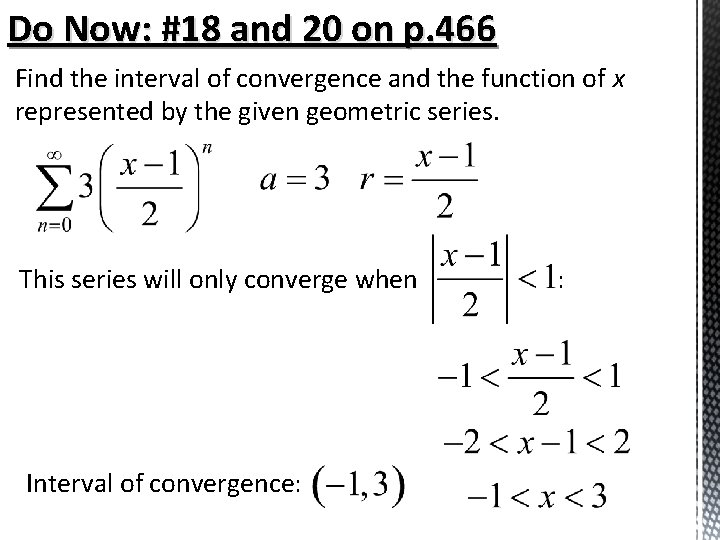
Do Now: #18 and 20 on p. 466 Find the interval of convergence and the function of x represented by the given geometric series. This series will only converge when Interval of convergence: :
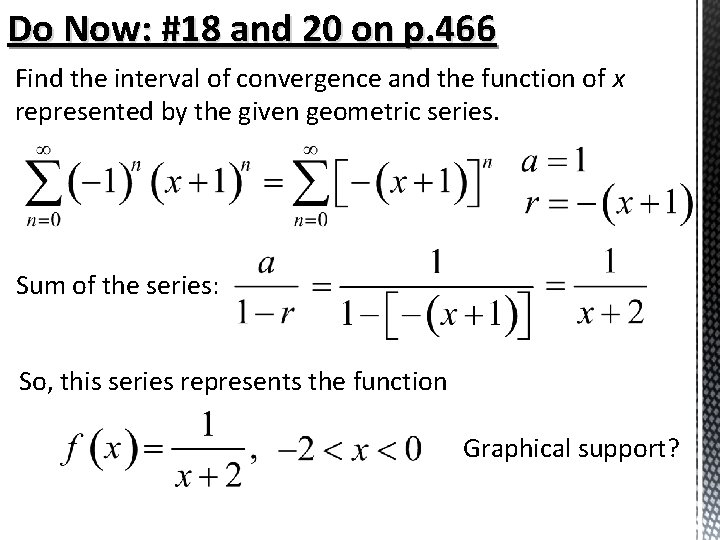
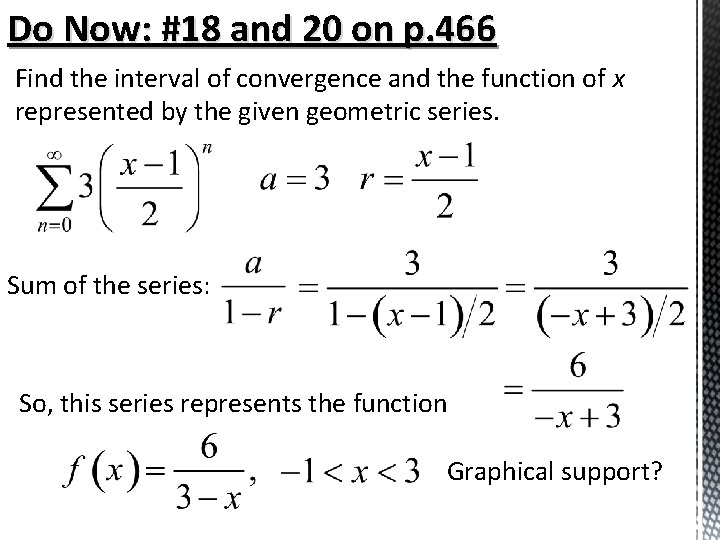
Do Now: #18 and 20 on p. 466 Find the interval of convergence and the function of x represented by the given geometric series. Sum of the series: So, this series represents the function Graphical support?
Power Series Section 9. 1 b
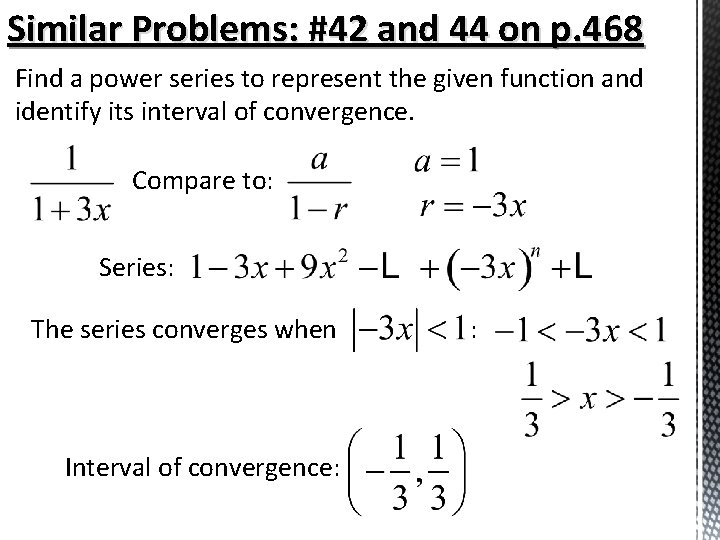
Similar Problems: #42 and 44 on p. 468 Find a power series to represent the given function and identify its interval of convergence. Compare to: Series: The series converges when Interval of convergence: :
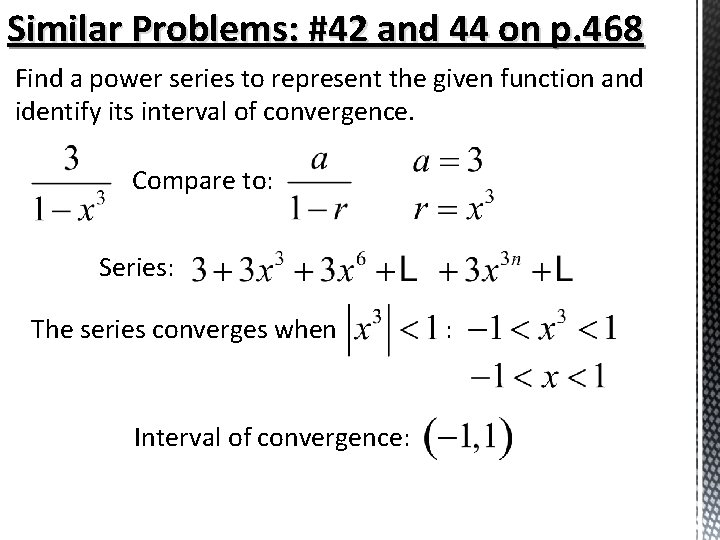
Similar Problems: #42 and 44 on p. 468 Find a power series to represent the given function and identify its interval of convergence. Compare to: Series: The series converges when Interval of convergence: :
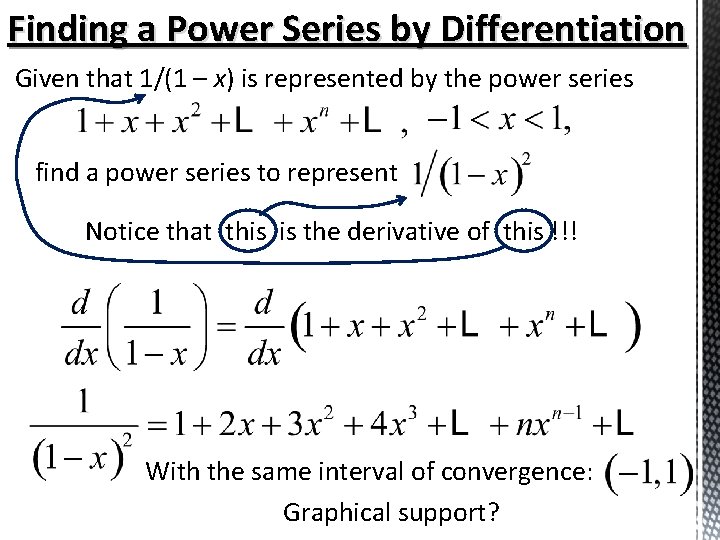
Finding a Power Series by Differentiation Given that 1/(1 – x) is represented by the power series find a power series to represent Notice that this is the derivative of this !!! With the same interval of convergence: Graphical support?
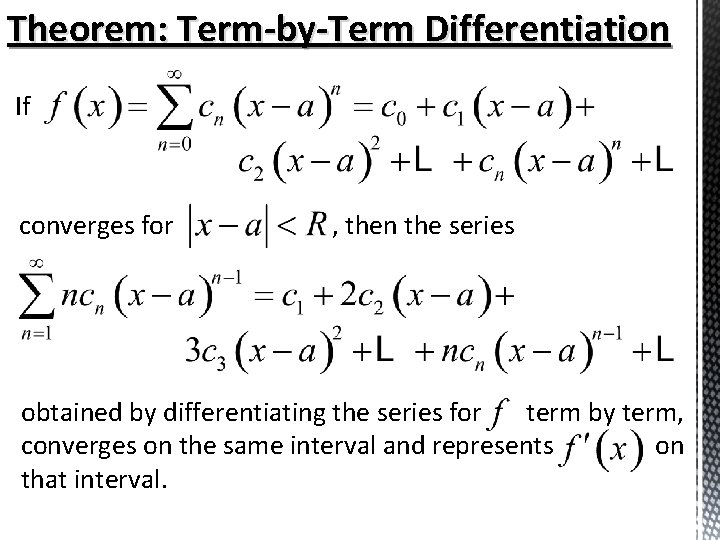
Theorem: Term-by-Term Differentiation If converges for , then the series obtained by differentiating the series for term by term, converges on the same interval and represents on that interval.
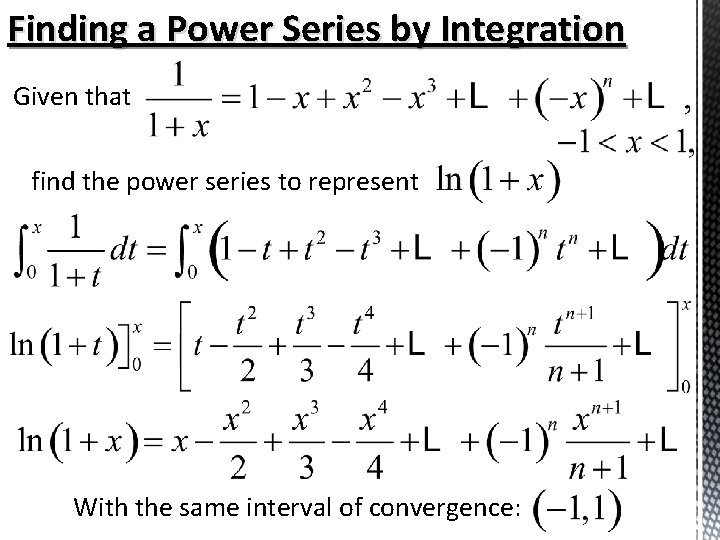
Finding a Power Series by Integration Given that find the power series to represent With the same interval of convergence:
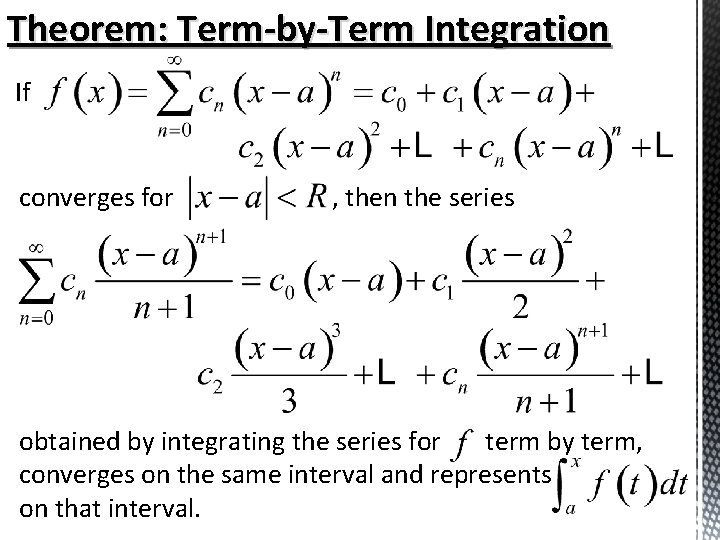
Theorem: Term-by-Term Integration If converges for , then the series obtained by integrating the series for term by term, converges on the same interval and represents on that interval.
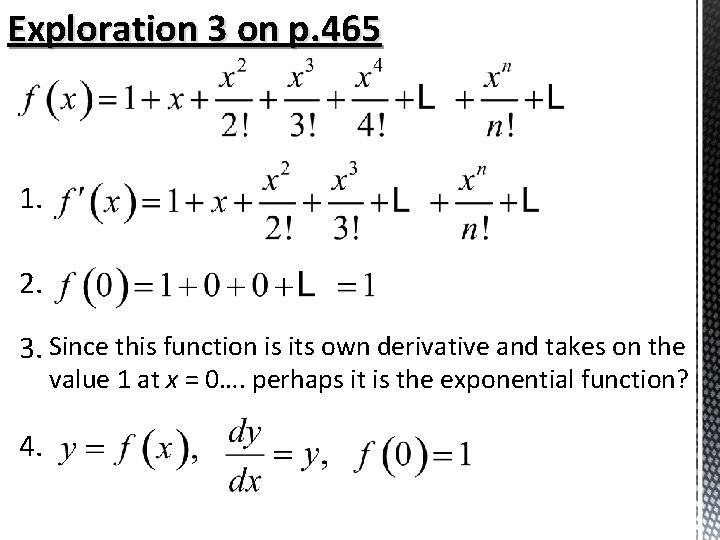
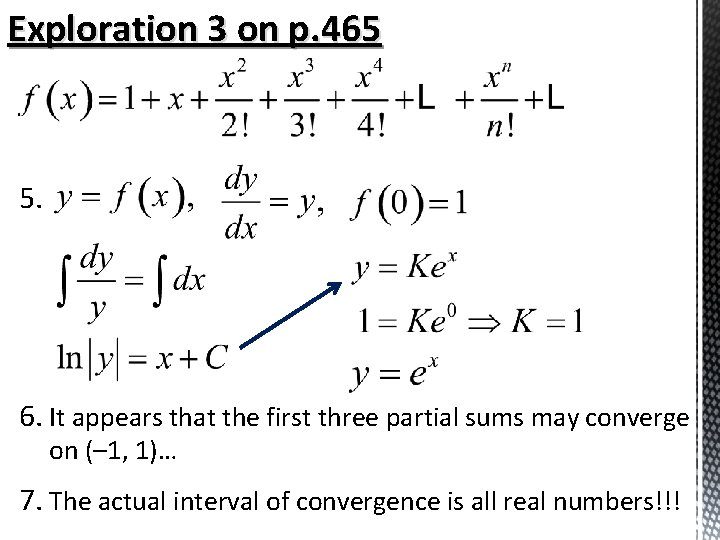
Exploration 3 on p. 465 1. 2. 3. Since this function is its own derivative and takes on the value 1 at x = 0…. perhaps it is the exponential function? 4.
Exploration 3 on p. 465 5. 6. It appears that the first three partial sums may converge on (– 1, 1)… 7. The actual interval of convergence is all real numbers!!!