
Do Now 1 Explain the difference between directional
Do Now 1. Explain the difference between directional and disruptive selection. 1. Directional – one extreme of the variation of the trait is most fit 2. Disruptive – BOTH extremes of the variation is most fit 2. What type of selection is most common? 1. Stabilizing selection Homework: finish book work from class
Speciation
What is Speciation? • A species is defined as a group of organisms that can successfully interbreed, producing fertile offspring. • Speciation – the formation of new species • How does a species evolve into two new species? – The gene pools of two populations must become separated. – Over time genetic changes cause reproductive isolation between the populations.
Reproductive Isolation • Reproductive isolation means that the organisms can no longer interbreed successfully. • There are 2 main types of Reproductive Isolation: – Pre-zygotic – prevents fertilization from taking place • Examples: Geographical, Behavioral, Temporal – Post-zygotic – prevents fertile offspring from being produced after fertilization occurs

Geographic Isolation • Geographic isolation occurs when populations are physically separated from each other. • Natural selection works separately on each population. – Differences in environment can cause genetic differences. – Over time, genetic changes can lead to formation of 2 separate species. • Geographic isolation does not always lead to the formation of new species. – Geographical barriers may be temporary. – Geographical barriers may not affect all organisms (Ex: River would separate land animals but not necessarily birds. )

Geographic Isolation Examples
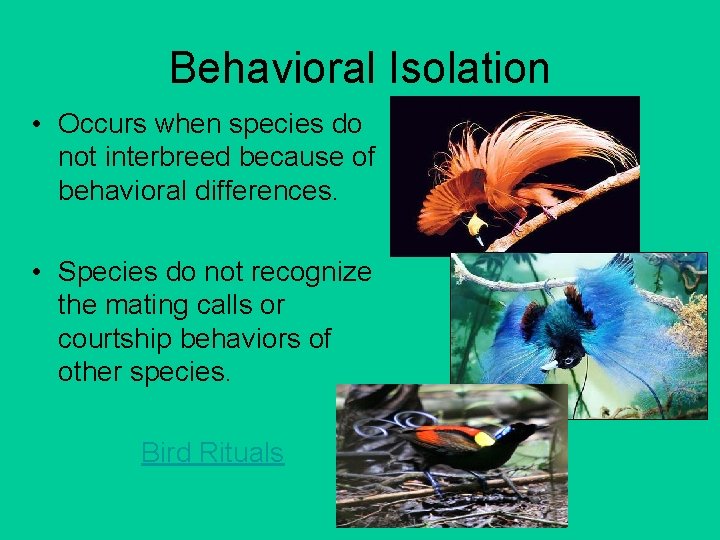
Behavioral Isolation • Occurs when species do not interbreed because of behavioral differences. • Species do not recognize the mating calls or courtship behaviors of other species. Bird Rituals

Temporal Isolation • Many species do not breed all year long and have specific mating seasons. • Temporal Isolation occurs when species sharing the same environment may reproduce at different times in the year.
Post-zygotic Isolation • Post-zygotic isolation prevents fertile offspring from being produced from the mating of two different species. • Several different ways that post-zygotic isolations occurs: – Offspring may die before birth – Offspring may die before reproductive age – Offspring may live, but may not be fertile
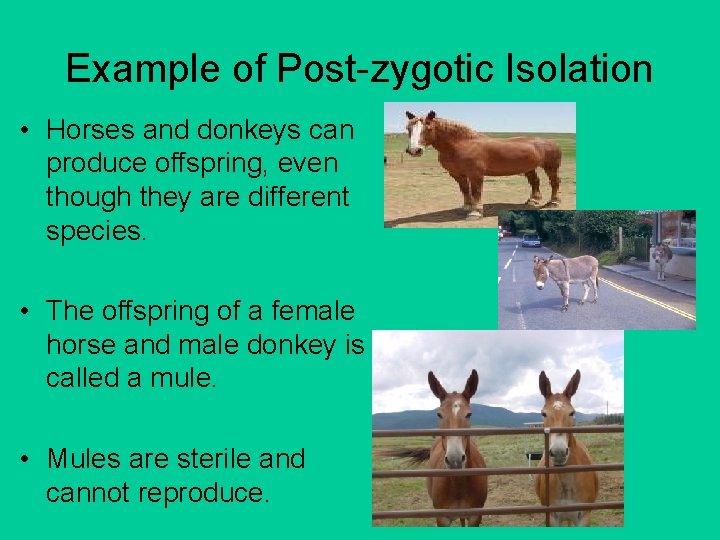
Example of Post-zygotic Isolation • Horses and donkeys can produce offspring, even though they are different species. • The offspring of a female horse and male donkey is called a mule. • Mules are sterile and cannot reproduce.
- Slides: 10