DO Now 1 A physical change is a

- Slides: 8
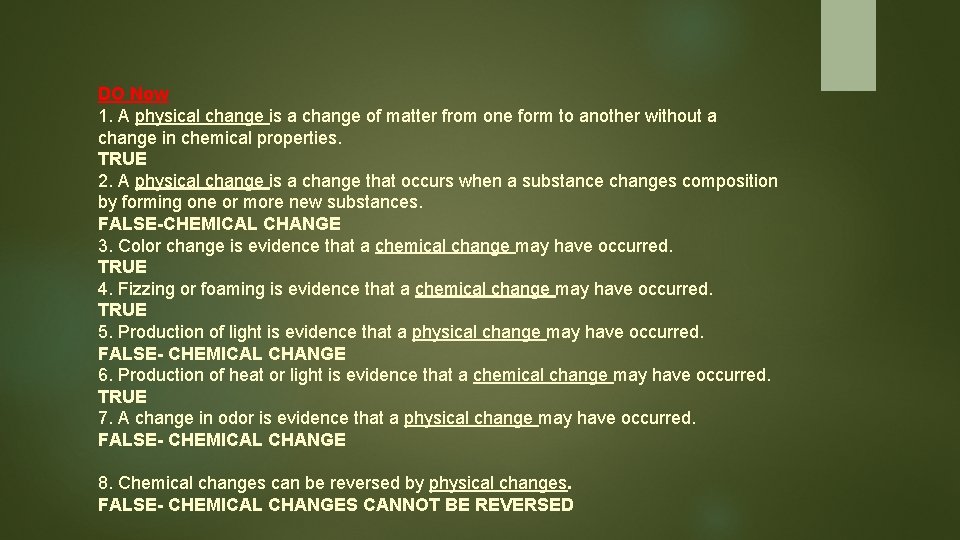
DO Now 1. A physical change is a change of matter from one form to another without a change in chemical properties. TRUE 2. A physical change is a change that occurs when a substance changes composition by forming one or more new substances. FALSE-CHEMICAL CHANGE 3. Color change is evidence that a chemical change may have occurred. TRUE 4. Fizzing or foaming is evidence that a chemical change may have occurred. TRUE 5. Production of light is evidence that a physical change may have occurred. FALSE- CHEMICAL CHANGE 6. Production of heat or light is evidence that a chemical change may have occurred. TRUE 7. A change in odor is evidence that a physical change may have occurred. FALSE- CHEMICAL CHANGE 8. Chemical changes can be reversed by physical changes. FALSE- CHEMICAL CHANGES CANNOT BE REVERSED
Changes of state are physical changes. https: //www. youtube. com/watch? v=AW 8 v 2 Fx 0 Y 8 c LESSON 2. 2
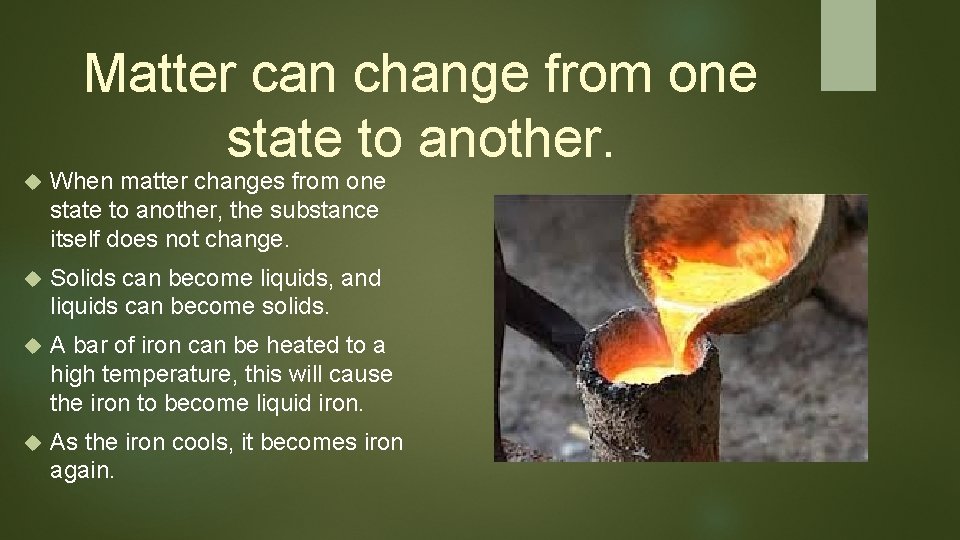
Matter can change from one state to another. When matter changes from one state to another, the substance itself does not change. Solids can become liquids, and liquids can become solids. A bar of iron can be heated to a high temperature, this will cause the iron to become liquid iron. As the iron cools, it becomes iron again.
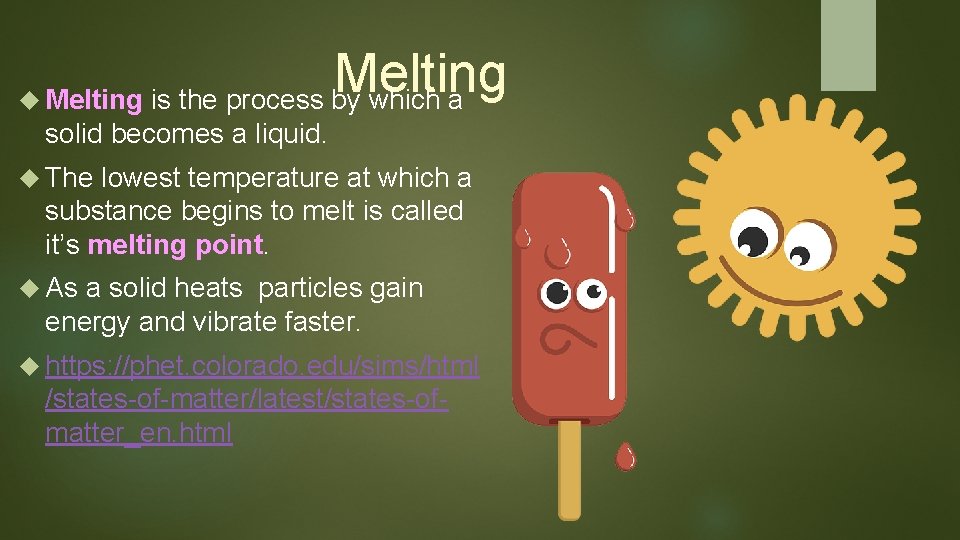
Melting is the process by which a solid becomes a liquid. The lowest temperature at which a substance begins to melt is called it’s melting point. As a solid heats particles gain energy and vibrate faster. https: //phet. colorado. edu/sims/html /states-of-matter/latest/states-ofmatter_en. html
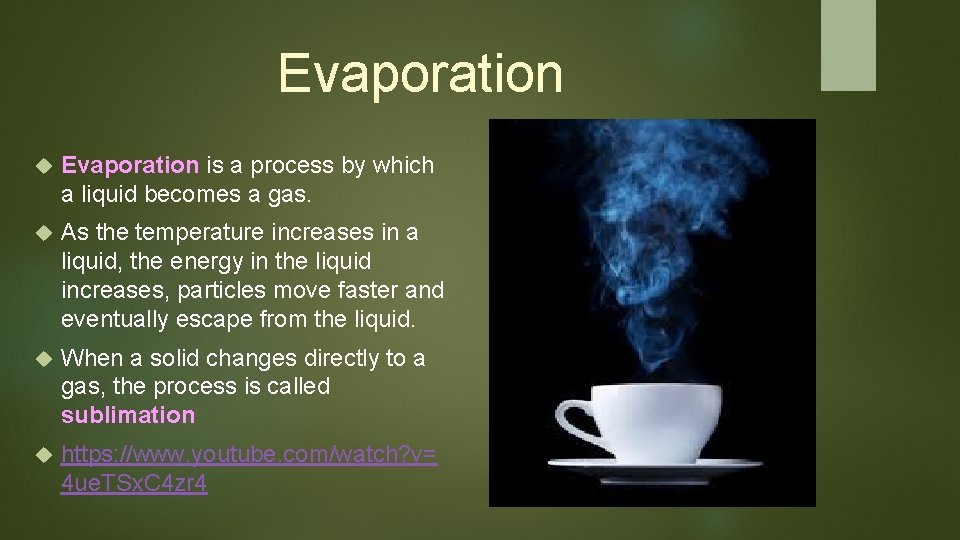
Evaporation is a process by which a liquid becomes a gas. As the temperature increases in a liquid, the energy in the liquid increases, particles move faster and eventually escape from the liquid. When a solid changes directly to a gas, the process is called sublimation https: //www. youtube. com/watch? v= 4 ue. TSx. C 4 zr 4
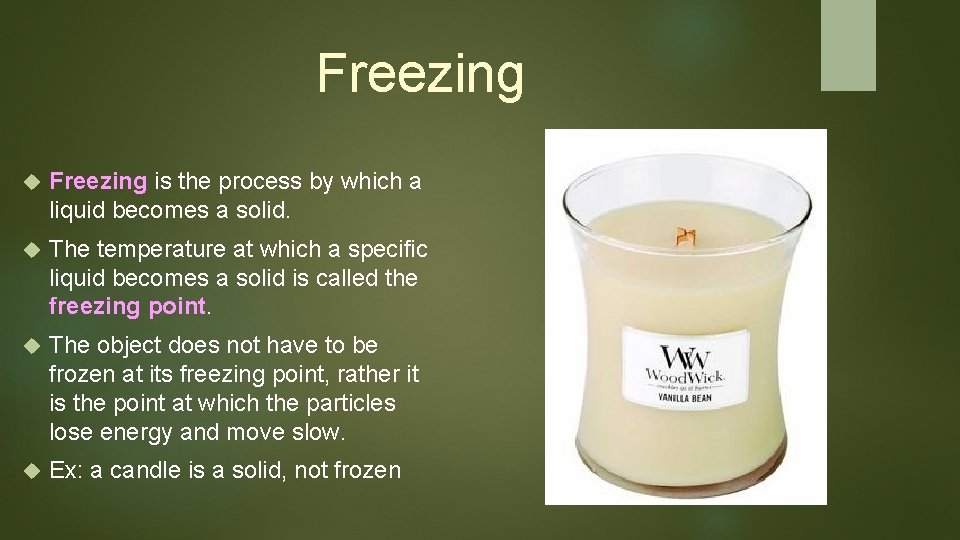
Freezing is the process by which a liquid becomes a solid. The temperature at which a specific liquid becomes a solid is called the freezing point. The object does not have to be frozen at its freezing point, rather it is the point at which the particles lose energy and move slow. Ex: a candle is a solid, not frozen
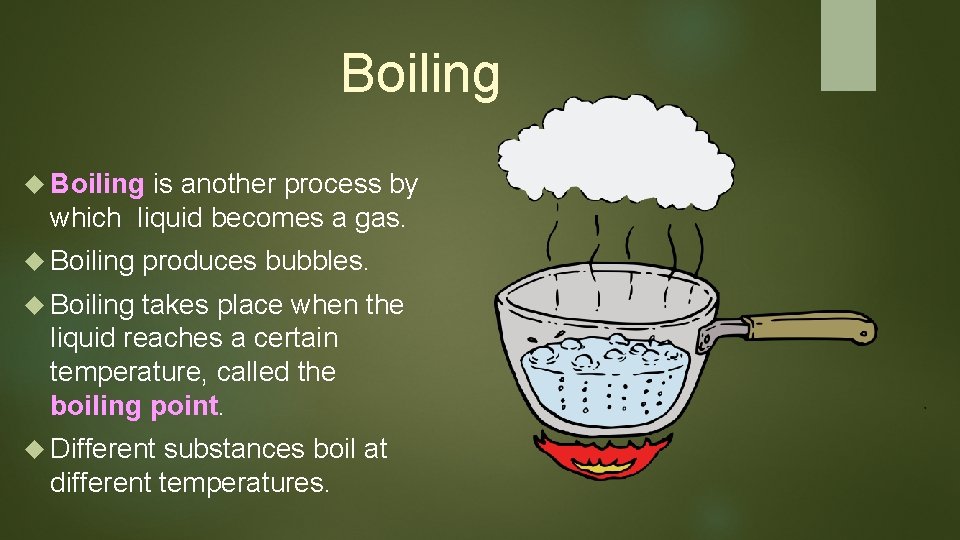
Boiling is another process by which liquid becomes a gas. Boiling produces bubbles. Boiling takes place when the liquid reaches a certain temperature, called the boiling point. Different substances boil at different temperatures.
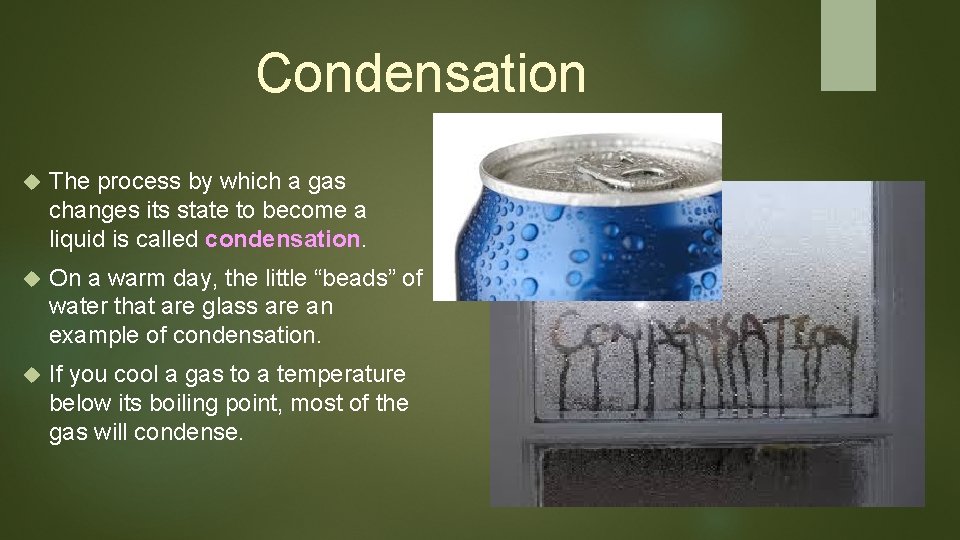
Condensation The process by which a gas changes its state to become a liquid is called condensation. On a warm day, the little “beads” of water that are glass are an example of condensation. If you cool a gas to a temperature below its boiling point, most of the gas will condense.