
Do it with electrons Microscopy Structure determines properties
- Slides: 30
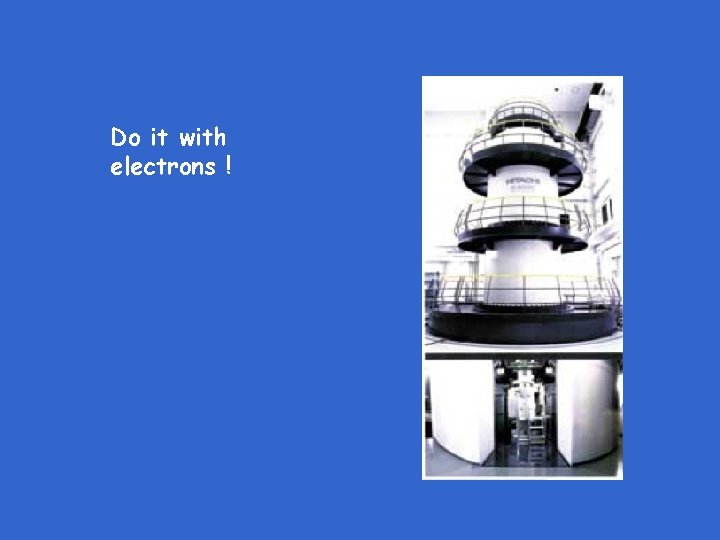
Do it with electrons !
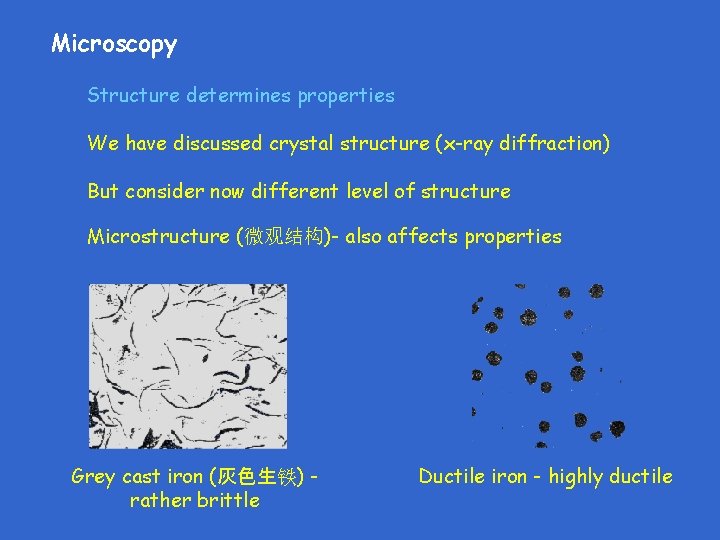
Microscopy Structure determines properties We have discussed crystal structure (x-ray diffraction) But consider now different level of structure Microstructure (微观结构)- also affects properties Grey cast iron (灰色生铁) rather brittle Ductile iron - highly ductile
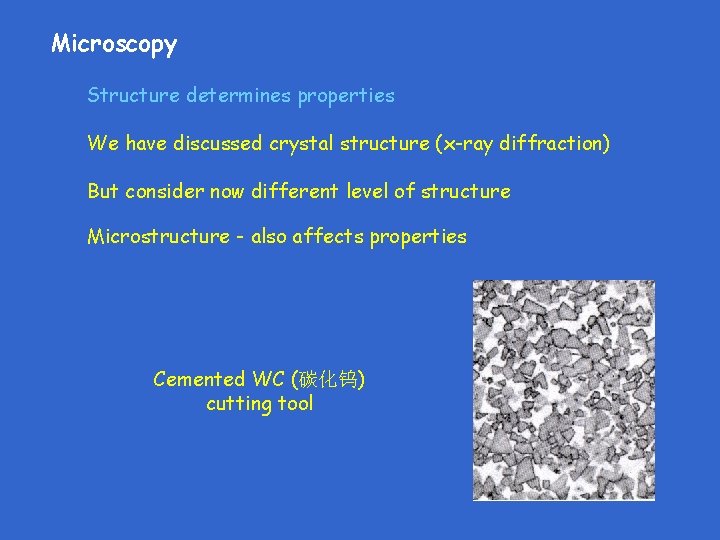
Microscopy Structure determines properties We have discussed crystal structure (x-ray diffraction) But consider now different level of structure Microstructure - also affects properties Cemented WC (碳化钨) cutting tool
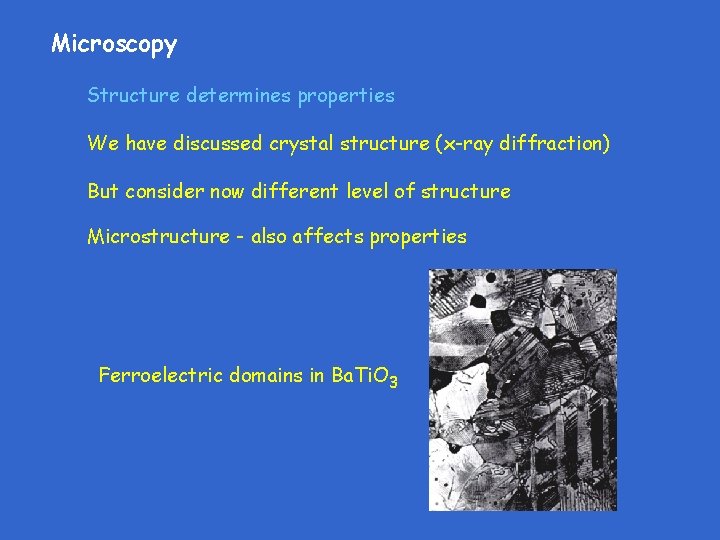
Microscopy Structure determines properties We have discussed crystal structure (x-ray diffraction) But consider now different level of structure Microstructure - also affects properties Ferroelectric domains in Ba. Ti. O 3
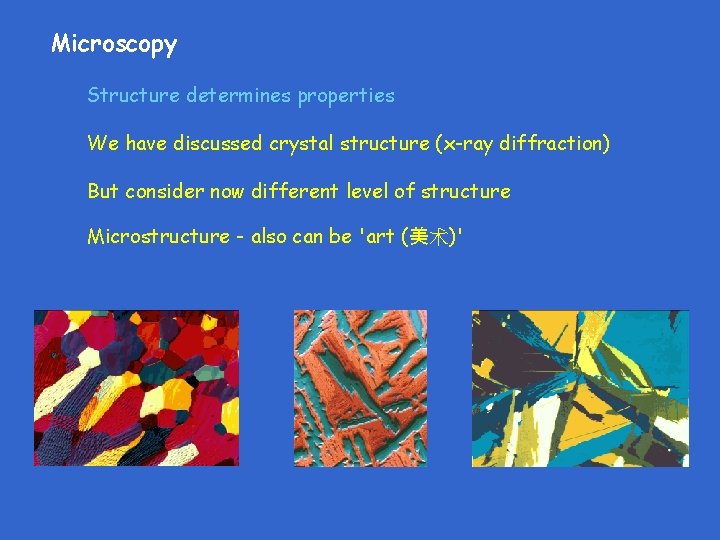
Microscopy Structure determines properties We have discussed crystal structure (x-ray diffraction) But consider now different level of structure Microstructure - also can be 'art (美术)'
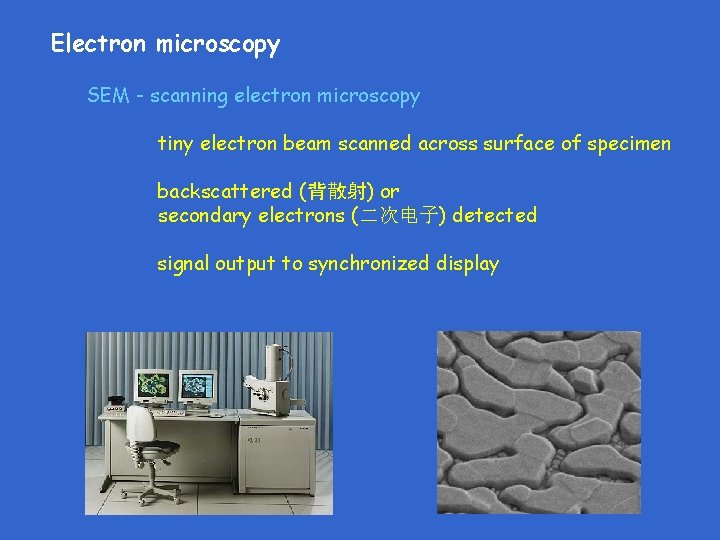
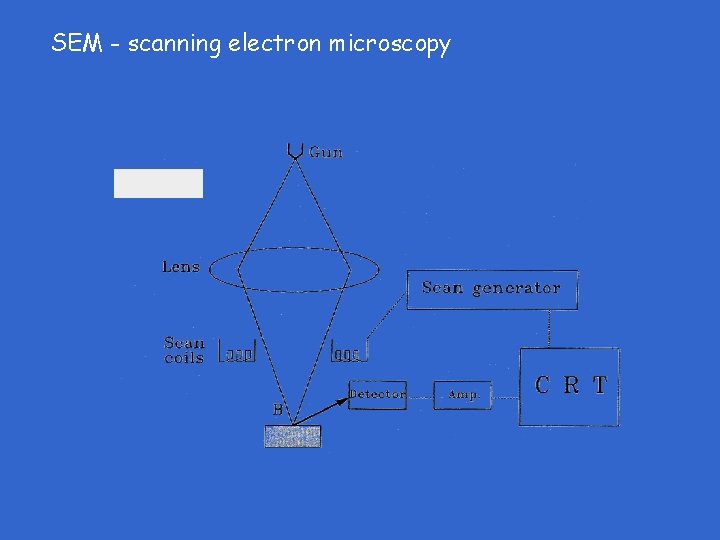
Electron microscopy SEM - scanning electron microscopy tiny electron beam scanned across surface of specimen backscattered (背散射) or secondary electrons (二次电子) detected signal output to synchronized display
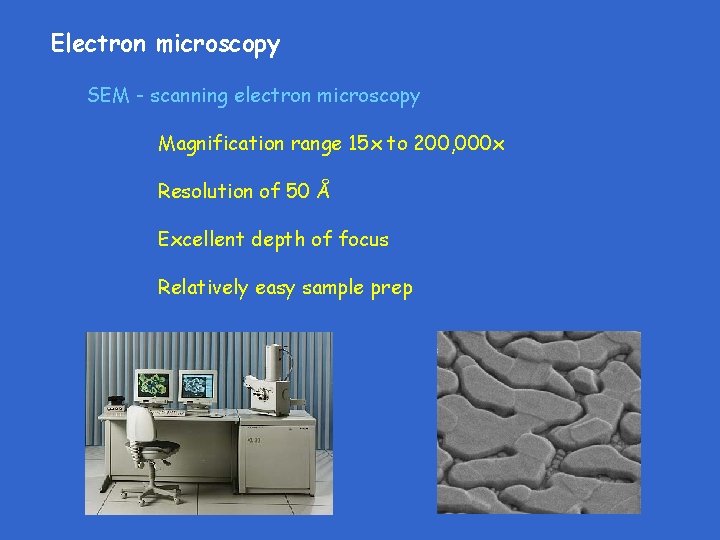
Electron microscopy SEM - scanning electron microscopy Magnification range 15 x to 200, 000 x Resolution of 50 Å Excellent depth of focus Relatively easy sample prep
SEM - scanning electron microscopy
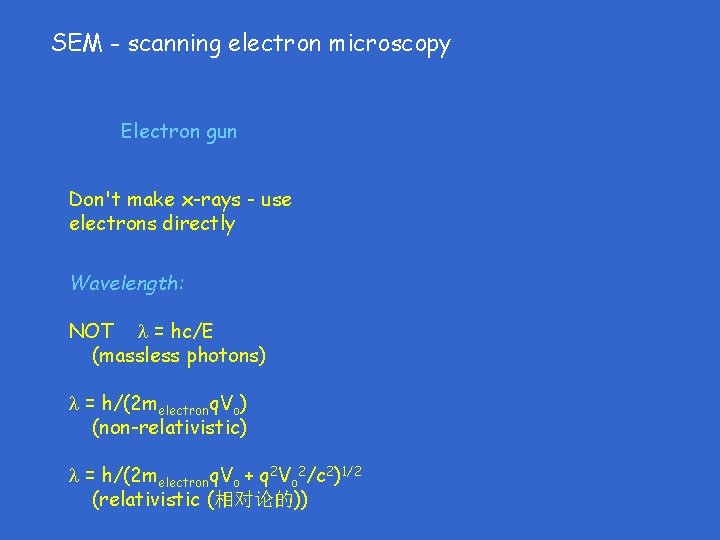
SEM - scanning electron microscopy Electron gun Don't make x-rays - use electrons directly Wavelength: NOT = hc/E (massless photons) = h/(2 melectronq. Vo) (non-relativistic) = h/(2 melectronq. Vo + q 2 Vo 2/c 2)1/2 (relativistic (相对论的))
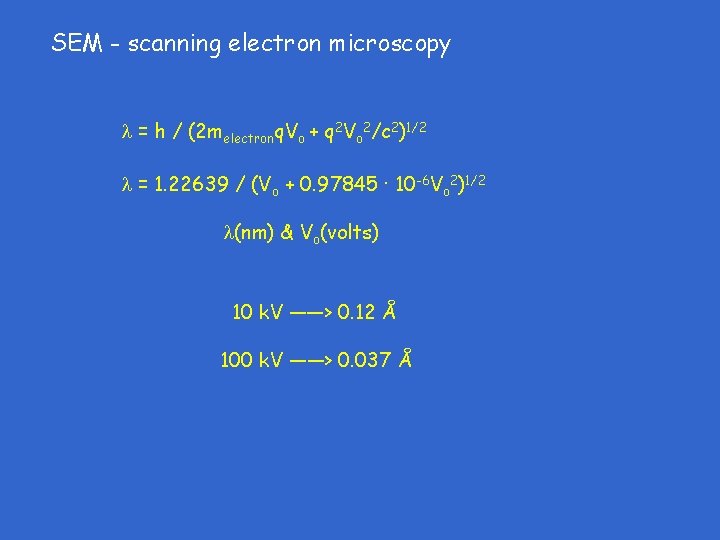
SEM - scanning electron microscopy = h / (2 melectronq. Vo + q 2 Vo 2/c 2)1/2 = 1. 22639 / (Vo + 0. 97845 · 10 -6 Vo 2)1/2 (nm) & Vo(volts) 10 k. V ——> 0. 12 Å 100 k. V ——> 0. 037 Å
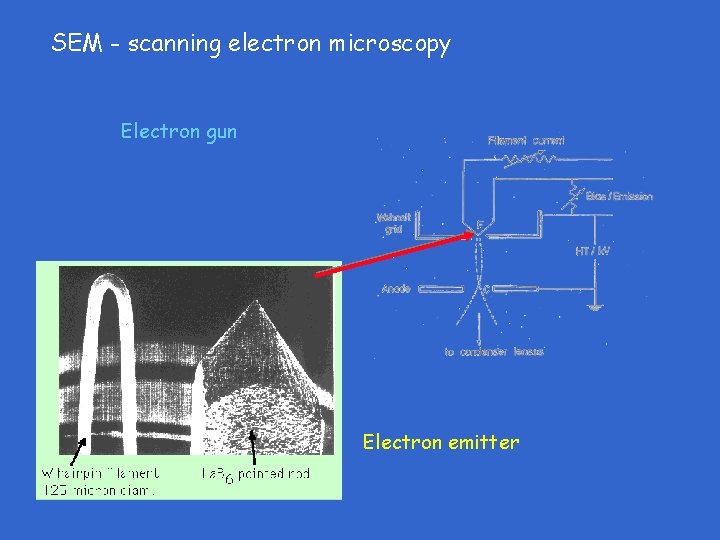
SEM - scanning electron microscopy Electron gun Electron emitter
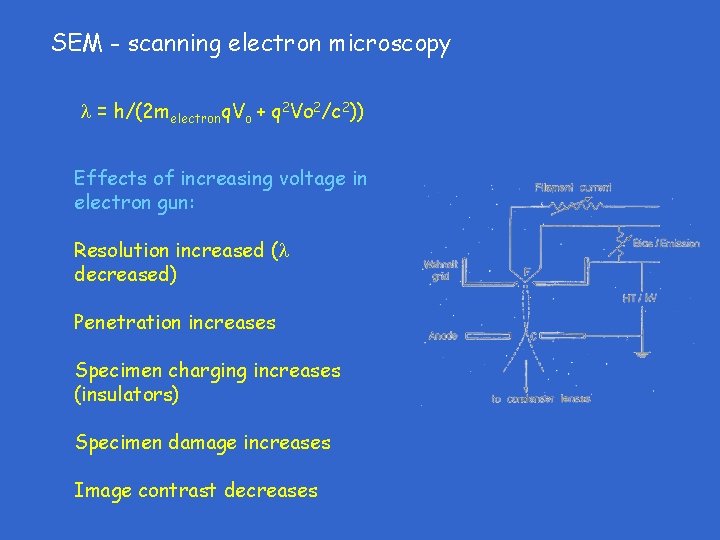
SEM - scanning electron microscopy = h/(2 melectronq. Vo + q 2 Vo 2/c 2)) Effects of increasing voltage in electron gun: Resolution increased ( decreased) Penetration increases Specimen charging increases (insulators) Specimen damage increases Image contrast decreases
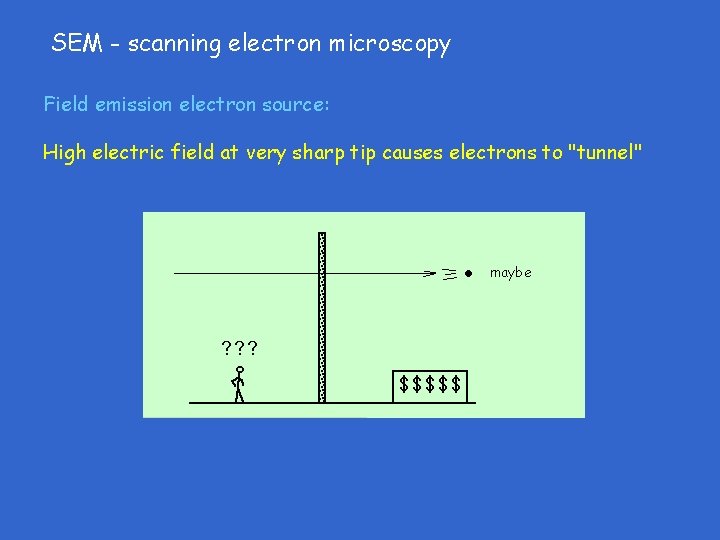
SEM - scanning electron microscopy Field emission electron source: High electric field at very sharp tip causes electrons to "tunnel" maybe
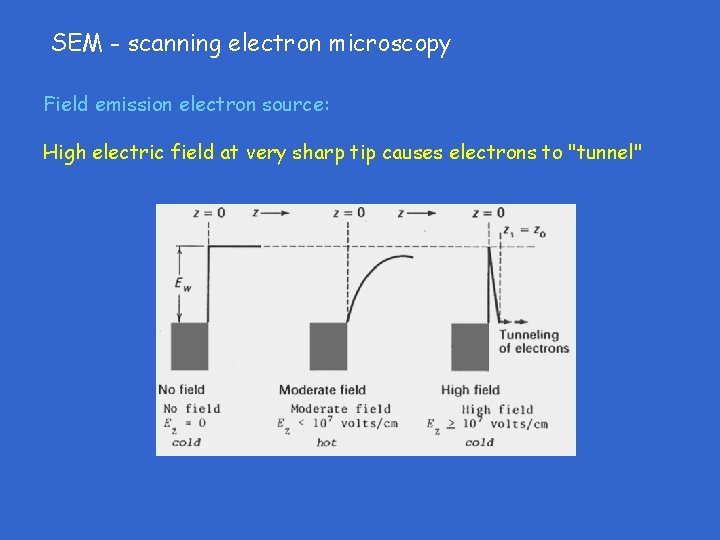
SEM - scanning electron microscopy Field emission electron source: High electric field at very sharp tip causes electrons to "tunnel"
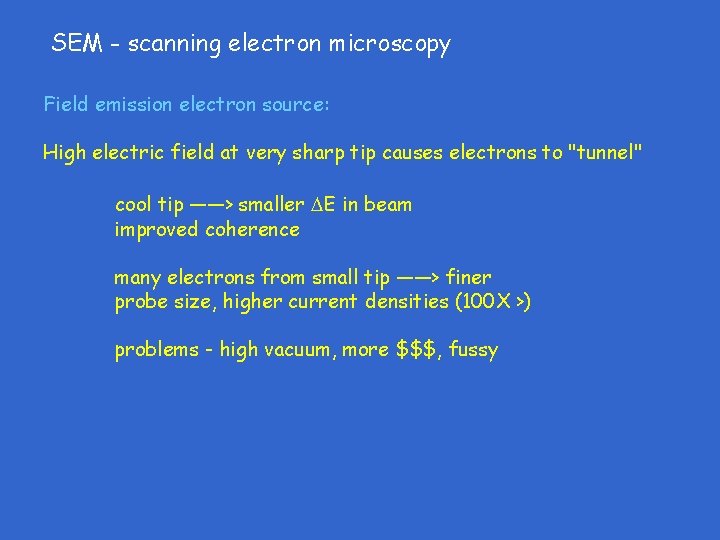
SEM - scanning electron microscopy Field emission electron source: High electric field at very sharp tip causes electrons to "tunnel" cool tip ——> smaller E in beam improved coherence many electrons from small tip ——> finer probe size, higher current densities (100 X >) problems - high vacuum, more $$$, fussy
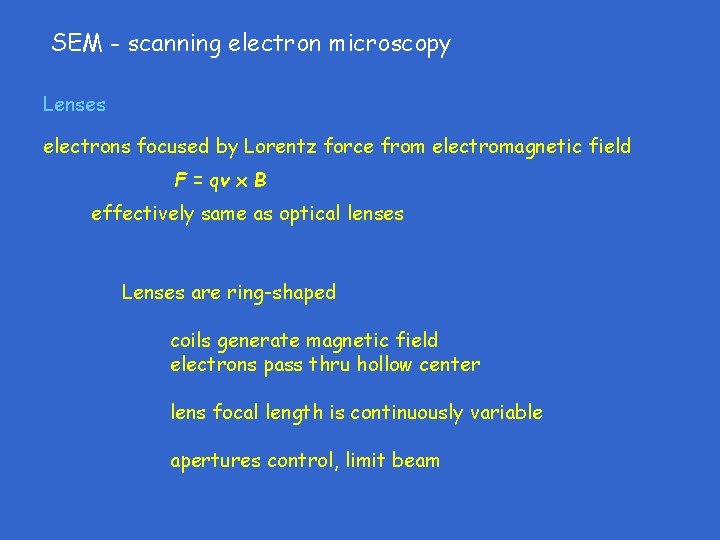
SEM - scanning electron microscopy Lenses electrons focused by Lorentz force from electromagnetic field F = qv x B effectively same as optical lenses Lenses are ring-shaped coils generate magnetic field electrons pass thru hollow center lens focal length is continuously variable apertures control, limit beam
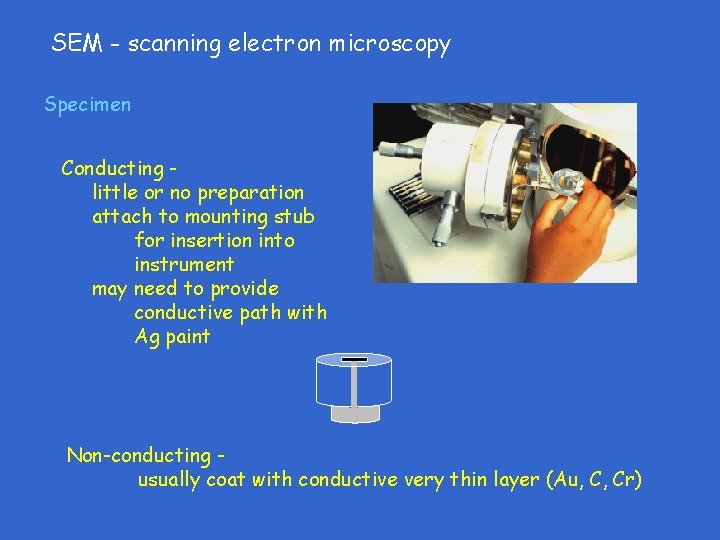
SEM - scanning electron microscopy Specimen Conducting little or no preparation attach to mounting stub for insertion into instrument may need to provide conductive path with Ag paint Non-conducting usually coat with conductive very thin layer (Au, C, Cr)
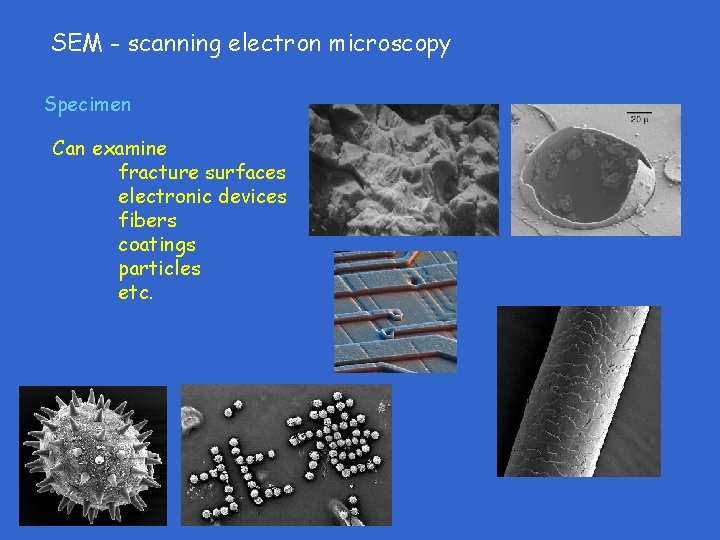
SEM - scanning electron microscopy Specimen Can examine fracture surfaces electronic devices fibers coatings particles etc.
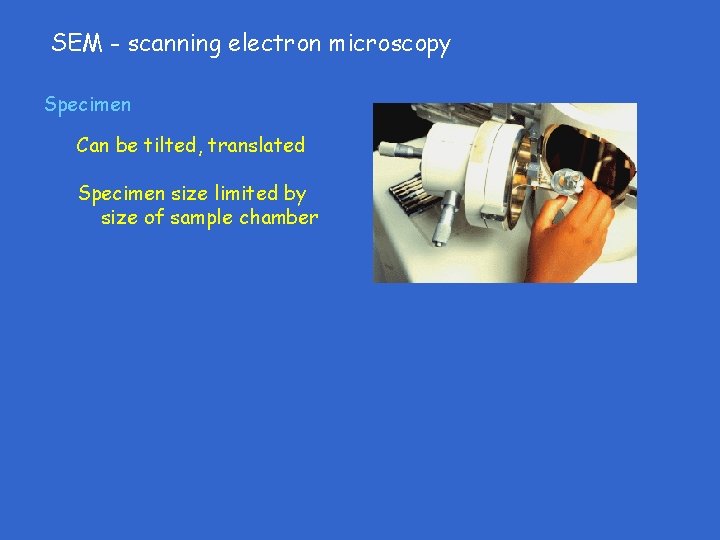
SEM - scanning electron microscopy Specimen Can be tilted, translated Specimen size limited by size of sample chamber
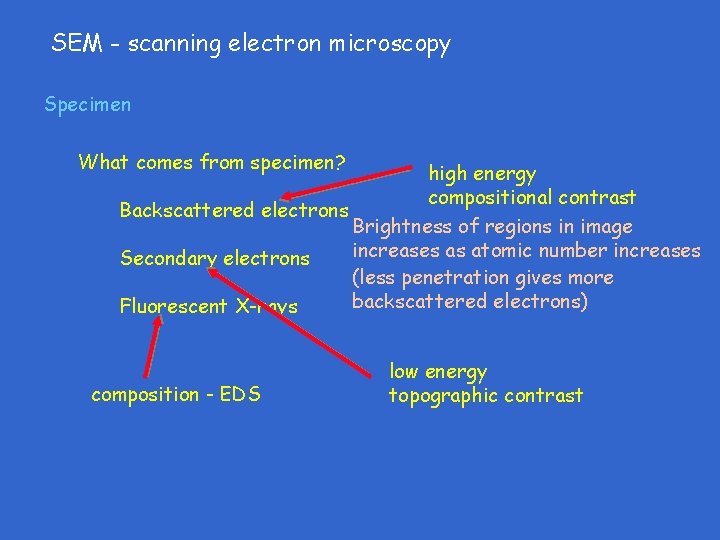
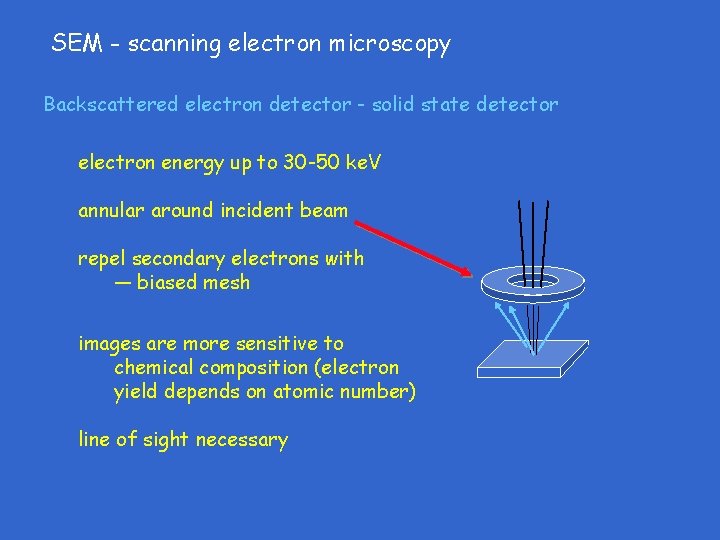
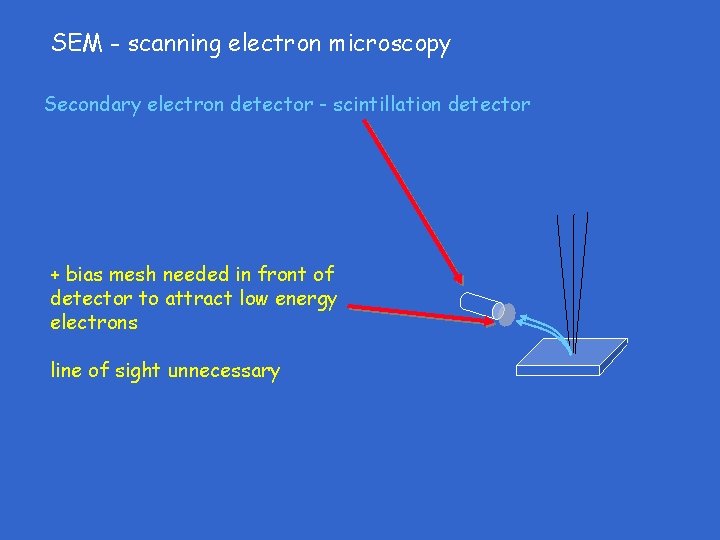
SEM - scanning electron microscopy Specimen What comes from specimen? high energy compositional contrast Backscattered electrons Brightness of regions in image increases as atomic number increases Secondary electrons (less penetration gives more backscattered electrons) Fluorescent X-rays composition - EDS low energy topographic contrast
SEM - scanning electron microscopy Backscattered electron detector - solid state detector electron energy up to 30 -50 ke. V annular around incident beam repel secondary electrons with — biased mesh images are more sensitive to chemical composition (electron yield depends on atomic number) line of sight necessary
SEM - scanning electron microscopy Secondary electron detector - scintillation detector + bias mesh needed in front of detector to attract low energy electrons line of sight unnecessary
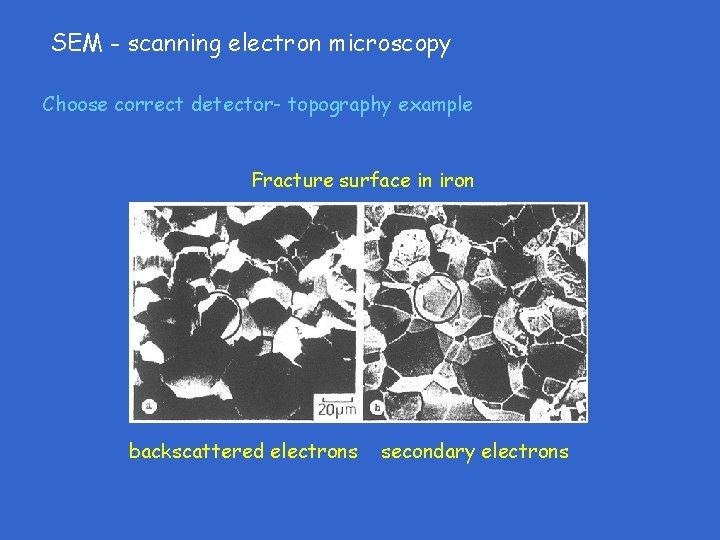
SEM - scanning electron microscopy Choose correct detector- topography example Fracture surface in iron backscattered electrons secondary electrons
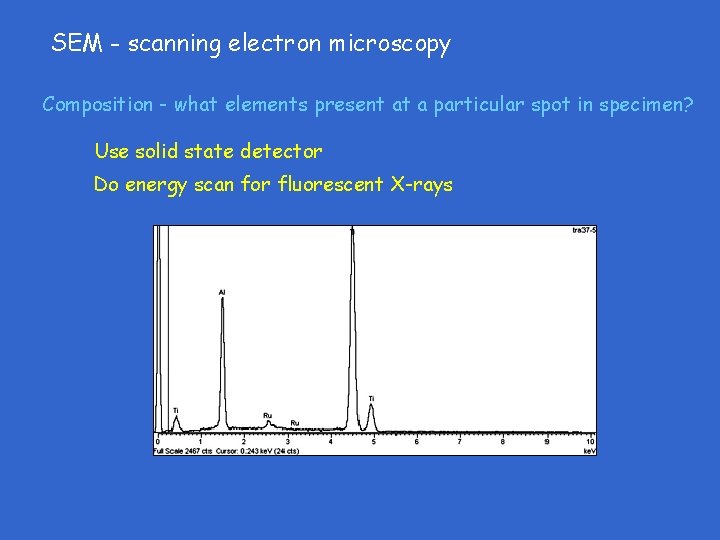
SEM - scanning electron microscopy Composition - what elements present at a particular spot in specimen? Use solid state detector Do energy scan for fluorescent X-rays
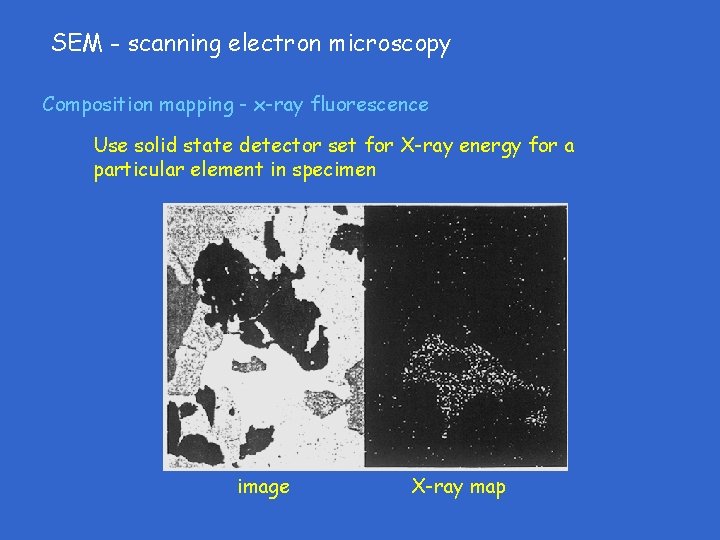
SEM - scanning electron microscopy Composition mapping - x-ray fluorescence Use solid state detector set for X-ray energy for a particular element in specimen image X-ray map
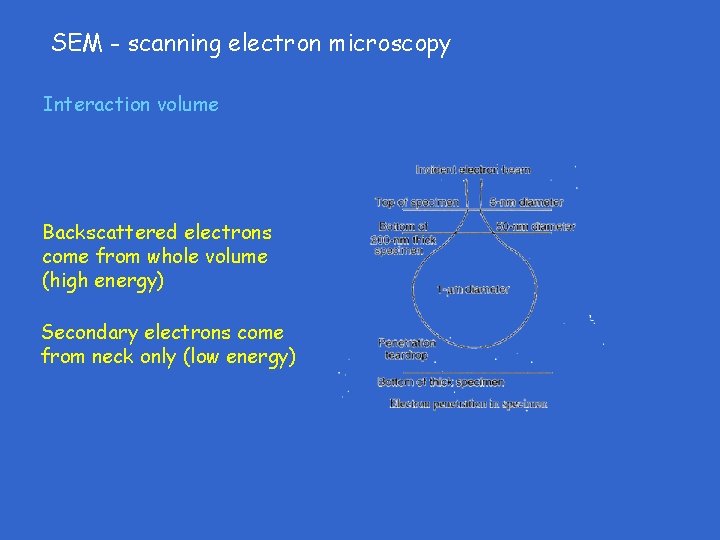
SEM - scanning electron microscopy Interaction volume Backscattered electrons come from whole volume (high energy) Secondary electrons come from neck only (low energy)
SEM - scanning electron microscopy Contrast Comes from any kind of interaction with electron beam topography composition elements phases grain (crystal) orientation charging affects contrast
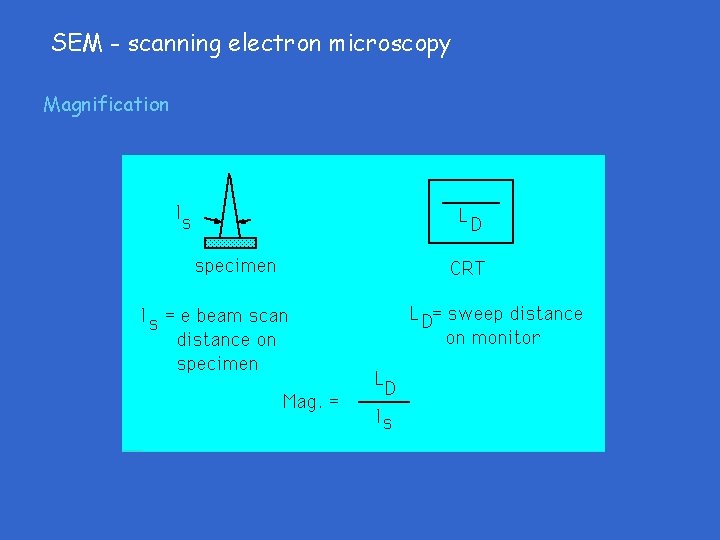
SEM - scanning electron microscopy Magnification
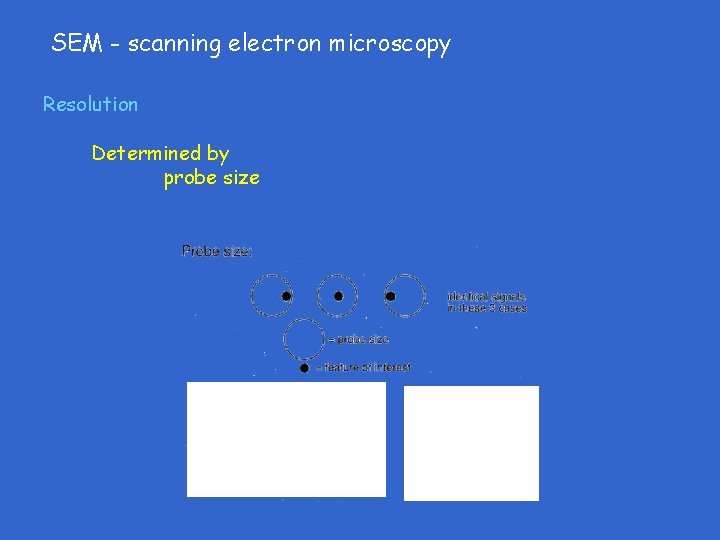
SEM - scanning electron microscopy Resolution Determined by probe size
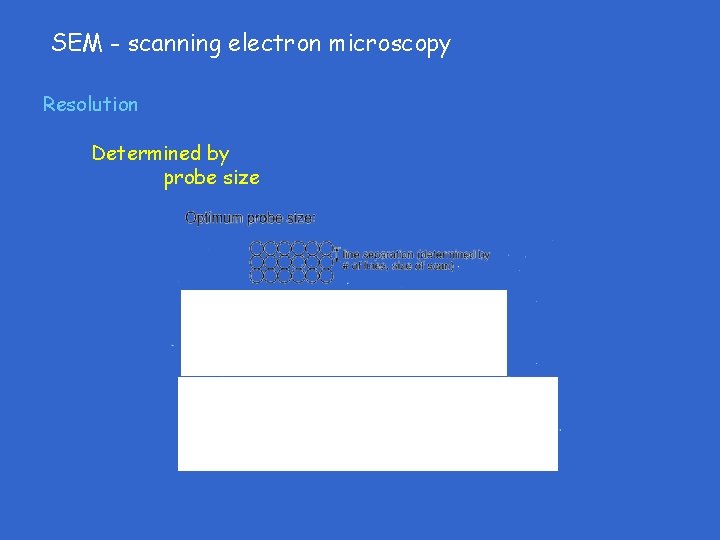
SEM - scanning electron microscopy Resolution Determined by probe size