
DNAs Structure Lecture 17 Ms Day Honors Biology
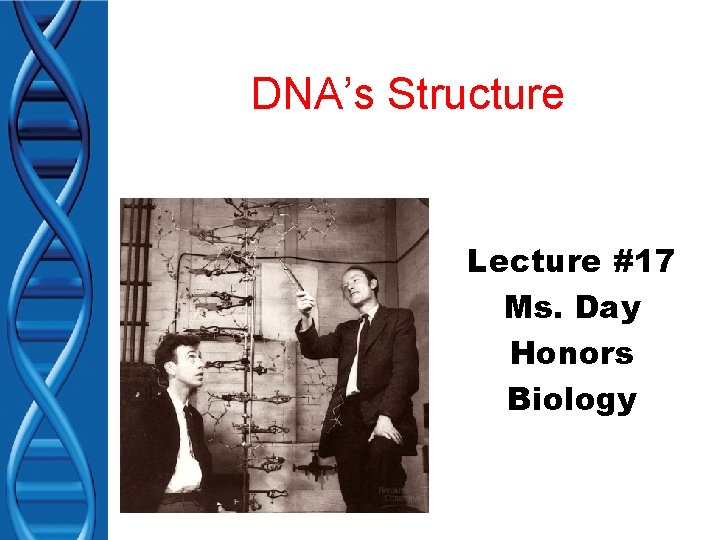
DNA’s Structure Lecture #17 Ms. Day Honors Biology
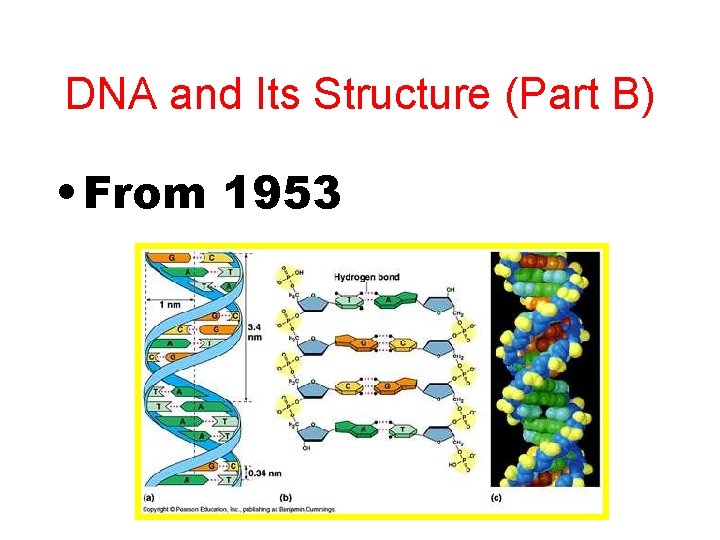
DNA and Its Structure (Part B) • From 1953
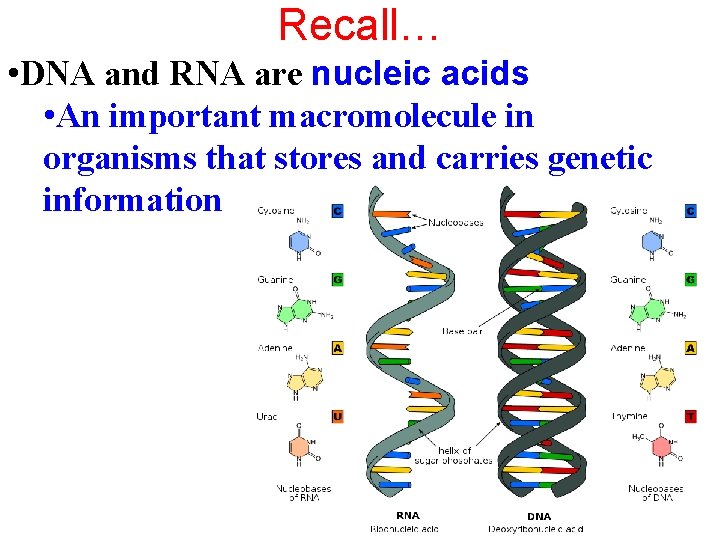
Recall… • DNA and RNA are nucleic acids • An important macromolecule in organisms that stores and carries genetic information
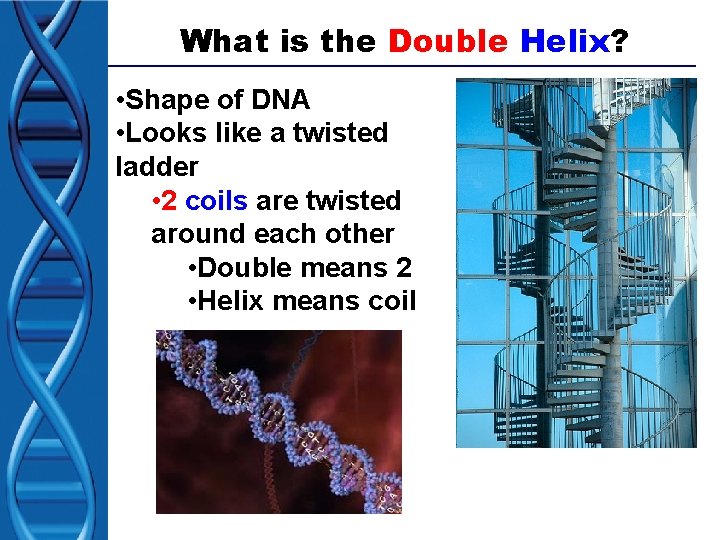
What is the Double Helix? • Shape of DNA • Looks like a twisted ladder • 2 coils are twisted around each other • Double means 2 • Helix means coil
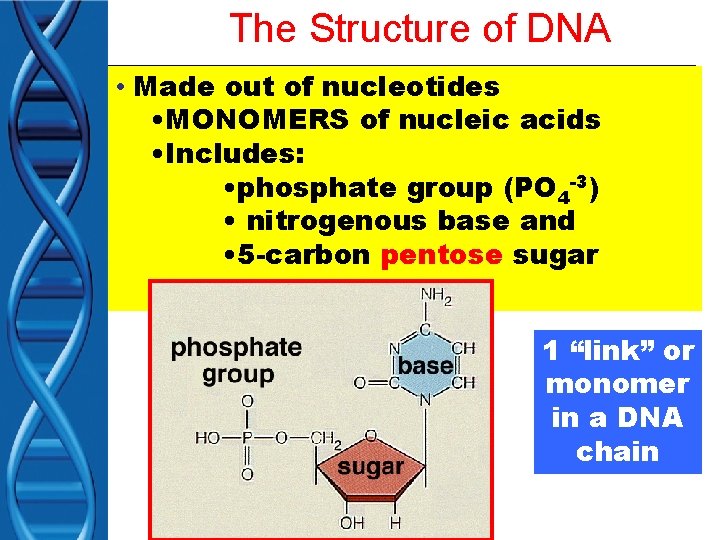
The Structure of DNA • Made out of nucleotides • MONOMERS of nucleic acids • Includes: • phosphate group (PO 4 -3) • nitrogenous base and • 5 -carbon pentose sugar 1 “link” or monomer in a DNA chain
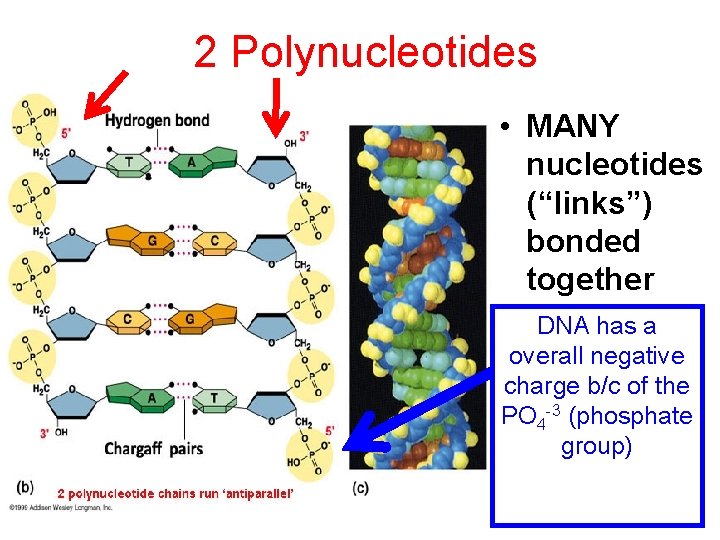
2 Polynucleotides • MANY nucleotides (“links”) bonded together DNA has a overall negative charge b/c of the PO 4 -3 (phosphate group)
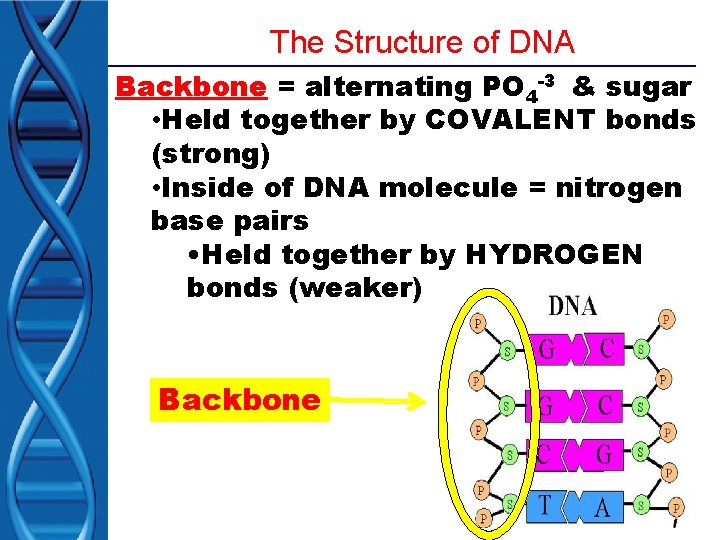
The Structure of DNA Backbone = alternating PO 4 -3 & sugar • Held together by COVALENT bonds (strong) • Inside of DNA molecule = nitrogen base pairs • Held together by HYDROGEN bonds (weaker) Backbone
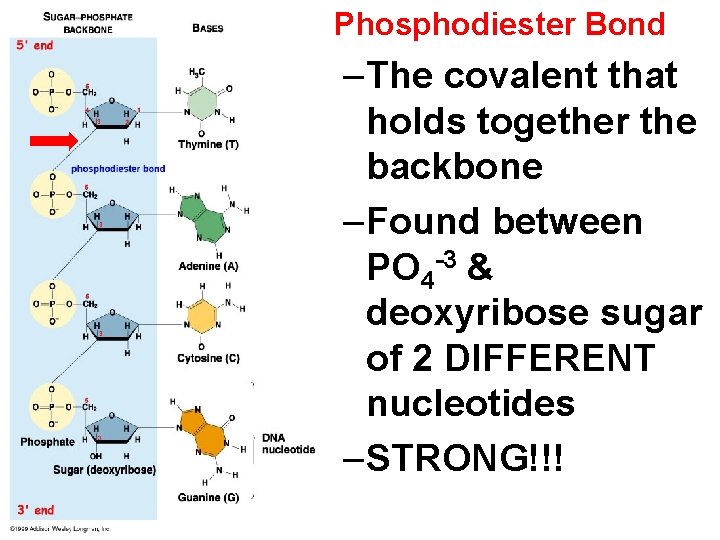
• Phosphodiester Bond –The covalent that holds together the backbone –Found between PO 4 -3 & deoxyribose sugar of 2 DIFFERENT nucleotides –STRONG!!!
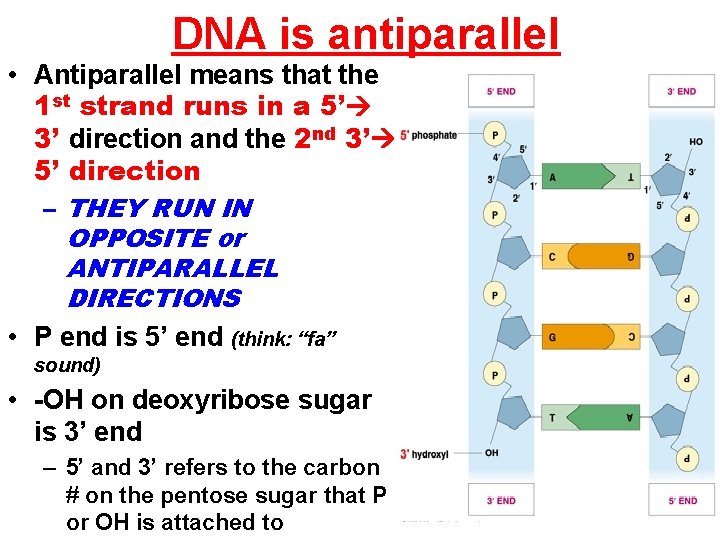
DNA is antiparallel • Antiparallel means that the 1 st strand runs in a 5’ 3’ direction and the 2 nd 3’ 5’ direction – THEY RUN IN OPPOSITE or ANTIPARALLEL DIRECTIONS • P end is 5’ end (think: “fa” sound) • -OH on deoxyribose sugar is 3’ end – 5’ and 3’ refers to the carbon # on the pentose sugar that P or OH is attached to
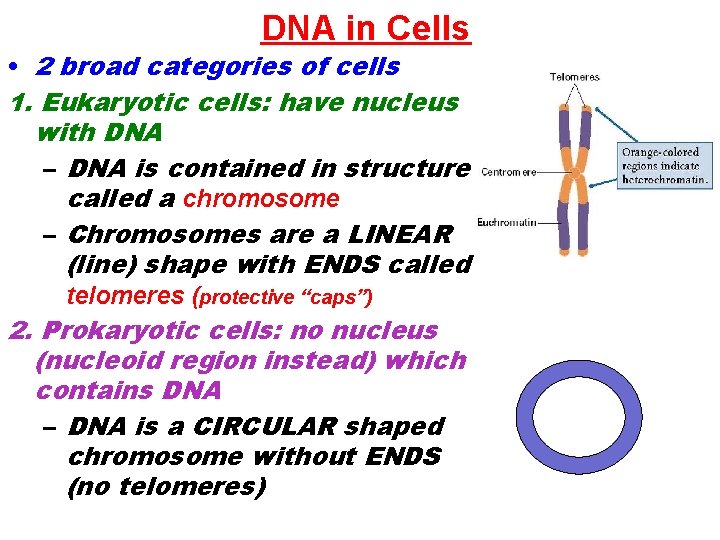
DNA in Cells • 2 broad categories of cells 1. Eukaryotic cells: have nucleus with DNA – DNA is contained in structure called a chromosome – Chromosomes are a LINEAR (line) shape with ENDS called telomeres (protective “caps”) 2. Prokaryotic cells: no nucleus (nucleoid region instead) which contains DNA – DNA is a CIRCULAR shaped chromosome without ENDS (no telomeres)
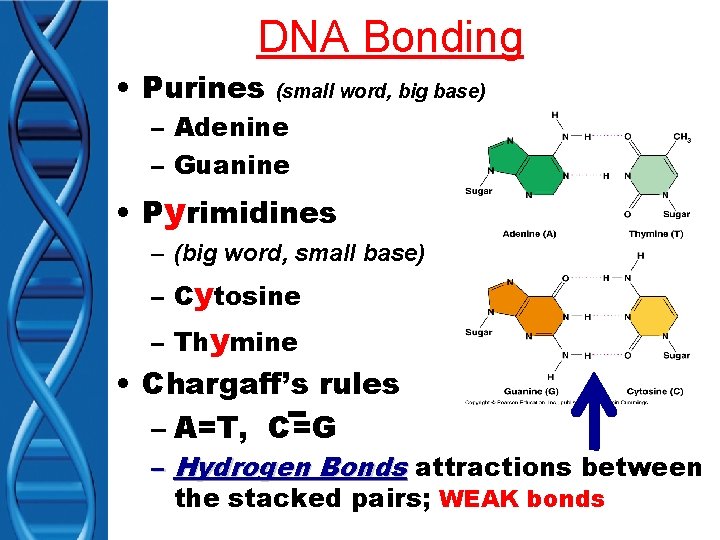
DNA Bonding • Purines (small word, big base) – Adenine – Guanine • Pyrimidines – (big word, small base) – Cytosine – Thymine • Chargaff’s rules – A=T, C=G – Hydrogen Bonds attractions between the stacked pairs; WEAK bonds
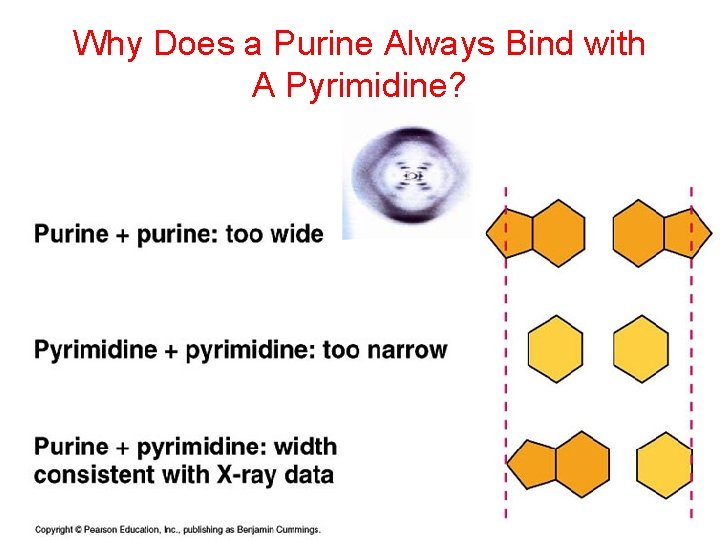
Why Does a Purine Always Bind with A Pyrimidine?
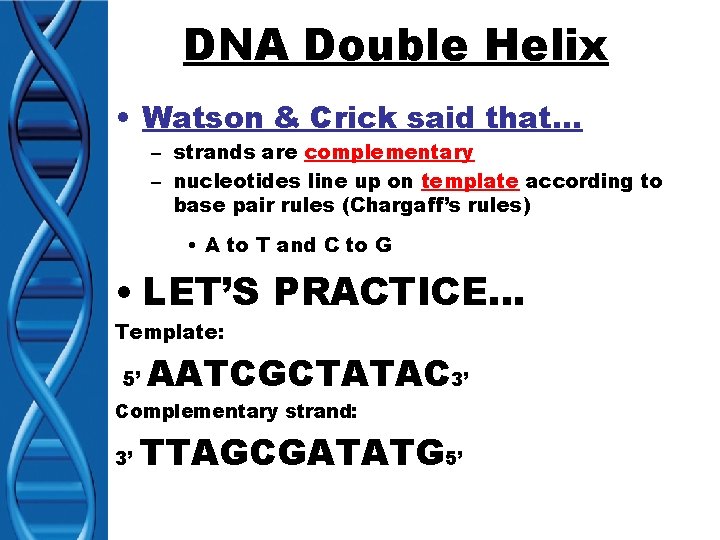
DNA Double Helix • Watson & Crick said that… – strands are complementary – nucleotides line up on template according to base pair rules (Chargaff’s rules) • A to T and C to G • LET’S PRACTICE… Template: 5’ AATCGCTATAC 3’ Complementary strand: 3’ TTAGCGATATG 5’
- Slides: 13