
DNA VIRUSES DNA genome replication strategies similar in
- Slides: 35
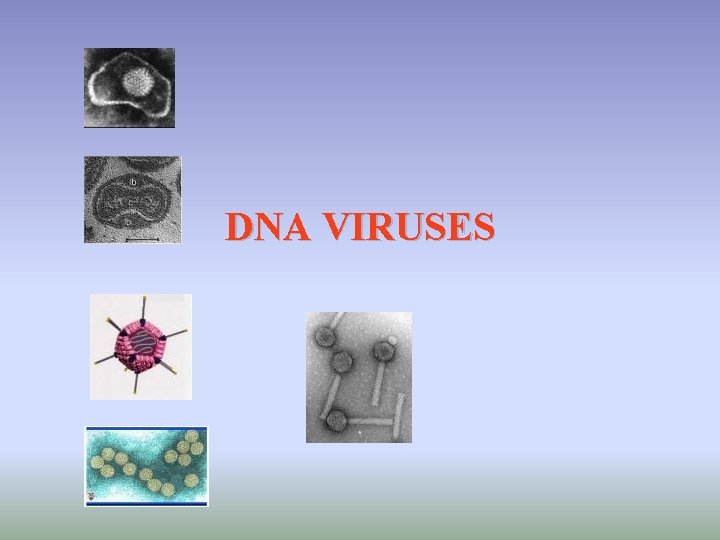
DNA VIRUSES
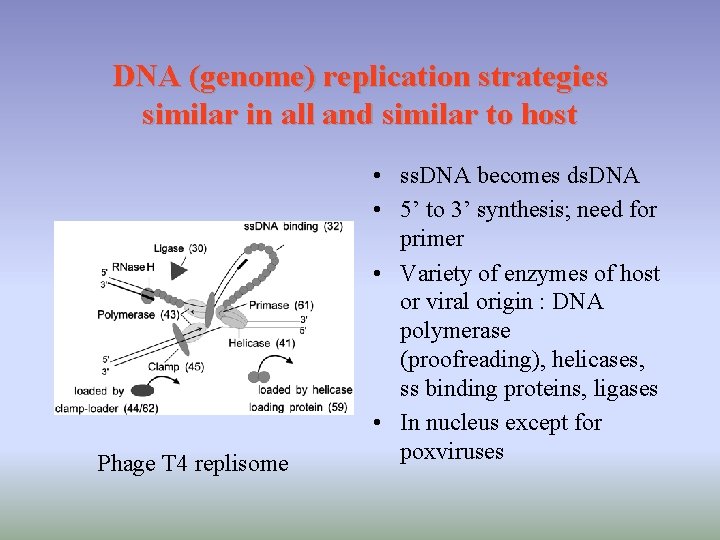
DNA (genome) replication strategies similar in all and similar to host Phage T 4 replisome • ss. DNA becomes ds. DNA • 5’ to 3’ synthesis; need for primer • Variety of enzymes of host or viral origin : DNA polymerase (proofreading), helicases, ss binding proteins, ligases • In nucleus except for poxviruses
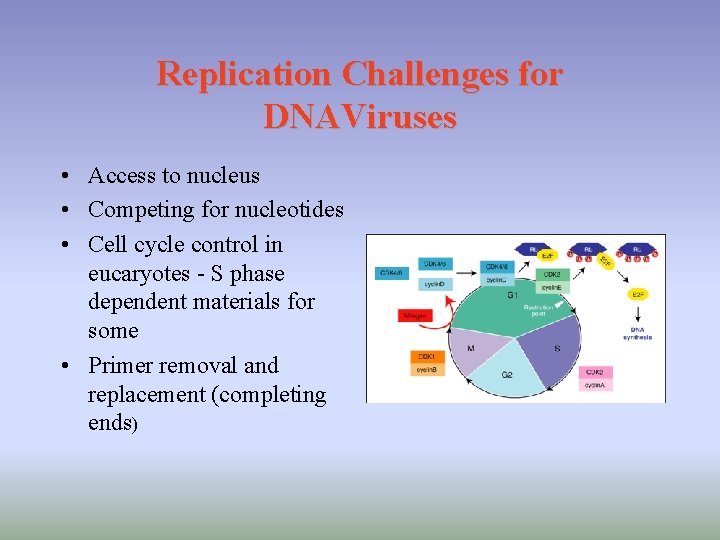
Replication Challenges for DNAViruses • Access to nucleus • Competing for nucleotides • Cell cycle control in eucaryotes - S phase dependent materials for some • Primer removal and replacement (completing ends)
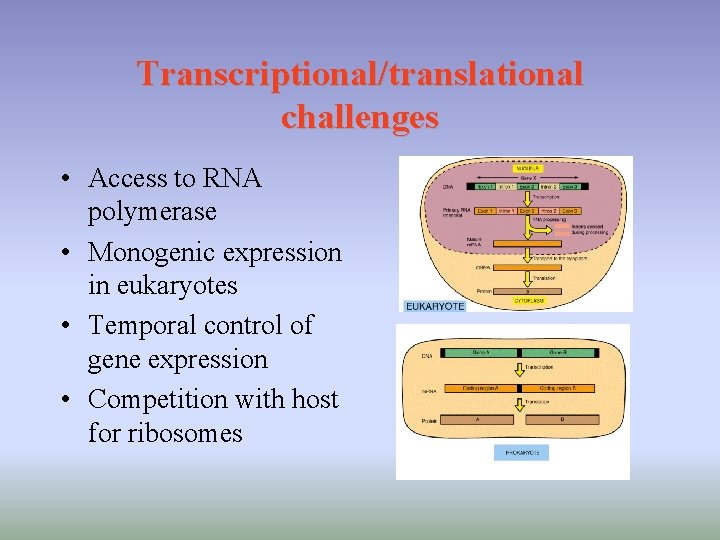
Transcriptional/translational challenges • Access to RNA polymerase • Monogenic expression in eukaryotes • Temporal control of gene expression • Competition with host for ribosomes
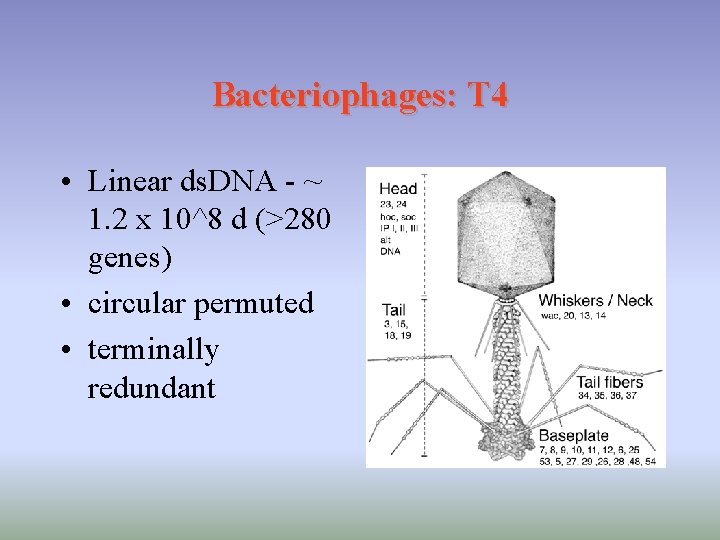
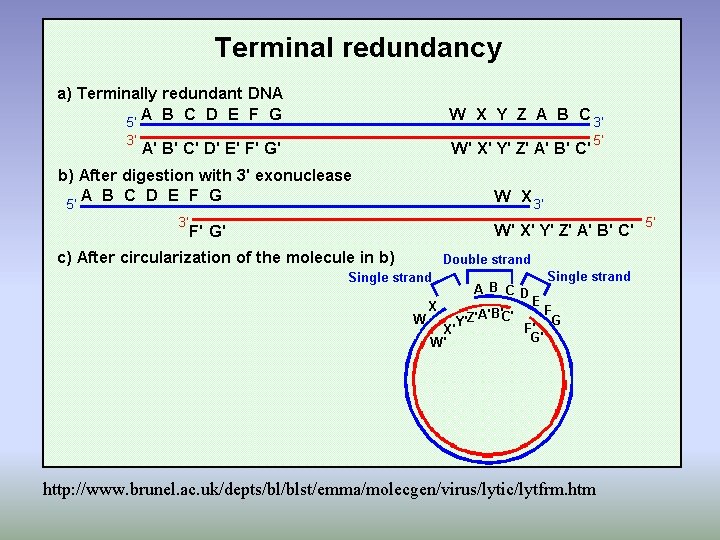
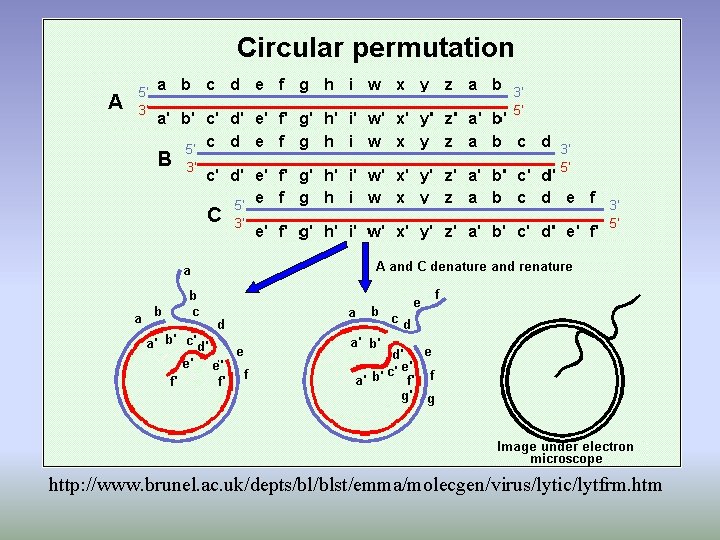
Bacteriophages: T 4 • Linear ds. DNA - ~ 1. 2 x 10^8 d (>280 genes) • circular permuted • terminally redundant
http: //www. brunel. ac. uk/depts/bl/blst/emma/molecgen/virus/lytic/lytfrm. htm
http: //www. brunel. ac. uk/depts/bl/blst/emma/molecgen/virus/lytic/lytfrm. htm
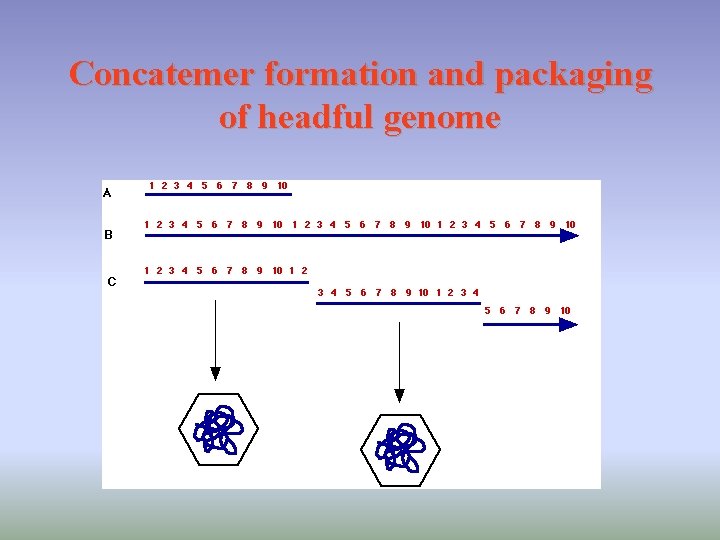
Concatemer formation and packaging of headful genome
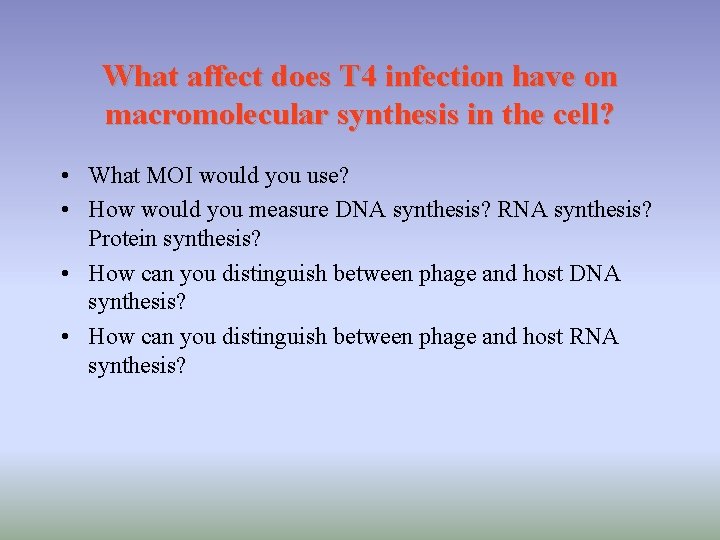
What affect does T 4 infection have on macromolecular synthesis in the cell? • What MOI would you use? • How would you measure DNA synthesis? RNA synthesis? Protein synthesis? • How can you distinguish between phage and host DNA synthesis? • How can you distinguish between phage and host RNA synthesis?
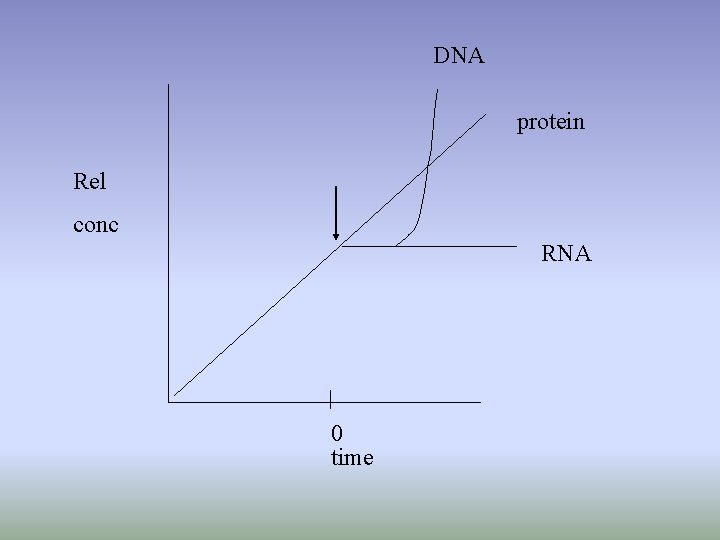
DNA protein Rel conc RNA 0 time
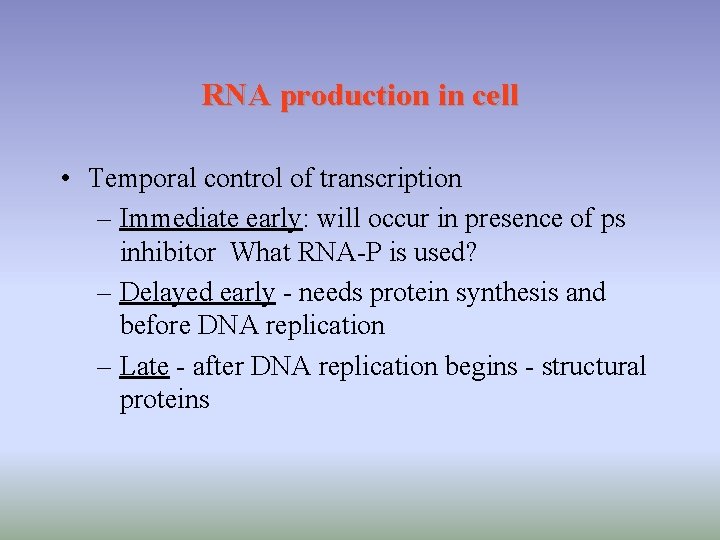
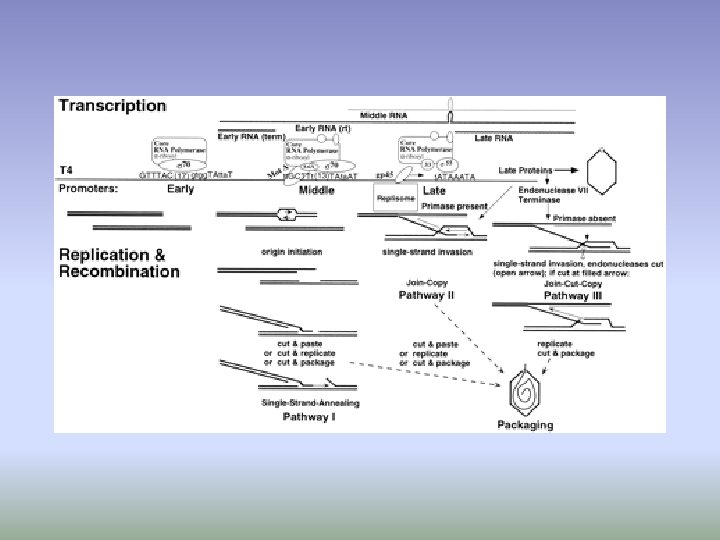
RNA production in cell • Temporal control of transcription – Immediate early: will occur in presence of ps inhibitor What RNA-P is used? – Delayed early - needs protein synthesis and before DNA replication – Late - after DNA replication begins - structural proteins
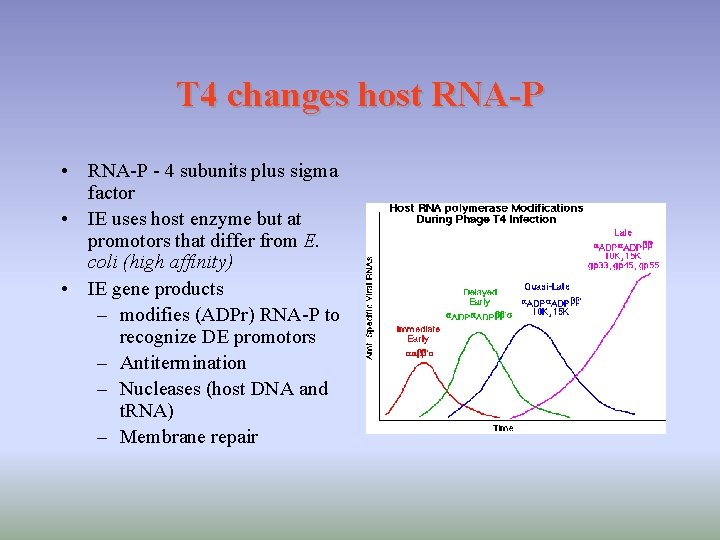
T 4 changes host RNA-P • RNA-P - 4 subunits plus sigma factor • IE uses host enzyme but at promotors that differ from E. coli (high affinity) • IE gene products – modifies (ADPr) RNA-P to recognize DE promotors – Antitermination – Nucleases (host DNA and t. RNA) – Membrane repair
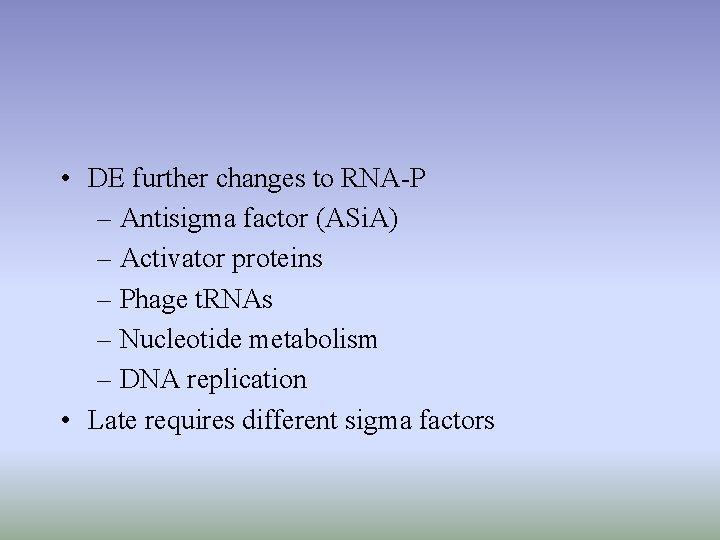
• DE further changes to RNA-P – Antisigma factor (ASi. A) – Activator proteins – Phage t. RNAs – Nucleotide metabolism – DNA replication • Late requires different sigma factors
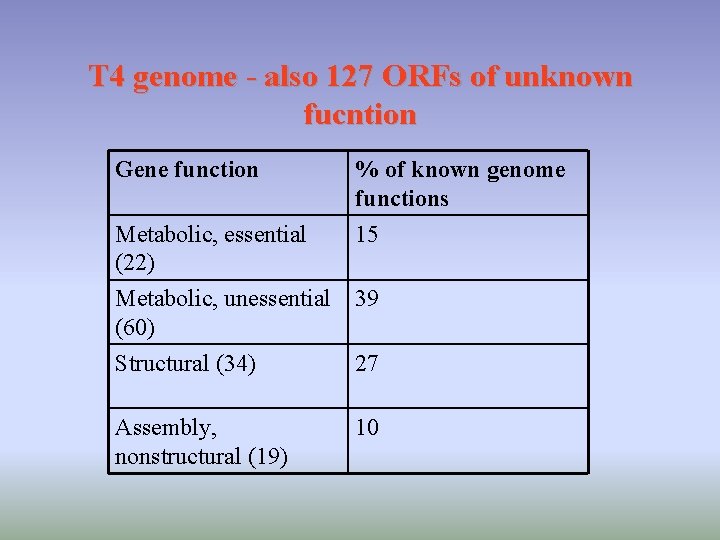
T 4 genome - also 127 ORFs of unknown fucntion Gene function % of known genome functions Metabolic, essential (22) 15 Metabolic, unessential (60) Structural (34) 39 Assembly, nonstructural (19) 10 27
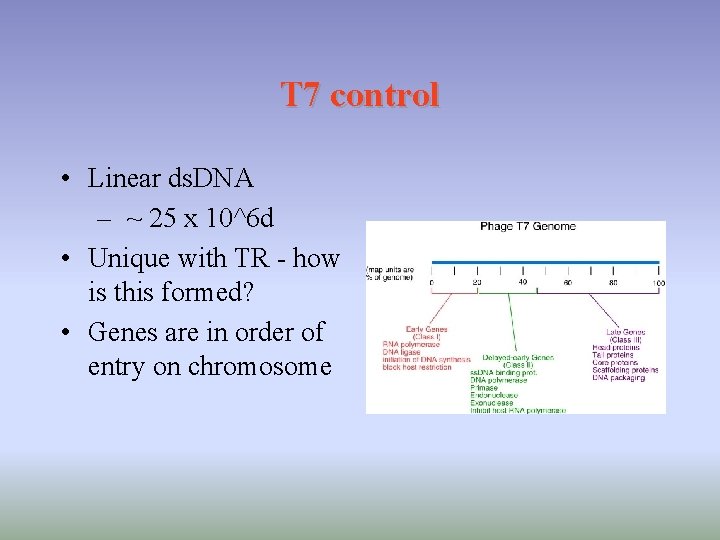
T 7 control • Linear ds. DNA – ~ 25 x 10^6 d • Unique with TR - how is this formed? • Genes are in order of entry on chromosome
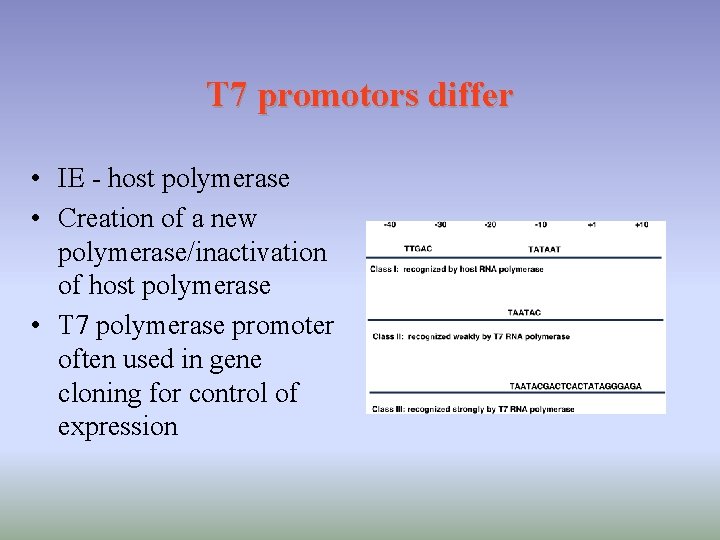
T 7 promotors differ • IE - host polymerase • Creation of a new polymerase/inactivation of host polymerase • T 7 polymerase promoter often used in gene cloning for control of expression
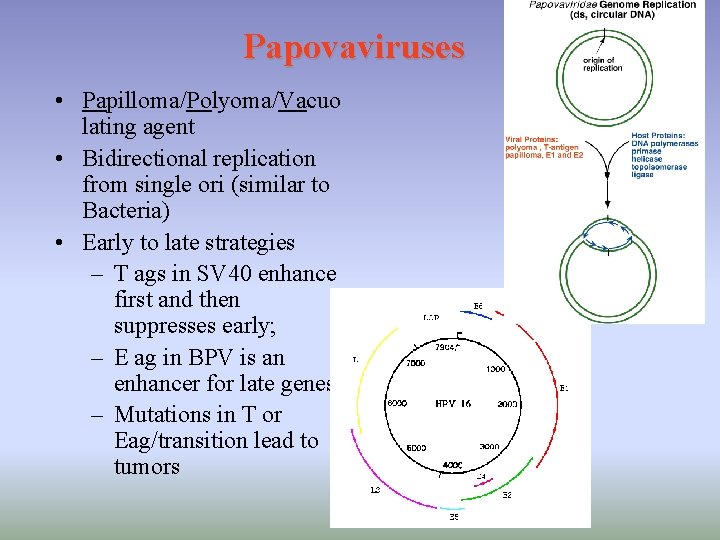
Papovaviruses • Papilloma/Polyoma/Vacuo lating agent • Bidirectional replication from single ori (similar to Bacteria) • Early to late strategies – T ags in SV 40 enhance first and then suppresses early; – E ag in BPV is an enhancer for late genes – Mutations in T or Eag/transition lead to tumors
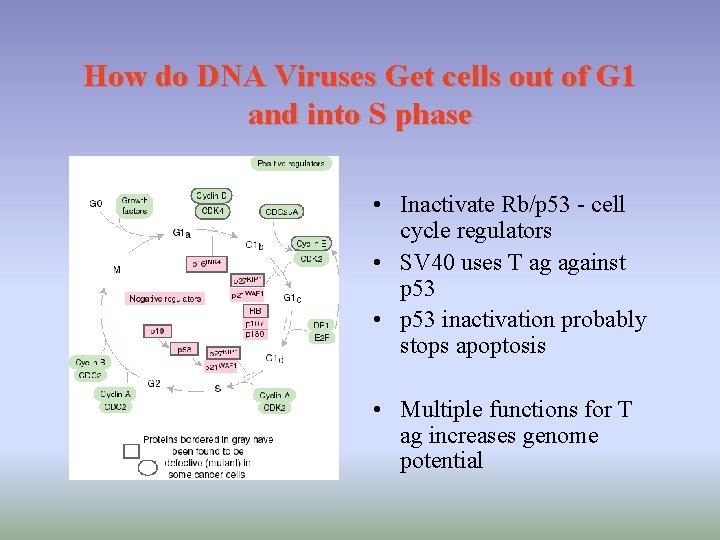
How do DNA Viruses Get cells out of G 1 and into S phase • Inactivate Rb/p 53 - cell cycle regulators • SV 40 uses T ag against p 53 • p 53 inactivation probably stops apoptosis • Multiple functions for T ag increases genome potential
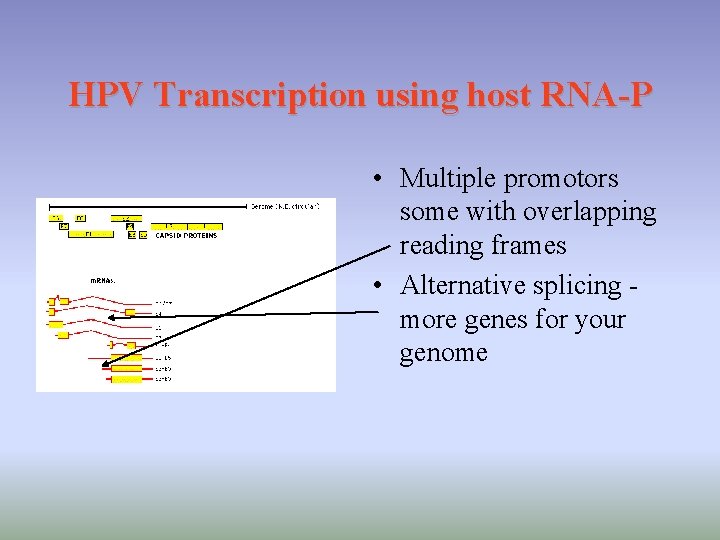
HPV Transcription using host RNA-P • Multiple promotors some with overlapping reading frames • Alternative splicing more genes for your genome
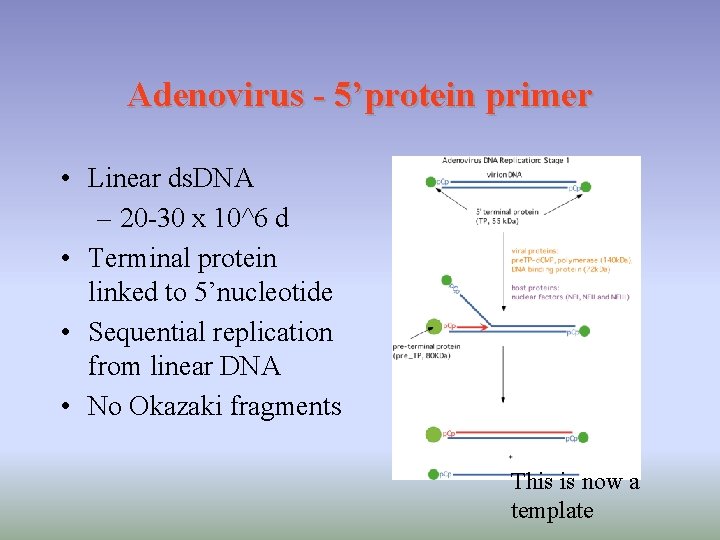
Adenovirus - 5’protein primer • Linear ds. DNA – 20 -30 x 10^6 d • Terminal protein linked to 5’nucleotide • Sequential replication from linear DNA • No Okazaki fragments This is now a template
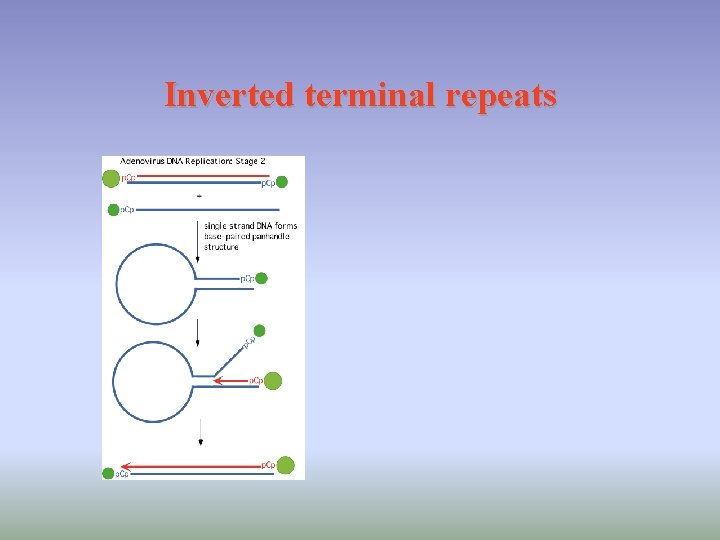
Inverted terminal repeats
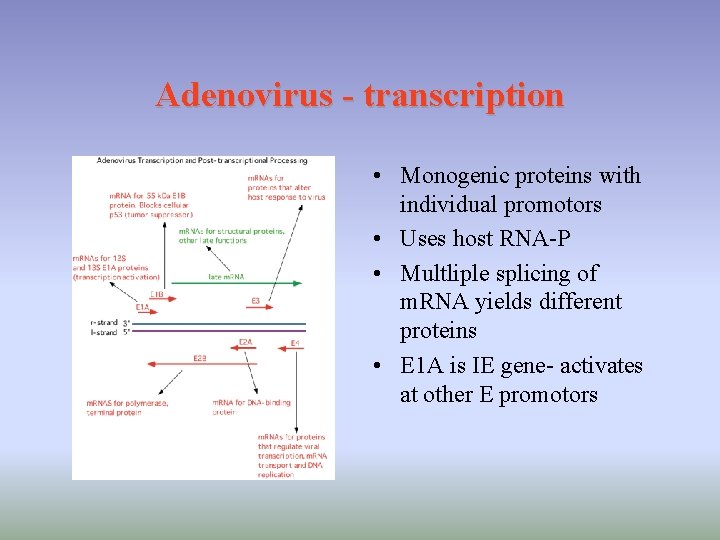
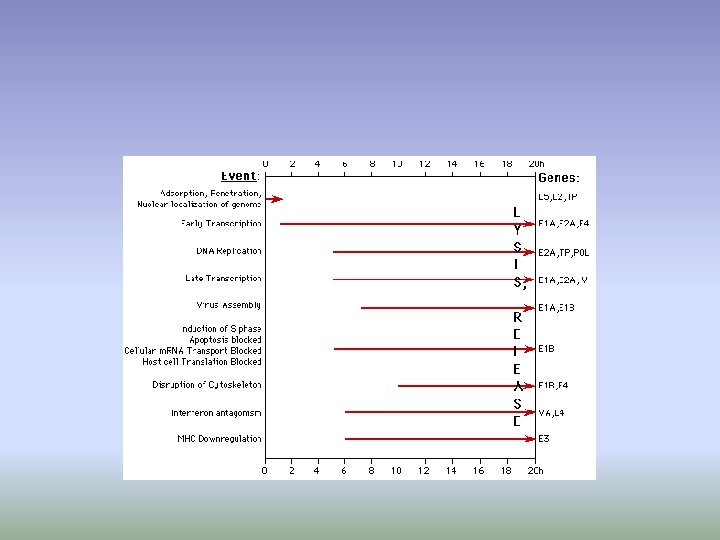
Adenovirus - transcription • Monogenic proteins with individual promotors • Uses host RNA-P • Multliple splicing of m. RNA yields different proteins • E 1 A is IE gene- activates at other E promotors
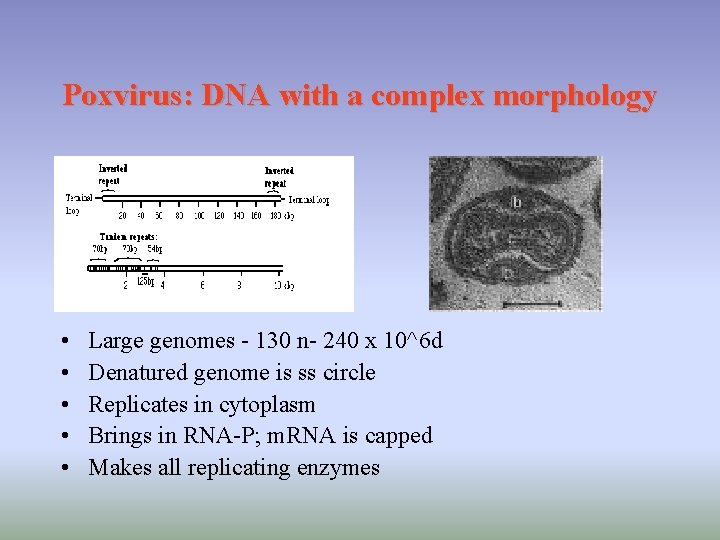
Poxvirus: DNA with a complex morphology • • • Large genomes - 130 n- 240 x 10^6 d Denatured genome is ss circle Replicates in cytoplasm Brings in RNA-P; m. RNA is capped Makes all replicating enzymes
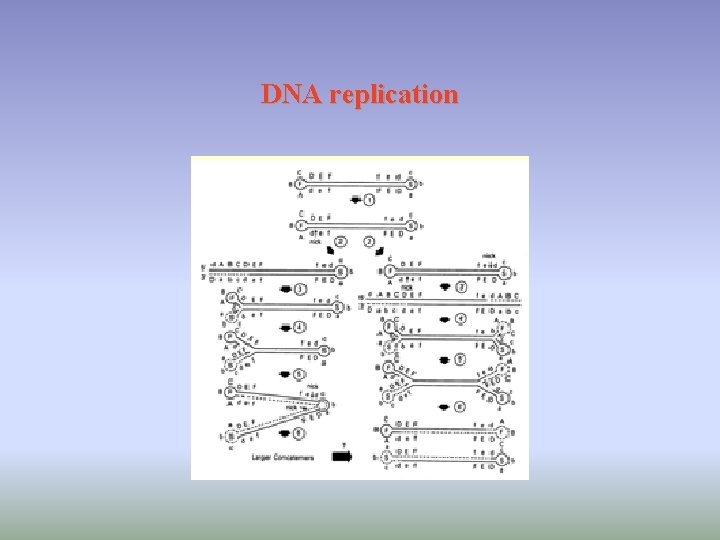
DNA replication
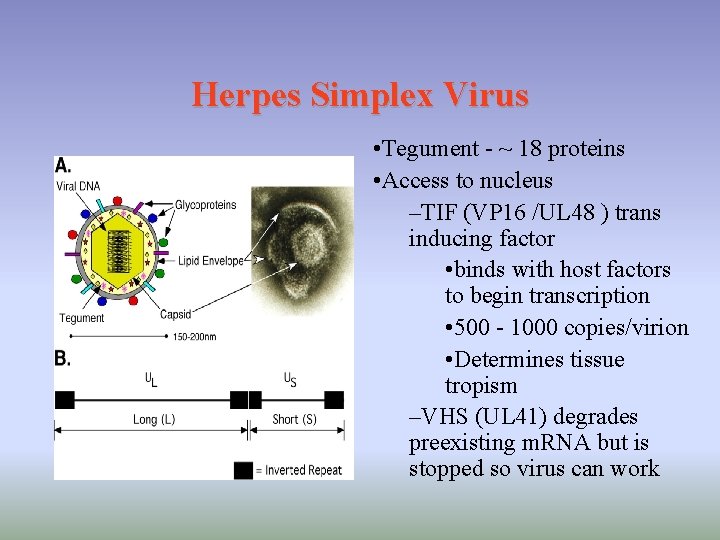
Herpes Simplex Virus • Tegument - ~ 18 proteins • Access to nucleus –TIF (VP 16 /UL 48 ) trans inducing factor • binds with host factors to begin transcription • 500 - 1000 copies/virion • Determines tissue tropism –VHS (UL 41) degrades preexisting m. RNA but is stopped so virus can work
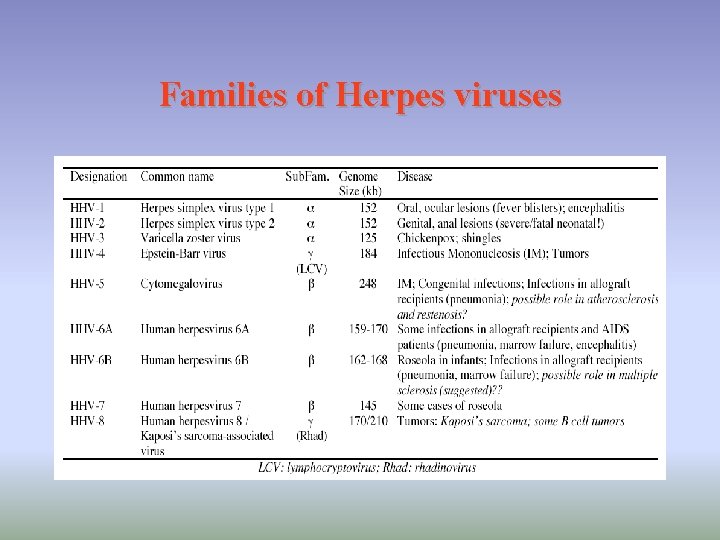
Families of Herpes viruses
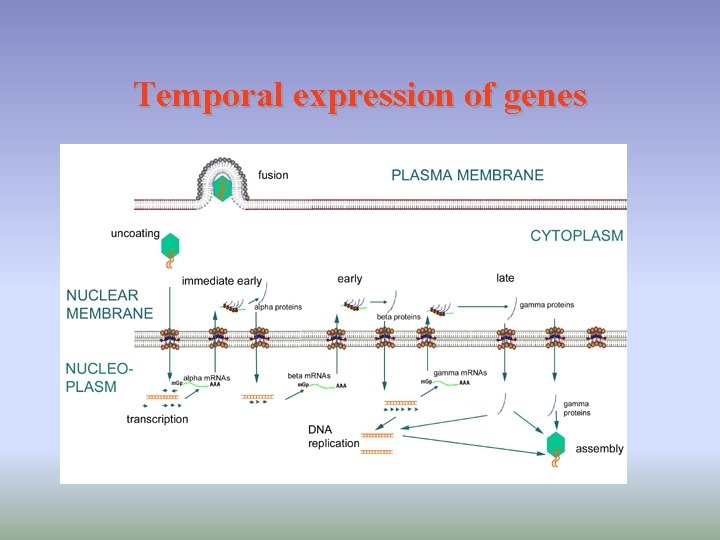
Temporal expression of genes
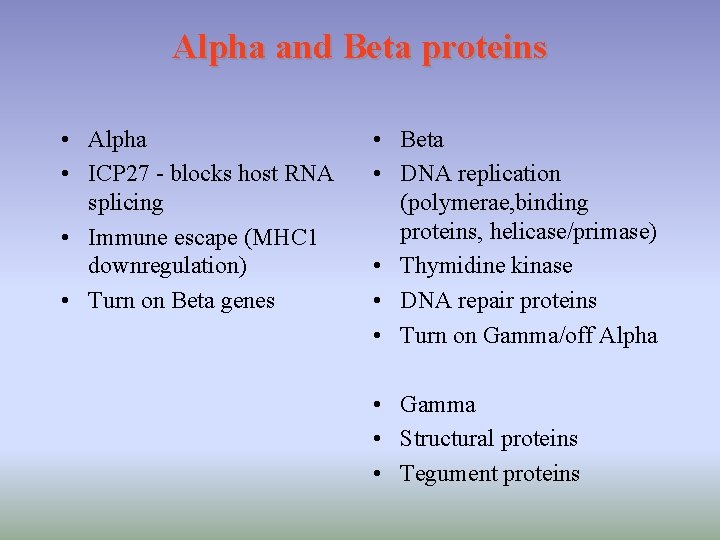
Alpha and Beta proteins • Alpha • ICP 27 - blocks host RNA splicing • Immune escape (MHC 1 downregulation) • Turn on Beta genes • Beta • DNA replication (polymerae, binding proteins, helicase/primase) • Thymidine kinase • DNA repair proteins • Turn on Gamma/off Alpha • Gamma • Structural proteins • Tegument proteins
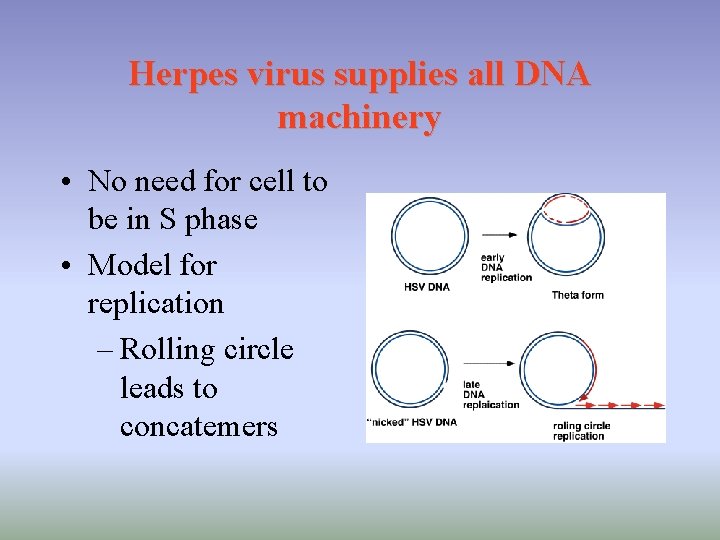
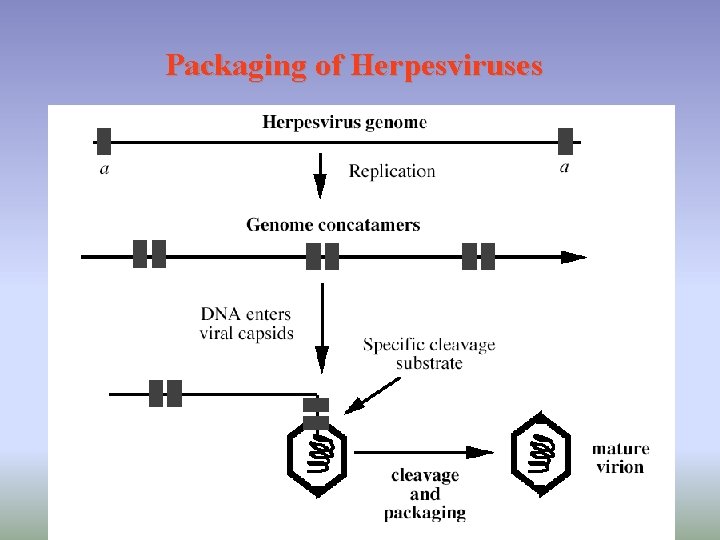
Herpes virus supplies all DNA machinery • No need for cell to be in S phase • Model for replication – Rolling circle leads to concatemers
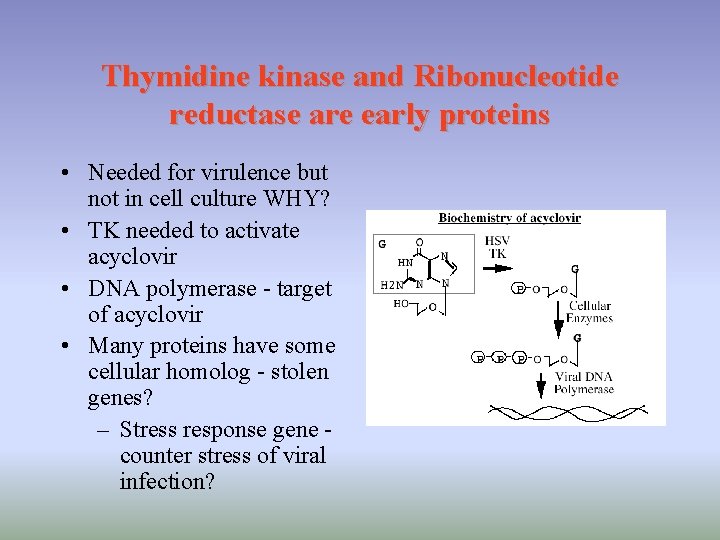
Thymidine kinase and Ribonucleotide reductase are early proteins • Needed for virulence but not in cell culture WHY? • TK needed to activate acyclovir • DNA polymerase - target of acyclovir • Many proteins have some cellular homolog - stolen genes? – Stress response gene counter stress of viral infection?
Packaging of Herpesviruses
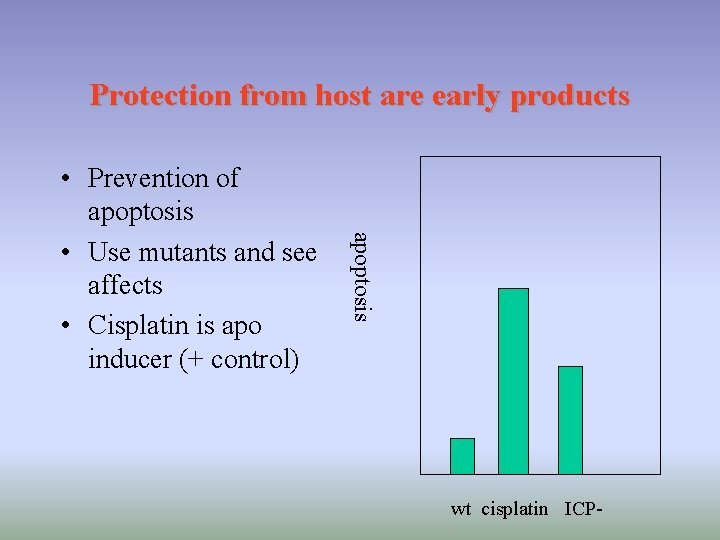
Protection from host are early products apoptosis • Prevention of apoptosis • Use mutants and see affects • Cisplatin is apo inducer (+ control) wt cisplatin ICP-
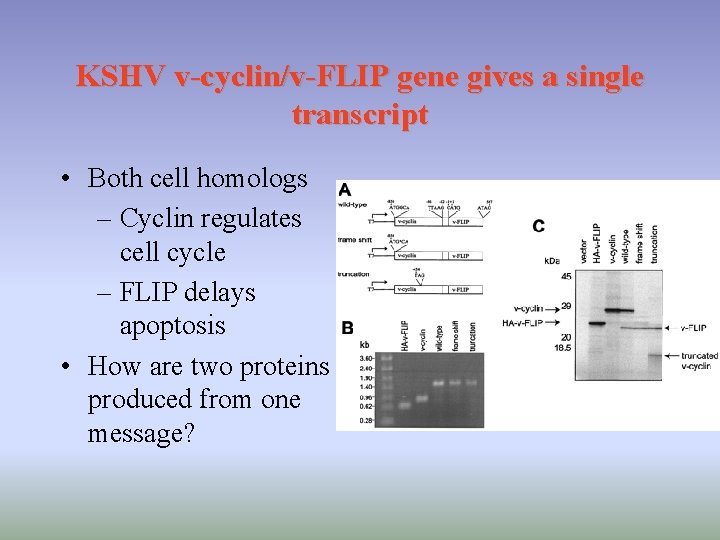
KSHV v-cyclin/v-FLIP gene gives a single transcript • Both cell homologs – Cyclin regulates cell cycle – FLIP delays apoptosis • How are two proteins produced from one message?