
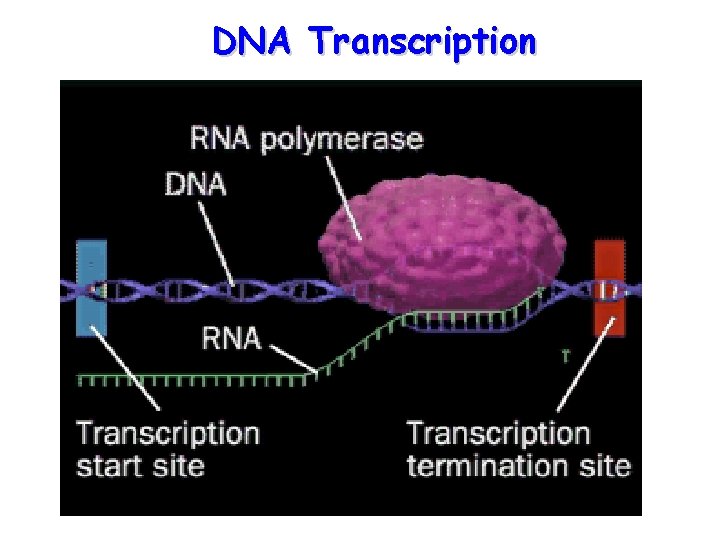
DNA Transcription DNA specify all kinds of proteins

- Slides: 26
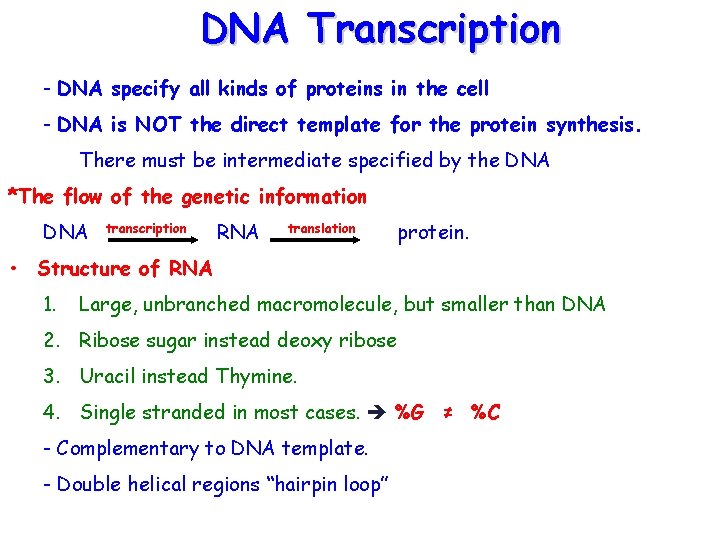
DNA Transcription - DNA specify all kinds of proteins in the cell - DNA is NOT the direct template for the protein synthesis. There must be intermediate specified by the DNA *The flow of the genetic information DNA transcription RNA translation protein. • Structure of RNA 1. Large, unbranched macromolecule, but smaller than DNA 2. Ribose sugar instead deoxy ribose 3. Uracil instead Thymine. 4. Single stranded in most cases. %G ≠ %C - Complementary to DNA template. - Double helical regions “hairpin loop”
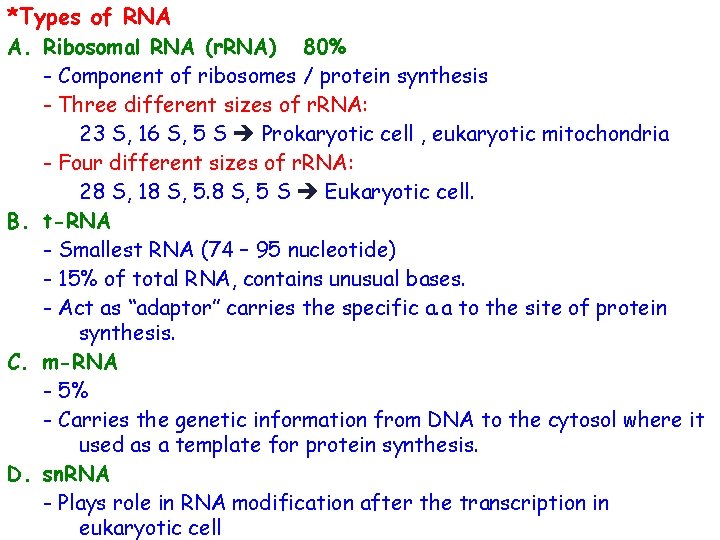
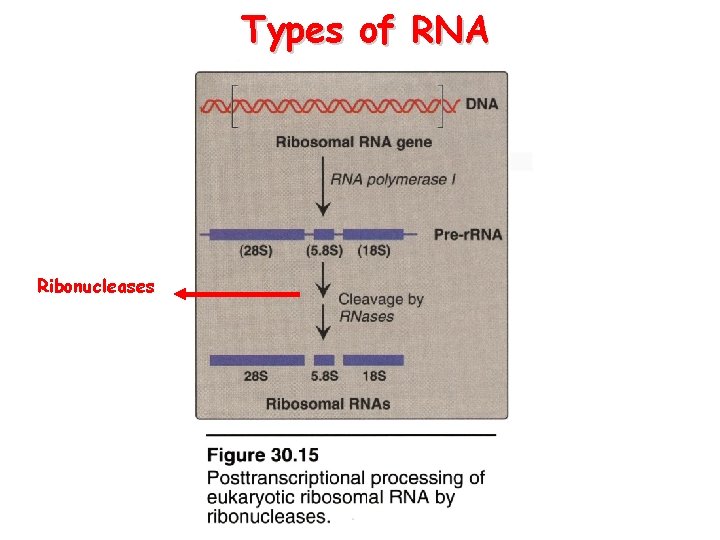
*Types of RNA A. Ribosomal RNA (r. RNA) 80% - Component of ribosomes / protein synthesis - Three different sizes of r. RNA: 23 S, 16 S, 5 S Prokaryotic cell , eukaryotic mitochondria - Four different sizes of r. RNA: 28 S, 18 S, 5 S Eukaryotic cell. B. t-RNA - Smallest RNA (74 – 95 nucleotide) - 15% of total RNA, contains unusual bases. - Act as “adaptor” carries the specific a. a to the site of protein synthesis. C. m-RNA - 5% - Carries the genetic information from DNA to the cytosol where it used as a template for protein synthesis. D. sn. RNA - Plays role in RNA modification after the transcription in eukaryotic cell
Types of RNA Ribonucleases
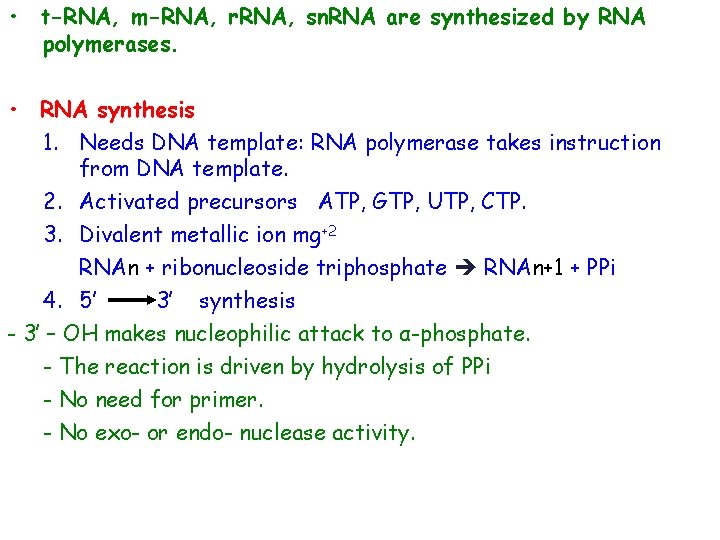
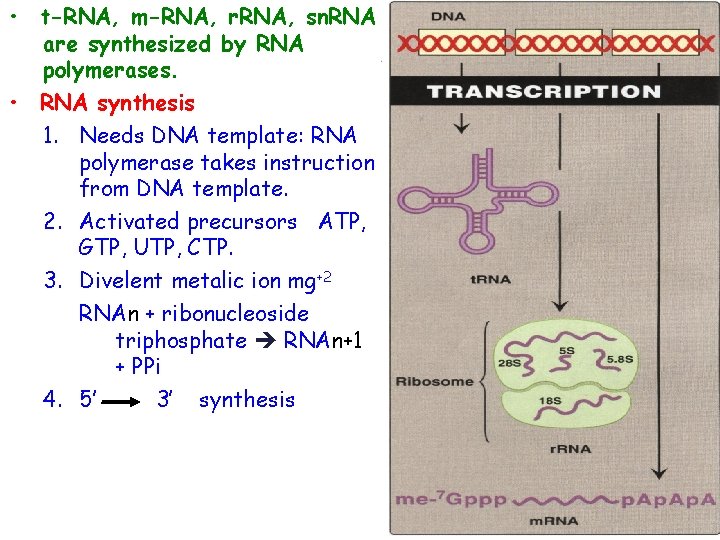
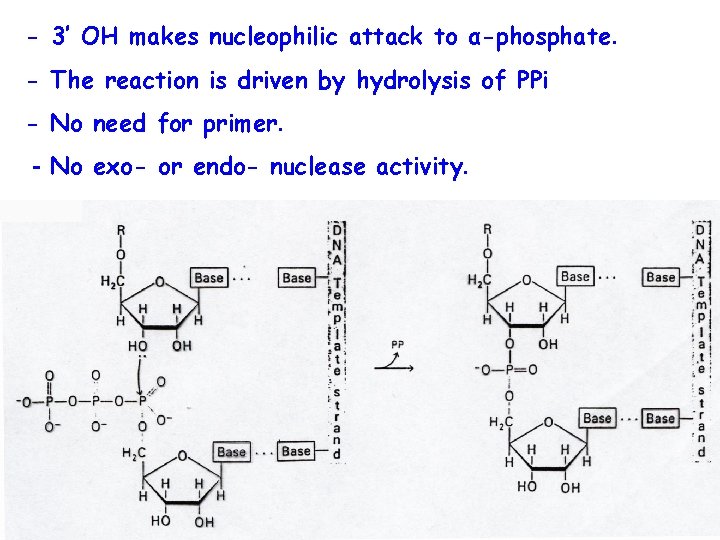
• t-RNA, m-RNA, r. RNA, sn. RNA are synthesized by RNA polymerases. • RNA synthesis 1. Needs DNA template: RNA polymerase takes instruction from DNA template. 2. Activated precursors ATP, GTP, UTP, CTP. 3. Divalent metallic ion mg+2 RNAn + ribonucleoside triphosphate RNAn+1 + PPi 4. 5’ 3’ synthesis - 3’ – OH makes nucleophilic attack to α-phosphate. - The reaction is driven by hydrolysis of PPi - No need for primer. - No exo- or endo- nuclease activity.
• t-RNA, m-RNA, r. RNA, sn. RNA are synthesized by RNA polymerases. • RNA synthesis 1. Needs DNA template: RNA polymerase takes instruction from DNA template. 2. Activated precursors ATP, GTP, UTP, CTP. 3. Divelent metalic ion mg+2 RNAn + ribonucleoside triphosphate RNAn+1 + PPi 4. 5’ 3’ synthesis
- 3’ OH makes nucleophilic attack to α-phosphate. - The reaction is driven by hydrolysis of PPi - No need for primer. - No exo- or endo- nuclease activity.
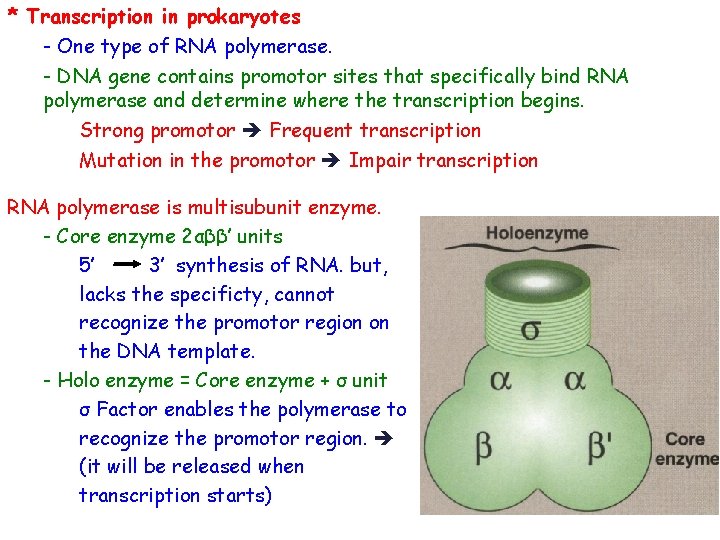
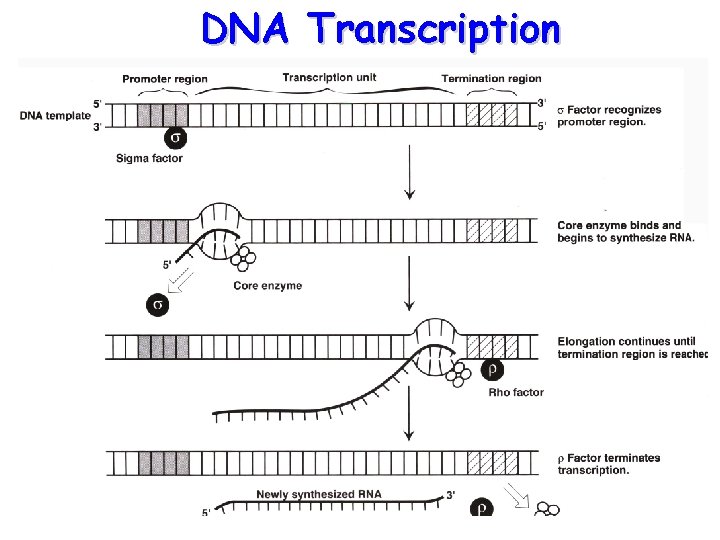
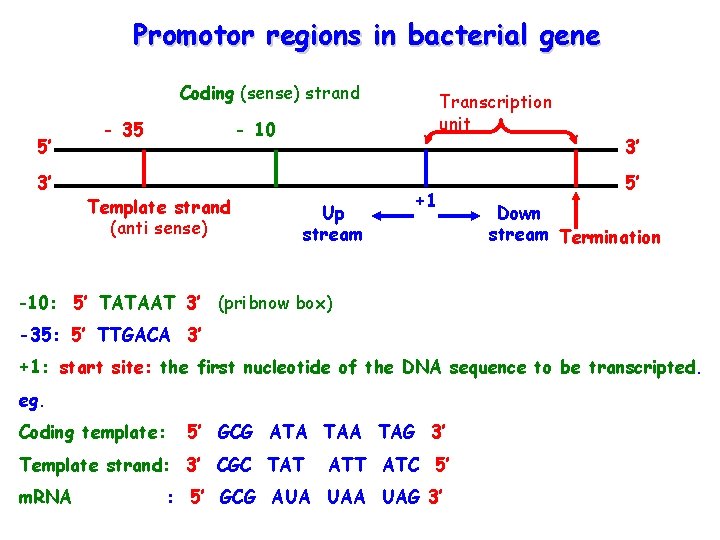
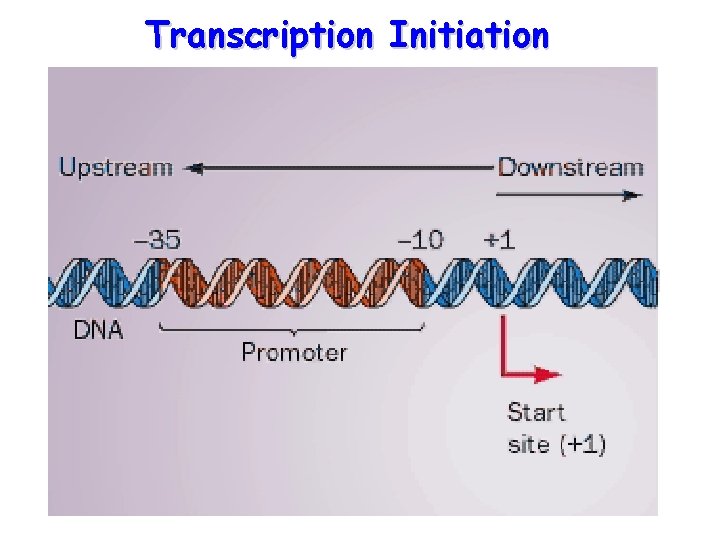
* Transcription in prokaryotes - One type of RNA polymerase. - DNA gene contains promotor sites that specifically bind RNA polymerase and determine where the transcription begins. Strong promotor Frequent transcription Mutation in the promotor Impair transcription RNA polymerase is multisubunit enzyme. - Core enzyme 2αββ’ units 5’ 3’ synthesis of RNA. but, lacks the specificty, cannot recognize the promotor region on the DNA template. - Holo enzyme = Core enzyme + σ unit σ Factor enables the polymerase to recognize the promotor region. (it will be released when transcription starts)
DNA Transcription
Promotor regions in bacterial gene Coding (sense) strand 5’ 3’ - 35 Transcription unit - 10 Template strand (anti sense) Up stream +1 3’ 5’ Down stream Termination -10: 5’ TATAAT 3’ (pribnow box) -35: 5’ TTGACA 3’ +1: start site: the first nucleotide of the DNA sequence to be transcripted. eg. Coding template: 5’ GCG ATA TAG 3’ Template strand: 3’ CGC TAT m. RNA ATT ATC 5’ : 5’ GCG AUA UAG 3’
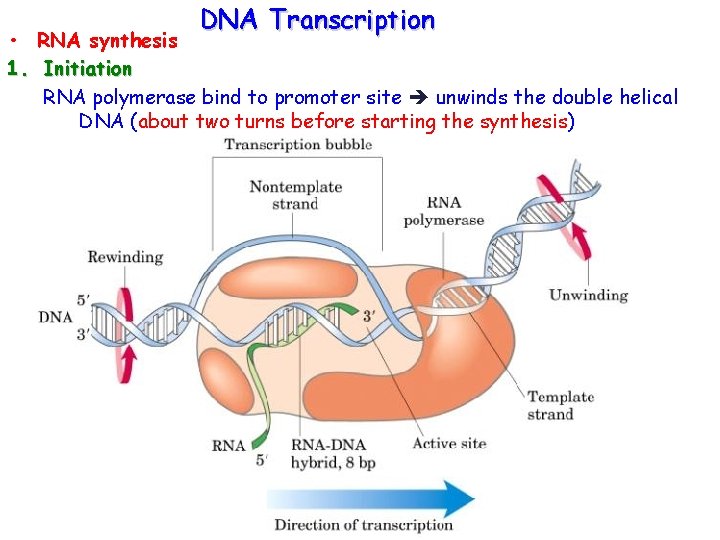
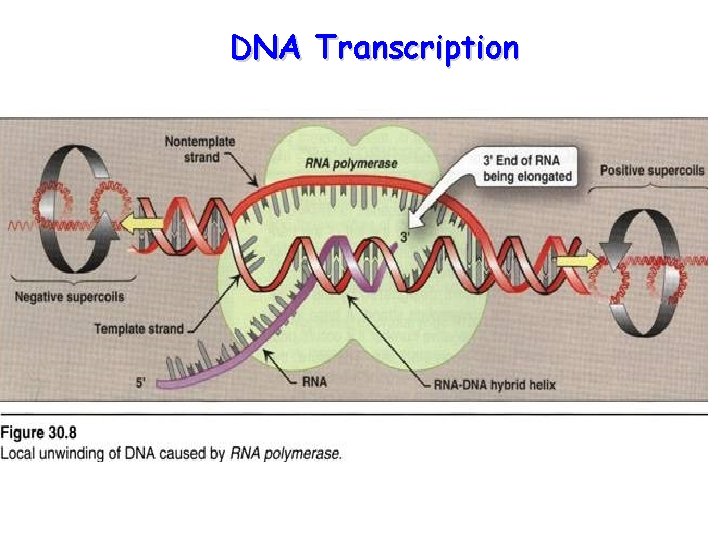
DNA Transcription • RNA synthesis 1. Initiation RNA polymerase bind to promoter site unwinds the double helical DNA (about two turns before starting the synthesis)
DNA Transcription
Transcription Initiation
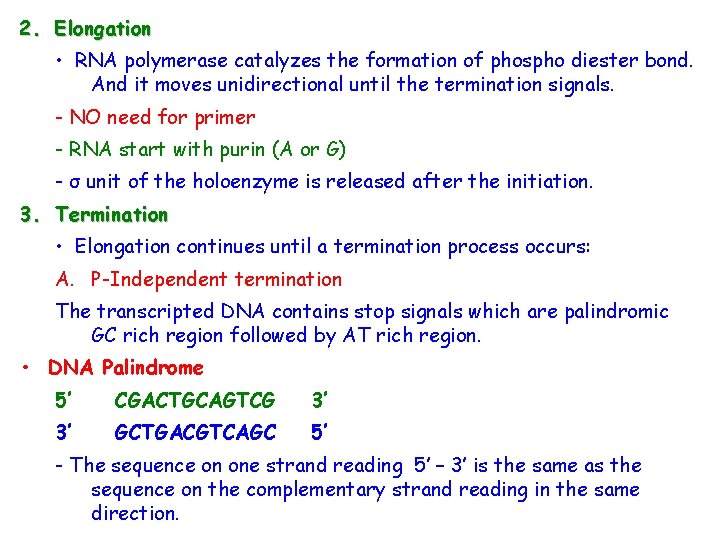
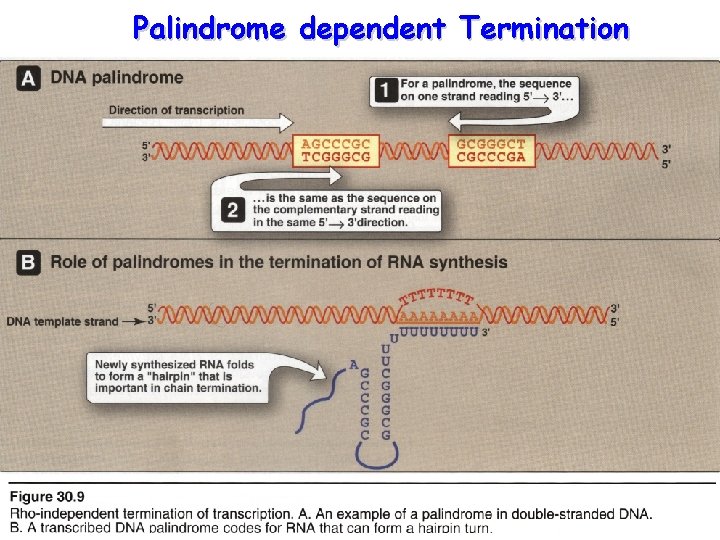
2. Elongation • RNA polymerase catalyzes the formation of phospho diester bond. And it moves unidirectional until the termination signals. - NO need for primer - RNA start with purin (A or G) - σ unit of the holoenzyme is released after the initiation. 3. Termination • Elongation continues until a termination process occurs: A. P-Independent termination The transcripted DNA contains stop signals which are palindromic GC rich region followed by AT rich region. • DNA Palindrome 5’ CGACTGCAGTCG 3’ 3’ GCTGACGTCAGC 5’ - The sequence on one strand reading 5’ – 3’ is the same as the sequence on the complementary strand reading in the same direction.
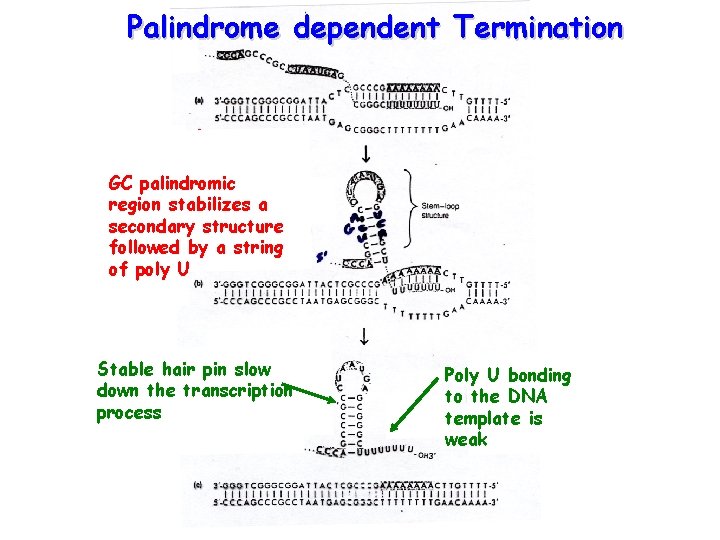
Palindrome dependent Termination GC palindromic region stabilizes a secondary structure followed by a string of poly U Stable hair pin slow down the transcription process Poly U bonding to the DNA template is weak
Palindrome dependent Termination
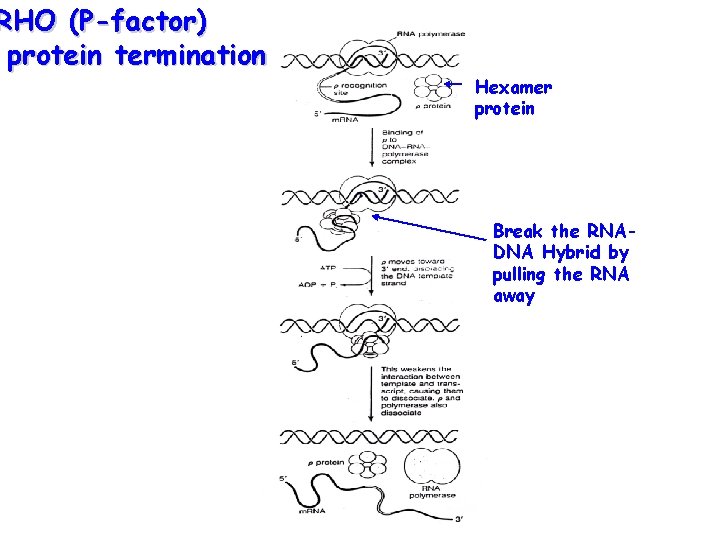
RHO (P-factor) protein termination Hexamer protein Break the RNADNA Hybrid by pulling the RNA away
DNA Transcription
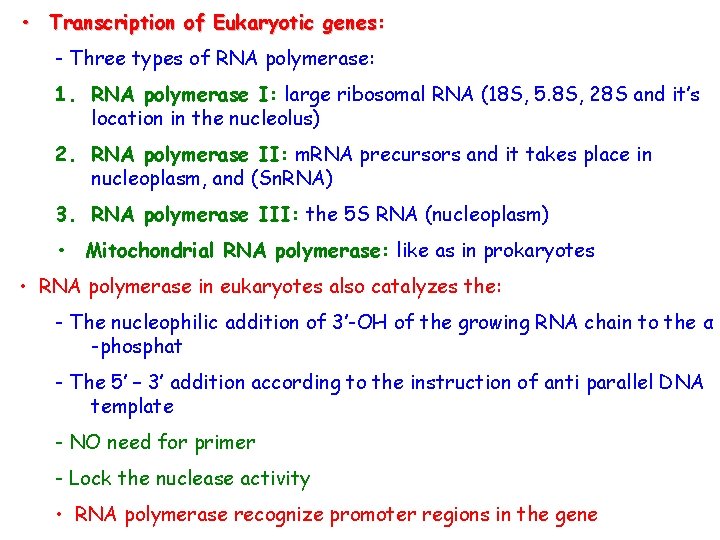
• Transcription of Eukaryotic genes: - Three types of RNA polymerase: 1. RNA polymerase I: large ribosomal RNA (18 S, 5. 8 S, 28 S and it’s location in the nucleolus) 2. RNA polymerase II: m. RNA precursors and it takes place in nucleoplasm, and (Sn. RNA) 3. RNA polymerase III: the 5 S RNA (nucleoplasm) • Mitochondrial RNA polymerase: like as in prokaryotes • RNA polymerase in eukaryotes also catalyzes the: - The nucleophilic addition of 3’-OH of the growing RNA chain to the α -phosphat - The 5’ – 3’ addition according to the instruction of anti parallel DNA template - NO need for primer - Lock the nuclease activity • RNA polymerase recognize promoter regions in the gene
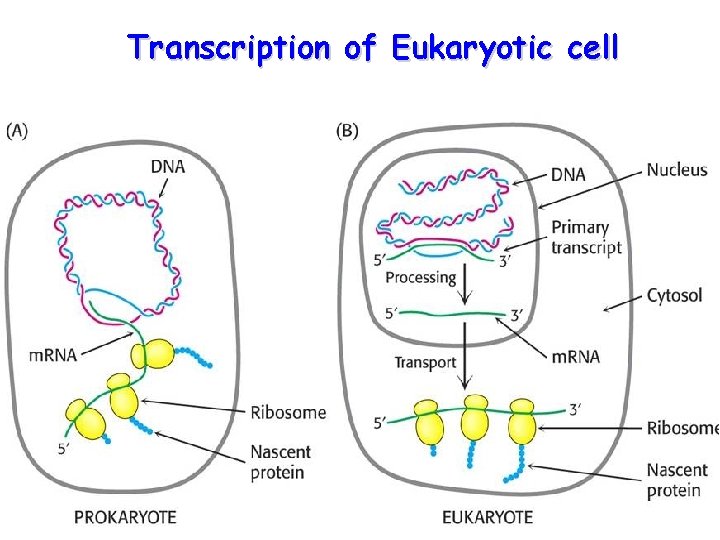
Transcription of Eukaryotic cell
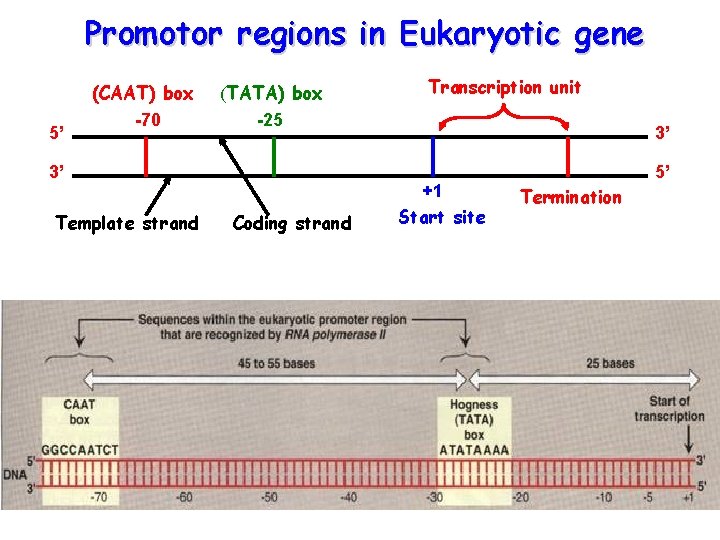
Promotor regions in Eukaryotic gene 5’ (CAAT) box -70 (TATA) box -25 3’ Template strand Coding strand Transcription unit 3’ +1 Start site 5’ Termination
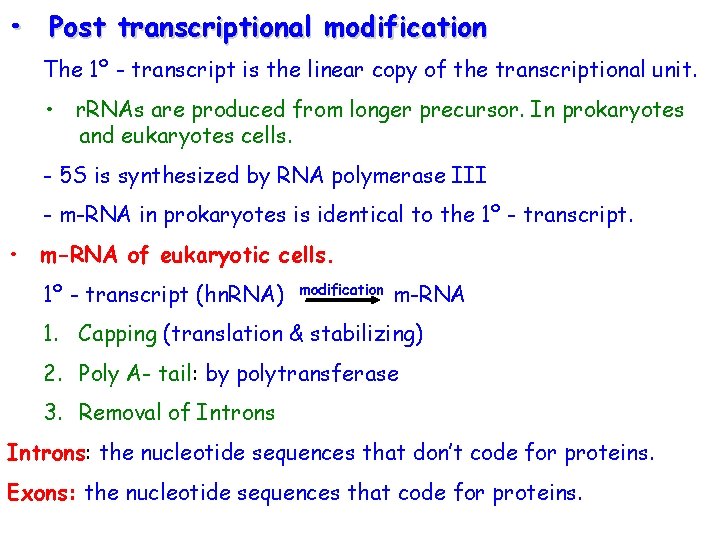
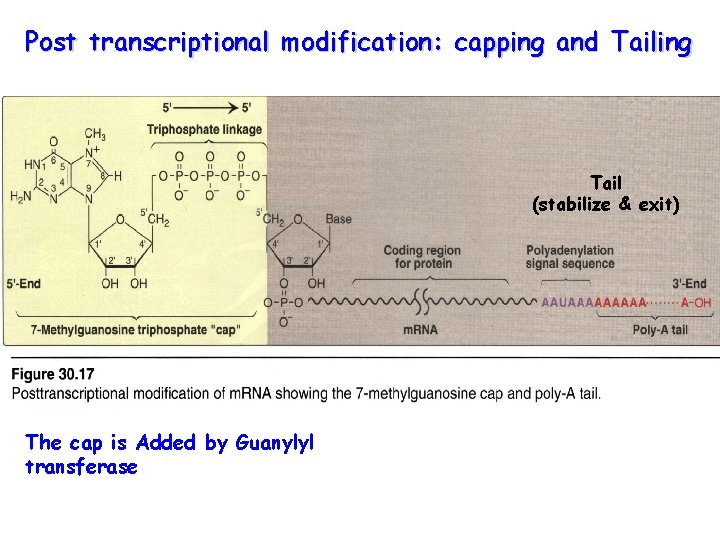
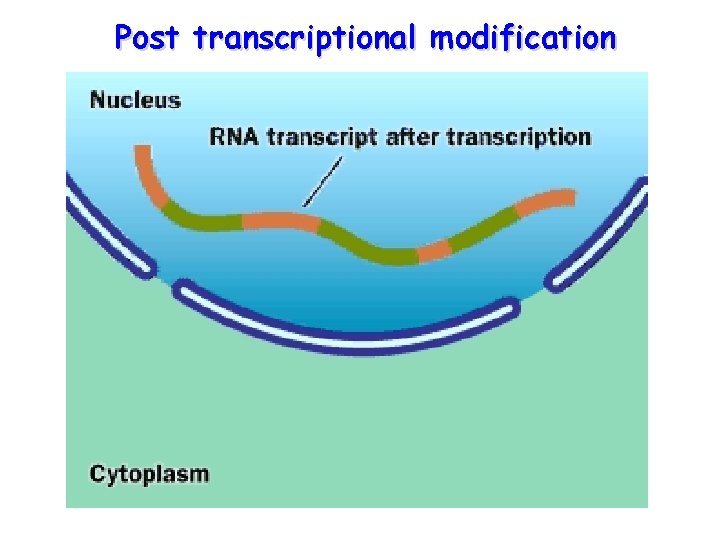
• Post transcriptional modification The 1º - transcript is the linear copy of the transcriptional unit. • r. RNAs are produced from longer precursor. In prokaryotes and eukaryotes cells. - 5 S is synthesized by RNA polymerase III - m-RNA in prokaryotes is identical to the 1º - transcript. • m-RNA of eukaryotic cells. 1º - transcript (hn. RNA) modification m-RNA 1. Capping (translation & stabilizing) 2. Poly A- tail: by polytransferase 3. Removal of Introns: the nucleotide sequences that don’t code for proteins. Exons: the nucleotide sequences that code for proteins.
Post transcriptional modification: capping and Tailing Tail (stabilize & exit) The cap is Added by Guanylyl transferase
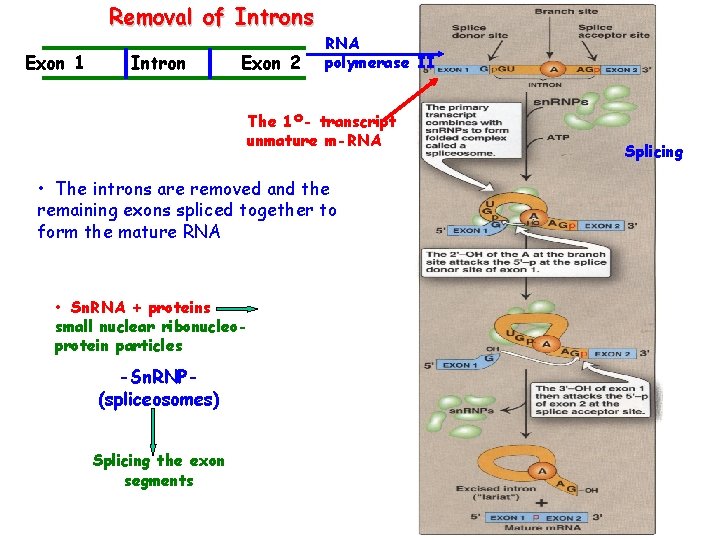
Removal of Introns Exon 1 Intron Exon 2 RNA polymerase II The 1º- transcript unmature m-RNA • The introns are removed and the remaining exons spliced together to form the mature RNA • Sn. RNA + proteins small nuclear ribonucleoprotein particles -Sn. RNP(spliceosomes) Splicing the exon segments Splicing
Post transcriptional modification
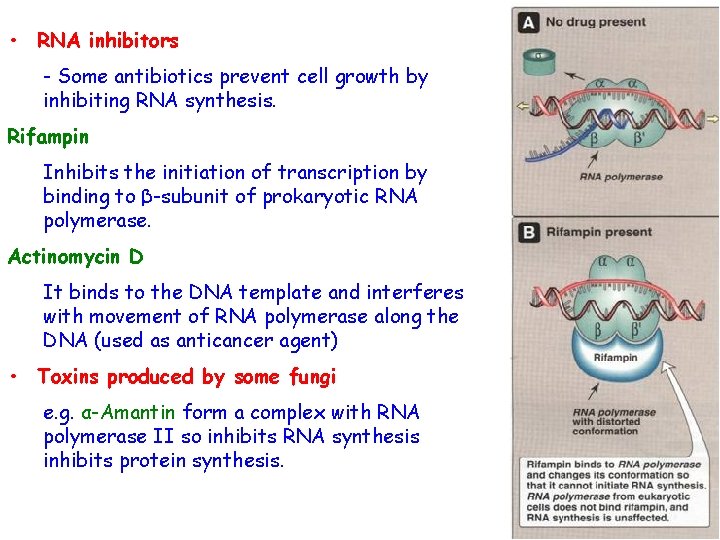
• RNA inhibitors - Some antibiotics prevent cell growth by inhibiting RNA synthesis. Rifampin Inhibits the initiation of transcription by binding to β-subunit of prokaryotic RNA polymerase. Actinomycin D It binds to the DNA template and interferes with movement of RNA polymerase along the DNA (used as anticancer agent) • Toxins produced by some fungi e. g. α-Amantin form a complex with RNA polymerase II so inhibits RNA synthesis inhibits protein synthesis.
The End