
DNA TOPOLOGY De Witt Sumners Department of Mathematics



- Slides: 62
DNA TOPOLOGY De Witt Sumners Department of Mathematics Florida State University Tallahassee, FL sumners@math. fsu. edu
Pedagogical School: Knots & Links: From Theory to Application
Pedagogical School: Knots & Links: From Theory to Application De Witt Sumners: Florida State University Lectures on DNA Topology: Schedule • Introduction to DNA Topology Monday 09/05/11 10: 40 -12: 40 • The Tangle Model for DNA Site-Specific Recombination Thursday 12/05/11 10: 40 -12: 40 • Random Knotting and Macromolecular Structure Friday 13/05/11 8: 30 -10: 30
DNA Site-Specific Recombination • • • Topological Enzymology Rational tangles and 4 -plats The Tangle Model Analysis of Tn 3 Resolvase Experiments Open tangle problem
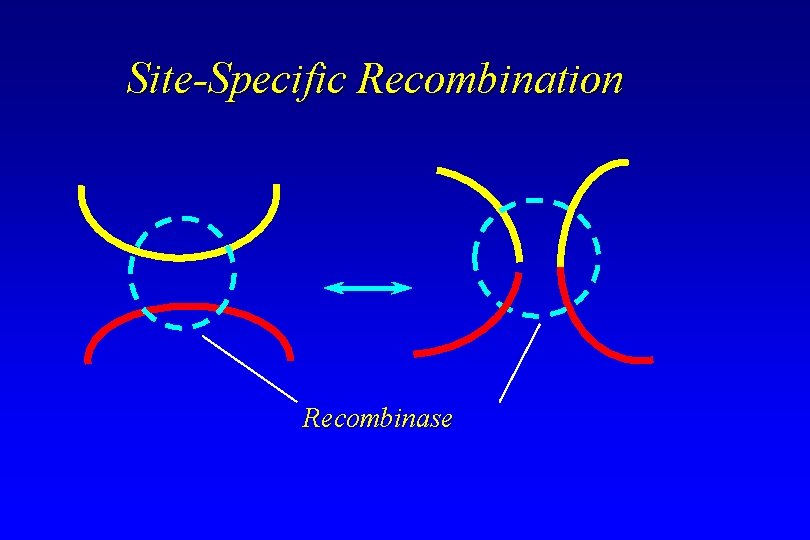
Site-Specific Recombination Recombinase
Biology of Recombination • Integration and excision of viral genome into and out of host genome • DNA inversion--regulate gene expression • Segregation of DNA progeny at cell division • Plasmid copy number regulation
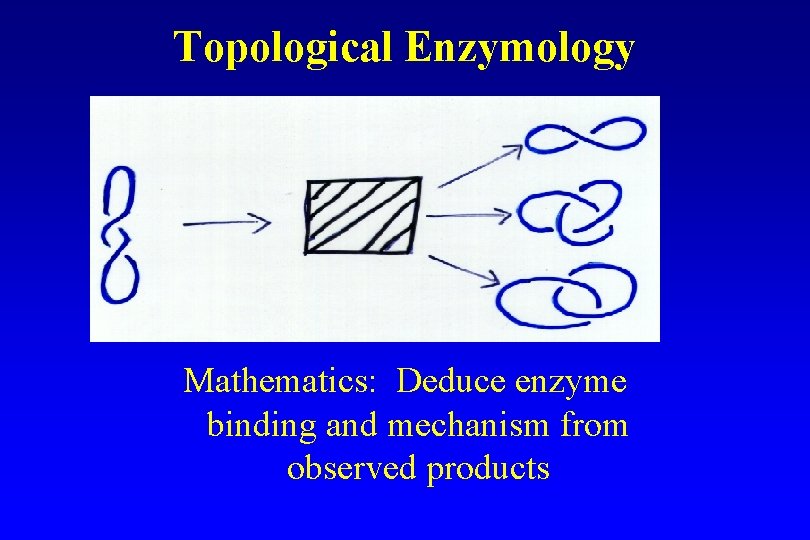
Topological Enzymology Mathematics: Deduce enzyme binding and mechanism from observed products
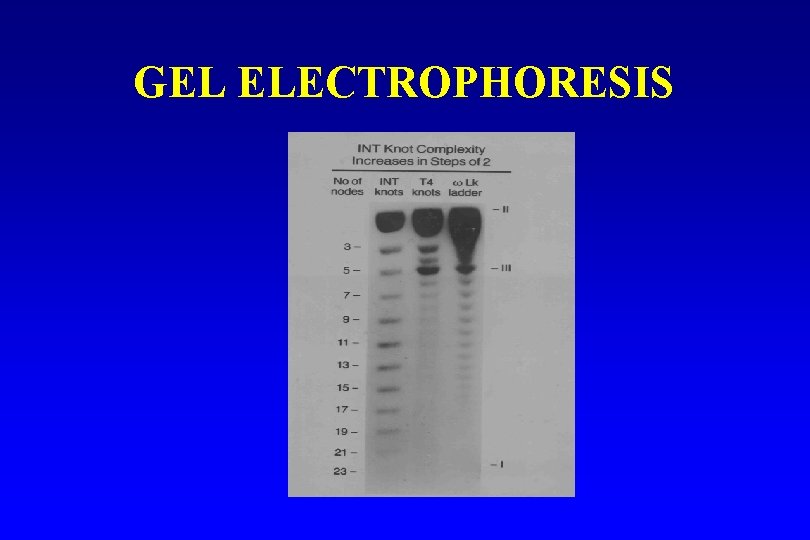
GEL ELECTROPHORESIS
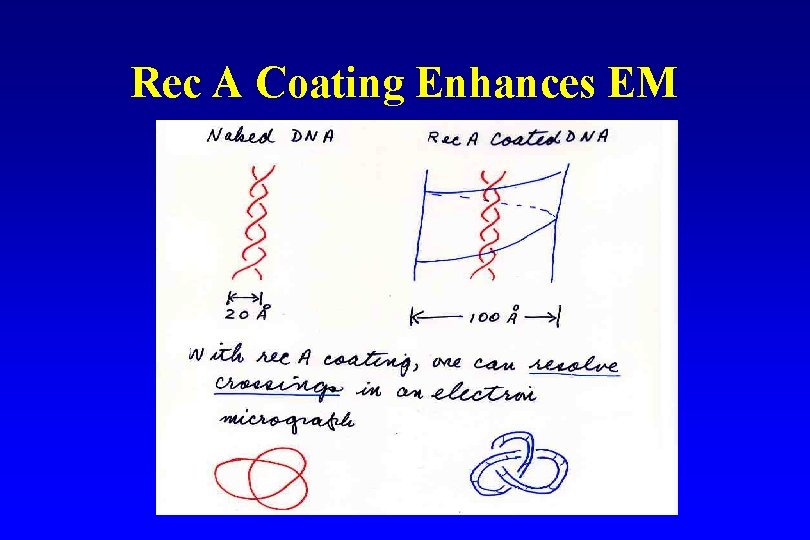
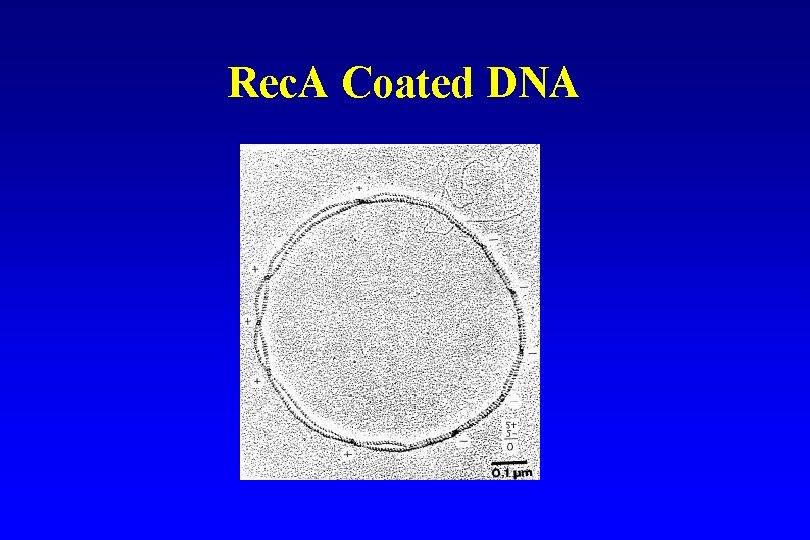
Rec A Coating Enhances EM
Rec. A Coated DNA
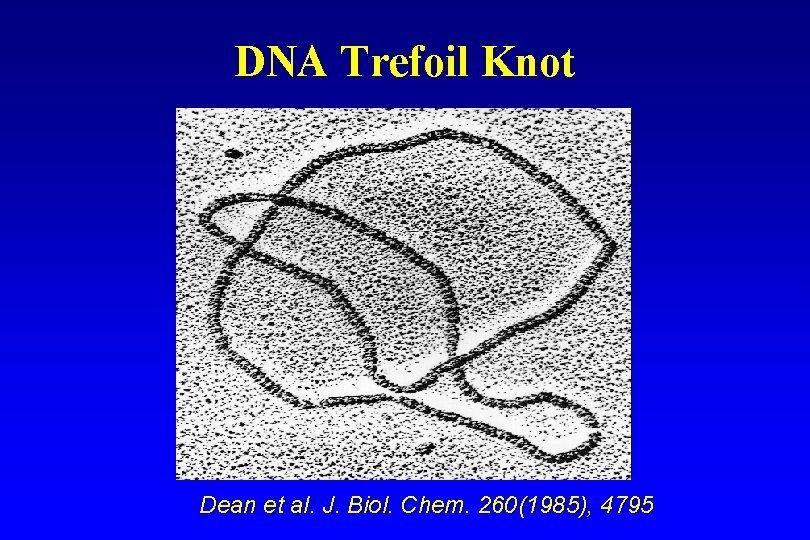
DNA Trefoil Knot Dean et al. J. Biol. Chem. 260(1985), 4795
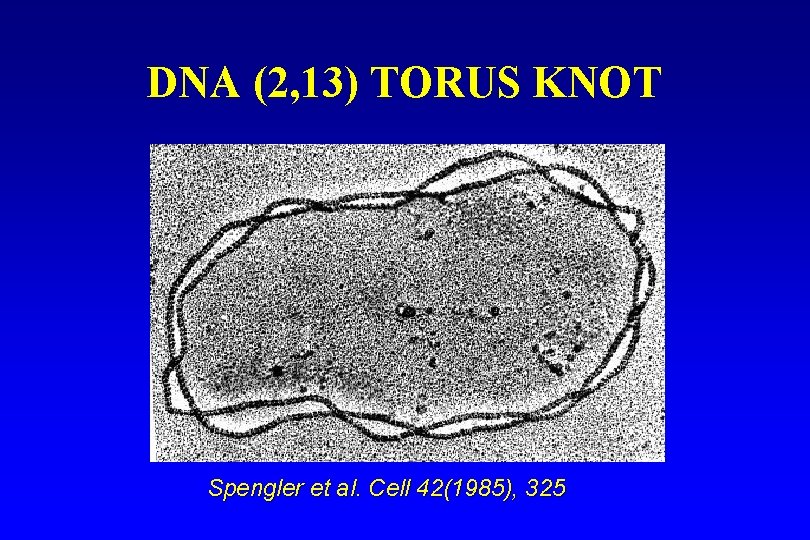
DNA (2, 13) TORUS KNOT Spengler et al. Cell 42(1985), 325
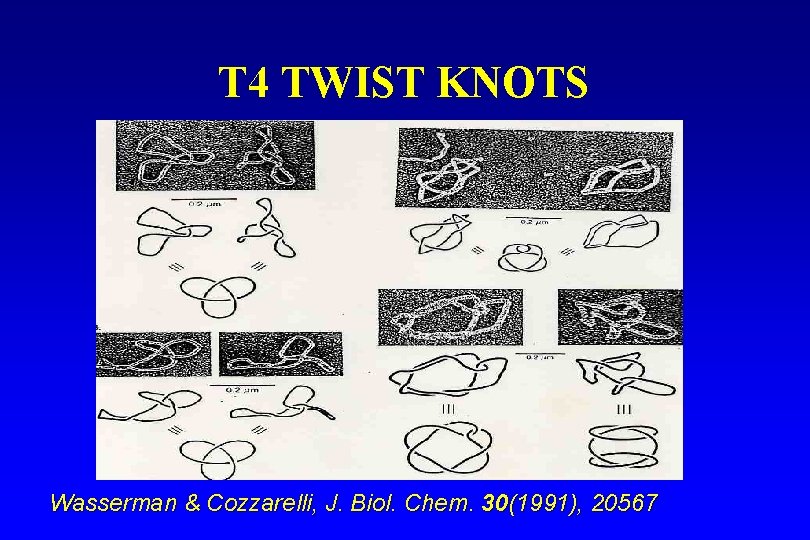
T 4 TWIST KNOTS Wasserman & Cozzarelli, J. Biol. Chem. 30(1991), 20567
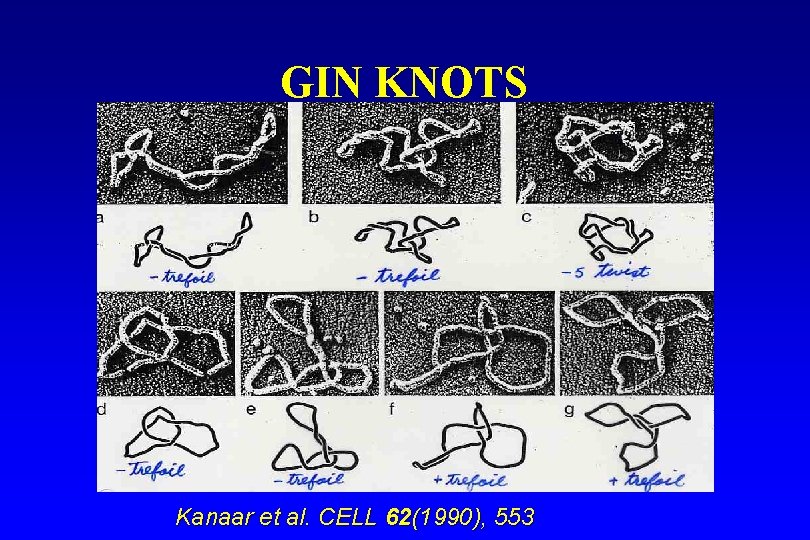
GIN KNOTS Kanaar et al. CELL 62(1990), 553
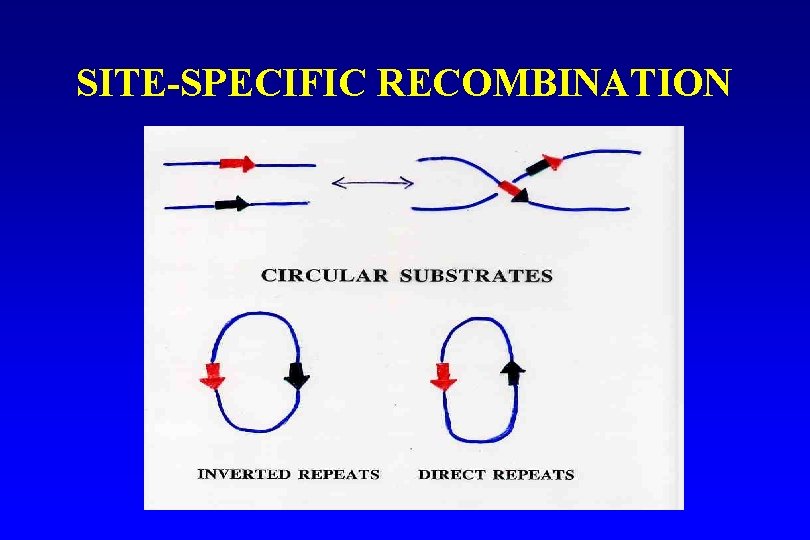
SITE-SPECIFIC RECOMBINATION
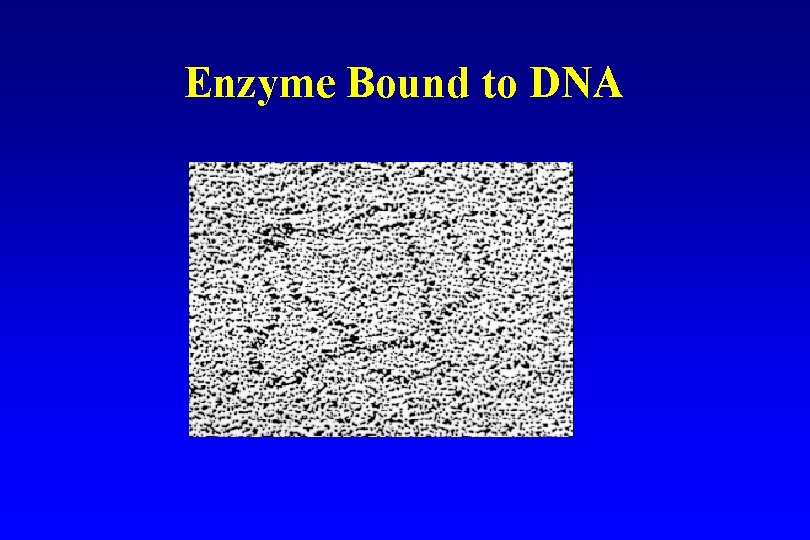
Enzyme Bound to DNA
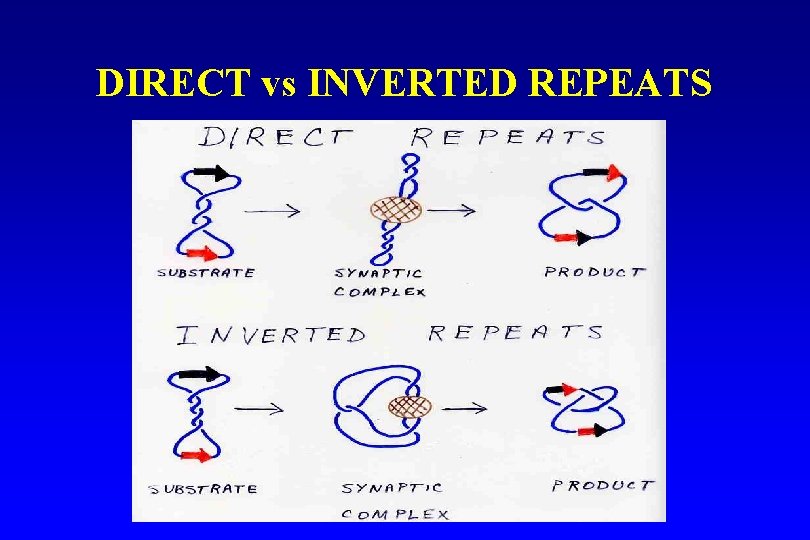
DIRECT vs INVERTED REPEATS
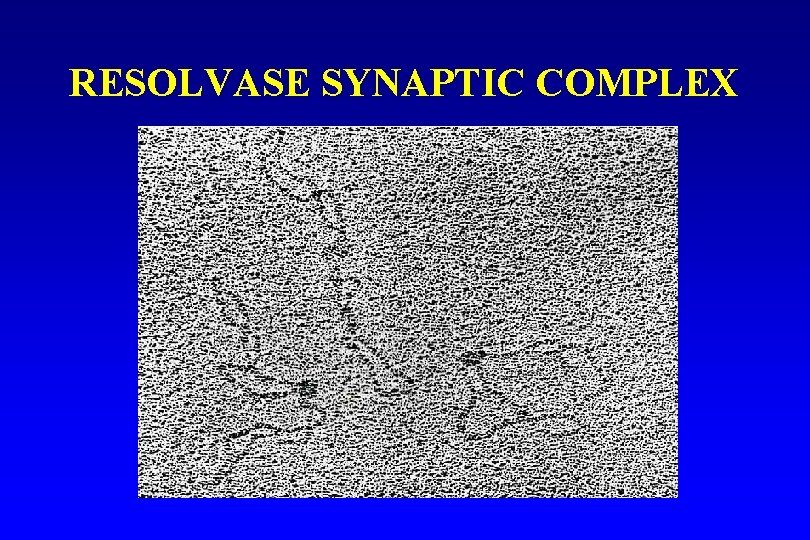
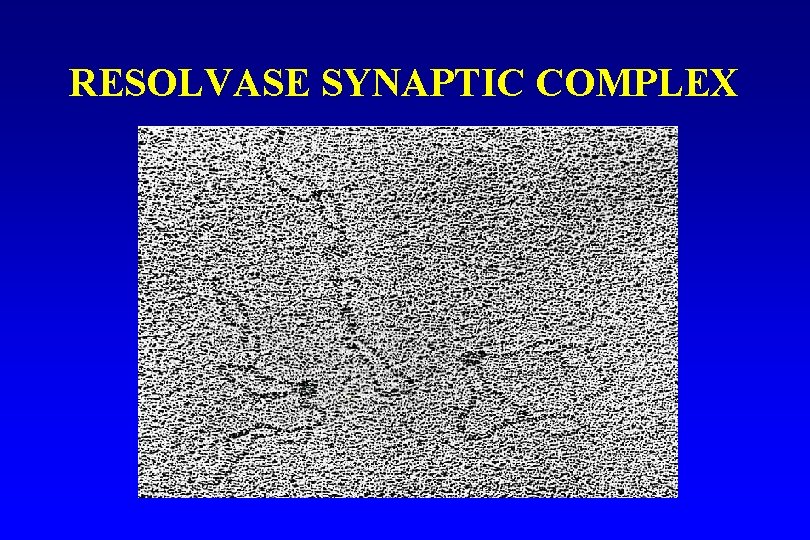
RESOLVASE SYNAPTIC COMPLEX
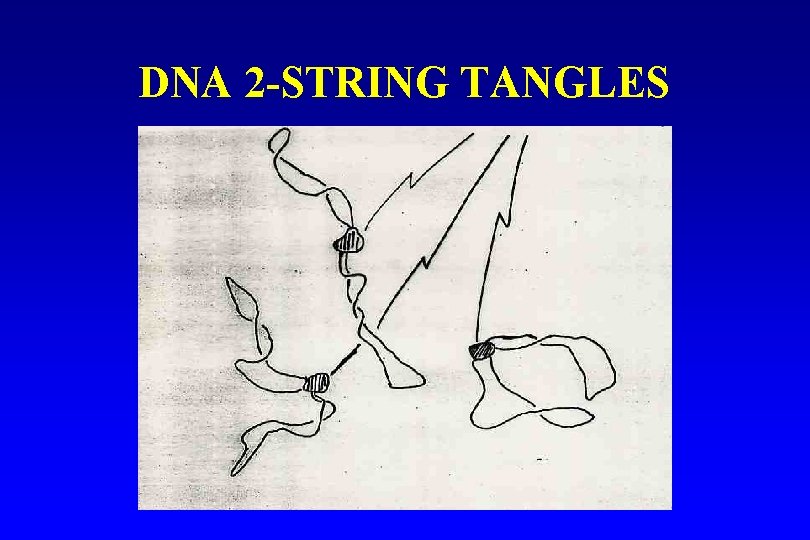
DNA 2 -STRING TANGLES
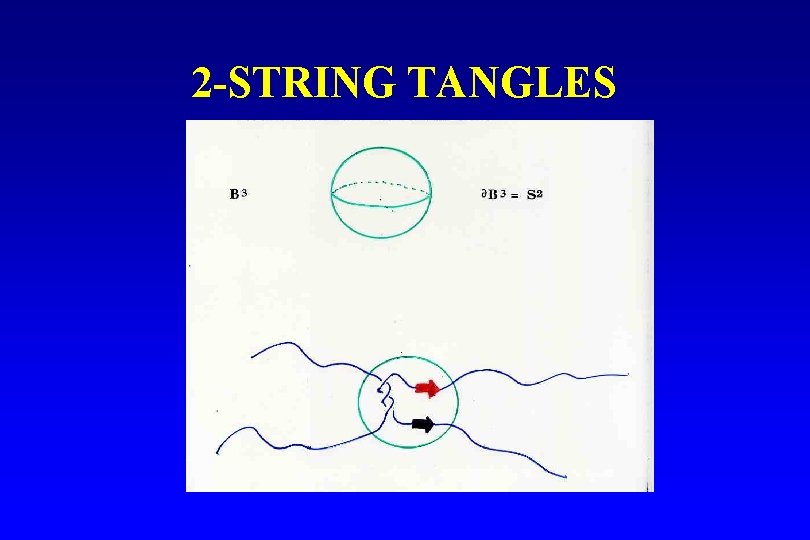
2 -STRING TANGLES
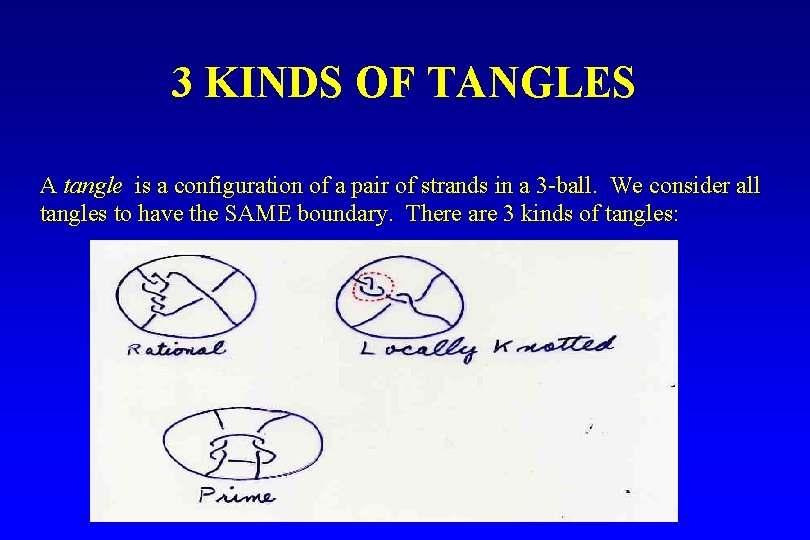
3 KINDS OF TANGLES A tangle is a configuration of a pair of strands in a 3 -ball. We consider all tangles to have the SAME boundary. There are 3 kinds of tangles:
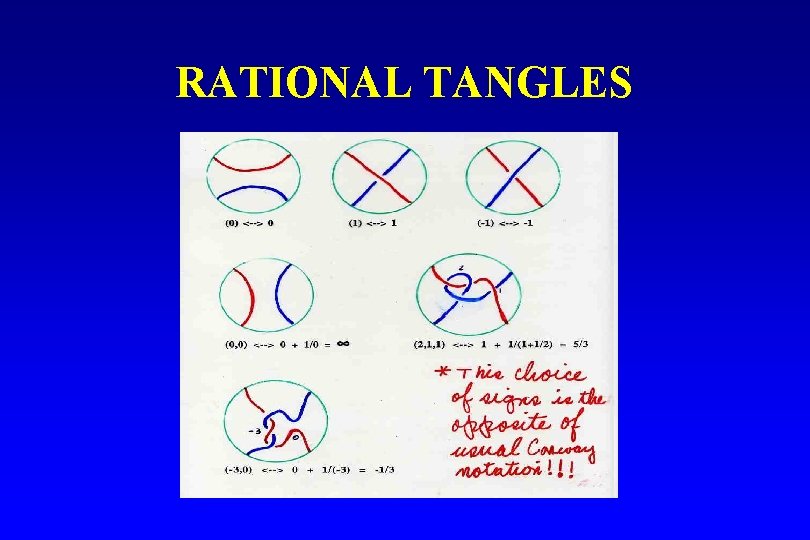
RATIONAL TANGLES
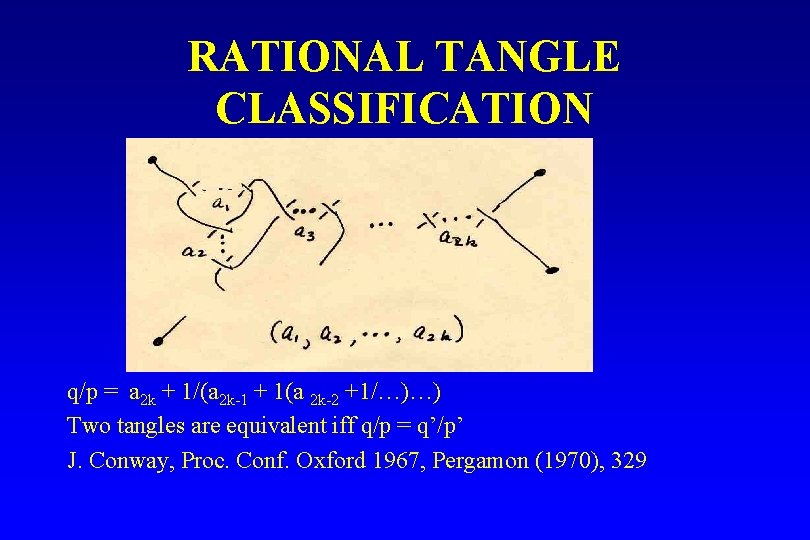
RATIONAL TANGLE CLASSIFICATION q/p = a 2 k + 1/(a 2 k-1 + 1(a 2 k-2 +1/…)…) Two tangles are equivalent iff q/p = q’/p’ J. Conway, Proc. Conf. Oxford 1967, Pergamon (1970), 329
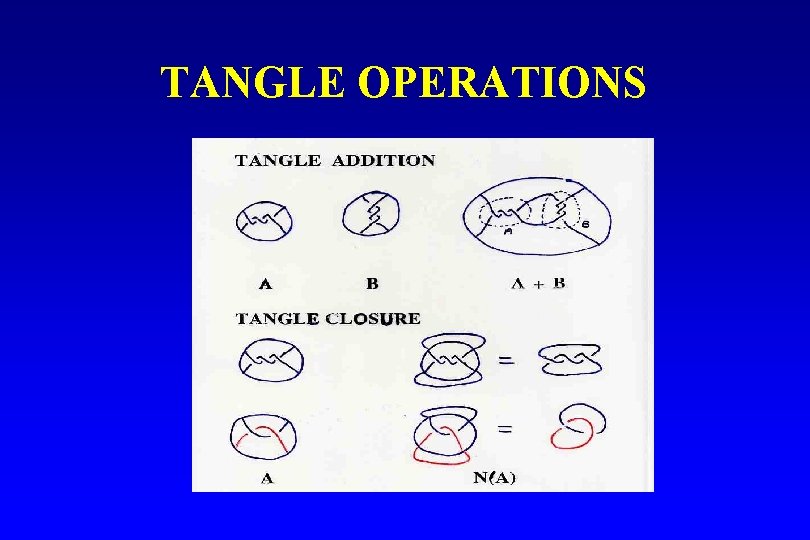
TANGLE OPERATIONS
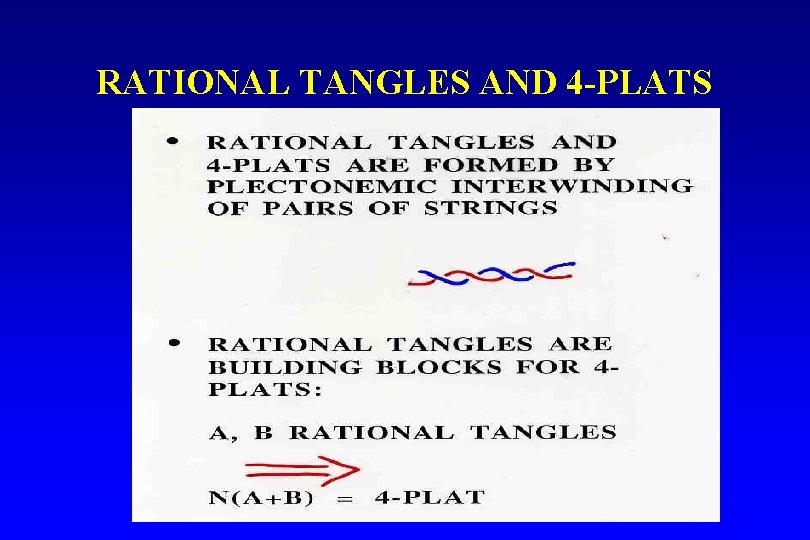
RATIONAL TANGLES AND 4 -PLATS
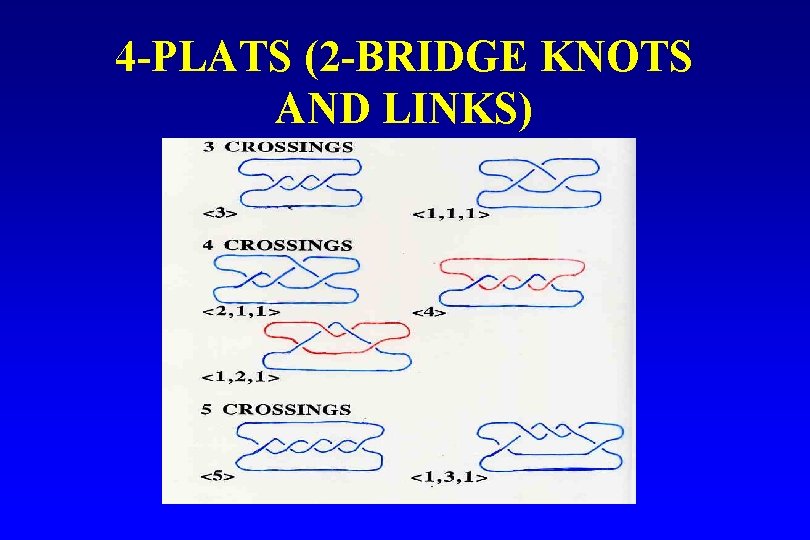
4 -PLATS (2 -BRIDGE KNOTS AND LINKS)
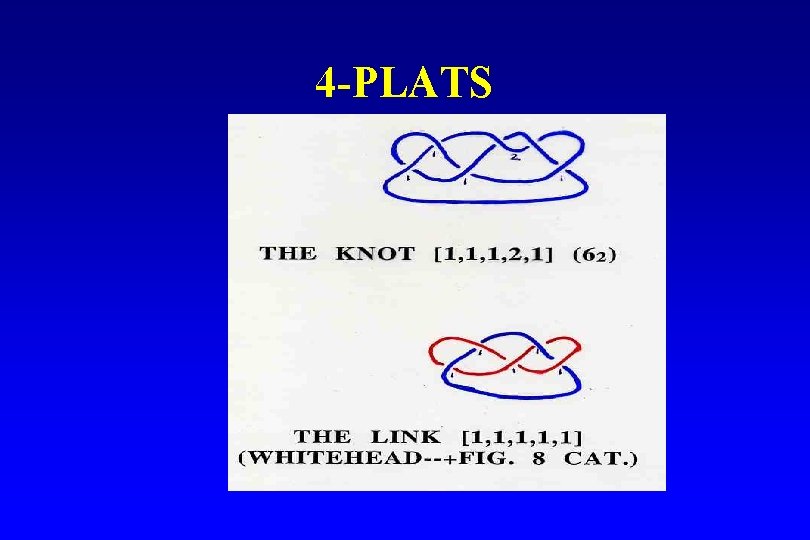
4 -PLATS
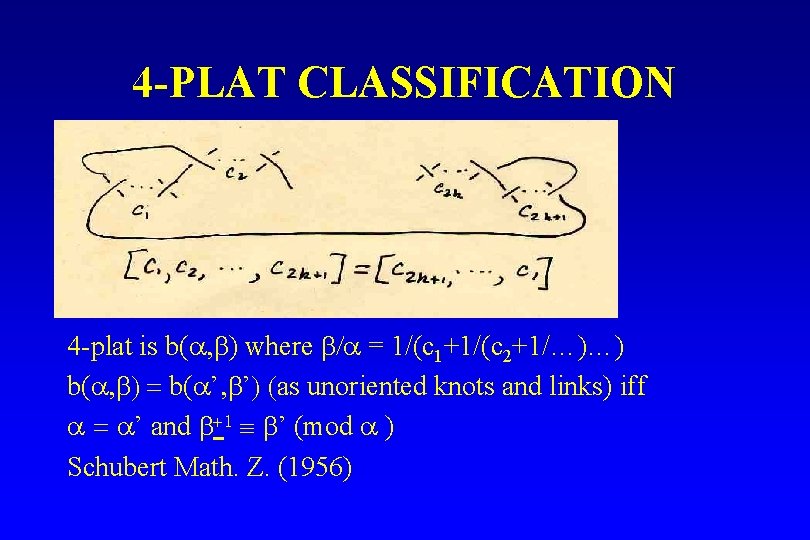
4 -PLAT CLASSIFICATION 4 -plat is b(a, b) where b/a = 1/(c 1+1/(c 2+1/…)…) b(a, b) = b(a’, b’) as unoriented knots and links) iff a = a’ and b+1 b’ (mod a ) Schubert Math. Z. (1956)
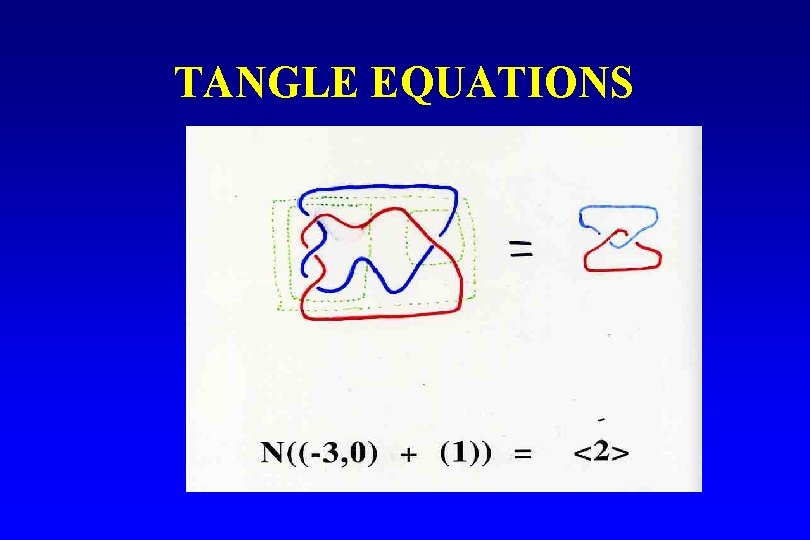
TANGLE EQUATIONS
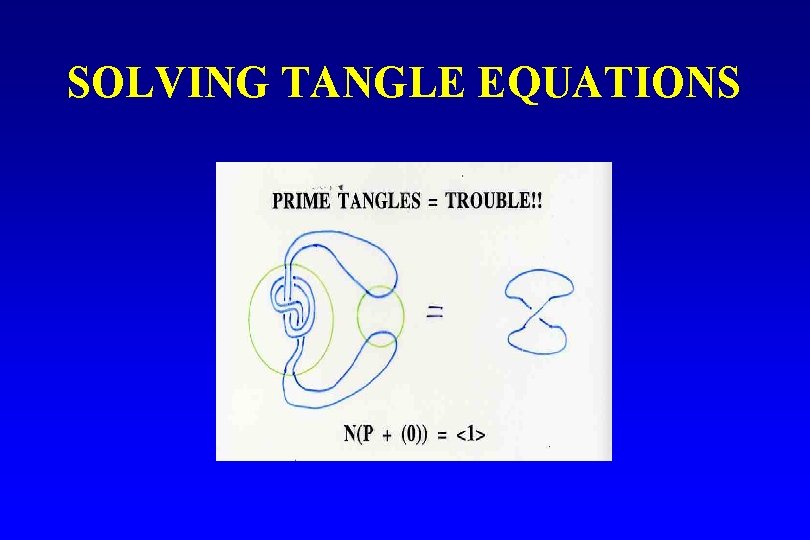
SOLVING TANGLE EQUATIONS
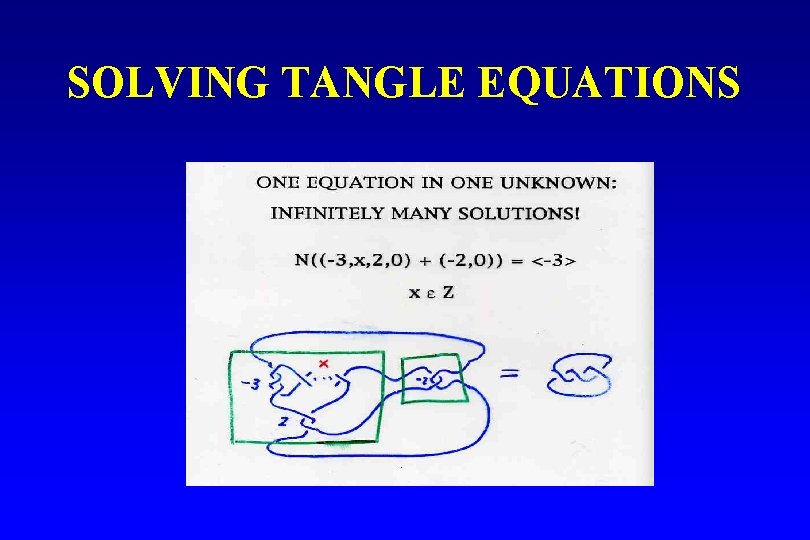
SOLVING TANGLE EQUATIONS
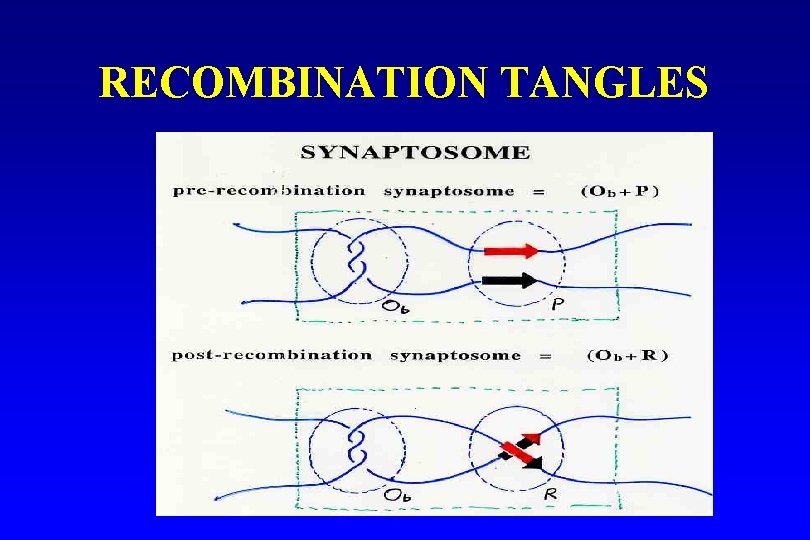
RECOMBINATION TANGLES
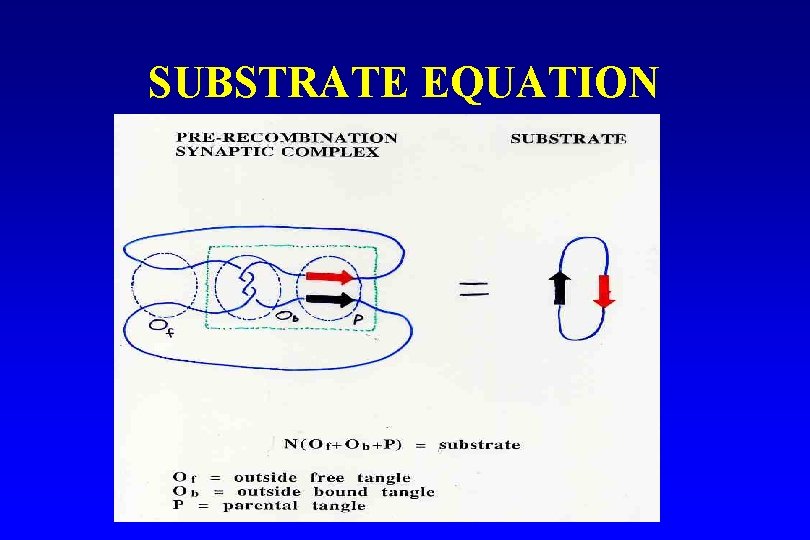
SUBSTRATE EQUATION
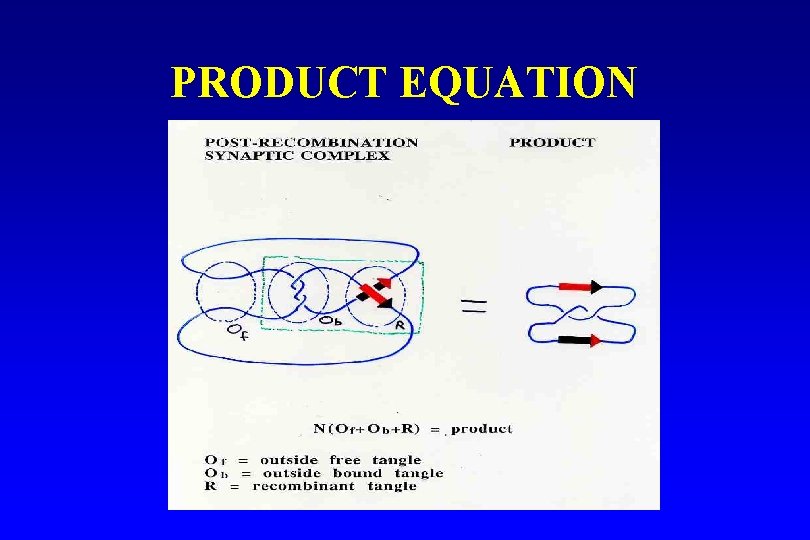
PRODUCT EQUATION
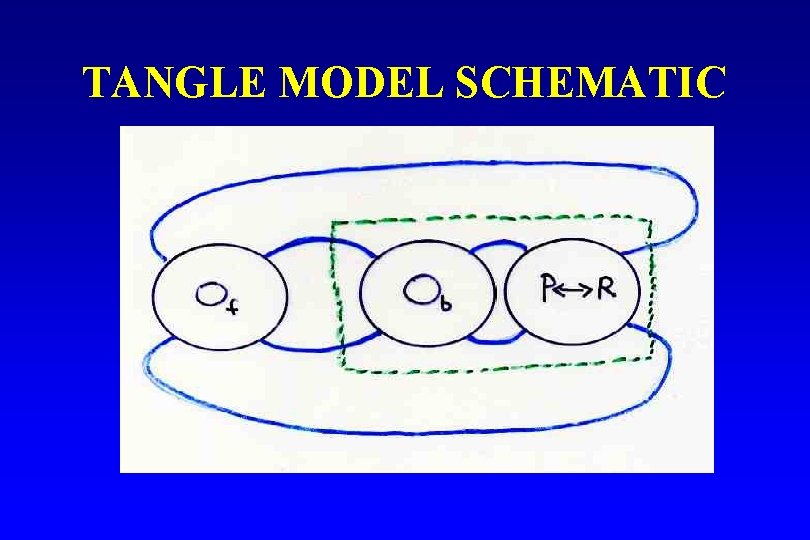
TANGLE MODEL SCHEMATIC
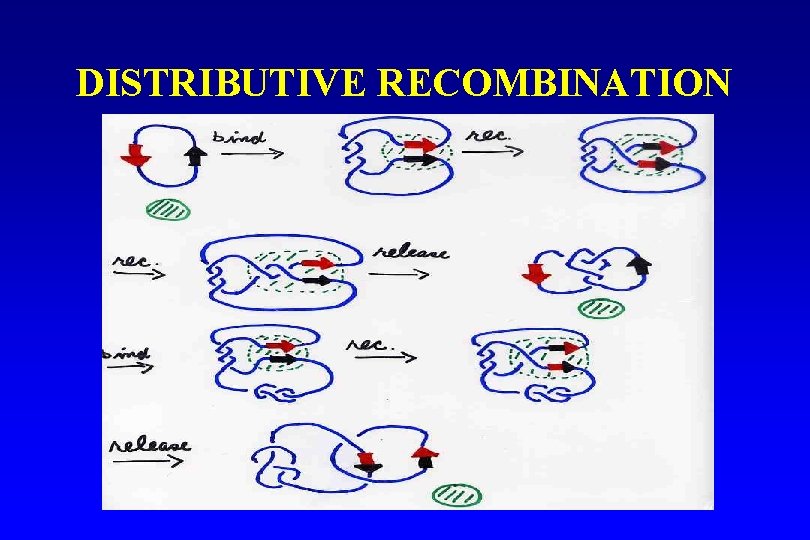
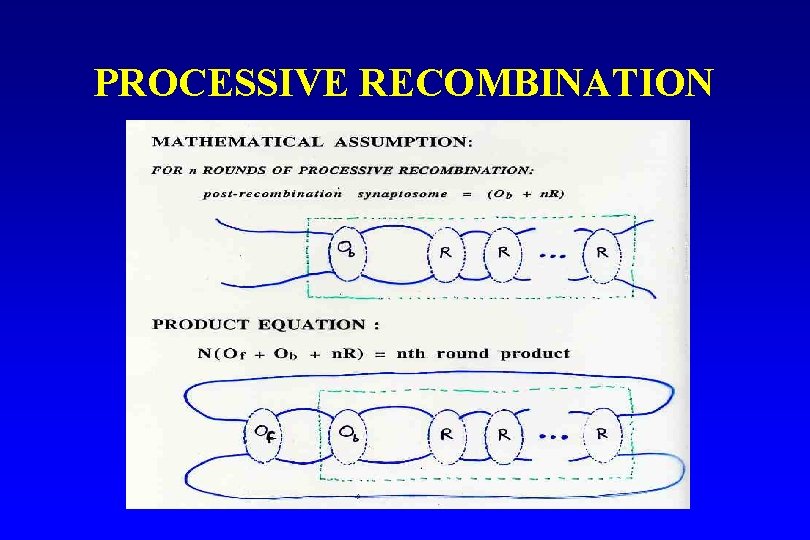
ITERATED RECOMBINATION • DISTRIBUTIVE: multiple recombination events in multiple binding encounters between DNA circle and enzyme • PROCESSIVE: multiple recombination events in a single binding encounter between DNA circle and enzyme
DISTRIBUTIVE RECOMBINATION
PROCESSIVE RECOMBINATION
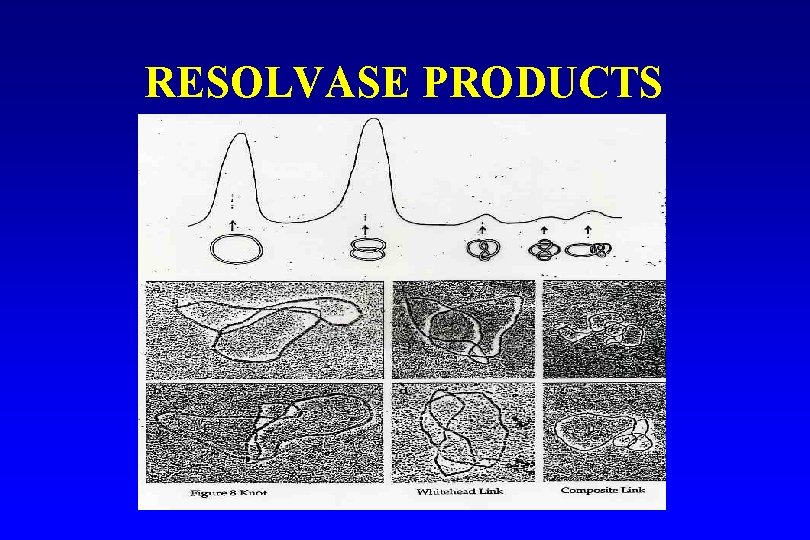
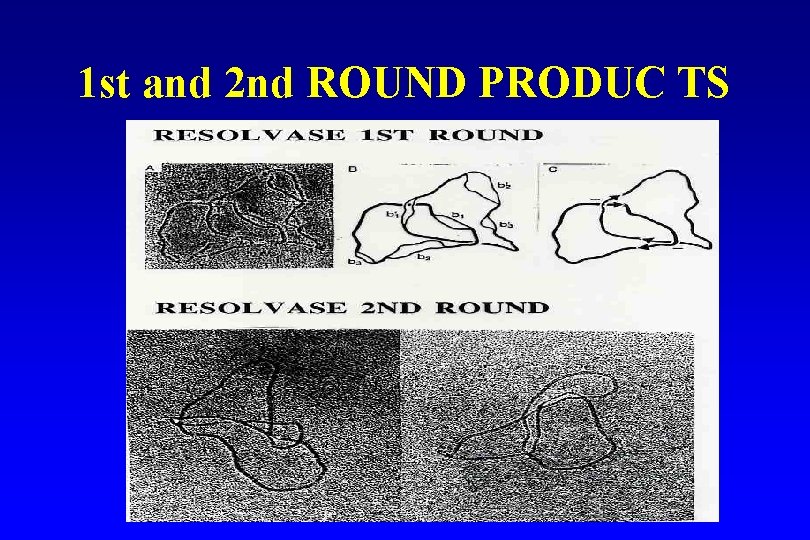
RESOLVASE PRODUCTS
RESOLVASE MAJOR PRODUCT • MAJOR PRODUCT is Hopf link [2], which does not react with Tn 3 • Therefore, ANY iterated recombination must begin with 2 rounds of processive recombination
RESOLVASE MINOR PRODUCTS • Figure 8 knot [1, 1, 2] (2 rounds of processive recombination) • Whitehead link [1, 1, 1] (either 1 or 3 rounds of recombination) • Composite link ( [2] # [1, 1, 2]--not the result of processive recombination, because assumption of tangle addition for iterated recombination implies prime products (Montesinos knots and links) for processive recombination
1 st and 2 nd ROUND PRODUC TS
RESOLVASE SYNAPTIC COMPLEX
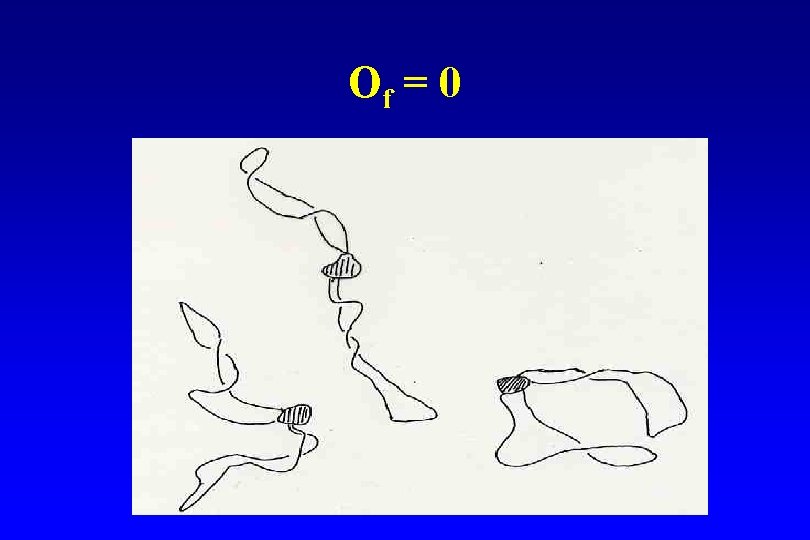
Of = 0
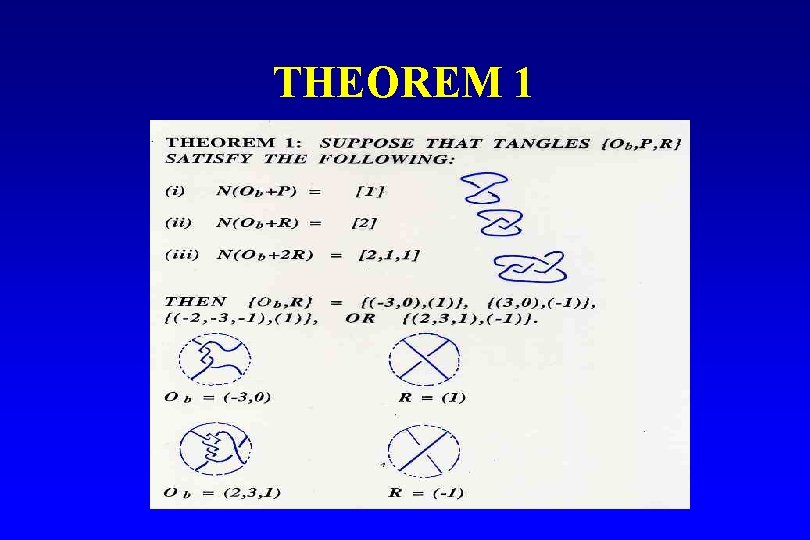
THEOREM 1
PROOF OF THEOREM 1 • Analyze 2 -fold branched cyclic cover T* of tangle T--T is rational iff T* = S 1 x D 2 • Use Cyclic Surgery Theorem to show T* is a Seifert Fiber Space (SFS) • Use results of Dehn surgery on SFS to show T* is a solid torus--hence T is a rational tangle • Use rational tangle calculus to solve tangle equations posed by resolvase experiments
Proof that Tangles are Rational 2 biological arguments • DNA tangles are small, and have few crossings— so are rational by default • DNA is on the outside of protein 3 -ball, and any tangle on the surface of a 3 -ball is rational
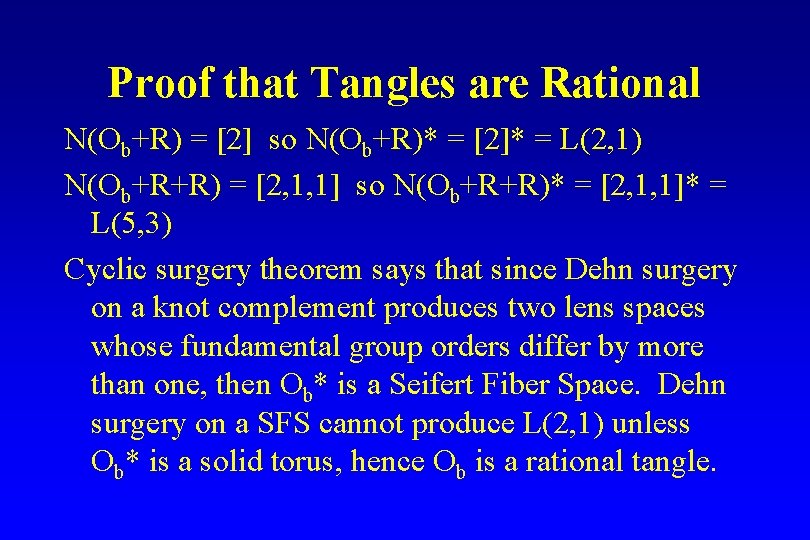
Proof that Tangles are Rational THE MATHEMATICAL ARGUMENT • The substrate (unknot) and the 1 st round product (Hopf link) contain no local knots, so Ob, P and R are either prime or rational. • If tangle A is prime, then ∂ A* (a torus) is incompressible in A. If both A and B are prime tangles, then (AUB)* contains an incompressible torus, and cannot be a lens space.
Proof that Tangles are Rational THE MATHEMATICAL ARGUMENT N(Ob+P) = [1] so N(Ob+P)* = [1]* = S 3 If Ob is prime, the P is rational, and Ob* is a knot complement in S 3. One can similarly argue that R and (R+R) are rational; then looking at the 2 fold branched cyclic covers of the 1 st 2 product equations, we have:
Proof that Tangles are Rational N(Ob+R) = [2] so N(Ob+R)* = [2]* = L(2, 1) N(Ob+R+R) = [2, 1, 1] so N(Ob+R+R)* = [2, 1, 1]* = L(5, 3) Cyclic surgery theorem says that since Dehn surgery on a knot complement produces two lens spaces whose fundamental group orders differ by more than one, then Ob* is a Seifert Fiber Space. Dehn surgery on a SFS cannot produce L(2, 1) unless Ob* is a solid torus, hence Ob is a rational tangle.
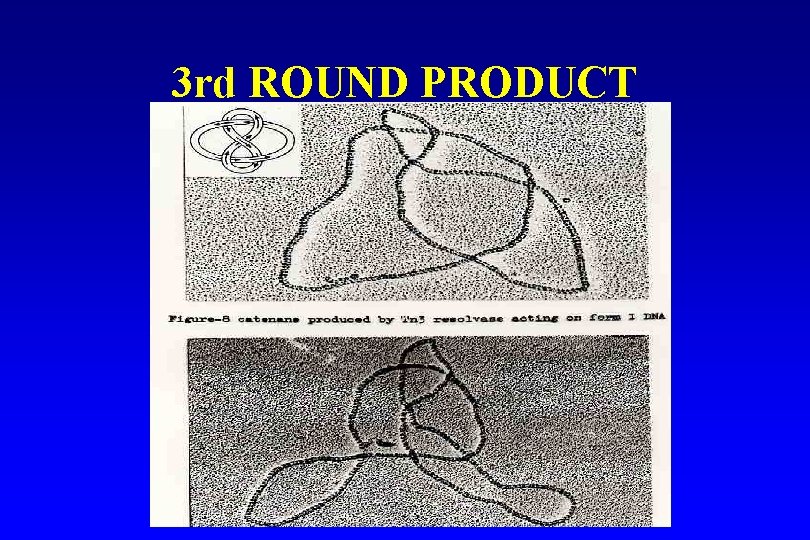
3 rd ROUND PRODUCT
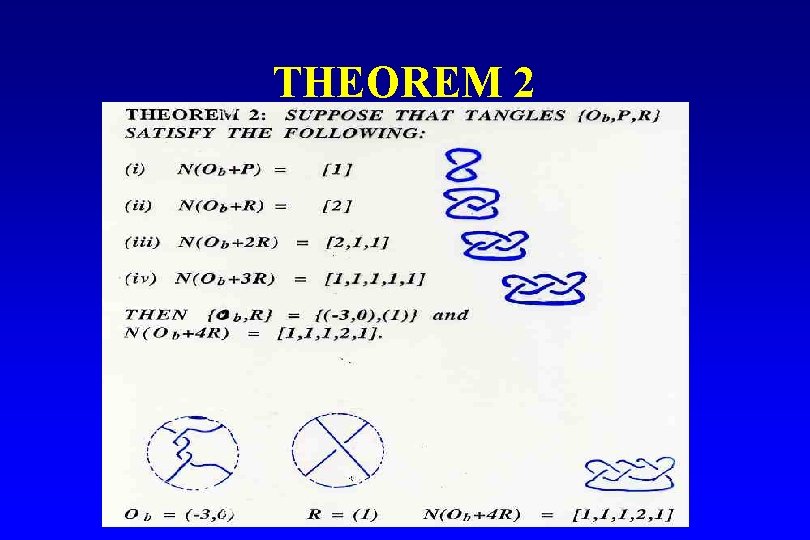
THEOREM 2
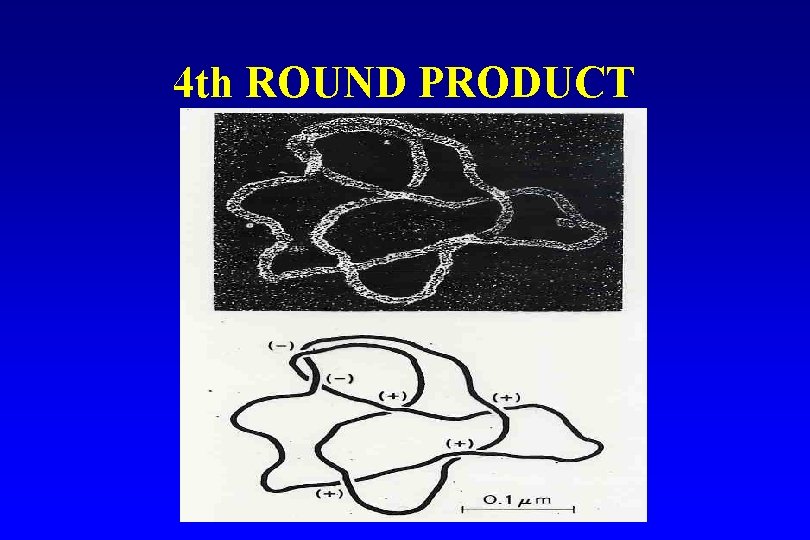
4 th ROUND PRODUCT
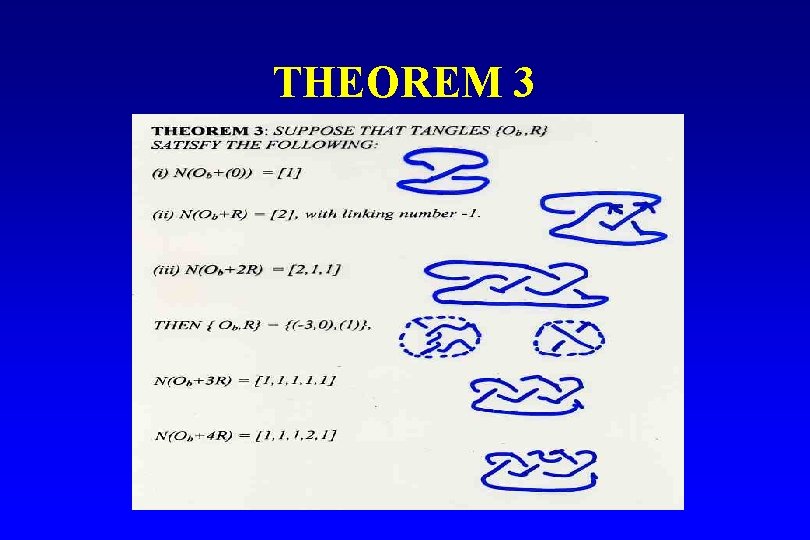
THEOREM 3
UTILITY OF TANGLE MODEL • Precise mathematical language for recombinationallows hypothesis testing • Calculates ALL alternative mechanisms for processive recombination • Model can be used with incomplete experimental evidence (NO EM)--crossing # of products, questionable relationship between product and round of recombination
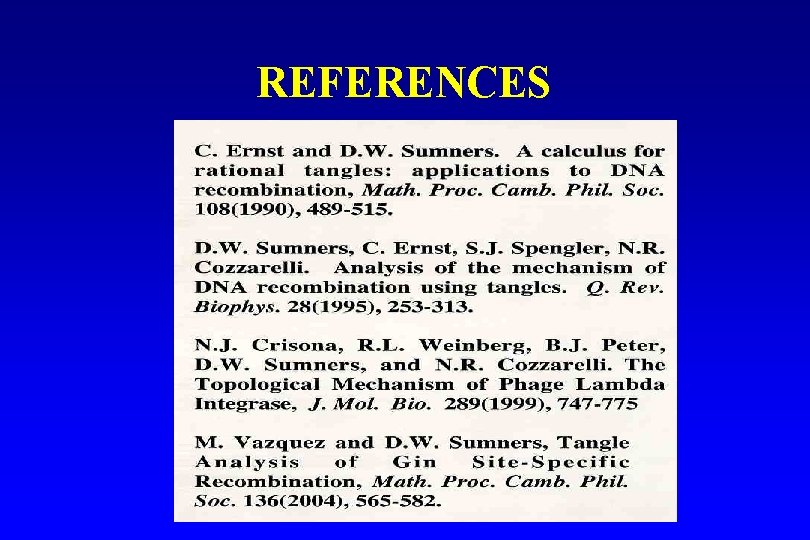
REFERENCES
JMB COVER
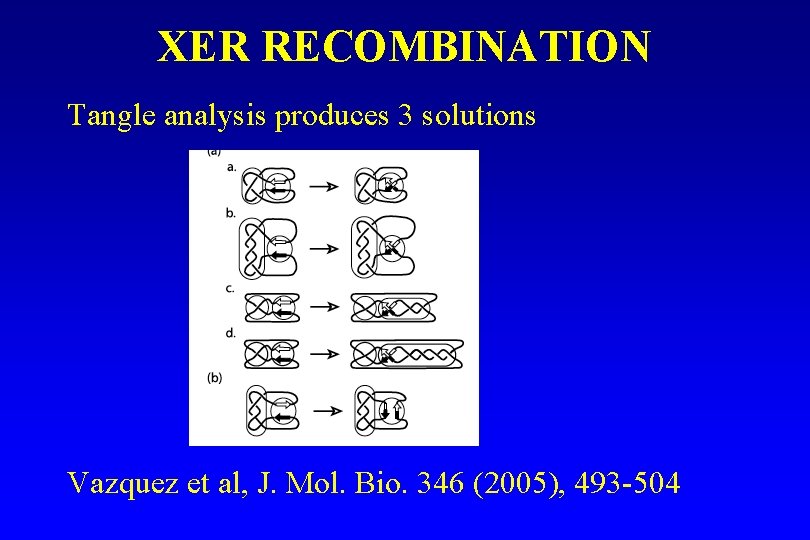
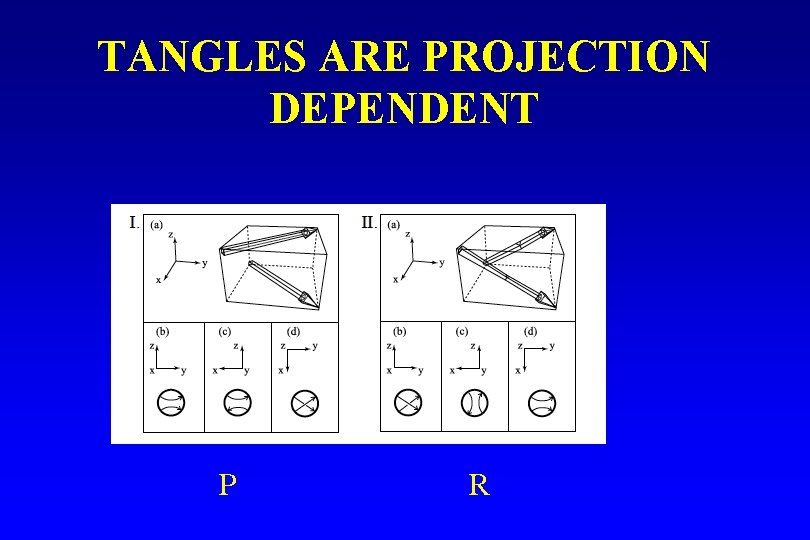
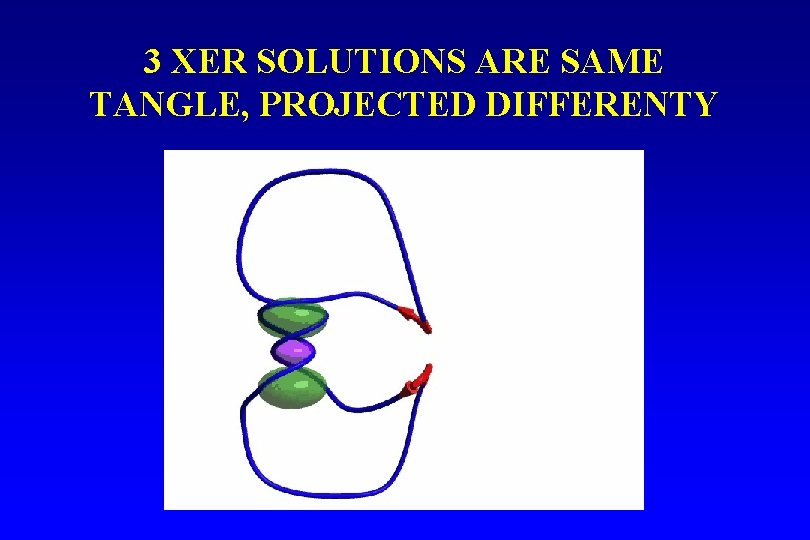
XER RECOMBINATION Tangle analysis produces 3 solutions Vazquez et al, J. Mol. Bio. 346 (2005), 493 -504
TANGLES ARE PROJECTION DEPENDENT P R
3 XER SOLUTIONS ARE SAME TANGLE, PROJECTED DIFFERENTY
UNSOLVED TANGLE PROBLEM • Let A be a rational tangle; how many other rational tangles can be obtained from A by choosing another projection?
Thank You • National Science Foundation • Burroughs Wellcome Fund