
DNA to PROTEIN CHAPTER 12 n DEOXYRIBONUCLEIC ACID
DNA to PROTEIN CHAPTER 12 n DEOXYRIBONUCLEIC ACID
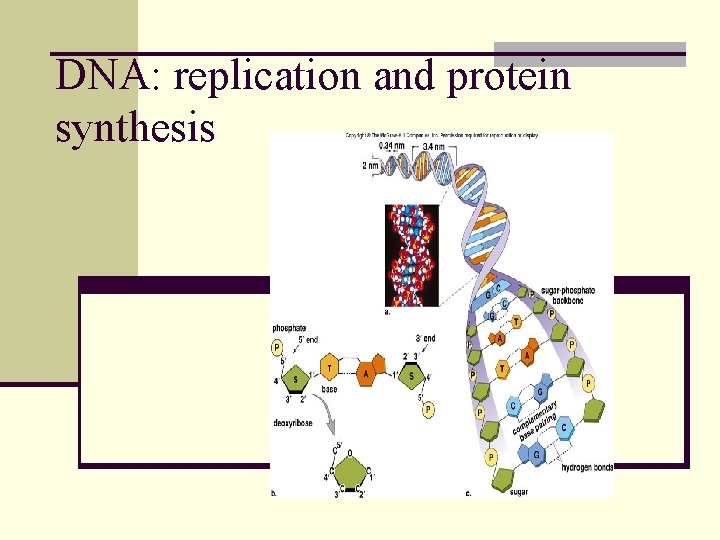
DNA: replication and protein synthesis
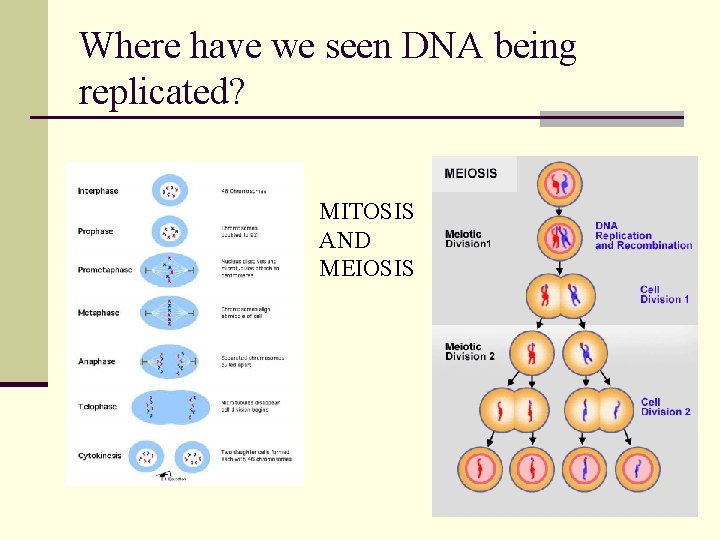
Where have we seen DNA being replicated? MITOSIS AND MEIOSIS
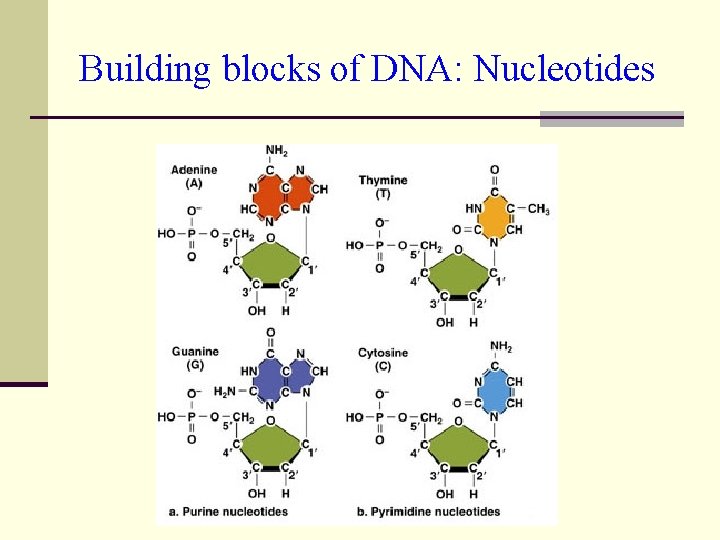
Building blocks of DNA: Nucleotides
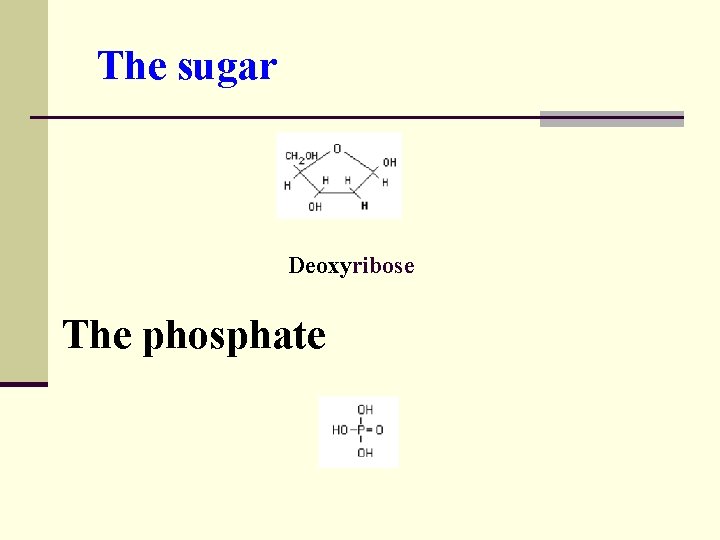
The sugar Deoxyribose The phosphate
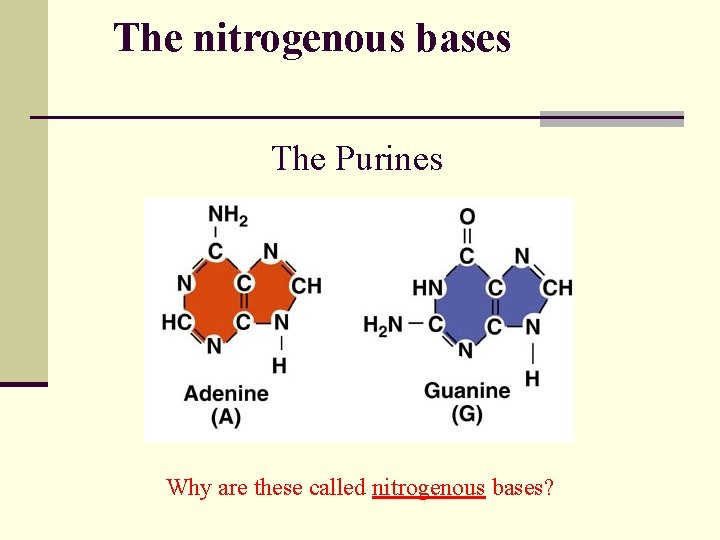
The nitrogenous bases The Purines Why are these called nitrogenous bases?
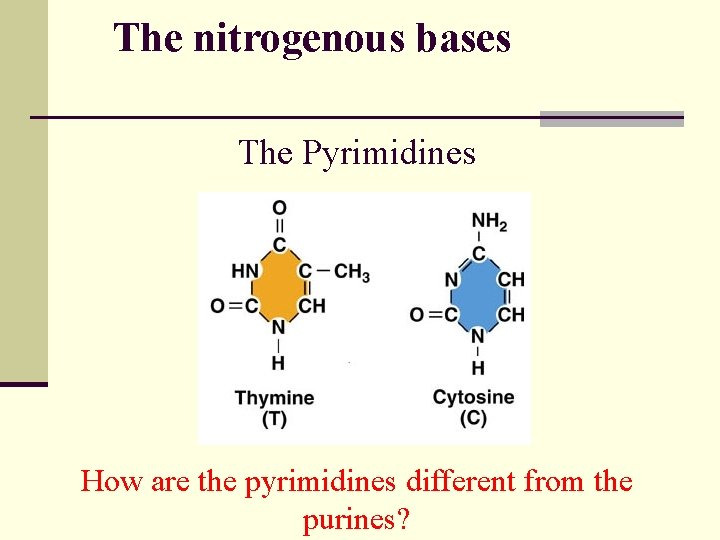
The nitrogenous bases The Pyrimidines How are the pyrimidines different from the purines?
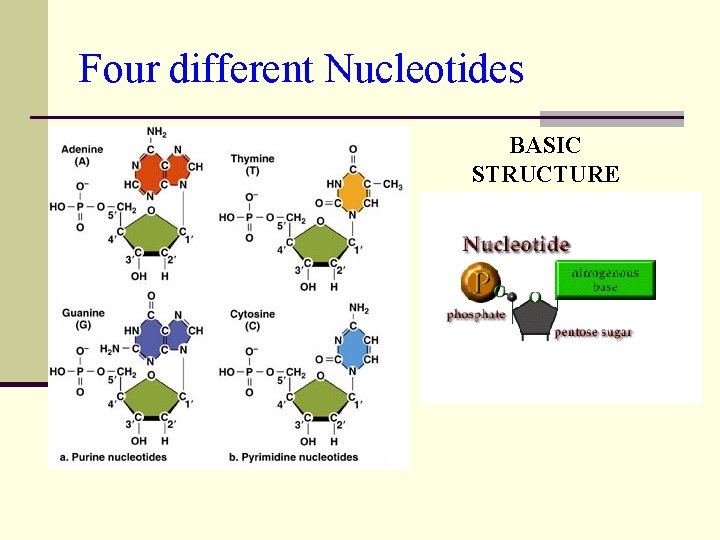
Four different Nucleotides BASIC STRUCTURE
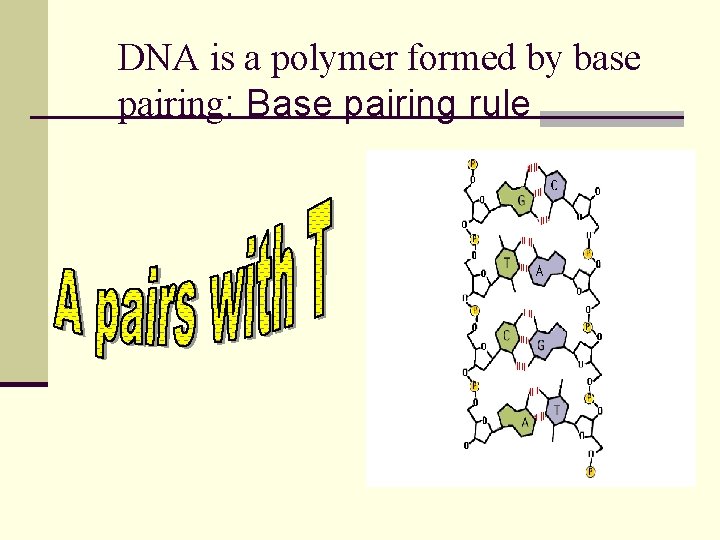
DNA is a polymer formed by base pairing: Base pairing rule
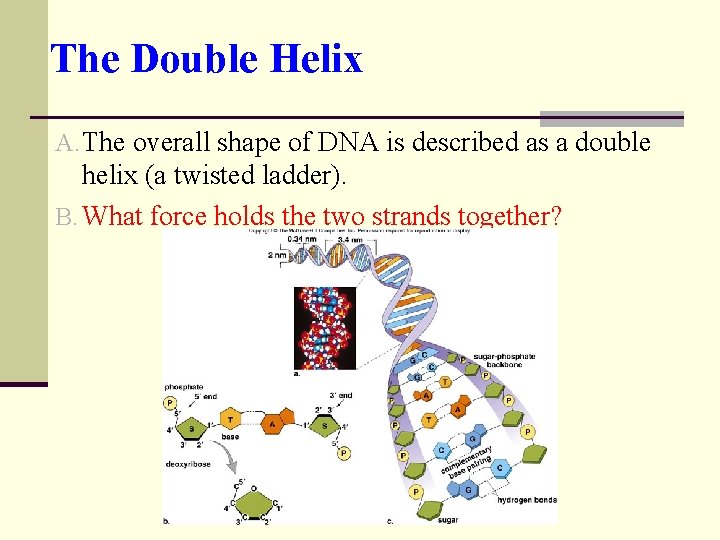
The Double Helix A. The overall shape of DNA is described as a double helix (a twisted ladder). B. What force holds the two strands together?
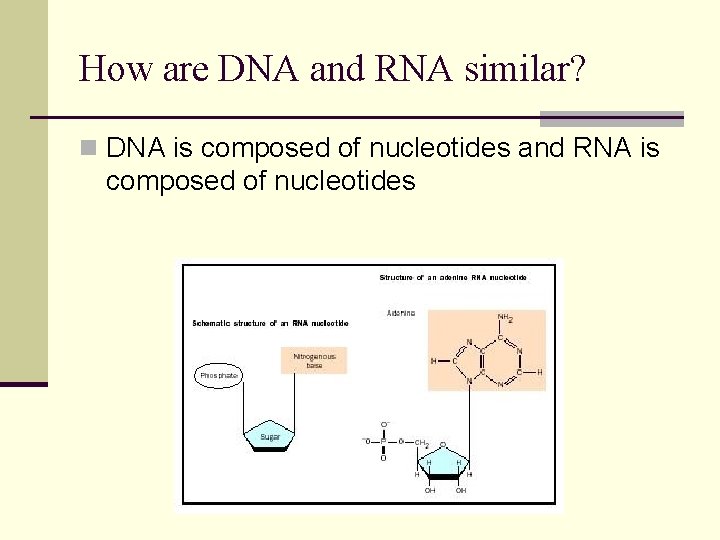
How are DNA and RNA similar? n DNA is composed of nucleotides and RNA is composed of nucleotides
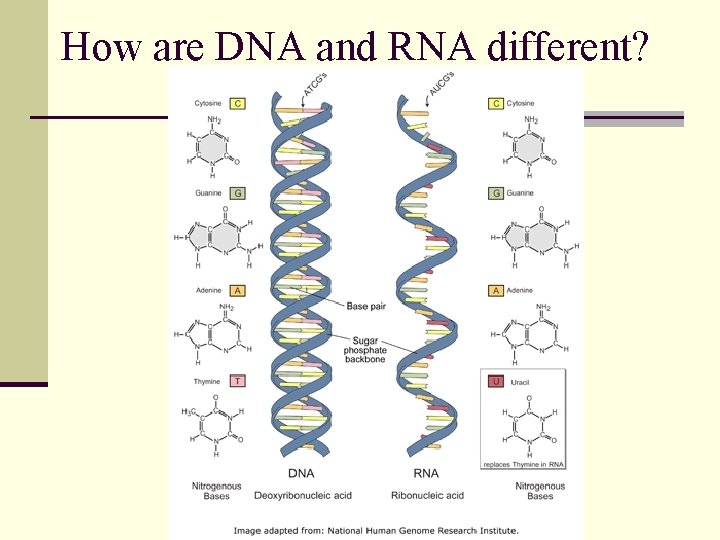
How are DNA and RNA different?
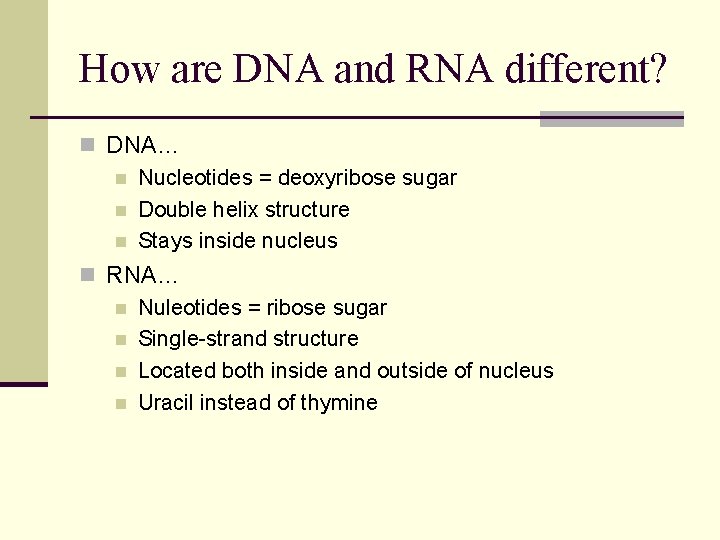
How are DNA and RNA different? n DNA… n Nucleotides = deoxyribose sugar n Double helix structure n Stays inside nucleus n RNA… n Nuleotides = ribose sugar n Single-strand structure n Located both inside and outside of nucleus n Uracil instead of thymine
DNA Replication n ANIMATION DETAILED
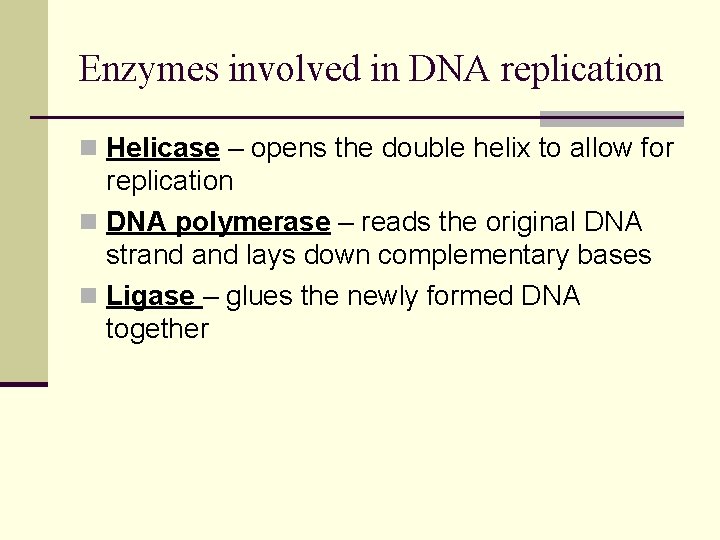
Enzymes involved in DNA replication n Helicase – opens the double helix to allow for replication n DNA polymerase – reads the original DNA strand lays down complementary bases n Ligase – glues the newly formed DNA together
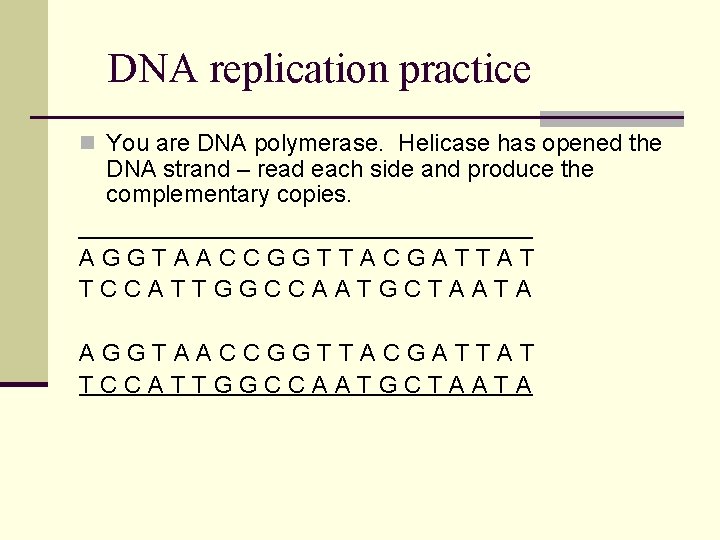
DNA replication practice n You are DNA polymerase. Helicase has opened the DNA strand – read each side and produce the complementary copies. _________________ AGGTAACCGGTTACGATTAT TCCATTGGCCAATGCTAATA
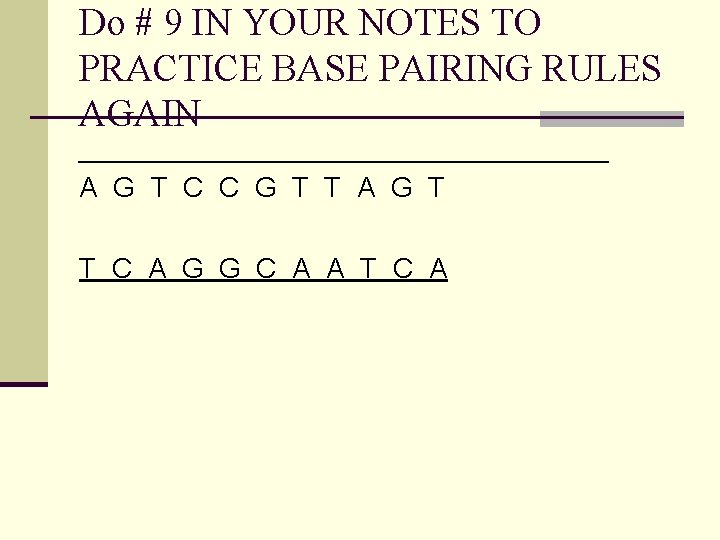
Do # 9 IN YOUR NOTES TO PRACTICE BASE PAIRING RULES AGAIN _________________ A G T C C G T T A G T T C A G G C A A T C A
Protein Synthesis= transcription and translation n DNA contains all the information for your traits – the genes n These genes are blueprints and need to remain safe – kept inside the nucleus n Copies can be made though – a messenger
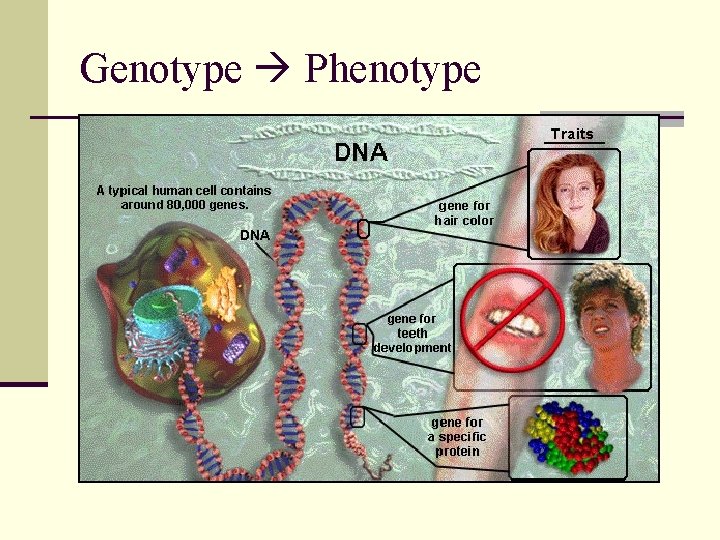
Genotype Phenotype DNA m. RNA t. RNA PROTEIN Transcription Translation
Transcription n m. RNA – stands for messenger RNA n it is the copy of the DNA message for making a protein n Occurs in the nucleus n Promoter region on DNA marks where transription should start and terminator region marks where it should stop
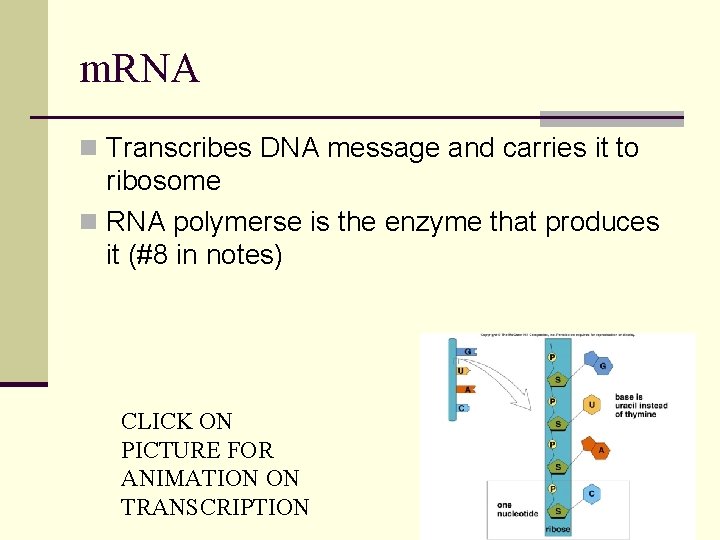
m. RNA n Transcribes DNA message and carries it to ribosome n RNA polymerse is the enzyme that produces it (#8 in notes) CLICK ON PICTURE FOR ANIMATION ON TRANSCRIPTION
m. RNA n No T (thymine) so when it reads the nucleotide A on DNA it matches it with ____? n Do #11 in notes
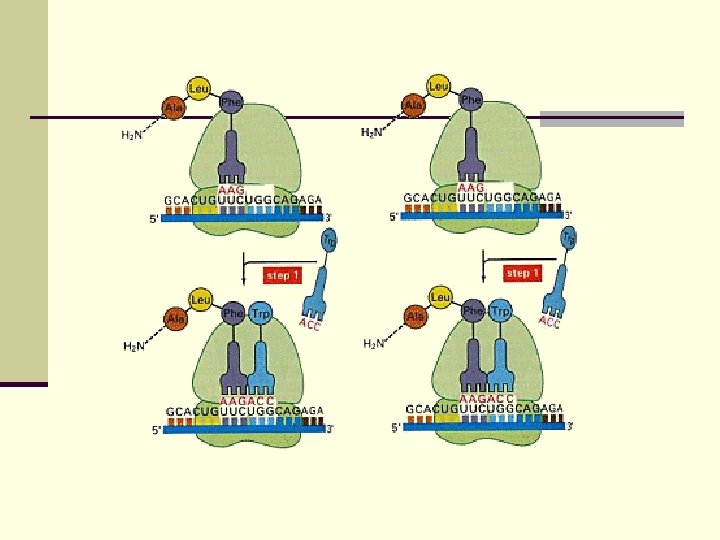
t. RNA n Once m. RNA is made it attaches to a ribosome n t. RNA = transfer RNA and they carry amino acids n Amino acids are the building blocks of proteins (remember? )
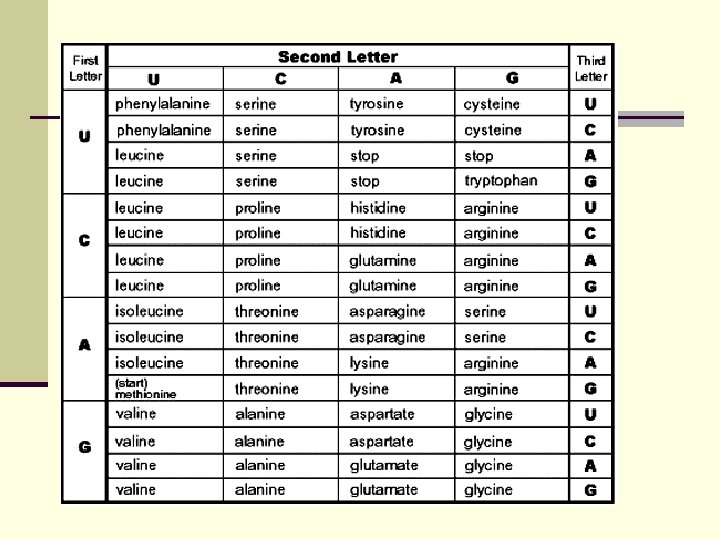
Translation n Ribosomes are the site of protein synthesis n Click here to see m. RNA and t. RNA work together at that ribosome to build a protein
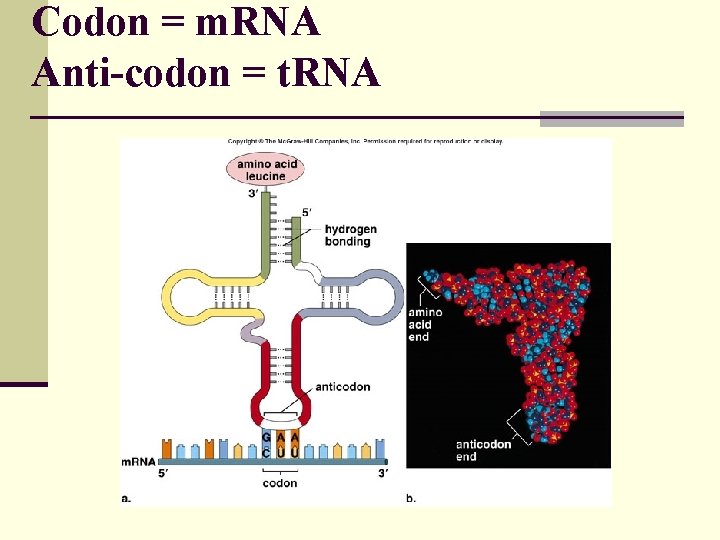
Codon = m. RNA Anti-codon = t. RNA
Let’s Review n DNA Structure is a ______ n DNA is composed of _____ What are four that make up DNA? A n. T n. C n. G n
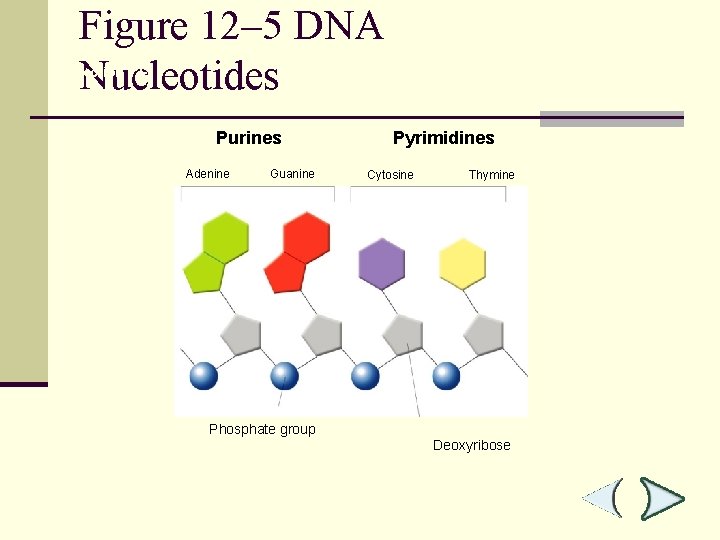
Figure 12– 5 DNA Nucleotides Section 12 -1 Purines Adenine Guanine Pyrimidines Cytosine Thymine Phosphate group Deoxyribose
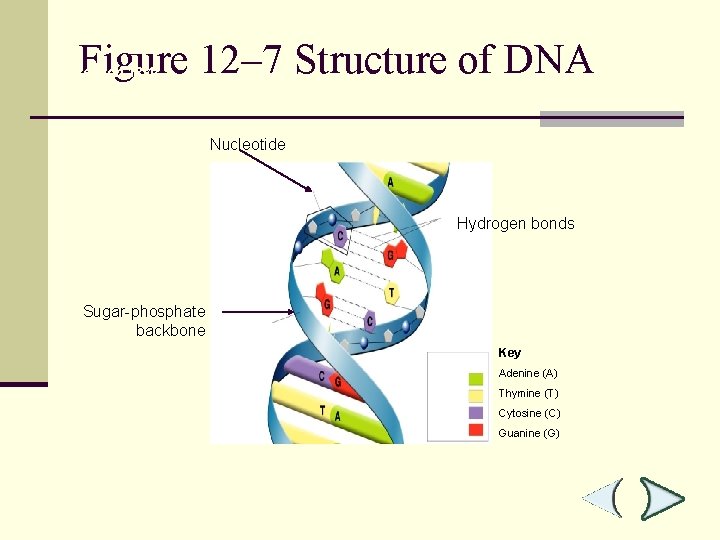
Figure 12– 7 Structure of DNA Section 12 -1 Nucleotide Hydrogen bonds Sugar-phosphate backbone Key Adenine (A) Thymine (T) Cytosine (C) Guanine (G)
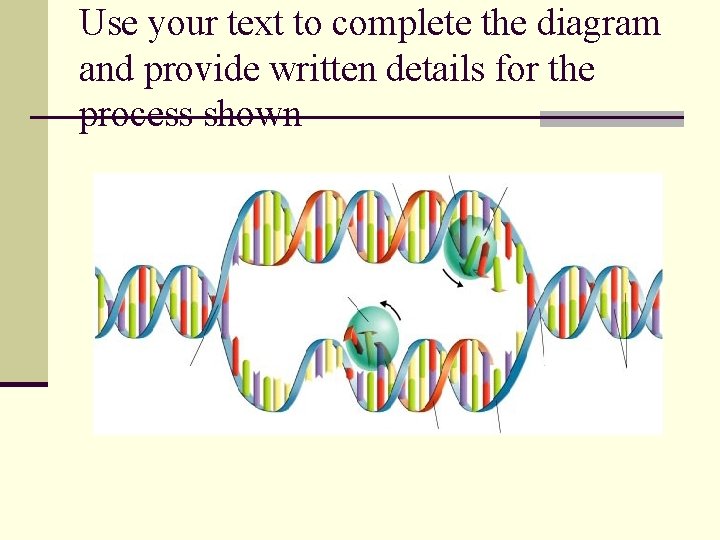
Use your text to complete the diagram and provide written details for the process shown
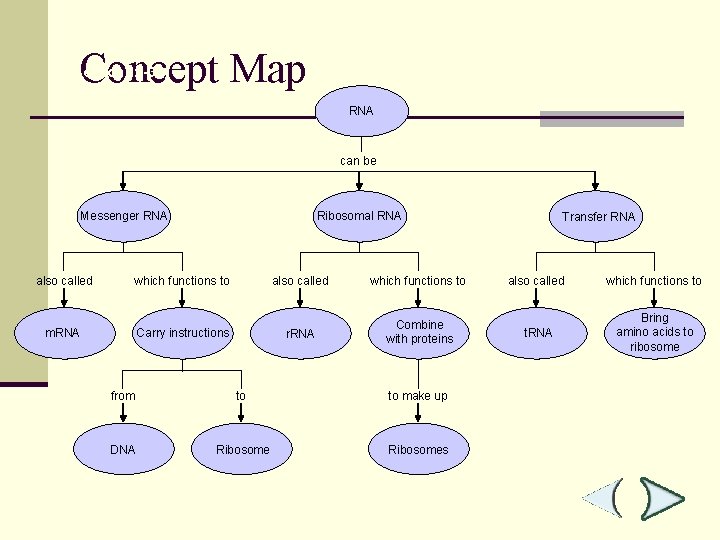
Concept Map Section 12 -3 RNA can be Messenger RNA also called Ribosomal RNA which functions to m. RNA Carry instructions also called which functions to r. RNA Combine with proteins from to to make up DNA Ribosomes Transfer RNA also called which functions to t. RNA Bring amino acids to ribosome
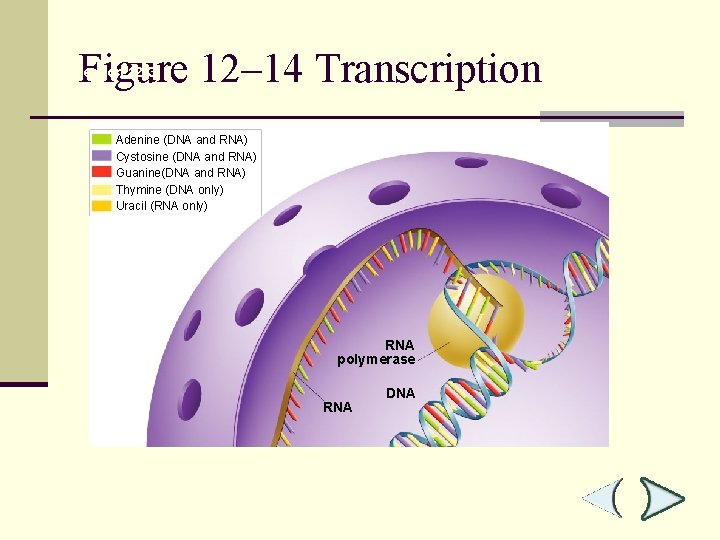
Figure 12– 14 Transcription Section 12 -3 Adenine (DNA and RNA) Cystosine (DNA and RNA) Guanine(DNA and RNA) Thymine (DNA only) Uracil (RNA only) RNA polymerase RNA DNA
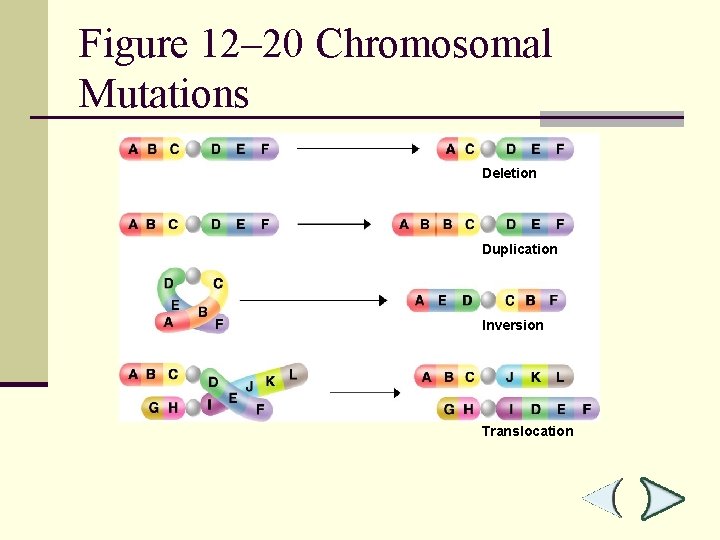
Figure 12– 20 Chromosomal Mutations Section 12 -4 Deletion Duplication Inversion Translocation

- Slides: 35