
DNA The Molecule of Heredity The Double Helix
DNA The Molecule of Heredity
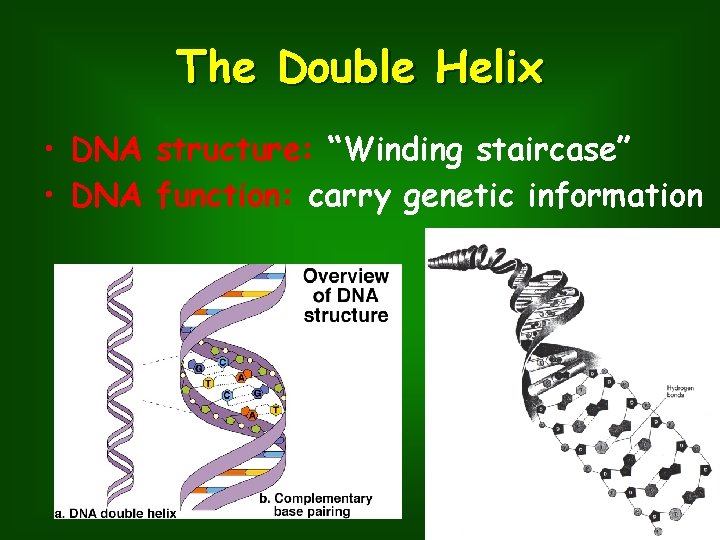
The Double Helix • DNA structure: “Winding staircase” • DNA function: carry genetic information
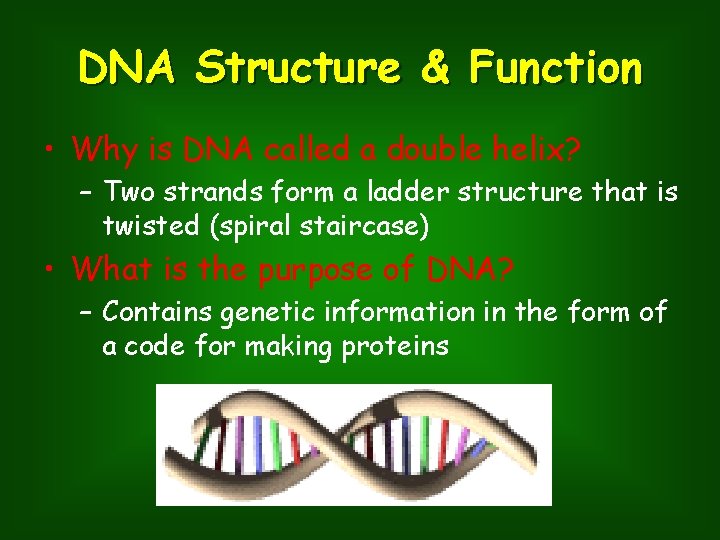
DNA Structure & Function • Why is DNA called a double helix? – Two strands form a ladder structure that is twisted (spiral staircase) • What is the purpose of DNA? – Contains genetic information in the form of a code for making proteins
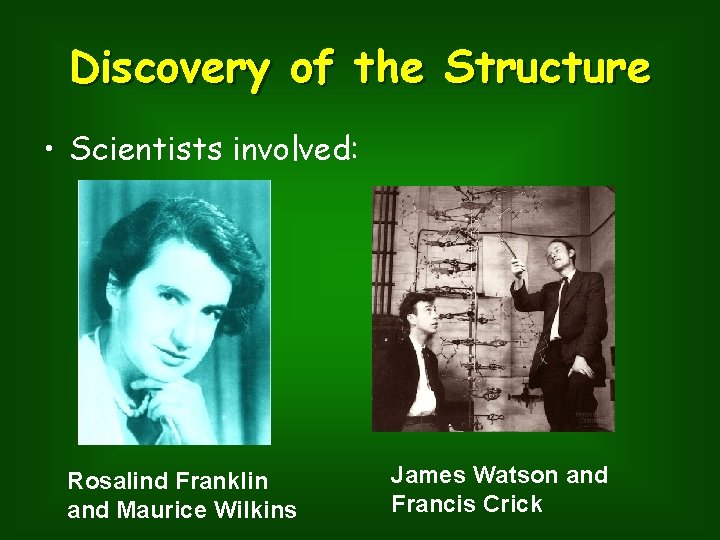
Discovery of the Structure • Scientists involved: Rosalind Franklin and Maurice Wilkins James Watson and Francis Crick
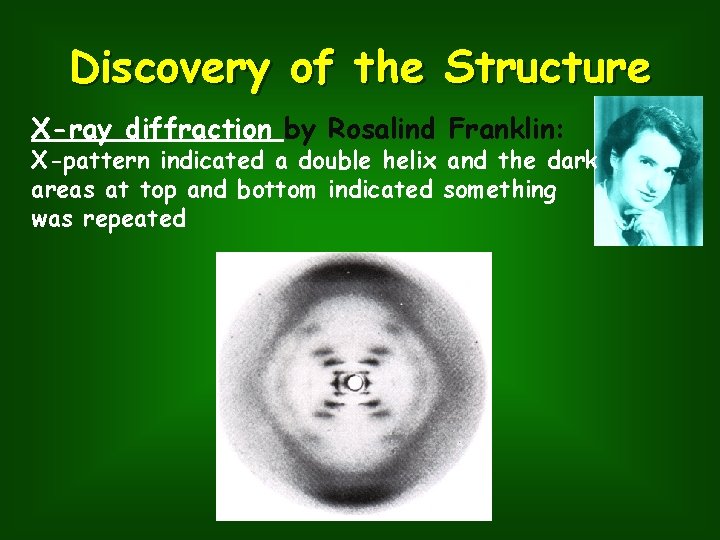
Discovery of the Structure X-ray diffraction by Rosalind Franklin: X-pattern indicated a double helix and the dark areas at top and bottom indicated something was repeated
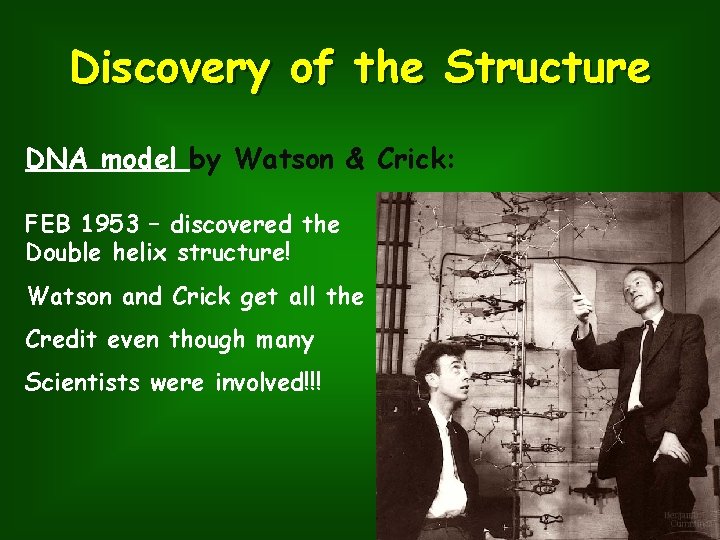
Discovery of the Structure DNA model by Watson & Crick: FEB 1953 – discovered the Double helix structure! Watson and Crick get all the Credit even though many Scientists were involved!!!
Let’s watch…
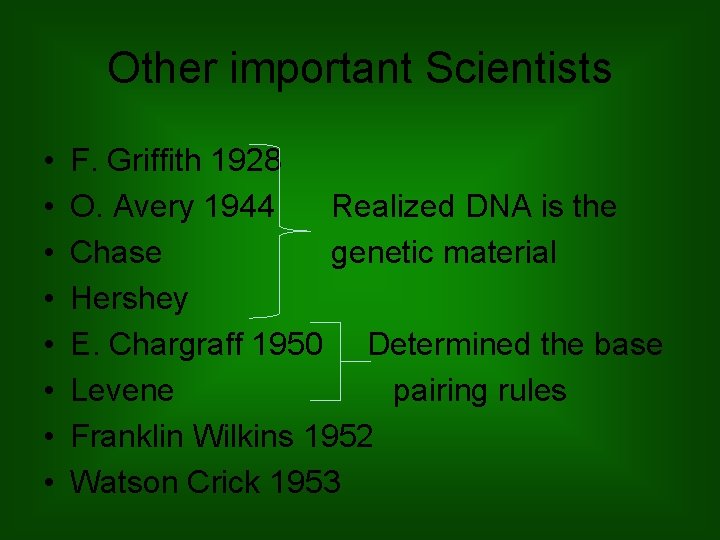
Other important Scientists • • F. Griffith 1928 O. Avery 1944 Realized DNA is the Chase genetic material Hershey E. Chargraff 1950 Determined the base Levene pairing rules Franklin Wilkins 1952 Watson Crick 1953
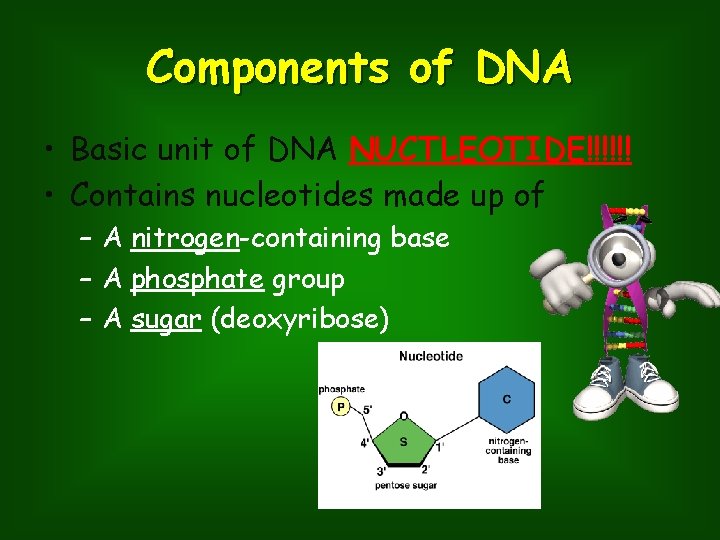
Components of DNA • Basic unit of DNA NUCTLEOTIDE!!!!!! • Contains nucleotides made up of – A nitrogen-containing base – A phosphate group – A sugar (deoxyribose)
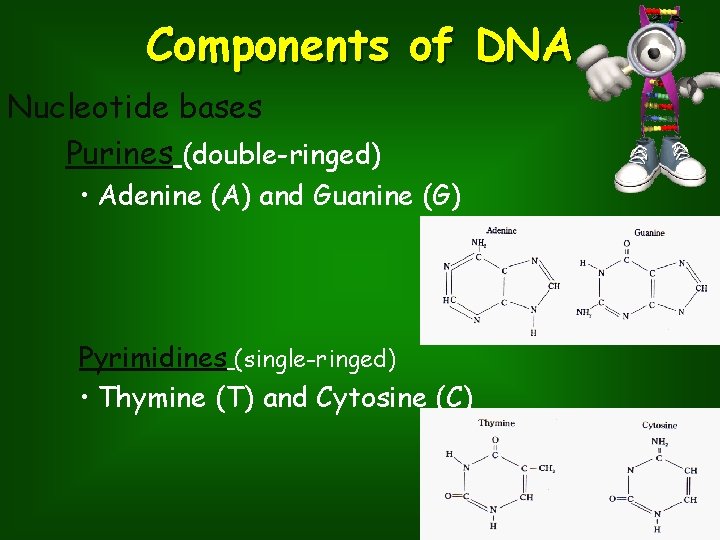
Components of DNA Nucleotide bases Purines (double-ringed) • Adenine (A) and Guanine (G) Pyrimidines (single-ringed) • Thymine (T) and Cytosine (C)
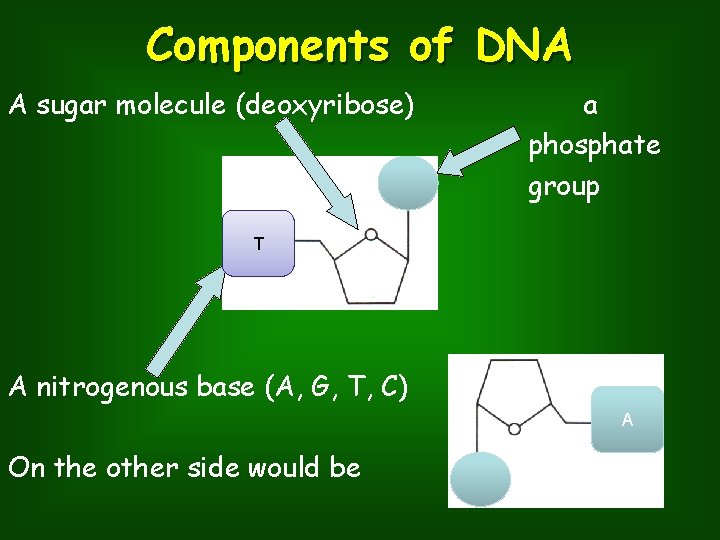
Components of DNA A sugar molecule (deoxyribose) a phosphate group T A nitrogenous base (A, G, T, C) A On the other side would be
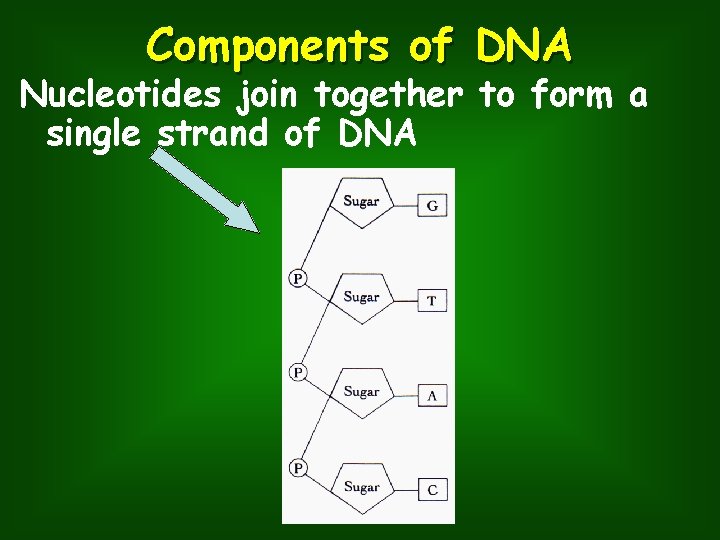
Components of DNA Nucleotides join together to form a single strand of DNA
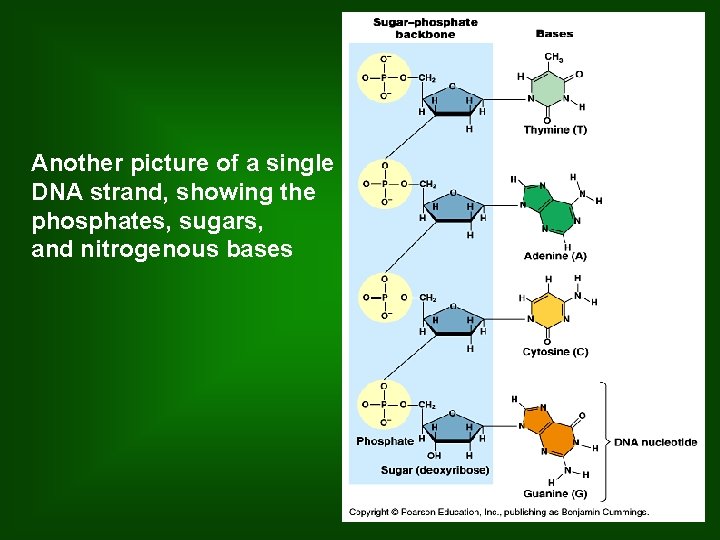
Another picture of a single DNA strand, showing the phosphates, sugars, and nitrogenous bases
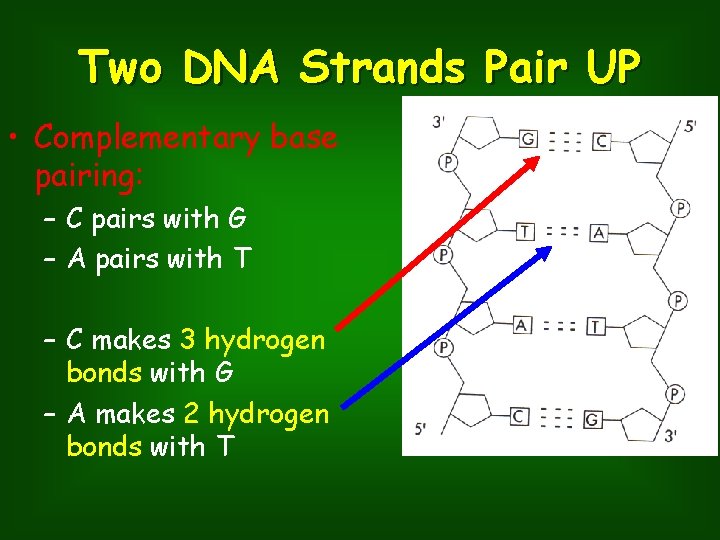
Two DNA Strands Pair UP • Complementary base pairing: – C pairs with G – A pairs with T – C makes 3 hydrogen bonds with G – A makes 2 hydrogen bonds with T
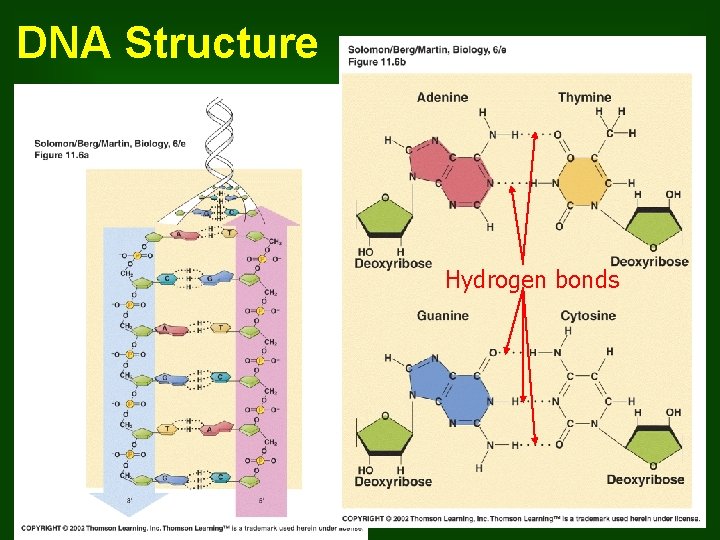
DNA Structure Hydrogen bonds
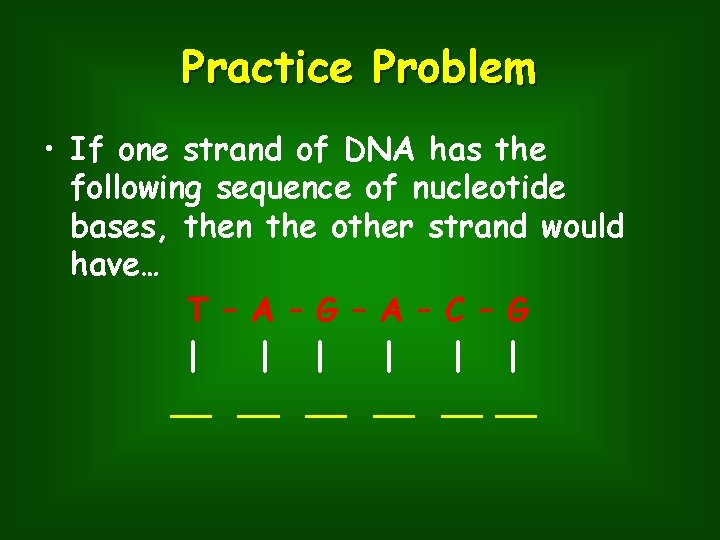
Practice Problem • If one strand of DNA has the following sequence of nucleotide bases, then the other strand would have… T – A – G – A – C – G | | | __ __ __
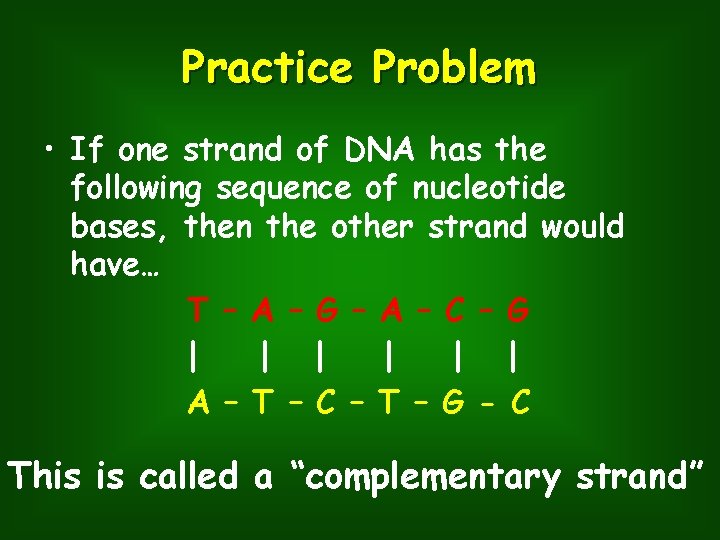
Practice Problem • If one strand of DNA has the following sequence of nucleotide bases, then the other strand would have… T – A – G – A – C – G | | | A – T – C – T – G - C This is called a “complementary strand”
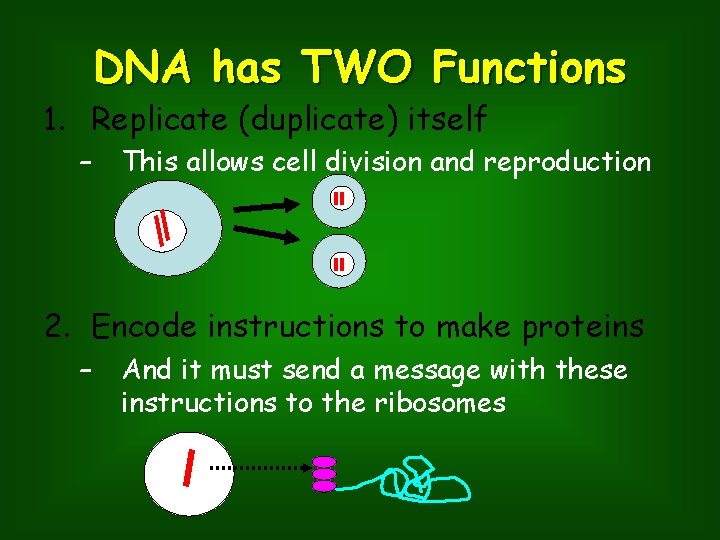
DNA has TWO Functions 1. Replicate (duplicate) itself – This allows cell division and reproduction 2. Encode instructions to make proteins – And it must send a message with these instructions to the ribosomes
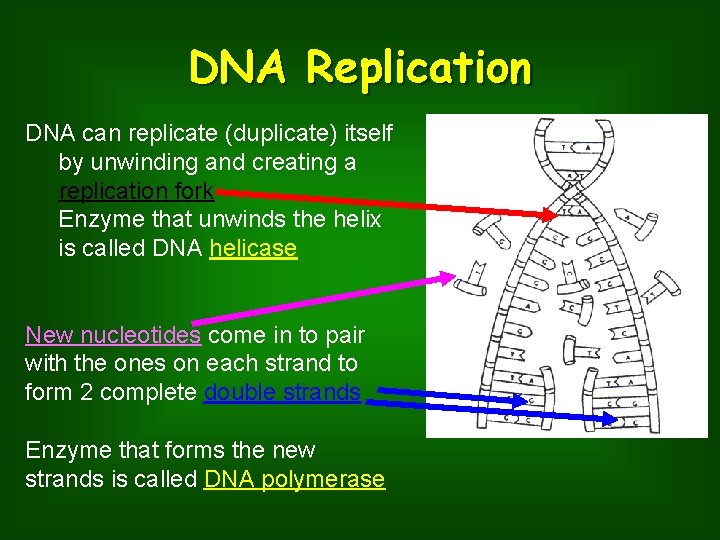
DNA Replication DNA can replicate (duplicate) itself by unwinding and creating a replication fork Enzyme that unwinds the helix is called DNA helicase New nucleotides come in to pair with the ones on each strand to form 2 complete double strands Enzyme that forms the new strands is called DNA polymerase
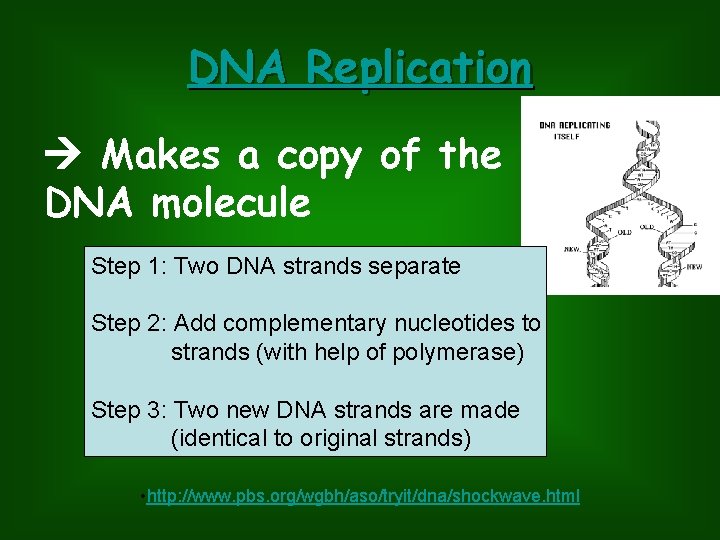
DNA Replication Makes a copy of the DNA molecule Step 1: Two DNA strands separate Step 2: Add complementary nucleotides to strands (with help of polymerase) Step 3: Two new DNA strands are made (identical to original strands) • http: //www. pbs. org/wgbh/aso/tryit/dna/shockwave. html
DNA Replication • Replication video • Now complete the DNA Replication Lab!
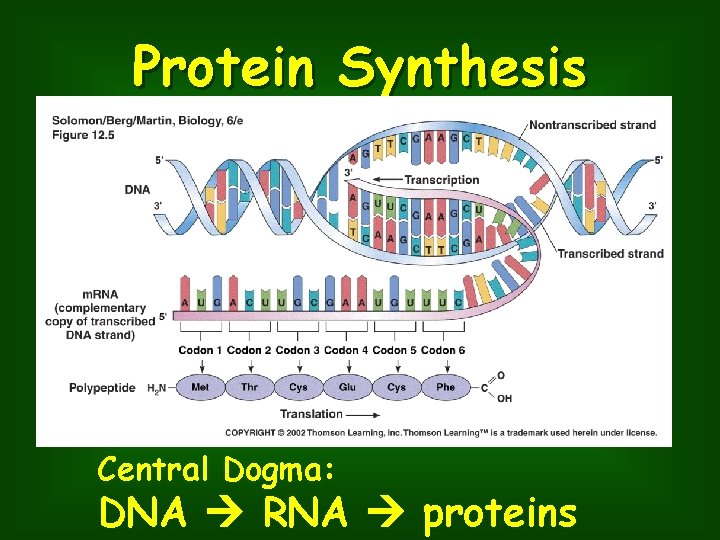
Protein Synthesis Central Dogma: DNA RNA proteins
Review of the Cell
Review of the Cell Nucleus
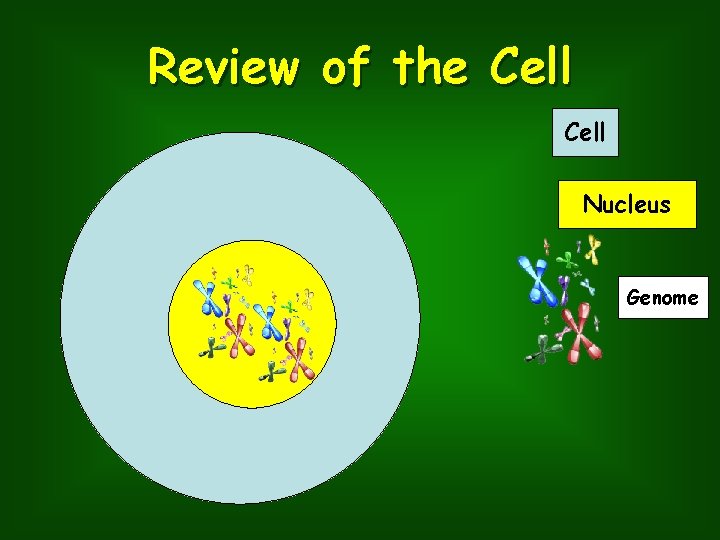
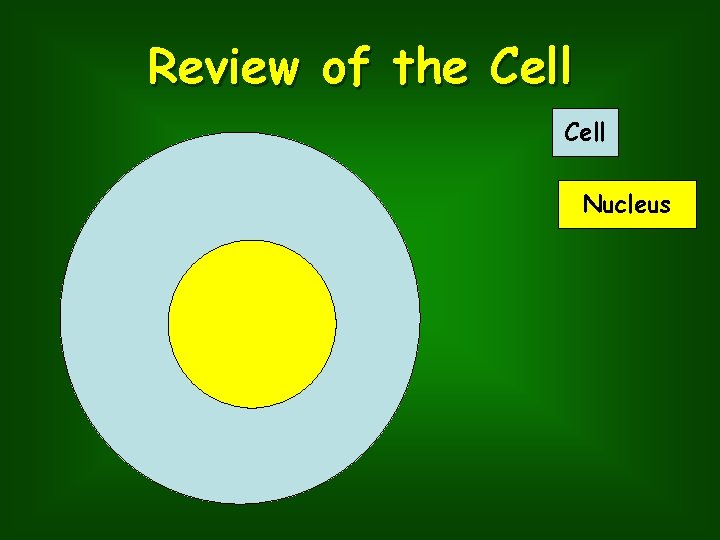
Review of the Cell Nucleus Genome
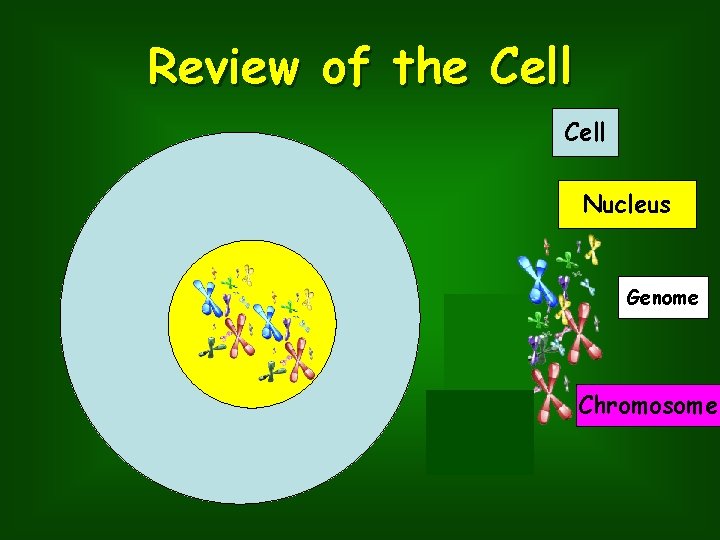
Review of the Cell Nucleus Genome Chromosome
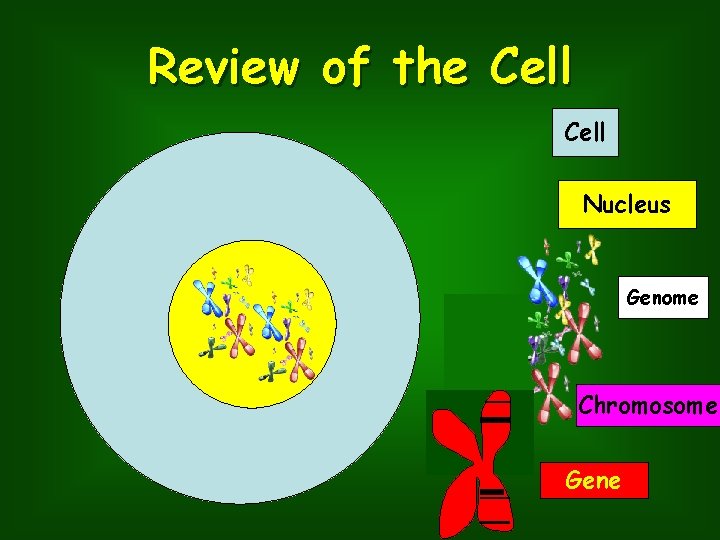
Review of the Cell Nucleus Genome Chromosome Gene
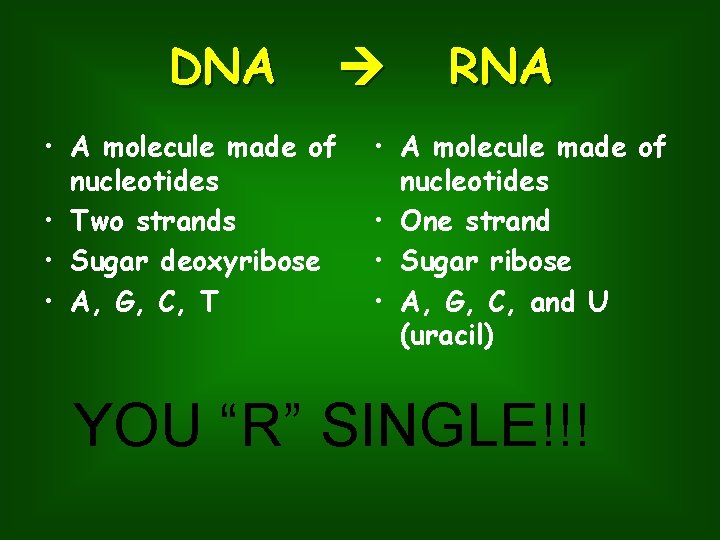
DNA • A molecule made of nucleotides • Two strands • Sugar deoxyribose • A, G, C, T RNA • A molecule made of nucleotides • One strand • Sugar ribose • A, G, C, and U (uracil) YOU “R” SINGLE!!!
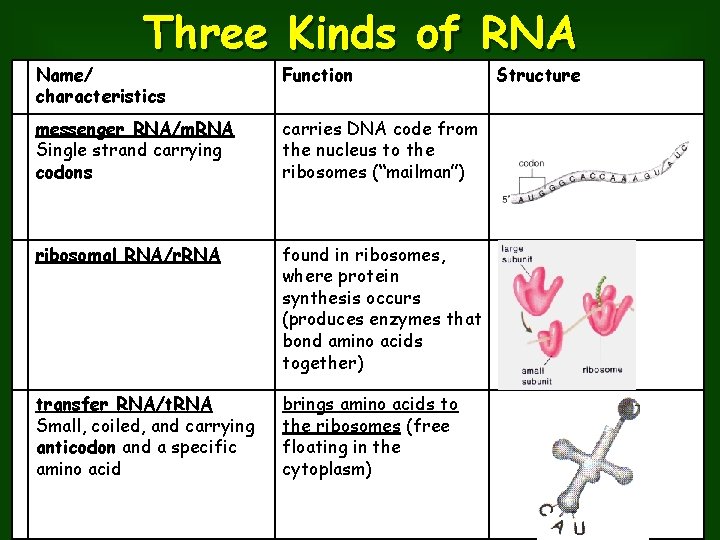
Three Kinds of RNA Name/ characteristics Function messenger RNA/m. RNA Single strand carrying codons carries DNA code from the nucleus to the ribosomes (“mailman”) ribosomal RNA/r. RNA found in ribosomes, where protein synthesis occurs (produces enzymes that bond amino acids together) transfer RNA/t. RNA Small, coiled, and carrying anticodon and a specific amino acid brings amino acids to the ribosomes (free floating in the cytoplasm) Structure
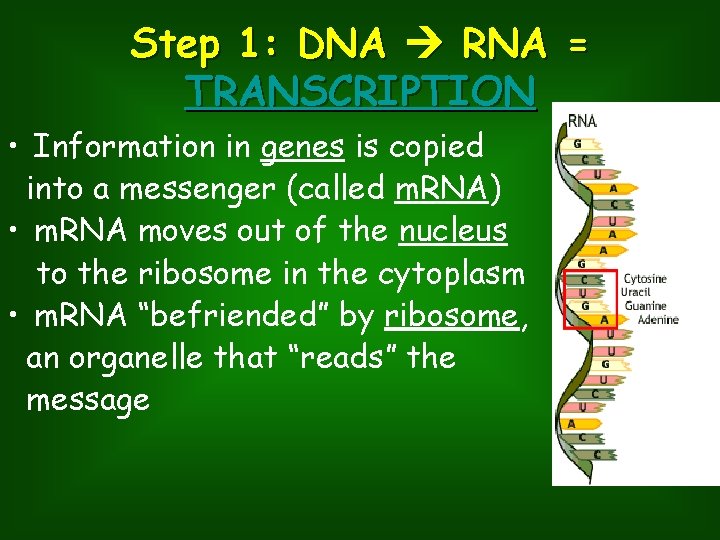
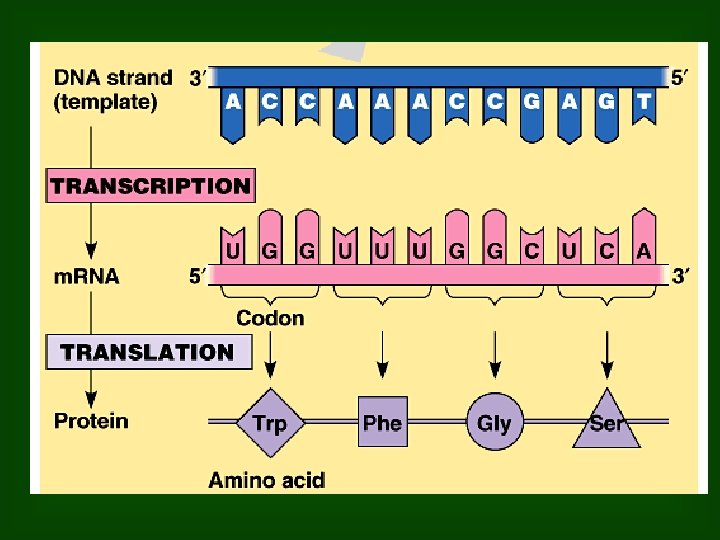
Step 1: DNA RNA = TRANSCRIPTION • Information in genes is copied into a messenger (called m. RNA) • m. RNA moves out of the nucleus to the ribosome in the cytoplasm • m. RNA “befriended” by ribosome, an organelle that “reads” the message
The Triplet Code • The genetic instructions for a polypeptide chain are ‘written’ in the DNA as a series of 3 -nucleotide ‘words’ called Codons • ‘U’ (uracil) replaces ‘T’ in RNA • Therefore, A on DNA will bond with U on the RNA!!!
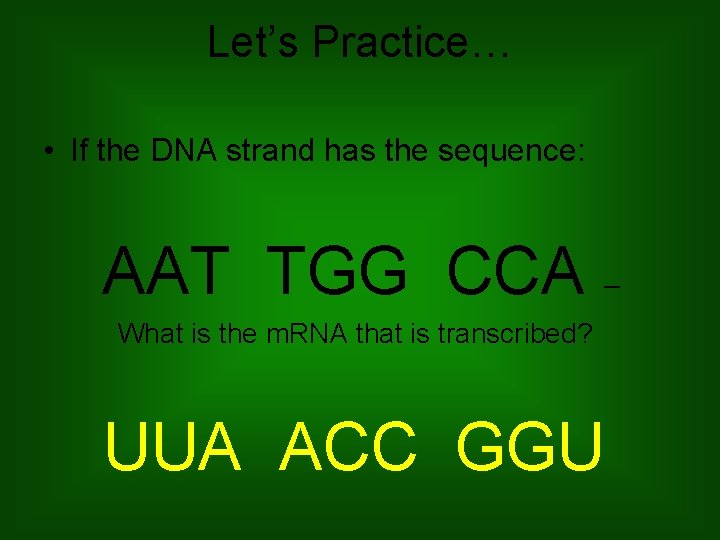
Let’s Practice… • If the DNA strand has the sequence: AAT TGG CCA – What is the m. RNA that is transcribed? UUA ACC GGU
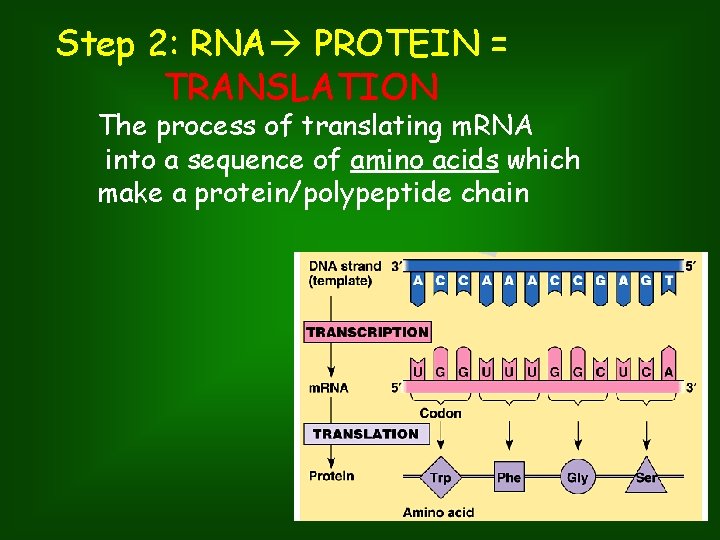
Step 2: RNA PROTEIN = TRANSLATION The process of translating m. RNA into a sequence of amino acids which make a protein/polypeptide chain
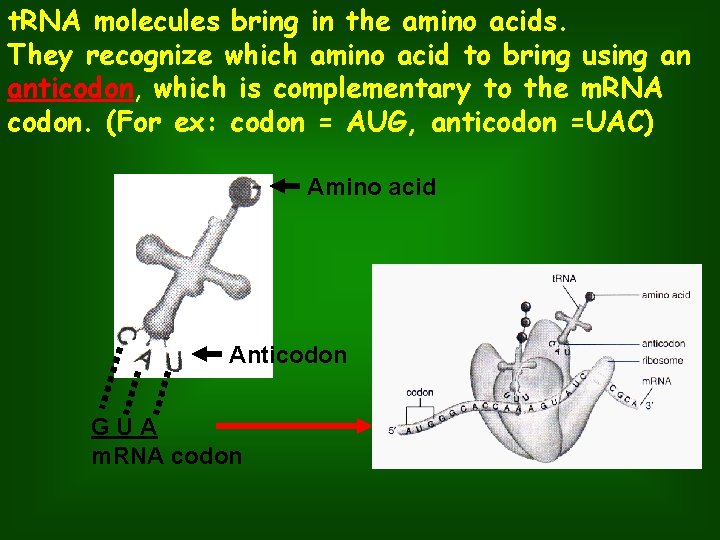
t. RNA molecules bring in the amino acids. They recognize which amino acid to bring using an anticodon, which is complementary to the m. RNA codon. (For ex: codon = AUG, anticodon =UAC) Amino acid Anticodon GUA m. RNA codon
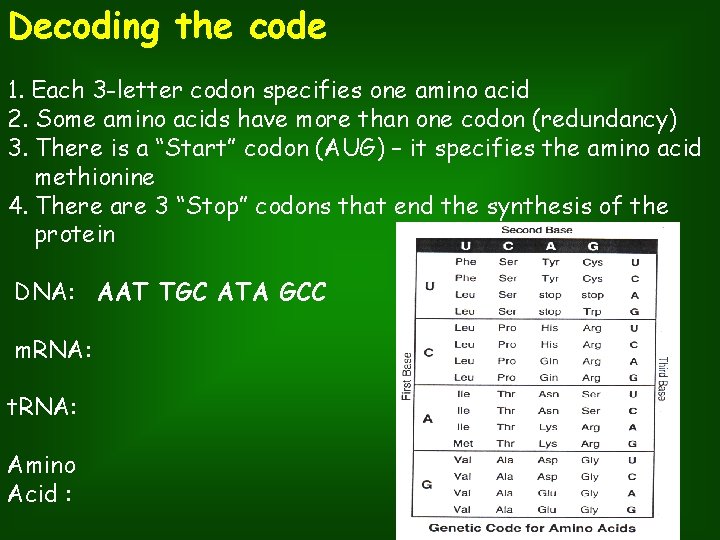
Decoding the code 1. Each 3 -letter codon specifies one amino acid 2. Some amino acids have more than one codon (redundancy) 3. There is a “Start” codon (AUG) – it specifies the amino acid methionine 4. There are 3 “Stop” codons that end the synthesis of the protein DNA: AAT TGC ATA GCC m. RNA: t. RNA: Amino Acid :
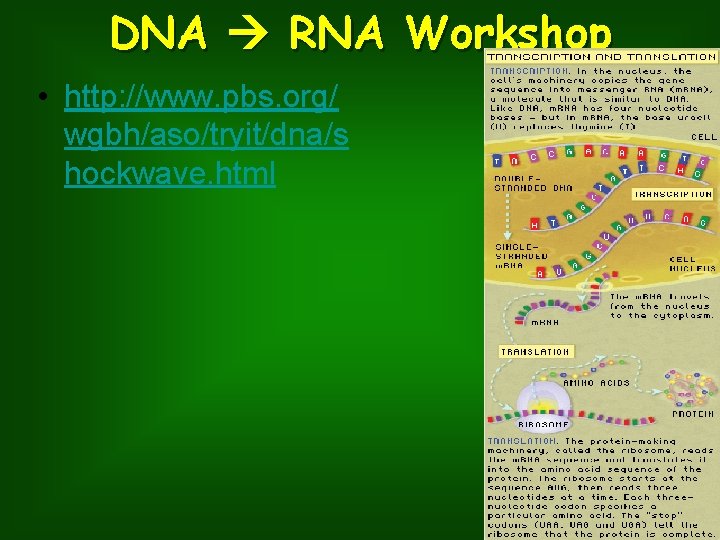
DNA RNA Workshop • http: //www. pbs. org/ wgbh/aso/tryit/dna/s hockwave. html
Videos and more on Protein Synthesis • Thinkquest • Protein Synthesis Rap
Mutations: An error in the genetic code 1. Chromosomal mutations (involve change in entire chromosome) (pieces of a chromosome become rearranged or lost) a. deletion: ABCDEFGH ABCEFGH b. inversion: ABCDEFGH ADCEBFGH c. insertion: ABCDEFGH ABCBCDEFGH d. translocation: ABCDEFGH WXYZ YZ
2. Gene Mutations Involve a change in a single gene!
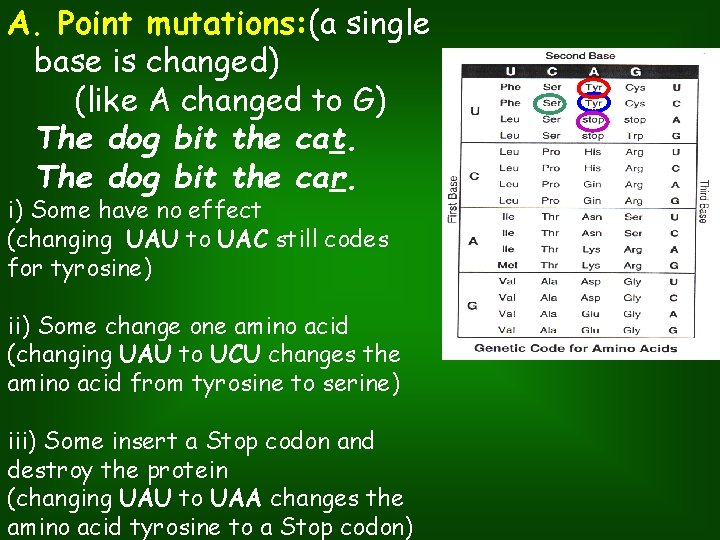
A. Point mutations: (a single base is changed) (like A changed to G) The dog bit the cat. The dog bit the car. i) Some have no effect (changing UAU to UAC still codes for tyrosine) ii) Some change one amino acid (changing UAU to UCU changes the amino acid from tyrosine to serine) iii) Some insert a Stop codon and destroy the protein (changing UAU to UAA changes the amino acid tyrosine to a Stop codon)
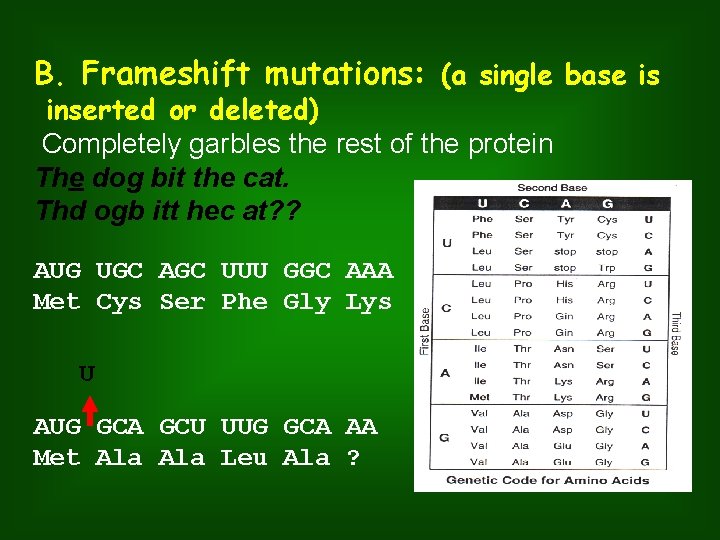
B. Frameshift mutations: (a single base is inserted or deleted) Completely garbles the rest of the protein The dog bit the cat. Thd ogb itt hec at? ? AUG UGC AGC UUU GGC AAA Met Cys Ser Phe Gly Lys U AUG GCA GCU UUG GCA AA Met Ala Leu Ala ?
Cause of Mutations can be brought about by chemical treatments and pollutants – such chemicals are called mutagens Many mutagens can cause cancer – carcinogens Other mutagens include X-rays, radioactive substances, and ultraviolet light
Remember – only mutations that occur in sex cells can be passed to offspring. THE MIGHTY MUTATION MAKER! Online Games - Mighty Mutations Maker - The GEEE! in GENOME
- Slides: 44