
DNA The Genetic Material Chapter 14 Frederick Griffith
- Slides: 41
DNA: The Genetic Material Chapter 14
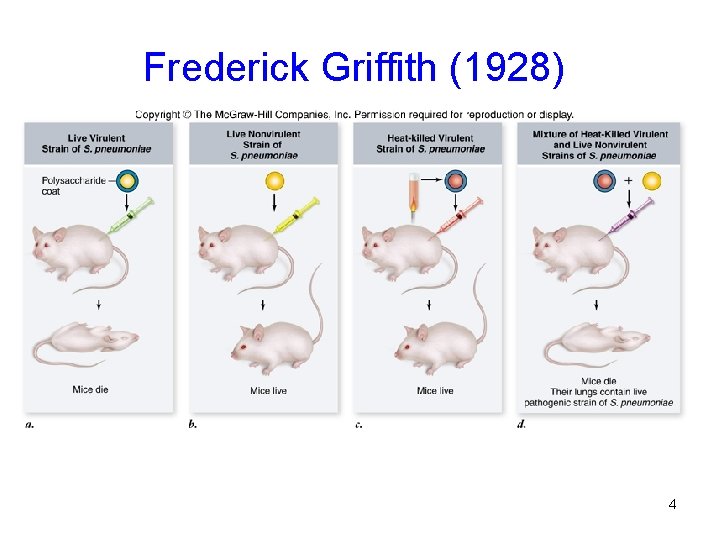
Frederick Griffith (1928) 4
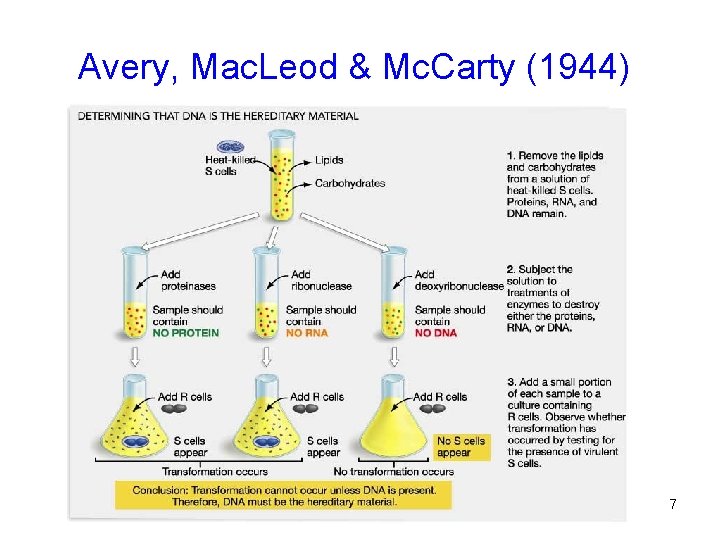
Avery, Mac. Leod & Mc. Carty (1944) 7
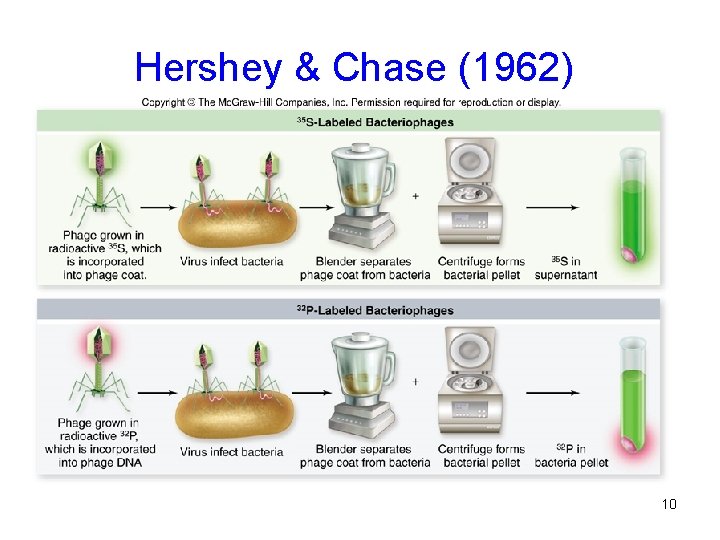
Hershey & Chase (1962) 10
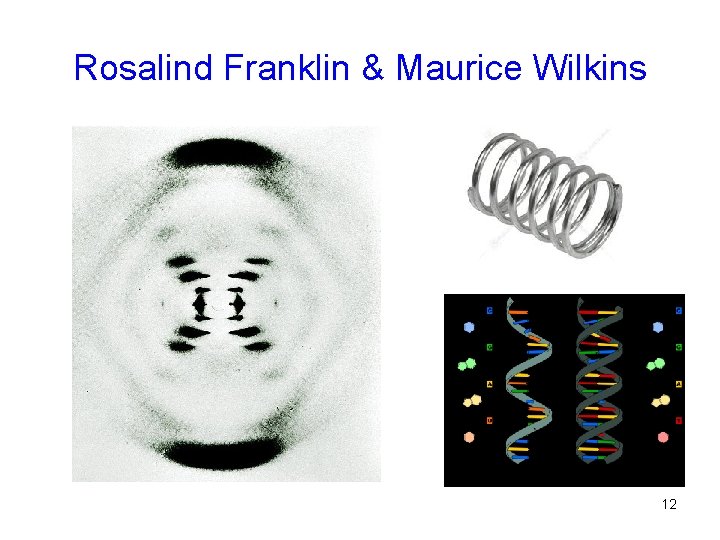
Rosalind Franklin & Maurice Wilkins 12
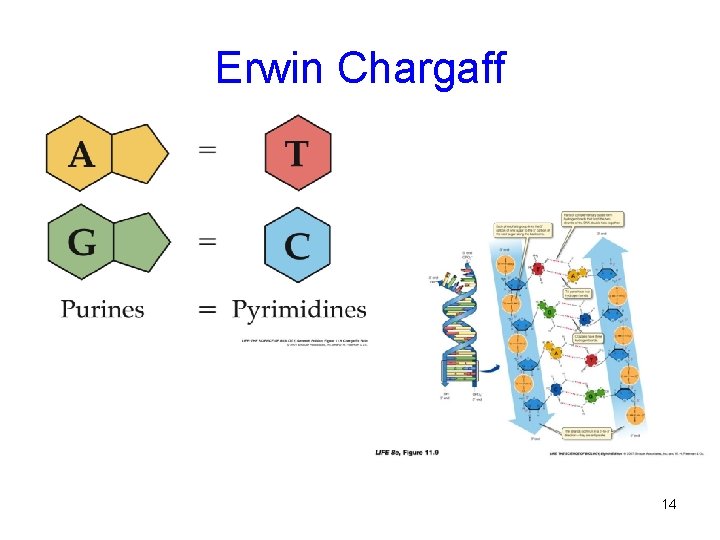
Erwin Chargaff 14
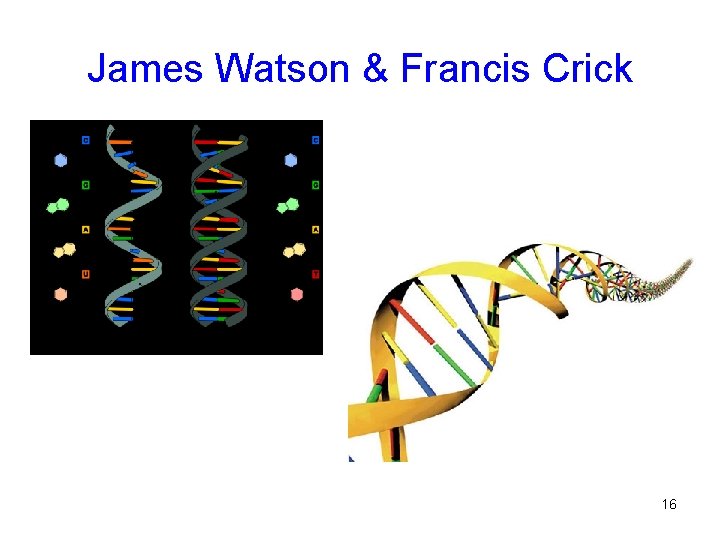
James Watson & Francis Crick 16
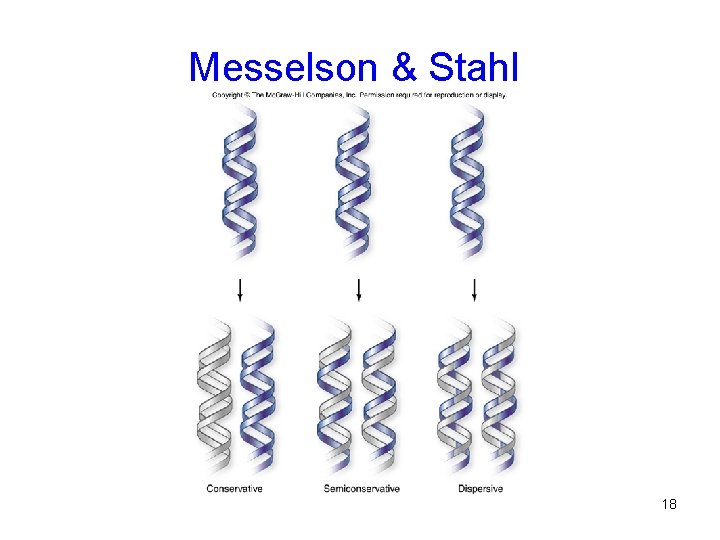
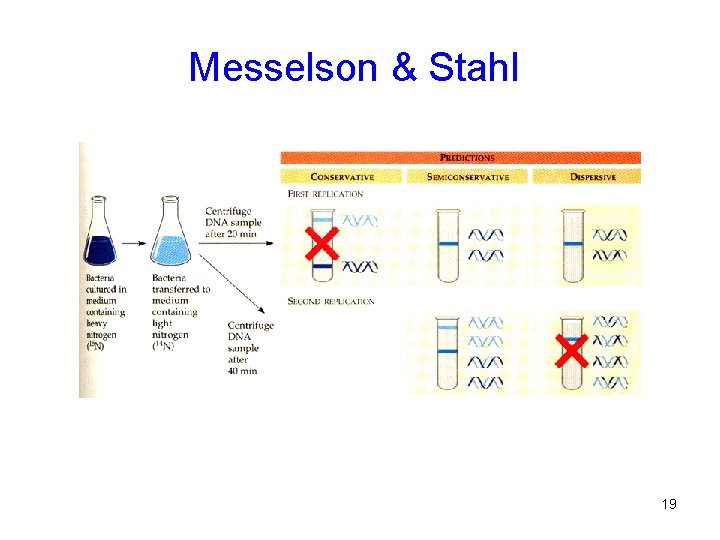
Messelson & Stahl 18
Messelson & Stahl 19
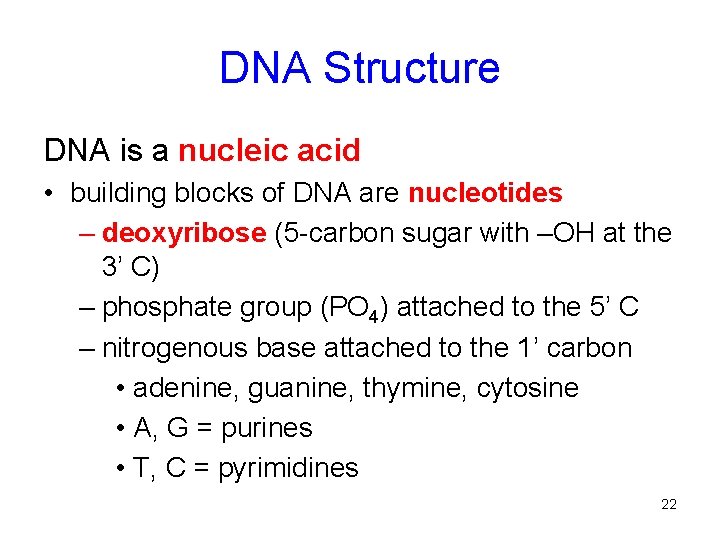
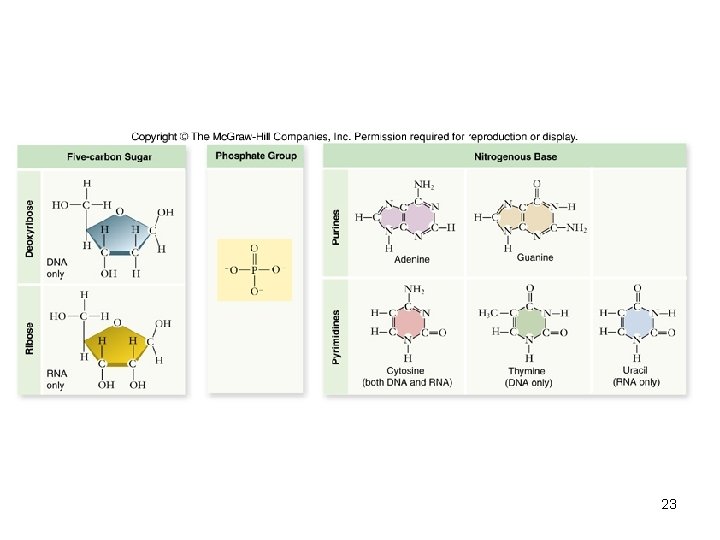
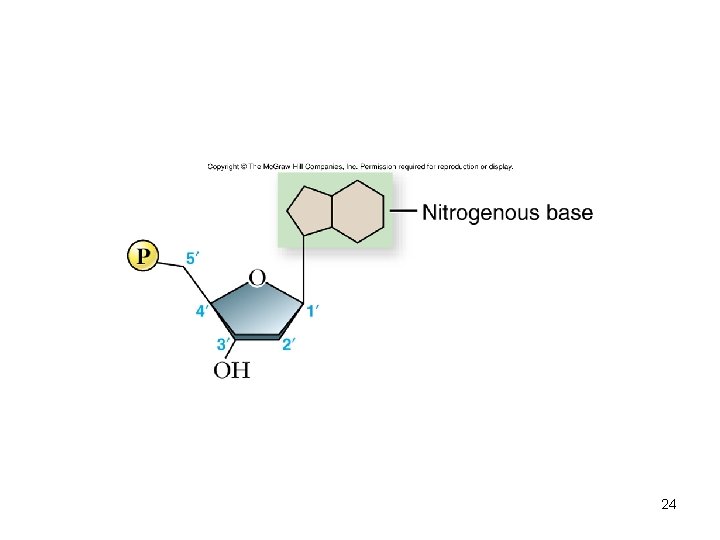
DNA Structure DNA is a nucleic acid • building blocks of DNA are nucleotides – deoxyribose (5 -carbon sugar with –OH at the 3’ C) – phosphate group (PO 4) attached to the 5’ C – nitrogenous base attached to the 1’ carbon • adenine, guanine, thymine, cytosine • A, G = purines • T, C = pyrimidines 22
23
24
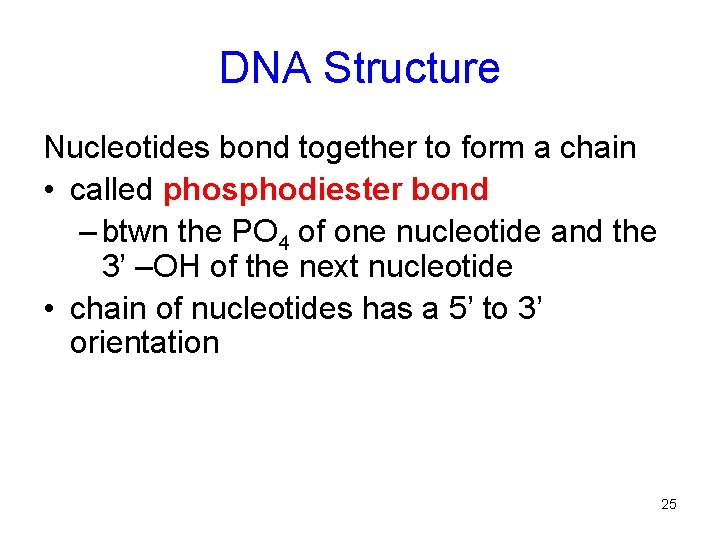
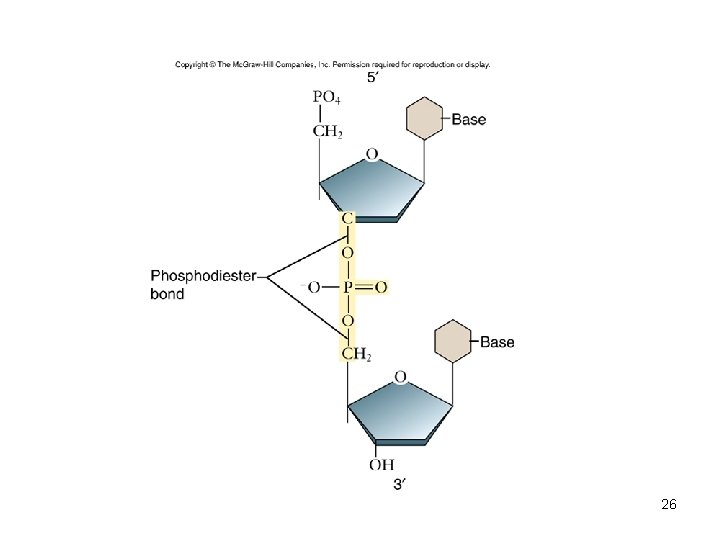
DNA Structure Nucleotides bond together to form a chain • called phosphodiester bond – btwn the PO 4 of one nucleotide and the 3’ –OH of the next nucleotide • chain of nucleotides has a 5’ to 3’ orientation 25
26
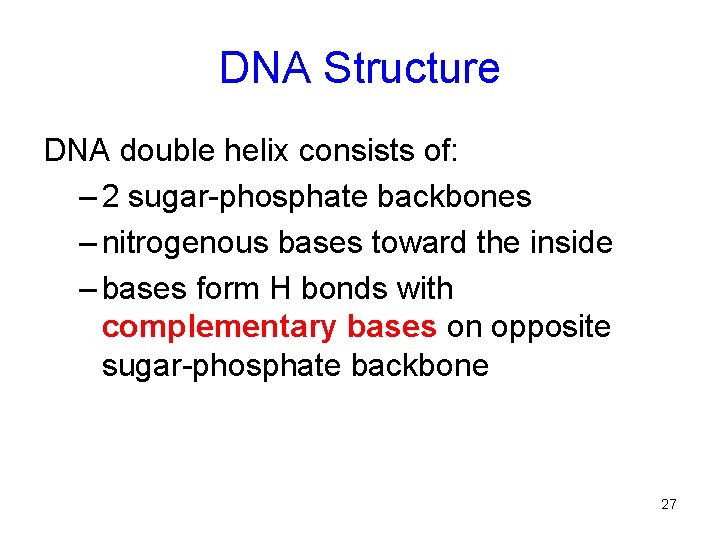
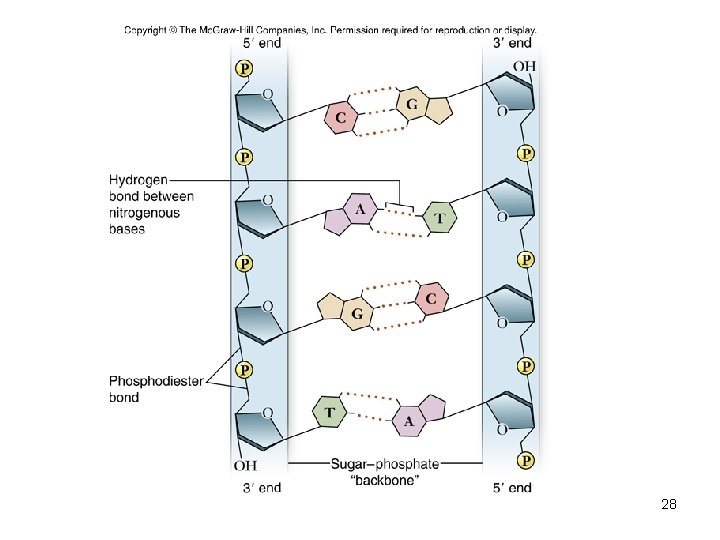
DNA Structure DNA double helix consists of: – 2 sugar-phosphate backbones – nitrogenous bases toward the inside – bases form H bonds with complementary bases on opposite sugar-phosphate backbone 27
28
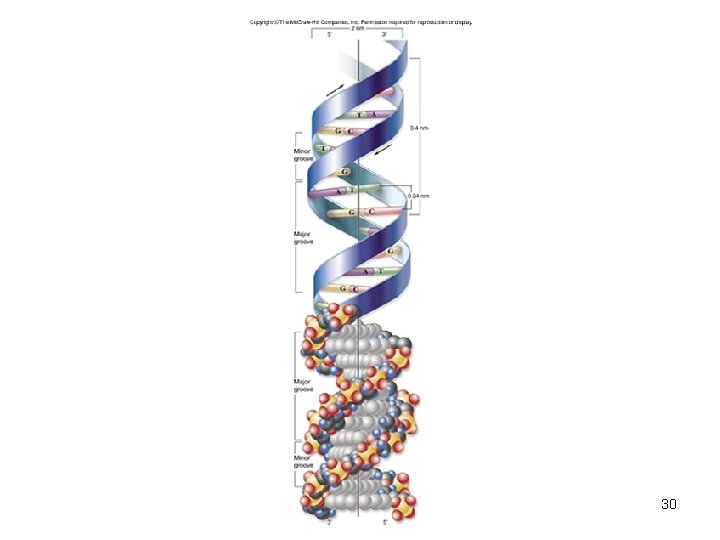
DNA Structure The two strands are antiparallel to each other – one is oriented 5’ to 3’, the other 3’ to 5’ – strands wrap around each other to create the helical shape 29
30
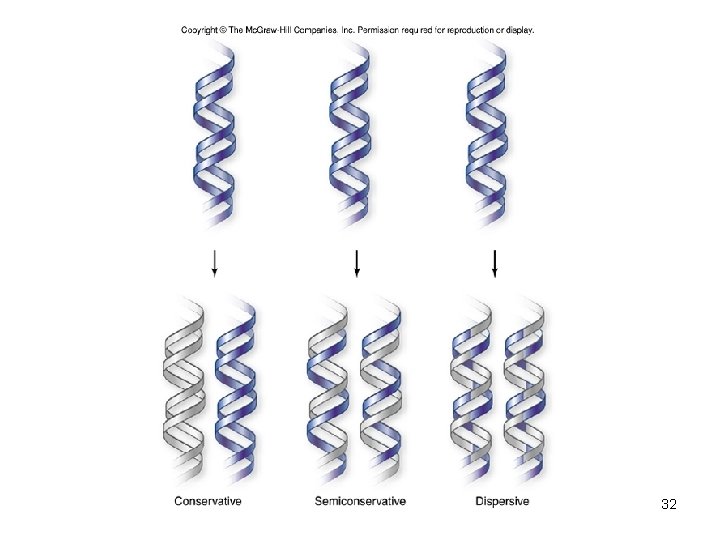
DNA Replication • Occurs during S phase • Mechanism of DNA replication is the semiconservative model – each strand of DNA acts as a template for the synthesis of a new strand 31
32
DNA Replication Overview http: //www. youtube. com/watch? v=te. V 62 zrm 2 P 0 33
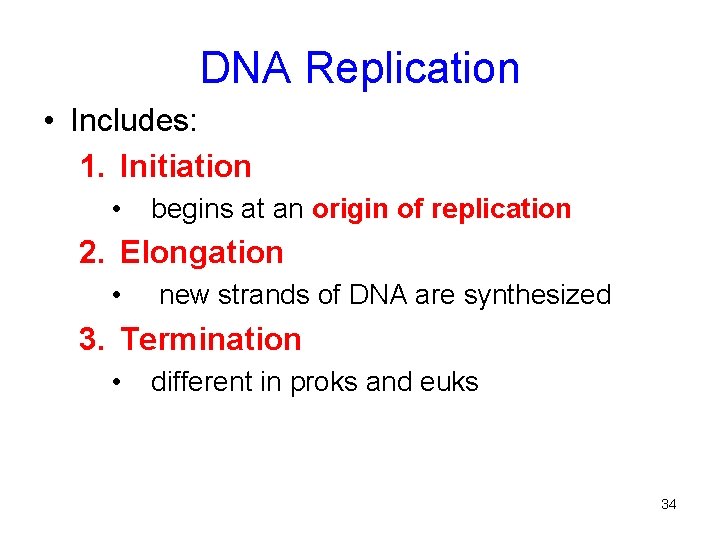
DNA Replication • Includes: 1. Initiation • begins at an origin of replication 2. Elongation • new strands of DNA are synthesized 3. Termination • different in proks and euks 34
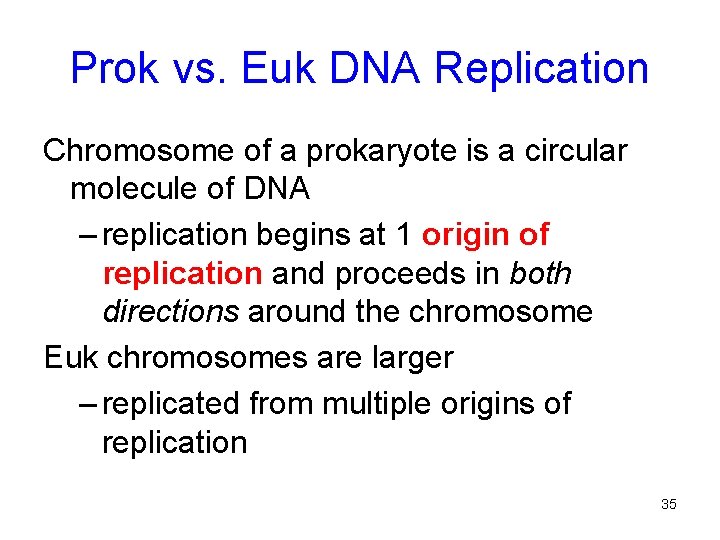
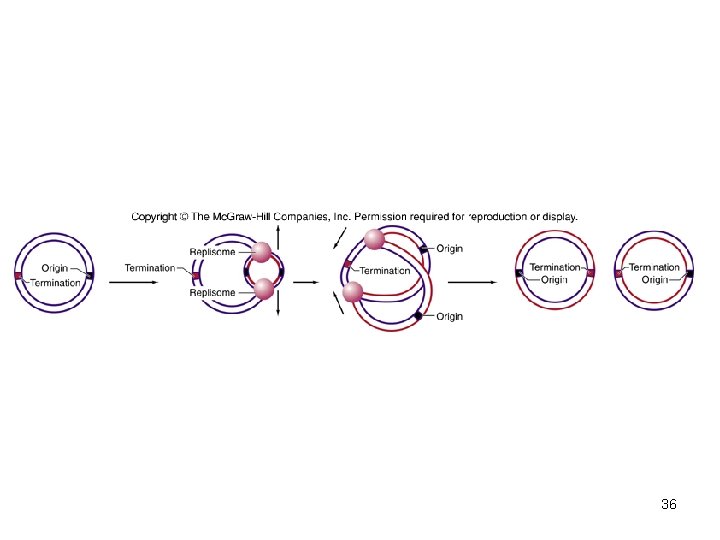
Prok vs. Euk DNA Replication Chromosome of a prokaryote is a circular molecule of DNA – replication begins at 1 origin of replication and proceeds in both directions around the chromosome Euk chromosomes are larger – replicated from multiple origins of replication 35
36
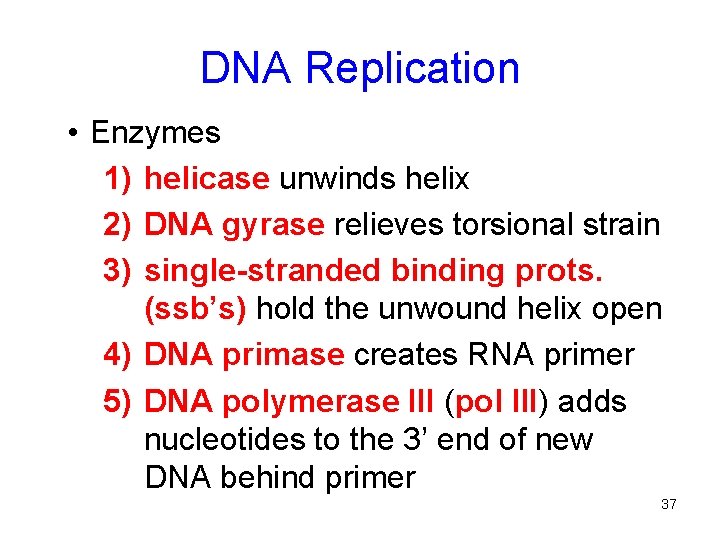
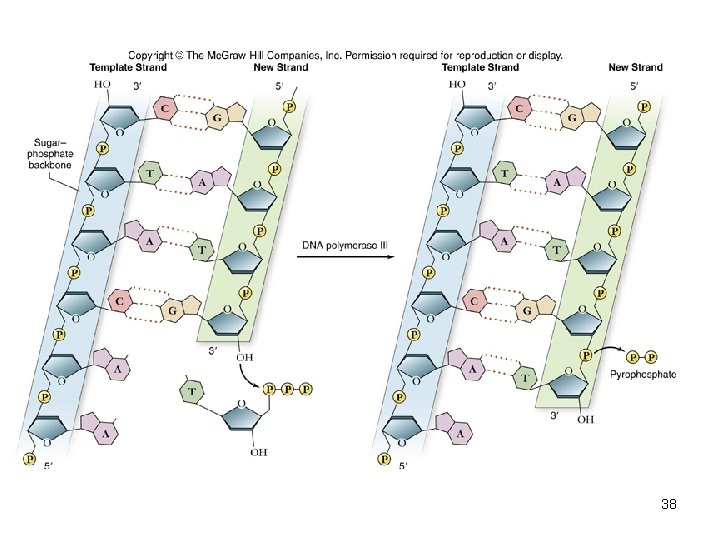
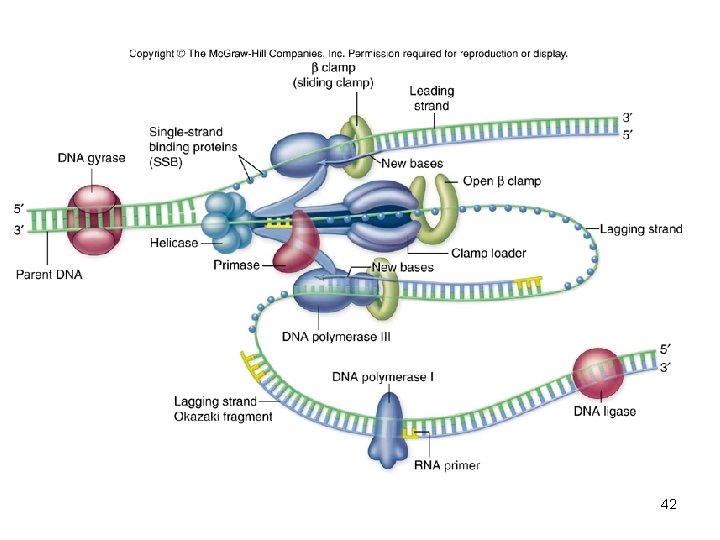
DNA Replication • Enzymes 1) helicase unwinds helix 2) DNA gyrase relieves torsional strain 3) single-stranded binding prots. (ssb’s) hold the unwound helix open 4) DNA primase creates RNA primer 5) DNA polymerase III (pol III) adds nucleotides to the 3’ end of new DNA behind primer 37
38
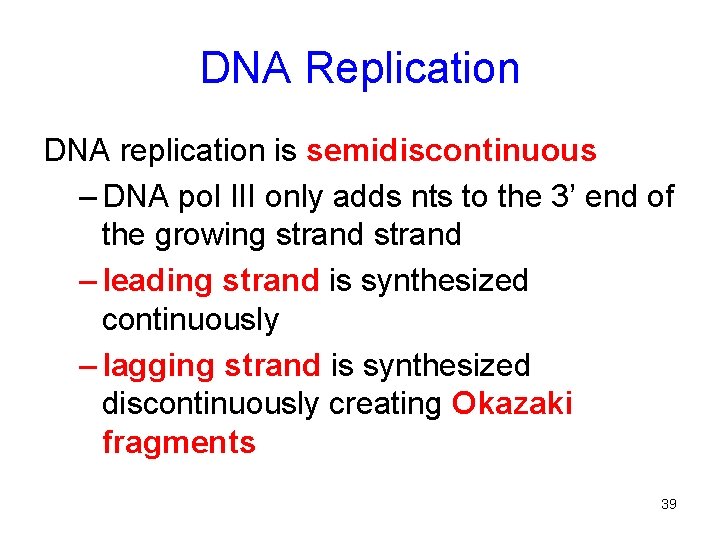
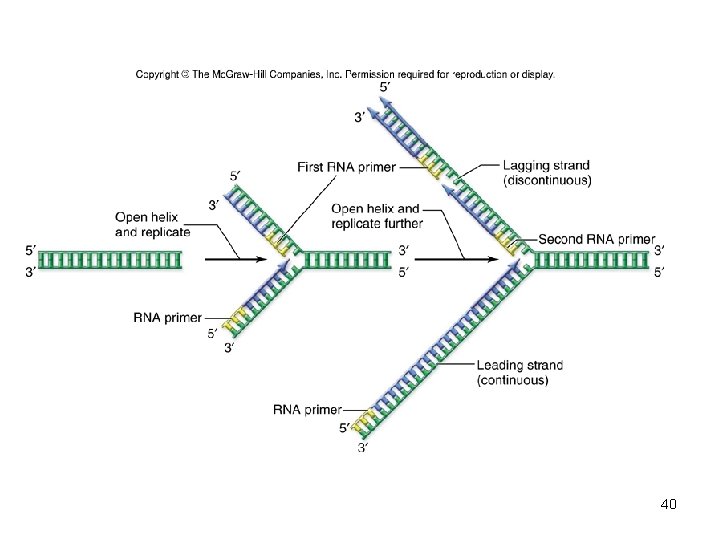
DNA Replication DNA replication is semidiscontinuous – DNA pol III only adds nts to the 3’ end of the growing strand – leading strand is synthesized continuously – lagging strand is synthesized discontinuously creating Okazaki fragments 39
40
DNA Replication 6) DNA polymerase I (pol I) replaces RNA primers 7) DNA ligase links Okazaki fragments on lagging strand 41
42
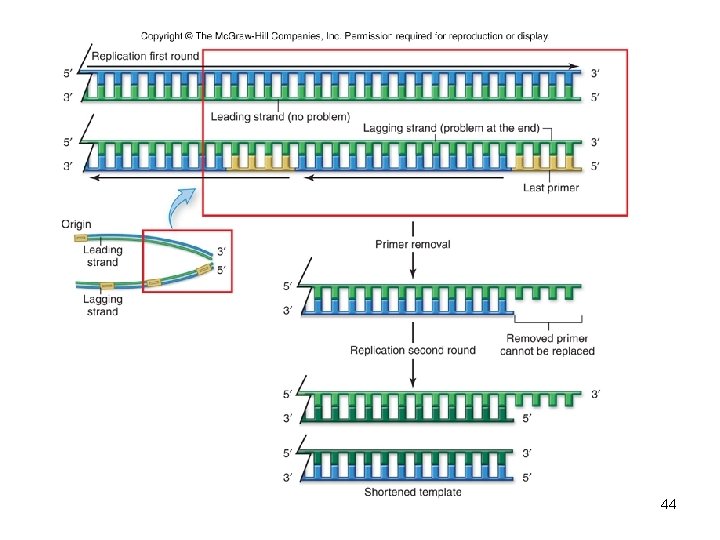
Eukaryotic DNA Replication Synthesizing the ends of euk chromosomes is difficult because of lack of a primer – With each round of DNA replication, the linear euk chromosome becomes shorter 43
44
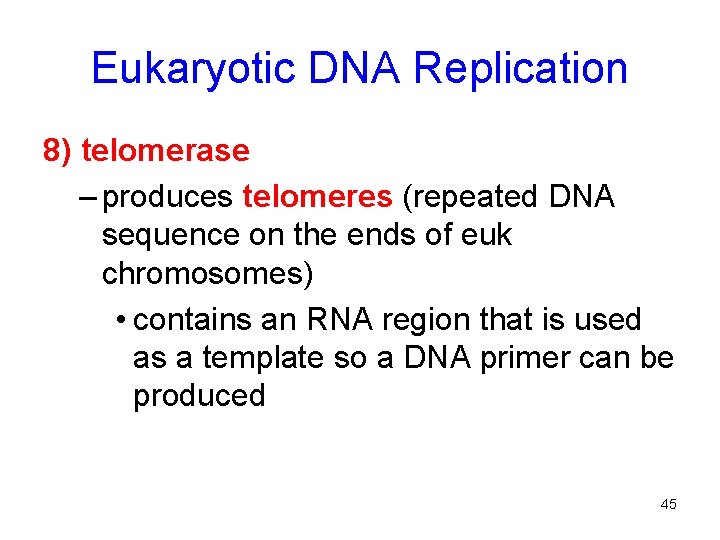
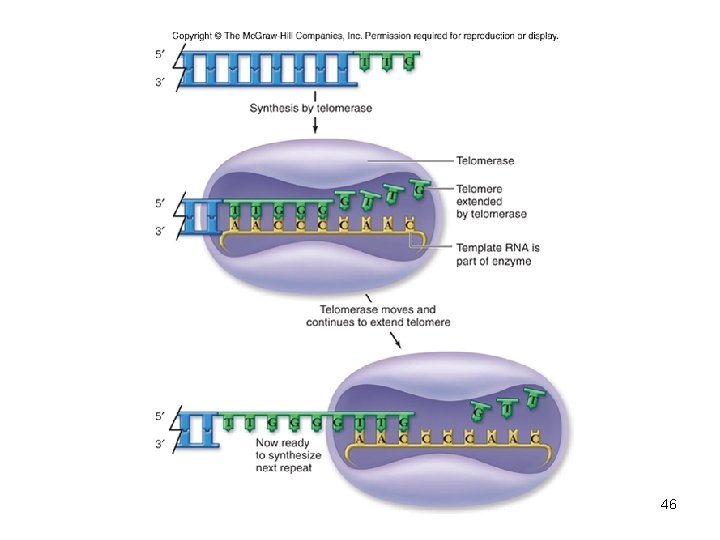
Eukaryotic DNA Replication 8) telomerase – produces telomeres (repeated DNA sequence on the ends of euk chromosomes) • contains an RNA region that is used as a template so a DNA primer can be produced 45
46
DNA Replication Review http: //www. youtube. com/watch? v=te. V 62 zrm 2 P 0 47
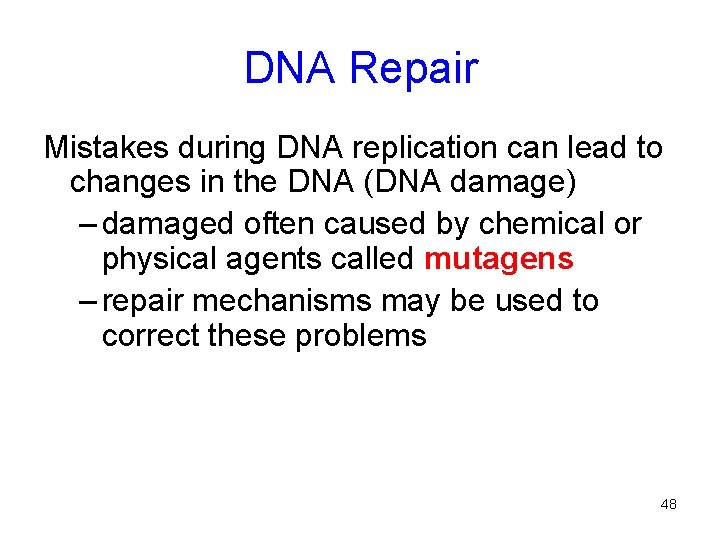
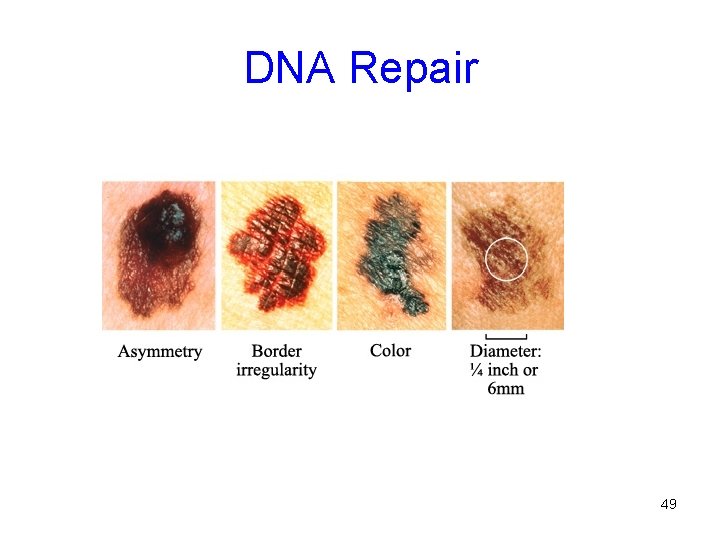
DNA Repair Mistakes during DNA replication can lead to changes in the DNA (DNA damage) – damaged often caused by chemical or physical agents called mutagens – repair mechanisms may be used to correct these problems 48
DNA Repair 49
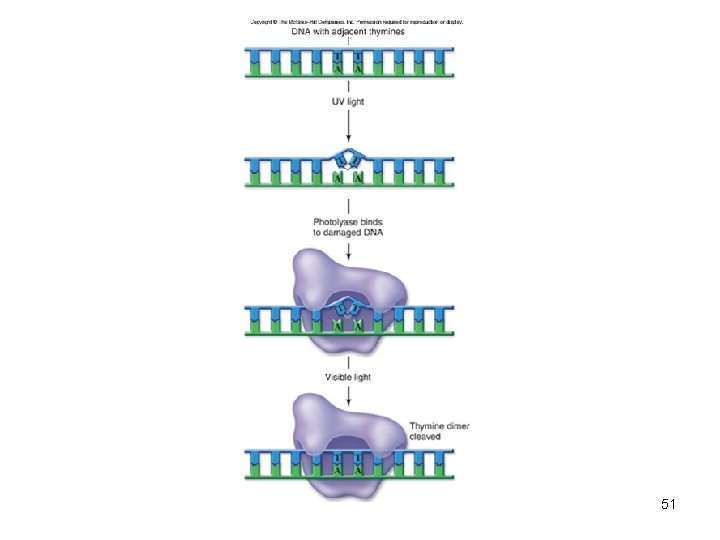
DNA Repair Mechanisms can be: – specific • targeting a particular type of DNA damage • Ex: thymine dimers & photorepair 50
51
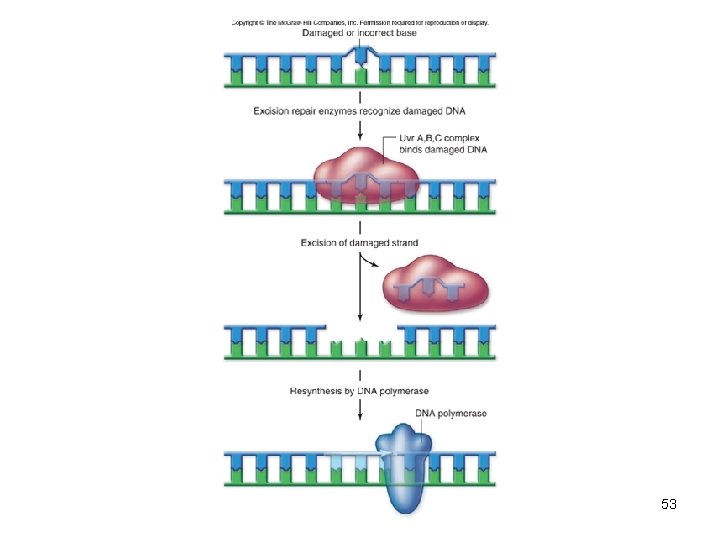
DNA Repair – non-specific • able to repair many different kinds of DNA damage • excision repair to correct damaged or mismatched nitrogenous bases 52
53