
DNA The Fingerprint of Life The Nucleus and

- Slides: 24
DNA The Fingerprint of Life
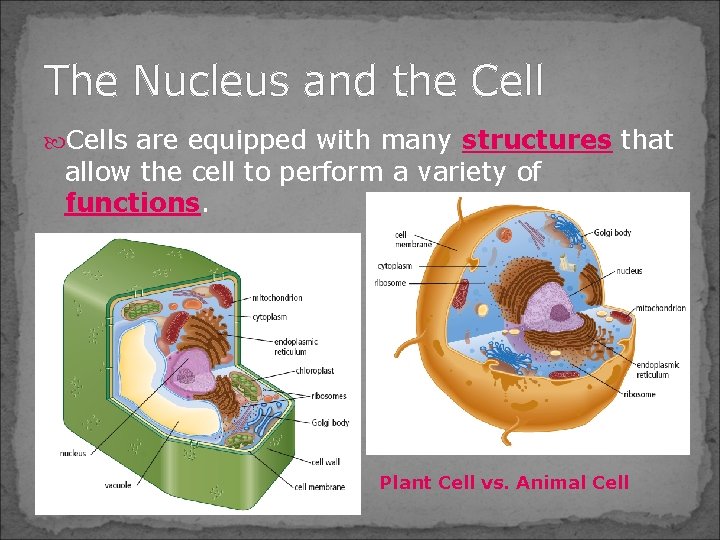
The Nucleus and the Cells are equipped with many structures that allow the cell to perform a variety of functions. Plant Cell vs. Animal Cell
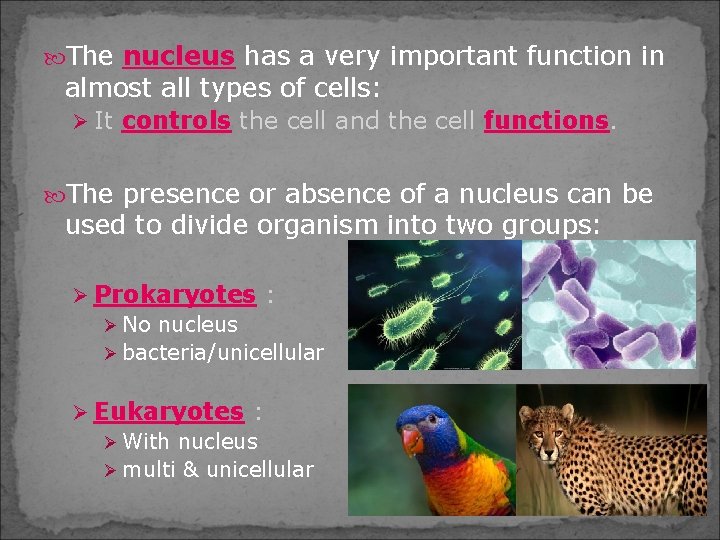
The nucleus has a very important function in almost all types of cells: Ø It controls the cell and the cell functions. The presence or absence of a nucleus can be used to divide organism into two groups: Ø Prokaryotes : Ø No nucleus Ø bacteria/unicellular Ø Eukaryotes : Ø With nucleus Ø multi & unicellular
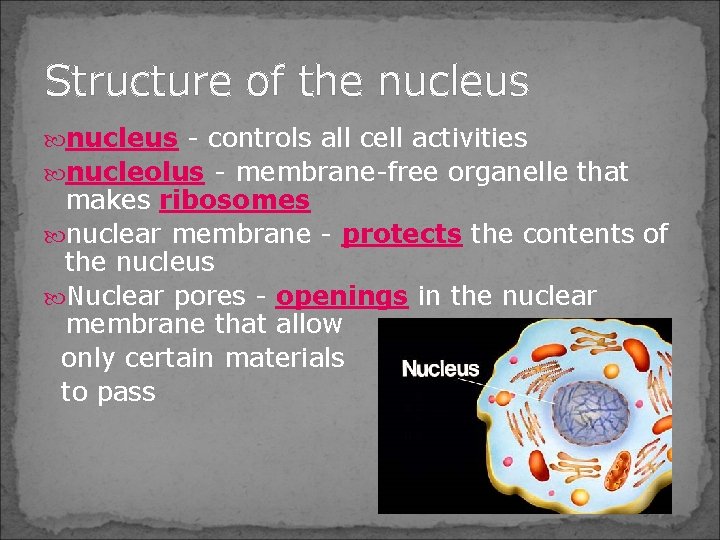
Structure of the nucleus - controls all cell activities nucleolus - membrane-free organelle that makes ribosomes nuclear membrane - protects the contents of the nucleus Nuclear pores - openings in the nuclear membrane that allow only certain materials to pass
The Nucleus and DNA The nucleus contains DNA (deoxyribonucleic acid) DNA is the molecule that has the master set of instructions for how cells function, what they will produce, and when they will die.
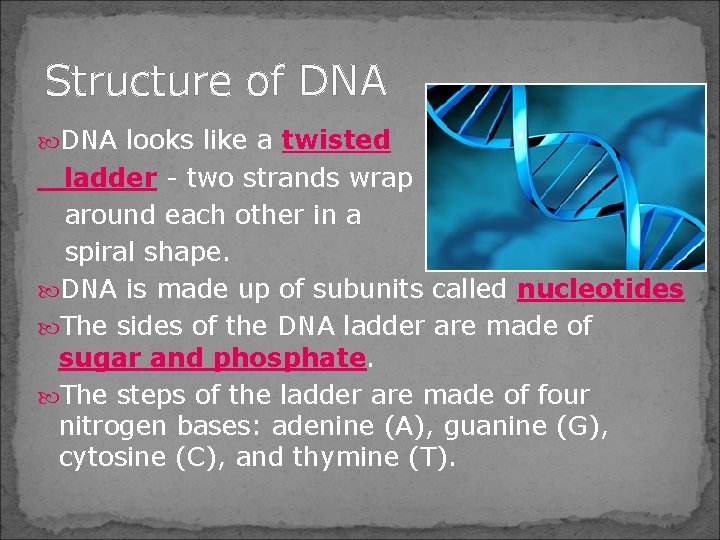
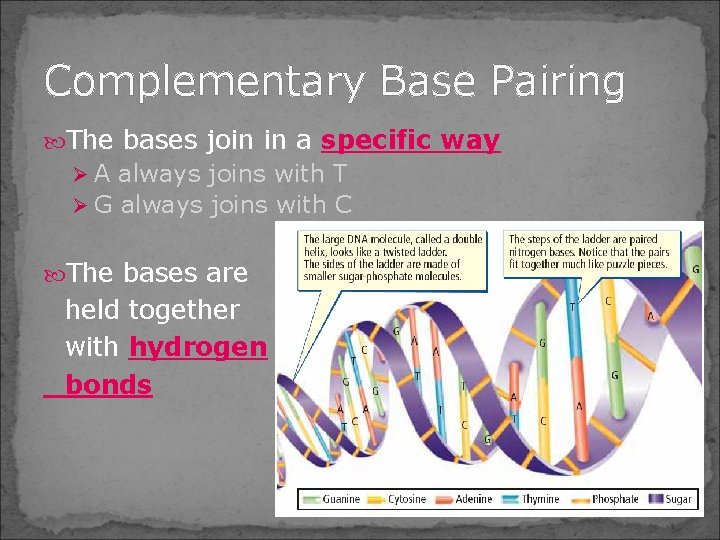
Structure of DNA looks like a twisted ladder - two strands wrap around each other in a spiral shape. DNA is made up of subunits called nucleotides The sides of the DNA ladder are made of sugar and phosphate. The steps of the ladder are made of four nitrogen bases: adenine (A), guanine (G), cytosine (C), and thymine (T).
Nucleotides Each nucleotide is a molecule made up of three basic parts: 1. 2. 3. A 5 -carbon sugar called deoxyribose A phosphate group A nitrogenous base There are 4 nitrogenous bases present in DNA: Ø Ø Adenine (a purine) Guanine (a purine) Thymine (a pyrimidine) Cytosine ( a pyrimidine) A Purine is a two-ringed structure A Pyrimidine is a one-ringed structure
Complementary Base Pairing The bases join in a specific way Ø A always joins with T Ø G always joins with C The bases are held together with hydrogen bonds
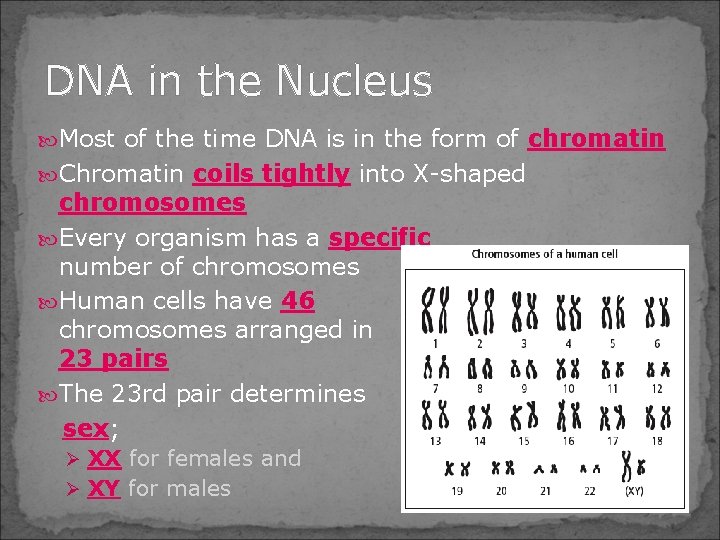
DNA in the Nucleus Most of the time DNA is in the form of chromatin Chromatin coils tightly into X-shaped chromosomes Every organism has a specific number of chromosomes Human cells have 46 chromosomes arranged in 23 pairs The 23 rd pair determines sex; Ø XX for females and Ø XY for males
DNA Replication Before a cell can divide, it must first duplicate (copy) its DNA. This makes sure that each new cell will also have a complete set of DNA molecules. The process of duplicating (copying) DNA is called DNA replication is also called DNA synthesis.
DNA replications starts when a molecule of DNA unwinds and “unzips”. “Unzips” is used to describe the breaking of the hydrogen bonds between the base pairs of the two strands of the original DNA. Each separated strand is now a template for new strands of DNA through the attachment of complementary bases.
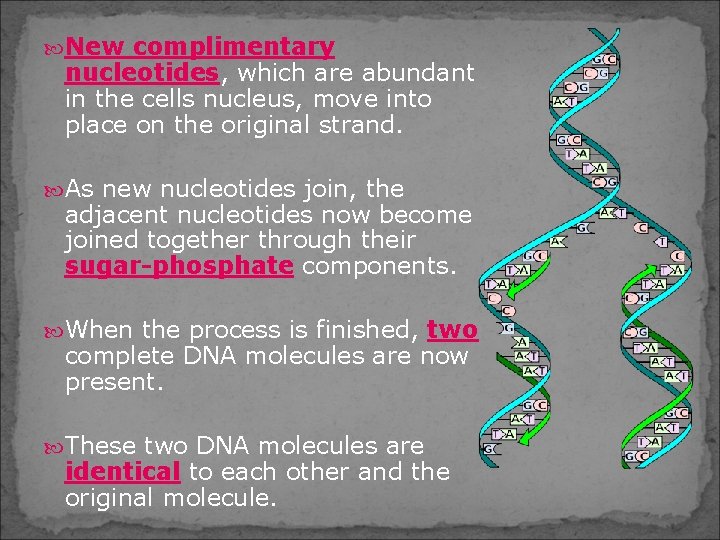
New complimentary nucleotides, which are abundant in the cells nucleus, move into place on the original strand. As new nucleotides join, the adjacent nucleotides now become joined together through their sugar-phosphate components. When the process is finished, two complete DNA molecules are now present. These two DNA molecules are identical to each other and the original molecule.
Protein Synthesis DNA is used to code for proteins. These proteins, which include enzymes that do specialized jobs, control the activities of the cell. Different cells have different activities. By controlling protein synthesis within each cell, the genes that make up DNA control the life of the entire organism.
Proteins are made outside of the nucleus in the ribosome of the cell. DNA is a large molecule, too large to pass through pores in the nuclear membrane. RNA acts as a messenger between DNA and the ribosome. RNA also carries out the process by which proteins are made from amino acids.
Structure of RNA is a single stranded chain of nucleotides Each nucleotide is a molecule made up of three basic parts: 1. 2. 3. A 5 -carbon sugar called ribose A phosphate group A nitrogenous base There are 4 nitrogenous bases present in RNA: Ø Ø Adenine (a purine) Guanine (a purine) Uracil (a pyrimidine) Cytosine ( a pyrimidine)
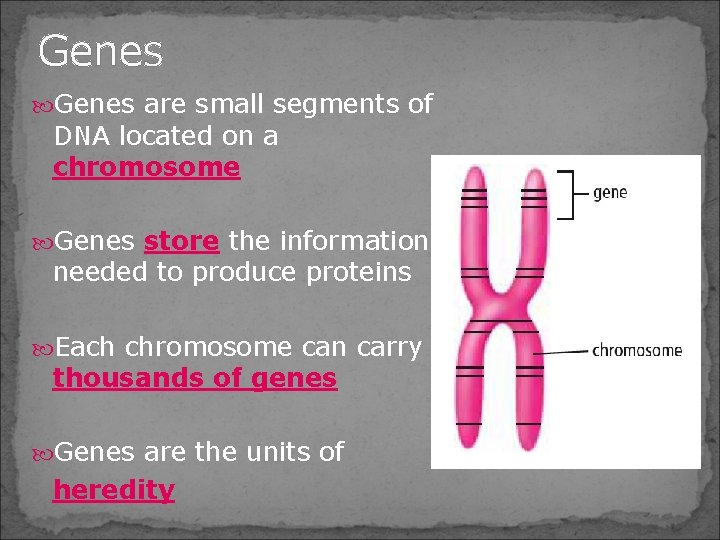
Genes are small segments of DNA located on a chromosome Genes store the information needed to produce proteins Each chromosome can carry thousands of genes Genes are the units of heredity
THE END