
DNA The Code of Life Medical Detectives 2013
- Slides: 12
DNA The Code of Life Medical Detectives © 2013 Project Lead The Way, Inc.
What is DNA? • DNA (deoxyribonucleic acid) is the genetic material in all known living organisms and some viruses • It can be carried from one generation to another
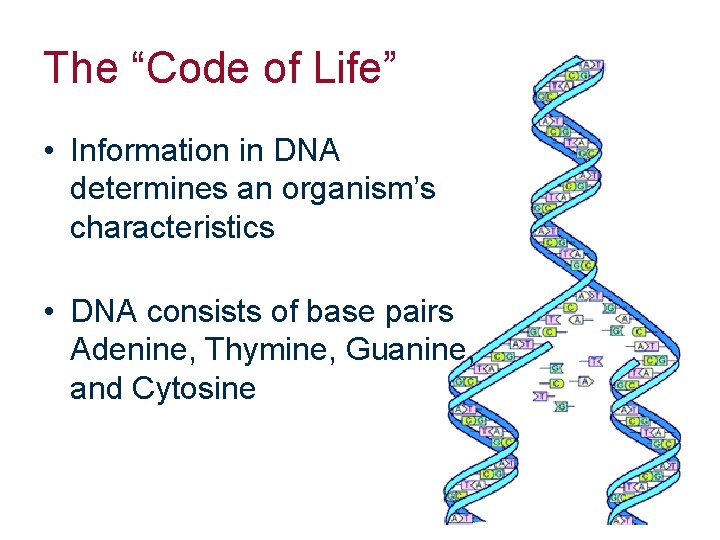
The “Code of Life” • Information in DNA determines an organism’s characteristics • DNA consists of base pairs Adenine, Thymine, Guanine, and Cytosine
The “Code of Life” • DNA can be compared to a cookbook with instructions about how to create and maintain a specific living thing. • Genes can be compared to the individual recipes in the cookbook. They encode the information to make proteins and determine how many of those proteins to make.
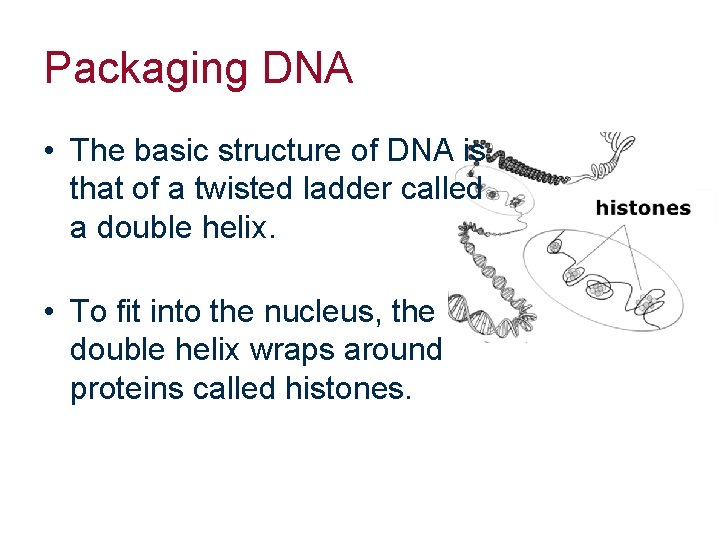
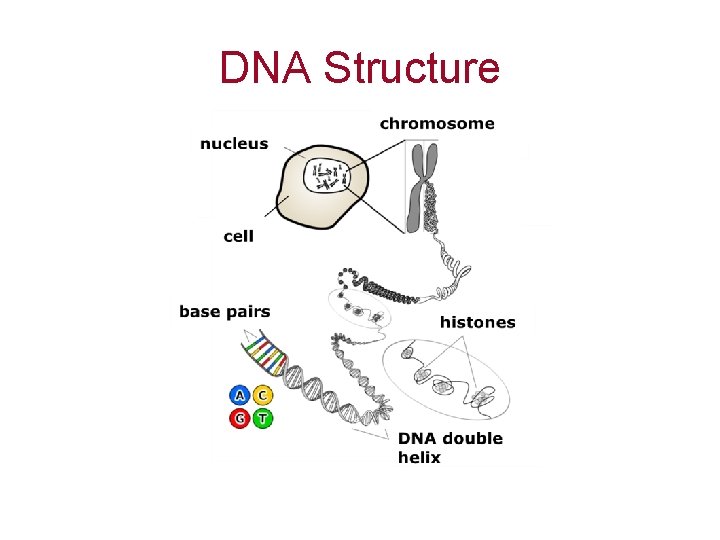
Packaging DNA • The basic structure of DNA is that of a twisted ladder called a double helix. • To fit into the nucleus, the double helix wraps around proteins called histones.
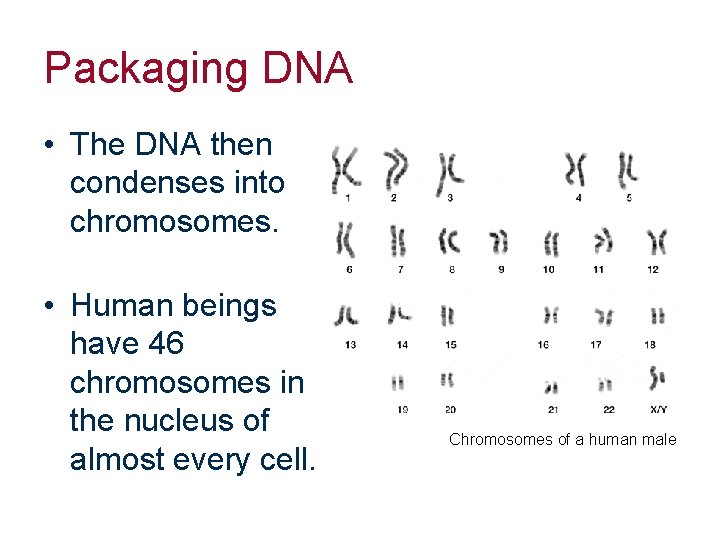
Packaging DNA • The DNA then condenses into chromosomes. • Human beings have 46 chromosomes in the nucleus of almost every cell. Chromosomes of a human male
DNA Structure
DNA Extraction Step 1: Collect cheek cells • Sports drink is used as a mouthwash collection medium. • Sports drinks contain salt in a concentration similar to the cheek cells; this prevents the cells from breaking open and releasing their DNA before they are collected.
DNA Extraction Step 2: Cell lysis • The membranes that surround and protect the cell and nucleus must be broken to release the DNA in a process called cell lysis. • A detergent-based cell lysis solution will be used to degrade the membranes. • The remaining solution is known as cell lysate.
DNA Extraction Step 3: DNA precipitation • The DNA in the cell lysate is in solution and is not visible (like sugar in water). • DNA is insoluble in ethanol (like sand in water). • DNA from the cell lysate can be visualized by applying a layer of ethanol on top of the cell lysate.
Importance of DNA Extraction • DNA extraction is the first step in many indepth experiments including: – The study of heredity – Potential treatments of diseases • Extracted DNA can be used to create DNA fingerprints to help: – Diagnose genetic diseases – Solve criminal cases
Image Resources By KES 47 (File: Chromosome zh. svg) [CC-BY-3. 0 (http: //creativecommons. org/licenses/by/3. 0)], via Wikimedia Commons Free images courtesy of Wikimedia Commons http: //commons. wikimedia. org/wiki/Main_Page