
DNA Structure Part 3 Learning Objectives Explain how
DNA Structure - Part 3
Learning Objectives • Explain how bonds are formed between nitrogenous bases
You. Tube Video DNA Structure
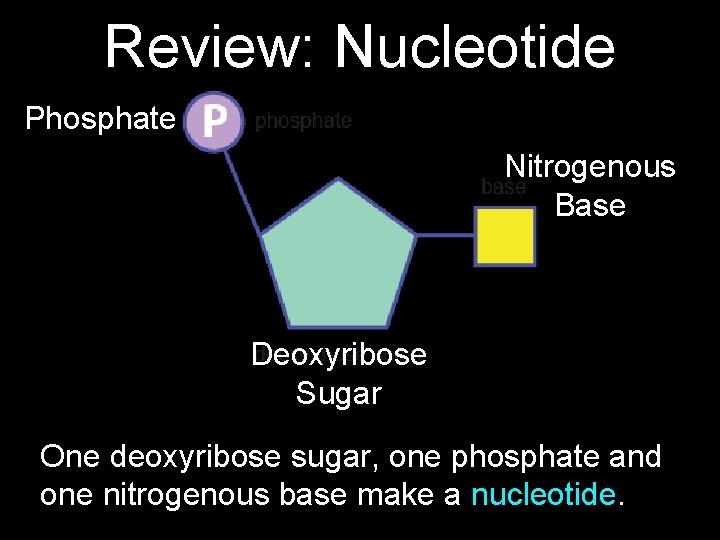
Review: Nucleotide Phosphate Nitrogenous Base Deoxyribose Sugar One deoxyribose sugar, one phosphate and one nitrogenous base make a nucleotide.
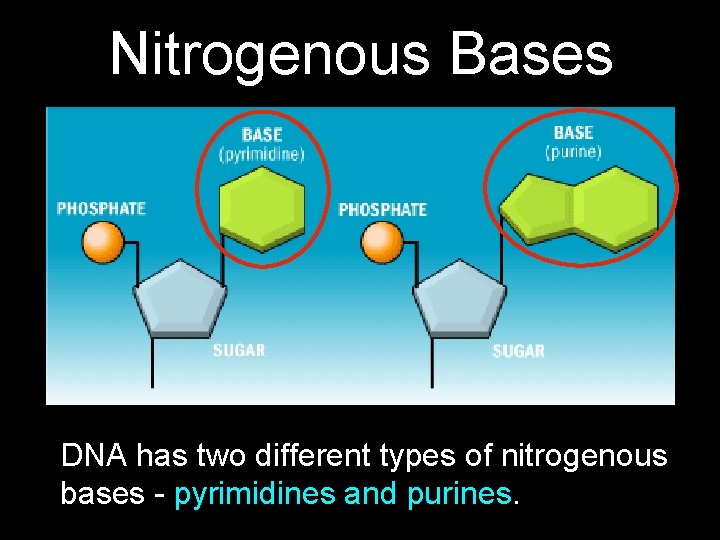
Nitrogenous Bases DNA has two different types of nitrogenous bases - pyrimidines and purines.
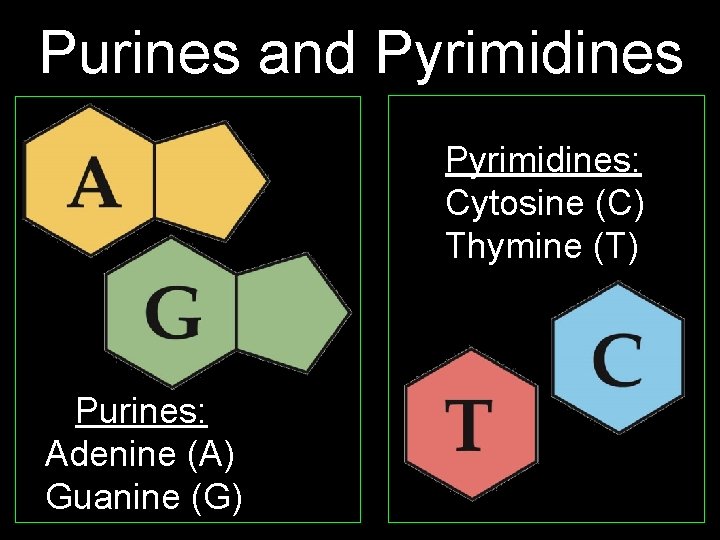
Purines and Pyrimidines: Cytosine (C) Thymine (T) Purines: Adenine (A) Guanine (G)
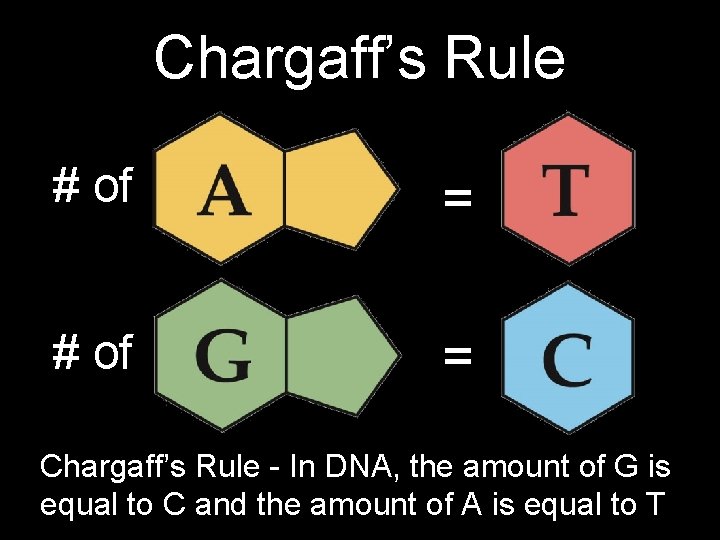
Chargaff’s Rule # of = Chargaff’s Rule - In DNA, the amount of G is equal to C and the amount of A is equal to T
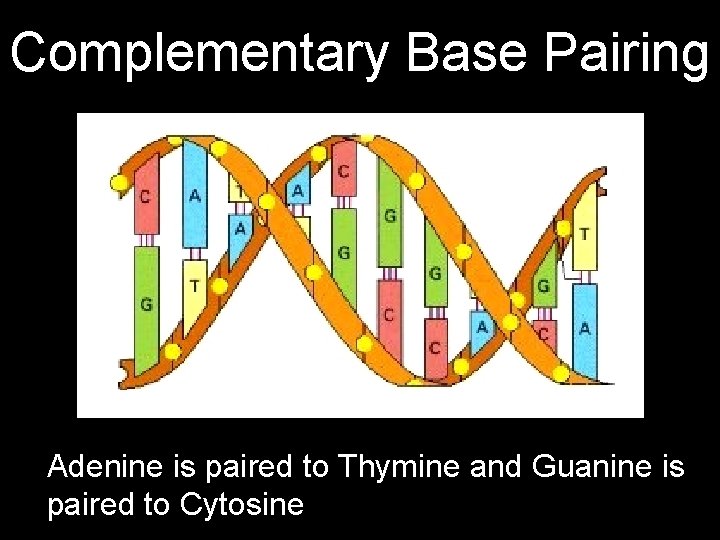
Complementary Base Pairing Adenine is paired to Thymine and Guanine is paired to Cytosine
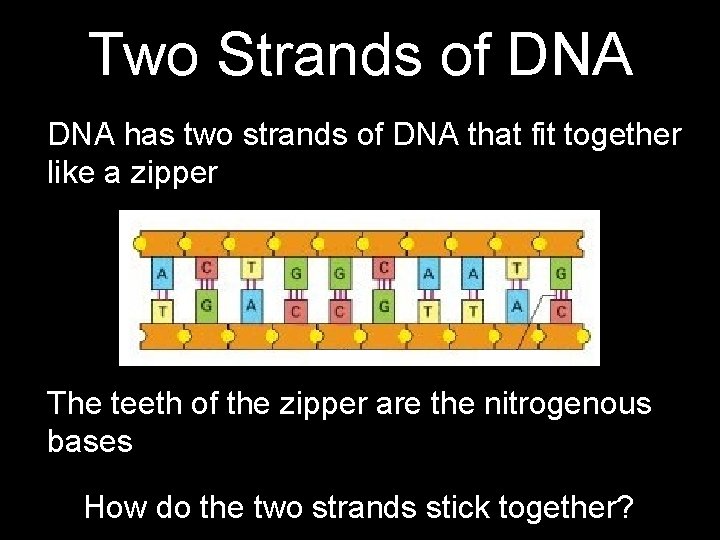
Two Strands of DNA has two strands of DNA that fit together like a zipper The teeth of the zipper are the nitrogenous bases How do the two strands stick together?
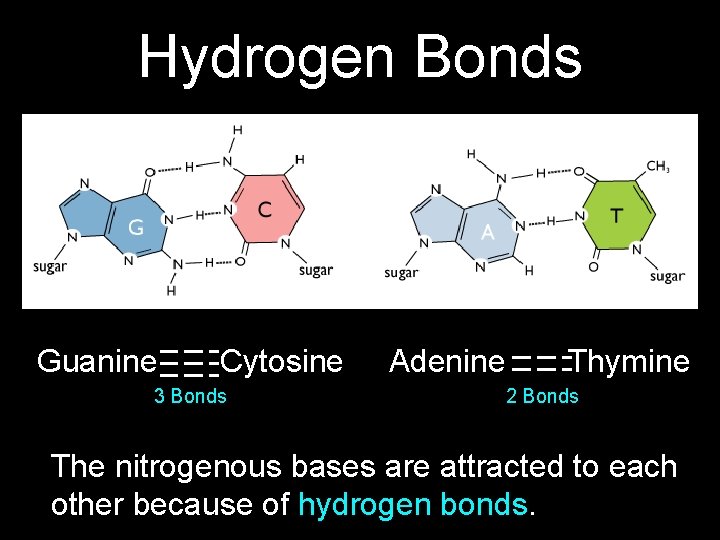
Hydrogen Bonds Guanine Cytosine 3 Bonds Adenine Thymine 2 Bonds The nitrogenous bases are attracted to each other because of hydrogen bonds.
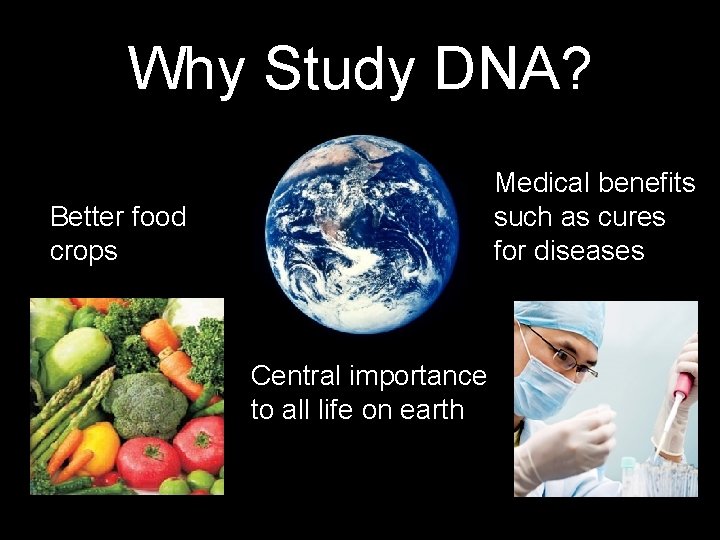
Why Study DNA? Medical benefits such as cures for diseases Better food crops Central importance to all life on earth
You. Tube Video Brain Tofu Biology DNA
You. Tube Video What is DNA and How Does it Work?

Stop Here
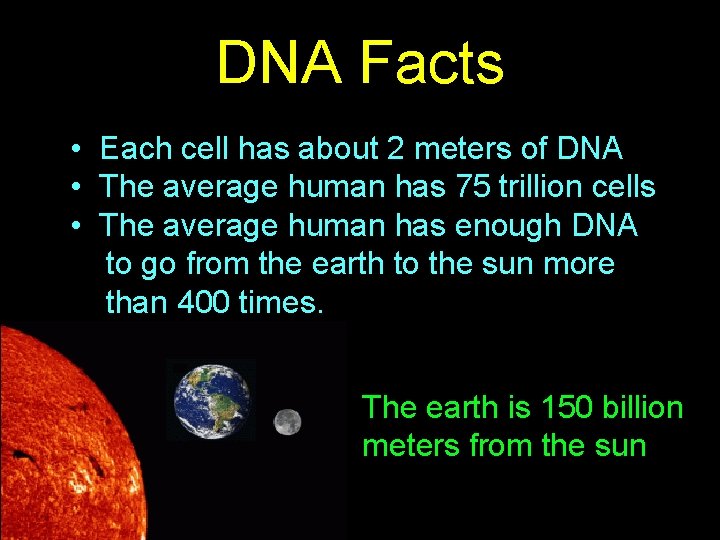
DNA Facts • Each cell has about 2 meters of DNA • The average human has 75 trillion cells • The average human has enough DNA to go from the earth to the sun more than 400 times. The earth is 150 billion meters from the sun
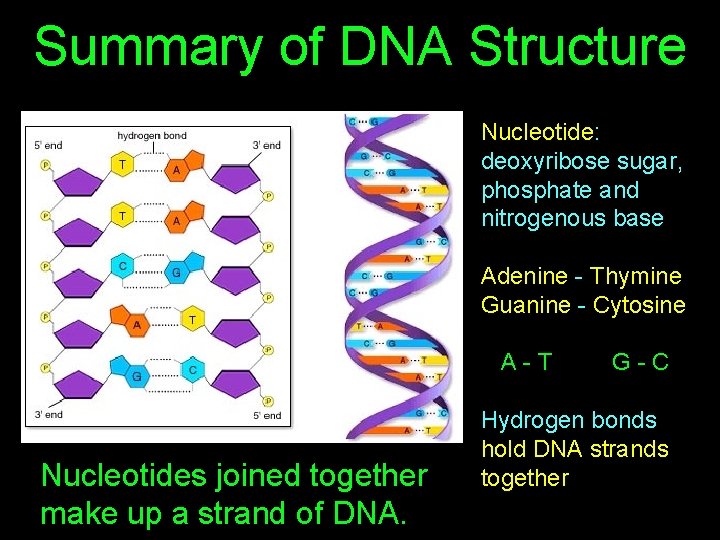
Summary of DNA Structure Nucleotide: deoxyribose sugar, phosphate and nitrogenous base Adenine - Thymine Guanine - Cytosine A-T Nucleotides joined together make up a strand of DNA. G-C Hydrogen bonds hold DNA strands together
- Slides: 16