
DNA Structure Flashback Wednesday Jan 7 Remember to
DNA Structure
Flashback Wednesday Jan. 7 Remember to put the date and write the question and answer. 1. What are the 3 parts of a DNA nucleotide? 2. What are the 4 bases in DNA?
Flashback Thursday Jan. 8 Remember to put the date and write the question and answer. 1. How many hydrogen bonds are between Cytosine and Guanine? Adenine and Thymine? 2. What is the name of the sugar in DNA?
Flashback Wednesday Jan. 7 Remember to put the date and write the question and answer. 1. What is the shape of DNA called? 2. The ______are found on the sides of the ladder, while the ______ are found on the rungs of the ladder.

DNA Structure DNA consists of two molecules that are arranged into a ladder-like structure called a Double Helix. A molecule of DNA is made up of millions of tiny subunits called Nucleotides. Each nucleotide consists of: 1. Phosphate group 2. Pentose sugar 3. Nitrogenous base
Cool Facts: • One chromosome has 50 - 250 million base pairs. • DNA is found in the mitochondria. • m. DNA is only found in the egg. Sperm has no mitochondria so m. DNA is passed to offspring from the mother. • One sequence of DNA is a genome or gene. • Unwind all our DNA, it will stretch from the moon and back 6000 X.
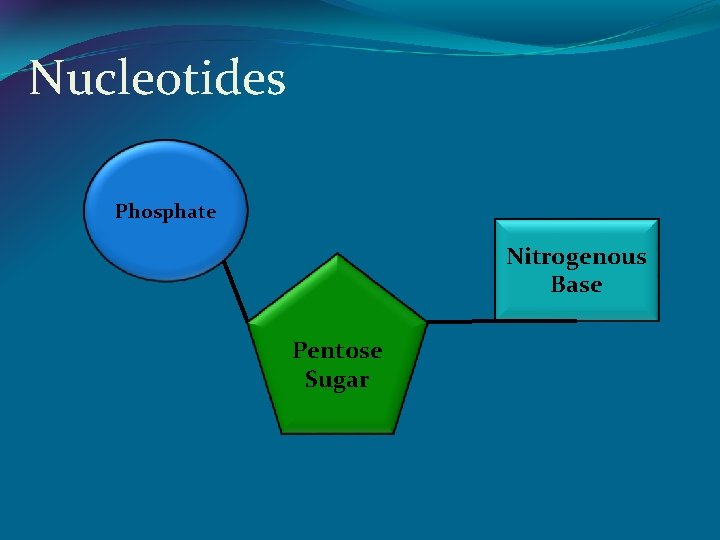
Nucleotides Phosphate Nitrogenous Base Pentose Sugar

Nucleic Acid: CHO, CHON, ? ? ?
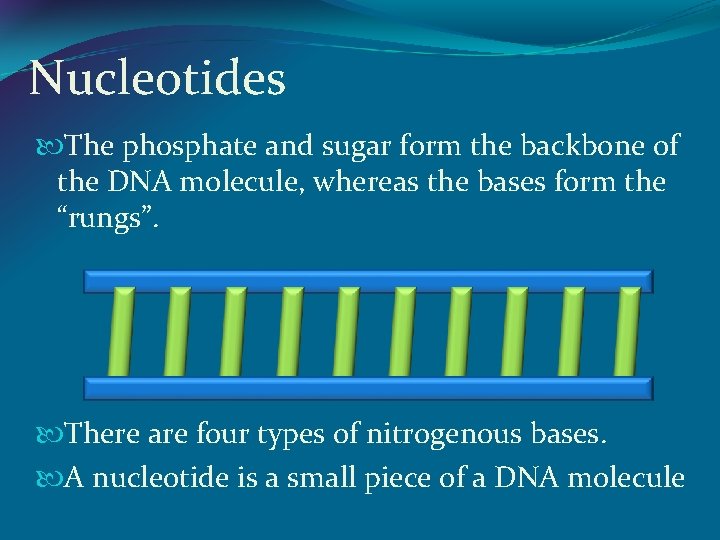
Nucleotides The phosphate and sugar form the backbone of the DNA molecule, whereas the bases form the “rungs”. There are four types of nitrogenous bases. A nucleotide is a small piece of a DNA molecule
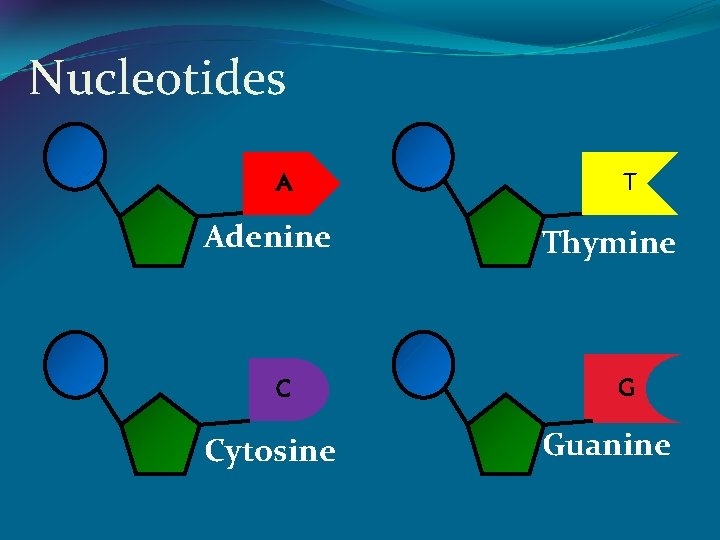
Nucleotides A Adenine C Cytosine T Thymine G Guanine
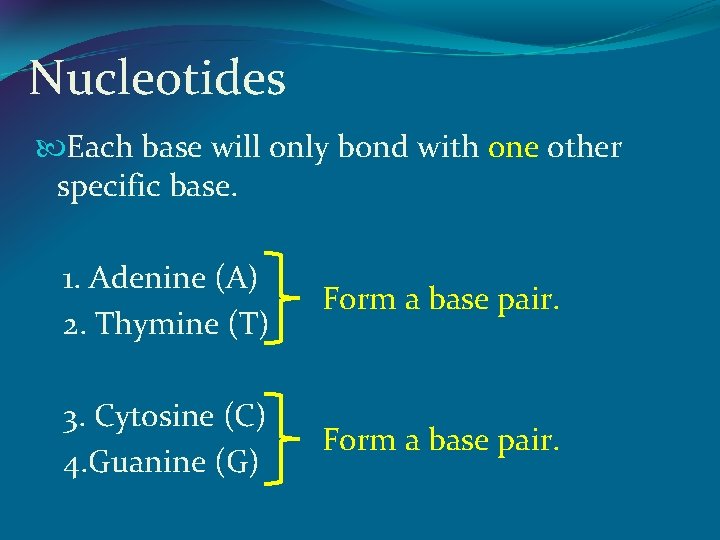
Nucleotides Each base will only bond with one other specific base. 1. Adenine (A) 2. Thymine (T) Form a base pair. 3. Cytosine (C) 4. Guanine (G) Form a base pair.
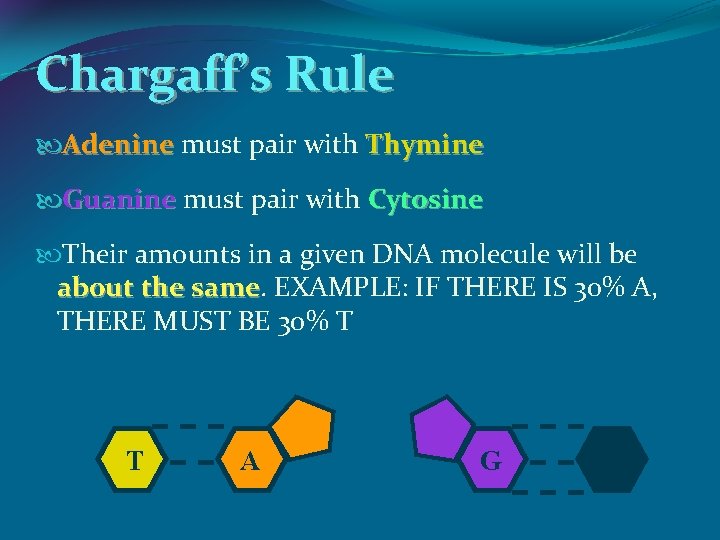
Chargaff’s Rule Adenine must pair with Thymine Guanine must pair with Cytosine Their amounts in a given DNA molecule will be about the same EXAMPLE: IF THERE IS 30% A, THERE MUST BE 30% T T A G C
Chargaff’s Rule Chargaff discovered that the percentage of A and T were equal. The same for C and G. This observation became Chargaff’s rule. This is always the same no matter what organisms.
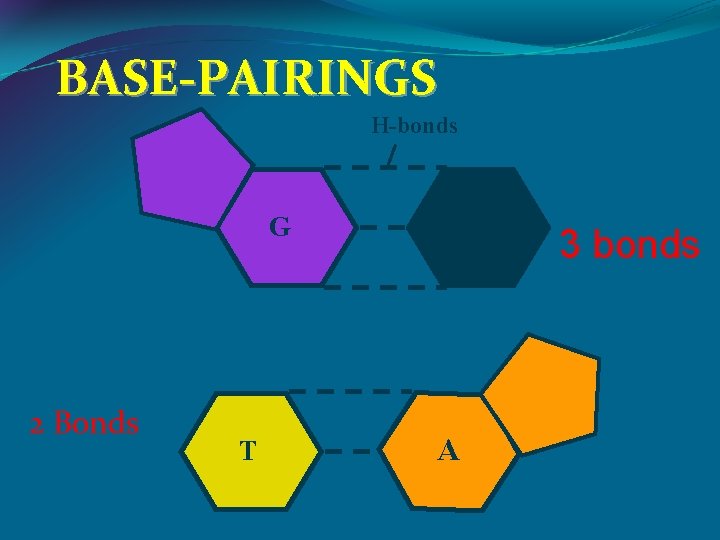
BASE-PAIRINGS H-bonds G 2 Bonds T C A 3 bonds
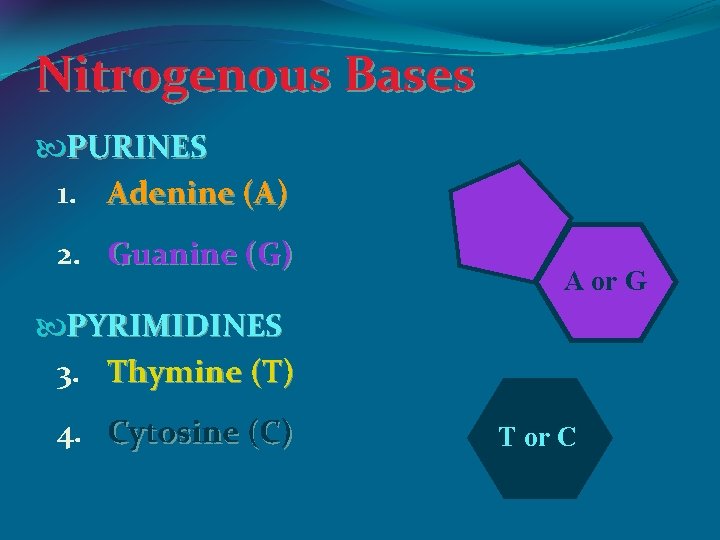
Nitrogenous Bases PURINES 1. Adenine (A) 2. Guanine (G) A or G PYRIMIDINES 3. Thymine (T) 4. Cytosine (C) T or C
DNA Structure Because of this complementary base pairing, the order of the bases in one strand determines the order of the bases in the other strand. “Complementary Rule”
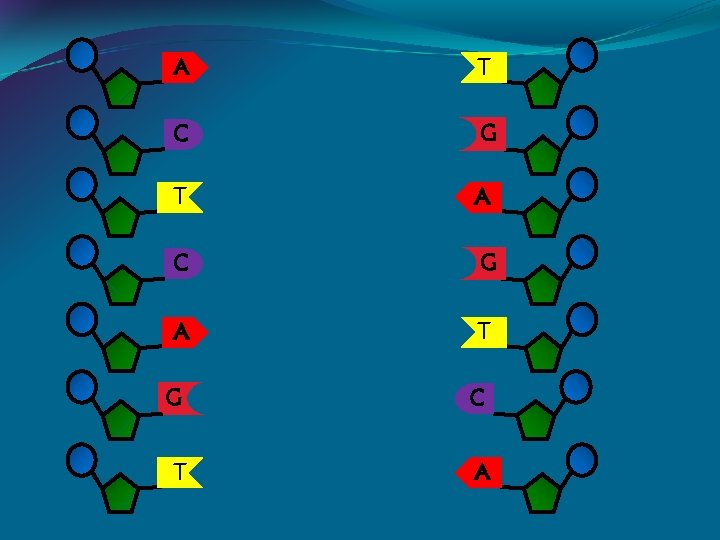
A T C G T A C G A T G C T A
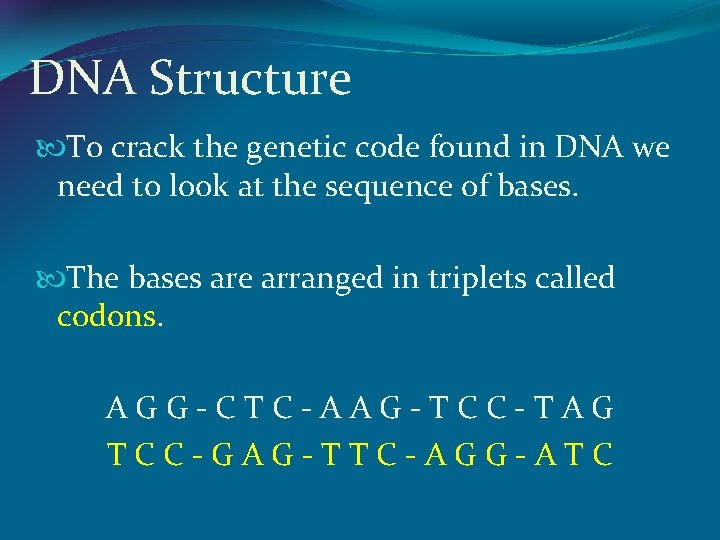
DNA Structure To crack the genetic code found in DNA we need to look at the sequence of bases. The bases are arranged in triplets called codons. AGG-CTC-AAG-TCC-TAG TCC-GAG-TTC-AGG-ATC
DNA Structure A gene is a section of DNA that codes for a protein. Each unique gene has a unique sequence of bases. This unique sequence of bases will code for the production of a unique protein. It is these proteins and combination of proteins that give us a unique phenotype.
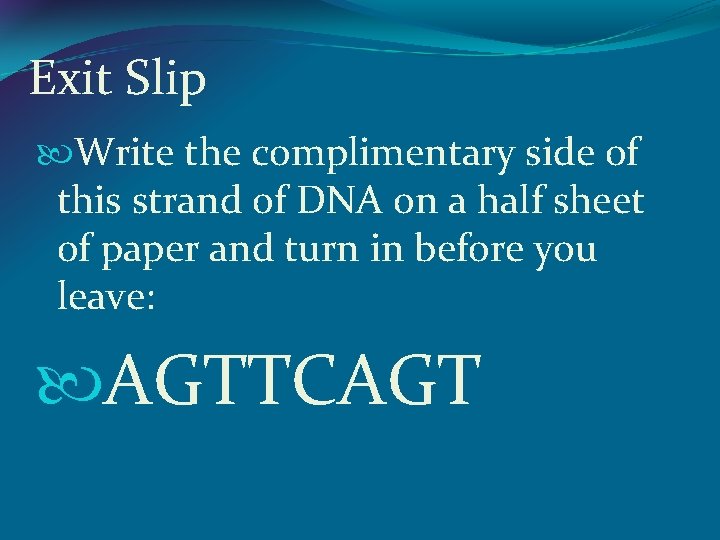
Exit Slip Write the complimentary side of this strand of DNA on a half sheet of paper and turn in before you leave: AGTTCAGT
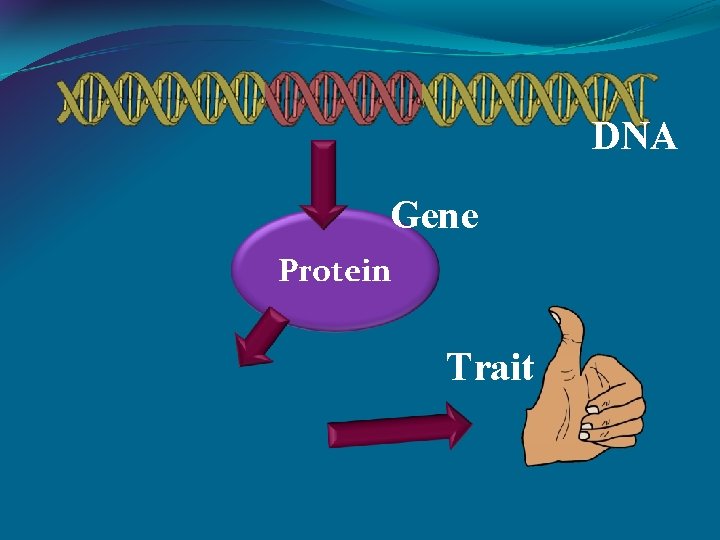
DNA Gene Protein Trait
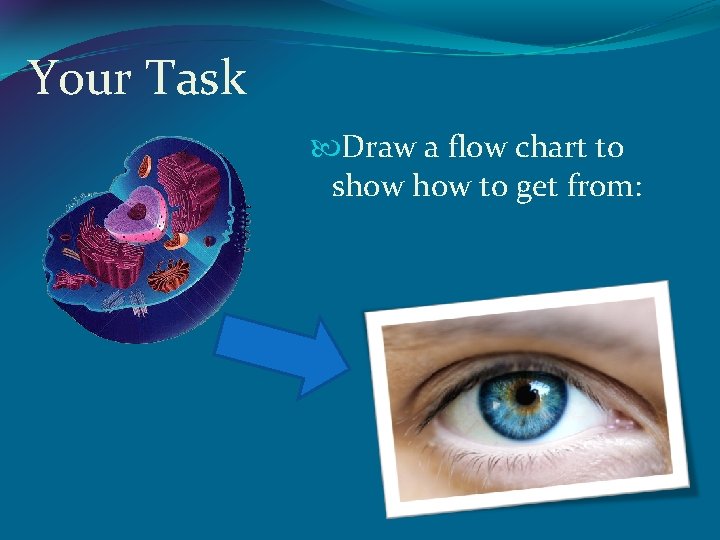
Your Task Draw a flow chart to show to get from:

This powerpoint was kindly donated to www. worldofteaching. com http: //www. worldofteaching. com is home to over a thousand powerpoints submitted by teachers. This is a completely free site and requires no registration. Please visit and I hope it will help in your teaching.
- Slides: 23