
DNA Structure Essential Standard 3 1 1 Explain



- Slides: 28
DNA Structure Essential Standard 3. 1. 1 - Explain the double-stranded, complementary nature of DNA as related to its function in the cell.
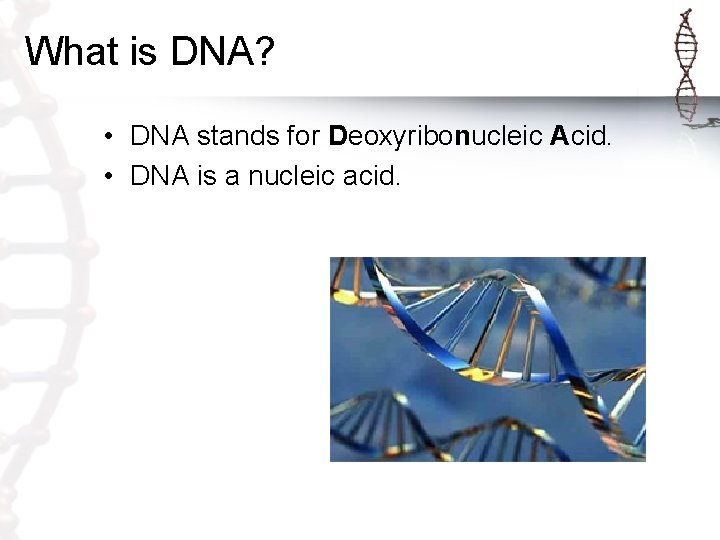
What is DNA? • DNA stands for Deoxyribonucleic Acid. • DNA is a nucleic acid.
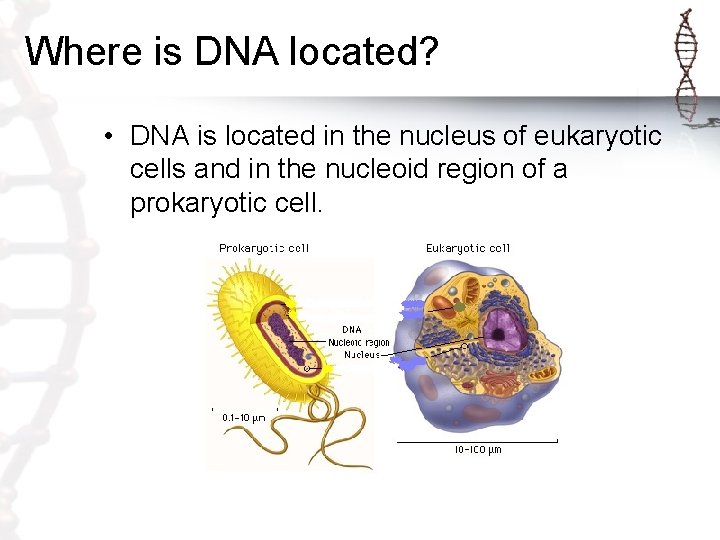
Where is DNA located? • DNA is located in the nucleus of eukaryotic cells and in the nucleoid region of a prokaryotic cell.
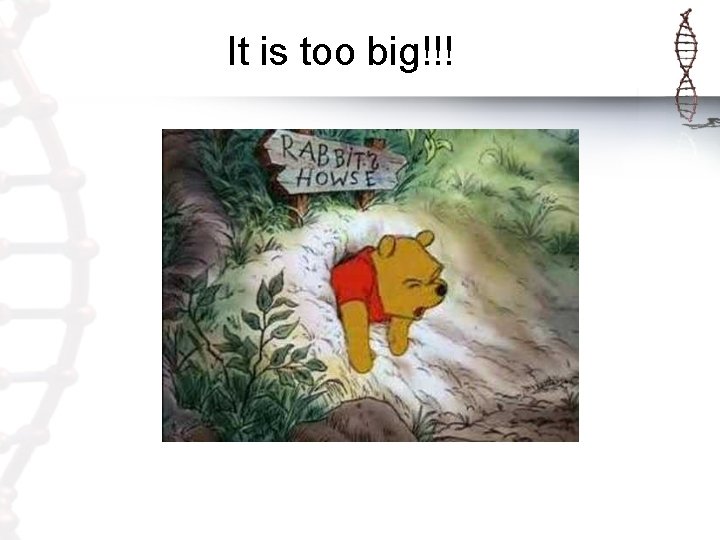
DNA and the Eukaryotic Cell • DNA can not leave the nucleus!!! • Can you determine why?
It is too big!!!
DNA’s Jobs!!! • Holds our genetic information. • Has the instructions for making proteins.
DNA Structure
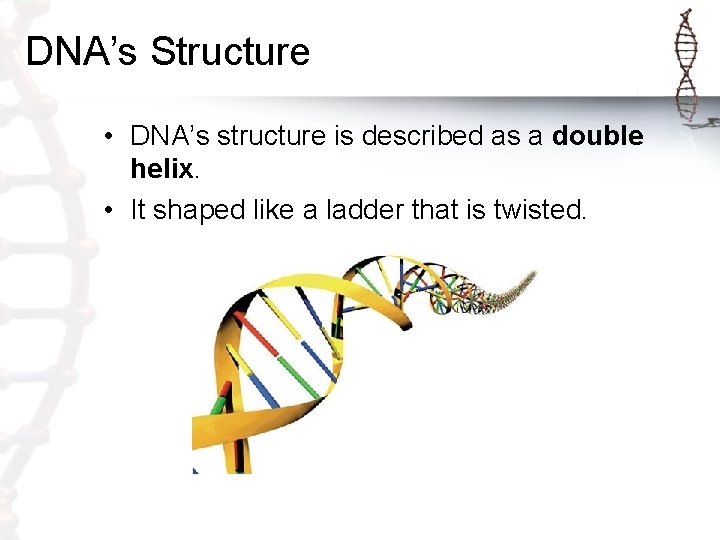
DNA’s Structure • DNA’s structure is described as a double helix. • It shaped like a ladder that is twisted.
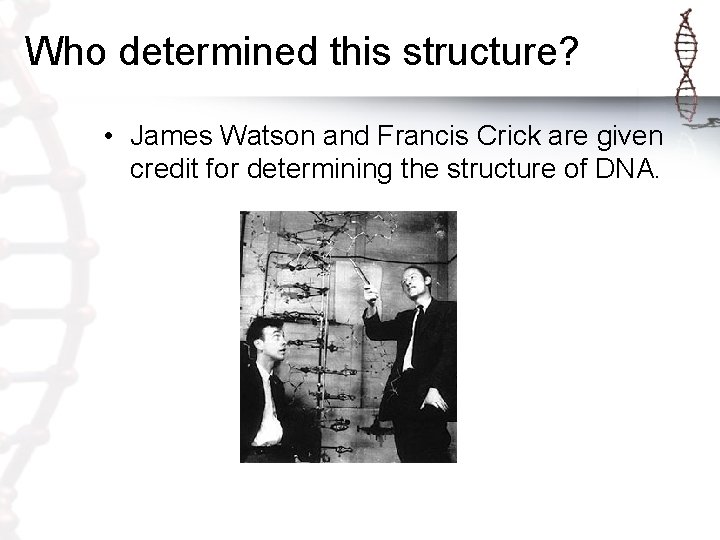
Who determined this structure? • James Watson and Francis Crick are given credit for determining the structure of DNA.
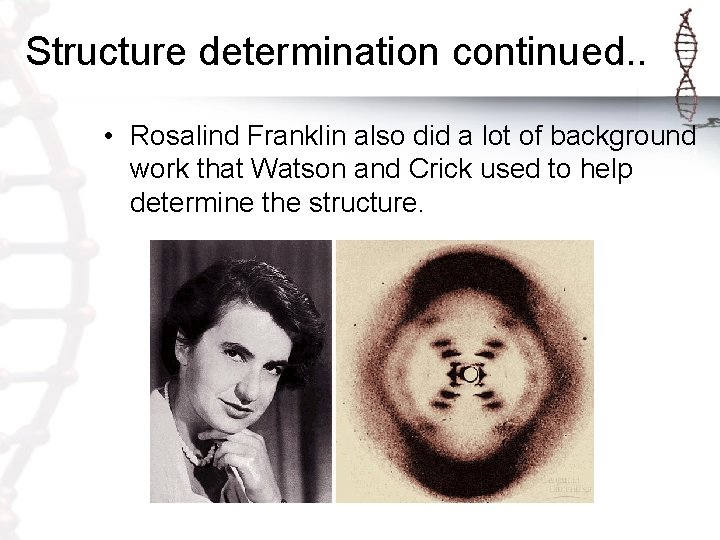
Structure determination continued. . • Rosalind Franklin also did a lot of background work that Watson and Crick used to help determine the structure.
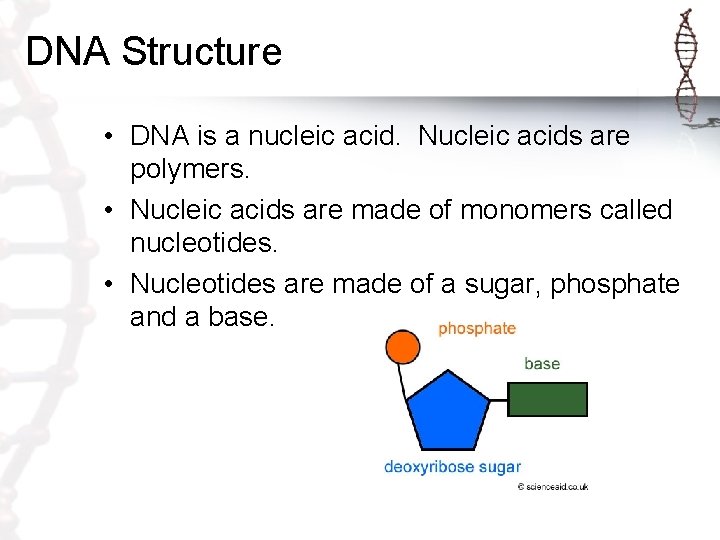
DNA Structure • DNA is a nucleic acid. Nucleic acids are polymers. • Nucleic acids are made of monomers called nucleotides. • Nucleotides are made of a sugar, phosphate and a base.
The Specifics for DNA • Deoxyribose is the sugar found in DNA. • There are four different nitrogenous bases found in DNA. They are: 1. 2. 3. 4. Adenine Thymine Guanine Cytosine
DNA’s Bases • There are two classes of nitrogenous bases: 1. Purines 2. Pyrimidines • Purines have two rings. – • Adenine and Guanine are purines Pyrimidines have one ring. – Cytosine and Thymine are pyrimidines.
DNA’s Bases
How the “pieces” are arranged… • The sugar and phosphate groups alternate on the outside of the strands. • The bases are bonded to the sugar. • The bases are located on the inside of the double helix. • The bases are held together by weak hydrogen bonds.
DNA Structure
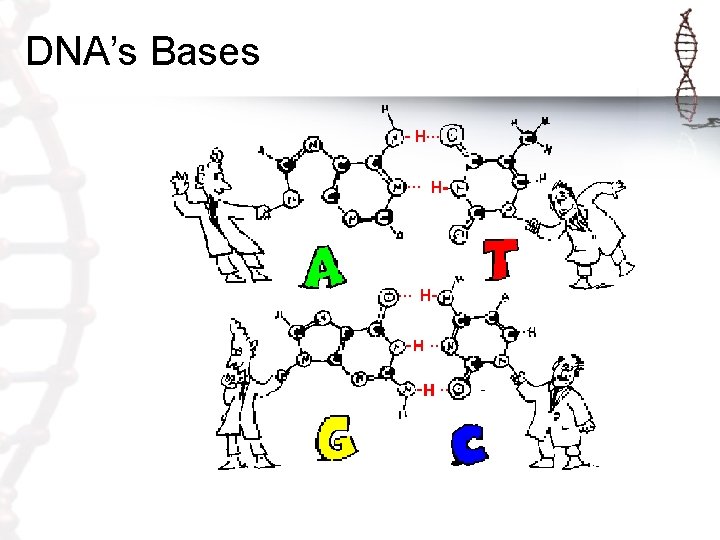
DNA Base Pairings • Watson and Crick determined that a purine bonds with a pyrimidine. • The bonding pairs are: – Adenine and Thymine – Cytosine and Guanine • The bases are held together with hydrogen bonds. – A and T are held together by two hydrogen bonds. – G and C are held together by three hydrogen bonds.
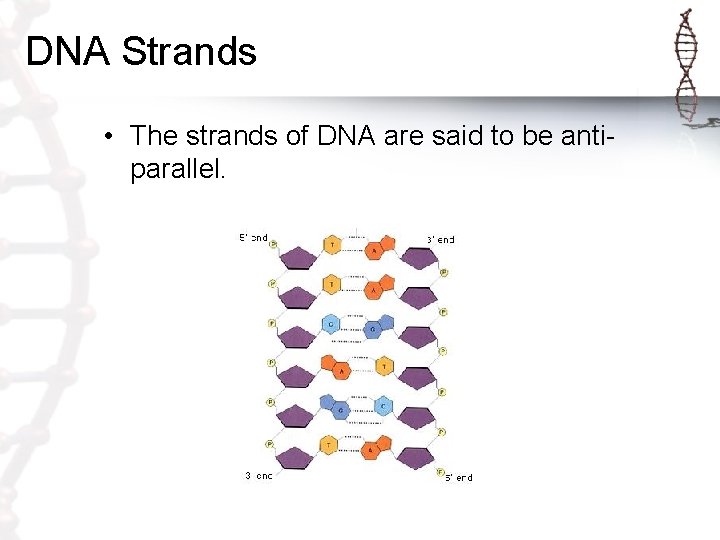
DNA Strands • The strands of DNA are said to be antiparallel.
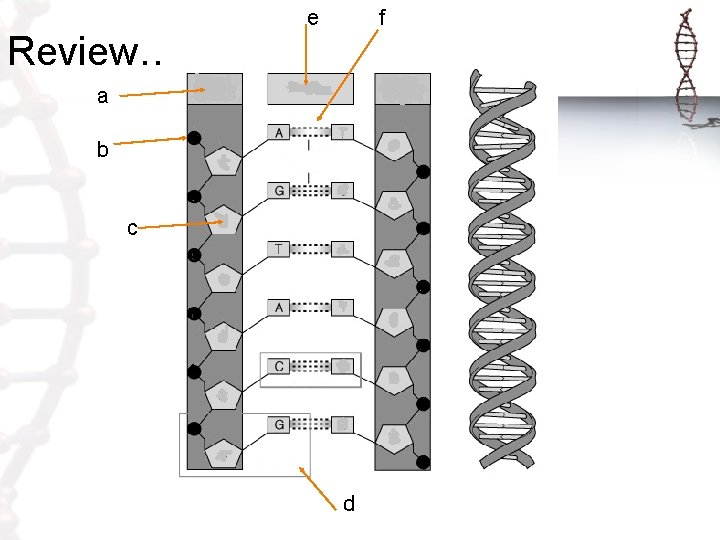
Review……. e f a b c d
DNA Replication
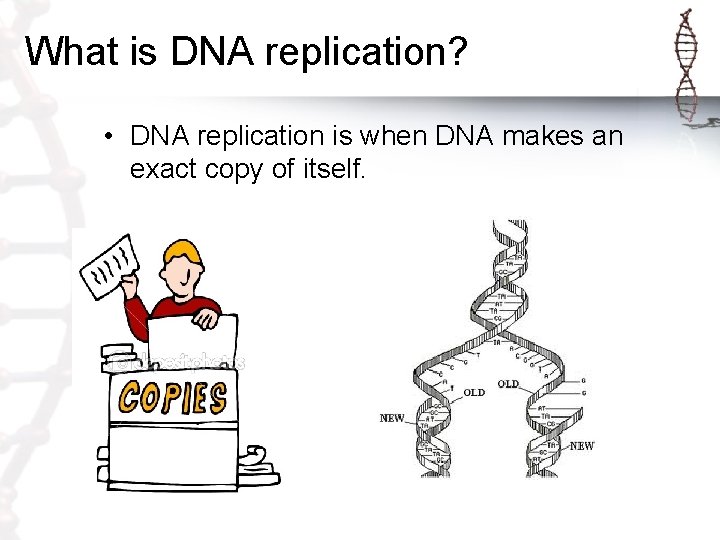
What is DNA replication? • DNA replication is when DNA makes an exact copy of itself.
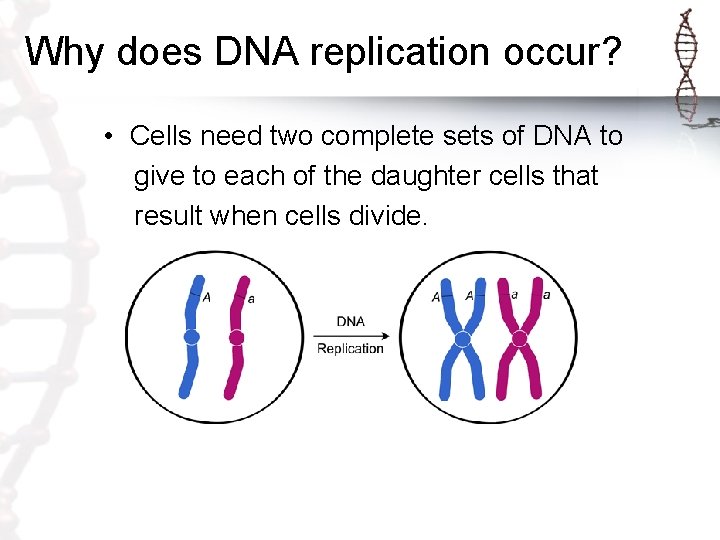
Why does DNA replication occur? • Cells need two complete sets of DNA to give to each of the daughter cells that result when cells divide.
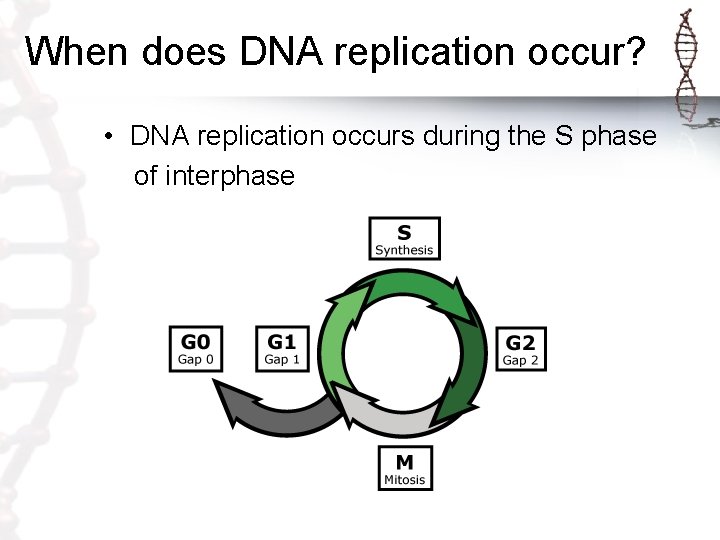
When does DNA replication occur? • DNA replication occurs during the S phase of interphase
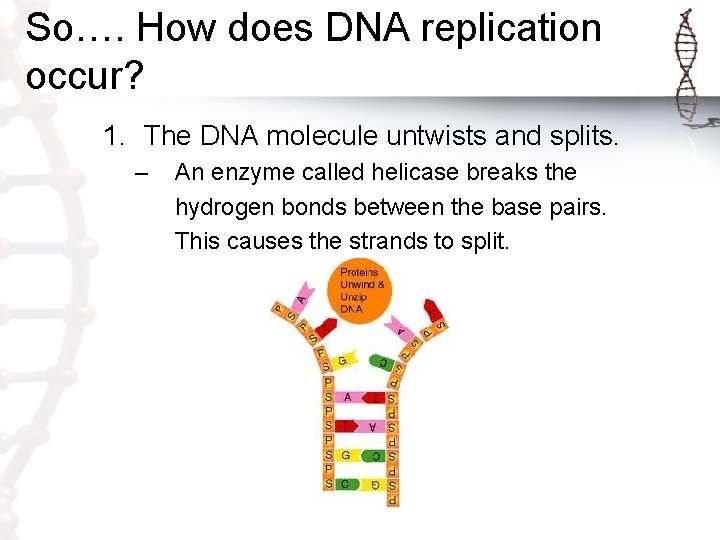
So…. How does DNA replication occur? 1. The DNA molecule untwists and splits. – An enzyme called helicase breaks the hydrogen bonds between the base pairs. This causes the strands to split.
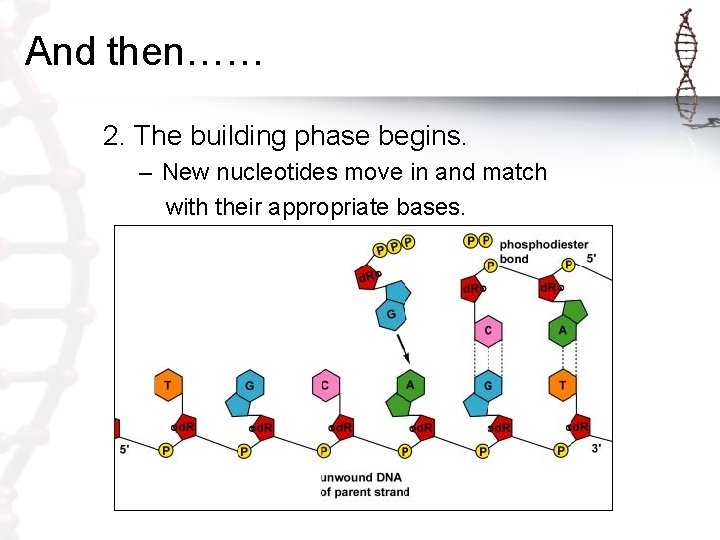
And then…… 2. The building phase begins. – New nucleotides move in and match with their appropriate bases.
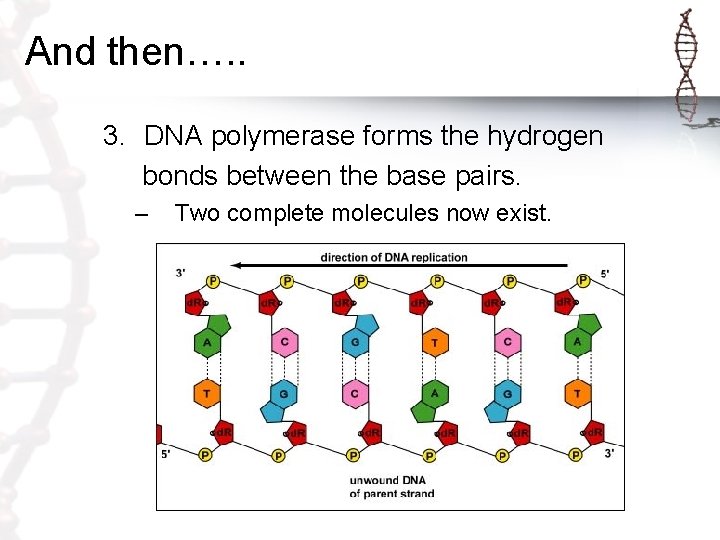
And then…. . 3. DNA polymerase forms the hydrogen bonds between the base pairs. – Two complete molecules now exist.
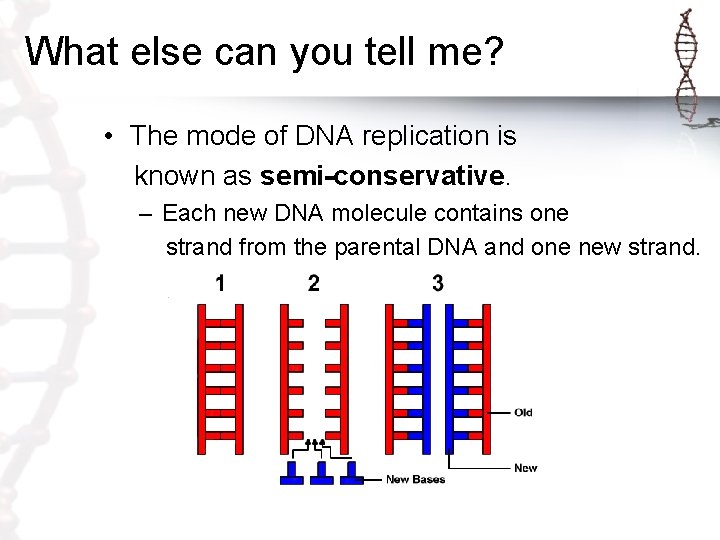
What else can you tell me? • The mode of DNA replication is known as semi-conservative. – Each new DNA molecule contains one strand from the parental DNA and one new strand.
A visual…. DNA Replication Animation