
DNA Structure and Replication Deoxyribonucleicacid The Structure of
DNA Structure and Replication Deoxyribonucleicacid
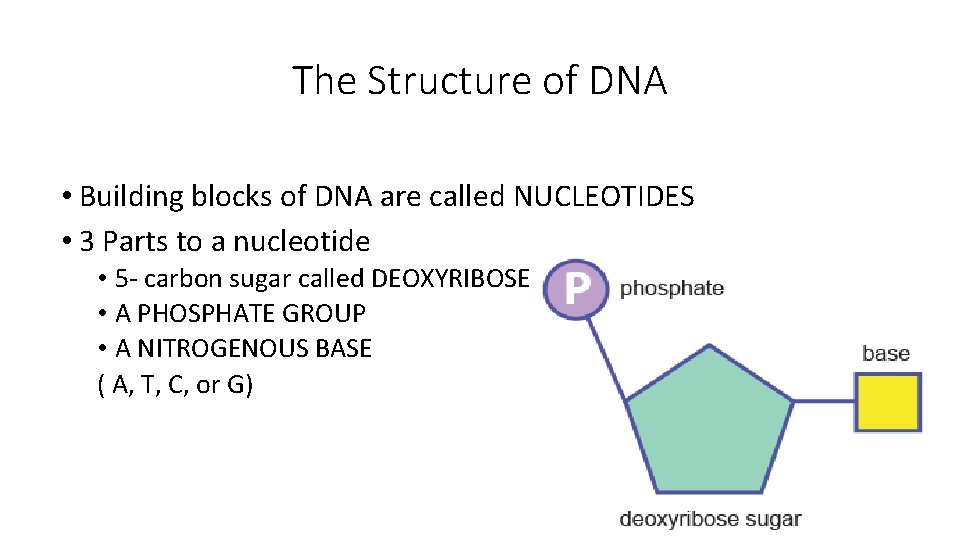
The Structure of DNA • Building blocks of DNA are called NUCLEOTIDES • 3 Parts to a nucleotide • 5 - carbon sugar called DEOXYRIBOSE • A PHOSPHATE GROUP • A NITROGENOUS BASE ( A, T, C, or G)
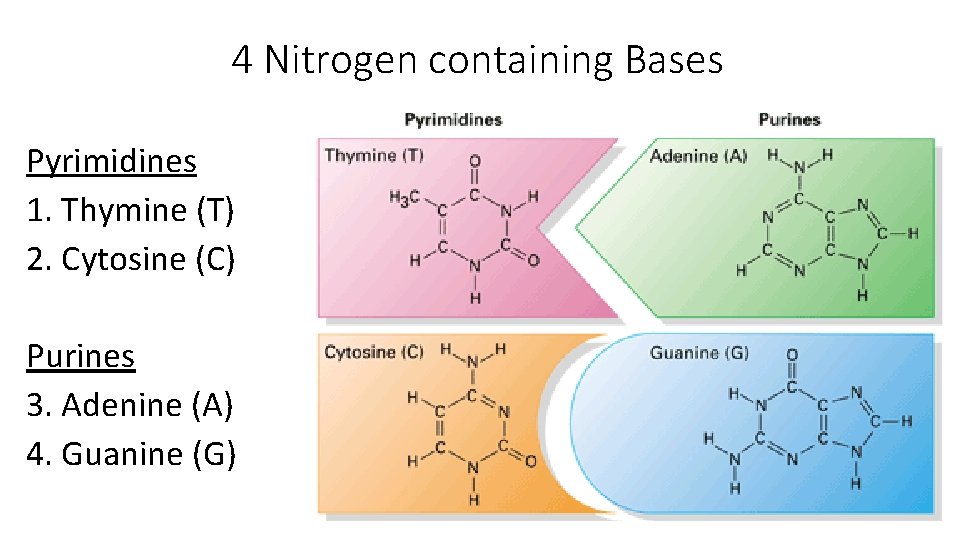
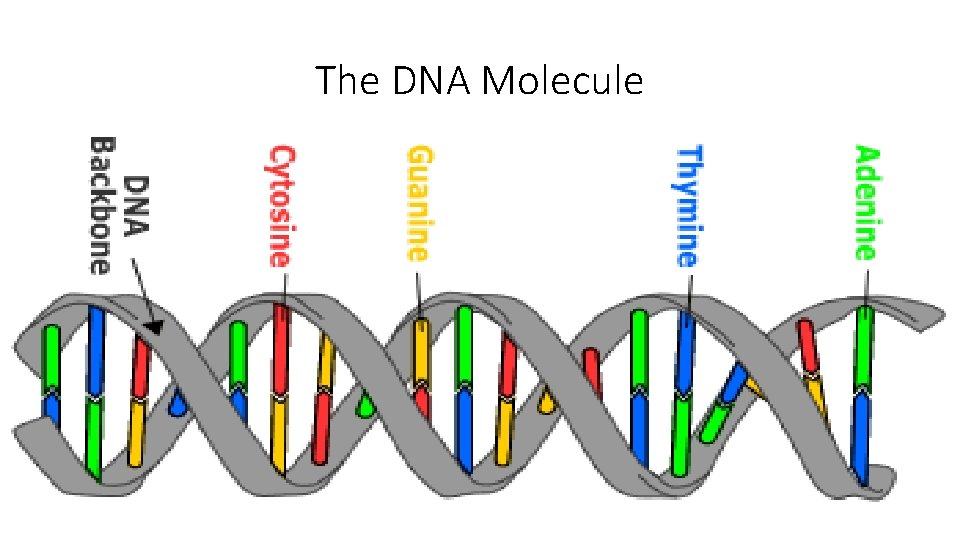
4 Nitrogen containing Bases Pyrimidines 1. Thymine (T) 2. Cytosine (C) Purines 3. Adenine (A) 4. Guanine (G)
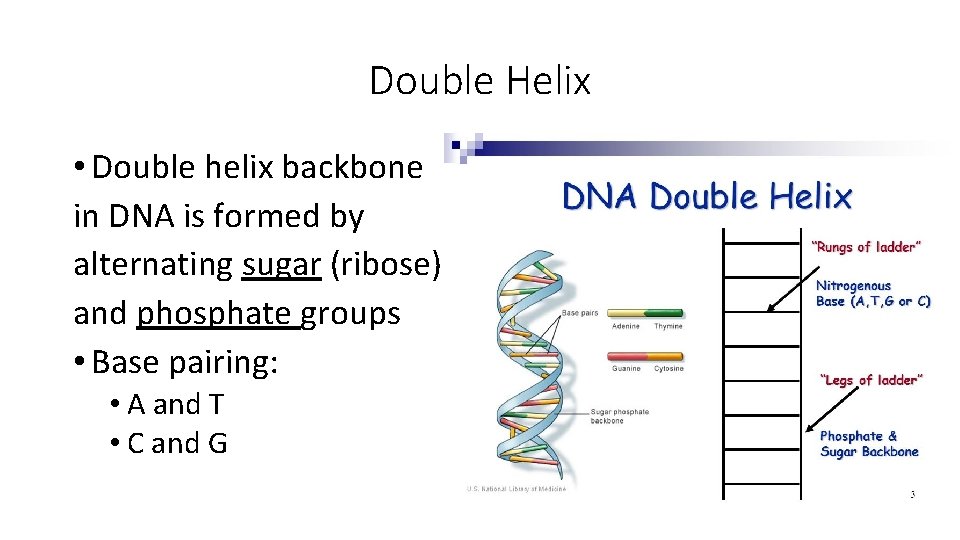
Double Helix • Double helix backbone in DNA is formed by alternating sugar (ribose) and phosphate groups • Base pairing: • A and T • C and G
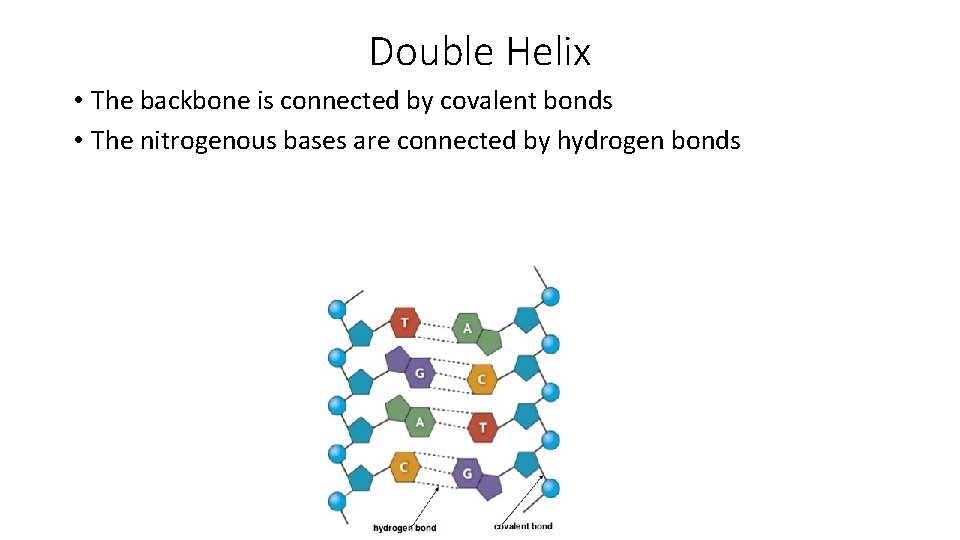
Double Helix • The backbone is connected by covalent bonds • The nitrogenous bases are connected by hydrogen bonds
The DNA Molecule
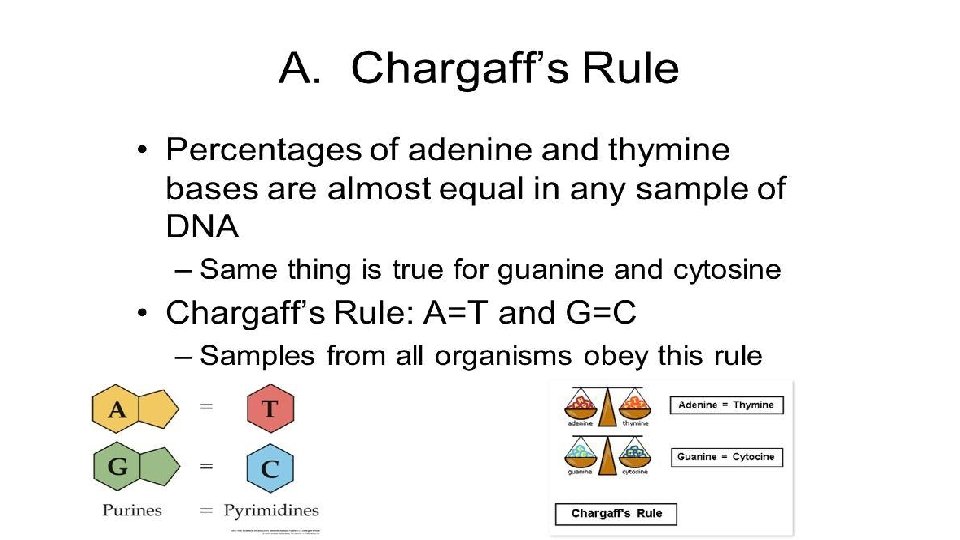
Chargraff’s Rule
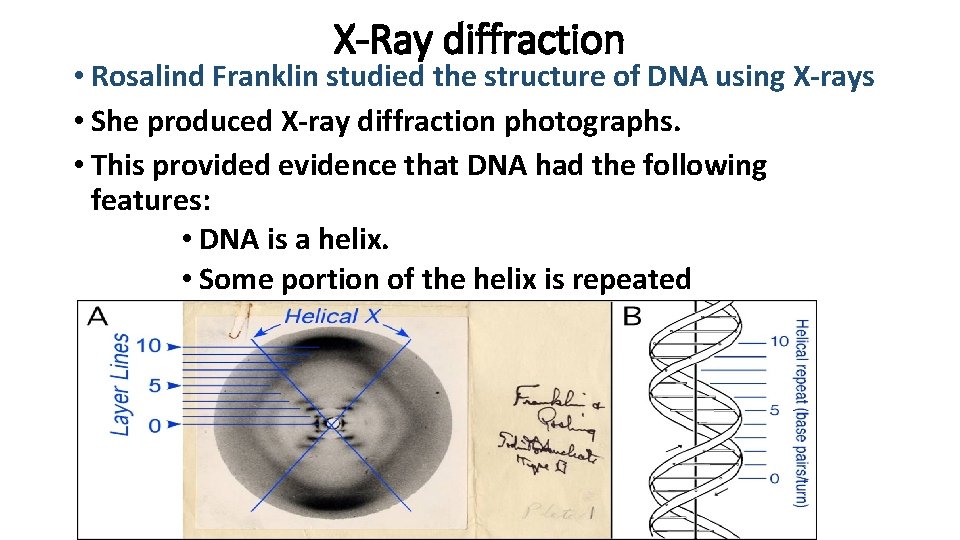
X-Ray diffraction • Rosalind Franklin studied the structure of DNA using X-rays • She produced X-ray diffraction photographs. • This provided evidence that DNA had the following features: • DNA is a helix. • Some portion of the helix is repeated
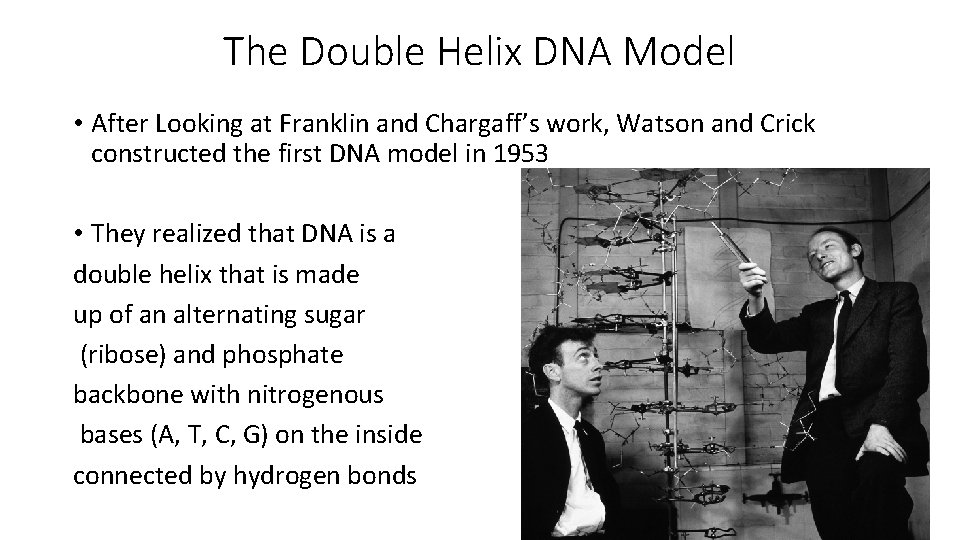
The Double Helix DNA Model • After Looking at Franklin and Chargaff’s work, Watson and Crick constructed the first DNA model in 1953 • They realized that DNA is a double helix that is made up of an alternating sugar (ribose) and phosphate backbone with nitrogenous bases (A, T, C, G) on the inside connected by hydrogen bonds
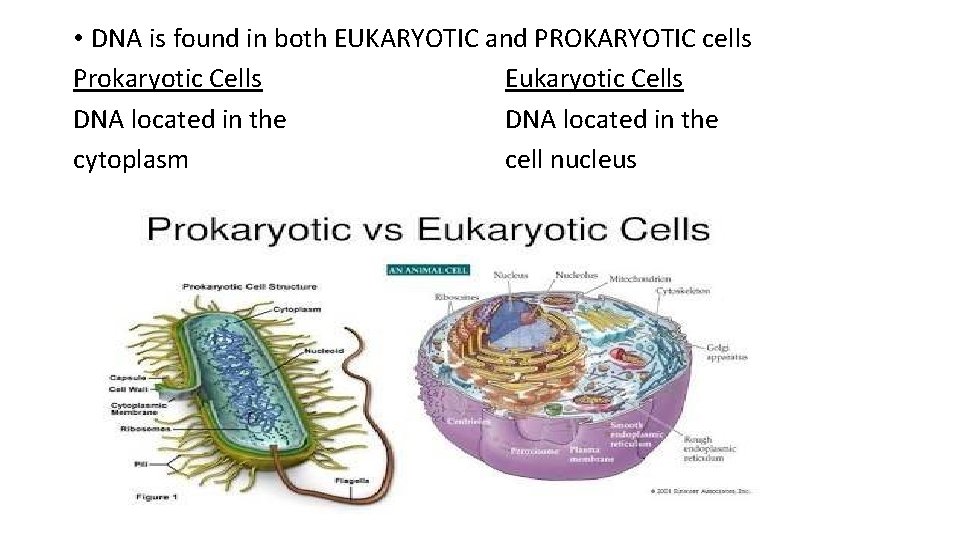
• DNA is found in both EUKARYOTIC and PROKARYOTIC cells Prokaryotic Cells Eukaryotic Cells DNA located in the cytoplasm cell nucleus
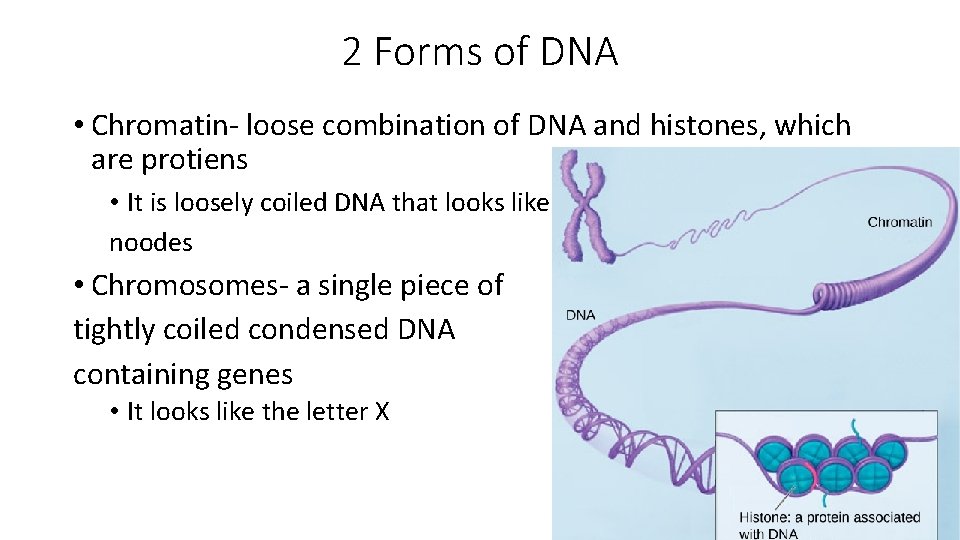
2 Forms of DNA • Chromatin- loose combination of DNA and histones, which are protiens • It is loosely coiled DNA that looks like noodes • Chromosomes- a single piece of tightly coiled condensed DNA containing genes • It looks like the letter X
Assignment • DNA Paper Model
What is DNA Replication? • The process by which a cell copies its DNA • Why does a cell need to copy its DNA? • To prepare for cell division and to create more cells that contain identical strands of DNA • Examples: mitosis and meiosis
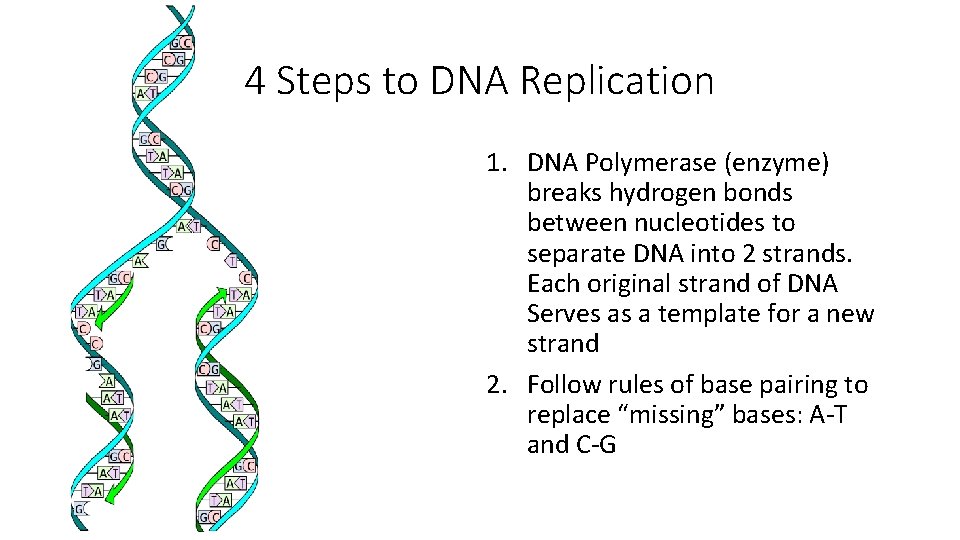
4 Steps to DNA Replication 1. DNA Polymerase (enzyme) breaks hydrogen bonds between nucleotides to separate DNA into 2 strands. Each original strand of DNA Serves as a template for a new strand 2. Follow rules of base pairing to replace “missing” bases: A-T and C-G
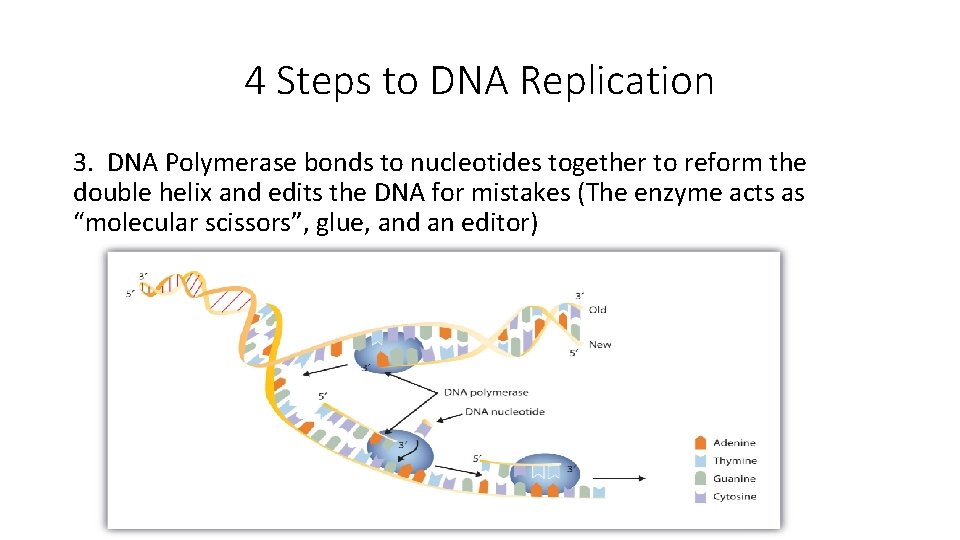
4 Steps to DNA Replication 3. DNA Polymerase bonds to nucleotides together to reform the double helix and edits the DNA for mistakes (The enzyme acts as “molecular scissors”, glue, and an editor)
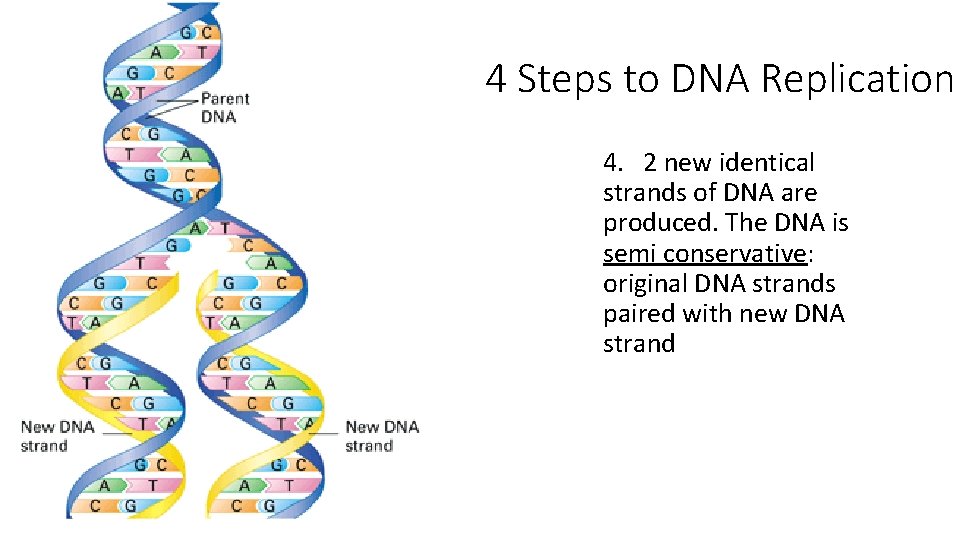
4 Steps to DNA Replication 4. 2 new identical strands of DNA are produced. The DNA is semi conservative: original DNA strands paired with new DNA strand
Assignment • g
- Slides: 17