
DNA Structure and Function Chapter 13 Impacts Issues
- Slides: 15
DNA Structure and Function Chapter 13
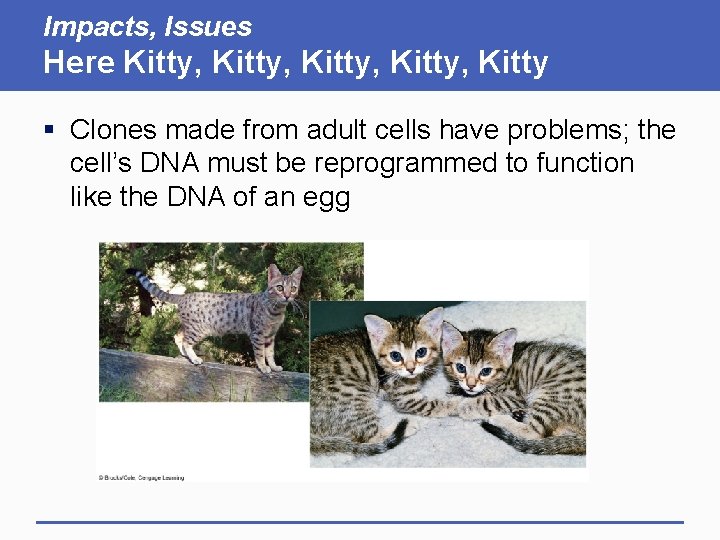
Impacts, Issues Here Kitty, Kitty § Clones made from adult cells have problems; the cell’s DNA must be reprogrammed to function like the DNA of an egg
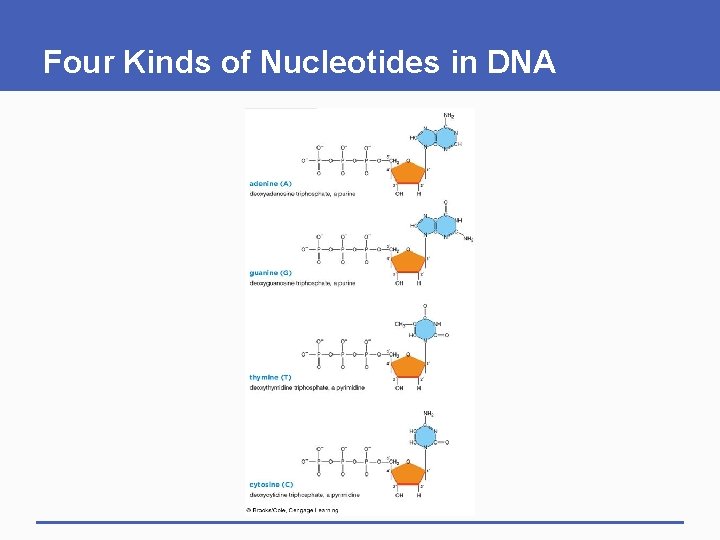
DNA’s Building Blocks § Nucleotide • A nucleic acid monomer consisting of a fivecarbon sugar (deoxyribose), three phosphate groups, and one of four nitrogen-containing bases § DNA consists of four nucleotide building blocks • Two pyrimidines: thymine and cytosine • Two purines: adenine and guanine
Four Kinds of Nucleotides in DNA
Chargaff’s Rules § The amounts of thymine and adenine in DNA are the same, and the amounts of cytosine and guanine are the same: A = T and G = C § The proportion of adenine and guanine differs among species
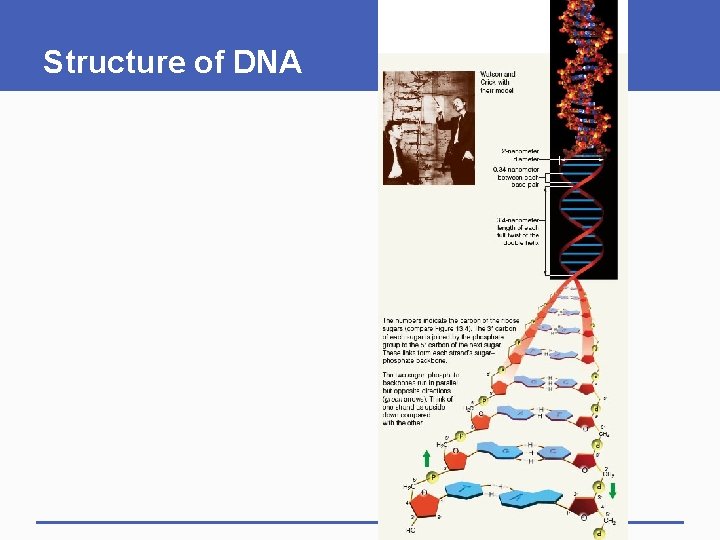
Watson and Crick’s DNA Model § A DNA molecule consists of two nucleotide chains (strands), running in opposite directions and coiled into a double helix § Base pairs form on the inside of the helix, held together by hydrogen bonds (A-T and G-C)
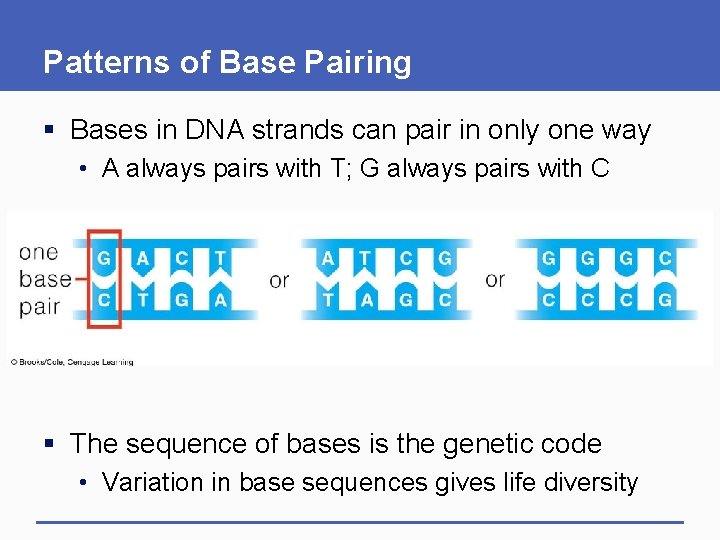
Patterns of Base Pairing § Bases in DNA strands can pair in only one way • A always pairs with T; G always pairs with C § The sequence of bases is the genetic code • Variation in base sequences gives life diversity
Structure of DNA
13. 2 Key Concepts Discovery of DNA’s Structure § A DNA molecule consists of two long chains of nucleotides coiled into a double helix § Four kinds of nucleotides make up the chains, which are held together along their length by hydrogen bonds
13. 3 DNA Replication and Repair § A cell copies its DNA before mitosis or meiosis I § DNA repair mechanisms and proofreading correct most replication errors
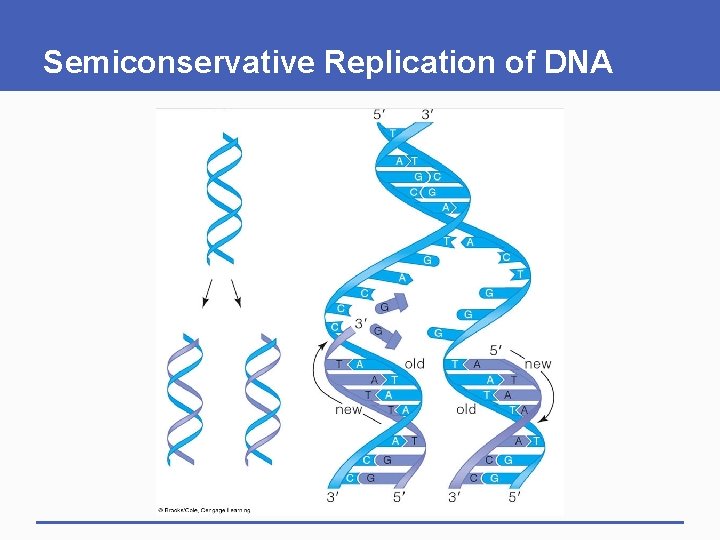
Semiconservative DNA Replication § Each strand of a DNA double helix is a template for synthesis of a complementary strand of DNA § One template builds DNA continuously; the other builds DNA discontinuously, in segments § Each new DNA molecule consist of one old strand one new strand
Enzymes of DNA Replication § DNA helicase • Breaks hydrogen bonds between DNA strands § DNA polymerase • Joins free nucleotides into a new strand of DNA § DNA ligase • Joins DNA segments on discontinuous strand
Semiconservative Replication of DNA
Checking for Mistakes § DNA repair mechanisms • DNA polymerases proofread DNA sequences during DNA replication and repair damaged DNA § When proofreading and repair mechanisms fail, an error becomes a mutation – a permanent change in the DNA sequence
13. 3 Key Concepts How Cells Duplicate Their DNA § Before a cell begins mitosis or meiosis, enzymes and other proteins replicate its chromosome(s) § Newly forming DNA strands are monitored for errors § Uncorrected errors may become mutations