
DNA Structure and Function Biologys biggest moment in
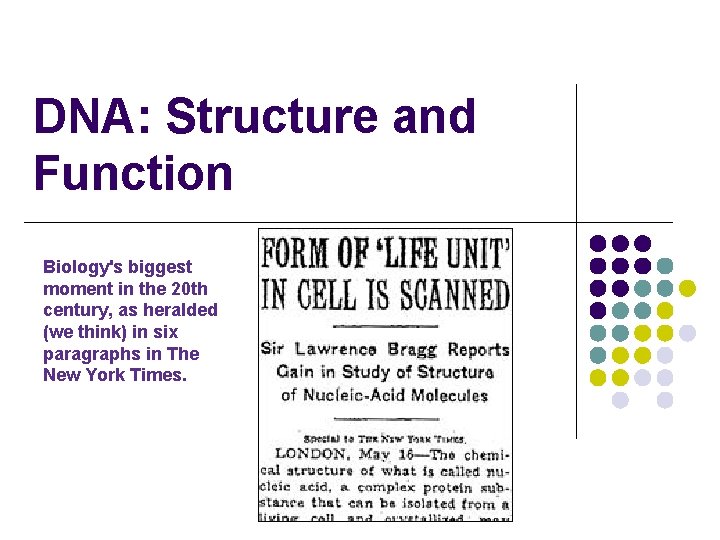
DNA: Structure and Function Biology's biggest moment in the 20 th century, as heralded (we think) in six paragraphs in The New York Times.
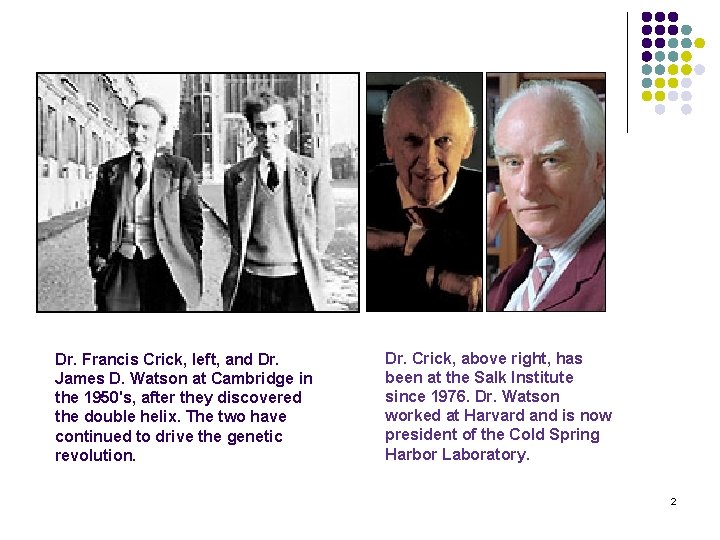
Dr. Francis Crick, left, and Dr. James D. Watson at Cambridge in the 1950's, after they discovered the double helix. The two have continued to drive the genetic revolution. Dr. Crick, above right, has been at the Salk Institute since 1976. Dr. Watson worked at Harvard and is now president of the Cold Spring Harbor Laboratory. 2
What is the Structure of DNA? l DNA structure must be compatible with its 4 roles: l Make copies of itself l Encode information l Control cells & tell them what to do l Change by mutation 3
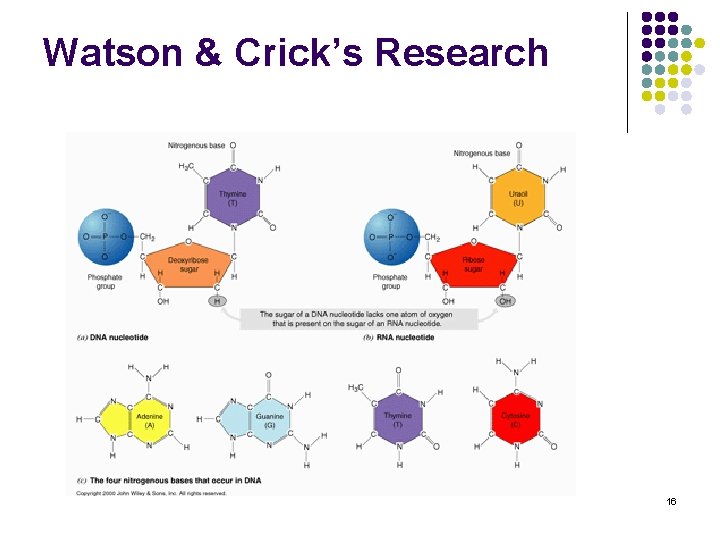
DNA is a Double Helix l Nucleotides that make up DNA have 3 components: l Phosphate group l 5 -C sugar (deoxyribose) l Nitrogen-containing organic base 4
Four Bases of DNA Nucleotides l Adenine (A) – purine l Guanine (G) – purine l Thymine (T) – pyrimidine l Cytosine (C) - pyrimidine 5
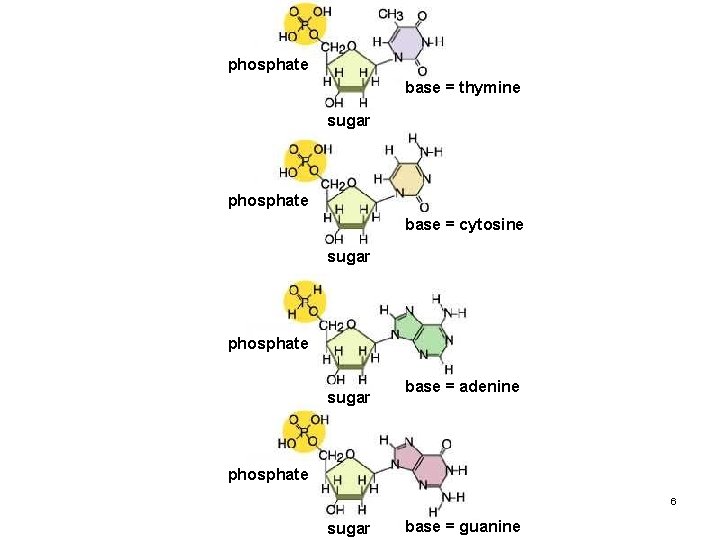
phosphate base = thymine sugar phosphate base = cytosine sugar phosphate sugar base = adenine phosphate 6 sugar base = guanine
Characteristics of Four Bases Watson & Crick l Assumed that the phosphate group & sugar connect the bases together l Thus, nitrogenous bases could occur in any order without changing basic molecular structure l Consistent with role as repository of information 7
3 D Structure of Proteins l L. Pauling made the discovery using X-ray crystallography: l Tiny bit of crystallized sample is bombarded with Xrays l Spots & areas thus formed reveal atomic arrangement in the sample l Some proteins have a regular structure 8
3 D Structure of Proteins l Pauling made paper models to resemble amino acids & assembled them into protein model l Model looked like twisted helix winding around axis (elongated spiral) l Pauling called the model alpha helix 9
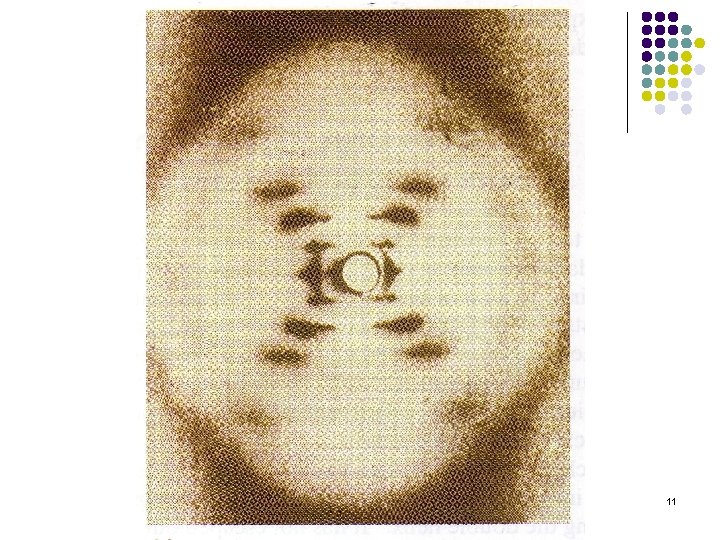
Research of DNA Structure l M. Wilkins’ research confirmed DNA was a helix l E. Chargaff found relative amounts of 4 bases conform to rule regardless of DNA source 10
11
Chargaff’s Rule of Ratios l Amount of adenine always equals thymine l Amount of cytosine always equals guanine l Amount of A+T together is independent of C+G 12
Watson & Crick’s Research l Considered there could be 2 helices with adenine on one & thymine on the other l Proposed pairing relationships – guanine on one & guanine on other 13
Watson & Crick’s Research l Pairing relationship – sequence on one chain is complement of sequence on other l Used Pauling’s model building approach to make a metal model l Their model was sugar-phosphate backbone (like rails on ladder), twisted into helix as predicted by pictures 14
Watson & Crick’s Research l Paired bases projecting from backbone formed rungs of a ladder projecting from rails & satisfied Chargaff’s ratios l Found bonds holding nucleotides together were covalent l Bonds holding base pairs – relatively weak, but many together – strong 15
Watson & Crick’s Research 16
DNA Replication l Replication – process by which DNA copies itself l Precedes cell division l Watson & Crick said replication begins when weak bonds connecting parental strands break l Strands separate as halves of a zipper 17
DNA Replication l Watson & Crick exposed bases attract new mates (T pairing with A, C pairing with G, etc. ) l Each strand acts as a blueprint upon which a new partner is assembled l As each new strand forms, nucleotides are lined together to form a complete strand 18
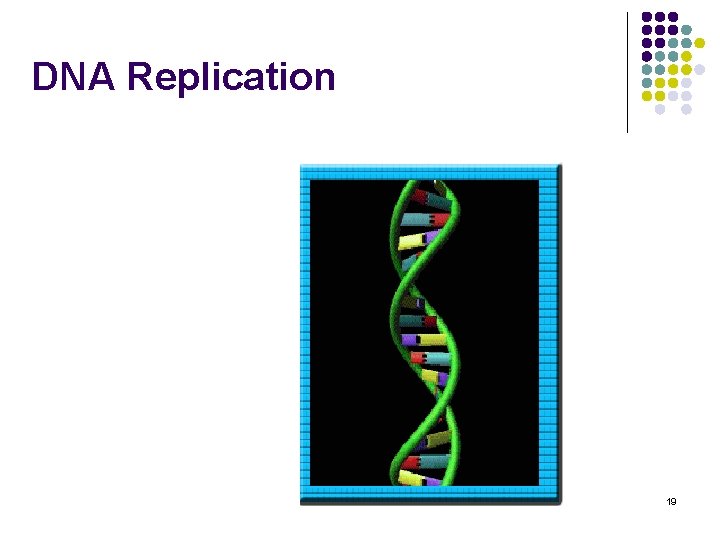
DNA Replication 062 A 3 REP. MOV 19
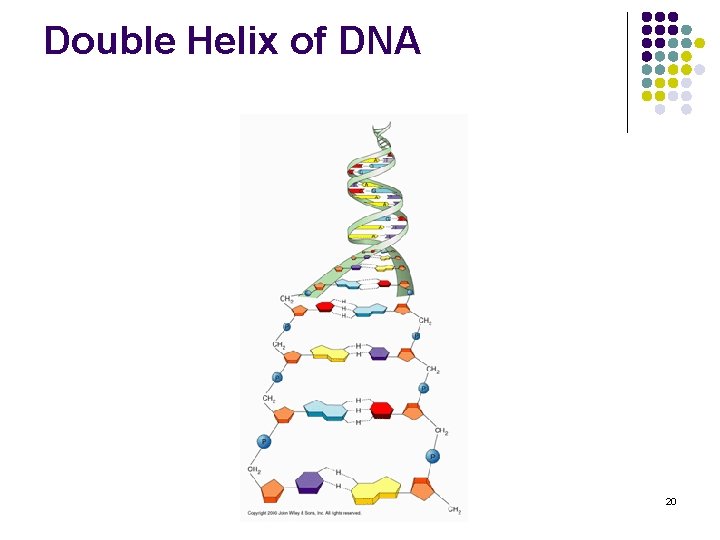
Double Helix of DNA 20
DNA Replication l Result is two double-stranded daughter helices l l Each composed of one parental strand & one newly synthesized strand This mechanism is called semiconservative replication l Watson & Crick proposed this solely on basis of logic, no scientific evidence 21
How is Info in DNA Expressed? l A. Garrod, 1902, proposed connection between genes & proteins l Proteins – amino acid polymers that fold, twist into 3 D structures l Amino acids differ form each other in side group (R group composition) l The genes determine protein primary structure 22
RNA as an Intermediary l DNA codes for protein through related polymer of ribonucleic acid nucleotides or RNA l DNA that encodes protein is copied into sequence of RNA nucleotides l Smaller, more mobile RNA goes to the part of the cell where sequence is decoded into protein 23
Decoding DNA: DNA RNA l PROTEIN Two separate processes involved: l Transcription – DNA used as the template to make RNA l Translation – RNA serves as the template for the sequence of amino acids in a protein 24
Structure of RNA Nucleotides & Polynucleotides l Composed of phosphate group, nitrogenous base (A, G, C, U [instead of T]) & ribose sugar l Nucleotides are joined together into singlestranded molecule by covalent bonds 25
Differences: DNA & RNA l They contain different sugars l l l DNA contains deoxyribose RNA contains ribose Nitrogenous bases l DNA contains A, G, T, & C l RNA contains A, G, U, & C l Uracil (U) replaces thymine (T) in RNA, thus A pairs with U when DNA is used as a template to make RNA 26
Differences: DNA & RNA l DNA – most stable as double helix l RNA most often exists as a single strand of nucleotides l Size l DNA molecules are larger l RNAs are smaller l Mobility l DNAs are basically immobile l RNAs are highly mobile l Life span l DNAs are long-lived l RNAs are broken down soon after their job is done 27
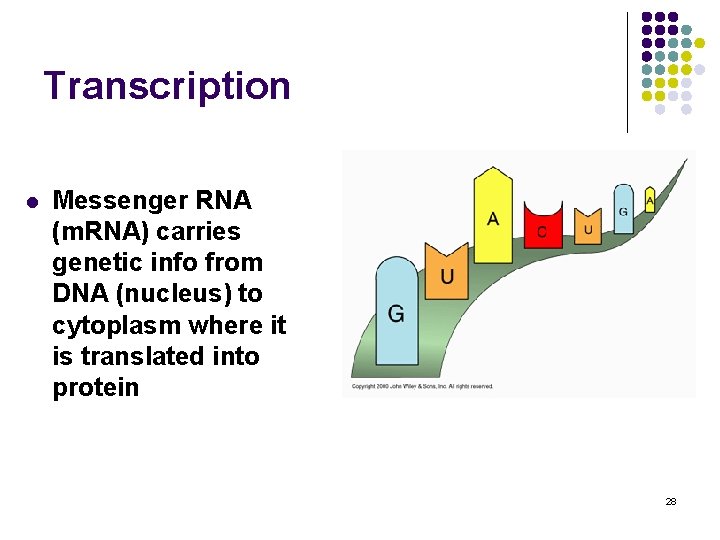
Transcription l Messenger RNA (m. RNA) carries genetic info from DNA (nucleus) to cytoplasm where it is translated into protein 28
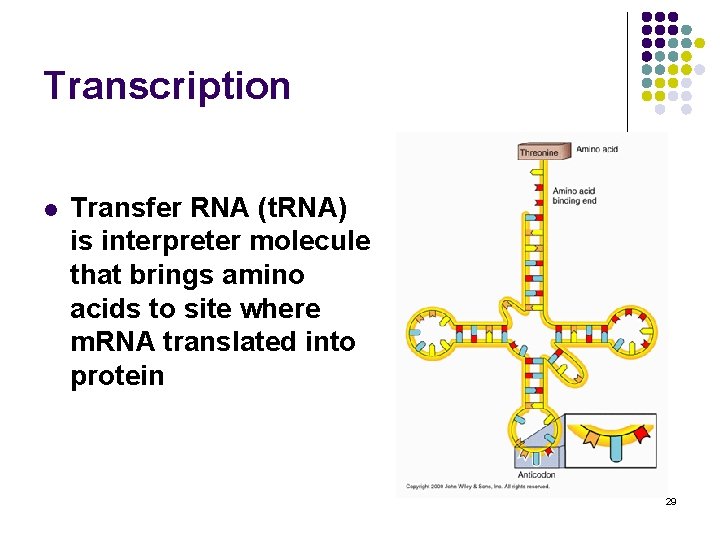
Transcription l Transfer RNA (t. RNA) is interpreter molecule that brings amino acids to site where m. RNA translated into protein 29
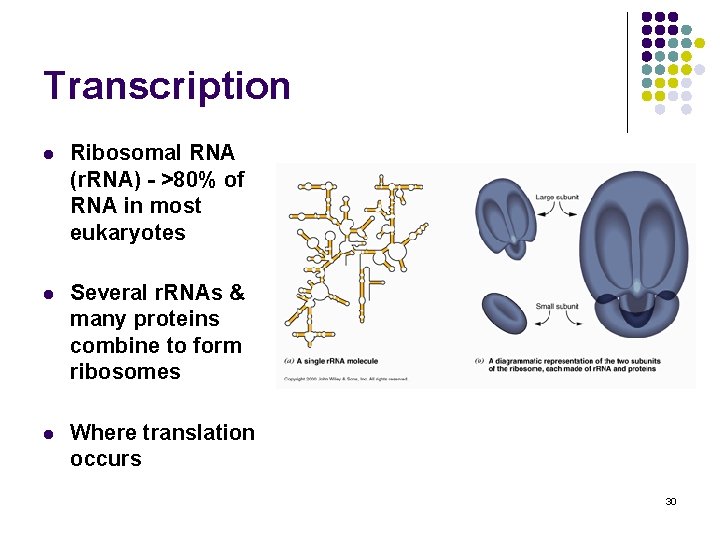
Transcription l Ribosomal RNA (r. RNA) - >80% of RNA in most eukaryotes l Several r. RNAs & many proteins combine to form ribosomes l Where translation occurs 30
Transcription l Enzymes involved in and control transcription l The enzyme RNA polymerase catalyzes assembly of RNA & places appropriate complimentary RNA nucleotides into new RNA l Other enzymes separate DNA double helix strands to allow transcription 31
Transcription l What raw materials are required for making RNA? l Ribonucleotides A, U, G, C that are the building blocks of RNA l A template or blueprint of the final product – DNA l Fuel to drive the assembly line linking ribonucleotides – nucleotide triphosphates l Equipment to accomplish actual assembly of the final product 32
Transcription l Transcription from DNA must start & end at specific places on DNA l Certain sequences within DNA (promoter sequences) l Signal RNA polymerase to attach to template and begin transcribing 33
Translation l Proteins are synthesized in translation – assembly of protein from m. RNA template l More complex & machinery of translation is far more elaborate than that of transcription 34
Translation l What is needed for translation? l Raw materials (amino acids) l Energy to drive synthesis l Template to determine amino acid sequences l Machinery to do synthesis l Reliable interpreter (t. RNA) l Stable synthesis platform (ribosome) 35
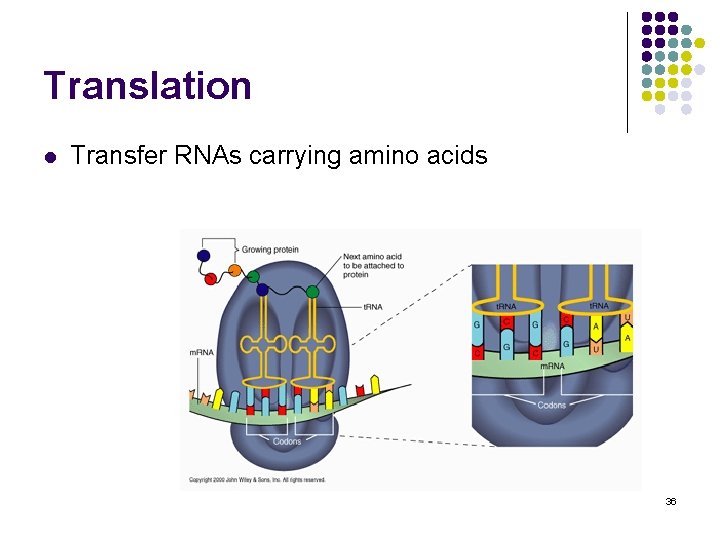
Translation l Transfer RNAs carrying amino acids 36
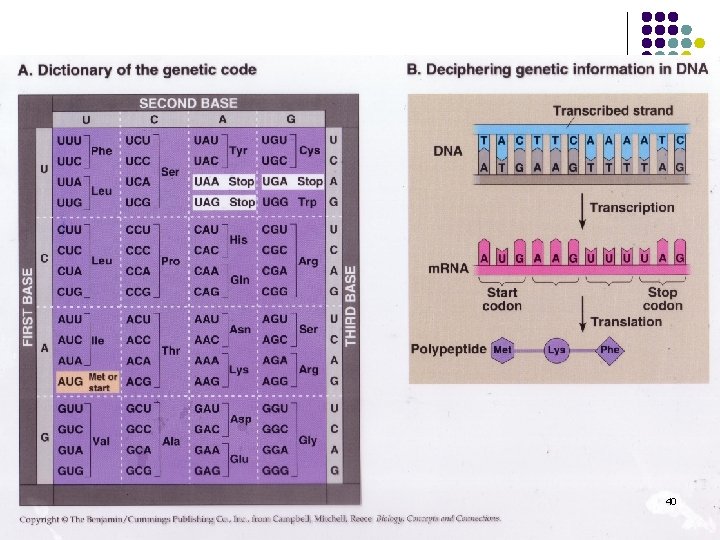
The Genetic Code l 3 RNA nucleotides code for 1 amino acid l The language of genes is written in sequence of nitrogenous base l Can be translated 3 at a time into amino acid words 37
The Genetic Code l Need code to stand for 20 amino acids l Alphabet for code has 4 letters (A, G, C, T or U) l Can only make 4 one-letter words (41), 16 twoletter words (42), 64 three-letter words (43) 38
The Genetic Code l l To code unambiguously for 20 amino acids l Need at least 20 words l Three-letter words would be the minimum M. Nirenberg & H. Matthaei, 1960 s, developed a technique for cracking code 39
40
The Genetic Code l Features of code l Code is universal, applies to humans & all other living things l Most amino acids have 2 and many have 4 triplet codons that code for them 41
What Makes Cells Different from Each Other? l During lifetime l A person may manufacture as many as 100, 000 different proteins, but l Only ~5000 are found in any one cell at any given time 42
What Makes Cells Different from Each Other? l Eukaryotes regulate genetic expression at many levels l Transcription is important in eukaryotes as well but there are other levels of regulation 43
DNA Mutations l Mutations are essential for life l Mutation is the sudden appearance of a new allele 44
DNA Mutations l Some mutations involve whole chromosomes l Polyploidy arises as genetic accident, but can be advantageous l Aneuploidy is a change in chromosome number involving single chromosome or single homologous pair 45
DNA Mutations l B. Mc. Clintock showed that DNA molecules did not always remain intact from generation to generation l l Called this genetic rearrangement transposition & Called moved bits of DNA l Transposable genetic element, later transposons 46
DNA Mutations l While sequences of transposon DNA are not random l l l Target sites are thought to be random, so that Transposon can land anywhere Can create new combinations of genes & can introduce errors in genetic material 47
DNA Mutations l Inversions l l Piece of chromosome broken, then reincorporated in chromosome in reversed order Deletions l Parts of chromosome spontaneously deleted 48
DNA Mutations l Micromutations that involve single DNA bases or just a few bases l l Called point mutations Neutral mutations l l Most mutations are harmful, but Many have little or no impact on recipients 49
- Slides: 49