
DNA Strand Polarity Transcriptional Orientation Numbering Conventions Hardison
DNA Strand Polarity, Transcriptional Orientation, Numbering Conventions Hardison Genomics 1_1_2 1/8/17 1
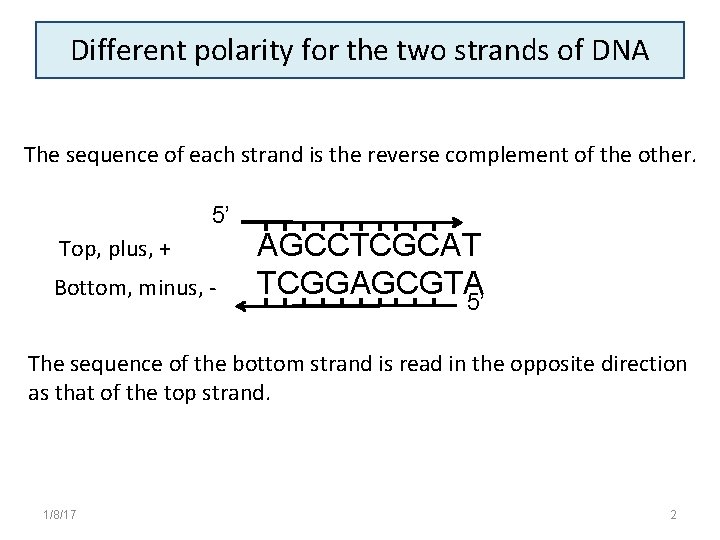
Different polarity for the two strands of DNA The sequence of each strand is the reverse complement of the other. 5’ Top, plus, + Bottom, minus, - AGCCTCGCAT TCGGAGCGTA 5’ The sequence of the bottom strand is read in the opposite direction as that of the top strand. 1/8/17 2

Exercise on reverse complement 1. What is the reverse complement of this sequence? 10 20 30 40 50. . . . | 60 5’ GCGTTTCTGAAAGAGTTGCTGTGGGAAGATGTGGAGACTTCTCTGTAAACCTTCCAG ACT 3’ 1/8/17 3
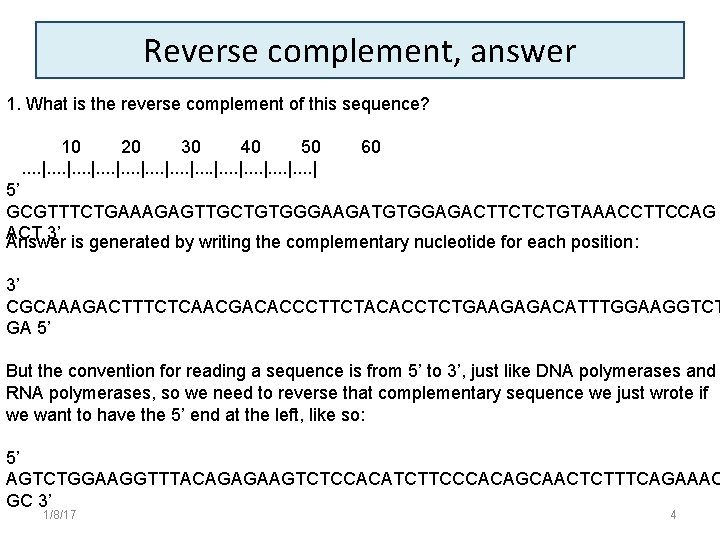
Reverse complement, answer 1. What is the reverse complement of this sequence? 10 20 30 40 50. . . . | 60 5’ GCGTTTCTGAAAGAGTTGCTGTGGGAAGATGTGGAGACTTCTCTGTAAACCTTCCAG ACT 3’ is generated by writing the complementary nucleotide for each position: Answer 3’ CGCAAAGACTTTCTCAACGACACCCTTCTACACCTCTGAAGAGACATTTGGAAGGTCT GA 5’ But the convention for reading a sequence is from 5’ to 3’, just like DNA polymerases and RNA polymerases, so we need to reverse that complementary sequence we just wrote if we want to have the 5’ end at the left, like so: 5’ AGTCTGGAAGGTTTACAGAGAAGTCTCCACATCTTCCCACAGCAACTCTTTCAGAAAC GC 3’ 1/8/17 4
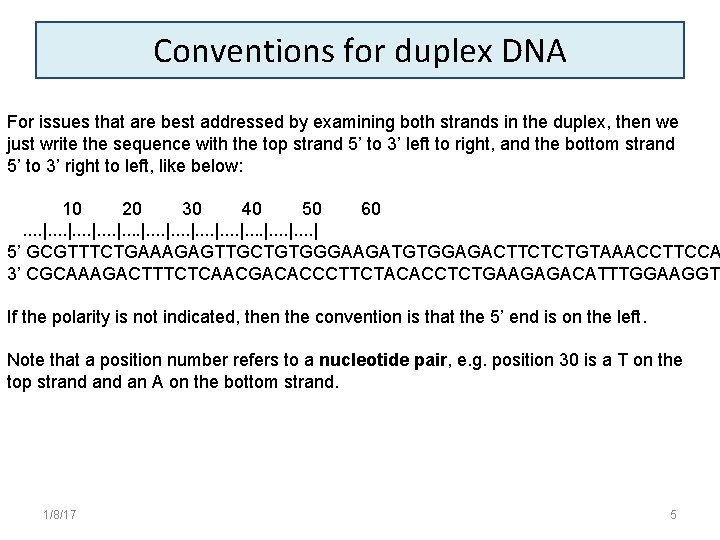
Conventions for duplex DNA For issues that are best addressed by examining both strands in the duplex, then we just write the sequence with the top strand 5’ to 3’ left to right, and the bottom strand 5’ to 3’ right to left, like below: 10 20 30 40 50 60. . . . | 5’ GCGTTTCTGAAAGAGTTGCTGTGGGAAGATGTGGAGACTTCTCTGTAAACCTTCCA 3’ CGCAAAGACTTTCTCAACGACACCCTTCTACACCTCTGAAGAGACATTTGGAAGGT If the polarity is not indicated, then the convention is that the 5’ end is on the left. Note that a position number refers to a nucleotide pair, e. g. position 30 is a T on the top strand an A on the bottom strand. 1/8/17 5
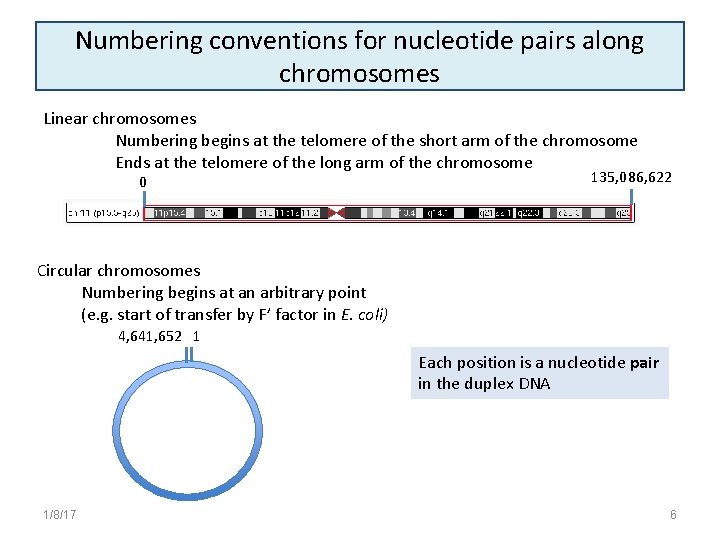
Numbering conventions for nucleotide pairs along chromosomes Linear chromosomes Numbering begins at the telomere of the short arm of the chromosome Ends at the telomere of the long arm of the chromosome 0 135, 086, 622 Circular chromosomes Numbering begins at an arbitrary point (e. g. start of transfer by F’ factor in E. coli) 4, 641, 652 1 Each position is a nucleotide pair in the duplex DNA 1/8/17 6
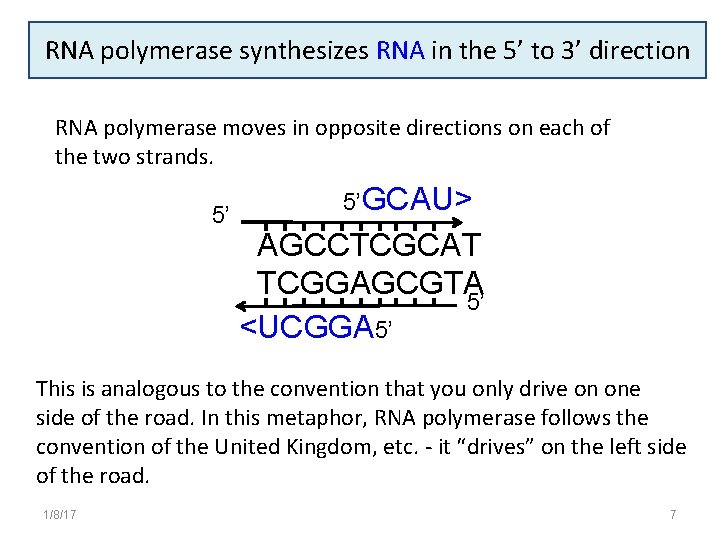
RNA polymerase synthesizes RNA in the 5’ to 3’ direction RNA polymerase moves in opposite directions on each of the two strands. 5’ 5’GCAU> AGCCTCGCAT TCGGAGCGTA 5’ <UCGGA 5’ This is analogous to the convention that you only drive on one side of the road. In this metaphor, RNA polymerase follows the convention of the United Kingdom, etc. - it “drives” on the left side of the road. 1/8/17 7
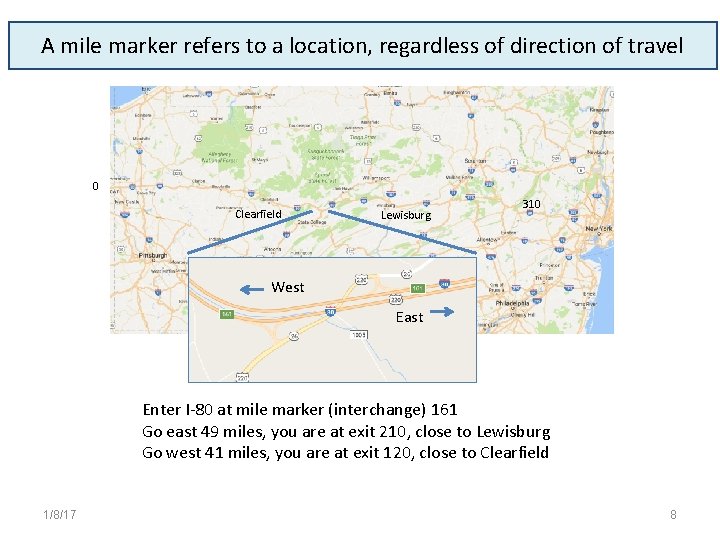
A mile marker refers to a location, regardless of direction of travel 0 Clearfield Lewisburg 310 West East Enter I-80 at mile marker (interchange) 161 Go east 49 miles, you are at exit 210, close to Lewisburg Go west 41 miles, you are at exit 120, close to Clearfield 1/8/17 8
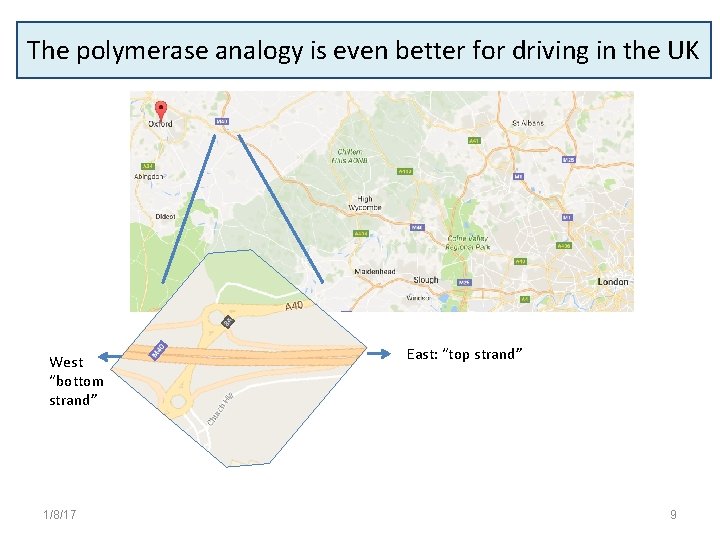
The polymerase analogy is even better for driving in the UK West “bottom strand” 1/8/17 East: “top strand” 9
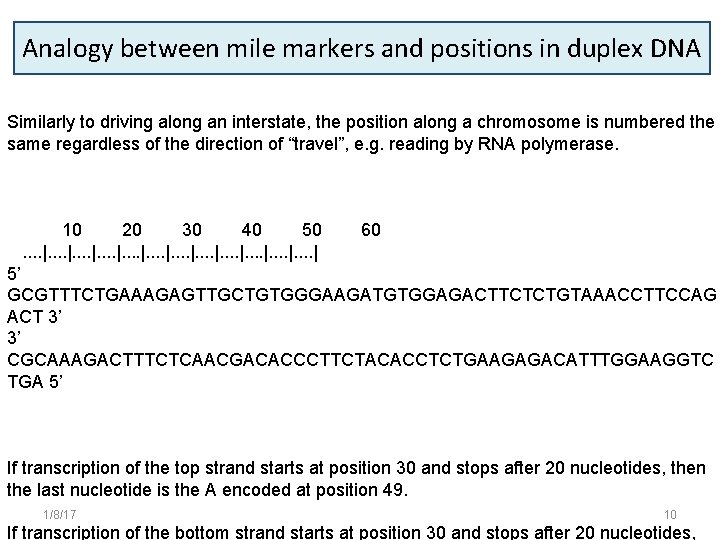
Analogy between mile markers and positions in duplex DNA Similarly to driving along an interstate, the position along a chromosome is numbered the same regardless of the direction of “travel”, e. g. reading by RNA polymerase. 10 20 30 40 50. . . . | 60 5’ GCGTTTCTGAAAGAGTTGCTGTGGGAAGATGTGGAGACTTCTCTGTAAACCTTCCAG ACT 3’ 3’ CGCAAAGACTTTCTCAACGACACCCTTCTACACCTCTGAAGAGACATTTGGAAGGTC TGA 5’ If transcription of the top strand starts at position 30 and stops after 20 nucleotides, then the last nucleotide is the A encoded at position 49. 1/8/17 10 If transcription of the bottom strand starts at position 30 and stops after 20 nucleotides,
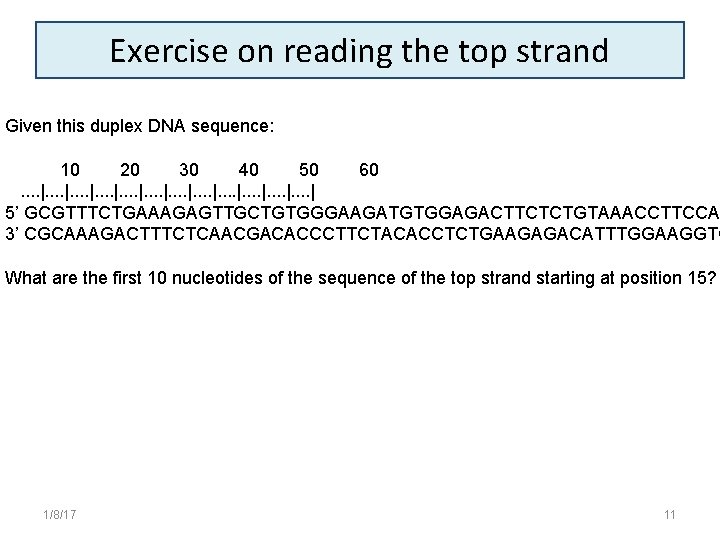
Exercise on reading the top strand Given this duplex DNA sequence: 10 20 30 40 50 60. . . . | 5’ GCGTTTCTGAAAGAGTTGCTGTGGGAAGATGTGGAGACTTCTCTGTAAACCTTCCA 3’ CGCAAAGACTTTCTCAACGACACCCTTCTACACCTCTGAAGAGACATTTGGAAGGTC What are the first 10 nucleotides of the sequence of the top strand starting at position 15? 1/8/17 11

Exercise on reading the top strand Given this duplex DNA sequence: 10 20 30 40 50 60. . . . | 5’ GCGTTTCTGAAAGAGTTGCTGTGGGAAGATGTGGAGACTTCTCTGTAAACCTTCCA 3’ CGCAAAGACTTTCTCAACGACACCCTTCTACACCTCTGAAGAGACATTTGGAAGGTC What are the first 10 nucleotides of the sequence of the top strand starting at position 15? Answer: GTTGCTGTGG 1/8/17 12

Exercise on reading the bottom strand Given this duplex DNA sequence: 10 20 30 40 50. . . . | 60 5’ GCGTTTCTGAAAGAGTTGCTGTGGGAAGATGTGGAGACTTCTCTGTAAACCTTCCAG ACT 3’ 3’ CGCAAAGACTTTCTCAACGACACCCTTCTACACCTCTGAAGAGACATTTGGAAGGTC TGA 5’ What are the first 10 nucleotides of the sequence of the bottom strand starting at position 15? 1/8/17 13
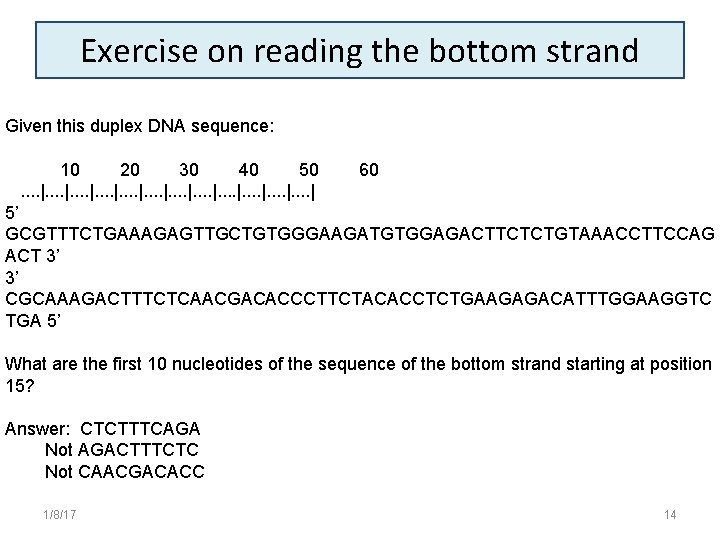
Exercise on reading the bottom strand Given this duplex DNA sequence: 10 20 30 40 50. . . . | 60 5’ GCGTTTCTGAAAGAGTTGCTGTGGGAAGATGTGGAGACTTCTCTGTAAACCTTCCAG ACT 3’ 3’ CGCAAAGACTTTCTCAACGACACCCTTCTACACCTCTGAAGAGACATTTGGAAGGTC TGA 5’ What are the first 10 nucleotides of the sequence of the bottom strand starting at position 15? Answer: CTCTTTCAGA Not AGACTTTCTC Not CAACGACACC 1/8/17 14
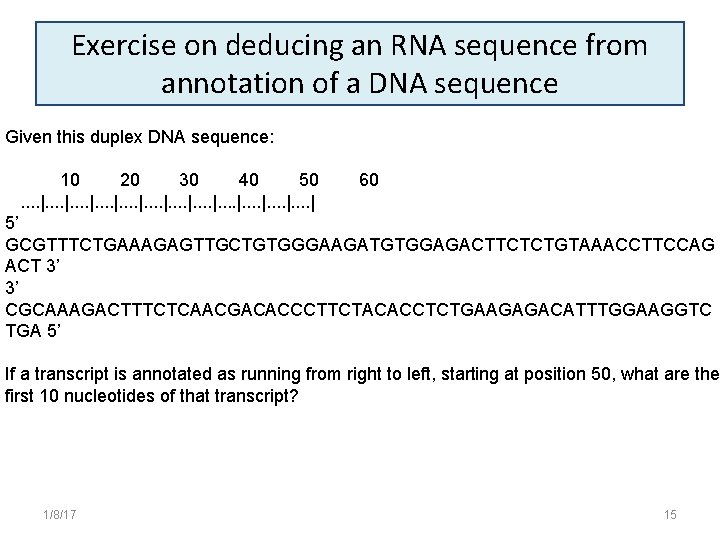
Exercise on deducing an RNA sequence from annotation of a DNA sequence Given this duplex DNA sequence: 10 20 30 40 50. . . . | 60 5’ GCGTTTCTGAAAGAGTTGCTGTGGGAAGATGTGGAGACTTCTCTGTAAACCTTCCAG ACT 3’ 3’ CGCAAAGACTTTCTCAACGACACCCTTCTACACCTCTGAAGAGACATTTGGAAGGTC TGA 5’ If a transcript is annotated as running from right to left, starting at position 50, what are the first 10 nucleotides of that transcript? 1/8/17 15
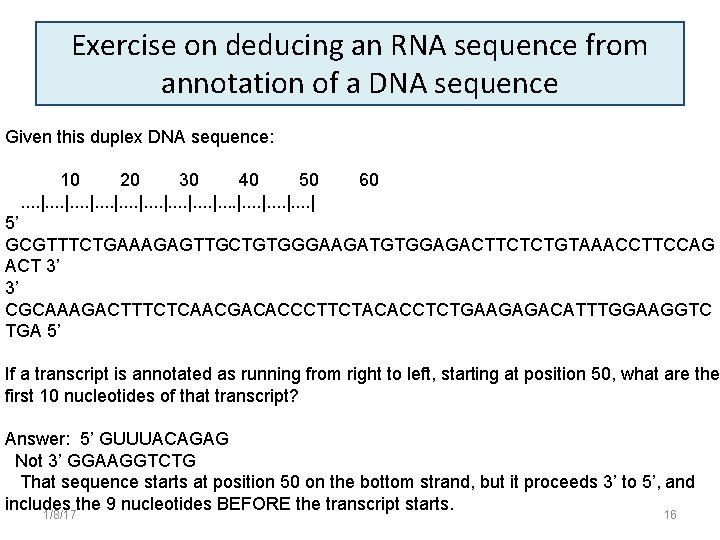
Exercise on deducing an RNA sequence from annotation of a DNA sequence Given this duplex DNA sequence: 10 20 30 40 50. . . . | 60 5’ GCGTTTCTGAAAGAGTTGCTGTGGGAAGATGTGGAGACTTCTCTGTAAACCTTCCAG ACT 3’ 3’ CGCAAAGACTTTCTCAACGACACCCTTCTACACCTCTGAAGAGACATTTGGAAGGTC TGA 5’ If a transcript is annotated as running from right to left, starting at position 50, what are the first 10 nucleotides of that transcript? Answer: 5’ GUUUACAGAG Not 3’ GGAAGGTCTG That sequence starts at position 50 on the bottom strand, but it proceeds 3’ to 5’, and includes the 9 nucleotides BEFORE the transcript starts. 1/8/17 16
- Slides: 16