
DNA short for deoxyribonucleic acid is the single
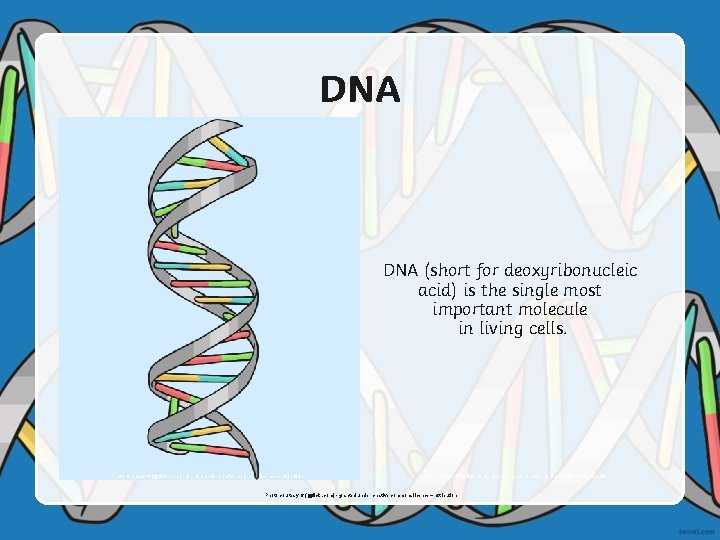
DNA (short for deoxyribonucleic acid) is the single most important molecule in living cells. Photo courtesy of (@flickr. com) - granted under creative commons licence – attribution
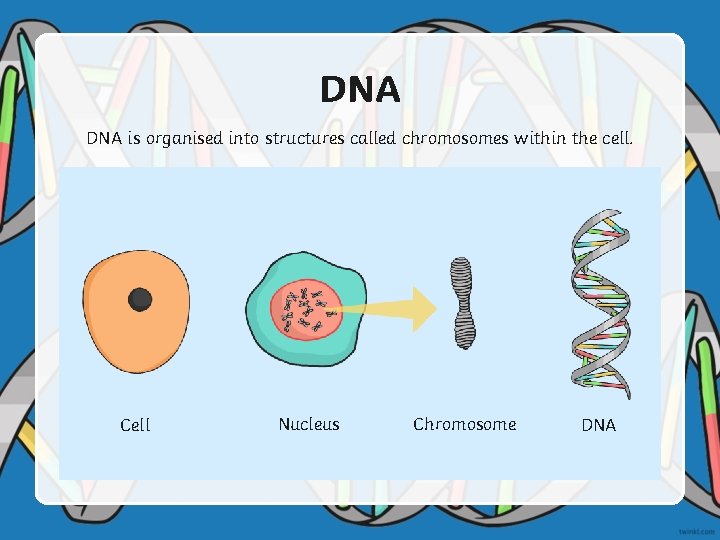
DNA is organised into structures called chromosomes within the cell. Cell Nucleus Photo courtesy of (@flickr. com) - granted under creative commons licence – attribution Chromosome DNA Photo courtesy of (@flickr. com) - granted under creative commons licence – attribution
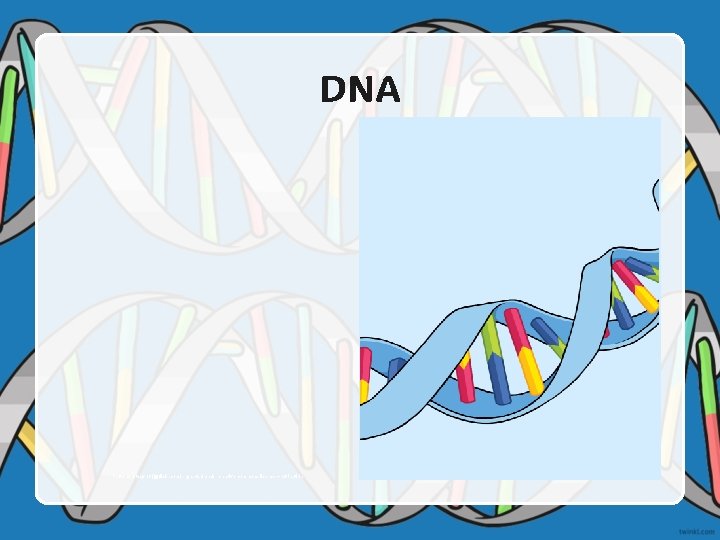
DNA Photo courtesy of (@flickr. com) - granted under creative commons licence – attribution
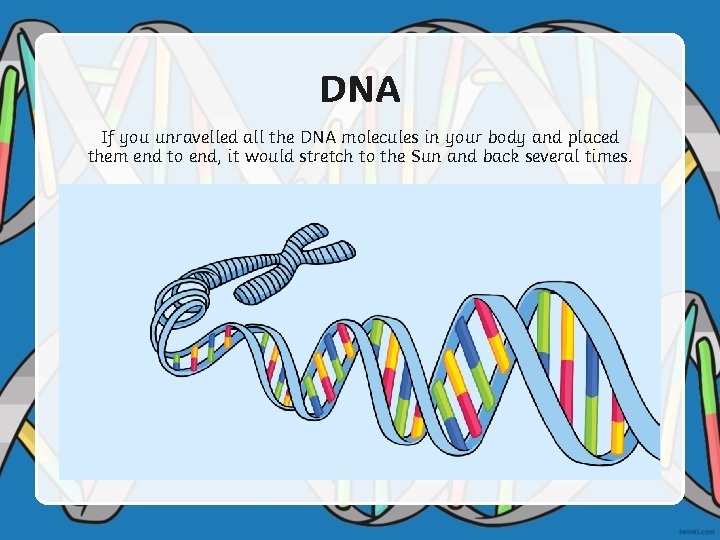
DNA If you unravelled all the DNA molecules in your body and placed them end to end, it would stretch to the Sun and back several times. . Photo courtesy of (@flickr. com) - granted under creative commons licence – attribution
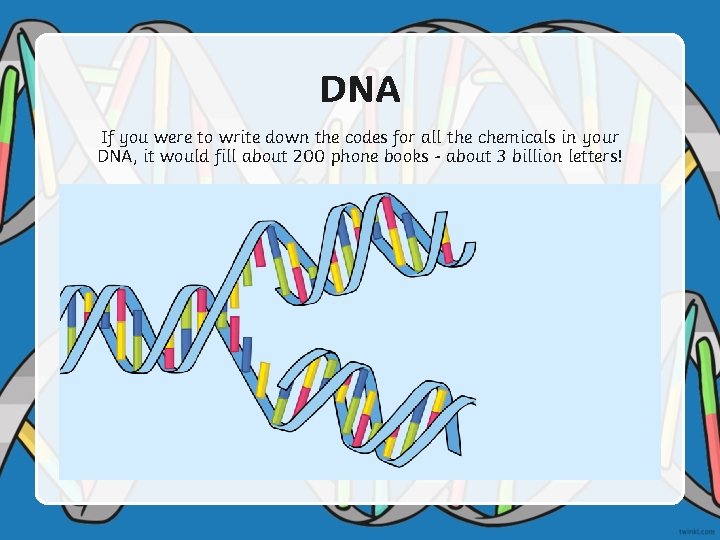
DNA If you were to write down the codes for all the chemicals in your DNA, it would fill about 200 phone books - about 3 billion letters!. . Photo courtesy of (@flickr. com) - granted under creative commons licence – attribution
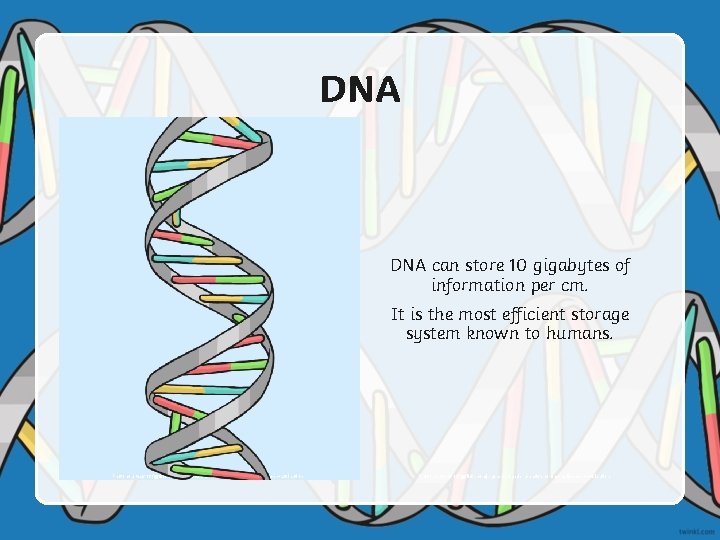
DNA can store 10 gigabytes of information per cm. It is the most efficient storage system known to humans. Photo courtesy of (@flickr. com) - granted under creative commons licence – attribution
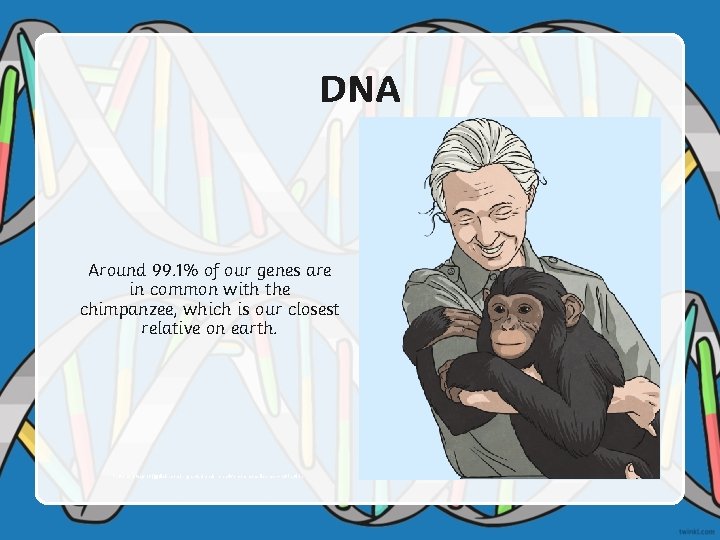
DNA Around 99. 1% of our genes are in common with the chimpanzee, which is our closest relative on earth. Photo courtesy of (@flickr. com) - granted under creative commons licence – attribution
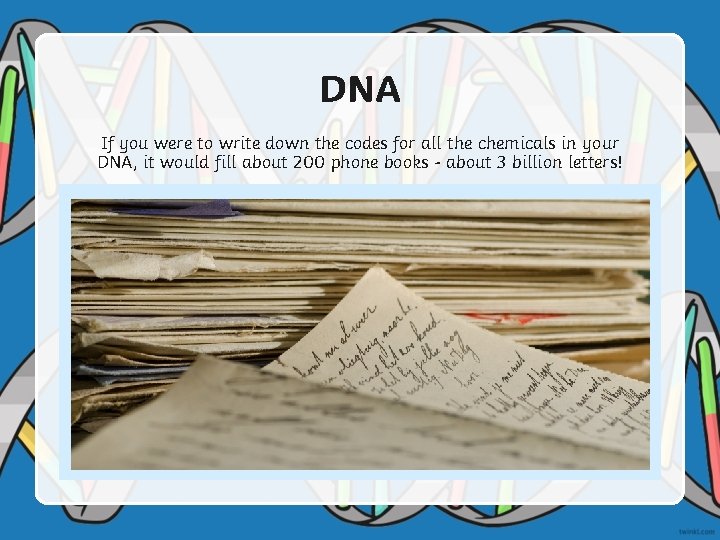
DNA If you were to write down the codes for all the chemicals in your DNA, it would fill about 200 phone books - about 3 billion letters! Photo courtesy of (@flickr. com) - granted under creative commons licence – attribution
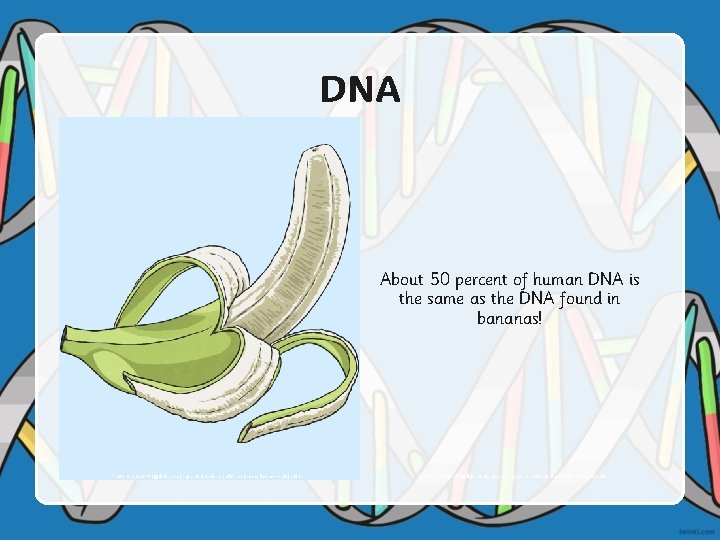
DNA About 50 percent of human DNA is the same as the DNA found in bananas! Photo courtesy of (@flickr. com) - granted under creative commons licence – attribution
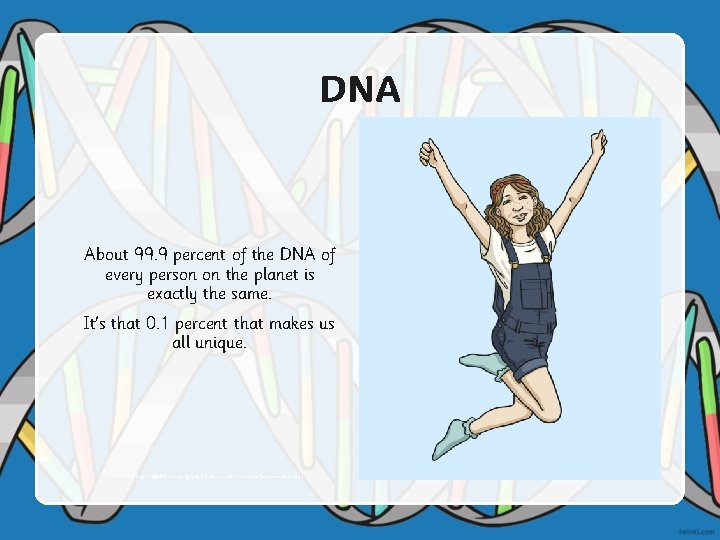
DNA About 99. 9 percent of the DNA of every person on the planet is exactly the same. It's that 0. 1 percent that makes us all unique. Photo courtesy of (@flickr. com) - granted under creative commons licence – attribution
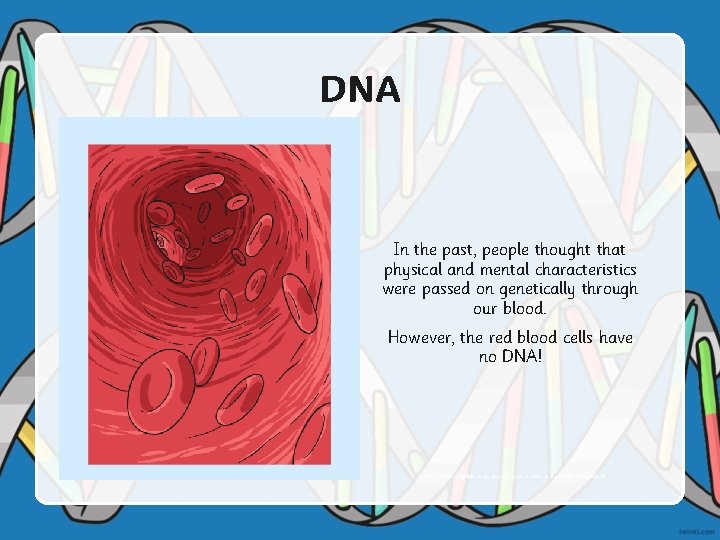
DNA In the past, people thought that physical and mental characteristics were passed on genetically through our blood. However, the red blood cells have no DNA! Photo courtesy of (@flickr. com) - granted under creative commons licence – attribution
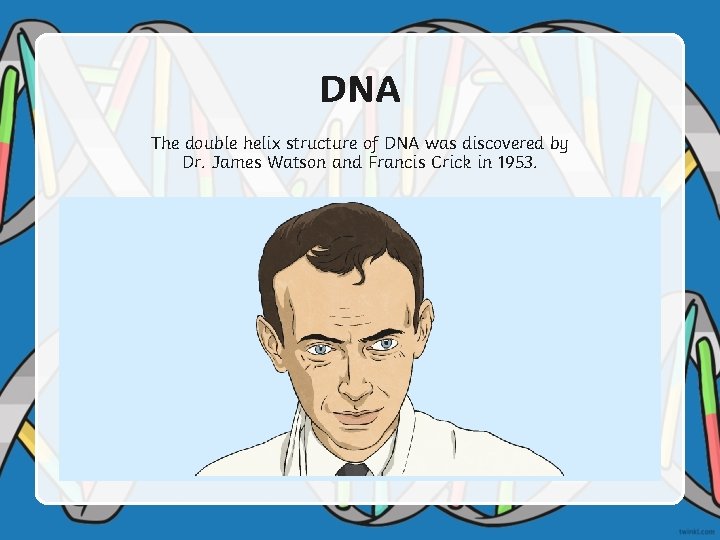
DNA The double helix structure of DNA was discovered by Dr. James Watson and Francis Crick in 1953. Photo courtesy of (@flickr. com) - granted under creative commons licence – attribution
DNA was first isolated and identified by Swiss biologist Friedrich Meischer in 1869. . Photo courtesy of (@flickr. com) - granted under creative commons licence – attribution
- Slides: 15