
DNA SEQUENCING WHAT IS IT The process of
- Slides: 15
DNA SEQUENCING
WHAT IS IT? • The process of determining the precise sequence (order) of nucleotides in a sample of DNA EX: ATCGGCTAGTATAGA
HUMAN GENOME PROJECT • Federally-funded project to determine all 3. 2 billion base pairs (letters) of the human genome using DNA sequencing • Completed in 2003
HUMAN GENOME PROJECT • Hopes: • Identify genes associated with genetic diseases • Develop tests and therapies for genetic diseases
HUMAN GENOME PROJECT • Concerns: • How will companies use genetic information • Which agencies have access to personal genetic information
HUMAN GENOME PROJECT • ELSI (Ethical, Legal and Social Implications Research Program) • Developed with HGP to study how it would impact individuals, families and communities
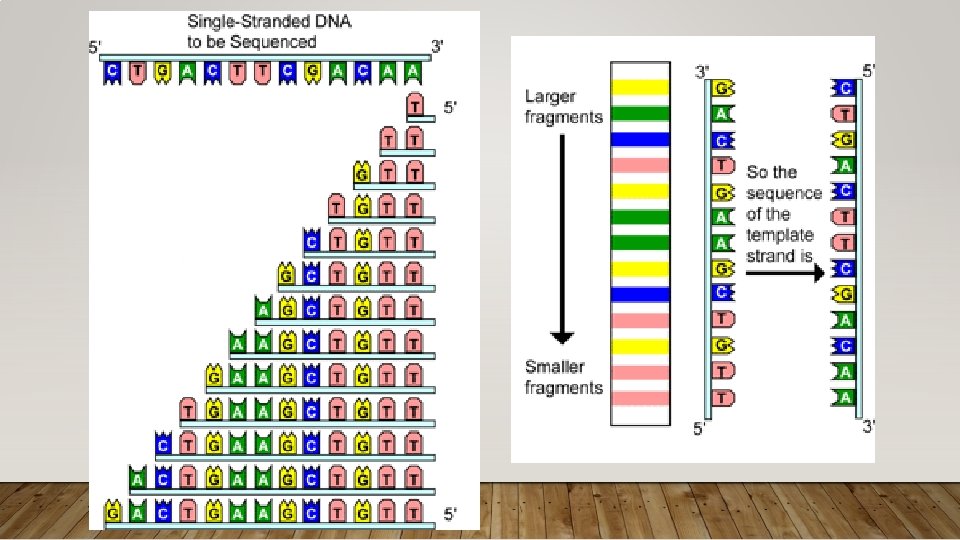
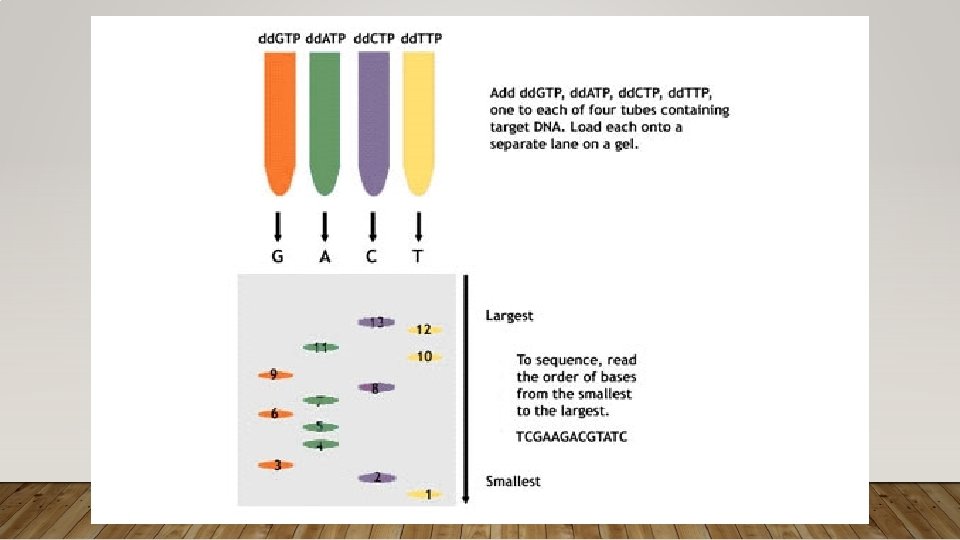
HOW DOES IT WORK? • Sanger Method • Uses special dideoxynucleotides to create DNA fragments of varying lengths • DNA fragments run through a type of gel electrophoresis to sort by size
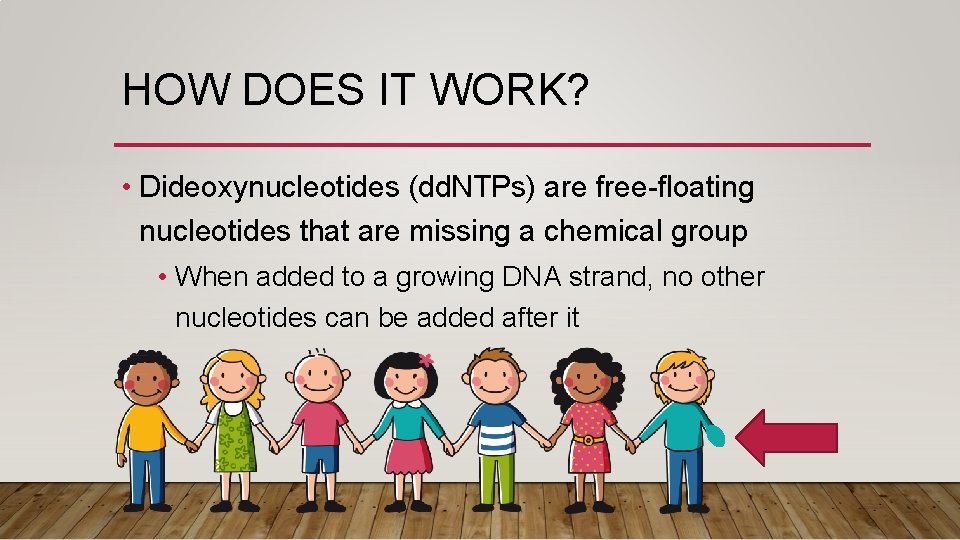
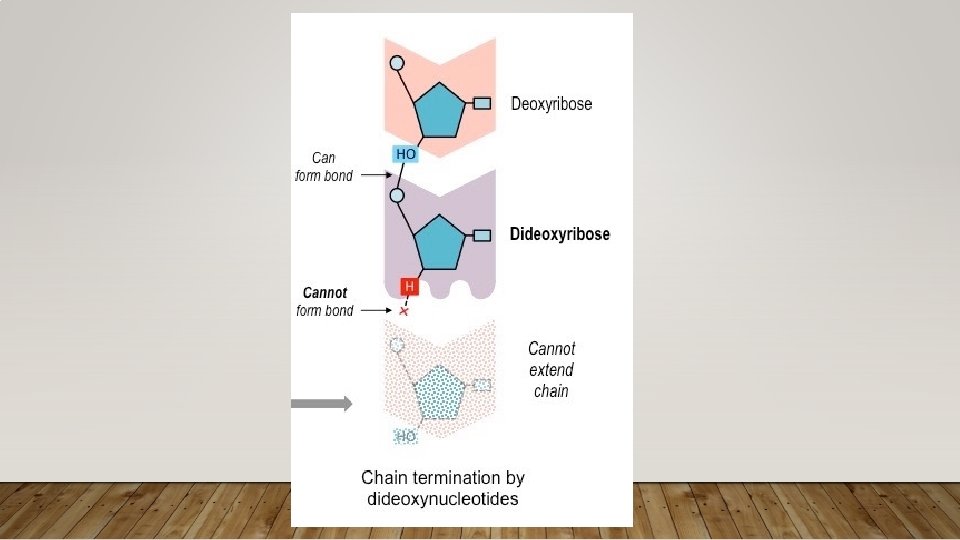
HOW DOES IT WORK? • Dideoxynucleotides (dd. NTPs) are free-floating nucleotides that are missing a chemical group • When added to a growing DNA strand, no other nucleotides can be added after it
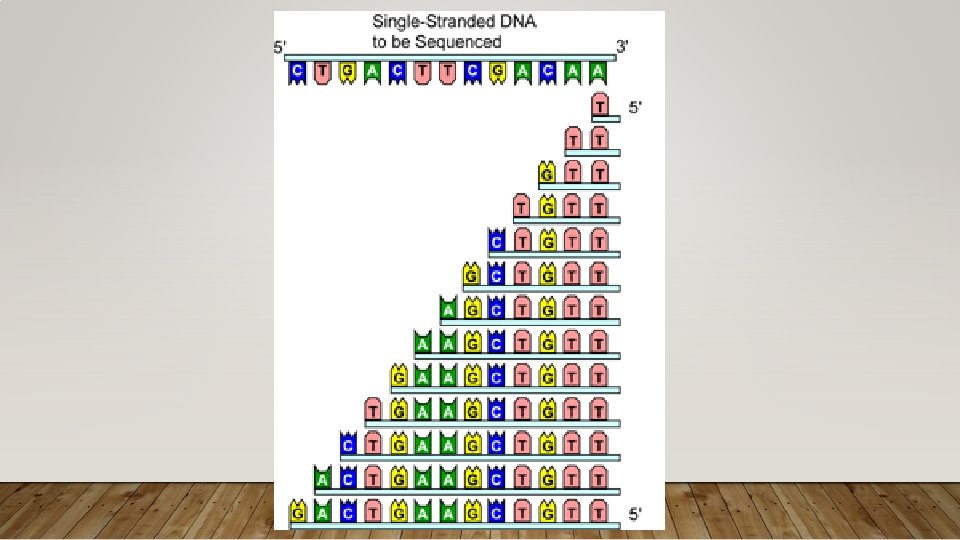
HOW DOES IT WORK? • As the DNA is replicated from the original DNA sample, each fragment ends in a different dd. NTP • You create every possible length of DNA strand from one letter long to the full length of the original sample
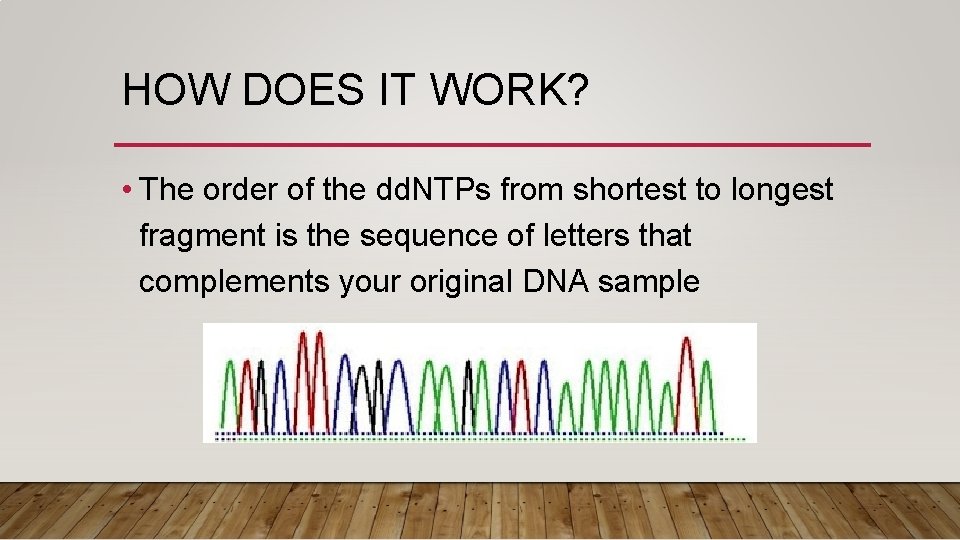
HOW DOES IT WORK? • Then you run your fragments through gel electrophoresis to organize them from shortest to longest • As the fragments run off the gel they pass across a laser and a computer reads the dd. NTP at the end of the fragment • Each dd. NTP has a fluorescent tag with a color that matches its letter (Ex: A is red, G is green, etc. )
HOW DOES IT WORK? • The order of the dd. NTPs from shortest to longest fragment is the sequence of letters that complements your original DNA sample