
DNA Sequencing DNA sequencing Determination of nucleotide sequence
- Slides: 28
DNA Sequencing
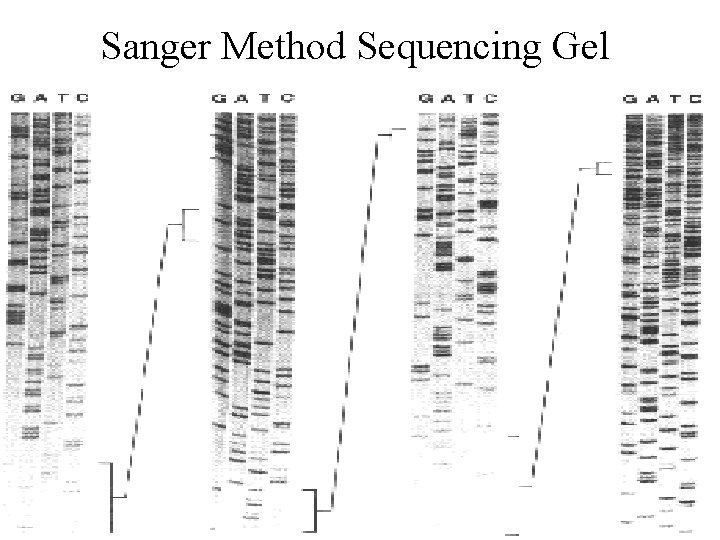
DNA sequencing ü Determination of nucleotide sequence Ø the determination of the precise sequence of nucleotides in a sample of DNA ü Two similar methods: 1. Maxam and Gilbert method 2. Sanger method ü They depend on the production of a mixture of oligonucleotides labeled either radioactively or fluorescein, with one common end and differing in length by a single nucleotide at the other end ü This mixture of oligonucleotides is separated by high resolution electrophoresis on polyacrilamide gels and the position of the bands determined
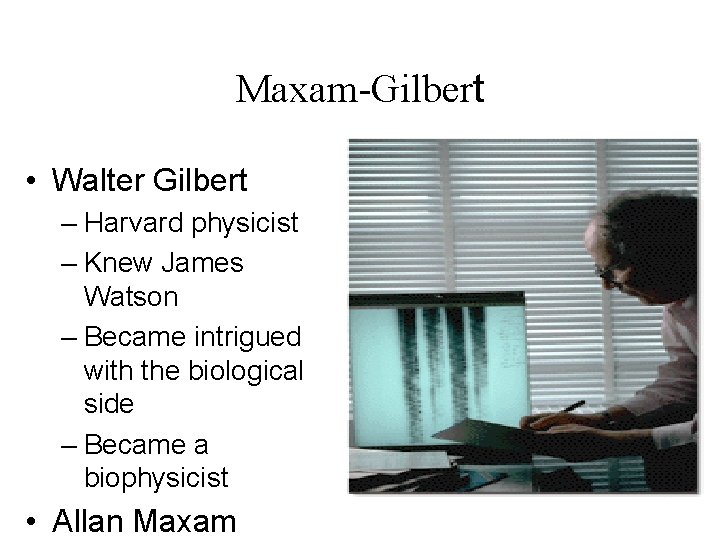
Maxam-Gilbert • Walter Gilbert – Harvard physicist – Knew James Watson – Became intrigued with the biological side – Became a biophysicist • Allan Maxam
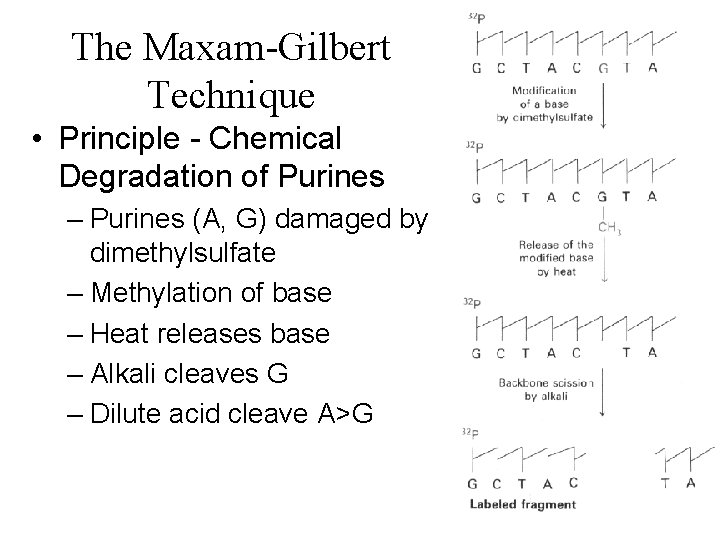
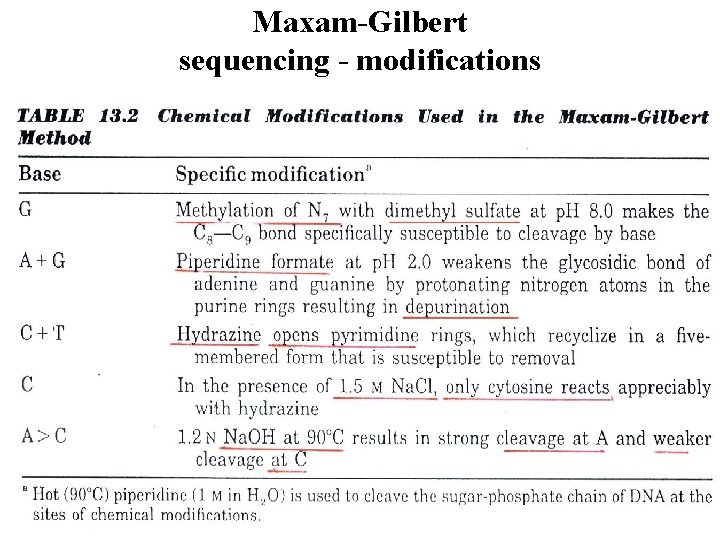
The Maxam-Gilbert Technique • Principle - Chemical Degradation of Purines – Purines (A, G) damaged by dimethylsulfate – Methylation of base – Heat releases base – Alkali cleaves G – Dilute acid cleave A>G
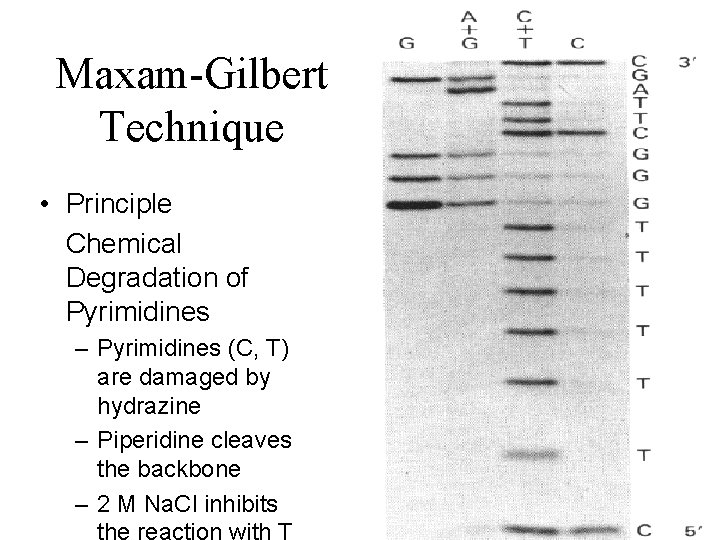
Maxam-Gilbert Technique • Principle Chemical Degradation of Pyrimidines – Pyrimidines (C, T) are damaged by hydrazine – Piperidine cleaves the backbone – 2 M Na. Cl inhibits
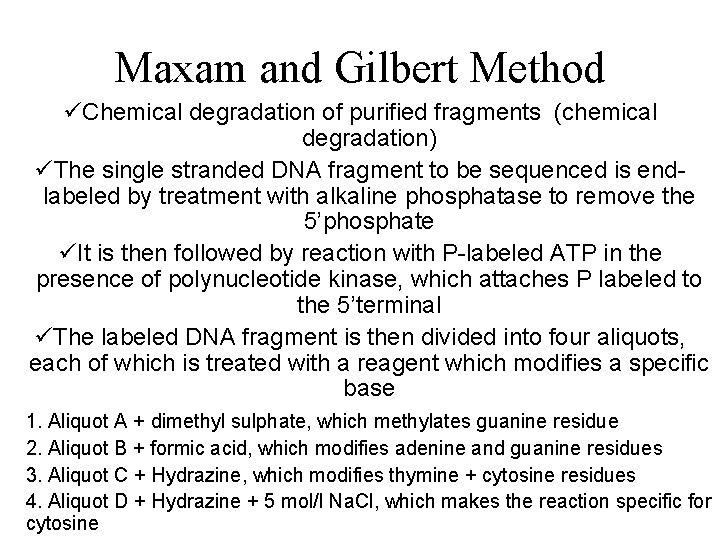
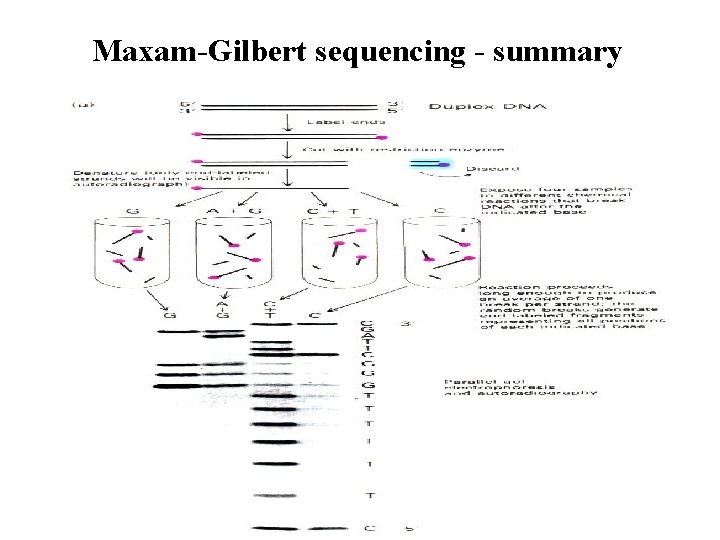
Maxam and Gilbert Method üChemical degradation of purified fragments (chemical degradation) üThe single stranded DNA fragment to be sequenced is endlabeled by treatment with alkaline phosphatase to remove the 5’phosphate üIt is then followed by reaction with P-labeled ATP in the presence of polynucleotide kinase, which attaches P labeled to the 5’terminal üThe labeled DNA fragment is then divided into four aliquots, each of which is treated with a reagent which modifies a specific base 1. Aliquot A + dimethyl sulphate, which methylates guanine residue 2. Aliquot B + formic acid, which modifies adenine and guanine residues 3. Aliquot C + Hydrazine, which modifies thymine + cytosine residues 4. Aliquot D + Hydrazine + 5 mol/l Na. Cl, which makes the reaction specific for cytosine
Maxam-Gilbert sequencing - modifications
Maxam-Gilbert sequencing - summary
Advantages/disadvantages Maxam-Gilbert sequencing ü Requires lots of purified DNA, and many intermediate purification steps ü Relatively short readings ü Automation not available (sequencers) ü Remaining use for ‘footprinting’ (partial protection against DNA modification when proteins bind to specific regions, and that produce ‘holes’ in the sequence ladder) In contrast, the Sanger sequencing methodology requires little if any DNA purification, no restriction digests, and no labeling of the DNA sequencing template
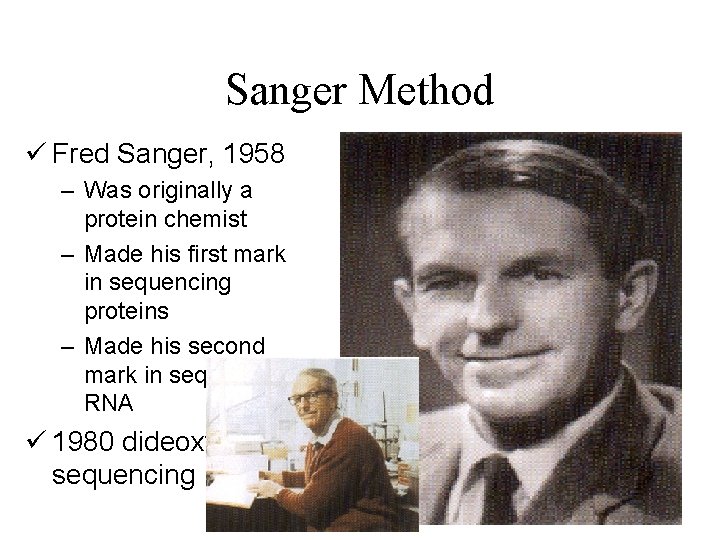
Sanger Method ü Fred Sanger, 1958 – Was originally a protein chemist – Made his first mark in sequencing proteins – Made his second mark in sequencing RNA ü 1980 dideoxy sequencing
Original Sanger Method ü Random incorporation of a dideoxynucleoside triphosphate into a growing strand of DNA ü Requires DNA polymerase I ü Requires a cloning vector with initial primer (M 13, high yield bacteriophage, modified by adding: beta-galactosidase screening, polylinker) ü Uses 32 P-deoxynucleoside triphosphates
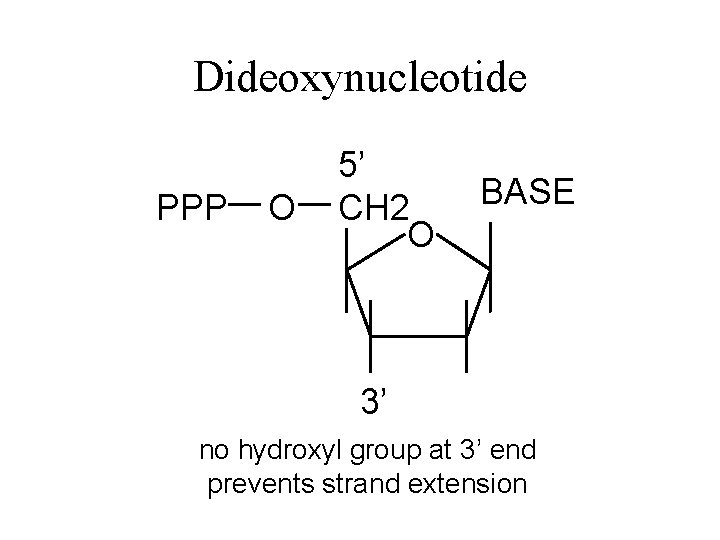
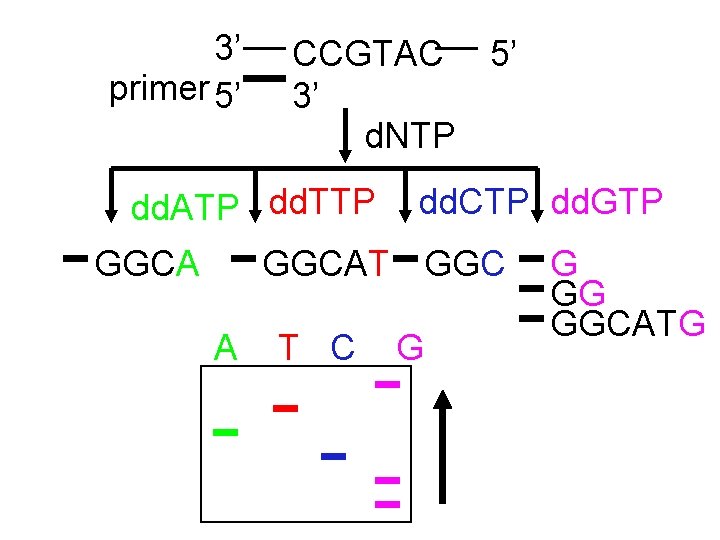
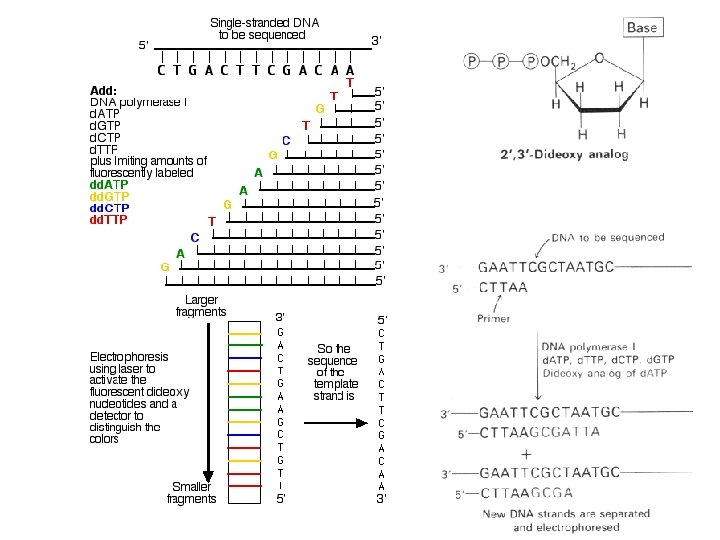
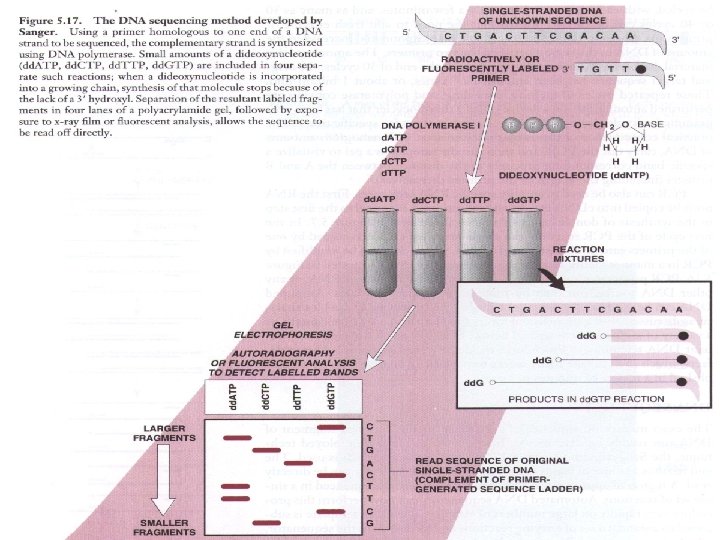
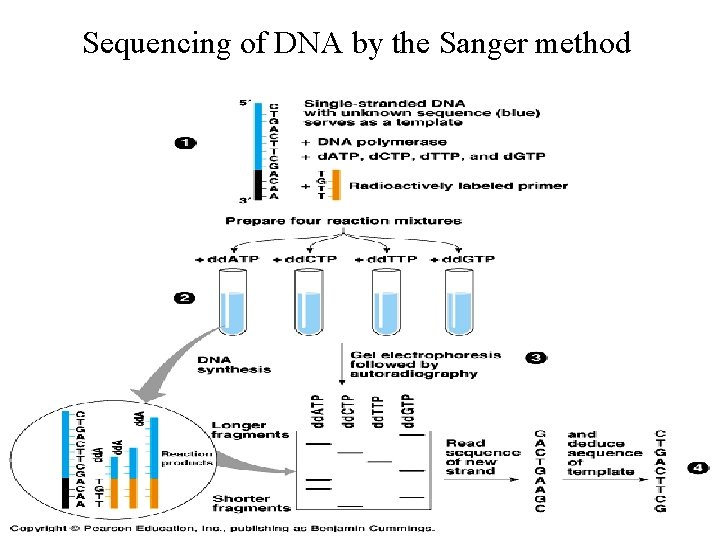
Sanger Method ü in-vitro DNA synthesis using ‘terminators’, use of dideoxi- nucleotides that do not permit chain elongation after their integration ü DNA synthesis using deoxy- and dideoxynucleotides that results in termination of synthesis at specific nucleotides ü Requires a primer, DNA polymerase, a template, a mixture of nucleotides, and detection system ü Incorporation of di-deoxynucleotides into growing strand terminates synthesis ü Synthesized strand sizes are determined for each di-deoxynucleotide by using gel or capillary electrophoresis
Dideoxynucleotide PPP O 5’ CH 2 O BASE 3’ no hydroxyl group at 3’ end prevents strand extension
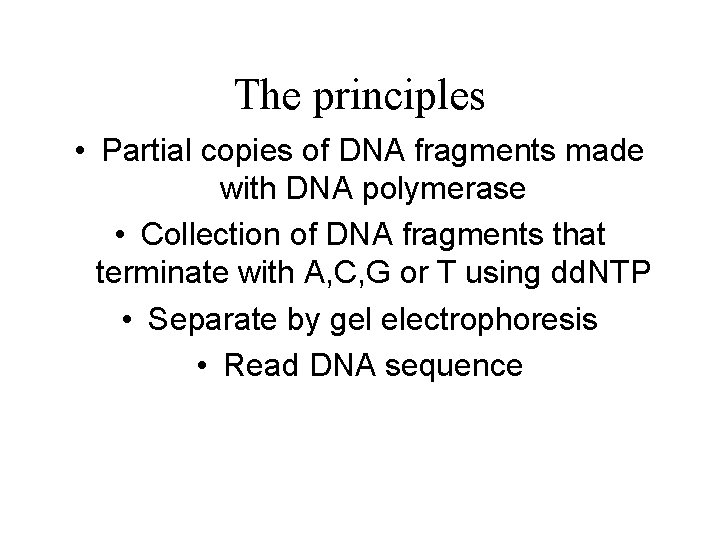
The principles • Partial copies of DNA fragments made with DNA polymerase • Collection of DNA fragments that terminate with A, C, G or T using dd. NTP • Separate by gel electrophoresis • Read DNA sequence
3’ primer 5’ CCGTAC 5’ 3’ d. NTP dd. ATP dd. TTP GGCA dd. CTP dd. GTP GGCAT GGC A T C G G GG GGCATG
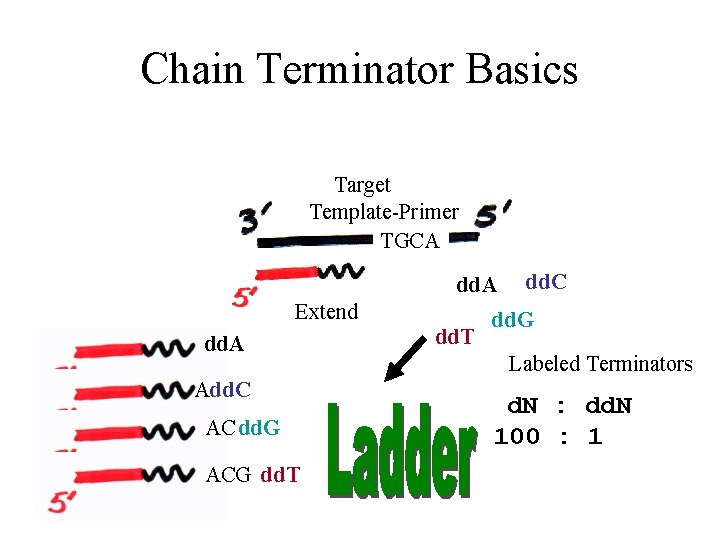
Dideoxy Chain Terminator ü Template ü Primer ü Extension Chemistry – polymerase – termination – labeling ü Separation ü Detection
Chain Terminator Basics Target Template-Primer TGCA dd. A Extend dd. A Add. C AC dd. G ACG dd. T dd. C dd. G Labeled Terminators d. N : dd. N 100 : 1
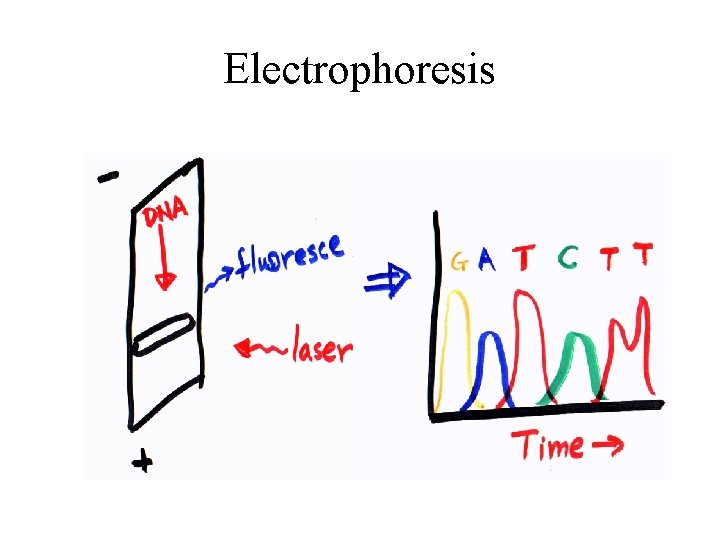
Electrophoresis
Sanger Method Sequencing Gel
Template ü ss. DNA vectors – M 13 – p. UC ü PCR ü ds. DNA (+/- PCR)
Primers üUniversal primers – cheap, reliable, easy, fast, parallel – BULK sequencing üCustom primers – expensive, slow, one-at-a-time – ADAPTABLE
Extension üPolymerase – Sequenase – Thermostable (Cycle Sequencing) üTerminators – Dye labels (“Big Dye”) • spectrally different, high fluorescence – dd. A, C, G, T with primer labels
Separation ü Gel Electrophoresis ü Capillary Electrophoresis – suited to automation • rapid (2 hrs vs 12 hrs) • re-usable • simple temperature control • 96 well format
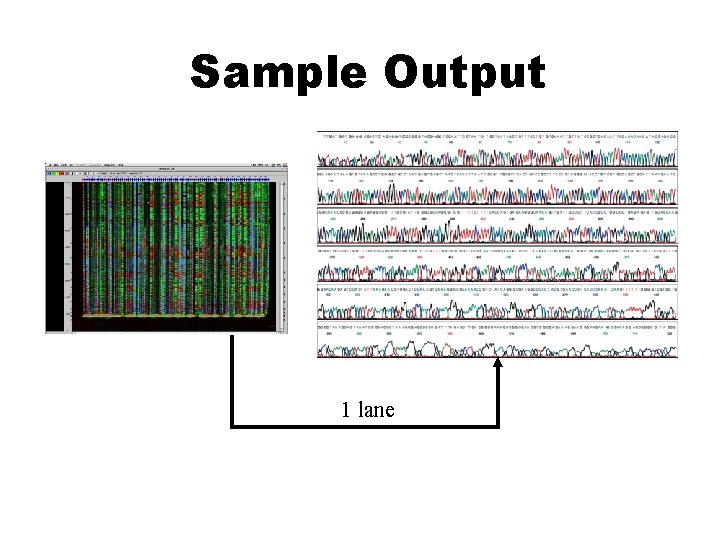
Sample Output 1 lane
Sequencing of DNA by the Sanger method
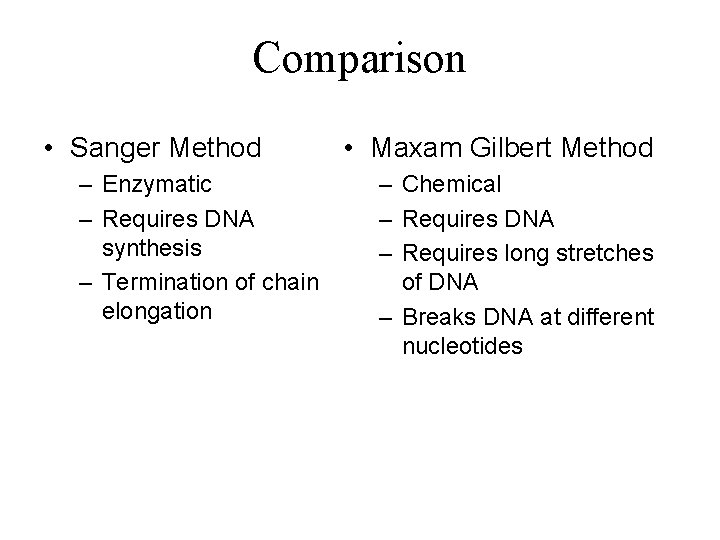
Comparison • Sanger Method – Enzymatic – Requires DNA synthesis – Termination of chain elongation • Maxam Gilbert Method – Chemical – Requires DNA – Requires long stretches of DNA – Breaks DNA at different nucleotides