
DNA SEQUENCE DATA From template DNA to Sequence
- Slides: 38
DNA SEQUENCE DATA -From template DNA to Sequence Alignment…
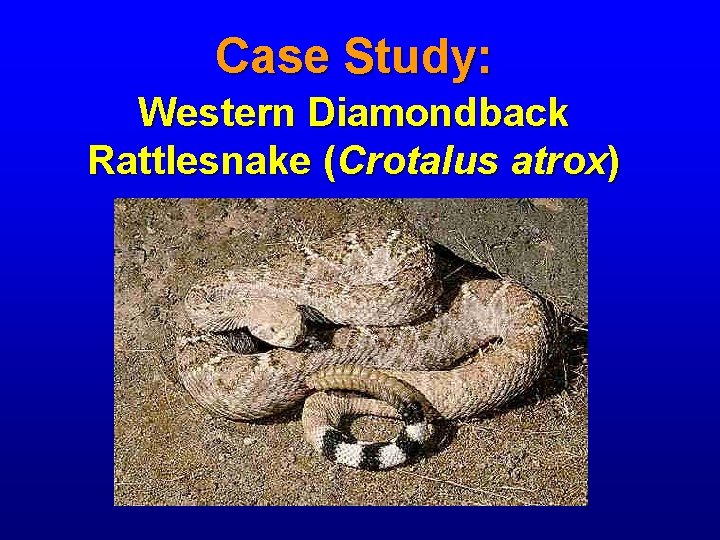
Case Study: Western Diamondback Rattlesnake (Crotalus atrox)
Protocol 1. Collect tissue samples from C. atrox individuals and extract t. DNA 2. Amplify specific gene using PCR (Polymerase Chain Reaction) 3. Sequence PCR products 4. Align our sequence with published sequences 5. Analyze with phylogenetic software
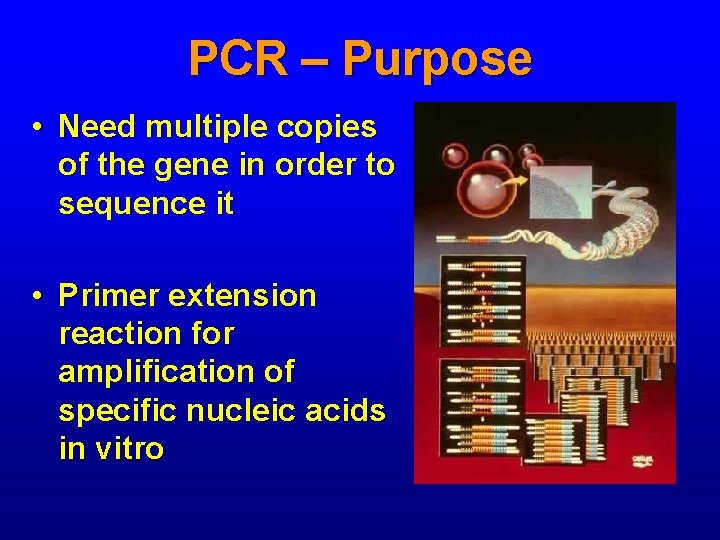
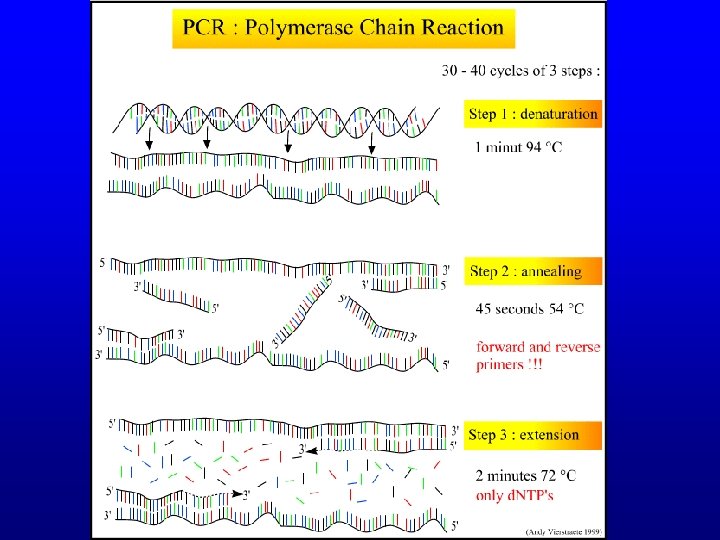
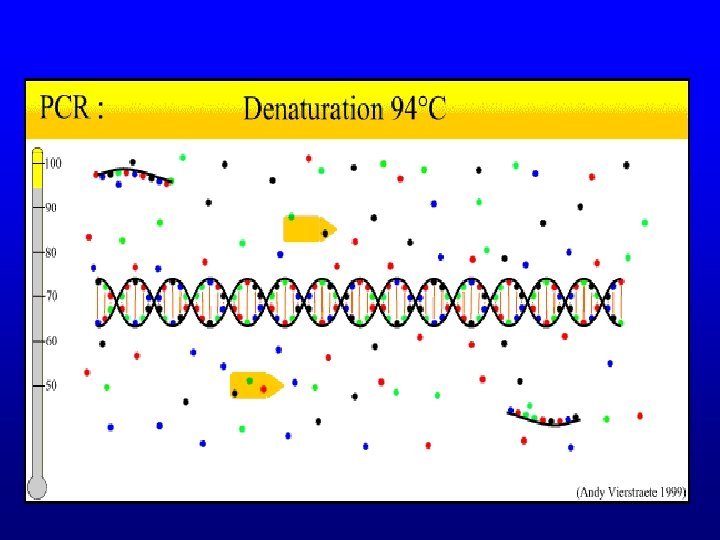
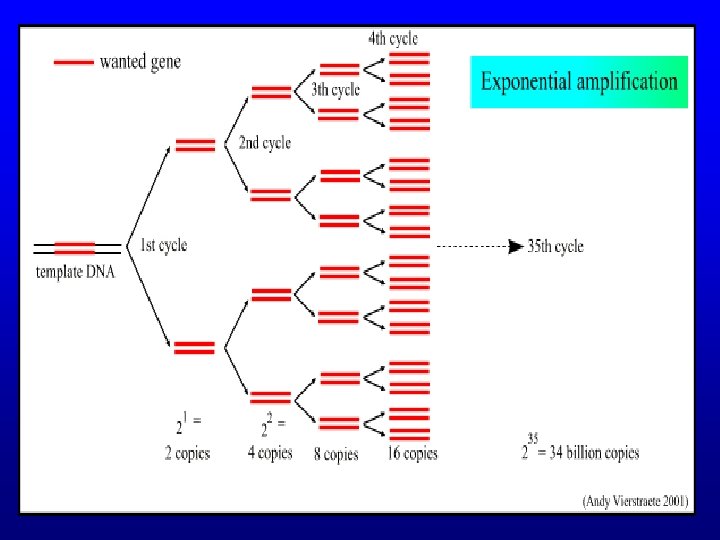
PCR – Purpose • Need multiple copies of the gene in order to sequence it • Primer extension reaction for amplification of specific nucleic acids in vitro
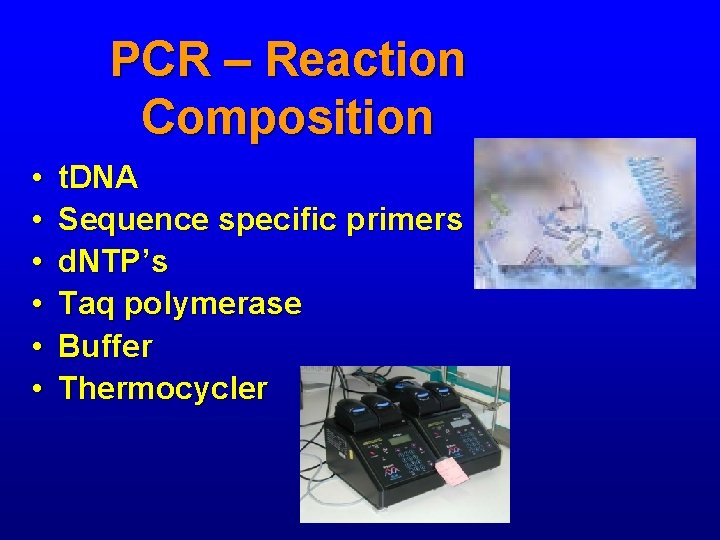
PCR – Reaction Composition • • • t. DNA Sequence specific primers d. NTP’s Taq polymerase Buffer Thermocycler
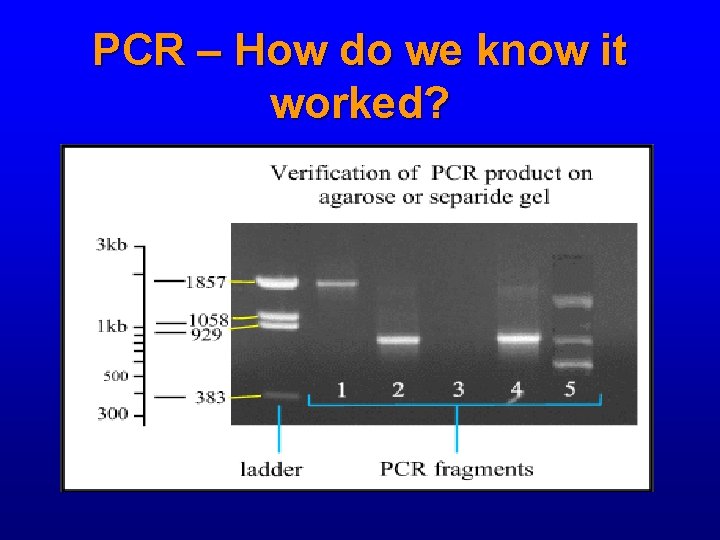
PCR – How do we know it worked?
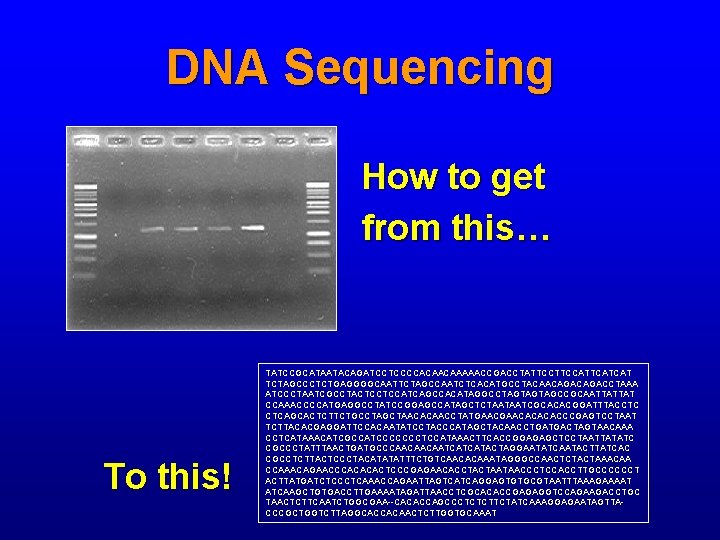
DNA Sequencing How to get from this… To this! TATCCGCATAATACAGATCCTCCCCACAACAAAAACCGACCTATTCCATTCATCAT TCTAGCCCTCTGAGGGGCAATTCTAGCCAATCTCACATGCCTACAACAGACCTAAA ATCCCTAATCGCCTACTCCTCCATCAGCCACATAGGCCTAGTAGTAGCCGCAATTATTAT CCAAACCCCATGAGGCCTATCCGGAGCCATAGCTCTAATAATCGCACACGGATTTACCTC CTCAGCACTCTTCTGCCTAGCTAACACAACCTATGAACACACACCCGAGTCCTAAT TCTTACACGAGGATTCCACAATATCCTACCCATAGCTACAACCTGATGACTAGTAACAAA CCTCATAAACATCGCCATCCCCCCCTCCATAAACTTCACCGGAGAGCTCCTAATTATATC CGCCCTATTTAACTGATGCCCAACAACAATCATCATACTAGGAATATCAATACTTATCAC CGCCTCTTACTCCCTACATATATTTCTGTCAACACAAATAGGGCCAACTCTACTAAACAA CCAAACAGAACCCACACACTCCCGAGAACACCTACTAATAACCCTCCACCTTGCCCCCCT ACTTATGATCTCCCTCAAACCAGAATTAGTCATCAGGAGTGTGCGTAATTTAAAGAAAAT ATCAAGCTGTGACCTTGAAAATAGATTAACCTCGCACACCGAGAGGTCCAGAAGACCTGC TAACTCTTCAATCTGGCGAA--CACACCAGCCCTCTCTTCTATCAAAGGAGAATAGTTACCCGCTGGTCTTAGGCACCACAACTCTTGGTGCAAAT
Automated DTCS (Dye Terminator Cycle Sequencing) • Typically provides accurate reads of 600800 b. p. • For long fragments, two or more sequencing reactions are run • Up to 96 run at once in a plate • Reaction is similar to a PCR reaction, but there is no logarithmic replication, so technically a primer extension reaction
Components • Purified PCR product (template) • Primer (1 per sequencing reaction)
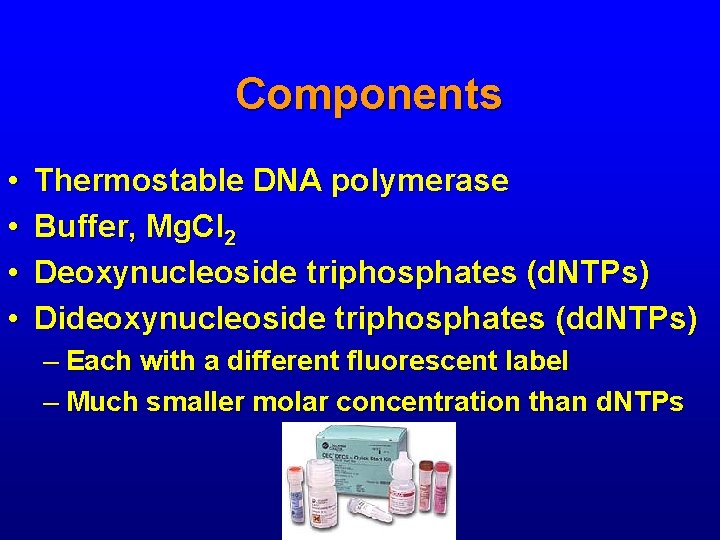
Components • • Thermostable DNA polymerase Buffer, Mg. Cl 2 Deoxynucleoside triphosphates (d. NTPs) Dideoxynucleoside triphosphates (dd. NTPs) – Each with a different fluorescent label – Much smaller molar concentration than d. NTPs
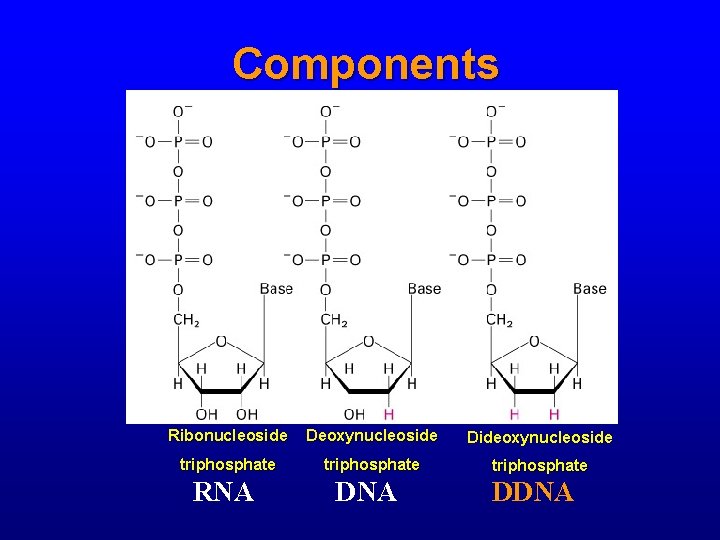
Components Ribonucleoside Deoxynucleoside Dideoxynucleoside triphosphate RNA DDNA
Reaction • Similar to a PCR reaction: – Denature at ~96°C – Anneal primer at ~50°C – Extend primer at ~60°C • Primer extension occurs normally as long as d. NTPs are incorporated • When a dd. NTP is incorporated, extension stops
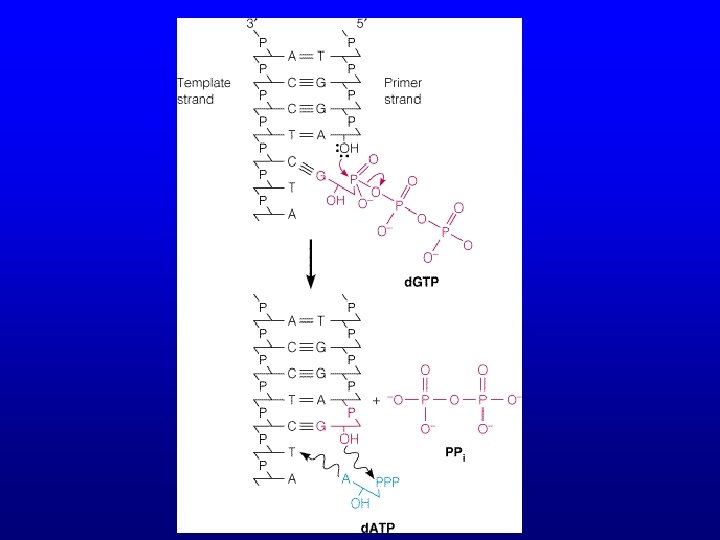
Reaction • Extension occurs via nucleophilic attack – 3’-hydroxyl group at the 3’ end of the growing strand – attacks the 5’-α-phosphate of the incoming d. NTP, – releasing pyrophosphate (PPi). – (d. NMP)n + d. NTP → (d. NMP)n+1 + PPi – Catalyzed by DNA polymerase – Synthesis occurs 3’ → 5’
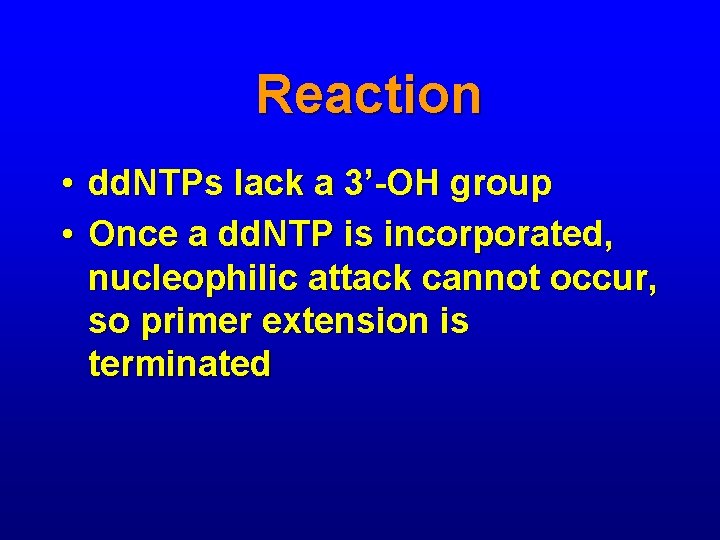
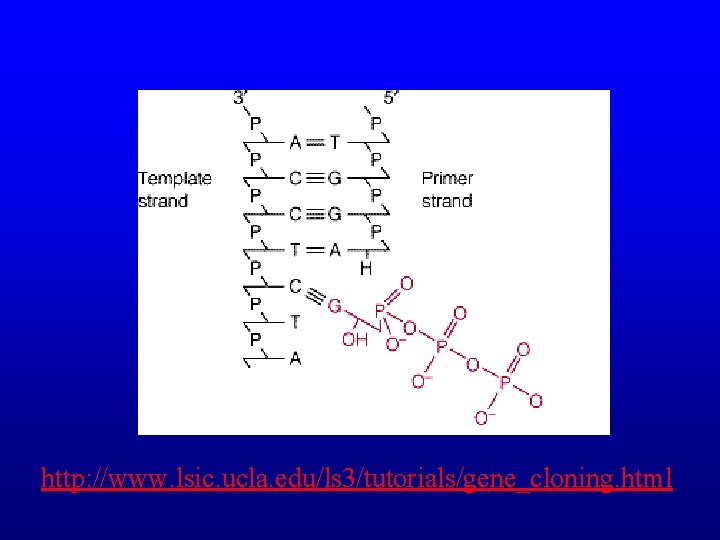
Reaction • dd. NTPs lack a 3’-OH group • Once a dd. NTP is incorporated, nucleophilic attack cannot occur, so primer extension is terminated
http: //www. lsic. ucla. edu/ls 3/tutorials/gene_cloning. html
Reaction • Produces a mixture of singlestranded DNA products of varying lengths – Each ends with a dye-labelled dd. NTP – Hopefully, everything from P + 1 to P + n
Reading the sequence • DNA from the sequencing reaction is purified via ethanol precipitation • DNA is resuspended in deionized formamide • Plate is loaded into the automated sequencer
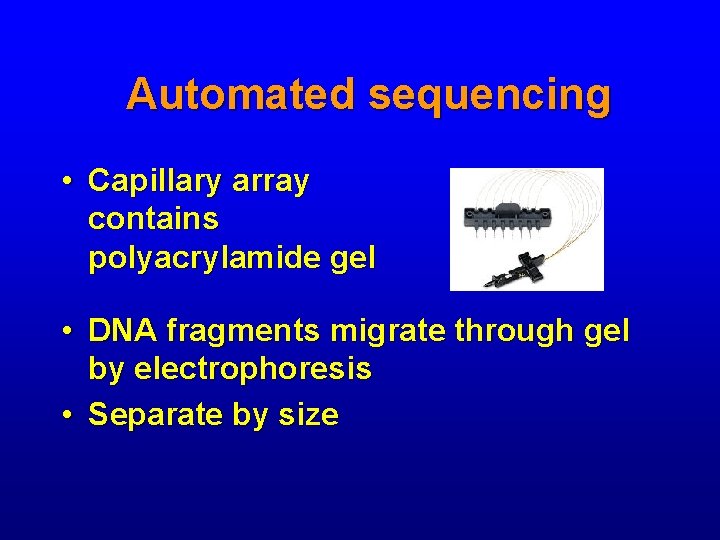
Automated sequencing • Capillary array contains polyacrylamide gel • DNA fragments migrate through gel by electrophoresis • Separate by size
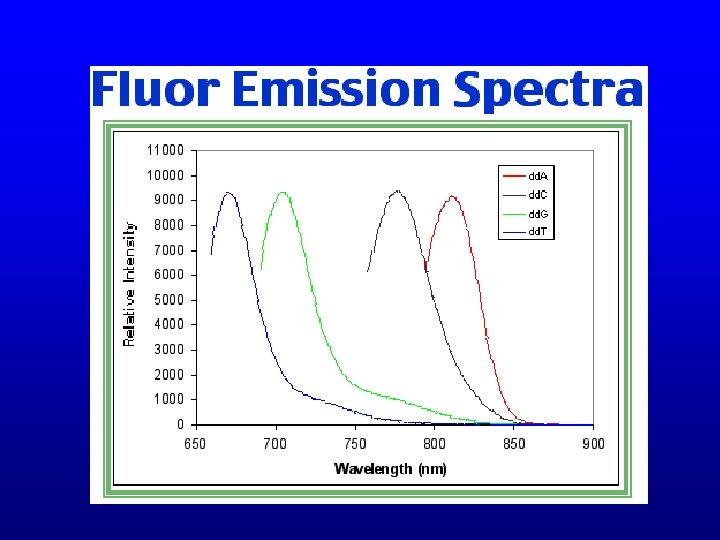
Automated sequencing • Capillary passes through a laser • Each dye fluoresces a different wavelength when excited by the laser • Fluorescence is detected by a CCD
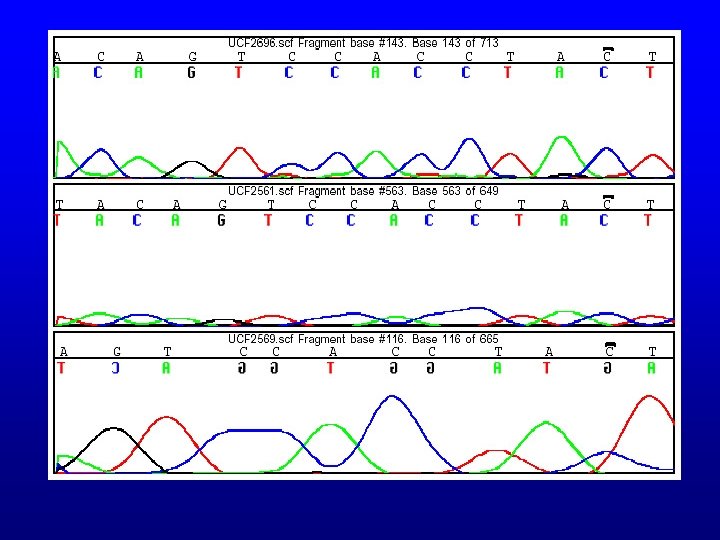
Automated sequencing • Fluorescences are processed into an electropherogram • Base “calls” made by sequencing software, but can be analyzed manually
NCBI – National Center for Biotechnology Information • • • http: //www. ncbi. nlm. nih. gov/ Literature databases Entrez databases Nucleotide databases Genome resources Analytical tools
Literature databases • Pub. Med – searchable citation database of life science literature • Pub. Med Central – digital versions of life science journals • Bookshelf – online versions of textbooks • OMIM – catalog of human genes and genetic disorders • PROW – Protein Reviews On the Web – reviews of proteins and protein families
Entrez databases • System for searching several linked databases: – Pub. Med – Protein sequence databases – Nucleotide sequence databases – Genome databases – Pop sets – Books
Nucleotide databases • Gen. Bank - annotated collection of all publicly available nucleotide and amino acid sequences • SNPs - Single base Nucleotide Polymorphisms - substitutions and short deletion and insertion polymorphisms • ESTs - Expressed Sequence Tags - short, single-pass sequence reads from m. RNA
Genome resources • Whole genomes of over 800 organisms • Others in progress • Viroids, viruses • Plasmids • Bacteria • Eukaryotic organelles
Genome resources • Eukaryotes – Yeast – Fruit fly – Zebrafish – Human – C. elegans – Rattus, Mus – Plasmodium – Plants
Analytical tools • Sequence analysis tools • Macromolecular and 3 -dimensional structure analysis • Software downloads • Citation searching • Taxonomy searching • Sequence similarity searching – BLAST
Where are we now? ? • • • Kelly has shown you PCR…. Matt has explained sequencing… Now we must use BLAST with our sequence to determine if we have the correct: – Gene – Animal
BLAST • Basic Local Alignment Search Tool • Similarity Program – Compares input sequences with all sequences (protein or DNA) in database – Each comparison given a score • Degree of similarity between query (input sequence) and sequence that it is being compared to • Higher the score, the greater the degree of similarity
BLAST, cont’d • Significance of each alignment composed as an E-value – The number of different alignments with scores equal to or greater than the given score that are expected to occur in a database search by chance – The lower the E-value, the more significant the score