
DNA RNA Protein Synthesis Chapter 12 Discovery of
- Slides: 40
DNA, RNA, Protein Synthesis Chapter 12
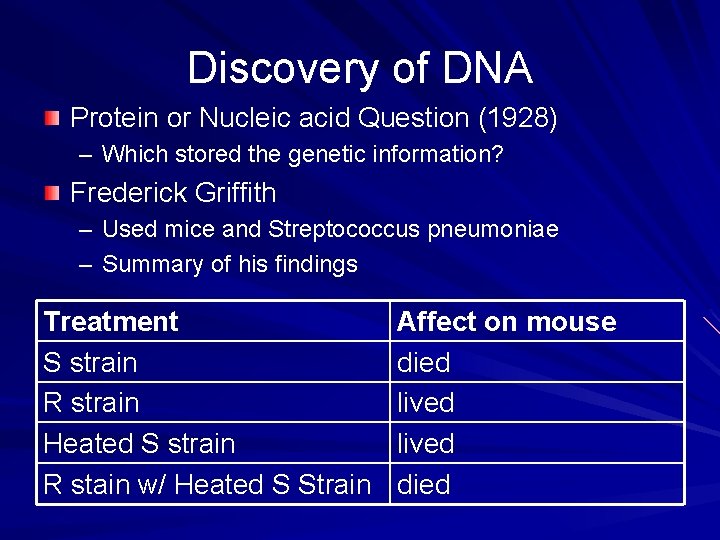
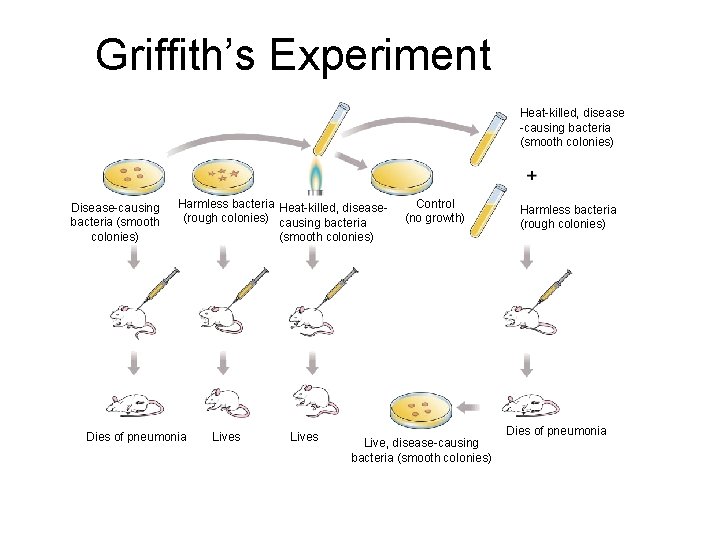
Discovery of DNA Protein or Nucleic acid Question (1928) – Which stored the genetic information? Frederick Griffith – Used mice and Streptococcus pneumoniae – Summary of his findings Treatment S strain R strain Heated S strain R stain w/ Heated S Strain Affect on mouse died lived died
Griffith’s Experiment Section 12 -1 Heat-killed, disease -causing bacteria (smooth colonies) Disease-causing bacteria (smooth colonies) Harmless bacteria Heat-killed, disease(rough colonies) causing bacteria (smooth colonies) Dies of pneumonia Lives Control (no growth) Live, disease-causing bacteria (smooth colonies) Harmless bacteria (rough colonies) Dies of pneumonia
Cont… Griffith concluded that information or factor was transferred from heated S strain to the live R stain. This process he called transformation. Oswald Avery- did the same experiment but also used an enzyme that destroyed carbohydrates, protein and lipids. Avery was able to show that it was nucleic acid not proteins that store genetic information
Structure of Nucleic Acid Edwin Chargaff- tested amounts of nitrogen bases in organism –Four types of bases Adenine, thymine, cytosine, guanine –Chargaff found that the amount of adenine was always the same as thymine, and guanine the same as cytosine
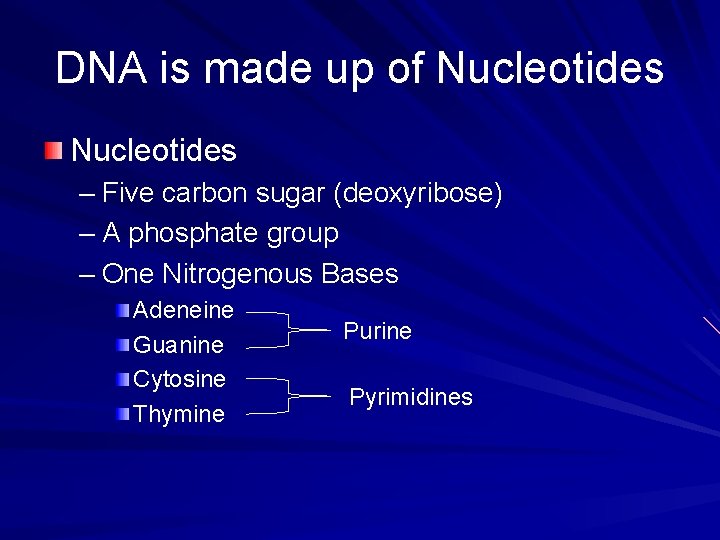
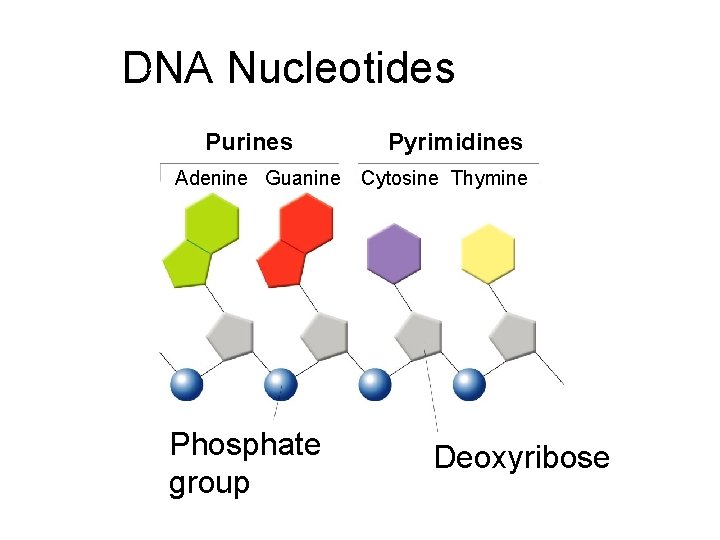
DNA is made up of Nucleotides – Five carbon sugar (deoxyribose) – A phosphate group – One Nitrogenous Bases Adeneine Guanine Cytosine Thymine Purine Pyrimidines
DNA Nucleotides Section 12 -1 Purines Adenine Guanine Phosphate group Pyrimidines Cytosine Thymine Deoxyribose
Watson & Crick Used knowledge of Chargaff experiments and X-ray imaging to discover some very important characteristics of DNA – Double stranded – Double helix – Sugar and phosphate make up backbone – Bases bind together (base pairing) Adenine to thymine Cytosine to Guanine
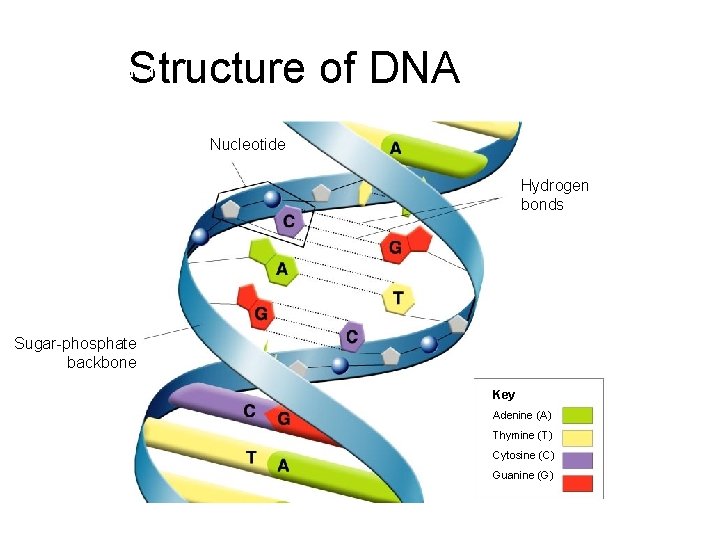
Structure of DNA Section 12 -1 Nucleotide Hydrogen bonds Sugar-phosphate backbone Key Adenine (A) Thymine (T) Cytosine (C) Guanine (G)
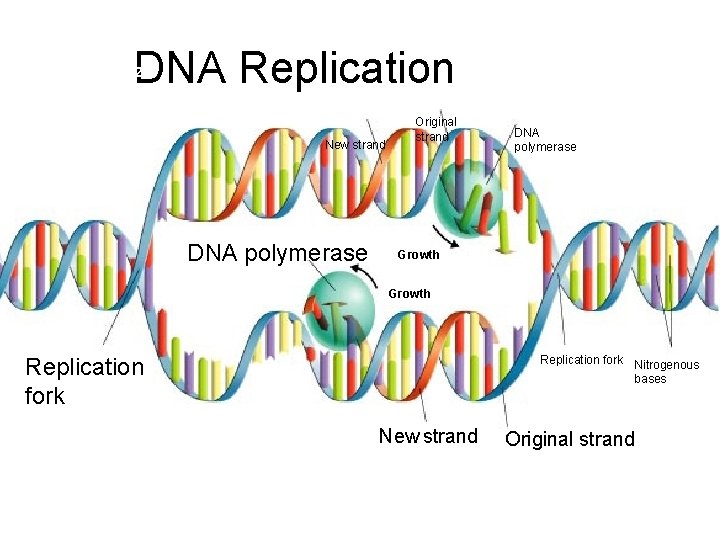
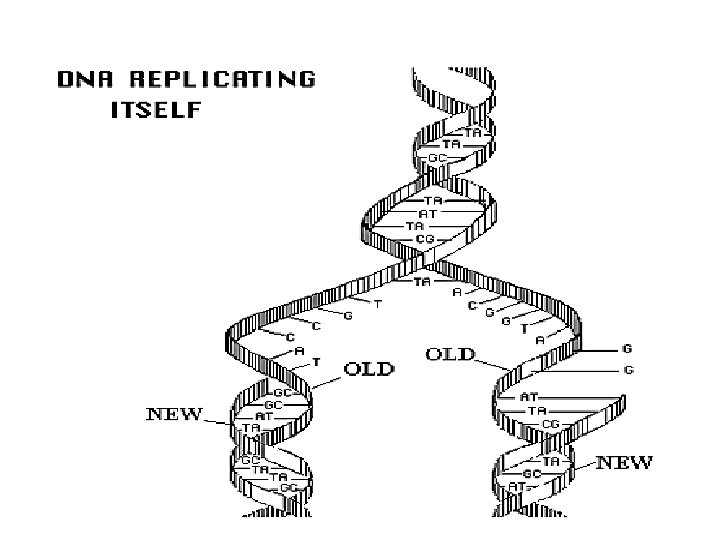
DNA Replication Remember this is done during the S phase of interphase in cell life cycle How it does it? – DNA unwinds (enzymes break the hydrogen bonds) – DNA polymerase enzyme attaches to each strand uses free floating nucleotides to assemble complementary strand – This process continues until two complete copies of the DNA are made
DNA Replication Section 12 -2 New strand DNA polymerase Original strand DNA polymerase Growth Replication fork Nitrogenous bases Replication fork New strand Original strand
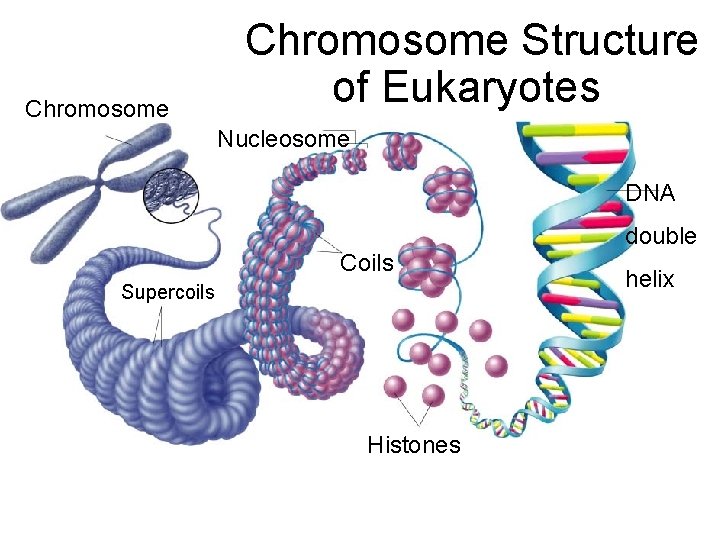
Chromosome Structures Strands of DNA are wrapped around proteins called histones – This is what makes up chromatin – During cell division this chromatin is packed tightly into chromosomes This is done to assist the genetic information in separating properly Also there is evidence to show the compact DNA can influence the expression of the genes
Section 12 -2 Chromosome Structure of Eukaryotes Nucleosome DNA double Coils Supercoils Histones helix
Nondisjunction in Meiosis During anaphase a chromosome fails to separate thus one gamete will have two many of one chromosome and on will be short a chromosome. – Monsomy- zygote has one copy of chromosome – Trisomy-zygote has three copies of same chromosome Ex. Down syndrome is a trisomy on the 21 chromosome – Genotype may look like the following: (AAa, XXX, XXY, or XO)
Review of DNA Double stranded Double helix Base pairing – Adenine to Thymine – Cytosine to Guanine Replication prior to cell division
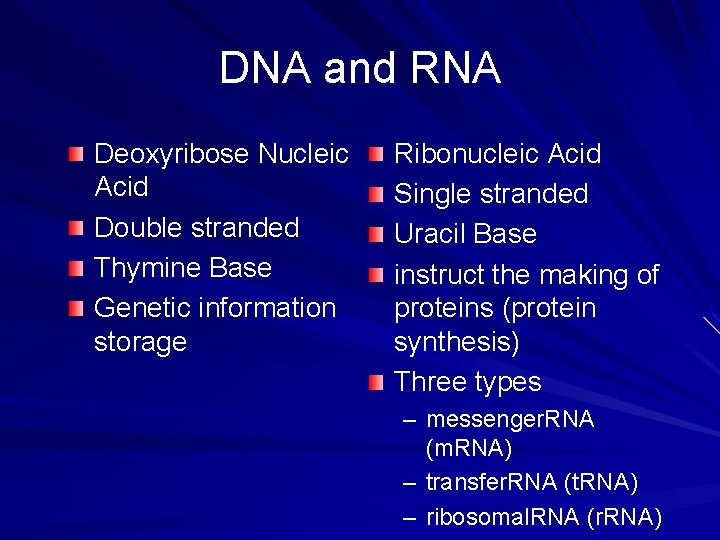
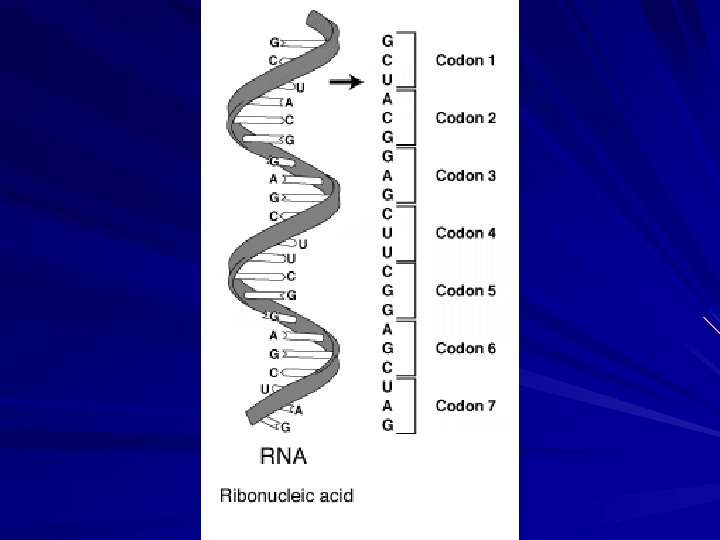
DNA and RNA Deoxyribose Nucleic Acid Double stranded Thymine Base Genetic information storage Ribonucleic Acid Single stranded Uracil Base instruct the making of proteins (protein synthesis) Three types – messenger. RNA (m. RNA) – transfer. RNA (t. RNA) – ribosomal. RNA (r. RNA)
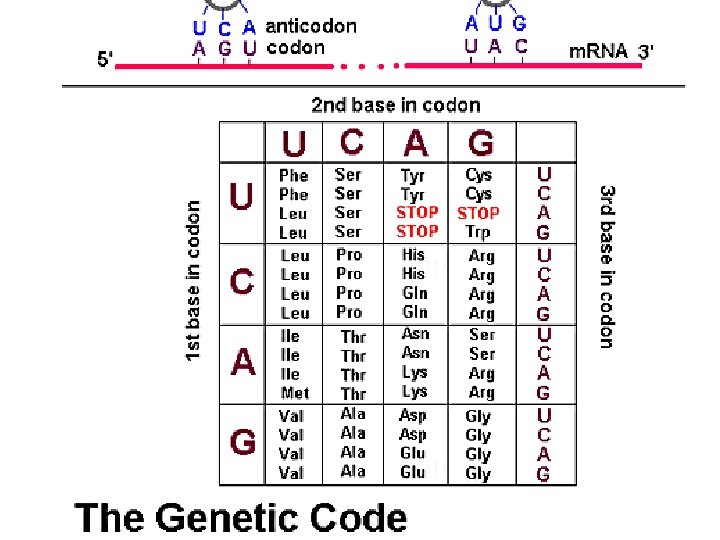
m. RNA Makes a complimentary template of DNA sequence Codon-three-nucleotide sequence on m. RNA that codes for an amino acids Amino Acids are the building blocks of proteins
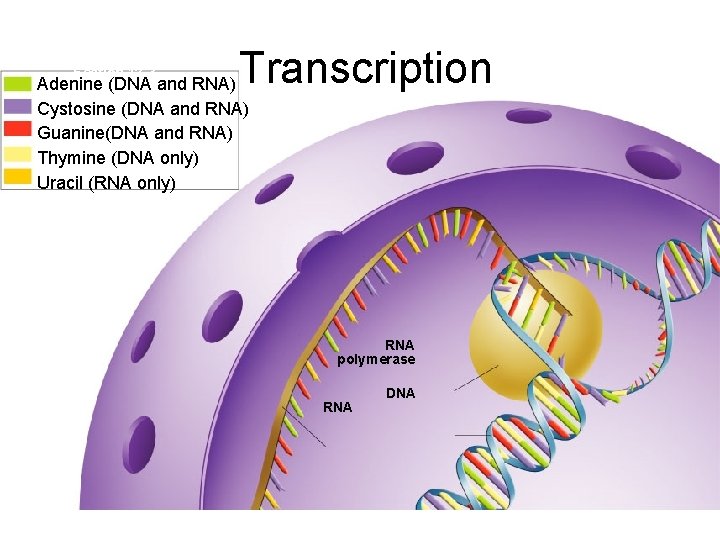
Transcription: RNA Synthesis Process by which DNA is copied into a complementary strand of RNA Why must DNA do this? This process is a lot like replication but only short single stranded RNA is produced This process takes place in the nucleus of the cell
Section 12 -3 Transcription Adenine (DNA and RNA) Cystosine (DNA and RNA) Guanine(DNA and RNA) Thymine (DNA only) Uracil (RNA only) RNA polymerase RNA DNA
RNA splicing Introns – noncoding regions of DNA or RNA Exons- regions of DNA or RNA that do code for proteins Before m. RNA leave the nucleus it splices or remove the introns and splices the exons together
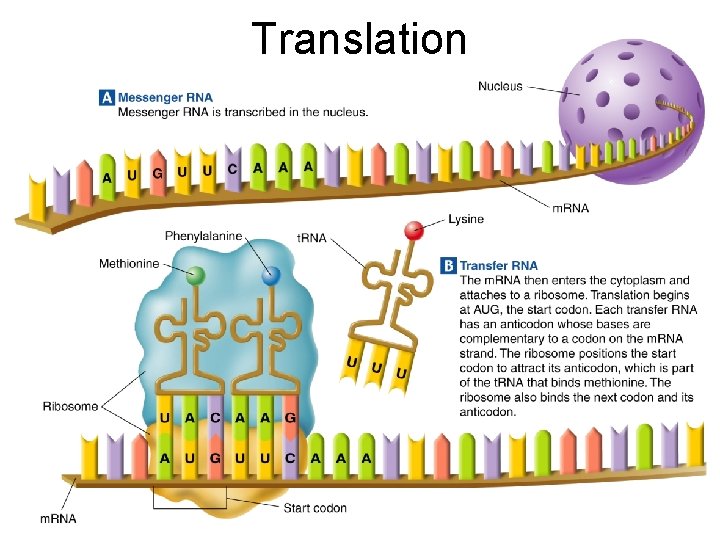
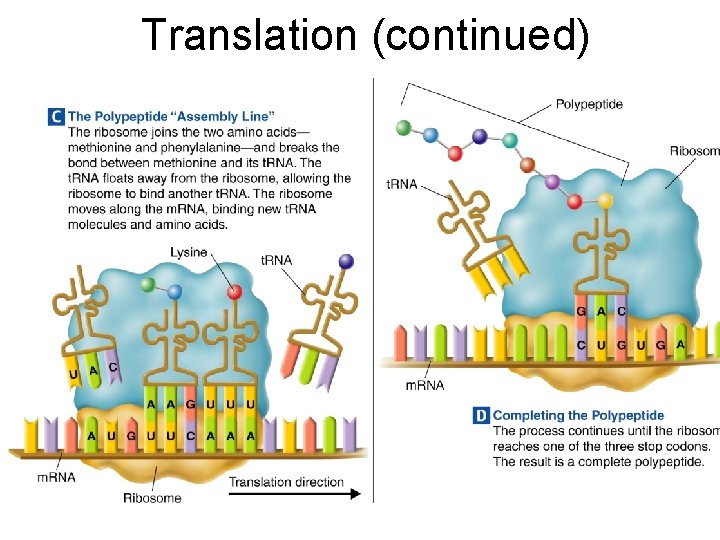
Translation Decoding of m. RNA into polypeptide chains (proteins) Ribosome attach to m. RNA in the cytoplasm t. RNA is now ready to attach amino acid to the ribosome t. RNA anticodon matches up with m. RNA codon to assemble the amino acids in correct order
Translation Section 12 -3
Translation (continued) Section 12 -3
Proteins Long chains of amino acids form what is called polypeptides Polypeptides combine to form protein molecules Proteins are what we see in our phenotype
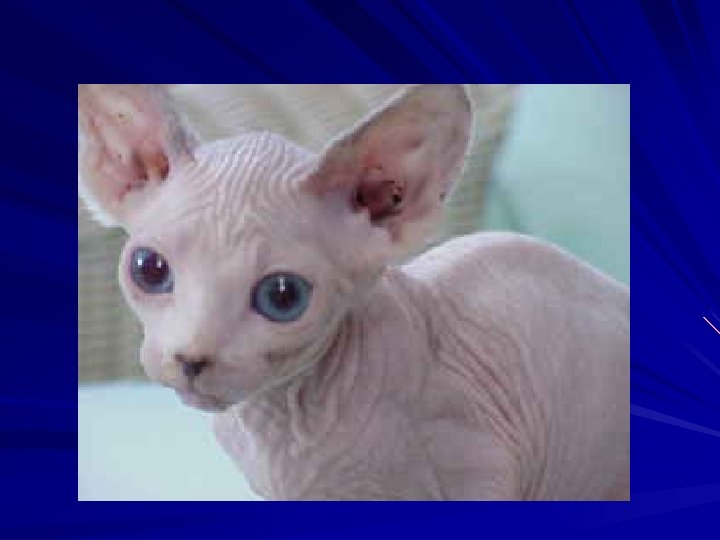
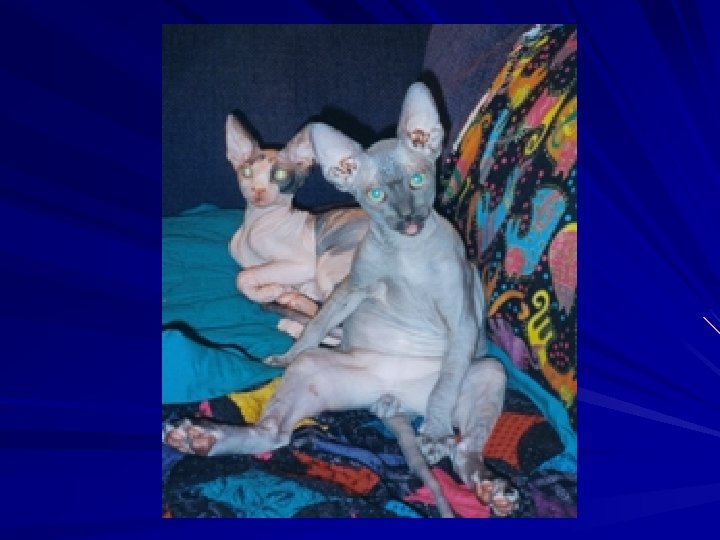
Changes to DNA Mutations- random changes in nucleotide sequence of DNA – Chromosomal Mutations-involve entire chromosome (cancer) – Gene mutations- involve single individual genes
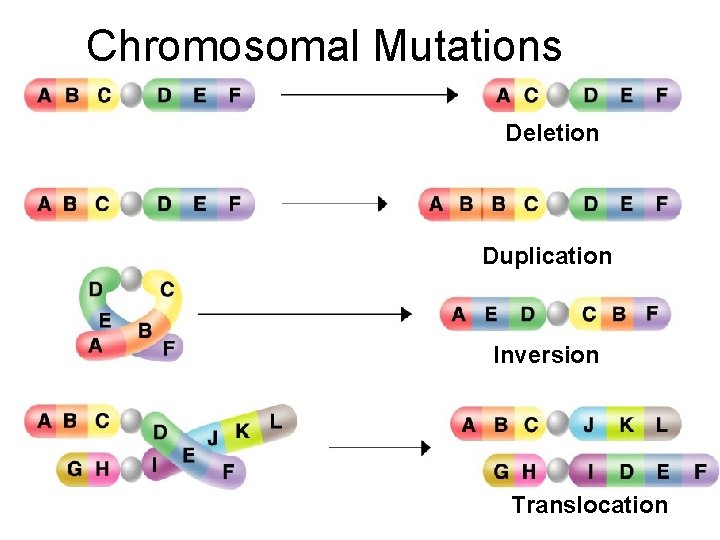
Chromosomal Mutations Deletion-occurs when chromosomes brake and a piece is lost Duplication- occurs when chromosome breaks off and is incorporated back into the chromosome, resulting is an extra copy Translocation- chromosome breaks off and attaches to different chromosome
Chromosomal Mutation cont… Inversion- chromosome break off, turns around, and reattaches in reverse order
Chromosomal Mutations Section 12 -4 Deletion Duplication Inversion Translocation
Gene Mutation Frameshift- deletion or addition that disrupts codons sequence See fig. 8. 14 pg. 194 Point Mutation- occurs because of a substitution of a base pair – Only effect one codon